

In this guide
A fixed-rate energy tariff sets the price of each unit of gas or electricity, and the daily standing charge, for an agreed period, usually between one and three years1. Twelve months is the commonest term, with two and three year deals also sold2. What is fixed is the price per kilowatt hour and the daily fee, not the bill: Home Energy Scotland puts it plainly, "your unit price is fixed, not your energy bill"1. The amount charged still rises and falls with how much energy the household uses3.
Fixing removes exposure to the quarterly price cap and to wholesale market moves for the length of the term. Households on a fixed tariff are not affected by increases in unit prices when the cap changes4. Ofgem has noted that around 40% of household accounts, counting gas and electricity separately, are on fixed tariffs5. The trade-off is contractual: most fixed tariffs carry an exit fee for each fuel, payable if the customer leaves before the end of the contract6, and the price cap does not protect a fixed-term tariff a household has chosen7.
Confidence about being fixed is not the same as being fixed. Ofgem research published in July 2025 found considerably more people claiming to be on fixed tariffs (38%) than official data suggested (11%), with 55% of those who said they were on a fixed electricity tariff "very confident" and 38% only "somewhat" confident8.
What a fixed tariff actually fixes: the unit rate and the standing charge
Two numbers are locked: the price per kilowatt hour and the daily standing charge. Uswitch is explicit that a fixed deal "doesn't lock in your total bill, which will change depending on how much energy" is used9. Citizens Advice describes the same arithmetic from the other direction: the amount charged is set by the amount of energy used, the unit cost and the daily fee, of which only the last two are fixed3. The Energy Saving Trust makes the same point: a fixed rate tariff lets you pay a set amount for each unit of energy until a set end date, and it is only the unit price and standing charge that are fixed2.
That distinction matters most in a cold winter or after a heat pump or an electric car arrives. Consumption climbs, the bill climbs with it, and nothing in the contract has been broken. A fixed tariff is protection against price movement, not against volume.
Standing charges are part of the fix, and they are not trivial. Some tariffs marketed as having no standing charge instead charge a much higher unit rate for the first two units of gas and electricity used each day, with a lower, more normal rate for everything after that12. Comparing two fixed deals therefore means comparing both numbers together, not the headline unit rate alone.
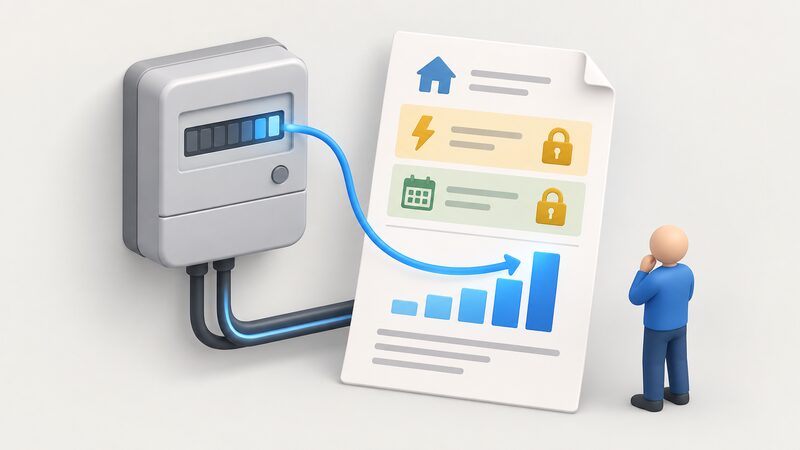
For comparing energy tariffs, the useful items are the unit rates and standing charges, whether prices are fixed or can change, the length of any fixed term, the payment methods available, customer service, and any additional benefits13.
How to tell whether you are already fixed
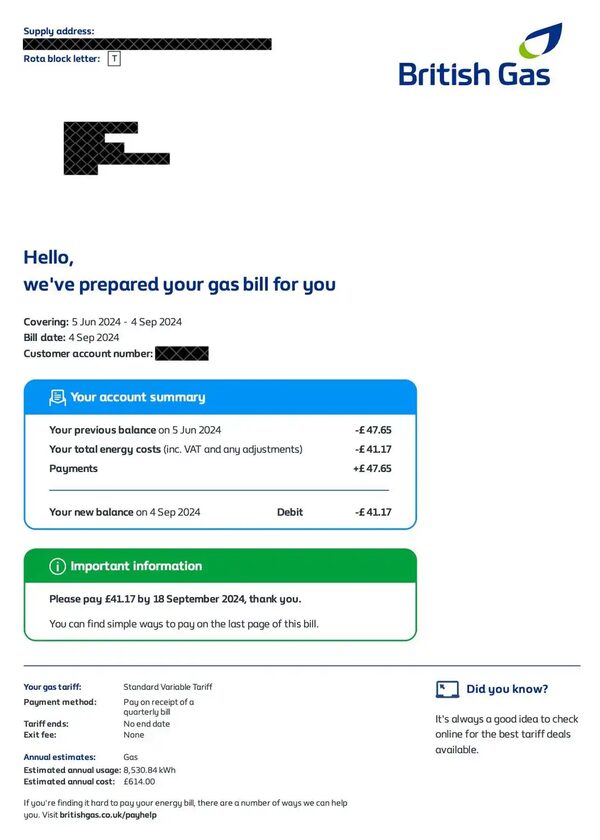
The test is a date. Citizens Advice states that if the tariff information on your bill says the contract has an end date, you are on a fixed tariff3. A standard variable tariff has no end date; its rates are determined by the price cap and change every three months14. Tariff details are usually on the latest bill or statement, or in a supplier's app or online account13.
The gap Ofgem found between self-reported and actual tariff type suggests households routinely mistake a variable deal for a fixed one, or remember a deal that has since expired and rolled over8. Because the exit fee, the switching rights and the exposure to cap changes all hinge on which you are on, the end date is worth confirming before acting on any assumption.
Fixed, variable or capped: what each one does
Three structures dominate the domestic market, alongside renewable, electric vehicle and prepayment variants11.
| Structure | How the price moves | Price cap protection | Exit fees |
|---|---|---|---|
| Fixed term | Unit rate and standing charge held for the term1 | Not protected on a chosen fixed-term tariff7 | Commonly charged per fuel before the last 49 days6 |
| Standard variable | Determined by the price cap, changes every three months14 | Covered by the default tariff cap15 | None; can switch at any time16 |
| Tracker and time-of-use | Move with wholesale or time of day | Not the default cap | Exit fees apply to some tracker tariffs17 |
The default tariff cap covers households on a standard variable or default tariff, including those paying by direct debit, standard credit or using a prepayment meter, with any supplier18. Turn2us describes the population as around 11 million households on a standard variable tariff or a tariff they have not chosen7. Ofgem's own explainer stresses that a capped tariff is not one national number: it depends on how you pay, where you live and what type of meter you have18.
Fixing suits a household that values a known unit rate over the chance of falling prices; staying variable suits one that wants the cap's protection and the freedom to leave. Neither choice reduces consumption, and neither removes dependence on a supplier. That is the ground covered in fixed vs variable energy tariff and, for wholesale-linked deals, tracker energy tariffs.
Term lengths: 12, 24 or 36 months
The market sells fixed rates for 12, 24 or even 36 months17. Sources converge on 12 months as the standard offer and one to two years as the common range:
| Source | Stated typical term |
|---|---|
| Home Energy Scotland | usually between one and three years1 |
| Energy Saving Trust | usually 12 months, with two and three-year deals available2 |
| Uswitch (fixed energy) | usually 12 to 24 months9 |
| Confused.com | usually 12 to 24 months19 |
| Citizens Advice | usually a year3 |
| Centre for Sustainable Energy | usually one or two years20 |
The documents differ only in how wide a range they quote, not in the centre of it. Ofgem's 2024 consumer research tested exactly three options with households: 12 months fixed term, 24 months fixed term, and standard variable8. Fixed green tariffs follow the same pattern, most lasting 12 to 24 months6.
A longer term buys more certainty and more lock-in. A 12-month deal returns the household to the market within a year, which is also the rhythm Uswitch describes when it suggests reviewing as a matter of habit every 12 to 18 months21. Three-year deals are the least common and carry the most risk of being stranded above the market if wholesale prices fall.
What a fixed tariff costs against the price cap
The cap is the reference point, and a fixed deal can sit either side of it. Which? reported in January 2026 finding fixed deals that could save around £200 compared with price cap variable rates22. Uswitch's April 2026 commentary said customers switching to a cheap fixed tariff could see bills up to 19% cheaper than standard rates once a cap reduction took effect23, and separately put the difference between a standard rate and the cheapest fixed deal at 5.17p per kWh on electricity, from 26.16p to 20.99p24.
The other side is well evidenced. The End Fuel Poverty Coalition's tariff watch recorded 337 fixed price tariffs more expensive than the then current Ofgem price cap, of which 206 would still be more expensive than the predicted January cap25. In April 2024 the same source found 76% of fixed tariffs had annual costs of £1,690 or more, meaning those customers would pay more than the price cap then in force26. Earlier, from 1 July 2023, households on 274 different tariffs had fixed at a level above the new cap25.
Because the cap only limits how much is paid for each unit of energy and the daily charge28, comparing a fixed offer with it means comparing those same two numbers, adjusted for the region, payment method and meter type that shape a capped price18. When the cap moves, a fixed customer's costs do not change with it29.
Where a fixed tariff falls short
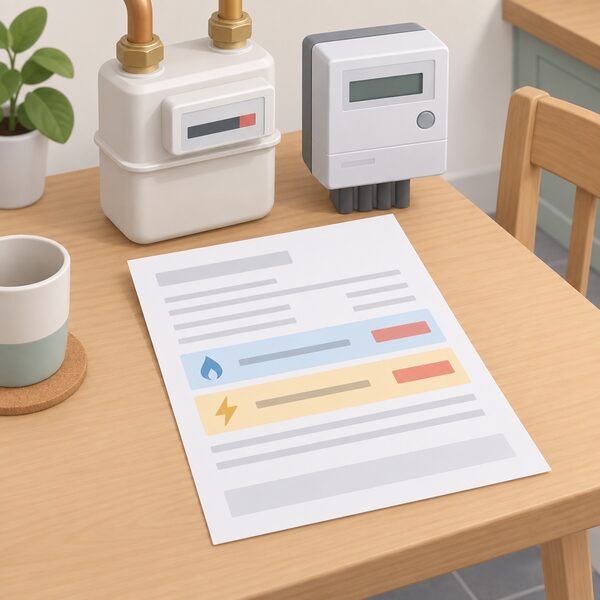
Three limits recur. The first is falling prices: the unit rate does not follow the market down, and a household that fixed near a peak carries that rate to the end of the term. The second is the exit fee. Most fixed tariffs include exit fees for each fuel, payable on leaving early6, which on a dual fuel contract means a fee for both gas and electricity30. Confused.com puts the typical amount at £30 to £60 per fuel on fixed-rate tariffs10. The Welsh Government's climate action pages describe choosing a tariff with low or no exit fees as a way of keeping the option to cancel early if circumstances change31.
The third is simply lock-in. Energyhelpline notes the exposure directly: you may need to pay an early exit fee if you want to switch before the contract has finished17.
Understanding of exit fees is patchy. Ofgem's research found 88% correctly identified that exit fees may apply when leaving a fixed contract early, but only 57% recognised that they may still apply when moving to another deal with the same supplier8. In the same research, 93% of consumers who thought they had an exit fee on their current contract were in fact on a no exit fee deal8. More detail sits in exit fees and energy tariff contract terms.
Set against this, Uswitch describes fixed tariffs as usually the cheapest tariff type available on the market6, and Which? has advised that where fixed tariffs cheaper than the cap exist, households paying out-of-contract rates are the ones with most to gain31.
Eligibility and conditions: meters, payment method and prepayment
Fixed tariffs are not equally available to every meter and payment method. A growing group of cheaper tariffs is only available to households that have a smart meter32, and new time-of-use tariffs are only available to customers with smart meters because regular automated meter readings are needed33. Smart metering is not compulsory, but declining one narrows the tariff list.
Prepayment means paying for electricity or gas in advance rather than after use34, topped up via a token, key or smartcard, online or through an app6. The default tariff cap covers prepayment customers as well as those paying by direct debit or standard credit35. Where an account carries debt, Uswitch notes that once the debt is settled a supplier may be able to change a prepayment meter to a credit meter6, and switching from an existing gas or electricity prepay meter to a smart credit meter is described as straightforward36. Smart Energy GB states it has a particular duty to make sure low-income, vulnerable and prepay customers benefit from smart meters33. The specifics are covered in prepayment and pay as you go energy tariffs.
Payment method matters in a second way. A fixed tariff does not protect you from your direct debit amount increasing or decreasing6. Citizens Advice explains the usual reason payments rise while the unit price and daily fee stay the same: the household is using more energy than the supplier expected3. A fixed contract fixes rates; it does not fix the monthly figure leaving the bank account.
Can prices change mid-term, and what about VAT

Within the term, the answer is no with one stated exception. Citizens Advice, for both England and Wales, says a supplier "can't increase the price you pay, unless the government has raised VAT"3. Uswitch describes a fixed rate plan as a guaranteed rate on the cost per unit that will not go up during the contract even if the supplier announces price rises38. Which? states the same rule and adds a second case: a staggered tariff, where the contract itself sets out different rates at defined points11.
Beyond VAT, the protection against market movement is real. Confused.com states that the fixed price applies for the full duration of the tariff regardless of changes to the wholesale cost of electricity or to the energy price cap during that period39, and energyhelpline that the price per kWh will not increase when the wholesale market does17.
"Your supplier can't increase the price you pay, unless the government has raised VAT."
For a household thinking about energy independence, that is the honest boundary of what a fixed deal delivers: it removes wholesale and cap volatility from the unit rate for a defined period. It does not remove the supplier, the grid connection, the standing charge, or the exposure of the total bill to how much energy the home actually needs. Reducing that need is the subject of tariffs and household energy independence.
The final 49 days and the end of the term
The 49-day window is the single most useful date in a fixed contract. Which? states that in the last 49 days of a fixed-term contract you do not have to pay an exit fee and have the right to switch freely11. Uswitch puts the same entitlement as switching to a new deal or supplier from 49 days before the end of the contract21. StepChange states that a provider cannot charge exit fees if you switch within 49 days of the deal ending40, and Citizens Advice frames it as no fee where the contract ends in the next 7 weeks3. The Energy Saving Trust expresses it as fewer than 50 days left41. There is also a 14-day cooling-off period at the start of a contract during which an exit fee cannot be charged16.
Confused.com adds a practical reason to act early inside the window: switching with 21 to 49 days left helps avoid spending days or weeks on the standard variable rate while the switch completes16.
- The supplier contacts you 42 to 49 days before the end date, telling you the contract is ending11, and should remind you it is about to end37.
- From 49 days out, you can move to a new deal or supplier without an exit fee21.
- If nothing is done, the supplier moves you automatically onto its standard variable tariff3, which is usually more expensive than the fixed deal that has ended38.
- After the term has ended, you can still switch supplier or tariff at any time3.
Ofgem's retail market review set the rollover rule: at the end of the fixed term customers can no longer be rolled over to another fixed term offer, and by default they are rolled onto the cheapest evergreen tariff of the same type42. Some suppliers may instead offer the chance to move to another of their deals9. Standard variable customers can switch at any time without incurring fees16. Further detail is in what happens if I do nothing when my fixed deal ends and tariff rules: what Ofgem requires suppliers to offer.

Moving house on a fixed tariff
Moving does not automatically cost an exit fee. The Energy Saving Trust states that if you move your tariff to the new house, exit fees do not apply41. Where the tariff cannot move with the household and the contract is broken instead, an exit fee may be payable41. Two other timing rules limit that charge in the ordinary course of a fixed contract: a supplier should not charge a fee to switch supplier if the contract ends within the next 7 weeks, and the fee usually does not apply with fewer than 50 days left to run.
Ofgem states generally that you may have to pay a previous supplier an exit fee if you were on a fixed rate tariff and chose to leave before it ended43. Whether a tariff can travel depends on the supplier and on the new property's meters, so the position is worth establishing before the move rather than after. Can I take my fixed energy tariff with me when I move home covers the question in isolation, and what tariff am I on when I move into a new home deals with the receiving end.
What a fixed deal means for a self-sustaining home

A fixed tariff is a hedging instrument, not a route out of the supply market. It gives a household a known price per unit for a known period, which makes the payback arithmetic on insulation, a heat pump, solar or a battery easier to state, because one of the variables is held still for 12 to 24 months9. It also removes the quarterly uncertainty of the cap for that window4.
The dependence that remains is complete: a supplier, a metering arrangement, a standing charge that is paid whether or not any energy is used, and a contract with an end date after which the default is the standard variable rate38. Where a home generates or stores its own electricity, the import tariff is only one half of the picture; export arrangements under the Smart Export Guarantee and the shape of time-of-use electricity tariffs can matter more than the fixed import rate. Full context for the options sits on the energy tariffs guide.
Sources43 cited
- Getting the best deal on your energy, Home Energy Scotland, 2026-09-20
- Switching your energy supplier, Energy Saving Trust, 2026-06-26
- Your gas or electricity supplier has put up its prices, Citizens Advice, 2026-09-17
- Changes to the energy price cap, Home Energy Scotland, 2026-08
- Price cap comment: fixed tariff share of household accounts, Energy and Climate Intelligence Unit, 2026-06-30
- Energy tariffs explained, Uswitch, 2026-02-17
- Energy bills to fall for millions of people, Turn2us, 2026-09-20
- Understanding consumers' energy tariff choices: research report, Ofgem, 2025-07
- Fixed energy tariffs, Uswitch, 2026-09-07
- Gas only tariffs, Confused.com, 2026
- How to complain about your energy bill, Which?, 2026-07-30
- Standing charges, National Energy Action, 2026-04-28
- How to check your energy tariff and switch, British Gas Energy Trust, 2026-07-30
- How to switch energy supplier, Which?, 2026-05-15
- Energy price cap, Uswitch, 2026-08-26
- How to switch energy supplier, Confused.com, 2025-12-15
- Fixed and variable tariffs: what's the difference, Energyhelpline, 2026-09-20
- Energy price caps explained, Ofgem, 2020-12
- Types of energy tariff, Confused.com, 2025-11-03
- Dealing with your energy supplier, Centre for Sustainable Energy, 2026-01
- When is the best time to switch my energy deal, Uswitch, 2026-08-26
- How to choose the best energy company, Which?, 2026-01-19
- Uswitch responds to April energy price cap announcement, Uswitch, 2026-04
- The price cap and regional unit rate differences, Uswitch, 2026-04-22
- Tariff watch, End Fuel Poverty Coalition, 2026-09-20
- Surge in energy exit fees since 2021, End Fuel Poverty Coalition, 2024-04-19
- What is the energy price cap, Energy Saving Trust, 2026-09-07
- Current gas and electricity prices, Centre for Sustainable Energy, 2026-08-27
- Energy price cap October 2026: what we know so far, Uswitch, 2026-08-20
- How to compare dual fuel tariffs, Confused.com, 2025-11-03
- Five top tips from Which? to cut your energy bills, Welsh Government, 2026-03-18
- Do you have to have a smart meter by law, Smart DCC, 2026
- Do I have to get a smart meter, Smart Energy GB, 2026-04-01
- Get help with your prepayment meter, Ofgem, 2026
- Changes to the energy price cap between 1 October and 31 December 2025, Ofgem, 2025-08-27
- How to get a smart meter, Smart DCC, 2026
- Your energy supplier has put up its prices (Wales), Citizens Advice, 2026-09-17
- Standard rate tariffs, Uswitch, 2026-08-26
- Electricity only tariffs, Confused.com, 2026
- Understanding energy bills, StepChange, 2026-09-20
- Moving house energy checklist, Energy Saving Trust, 2026-05-01
- The Retail Market Review: final domestic proposals, Ofgem, 2013-03-27
- Switch your home energy supplier, Ofgem, 2026
 The Full Tariffs GuideWhich energy tariff suits how you live, and will switching really save you money?
 Exit Fees and Contract TermsExplains exit fees on fixed energy contracts, how they are charged per fuel, and the Ofgem switching window in which a supplier cannot apply them.
 Fixed and Variable TariffsCompares capped standard variable tariffs with fixed deals, including exit fees, contract end and rollover.
 Energy Price CapThe price cap sets the most you pay for each unit of gas and electricity, plus the daily standing charge, but not your total bill.
 Domestic Energy Prices Over TimeTracks the published domestic gas and electricity unit rates, standing charges and cap levels over time, from the £1,277 cap of early 2022 through the crisis peak to the 2026 quarters.
 How Tracker Tariffs WorkTracker tariffs move your unit rate with wholesale prices or the Ofgem price cap, so what you pay can change daily.