
In this guide
A tracker energy tariff sets the unit rate a household pays from something published and moving, rather than from a price agreed in advance. Two things are commonly tracked. A wholesale tracker follows wholesale energy prices and sets the price the customer pays on a daily basis1. A cap tracker instead follows the level of the Ofgem price cap, usually with a guaranteed discount against it, so the rate changes when the cap changes1. Citizens Advice describes the first type plainly: tracker tariffs have rates that change each day based on wholesale market energy prices2.
The trade is certainty for exposure. Tracker tariffs are not usually subject to the price cap, so a customer can be charged more than the cap if prices rise beyond its limit1, and can pay less than it when wholesale prices fall3. For context, from 1 October 2026 the capped electricity unit rate is 26.32p per kWh with a standing charge of 54.83p per day, and gas standing charges are 29.68p per day4. Those are the numbers a tracker is measured against.
A third group of tariffs is sold under the tracker name but works differently again: heat pump tariffs with set day and off-peak bands. EDF's Heat Pump Tracker gives a discount of 10p per kWh off the standard regional rate during six low-cost hours a day, 4am to 7am and 1pm to 4pm, with no exit fees or tie-ins, and no discount at all on the standing charge5.
Pricing that follows wholesale costs
Ofgem defines wholesale costs as the cost a supplier pays to buy energy6. On a conventional fixed or standard variable tariff the supplier buys ahead, carries the risk of the market moving, and charges a rate that holds still for a period. On a tracker, some of that risk passes to the household in exchange for the benefit when prices fall.
Energy UK sets out the same idea as a category of consumer-led flexibility: tariff-led flexibility is where a supplier offers lower-cost electricity when wholesale prices are lower, and such tariffs can be static, for example fixed off-peak overnight rates, or dynamic, with prices that track wholesale market prices in real time8. The Energy Saving Trust describes dynamic time-of-use pricing as decided close to the real-time consumption of electricity and based on wholesale electricity prices, with times and rates typically changing from day to day9.
The cap tracker sits between the two. It does not react to the market hour by hour; it inherits the cap's own movements and applies a stated discount. Confused.com notes that the discount on some trackers is often taken out of standing charges, so unit rates change like a normal tracker while standing charges do not3. That design matters more than it sounds, because it decides which households the saving flows to.
Not every tariff marketed with the word tracker is dynamic. Smart Energy GB draws the line between fixed cheaper periods, as used by Economy 7 and Economy 10, and newer EV and tracker tariffs, which can be more dynamic and usually work best with a smart meter10. On a fixed or standard variable tariff, by contrast, energy costs the same each day, at any time of day10.
For the half-hourly end of the market, see agile and dynamic tariffs; for the banded end, time-of-use tariffs.
Tracker tariffs versus the Ofgem price cap
The price cap limits the unit cost of energy and standing charges which firms can charge, not the total bill, and it applies to around 20 million GB households on variable tariffs, including 5 million prepayment meter customers and 3 million standard credit customers4. Around 11 million households have fixed their rates instead4. Standard variable tariffs are the main focus of the cap3; it does not apply where a customer is on a fixed-term tariff with a fixed end date and an agreed fixed per unit price11.
Trackers therefore mostly sit outside that protection. That cuts both ways, and the recent record shows how wide the swing can be. Between winter 2021-22 and April 2022 Ofgem increased the cap by 54%, and it peaked during 2023 at £4,059 before falling to £1,834 for October to December 2023 and £1,568 for July to September 202412. It then rose to £1,717 for October to December 2024, a 10% rise and an additional £149, still higher than pre-crisis levels12.
The most recent movements published for the cap are shown below.
| Cap element | Change, 1 July 2026 to 1 October 2026 | Level from 1 October 2026 |
|---|---|---|
| Electricity unit rate | +0.21p per kWh, +0.8% | 26.32p per kWh |
| Electricity standing charge | -2.36p per day, -4.1% | 54.83p per day |
| Gas unit rate | +8.7% | 8p per kWh |
| Gas standing charge | +2.2% | 29.68p per day |
All figures from the same price cap analysis4. 97p per kWh. From 1 July 2026 bills rose by around 13.5%4, and one guide records the cap increasing by 13% in July13; a separate account of a 4% increase due in October is not reconciled in the material available, so both figures are reported as they stand.
Two further points shape any comparison. Prepayment tariffs have been capped since 1 April 2017, covering around 4 million consumers14, and VAT of 5% is added to capped prices14. Ofgem is also altering the definition of an average household, and regional variation is large: some regions, such as Merseyside and North Wales, will pay substantially more than others, such as London4.

How often the rates change, and what drives them
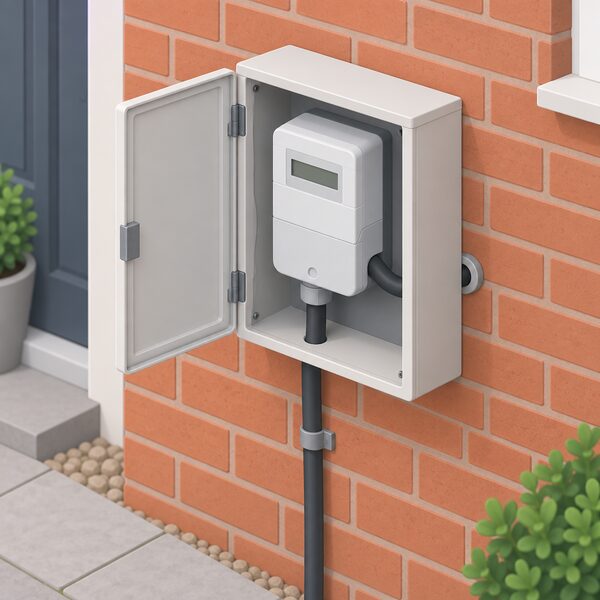
Frequency depends on the reference. Which? describes a tracker where the amount paid changes every three months when the price cap is reset, with most providers guaranteeing a discount on the cap7. Standard variable unit rates can go up or down at any time, usually four times a year to coincide with price cap changes15. A wholesale tracker moves far faster: Octopus Energy's Agile tariff tracks half-hourly wholesale prices and updates its rates daily16.
What moves them is the wholesale market. Wholesale energy prices have been high because of the conflict in the Middle East13. On the capped rates, each unit of electricity costs more than four times as much as a unit of gas17, which is the single most important number for any electrically heated home considering a tracker. Electricity unit rates have been held roughly stable into October 2026, helped by the Government cutting VAT on electricity, while gas unit rates rose from 6.29p per kWh last winter to 8p from 1 October, up around 27% year on year, with a further 12% rise forecast for January 20274.
Standing charges behave differently again. On tracker tariffs they usually stay fixed for a set period, usually 12 months18, which is why a tracker's headline discount and its actual effect on a bill can diverge. Ofgem has consulted on a requirement to offer lower standing charge tariffs19.
Who a tracker suits, and where it falls short
Nobody is placed on time-varying pricing without asking for it: a supplier cannot charge based on when energy is used unless the customer specifically chooses such a tariff20. Smart Energy GB is equally clear that time-of-use tariffs will not be appropriate for all consumers and that some people will always need to use energy at particular times21.
The pattern of benefit follows consumption. Where a tracker discounts the unit rate, higher usage means higher savings, and lower usage means less1. Where it discounts the standing charge instead, that structure is better for lower-consumption households than a tracker where the discount is on the unit rate1.
Technology in the home changes the arithmetic. The Energy Saving Trust asks directly whether a household has, or plans to get, an EV, heat pump or home battery, because these make smart tariffs much more valuable22, and advises households with a heat pump alone to look for a dynamic tariff or a heat pump tariff23. The Welsh Government makes the same point for green tech such as a heat pump, battery storage or an electric or hybrid car. Solar and battery tariffs usually combine an export tariff with a smart time-of-use tariff, offering different rates at different times for both importing and exporting23.
- Likely to gain: households that can move a large share of load into cheap windows, and homes with a heat pump, EV or battery22
- Likely to gain less: low-consumption homes on a unit-rate-discount tracker1
- Poor fit: households whose demand cannot be moved, since time-of-use pricing is not right for everyone21
- A live risk: no price cap protection if wholesale prices rise beyond the cap's limit1
Adoption is still thin. Ofgem records that the number of heat pump users on specialised tariffs is low, less than 5%24. The Energy Saving Trust, which examined over a million heat pump, tariff and technology combinations, states that it cannot recommend specific tariffs from energy suppliers25.
EDF's Heat Pump Tracker: two discounted windows a day
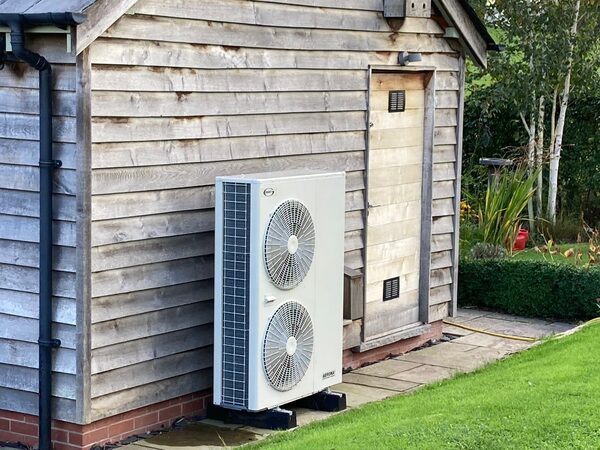
EDF's Heat Pump Tracker is a banded tariff rather than a daily-repricing one. It has a day unit rate set at EDF's standard tariff rate in the region, a tracker rate that applies between 4am and 7am and between 1pm and 4pm, and a daily standing rate aligned with the regional standard tariff rate with no discount on it5. During the discounted hours the reduction is 10p per kWh off the standard regional rate5, a figure Which? reported in the same terms26.
"A daily standing rate aligned with the Standard tariff rate in your region. There is no discount on this rate"
The six discounted hours split into an early-morning and an early-afternoon block, which suits a heat pump run to warm the fabric of a home and heat water before the evening peak. Other suppliers band differently: ScottishPower's Heat Pump Saver has a cheaper rate of 14p per kWh between 11am and 4pm every day, with a standard rate for the remaining hours26. EDF also offers other tariffs for heat pumps and electric vehicles, and its Ensure tariff is structured as a standing charge discount with tracker unit rates that change every three months27.
Rates by region
| Region | Tracker rate (4am-7am, 1pm-4pm) | Day unit rate | Daily standing charge |
|---|---|---|---|
| South East | 16.88p per kWh | 26.88p per kWh | 52.32p |
| Eastern | 16.61p per kWh | 26.61p per kWh | 51.84p |
| Southern | 16.47p per kWh | not stated | 47.81p |
| North East | 15.46p per kWh | 25.46p per kWh | not stated |
| North West | 16.49p per kWh | not stated | 45.68p |
| North Scotland | 16.35p per kWh | not stated | not stated |
| South West | not stated | not stated | 55.58p |
All rates as published by EDF5. Where both are given, the gap is exactly the stated discount: in the South East, 26.88p per kWh day rate less 16.88p per kWh tracker rate. Regional spread in the standing charge alone runs from 45.68p per day in the North West to 55.58p per day in the South West5. For comparison, the capped standing charge is 54.83p per day from 1 October 2026 and the capped electricity unit rate 26.32p per kWh4; in the South Wales region the capped single rate was 26.33p per kWh with a standing charge of 57.84p per day28. In Scotland, capped direct debit electricity rates for January to March 2026 were 27.83p per kWh for southern Scotland and 28.36p per kWh for northern Scotland29.
Eligibility, evidence and the switching process
Two conditions sit behind any heat pump tracker: the hardware and the meter. EDF states it may ask anyone who signs up to provide evidence of their heat pump installation, which could be an MCS certificate or a photo5. Most EV tariffs likewise require a smart meter as well as a charger16, and the same logic applies to heat pump bands, because the supplier must read consumption by time of day.
The MCS certificate is the usual document. For heat pump installations, metering information must be added to the MCS certificate30, and metering for performance has been required for all heat pump installations accredited from 22 May 201831. Where installation work is carried out by a registered competent person under Building Regulations, the compliance certificate, or a copy of the information on it, must be given to the building control authority32.
The steps EDF sets out are short:
- Submit the application with details of the heat pump installation.
- EDF checks the information, which takes up to five working days5.
- For new customers, the switch usually takes around 14 days and includes setting up the smart meter to connect with the supplier every 30 minutes5.
Related conditions are covered in do I need a smart meter for an EV or heat pump tariff and which tariffs your meter allows.
Exit fees, reviews and what a tracker asks of a household

Contract terms vary more on trackers than on any other tariff type. Tracker contract lengths are usually fixed, but while some trackers have exit fees, others do not1. Exit fees apply only to fixed-term deals, including some trackers, and cannot be charged in the last 49 days of the tariff7. Most fixed tariffs include exit fees for each fuel, payable if the customer switches before the end of the contract18, often £100 per fuel7. EDF states there are no exit fees or tie-ins on its Heat Pump Tracker, so a customer who finds it does not work can switch to another supplier5.
Where a fee does apply, the British Gas Energy Trust's guidance is to compare it with the savings a switch could make, because moving to a cheaper tariff could still save money overall33, and to review the tariff regularly while remaining aware of any exit fees34. uSwitch suggests customers on a price-capped standard or variable tariff run a comparison to see what fixed or tracker deals are available4.
Reviews are worth diarising because cap trackers move with the cap. Ofgem's review for the January to March 2027 cap is due on 25 November 2026, the April to June 2027 review on 23 February 2027, and the July to September 2027 review on 26 May 202711. Customers paying by standard credit, that is cash, cheque or bank transfer, are hit with a significant price premium4. Tariffs are also not always portable: on a fixed deal a supplier may allow the tariff to move to a new home, but rates may change by region5.
Further detail sits in exit fees and tariff contract terms and comparing energy tariffs.
Trackers and energy independence: what dependence remains
A tracker does not reduce the volume of energy a household buys. It changes the price signal, and in doing so it moves the household from a supplier-managed price to a market-linked one. The dependence on the grid, the supplier and the wholesale market is unchanged, and the buffer the price cap provides is largely given up1.
What a tracker can do is reward capability the household already owns. Citizens Advice supports standardising tariff pricing data as an important step in enabling consumer-led flexibility35. The benefit is realised through equipment that can shift load: a heat pump with a schedule, a hot water cylinder, a battery. Solar Heat Europe's argument for thermal energy storage is exactly that a continuous energy supply can be guaranteed independently of weather conditions and volatile energy markets36. Storage, in other words, is what turns a volatile price into a controllable cost. The Energy Saving Trust notes that switching to a heat pump time-of-use tariff, charging different rates at different times of day, can save money on bills37.
Geography matters too. Energy prices were not capped in Northern Ireland, where suppliers have the flexibility to set their tariffs independently to reflect their costs of operating38, so the cap-versus-tracker comparison that frames the market in Great Britain does not apply there in the same form. See tariffs in Northern Ireland, tariffs in Scotland and the wider guide to UK energy tariffs.
The honest summary is narrow: a tracker converts a fixed household outgoing into a variable one, exposes it to a market driven by events outside the household's control, and pays back only to the extent that consumption can be moved or stored. Where neither is possible, the exposure remains and the discount does not.
Sources38 cited
- What is a tracker tariff?, uSwitch, 2026-06-26
- Choosing an energy tariff, Citizens Advice, 2023-08-24
- Types of energy tariff, Confused.com, 2025-11-03
- The Ofgem price cap, End Fuel Poverty Coalition, 2026-08-26
- Heat Pump Tracker tariff, EDF, 2026-09-17
- Check if you are owed money on your energy bill, Ofgem, 2026
- How to switch energy supplier, Which?, 2026-05-15
- How consumer-led flexibility works in power markets, Energy UK, 2026-04-14
- Time of use tariffs: all you need to know, Energy Saving Trust, 2026-05-20
- Energy flexibility, Smart Energy GB, 2026-08-17
- What is the energy price cap, Energy Saving Trust, 2026-09-07
- Energy bills support: an update, National Audit Office, 2024-11-14
- When is the best time to switch my energy deal?, uSwitch, 2026-08-26
- The history of Ofgem's energy price cap, energyhelpline, 2026-09-20
- Winter countdown: four weeks to escape rising energy bills, uSwitch, 2026-09-09
- How to choose the best energy company, Which?, 2026-01-19
- What it really costs to heat a home in the UK with a heat pump, Carbon Brief, 2026-01-30
- Energy tariffs explained, uSwitch, 2026-02-17
- Requirement to offer lower standing charge tariffs, Ofgem, 2025-09-24
- Switching supplier, tariffs and bills, Smart Energy GB, 2026-03-16
- Time-of-use tariffs: the benefits, Smart Energy GB, 2026-04-24
- Should I switch to a time of use tariff?, Energy Saving Trust, 2026-01-23
- Tariffs for renewable technology, Energy Saving Trust, 2026-08-12
- Smart meter Guaranteed Standards of Performance draft impact assessment, Ofgem, 2025-08
- Flexible futures: integrating smart tariffs with low-carbon home technologies, Energy Saving Trust, 2026-07-10
- A heat pump might be a lot cheaper than you think, Which?, 2024-11-26
- EDF Energy tariffs, energyhelpline, 2026-09-20
- Economy 7 explained, uSwitch, 2026-09-08
- Balancing investment in clean heat and energy efficiency in Scottish housing retrofit, ClimateXChange, 2026
- Eligible heating systems, Domestic RHI, Ofgem, 2026-09-17
- Domestic RHI guide to metering, Ofgem, 2026
- Approved Document L, Volume 1: Dwellings, UK Government, 2026
- How to check your energy tariff and switch, British Gas Energy Trust, 2026-07-30
- Energy saving tips for UK households, British Gas Energy Trust, 2026-04-21
- Response to DESNZ's tariff interoperability consultation, Citizens Advice, 2026-01-19
- Thermal energy storage, Solar Heat Europe, 2025-01-28
- Heat pump fact check, Energy Saving Trust, 2026-07-01
- Energy Price Guarantee up until 30 June 2023, UK Government, 2026-09-17
 Tracker vs Price CapTracker tariffs can cost more than the price cap, so how do they compare?
 The Full Tariffs GuideWhich energy tariff suits how you live, and will switching really save you money?
 The Full Energy Bills and the Price Cap GuideWondering why your bill went up even when you used less power?
 Energy Price CapThe price cap sets the most you pay for each unit of gas and electricity, plus the daily standing charge, but not your total bill.
 Tariff Rules and ProtectionsOfgem decides which energy tariffs suppliers can offer you, so it's worth knowing what they must provide.
 Wholesale Prices and BillsGas prices around the world keep changing, so why do your bills move so slowly, and why does gas still set what you pay for electricity?