In this guide
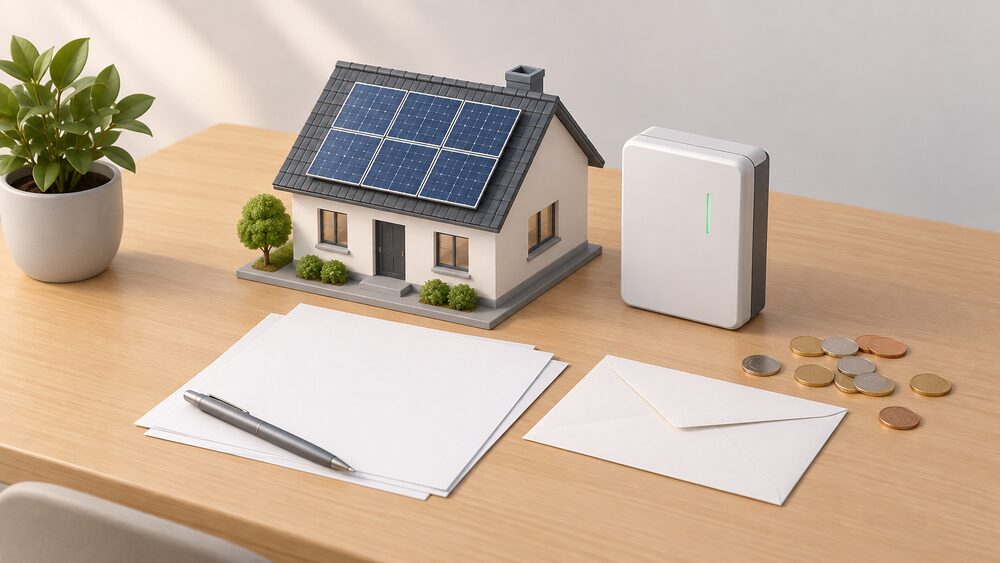
A solar battery tariff is an import tariff built for a home that generates its own electricity and stores it. It combines a smart time of use import rate, with different prices at peak and off-peak times, with an export rate that pays for what the home sends to the grid. Energy Saving Trust describes the structure plainly: "These usually combine an export tariff with a smart time of use tariff."1
The point of the combination is that the two halves work on the same battery. Cheap overnight import fills the battery; the battery covers the home through the expensive evening; surplus solar and any deliberate evening discharge earn an export payment. Which Energy Saving Trust says is worth considering "especially useful if your solar panel system is bigger than average" or if a heat pump is smaller than average1.
The tariffs in this market are not uniform. Some are dynamic, tracking wholesale prices every half hour. Some are fixed-window. Some are reserved for customers who bought their panels and battery from the supplier that runs them. All of them depend on a smart meter, an export meter point, and a battery the supplier is allowed to control.
What a solar battery tariff is, and how it differs from a standard tariff
A standard tariff charges one unit rate for every kilowatt hour, whenever it is used. A solar battery tariff splits the day. Dedicated smart storage battery tariffs "typically have cheaper rates overnight so you can charge up your battery and use the power during the day when it'd be pricer to buy", according to Which?6. The export half pays for electricity going the other way, usually at a rate that is higher in the evening peak than in the middle of the day.
That shape only makes sense with storage. Energy Saving Trust states the eligibility condition directly: "You need solar panels and a battery to get this"1. The same guidance notes that solar-specific tariffs usually require battery storage as well as solar panels, and that the household gets its energy from that supplier7.
There are two broad routes. One is a dedicated solar and battery tariff, designed as a single product for the combination. The other is a good Smart Export Guarantee tariff matched with a dynamic import tariff or an Economy 7 tariff, assembled by the household rather than sold as a package1. The second route gives more choice of supplier but puts the timing decisions on the household rather than on the supplier's automation.
The market is wider than the four named tariffs on this page. Smart time of use tariffs are offered by British Gas, E.ON Next, EDF Energy, Octopus Energy, Ovo Energy and Scottish Power, as well as smaller firms including 100Green, Fuse Energy, Good Energy and So Energy6. Several providers offer dedicated smart storage battery tariffs, including British Gas, E.ON Next and EDF Energy6. Some smaller suppliers, including 100Green, offer export tariffs for solar panel users that are not covered by the Smart Export Guarantee8.
For a household's independence, the import half of the tariff is what reduces reliance on grid prices at the expensive hours. The export half turns the home into a small generator with a contract. Neither removes the grid connection, and both depend on a supplier's systems working.
The tariffs available in the UK
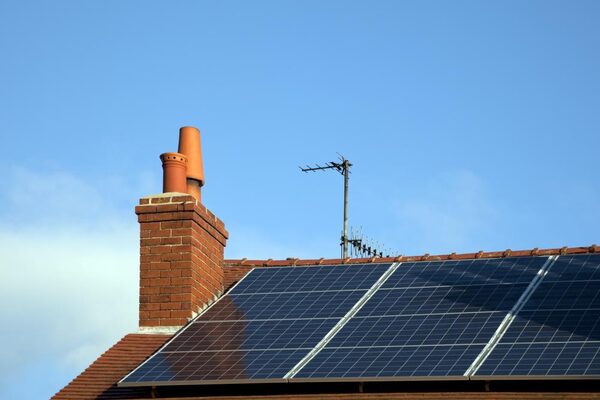
Four arrangements are documented in detail here, and they differ in how much control the household keeps.
| Tariff | Structure | Who it is for |
|---|---|---|
| Next Optimise | Dynamic import and export, updating every half hour2 | E.ON Next customers with solar and a battery |
| Octopus Flux | Import tariff with battery storage included, no fixed end date5 | Octopus Energy customers with solar and a battery |
| Intelligent Octopus Flux | Two-rate tariff with matching import and export prices, automated battery management charging when power is cheapest and exporting between 4pm and 7pm4 | Customers on the Intelligent Flux import tariff who had solar PV and battery storage and allowed Octopus to control their battery exports5 |
| Good Energy Solar Savings Exclusive | 25p per kWh export4 | Good Energy customers who had solar panels and a battery installed by Good Energy Solar4 |
Two of these are reserved for a supplier's own installation customers. The E.ON Next Export Premium Plus tariff, recorded in Ofgem's Smart Export Guarantee annual report, "was exclusive to 'E.ON Next' import customers who had had both solar panels and a battery solution installed by E.ON from 1st January 2024"5. Good Energy's Solar Savings Exclusive follows the same pattern, at 25p per kWh for customers who had both installed by Good Energy Solar, against 15p per kWh on the standard Good Energy Solar Savings tariff4.
Reserved export tariffs are not unusual. Examples of SEG tariffs reserved for customers include E.ON Next Premium, Octoplus Flux, and So Energy So Bright8. The practical consequence is that a household that bought its system from one company may not be able to take the best export rate from another.
Next Optimise: a dynamic tariff that tracks wholesale prices every half hour
Next Optimise is E.ON Next's dynamic product. The company describes it as "a dynamic tariff, where your import and export prices update every half hour based on real-world supply and demand"2. The household gets "access to live wholesale prices that update every 30 minutes"2.
That is a different proposition from a fixed-window tariff. There is no guaranteed cheap period at a set hour; the price follows the market, so the cheapest half hours move with wind output, demand and the time of year. The battery and the supplier's forecasting do the work of deciding when to charge and when to discharge.
The savings evidence is thin and comes from the supplier. E.ON Next states that "our pilot customers reduced their bills by around £18 a month compared to a modelled baseline of similar homes on a standard SEG and standard import tariff"2. That is a pilot result against a model, not a measured comparison across a full year, and it is the maker's own figure for its own product.
Independent modelling puts the wider prize higher. Nesta modelled solar PV plus battery storage responding to price signals against a pass-through tariff with a standard heat pump profile and found "an even greater saving of £773/year on average"3. That figure is modelled, not observed, and it describes a household with a heat pump as well as solar and storage.
The tariff carries no exit fees: "None. Complete freedom to switch if your needs change."2 For a household weighing independence, that matters, because a dynamic tariff can be left if the price pattern stops suiting the home.
Octopus Flux and Intelligent Octopus Flux: fixed windows versus automated control
The two Octopus products sit at opposite ends of the control spectrum.
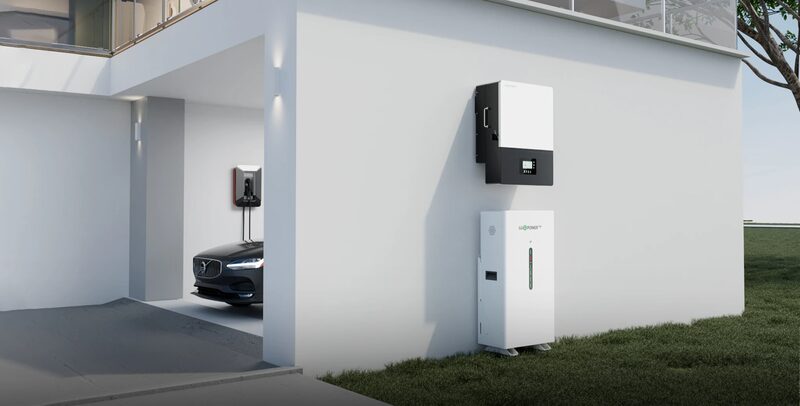
Octopus Flux is the simpler arrangement. It is recorded as an import tariff that includes battery storage, with no fixed end date5. The household keeps the scheduling decisions, using the tariff's windows to charge and discharge.
Intelligent Octopus Flux adds automation. It is described as a "two-rate tariff with matching import and export prices, automated battery management charging when power is cheapest and exporting between 4pm and 7pm"4. The eligibility condition is specific: it "was available to customers on the 'Intelligent Flux' import tariff, who had solar PV and battery storage but also allowed Octopus to control their battery exports"5. Handing over control of the battery is the price of the automated version.
The wider Octopus smart range shows how the company structures these products. Octopus Energy's Intelligent Octopus tariff has six hours of cheaper electricity overnight10. Intelligent Octopus Go is described as "Octopus Energy's most popular smart tariff"11, and a UK Power Networks trial found that shifting EV charging helped manage renewable energy on the network11.
For a solar and battery household, the choice between the two Flux products is a choice about who decides. Fixed windows leave the household in charge and require the household to act. Automated control removes that labour and removes that discretion at the same time.
Good Energy Solar Savings Exclusive: 25p per kWh export
Good Energy's Solar Savings Exclusive pays 25p per kWh for exported electricity, against 15p per kWh on the standard Solar Savings tariff4. The higher rate is not open to all Good Energy customers. It applies to "Good Energy customers who had solar panels and a battery installed by Good Energy Solar"4.
The tariff is recorded as a 12-month fixed term at 25p5. The standard Solar Savings tariff is variable with no fixed end date at 15p5, and its payment cycle is three months5.
The gap between the two rates is the clearest illustration of how this market works. The export rate is not a market-wide price; it is a supplier's offer, and the best version of it is tied to buying the hardware from the same company. A household with an existing system installed by someone else cannot access the 25p rate.
Good Energy's general tariff rates change on 1 October 2026, covering the Good Energy Standard, Deemed and Default, and Traditional Prepayment and Smart Prepayment tariffs12. That is a separate matter from the export rate, but it shows that the import side of a solar and battery arrangement is not static.
Eligibility and hardware: panels, battery, smart meter and Export MPAN
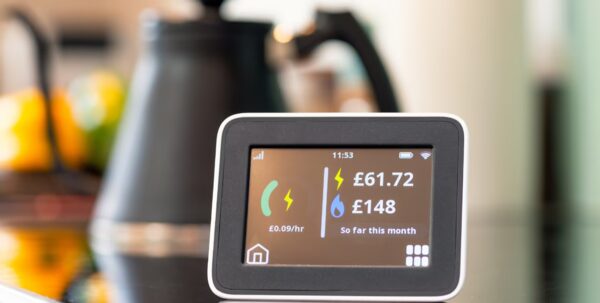
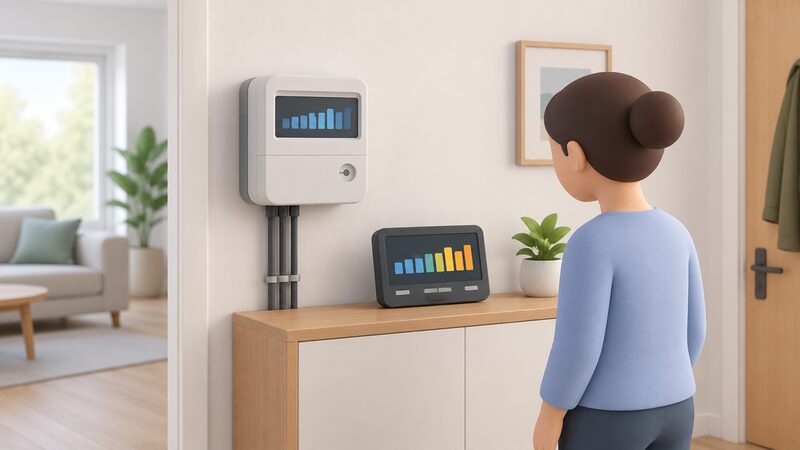
The hardware list is short and firm. Solar panels and a battery are the starting point1. A working smart meter is required, and for SEG tariffs the solar panel system must have been installed by an MCS-certified installer13. Only Microgeneration Certification Scheme or Flexi-Orb approved solar installations with suitable export metering are eligible for Smart Export Guarantee payments14.
The metering requirement is the one households most often miss. A household needs "a meter that can give half-hourly readings, generally this will be a smart meter, to sign up to a tariff that pays for exporting solar electricity"15. The licence conditions behind the Smart Export Guarantee require an eligible installation to "have an export MPAN to manage exported electricity volumes to the SEG licensee"16.
The generating technologies that can qualify are wider than solar alone: solar PV panels, a wind turbine, hydro, anaerobic digestion and micro combined heat and power12. Home Energy Scotland lists the same set: solar photovoltaic panels, a wind turbine, hydroelectricity, anaerobic digestion, and micro combined heat and power17.
Smart meters are optional, but the tariff consequences are not. "Smart meters are optional, but without one, you miss out on easier billing and innovative tariff options"18. Some tariffs are only available to customers with smart meters, or to those who agree to have one fitted19. The same pattern applies to heat pump and EV tariffs: "You'll also need a smart meter to get one of these tariffs."20
There are known gaps. Households with storage heaters on Economy 7 or Economy 10 may find their supplier does not offer smart meters that work with those tariffs yet21. Economy 10 tariffs do not work with existing smart meters, and many suppliers do not sell tariffs for them22. For a household in that position, the solar and battery tariff market is effectively closed until the metering is sorted.
How the automation works, and what it does to the battery
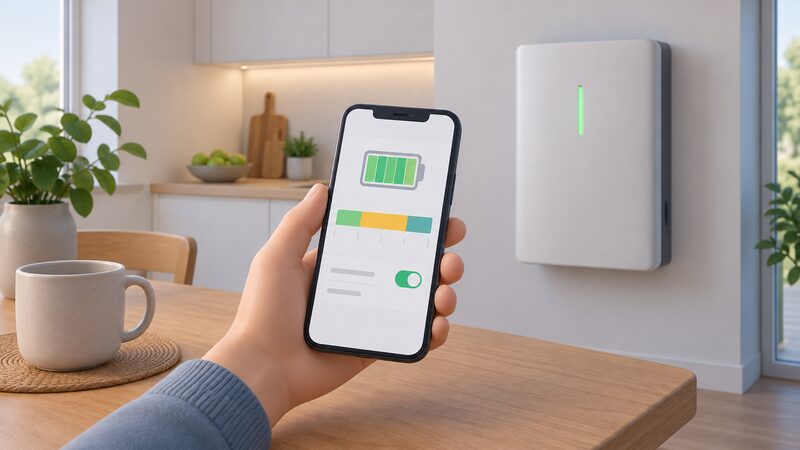
Automation is the feature that separates these tariffs from a plain time of use rate. The battery is set "to charge up when electricity is cheap, and to discharge when electricity is expensive"1. On an automated tariff the supplier's system issues those instructions rather than the household.
The general behaviour of a home battery is well documented. A battery stores excess solar electricity or charges when the tariff is cheap, and the stored energy is used at night or when prices are high23. With a battery and no solar panels, charging stops when the battery is full and it discharges when the next cheap tariff period ends, automatically23. When the battery is full, surplus solar electricity can be sold back to the supplier through a Smart Export Guarantee tariff23.
The failure mode is the part households ask about. E.ON Next states that "your battery will still work normally if your internet connection drops. It will continue to store your solar energy and" match output to household usage, falling back to default self-consumption settings, with active forecasting paused until the connection is restored2. The battery does not stop working; it stops being optimised.
Where these tariffs fall short
The limitations are structural, not teething problems.
- Smart meter dependence. Cheaper tariffs are only available with a smart meter, and going without one means "excluding yourself from cheaper tariffs which are only available if you have a smart meter"24. To benefit properly from smart appliances, electric vehicles and home batteries, a household needs to be on a smart tariff25.
- Beta status and withdrawal. Intelligent Octopus Flux was recorded as temporarily unavailable because of volatile prices9. A tariff that can be paused is not a guaranteed arrangement.
- No guaranteed savings. The £18 a month figure is a pilot result against a modelled baseline2, and the £773 a year figure is modelled3. Neither is a promise.
- Compatibility limits. Some smart storage battery tariffs only work with specific systems6, so the tariff may not fit the battery already installed.
- Feed-in Tariff friction. A household claiming the Feed-in Tariff without a smart meter cannot take the meter readings required to calculate payments if the generation meter fails26.
- Reserved rates. The best export rates are often tied to buying the system from the supplier that pays them4.
The independence question is worth stating plainly. These tariffs reduce a household's exposure to peak import prices and give it a contract for what it exports. They do not remove the grid connection, the supplier relationship, or the dependence on a working smart meter and a working internet connection. The battery is the household's asset; the optimisation running it belongs to the supplier.
Sources27 cited
- Tariffs for renewable technology, Energy Saving Trust, 2026-08-12
- Save smarter on solar and battery with Next Optimise, E.ON Next, 2026-04-30
- Domestic heat pump flexibility modelling, Nesta, 2024-11-19
- Smart Export Guarantee rates: the best and worst SEG tariffs, Which?, 2026-04-24
- Smart Export Guarantee Annual Report Year 5, Ofgem, 2025-12
- Time of use tariffs explained, Which?, 2026-04-23
- Solar panel installation, Energy Saving Trust, 2026-09-07
- Can I switch energy supplier if I have solar panels?, Uswitch, 2026-06-04
- Octopus temporarily pause new sign-up to Intelligent Octopus Flux and Flux tariffs, MoneySavingExpert Forum, 2025-03-05
- How to choose the best energy company, Which?, 2026-01-19
- UK first trial shows shifting EV charging can help manage renewable energy, UK Power Networks, 2024-06-24
- Energy incentives and schemes, South Cambridgeshire District Council, 2026-09-17
- Solar panel installation, maintenance and repair, NICEIC, 2026-09-17
- Smart Export Guarantee, MCS Certified, 2026-09-15
- Plug-in solar panels, Which?, 2026-08-24
- Draft licence conditions, Department for Business, Energy and Industrial Strategy, 2026-09-17
- Offset bills with green energy, Home Energy Scotland, 2026-09-20
- Smart meters, Welsh Government, 2026
- How to switch energy supplier, Which?, 2026-05-15
- Deciding if a heat pump is right for you, Citizens Advice, 2025-12-08
- Smart meter problems and solutions, Which?, 2026-03-16
- Gas meters and electricity meters: what you need to know, Which?, 2026-01-16
- Battery storage, Energy Saving Trust, 2026-08-19
- Do you have to have a smart meter by law?, Smart DCC, 2026
- Smart homes, lower carbon footprint, Energy Saving Trust, 2026-01-21
- Most common solar panel problems, Which?, 2026-09-20
- Solar panel problems and how to solve them, Which?, 2026-03-26
 Tariffs and Energy IndependenceA tariff decides what you pay for power from the grid and what you get paid for sending solar back.
 Solar Export PaymentsIf you have solar panels, how do you actually get paid for the electricity you send back to the grid?
 EV Tariffs and Home ChargingHow EV-specific import tariffs and charging bolt-ons work, including supplier-controlled charging where the energy company decides when the car draws power, which charge points each scheme supports, and what a household needs in place.
 Batteries and Smart TariffsA home battery can earn its keep if your electricity prices change through the day.
 Electric Vehicle TariffsCharging an electric car at home can cost far less overnight, but only on special electricity plans.
 Supplier-Controlled ChargingSmart charging tariffs let your energy supplier decide when your car charges, usually overnight when electricity is cheaper.