

In this guide
British Gas is the largest supplier in the British market, and its tariff range is correspondingly wide: standard fixes, an electric vehicle tariff, a storage heater tariff, variable deals and export payments for households with solar. The company is a subsidiary of Centrica, a multinational that owns multiple companies with similar interests in the market1. That ownership matters for the independence question, because a British Gas tariff keeps a household inside a large corporate supply chain rather than outside it.
The headline numbers a household needs are these. British Gas charges home energy customers £75 per fuel for cancellations, and its average exit fee is £621. Just one in twenty of its tariffs, 6%, come with no exit fees at all2. On the gas side, the price cap unit rate for Great Britain was 7.33p per kWh in July to September 2026 and 7.97p per kWh for October to December 20263. The cap does not apply to fixed-rate tariffs, so a British Gas fix is not capped1.
This page sets out what is on offer, what the exit fees and price rises look like, how the green claims hold up, and what owning a British Gas tariff means for a household trying to reduce its dependence on the grid and on a supplier.
Fixed, EV and export tariffs: what is on offer
British Gas offers a few different types of fixed rate tariff, including a standard fix, an electric vehicle tariff and a Dimplex Quantum tariff for storage heaters1. On the variable side there are two: a standard variable tariff and a pay-as-you-go tariff1. The fixed range is where most of the product development has happened.
EV Power is the electric vehicle tariff, described as the current version as of July 2026, with households signing up to that version able to use its fixed prices until their contract ends1. Charge Power launched in January 2026 as a fixed-rate tariff, and Store&Reward launched in June 2026 as a fixed tariff for Sunsave Home Battery customers, alongside Store&Save, a flat-rate tariff reserved for the same group1. The Samsung Weekend Saver Fix is an exclusive tariff tied to buying eligible Samsung appliances, with purchases made between 3 November 2025 and 31 October 2026 qualifying1.
On export, British Gas stopped offering its 15.1p per kWh Export and Earn Plus tariff in June 2026 and replaced it with Export Premium and Export Extra4. Export and Earn Flex remains listed as a British Gas export payment option4. The Smart Export Guarantee is the framework behind these payments, and the rates suppliers pay vary widely across the market.
| Tariff | Type | Key detail |
|---|---|---|
| Standard fix | Fixed | Standard fixed-rate deal1 |
| EV Power | Fixed, EV | Current version as of July 20261 |
| Dimplex Quantum | Fixed, storage heaters | For storage heater households1 |
| Charge Power | Fixed | Launched January 20261 |
| Store&Reward | Fixed, battery | For Sunsave Home Battery customers, launched June 20261 |
| Store&Save | Flat rate, battery | Reserved for Sunsave Home Battery customers, started June 20261 |
| Samsung Weekend Saver Fix | Fixed | Tied to eligible Samsung appliance purchases, 3 November 2025 to 31 October 20261 |
| Export and Earn Flex | Export | British Gas export payment option4 |
| Export Premium and Export Extra | Export | Replaced Export and Earn Plus in June 20264 |
The pattern is a supplier building tariffs around specific hardware: an EV, a storage heater, a home battery, a Samsung appliance. Each ties the tariff to a purchase, which is a commercial arrangement rather than an independence one. A household on one of these deals is still buying its energy from British Gas, and the hardware does not change that.
Price rises: 8.4% on gas after a 6.4% cap rise
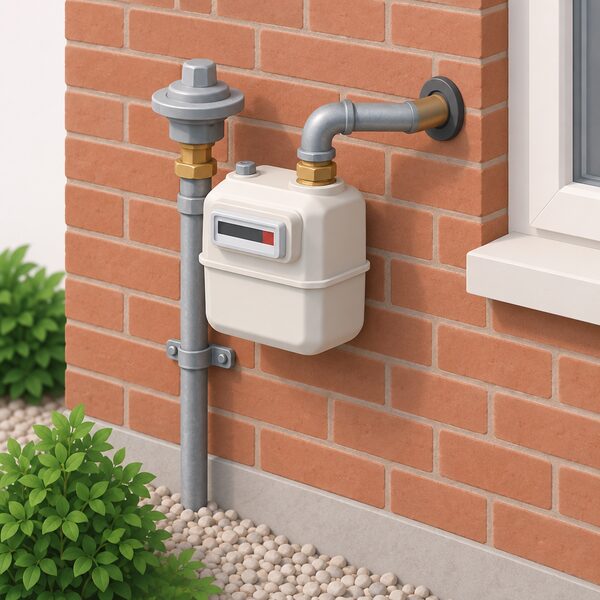
Gas unit rates under the Ofgem price cap rose from 6.29p per kWh last winter to 8p from 1 October, up around 27% year on year1. The cap itself moved in steps: a 6.4% rise on 1 April for those on price-capped tariffs2, and an increase in the average household gas and electricity bill to £3,549 per year on 1 October3. Standing charges are up 8% for gas compared with pre-crisis levels4.
Wholesale movement sits behind those numbers. UK gas prices were 38% up year on year in early trading on 8 April5, and UK natural gas prices spiked by more than 124% month on month and 65% up year on year, the highest level since the conflict began6. UK and European wholesale gas prices increased by more than 30% between the week beginning 14 February and the week beginning 14 March7, and gas prices rose 250% since January and 70% since August according to industry group Oil and Gas UK8. One estimate puts an extra £155 on the bill due to wholesale gas price rises, of which about £130 (82%) is on the gas bill9. British Gas raised gas tariffs by 8.4% the previous month10.
British Gas raised gas tariffs by 8.4% in November 2013, following an earlier increase that added around £123 to the average annual bill for British Gas customers5. The company's average bill was £1,190 in October 2013, rising to £1,297 the following year, an increase of £1076. Those figures are historical, but they show the pattern: supplier-led price rises on top of whatever the cap allows.
The cap itself has moved sharply since. The latest unit prices for gas are around 120% higher than their mid-2021 levels7. The cap level for Great Britain was 7.33p per kWh for gas in July to September 2026, rising to 7.97p per kWh for October to December 20263. The gas bill figure under the cap is £1,3793.
Regional variation is significant. Under the cap for October to December 2025, a London prepayment customer at 12,000 kWh saw an annual gas figure of £826.21, a Northern customer on other payment methods £837.33, a South East prepayment customer £798.62, a Southern prepayment customer £821.54, a North West standard credit customer £897.29 and an Eastern standard credit customer £893.828. 21 and another £849.70 for the same period and consumption, so the regional numbers should be read as indicative rather than exact.
For comparison, the Energy Price Guarantee averaged gas at 10.3p per kWh for direct debit customers in Great Britain with typical consumption9. That scheme applied to fixed rate tariffs and is now closed to new applicants.
Exit fees: only 6% of tariffs come without them
Exit fees are the clearest cost of leaving a British Gas fixed deal. British Gas charges home energy customers £75 per fuel for cancellations, and the firm's average exit fee is £621. Across the market, exit fees on affected fixed tariffs range from £50 to £4002. Just one in twenty British Gas tariffs, 6%, come with no exit fees2. For comparison, 12% of E.ON's tariffs and 14% of EDF's have no exit fees2.
The position depends on the tariff type. A sample British Gas bill shows a customer on a variable deal, which does not usually include exit fees, whereas a fixed deal would carry fees that might apply10. So the 6% figure is about the fixed range, and a household on the standard variable tariff is not in the same position.
Awareness is poor. As many as three in ten consumers say they do not know whether an exit fee applies to their tariff, at 31%11. That is a gap worth closing before signing anything, because the fee is charged per fuel, so a dual fuel household leaving both could pay twice.
The wider rules on contract terms, notice periods and what a supplier must tell you before a price rise are set out in the guidance on exit fees and tariff contract terms. For households weighing whether to fix at all, the comparison of fixed and variable tariffs covers the trade-off between certainty and flexibility.
Green credentials: 100% renewables in green tariffs
British Gas green tariffs are backed by 100% renewables for the period 1 April 2024 to 31 March 202512. That is the green tariff product specifically. The supplier's general fuel mix is different: British Gas reports 76% renewables, and its non-renewable tariffs are predominantly sourced from nuclear at 63% and natural gas at 28%1. Citizens Advice lists British Gas renewables at 20% on its fuel mix disclosure14.
The gap between those figures is the gap between a green tariff and the standard supply. Green tariffs usually promise 100% renewably sourced electricity as a minimum, with some including renewably sourced gas15. Uswitch rates the greenest tariffs by certain criteria under its Green Accreditation scheme, which requires 10% of your gas certified as renewable12.
Green gas is the weak point across the market. Green gas is more difficult due to there being little renewable gas produced in the UK16. Some renewable tariffs pay a proportion of your bill into funds that support either renewable energy projects16. For a household wanting genuine independence from gas, a green tariff does not deliver it: the gas still comes through the same network, and the renewable content is certified rather than physical.

Business tariffs: 9.4p per kWh on the 1-year tariff
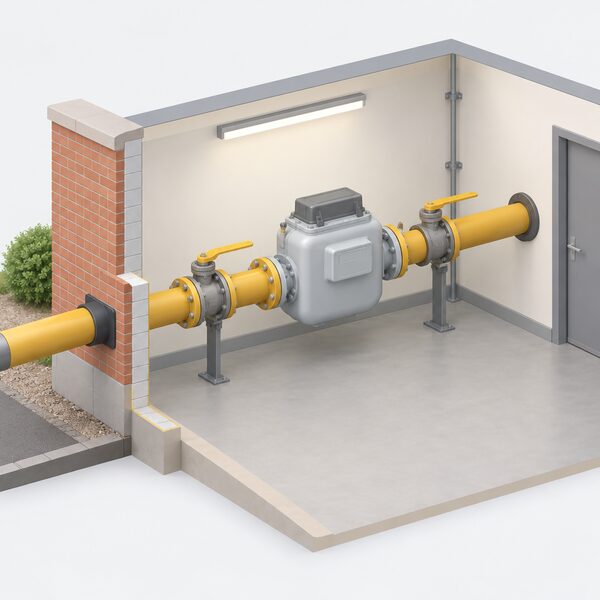
British Gas business gas unit rates were 9.4p per kWh on the 1-Year tariff, 8.4p per kWh on the 2-Year tariff and 8.1p per kWh on the 3-Year tariff, as of March 20261. 4p and another giving 26.2p for the same tariff and date, so the 1-Year rate should be treated as unresolved.
For context, EDF Energy business tariffs at an example consumption of 25,000 kWh per year were 9.9p on the 1-Year fixed, 9p on the 2-Year fixed and 8.7p on the 3-Year fixed1. The pattern across both suppliers is that longer fixes carry lower unit rates, which is the opposite of the domestic market's usual shape.
Zero standing charges are also available for business tariffs, and work in the same way as domestic tariffs that do not include a standing charge17. That is a genuine difference from the domestic position, where none of the big six suppliers currently offers zero standing charge tariffs17.
Business customers are outside the domestic price cap, so the cap levels quoted elsewhere on this page do not apply. The gas benchmark maximum charges under the cap for July to September 2026 ranged from £745.22 in the South East on prepayment to £842.13 in London on standard credit, at 9,500 kWh18. Those are domestic figures and are given here only to show the scale a business tariff sits outside of.
What owning a British Gas tariff means for energy independence
A British Gas tariff keeps a household on the gas grid and on a gas supplier. The UK is a net importer of natural gas, importing more than it exports, which makes it vulnerable to global price volatility19. Wholesale gas prices rose by more than 30% between the week beginning 14 February and the week beginning 14 March 202220. No domestic tariff insulates a household from that, because the gas itself is bought on the same international market.
The dependence has several layers. There is the physical dependence on the gas network. There is the commercial dependence on British Gas as supplier, and on Centrica as owner1. There is the contractual dependence created by exit fees, which at £75 per fuel and an average of £62 make leaving a fixed deal a costed decision1. And for households on the EV, battery or storage heater tariffs, there is a dependence on specific hardware continuing to work with the tariff.
What a household can control is the tariff type and the timing. Shopping around for a fixed tariff has the potential to save some consumers more than £200 compared to the upcoming price cap21. The wider question of how tariff choice interacts with self-generation, storage and export is covered in tariffs and energy independence, and the full landscape of UK tariff types is set out in the energy tariffs pillar guide.
For households with solar, the export side is where a British Gas tariff can pay something back. Export and Earn Flex remains listed as a British Gas export payment option, and Export Premium and Export Extra replaced Export and Earn Plus in June 20264. The rates suppliers pay per kWh are compared in Smart Export Guarantee rates, and the eligibility rules are in SEG eligibility and requirements.
Sources22 cited
- British Gas supplier guide, Energy Helpline, 2026
- Tariff Watch, End Fuel Poverty Coalition, 2026
- What is the energy price cap?, Energy Saving Trust, 2026
- Smart Export Guarantee, Solar Energy UK, 2026
- Energy firms pledge to curb price rises, Age UK, 2013
- Interrogating British Gas's energy bill rise, Carbon Brief, 2013
- Research briefing CBP-10958, House of Commons Library, 2026
- Energy price cap levels, 1 October to 31 December 2025, Ofgem, 2025
- Energy Price Guarantee up until 30 June 2023, GOV.UK, 2023
- How do I read my British Gas energy bill?, Uswitch, 2025
- Understanding consumers' energy tariff choices, Ofgem, 2025
- Green energy, Uswitch, 2026
- Where does my energy come from?, Uswitch, 2026
- British Gas customer service details, Citizens Advice, 2026
- Energy tariffs explained, Uswitch, 2026
- Types of energy tariff, Confused.com, 2025
- Should I get a no standing charge tariff?, Uswitch, 2026
- Energy price cap levels, 1 July to 30 September 2026, Ofgem, 2026
- Research briefing CBP-9340, House of Commons Library, 2022
- Spring Statement 2022, HM Treasury, 2022
- Energy price cap will rise 2 percent in October, Ofgem, 2025
- Raise a dispute: British Gas, Energy Ombudsman, 2026
 British Gas Home Energy InstallationsBritish Gas fits heat pumps and boilers through a national service, with HomeCare cover, a Warm Home Promise and grant-funded installations.
 British Gas Smart Meters and DisplaysWhat a British Gas smart meter installation includes, what the in-home display shows in credit and prepay mode, the 12-month display warranty, booking timescales and the limits to know before you book.
 British GasBritish Gas is the UK's largest household energy supplier, part of Centrica, serving more than 8 million homes and businesses with gas and electricity, plus boiler cover through HomeCare.