

In this comparison
ScottishPower and British Gas are the two names most often weighed against each other by households that have never switched, and the comparison turns on ownership, service record and price rather than on anything either company does to the wires and pipes. British Gas is the biggest energy supplier in Great Britain and Britain's oldest, while ScottishPower occupies the sixth and final spot in the UK's big energy suppliers list and serves around five million households and businesses across Great Britain1.
The two are frequently confused because British Gas trades under the name Scottish Gas north of the border, and both sit inside larger international groups: British Gas is a retail brand of Centrica plc, and ScottishPower has been a subsidiary of the Spanish utility company Iberdrola since 20072. Neither is an independent British company, and neither generates the gas or electricity a household burns in any meaningful sense of the word.
On service, the independent evidence is unflattering to both. Which? gave British Gas two stars out of five for every category its customers rated, and it finished at the bottom of the ranking table alongside EDF Energy and ScottishPower6. Ofgem's July to August 2025 survey found Scottish Power had a significantly lower than average proportion of customers satisfied or very satisfied overall7.
What each company offers in the UK
Both supply gas and electricity to domestic customers across Great Britain, and both are members of the group traditionally called the Big Six, alongside E.ON UK, Scottish and Southern Energy, RWE npower and EDF Energy2. The Big Six label is historical rather than regulatory, but it still describes the shape of the market these two occupy.
British Gas operates three retail brands under Centrica plc: British Gas in England, Scottish Gas in Scotland and Nwy Prydain in Wales2. That means a household in Glasgow searching for ScottishPower may in fact be looking at a British Gas account under a different name. The Energy Ombudsman notes that Scottish Gas matches the company name written on the account holder's bill, which is the practical test for anyone unsure which company they are actually disputing with9.
ScottishPower is headquartered in Glasgow and runs its customer-facing operation at www.scottishpower.co.uk1. The Energy Saving Trust records that it was the first energy company in Great Britain to generate 100% green electricity, a claim about its own generation rather than about the electricity every customer receives8. Its fuel mix disclosure shows gas at 59% and other sources at 5%4.
British Gas has moved into home technology as well as supply. The company has said it is pleased to be bringing plug-in solar technology to its customers, following a government announcement that households can save as plug-in solar panels come to market10. That is a product line rather than a change to the supply business, but it signals where the larger supplier sees household demand heading.
For households in Scotland, Home Energy Scotland provides free and impartial advice funded by the Scottish Government, and acts as a referral partner for eligibility enquiries on area-based schemes11. That advice is independent of both suppliers.
Specifications: what is actually being compared
There is no product specification to compare in the way there would be for a boiler. A domestic energy supply is a contract for gas and electricity delivered through national networks, and the meaningful variables are tariff type, payment method, meter type and the service standards attached to each.
| British Gas / Scottish Gas | ScottishPower | |
|---|---|---|
| Parent company | Centrica plc2 | Iberdrola, since 20075 |
| Trading names | British Gas, Scottish Gas, Nwy Prydain2 | ScottishPower1 |
| Headquarters | Not stated in the sources used | Glasgow1 |
| Position in market | Biggest supplier in Great Britain3 | Sixth and final spot in the big supplier list1 |
| Customers | Not stated in the sources used | Around five million households and businesses8 |
| Fuel mix, gas | Not stated in the sources used | 59%4 |
| Fuel mix, other | Not stated in the sources used | 5%4 |
| Which? overall score | Less than 60%, bottom of the table6 | Bottom of the table with British Gas and EDF6 |
The bill assumptions behind published comparisons matter here. British Gas, Scottish Power and SSE figures have historically been based on Ofgem's industry standard consumption rates of 13,500 kilowatt hours of gas and 3,200 kilowatt hours of electricity12. A household using materially more or less than that will not recognise the headline numbers, whichever supplier it is with.
What the service record shows

Customer service is where the two are most often compared, and the independent evidence is consistent across several years. Which? reported in January 2026 that British Gas, EDF Energy, Ovo Energy and Scottish Power each received just two stars out of five for every category their customers rated, including customer service and value for money6. The same research placed British Gas, EDF Energy and Scottish Power at the bottom of the ranking table with overall scores below 60%6.
That follows an earlier Which? assessment in January 2024, which found British Gas remained the biggest energy supplier in Great Britain but that its customers' feedback resulted in mediocre scores across the board3. The pattern is not new.
Ofgem's own survey work points the same way. In the July to August 2025 findings, Scottish Power and OVO Energy both had significantly lower than average proportions of customers who claimed to be satisfied or very satisfied overall7. There is one countervailing official finding: in the July 2024 wave, British Gas, Scottish Power and Utilita saw a statistically significant increase in the proportion of consumers who said they were satisfied or very satisfied with customer service compared with the previous wave13.
Citizens Advice publishes supplier-level customer service ratings, and ScottishPower's own published results for January to March 2026 record a score of 2.94 out of 5 overall, ranking fourth among large suppliers, with results excluding Northern Ireland8. Both figures are given here because the discrepancy is unresolved.
What it costs, and why the cap is not a supplier price
Neither company sets the price cap. Ofgem sets it, and it applies to default tariffs regardless of which supplier holds the account. What differs is the regional level and the payment method, not the company name on the bill.
The clearest recent figures are for gas in Scotland, where both suppliers compete directly. For 1 July to 30 September 2026, the benchmark maximum gas charge in Southern Scotland on prepayment was £101.64 standing charge and £730.78 annual bill at 9,500 kWh, and in Northern Scotland £101.58 and £730.7015. On standard credit the same period gives £127.52 and £844.50 in Southern Scotland, and £127.57 and £816.45 in Northern Scotland15.
Earlier periods show how far these have moved. For 1 July to 30 September 2025, gas at 12,000 kWh per annum in Southern Scotland was £796.27 on prepayment, £820.67 on other payment methods and £886.25 on standard credit; Northern Scotland was £796.19 and £820.58 on prepayment and other methods respectively16. For 1 October to 31 December 2025, Southern Scotland stood at £119.04 at nil consumption and £804.29 at 12,000 kWh on prepayment17. Going further back, the default tariff cap for 1 April to 30 June 2024 put Southern Scotland gas at £763.74 on prepayment at 12,000 kWh18, and Charge Restriction Period 12b recorded £700.00 for Southern Scotland prepayment and £726.81 for other payment methods19. Charge Restriction Period 15b recorded £742.03 and £777.42 for Southern Scotland gas on prepayment20.
Charge Restriction Period 15b gives Southern Scotland gas on prepayment as £742.03 in one table and £777.42 in another, and the default tariff cap for Southern Scotland appears as both £763.74 and £839.13 for the same 2024 period11. The October to December 2025 Southern Scotland figure at 12,000 kWh appears as both £804.29 and £832.5217. Where the figures disagree, both stand.
ScottishPower's own standard variable price has tracked the cap closely: £1,477 for April to July 2026 under new TDCVs, and £1,663 against a cap of £1,664 for July to October 202621. That is a supplier price, not a cap level, and it applies to ScottishPower's default tariff rather than to any fixed deal.
Company status and ownership
British Gas is a retail brand of Centrica plc, which also trades as Scottish Gas in Scotland and Nwy Prydain in Wales2. It is Britain's oldest energy supplier and remains the biggest in Great Britain3. Centrica's history includes the purchase of a 20% stake in British Energy in 2011, a shareholding rather than a supply arrangement22.
ScottishPower is Spanish-owned despite the name, a subsidiary of the Spanish utility company Iberdrola since 2007, headquartered in Glasgow1. It holds the sixth and final spot in the UK's big energy suppliers list1. In the Smart Export Guarantee Year 5 reporting, ScottishPower submitted its annual data after the 30 June deadline, recorded as incidents in the report, and registered 14,216 installations, or 5.3% of the total23.
Both companies appear in the Energy Ombudsman's dispute service. Scottish Gas matches the company name written on the account holder's bill, and British Gas Evolve customers should continue their dispute with British Gas9. The British Gas Energy Trust funds local charities and advice centres across England, Scotland and Wales25. The Energy Price Guarantee, a separate support measure, applied to England, Scotland and Wales26.
Neither company has failed or entered administration. Both remain trading suppliers, which distinguishes them from several challengers that have collapsed since 2021.
What this means for household energy independence
Choosing between ScottishPower and British Gas changes the name on the bill and the service experience. It does not change where the energy comes from or how exposed a household is to wholesale prices.
The UK has been strongly affected by the energy crisis due to its dependence on natural gas for heating, electricity generation and industry27. That dependence sits behind the household, not in front of it, and no domestic supply contract removes it. Scotland's position illustrates the scale: oil and gas made up 92.7% of Scotland's primary energy including indigenous production and imports, and 78.0% of all energy consumption, with just 10.5% of all electricity generated from oil and gas28. Scotland's rate of energy consumption is still higher than elsewhere in the UK30.
There has been progress on the demand side. Scotland's domestic gas consumption fell 13% by 2024, though gas-consuming properties built in 2023 used 2% more gas than those built in 201531. In 2017 Scotland was spending four times as much per capita on energy efficiency as England32. Home Energy Scotland continues to provide free impartial advice on energy efficiency and renewable energy, funded by the Scottish Government11.
The historical record shows how little supplier choice has changed this. ScottishPower held 10% of domestic electricity supply by customers in Great Britain in September 2001, and the structure of the market has been contested since at least the 2001 review of domestic gas and electricity competition34. Our Power, an energy supply company established by housing associations and local authorities in Scotland with the aim of reducing heat and fuel costs to tenants in their communities, was an attempt to build something different35.
For a household, the practical independence available is reduction: less gas burned, less electricity drawn, and more generated on site. Switching between two large suppliers does not deliver that. The energy suppliers and household energy independence page sets out where the leverage actually sits, and the Big Six history explains how both companies came to occupy their current positions.
Sources35 cited
- Which energy suppliers are British?, Uswitch, 2026-06-26
- Energy terms explained, Ofgem, 2026
- Best energy companies for 2024, Which?, 2024-01-22
- ScottishPower customer service details, Citizens Advice Scotland, 2026-01
- ScottishPower supplier profile, Energy Helpline, 2026-03
- Revealed: the energy suppliers that top our rankings for 2026, Which?, 2026-01-19
- Customers' satisfaction with their supplier: supplier level findings, July to August 2025, Ofgem, 2025-12
- ScottishPower energy advice case study, Energy Saving Trust, 2025-10-21
- Raise a dispute: Scottish Gas, Energy Ombudsman, 2026-09-19
- Households can save as plug-in solar panels come to market, GOV.UK, 2026-08-26
- Home energy efficiency advice, Argyll and Bute Council, 2026-09-17
- Energy bills still set to rise just a little less than before, Carbon Brief, 2013-12-02
- Customers' satisfaction with their supplier: supplier level findings, July 2024, Ofgem, 2024-11
- Ofgem completes review of how suppliers support customers in vulnerable situations, Ofgem, 2022-11-22
- Energy price cap levels, 1 July to 30 September 2026, Ofgem, 2026
- Energy price cap levels, 1 July to 30 September 2025, Ofgem, 2025-07-01
- Energy price cap levels, 1 October to 31 December 2025, Ofgem, 2025
- Default tariff cap level, 1 April 2024 to 30 June 2024, Ofgem, 2024
- Benchmark maximum charges for Charge Restriction Period 12b, Ofgem, 2024-05
- Benchmark maximum charges for Charge Restriction Period 13a, Ofgem, 2024
- ScottishPower price changes, Uswitch, 2026-07
- Review of domestic gas and electricity competition and supply price regulation, Ofgem, 2011-03
- Smart Export Guarantee annual report, Year 5, Ofgem, 2025-12
- Raise a dispute: British Gas, Energy Ombudsman, 2026-09-19
- Who can apply, British Gas Energy Trust, 2026-08-28
- Energy Price Guarantee regional rates, GOV.UK, 2022-10-07
- Climate policy that cuts costs: international policy comparison, Climate Change Committee, 2026-09-19
- Annual energy statement 2019, Scottish Government, 2019-05-15
- Heat in buildings strategy: strategic environmental assessment, Scottish Government, 2021-02
- Programme for extending permitted development rights in Scotland: sustainability appraisal, Scottish Government, 2019-06
- National Energy Efficiency Data Framework: need report summary of analysis 2026, GOV.UK, 2026
- Written evidence on energy efficiency spending, UK Parliament, 2017
- Domestic Renewable Heat Incentive: who to contact, Ofgem, 2026-09-17
- Review of domestic gas and electricity competition and supply price regulation, 2001, Ofgem, 2001-09
- Scotland without fuel poverty: four steps to achieving a sustainable future, Scottish Government, 2016-10-24
 The Full Rules and Regulation GuideConfused about who actually decides what you pay for gas and electricity, or why rules differ in Scotland and Wales?
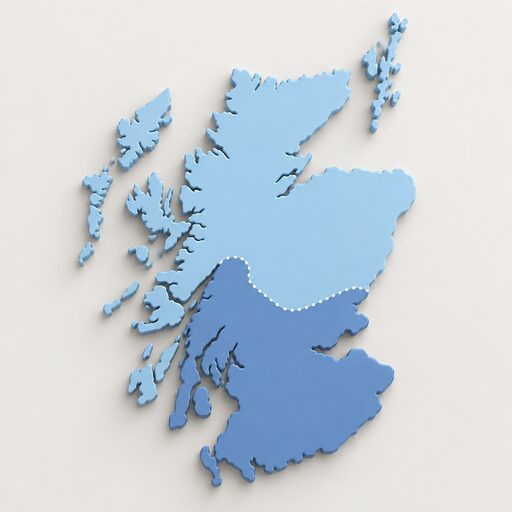 Tariffs in ScotlandWhy do Scottish electricity bills differ from the rest of Great Britain, and why do standing charges cost more in the north?
 Suppliers in ScotlandWho do you contact in Scotland when something goes wrong with your supplier, whether that is British Gas, ScottishPower, SSE or another big name?
 Energy Supply in ScotlandScotland makes far more low-carbon electricity than it uses and sends the rest south.
 UK Energy Prices vs EuropeWhy does the UK pay so much for electricity when our gas is cheaper than most of Europe?
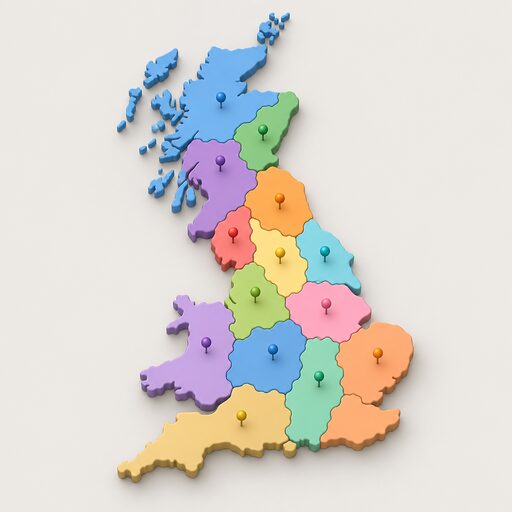 Unit Rates by RegionWhy do electricity and gas prices differ depending on where you live?