
In this answer
Short answer
Fuel poverty in Scotland is measured against a legal definition that adds an extra allowance for households in remote rural areas, remote small towns and island areas, because the cost of maintaining an acceptable standard of living is higher in those places1. That single design choice is the clearest way in which rural fuel poverty differs from urban fuel poverty in Scotland: the same income buys less in a remote area, so the definition adjusts for it.
The scale is large. The Scottish Government estimated that from October to December 2026 there would be around 820,000 fuel poor households in Scotland, 32% of all households, and around 440,000 in extreme fuel poverty, 17% of all households2. For January to March 2026 the estimate was around 800,000 fuel poor households, 31% of all households, with around 400,000 in extreme fuel poverty, 16%3. The gap between rural and urban shows up most sharply in what it costs to close: households using electricity as their primary heating fuel had a median fuel poverty gap of around £2,000 a year, far above other fuels3.
What fuel poverty means in Scotland, and the rural uplift
A household is in fuel poverty if, in order to maintain a satisfactory heating regime, total fuel costs necessary for the home are more than 10% of the household's adjusted net income after housing costs, and if after deducting fuel costs, benefits received for a care need or disability and childcare costs, the household's remaining adjusted net income is insufficient to maintain an acceptable standard of living1. Extreme fuel poverty follows the same definition except that the threshold is more than 20% of adjusted net income6.
The definition is set out in section 3 of the Fuel Poverty (Targets, Definition and Strategy) (Scotland) Act1. The legislation provides for uplifts to be applied to the Minimum Income Standard for households in rural and island communities, to take into account the higher cost of living in these areas7. In practice this means an additional amount is added for households in remote rural, remote small town and island areas1.
That uplift matters because it changes who counts. A rural household on the same income as an urban one, facing the same fuel bill, can fall inside the definition where the urban household does not, because the income remaining after fuel costs is judged against a higher local living-cost baseline. The definition therefore does not treat rural and urban households as interchangeable, and the statistics built on it inherit that distinction.
"The legislation provides for uplifts to be applied to the MIS for households rural and island communities to take into account the higher cost of living in these areas"
The scale: 32% of households, and the legal targets to cut it
The headline rate has moved with fuel prices. The Scottish House Condition Survey found 31 to 33% of households in fuel poverty in 20248, and the 2024 key findings recorded a decrease of 127,000 households, or five percentage points, on the previous year9. Scenario modelling for the April to June 2026 price cap period put the rate at 27% of all households, around 680,000, with around 320,000 in extreme fuel poverty, 12%10. By the October to December 2026 period the estimate had risen to 32% and 17% respectively, each up around 20,000 households on the previous quarter2.
The Act sets statutory targets for reducing fuel poverty11. By 2040, as far as reasonably possible, no household in Scotland should be in fuel poverty, with no more than 5% of households in fuel poverty and no more than 1% in extreme fuel poverty4. The same legislation sets a target that the median fuel poverty gap of households in Scotland in fuel poverty would be no more than £250 at 2015 prices, adjusted for changes in the value of money4.
Fuel poverty is affected by four key drivers: levels of household income, the price of fuel required for space and water heating, the energy efficiency of the dwelling, and the required use of fuel by households to maintain satisfactory heating regimes12. Rural households tend to score badly on the last three at once, which is why the rural share of fuel poverty is not simply a reflection of rural incomes.
Why rural and island areas pay more
Three factors stack up in rural and island Scotland: the building fabric, the absence of mains gas, and the cost of the fuels that replace it.
Age UK's work on fuel poverty found that it is particularly prevalent in rural areas due to the high number of stone-built, solid wall properties and households who are off mains gas13. Solid wall construction is harder and costlier to insulate than cavity wall, so the dwelling driver of fuel poverty is worse before any fuel is bought.
Where there is no mains gas, heating tends to run on electricity, oil or solid fuel. Electricity is the most expensive option in fuel poverty terms: for January to March 2026, fuel poor households using electricity as their primary heating fuel had a significantly higher median fuel poverty gap, around £2,000 a year, and the modelling showed a reduction of £300 for households using electricity, to £1,700, under the scenario tested3. The rate for households using electricity as their primary heating fuel moved from 52% to 48%, a change of four percentage points3.
The cost of electricity also shapes behaviour in homes that do have gas. Research on the lived experience of fuel poverty in Scotland found those in underheated homes citing the cost of electricity as a reason for not using portable electrical heaters as a secondary heating source14. A household that avoids switching on a heater it already owns is, in effect, rationing heat because of the price of the fuel.
Where fuel poverty is worst and best
Local authority comparison is complicated by a definition change. The published local authority analysis states that the figures are a best estimate of fuel poverty under the new definition and therefore cannot be compared to statistics published under the old definition in local authority analyses prior to 2016-201815. Any ranking that mixes the two is not a like-for-like comparison.
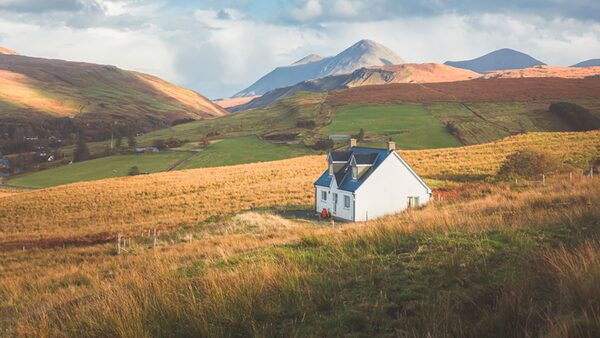
What the evidence does show is a wide spread. The Scottish Government has said fuel poverty rates across Scotland are likely to range from something in the region of 1 in 2 to 1 in 5 households depending on geography and demographics8. Survey analysis has found fuel poverty rates were highest for remote rural households, at 21%, and lowest for other urban and accessible small towns, at 8%4. Households in the 15% most deprived areas recorded a 41% fuel poverty rate, higher than other areas of Scotland9.
Tenure matters alongside geography. In 2024, rates differed between the social sector, at 49%, and the private sector, at 22%6. Earlier survey work found the same pattern, with social sector rates at 48% and private sector rates at 26% in 202216, and 34% against 15% in 20214. The Scottish Government's strategic approach also found fuel poor households in inefficient homes were more likely to live in remote rural areas, 13% versus 8%17.
| Group | Fuel poverty rate | Period |
|---|---|---|
| Remote rural households | 21% | 2021 survey analysis4 |
| Other urban and accessible small towns | 8% | 2021 survey analysis4 |
| Households in the 15% most deprived areas | 41% | 20249 |
| Social sector | 49% | 20246 |
| Private sector | 22% | 20246 |
For a householder trying to judge their own risk, the pattern is that remoteness, off-gas heating, solid wall construction and social renting each raise the odds, and they often occur together. The worst areas for fuel poverty in Scotland page sets out the local picture in more detail, and how fuel poverty differs by heating fuel type covers the fuel dimension.
What help exists: Warmer Homes Scotland, Home Energy Scotland and grants
Warmer Homes Scotland is funded by the Scottish Government and offers funding and support to eligible households struggling to stay warm and keep on top of energy bills7. The scheme helps households in, or at risk of, fuel poverty improve their heating and energy efficiency18. It is one of the fuel poverty schemes, alongside Nest in Wales, that provide additional targeted support to low income households19.
Home Energy Scotland is the advice route. It can be contacted free by phone, email or WhatsApp, on 0808 808 22825. Households may be eligible for financial support such as Warmer Homes Scotland or the Home Energy Scotland Grant and Loan, both funded by the Scottish Government20. The Home Energy Scotland Grant and Loan page covers the funding in detail, and HEEPS Area Based Schemes covers the area-based route.
For rural households specifically, the practical difficulty is often not eligibility but delivery: solid wall insulation, off-gas heating replacement and island logistics all cost more per home than the equivalent urban retrofit. That is the gap the rural uplift in the definition acknowledges statistically, and the gap the grant schemes are intended to close in practice. The why energy grants differ by nation page explains how the Scottish schemes compare with those elsewhere in the UK.
How the net zero rollout interacts with rural fuel poverty
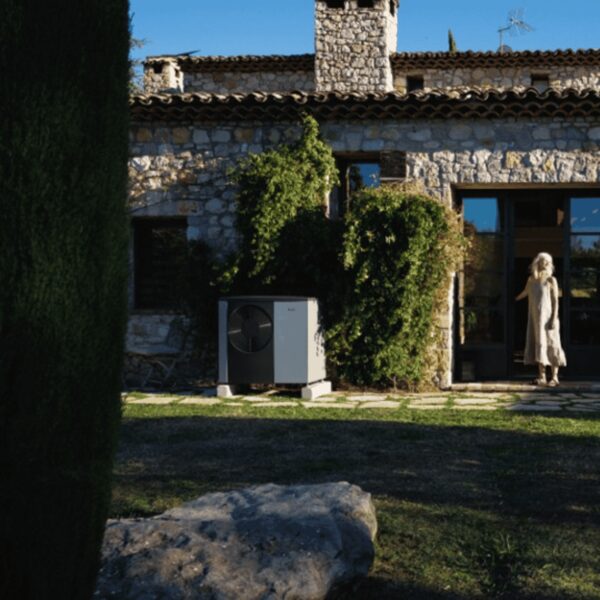
The net zero transition and fuel poverty policy meet most directly in how homes are heated. Scotland's heat in buildings strategy sets out the shift away from fossil fuel heating, and the rural and island housing stock is the hardest part of that shift because so much of it is off the gas grid already and poorly insulated21. The Scottish Government has legally committed to a net zero greenhouse gas emissions target by 204522.
There is an economic dimension. Scotland's climate change plan records the transition as supporting 100,700 FTE jobs23. For households, the relevant question is whether low carbon heating reduces bills as well as emissions, and the evidence is mixed: the Energy Saving Trust's work on low carbon technology combinations examines how different packages perform for households19.
The risk for rural households is a transition that raises costs before it lowers them. A household replacing an off-gas fossil fuel system with a heat pump needs the fabric improved first for the running costs to work, and rural solid wall properties are the most expensive to bring up to that standard. Where the rollout is not paired with fabric funding, the household carries the difference. The Scotland renewable heating target page and how Scottish homes are heated set out the wider picture, and energy costs in Scotland's islands and remote areas covers the cost geography directly.
Sources23 cited
- Scottish House Condition Survey: local authority tables 2022 to 2024, fuel poverty, Scottish Government, 2026
- Fuel poverty scenario modelling based on Ofgem energy price caps up to October to December 2026, Scottish Government, 2026
- Scenario modelling: impact of the reduction of the Renewables Obligation and ending ECO on fuel poverty in Scotland, Scottish Government, 2026
- Scottish House Condition Survey 2021: fuel poverty, Scottish Government, 2021
- Home Energy Scotland: easy ways to save energy, Home Energy Scotland, 2026
- Scottish House Condition Survey 2024: key findings, Scottish Government, 2026
- Home energy efficiency advice, Argyll and Bute Council, 2026
- Tackling fuel poverty in Scotland: periodic report 2021 to 2024, engagement responses, Scottish Government, 2025
- Scottish House Condition Survey 2024: key findings, Scottish Government, 2026
- Fuel poverty scenario modelling based on Ofgem energy price caps up to April to June 2026, Scottish Government, 2026
- Energy efficiency in homes, Scottish Government, 2026
- Scenario modelling: 2023 fuel poverty levels under 2019 fuel prices, Scottish Government, 2025
- Age UK report: reducing fuel poverty, a scourge for older people, End Fuel Poverty Coalition, 2019
- Research: lived experience of fuel poverty in Scotland, Scottish Government, 2020
- Scottish House Condition Survey: local authority analysis 2017 to 2019, Scottish Government, 2021
- Scottish House Condition Survey 2022: fuel poverty, Scottish Government, 2022
- Tackling fuel poverty in Scotland: a strategic approach, Scottish Government, 2021
- Warmer Homes Scotland scheme: headline data, Scottish Government, 2025
- Supporting households with low carbon technology combinations, Energy Saving Trust, 2026
- Make your home warmer, Home Energy Scotland, 2026
- Heat in buildings strategy: achieving net zero emissions in Scotland's buildings, Scottish Government, 2021
- Net zero by 2045: how Scotland is addressing the climate emergency, Energy Saving Trust
- Scotland's climate change plan 2026 to 2040, Scottish Government, 2025
 Fuel PovertyHow does Scotland decide if a household is in fuel poverty, and how many homes are affected?
 Energy Supply in ScotlandScotland makes far more low-carbon electricity than it uses and sends the rest south.
 Tariffs in ScotlandWhy do Scottish electricity bills differ from the rest of Great Britain, and why do standing charges cost more in the north?
 Fuel Poverty PolicyWhy does fuel poverty mean something different depending on where in the UK you live?
 Energy Policy in ScotlandWho decides how your home in Scotland is heated and improved?
 Fuel Poverty in the UKWho counts as living in fuel poverty, and why does the number change depending on where in the UK you live?