

In this answer
Short answer
Fuel poverty in Scotland is not spread evenly across heating fuels. The Scottish House Condition Survey found that 46% of households using electricity as their primary heating fuel were fuel poor, against 29% of households using gas and 28% using oil1. Extreme fuel poverty followed the same pattern: 34% for electric heating households, higher than for any other fuel group1.
The gap between fuels is not a small difference in the same problem. It is the difference between roughly one household in two and roughly one in three, and it tracks the price of the fuel rather than the behaviour of the household. Scottish Government scenario modelling for January to March 2026 put the median fuel poverty gap for fuel poor households using electricity at around £2,000 a year before support, falling to £1,700 after support, a reduction of £3002. That is the largest gap of any heating fuel group in the modelling.
This page sets out the definition and the legal targets, compares electric, gas and oil heating, explains why electric heating households fare worst, and covers what the fuel poverty gap looks like before and after support, the net zero heating transition, and the grants and support available in Scotland.
Fuel poverty in Scotland: the definition and the legal targets
The Scottish definition is set in law, not in guidance. A household is in fuel poverty if, in order to maintain a satisfactory heating regime, total fuel costs necessary for the home are more than 10% of the household's adjusted net income after housing costs, and if after deducting fuel costs, benefits received for a care need or disability and childcare costs, the household's remaining adjusted net income is insufficient to maintain an acceptable standard of living5. The legal basis is section 3 of the Fuel Poverty (Targets, Definition and Strategy) (Scotland) Act 20195.
Extreme fuel poverty uses the same test with the threshold doubled: more than 20% of net income required for reasonable fuel needs, with the same remaining-income condition6. The independent guidance from CIPHE states the two thresholds in the same terms, confirming that the 10% and 20% figures are the operative ones6.
The Act also sets statutory targets for 2040. By that year, as far as reasonably possible no household in Scotland should be in fuel poverty, and no more than 5% of households should be fuel poor, no more than 1% in extreme fuel poverty, with the median fuel poverty gap no more than £250 at 2015 prices4. The gap target is expressed in 2015 prices and adjusted to take account of changes in the value of money4. The Scottish Government's energy efficiency policy pages confirm that the Act sets statutory targets for reducing fuel poverty7.
The definition matters for fuel type because it is a cost test, not a consumption test. A household that heats with electricity and pays a higher unit rate for the same warmth will cross the 10% threshold sooner than an identical household on mains gas. The definition does not distinguish between fuels; the prices do.
"If, after housing costs have been deducted, more than 10% (20% for extreme fuel poverty) of their net income is required"
Fuel poverty by fuel type: electric, gas and oil compared
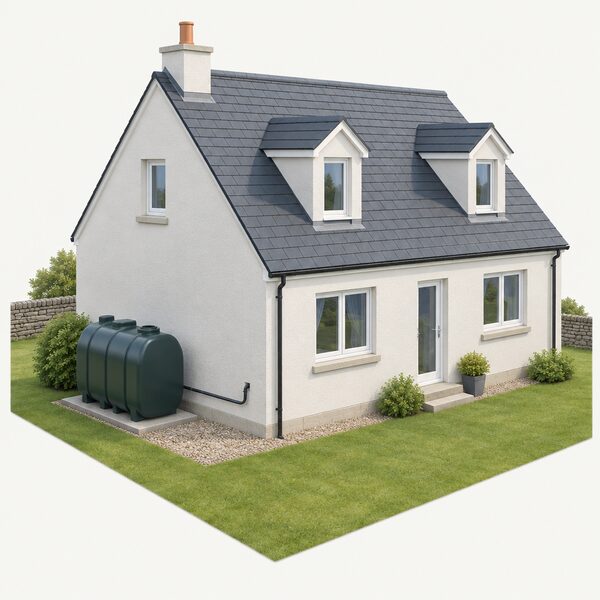
The headline comparison comes from the Scottish House Condition Survey. In 2022, 46% of households using electricity as their primary heating fuel were fuel poor, higher than for households using gas at 29% and oil at 28%1. Extreme fuel poverty among electric heating households was 34%, again higher than other fuels1.
The Scottish Government's Heat in Buildings Strategy, published in October 2021, gave a similar split using earlier data: the fuel poverty rate for homes with electricity as their primary heating fuel was 43% compared to 22% for gas8. The two sets of figures are not directly comparable because they use different survey years and the definition changed, but the direction is consistent across both: electric heating households carry a fuel poverty rate roughly 14 to 21 percentage points above gas heating households.
| Primary heating fuel | Fuel poverty rate | Extreme fuel poverty rate | Source year |
|---|---|---|---|
| Electricity | 46% | 34% | 20221 |
| Gas | 29% | not given separately | 20221 |
| Oil | 28% | 13% | 20221, 20245 |
| Electricity (earlier data) | 43% | not given | 20218 |
| Gas (earlier data) | 22% | not given | 20218 |
The 2024 figures from the research briefing give a slightly different cut: 42% of households using electricity were in fuel poverty, against 26% of those using other fuels, and 13% of those using oil were in extreme fuel poverty5.
Tenure cuts across fuel type. Local authority tenants recorded a 48% rate in 2022, with housing association tenants at 47% and private rented at 44%, rates that sit close to one another across the rented sectors1. A household's fuel poverty risk is therefore shaped by both what it heats with and how it holds its home: the heating fuel sets the unit price paid for warmth, while tenure shapes how far the household can change the fabric or the heating system at all.
Why electric heating households fare worst
Electric heating households fare worst for two connected reasons: the price of electricity per unit of delivered heat, and the share of Scottish homes that cannot buy mains gas at all.
Around 20% of Scottish households are not connected to the gas network, according to independent analysis of net zero technology uptake in Scottish homes3. Those households heat with electricity, oil, LPG or solid fuel. For the electric heating group, the alternative to a high electricity bill is not a cheaper fuel; it is a different heating system, which carries its own capital cost.
The Scottish Government's scenario modelling for January to March 2026 shows the composition of the fuel poor population by fuel. Around 140,000 fuel poor households used electricity as their primary heating fuel, falling to 130,000, while around 260,000 used mains gas, falling to 230,000, a change of 20,000 households2. The electric heating group is smaller in absolute numbers but carries the higher rate and the larger gap.
The modelling also shows that 20,000 households who heat their property with electricity moved out of extreme fuel poverty in the same period2. That movement is real but partial: the group remains the one with the highest extreme fuel poverty rate.
What the fuel poverty gap looks like before and after support

The fuel poverty gap is the amount by which a fuel poor household's required fuel costs exceed what it would pay at the median for a household of its type. It is the measure the 2040 target uses, and it is where the fuel type difference is sharpest.
For fuel poor households using electricity as their primary heating fuel, the median gap was around £2,000 a year before support in the January to March 2026 modelling, falling to £1,700 after support, a reduction of £3002. The Scottish Government's own summary states that fuel poor households using electricity as their primary heating fuel have a significantly higher median fuel poverty gap than other groups2.
The historical series shows how the gap has moved. The actual median fuel poverty gap for fuel poor households was £690 in 20219. The 2019 figure was £750, and the 2021 figure was 65% higher than that 2019 median10.
The gap is also sensitive to prices rather than to household behaviour. Applying fuel price changes increased the fuel poverty rate by 11 percentage points in the Scottish Government's micro-simulation, while applying income changes decreased it1. That is the mechanism behind the fuel type difference: a household on electricity faces a higher price for the same warmth, so the same income produces a larger gap.
The scenario modelling for April to June 2026 estimated around 680,000 fuel poor households in Scotland, 27% of all households, with around 320,000 in extreme fuel poverty, 12% of all households11. By October to December 2026 the estimate rises to around 820,000 fuel poor households, 32% of all households, with around 440,000 in extreme fuel poverty, 17% of all households12. The two quarters differ by around 140,000 households, which shows how much the gap moves with the price cap period rather than with the heating fuel itself.
Scotland's net zero heating transition and what it means for fuel poor households
The transition away from fossil heating is the largest single change facing fuel poor households in Scotland, because it asks them to change the system that produces the bill they already cannot afford.
Over one million households are expected to need a low-carbon heating system by 2030, according to Scottish Government guidance on the heat transition13. The same guidance sets a target of no household in Scotland being in fuel poverty by 204013. The two targets interact: a household that cannot afford its current heating is unlikely to be able to fund a new system without support, and a new system that raises the fuel bill would move it further from the 2040 target rather than closer.
The fuel type composition of the fuel poor population is already shifting. In the January to March 2026 modelling, the number of fuel poor households using electricity fell from 140,000 to 130,000, the number using mains gas fell from 260,000 to 230,000, a change of 20,000 households, and the extreme fuel poverty rate for oil heating households fell from 37% to 30%2. The gas heating fuel poverty rate moved from 26% to 25%, a change of 1 percentage point, and the extreme fuel poverty rate for gas heating moved from 13% to 11%2.
The direction of travel matters for independence. A household that moves from gas to a heat pump reduces its exposure to gas imports and to the gas price, but increases its exposure to electricity prices and to the electricity network. A household that stays on oil remains exposed to a delivered fuel market with no price cap at all. The Scottish Government's own framing is that fuel poverty is affected by four key drivers: levels of household income, the price of fuel required for space and water heating, the energy efficiency of the dwelling, and the required use of fuel by households to maintain satisfactory heating regimes14. Fuel type sits inside the second and fourth of those drivers.
Grants and support available in Scotland
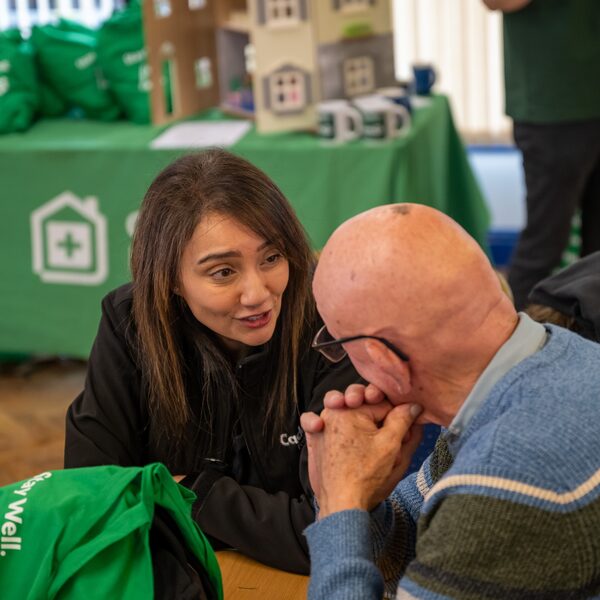
Support for fuel poor households in Scotland is delivered through a mix of national schemes, local authority programmes and crisis funding, and the fuel type a household uses determines which of them it can access.
The Fuel Insecurity Fund was the previous support scheme in Scotland and covered all fuel types15. It has been removed, and the Scottish Welfare Fund now remains the only significant source of crisis funding available to support people with their energy bills following that removal16. The Fuel Insecurity Fund had provided vital support for fuel poor people, who are amongst the most vulnerable living in Scotland, according to the Fuel Poverty Advisory Panel's response on the Scottish Budget 2024 to 202517.
The Scottish Government's energy efficiency in homes policy pages set out the current grant and loan landscape, and the statutory targets that sit behind it7. The Home Energy Scotland Grant and Loan Scheme and the HEEPS Area Based Schemes are the main routes for fabric and heating system improvements, and the Home Energy Scotland Grant and Loan Scheme and HEEPS Area Based Schemes pages set out eligibility and process. The HEEPS Equity Loan Pilot is a closed Scottish scheme.
For households on electric heating, the practical support question is whether a scheme covers the fuel they actually use. The Fuel Insecurity Fund's coverage of all fuel types was unusual; most grant schemes are tied to specific measures rather than to the fuel bill itself. The Fuel Poverty in Scotland page covers the definition, rate and 2040 target in more detail, and the Winter Heating Payment in Scotland and Pension Age Winter Heating Payment pages cover the social security side.
Sources17 cited
- Scottish House Condition Survey 2022: Fuel Poverty, Scottish Government, 2022
- Scenario Modelling: Impact of the Reduction of the Renewables Obligation and Ending ECO on Fuel Poverty in Scotland, Scottish Government, 2026
- Uptake of Net Zero Technologies in Scottish Homes, Energy and Climate Intelligence Unit, 2026-06-22
- Heat in Buildings Strategy: Achieving Net Zero Emissions in Scotland's Buildings, Scottish Government, 2021-10
- Fuel Poverty in Scotland: Research Briefing CBP-9838, House of Commons Library, 2024
- Fuel Poverty: Sustainability Within Your Home, CIPHE, 2026-09-17
- Energy Efficiency in Homes, Scottish Government, 2026-09-17
- Heat in Buildings Strategy: Summary Document, Scottish Government, 2021-10
- Scottish House Condition Survey 2021: Fuel Poverty, Scottish Government, 2021
- Scottish House Condition Survey 2022: Key Findings Summary, Scottish Government, 2022
- Fuel Poverty Scenario Modelling Based on Ofgem Energy Price Caps up to April to June 2026, Scottish Government, 2026
- Fuel Poverty Scenario Modelling Based on Ofgem Energy Price Caps up to October to December 2026, Scottish Government, 2026-09-02
- High Rise Retrofit and Upgrade Programme Phase 1, City of Edinburgh Council, 2026-04-20
- Scenario Modelling: 2023 Fuel Poverty Levels Under 2019 Fuel Prices, Scottish Government, 2025-03-25
- Social Tariff Working Group: Final Report, Scottish Government, 2025-04-23
- Tackling Fuel Poverty in Scotland: Periodic Report 2021 to 2024, Engagement Responses, Scottish Government, 2025-04-22
- Fuel Poverty Advisory Panel: Initial Response on Scottish Budget 2024 to 2025, Fuel Poverty Advisory Panel, 2023-12-21
 Fuel PovertyHow does Scotland decide if a household is in fuel poverty, and how many homes are affected?
 Energy Policy in ScotlandWho decides how your home in Scotland is heated and improved?
 Fuel Poverty in the UKWho counts as living in fuel poverty, and why does the number change depending on where in the UK you live?
 Tariffs in ScotlandWhy do Scottish electricity bills differ from the rest of Great Britain, and why do standing charges cost more in the north?
 Home HeatingMost Scottish homes are heated by mains gas, so what happens to the rest?
 Fuel PovertyWhy does Northern Ireland have such a high rate of fuel poverty, and how many households are affected?