
In this answer
Short answer
A heat pump can lower a Scottish household's bills, but only in the right circumstances. The Energy Saving Trust puts the saving from switching to a heat pump appropriate tariff at up to £330 a year on heating bills1. Modelling of Scottish clean heating requirements found average annual bill savings of £384 to £642 for homes that do make a saving, depending on tariff type and scenario2. Under current energy prices, roughly 25% of all homes in Scotland would make energy bill savings when moving to a heat pump3.
The catch is Scotland's electricity price. Scotland has the highest average electricity bill of all the UK nations4, and the Heat in Buildings progress report states plainly that heat pump savings "are constrained by the higher cost of electricity relative to gas"5. Whether a household ends up ahead turns on what it is replacing, what tariff it is on, and how much insulation work the property needs first.
Why electricity prices in Scotland matter
Scotland's problem is not the heat pump, it is the ratio between electricity and the fuel it replaces. Data from the Department of Energy Security and Net Zero shows Scotland has the highest average electricity bill of all the UK nations4. Electricity is more expensive in the UK than in any EU country8, and analysis of Scottish clean heating requirements concluded that equal bills would require an electricity supply cost of between one-third and one fifth of the price of the comparable fuel, depending on heat pump efficiency9.
That ratio explains why the same appliance produces a saving in one Scottish home and a loss in the next. The Heat in Buildings progress report 2025 identifies the higher cost of electricity relative to gas as the constraint on savings5. The Energy Saving Trust's position is that running costs for heat pumps are around the same as for a new gas boiler at current energy prices10, and parliamentary research reaches the same conclusion, that heat pumps currently have similar running costs to gas boilers11.
There is a countervailing trend. Average electricity bills in Scotland fell by 15.13% between 2023 and 2024, a steeper fall than the 12.19% recorded in England and Wales4. The weighted average index price of heating fuels in Scotland fell by approximately 23.3% over 2024 compared with 2023, driven primarily by movements in the underlying fuel prices12. Heat pump installations in Scotland rose 18% between 2023 and 202413.
For a household's energy independence, the picture is mixed. A heat pump moves space heating and hot water off a delivered fuel and onto the electricity network, which removes exposure to oil or LPG deliveries and to gas standing charges. It does not remove exposure to electricity prices, to a supplier, or to the grid. The Scottish household that switches remains a grid customer, and in Scotland that grid carries the highest average electricity bill in the UK4.
Off gas grid homes: where heat pumps have the clearest advantage
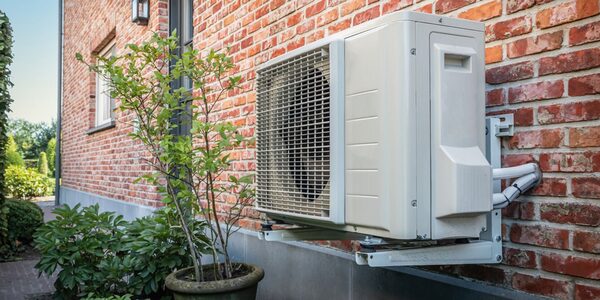
The clearest financial case for a heat pump in Scotland is in a home with no mains gas connection. Scottish Government analysis is explicit: "At present heat pumps can be cost-effective compared to fossil fuel heating systems in off-gas areas but not where a gas boiler connected to the grid is an option"14. Around 81% of Scottish homes use mains gas for heating15, and over 450,000 homes do not use gas as their primary heating fuel16. The Heat Pump Sector Deal final report puts the off-gas figure at some 420,000 homes14.
Those off-gas homes are typically on oil, LPG or direct electric heating, and the comparison is against those fuels rather than against gas. Heat pumps cost around £800 to £1,050 a year to run, making them one of the cheapest electric heating options17. That figure is the strongest available evidence for the off-gas case, because it compares the heat pump against other electric systems rather than against a gas boiler.
The geography reinforces it. Areas such as the Hebrides and Orkney have the highest heat pump installation rates in Scotland and exceed those of any local authority in England by a substantial margin6. Since 2019, installation rates in Scotland have increased more than threefold6. Scotland has installed more than 17 heat pumps per 1,000 households cumulatively6.
"At present heat pumps can be cost-effective compared to fossil fuel heating systems in off-gas areas but not where a gas boiler connected to the grid is an option"
The independence gain here is real but partial. An off-gas home that replaces an oil boiler stops depending on fuel deliveries, tanker access and oil price movements, and stops depending on a fossil fuel supply chain entirely. It becomes dependent instead on the electricity grid and a supplier, and on the heat pump manufacturer for parts and support. That is a shift in the shape of dependence rather than its removal.
Running costs compared with gas, oil and electric heating
The comparison depends entirely on what is being replaced. Against a gas boiler, the evidence points to rough parity rather than a saving. Parliamentary research states that heat pumps currently have similar running costs to gas boilers11, and the Energy Saving Trust agrees that at current energy prices running costs for heat pumps are around the same as for a new gas boiler10.
Against electric heating, the case is stronger. Heat pumps cost around £800 to £1,050 a year to run, making them one of the cheapest electric heating options17. That is the comparison that matters for the roughly one in five Scottish homes not on mains gas15.
The larger savings figures come with conditions attached. Which? reports a claim from Dr Jan Rosenow of the Regulatory Assistance Project that a household could save more than 50% on running costs with a heat pump compared to a gas boiler, but only with high quality installation, high efficiency and a heat pump tariff18. The Energy Saving Trust's figure of up to £330 a year on heating bills is likewise conditional on a heat pump appropriate tariff1. E3G's modelling found that with the right policy changes the average household heating bill could be over £400 lower with a heat pump than with a gas boiler19.
| Comparison | Running cost position | Source |
|---|---|---|
| Heat pump vs new gas boiler | Around the same at current energy prices | Energy Saving Trust10 |
| Heat pump vs gas boiler | Similar running costs | Parliamentary research11 |
| Heat pump vs other electric heating | £800 to £1,050 a year, among the cheapest electric options | Centre for Sustainable Energy17 |
| Heat pump vs gas boiler, best case | More than 50% saving, with quality installation, high efficiency and a heat pump tariff | Which?, citing Dr Jan Rosenow18 |
Fabric matters as much as fuel. Around half of homes will require moderate cost insulation improvements, averaging £2,000, to enjoy cheaper bills with a heat pump20. A heat pump in a poorly insulated Scottish home will not deliver the running cost figures above, whatever tariff is in place.
Grants and financial support: Scotland's system differs from the rest of the UK

Scotland runs its own support architecture rather than the Boiler Upgrade Scheme that operates in England and Wales. The Home Energy Scotland Scheme offers grants to homeowners to install heat pumps21. The Home Energy Scotland Grant and Loan Scheme provides grants and loans to all domestic owner-occupiers in Scotland to install clean heat and energy efficiency measures22.
Warmer Homes Scotland is funded by the Scottish Government and offers funding and support to eligible households struggling to stay warm and keep on top of energy bills23. The Scottish Government also publishes routes to help with home energy bills for households in Scotland24.
The Warm Home Discount Scheme operates in Scotland, England and Wales. Where a supplier provides both gas and electricity, the discount may be applied to the gas bill instead of the electricity bill26.
The independence angle on grants is straightforward: a grant reduces the capital cost of the switch but does not change the running cost ratio that determines whether bills fall. A household that installs on a grant and then runs the system on a standard electricity tariff may still see bills rise. The tariff decision matters as much as the grant decision.
Planning permission, building warrants and other installation hurdles
Most domestic air source heat pump installations in Scotland fall under permitted development rights, and the Scottish Government has published guidance on those rights27. Where a full planning application is required, the fee for a domestic air source heat pump is £20228. For non-domestic installations the fee is £401 for each 0.1 hectare28. Planning authorities in Scotland would forgo an estimated £162,408 a year in fee income if air source heat pumps were fully permitted, based on 804 planning applications per year28.
Listed buildings are the clear exception: planning permission and listed building consent are required29. Conservation areas and other designations raise their own questions, and the position varies by local authority.
Building warrants are a separate matter from planning. The Heat in Buildings Bill as consulted on introduces a voluntary Scottish installation and maintenance licence for heat networks, giving developers a route to demonstrate competence30. That licence covers heat networks rather than individual domestic heat pumps, and building standards requirements for a domestic installation should be confirmed with the relevant local authority before work begins.
The wider barriers are not unique to Scotland. Parliamentary research identifies a lack of qualified heat pump installers, planning rules and the need for electricity infrastructure upgrades as constraints on rollout11. Scotland's installation sector is small: 200 to 400 installers deliver approximately 3,500 installations a year, and this could increase to around 35 to 40 installations per installer with the productivity gains that come with a more established market31.
How many Scottish homes this affects, and by when
The scale of the intended transition is large. Over one million households in Scotland are expected to need a low-carbon heating system by 20307. The net zero roadmap requires more than one million homes and 50,000 non-domestic buildings to convert to zero emission heating systems by the end of the decade32. Around 50% of homes, or over one million households, will need to convert to zero emissions heating systems by 20307.
Annual heat pump installations in existing homes will need to accelerate rapidly, reaching nearly 35,000 by 203033. By 2035, around a quarter of existing homes are expected to be heated by a heat pump, either as standalone or communal systems33.
New build is already moving. Of low-carbon heated new homes in Scotland in 2024, 62% used heat pumps, with 22% using less efficient direct electric technologies34. Heat pump installations in Scotland rose 18% between 2023 and 202413.
For an individual household, these targets are context rather than a deadline. There is no requirement on a specific home to convert by 2030 on the evidence available, and the Heat Pump Sector Deal Expert Advisory Group recommended that the Scottish Government commission further analysis of the housing stock to identify on-gas buildings where heat pumps are already cost-effective35. That recommendation implies the on-gas case is not yet settled.
The independence question at this scale is a system question as much as a household one. A Scotland where a quarter of existing homes run heat pumps by 2035 is a Scotland where a large share of heating demand has moved onto the electricity network, with the grid, the supplier and the generation mix as the remaining points of dependence. For the household, the practical test is narrower: what fuel is being replaced, what tariff the heat pump will run on, and whether the fabric of the home lets the system perform as designed.
Sources35 cited
- Renewable technologies: what really cuts energy bills, Energy Saving Trust, 2026-08-12
- Exploring the costs to consumers of Scottish clean heating requirements: findings on energy bills, Nesta, 2028
- Exploring the costs to consumers of Scottish clean heating requirements, Nesta, 2024-08-01
- Energy statistics, Uswitch, 2025-12-17
- Heat in Buildings: progress report 2025, Scottish Government, 2025-10-02
- Uptake of net zero technologies in Scottish homes, Energy and Climate Intelligence Unit, 2026-06-22
- High rise retrofit and upgrade programme phase 1, City of Edinburgh Council, 2026-04-20
- Exploring the costs to consumers of Scottish clean heating requirements: what did we do, Nesta, 2024-08-01
- Energy consumers and the transition to net zero, Consumer Scotland, 2024-02-27
- Heat pump fact check, Energy Saving Trust, 2026-07-01
- Heat pumps, Parliamentary Office of Science and Technology, 2026-09-19
- Scottish House Condition Survey 2024: key findings, Scottish Government, 2024
- Scotland's plan means immediate climate targets are now within reach, says CCC, Climate Change Committee, 2026-02-25
- Heat Pump Sector Deal Expert Advisory Group final report, Scottish Government, 2021-12
- Heat in Buildings Strategy consultation, Scottish Government, 2021-02
- Heat in Buildings Strategy, Scottish Government, 2021-10
- Electric heating, Centre for Sustainable Energy, 2026-06
- Heat pumps vs boilers, Which?, 2025-09-22
- Heat pumps could have potential to halve UK heating bills, E3G, 2025-08-28
- Accelerating zero carbon heat in Scotland, MCS Foundation, 2026-09-20
- The Heat in Buildings programme, Scottish Government, 2026-09-17
- Heat in Buildings progress report 2024, Scottish Government, 2024-10-10
- Home energy efficiency, Argyll and Bute Council, 2026-09-17
- Getting help if you can't afford your energy bills, Ofgem, 2026-09-17
- Get help with your energy bills, Ofgem, 2026-09-17
- Warm Home Discount Scheme: England, Scotland and Wales, Turn2us, 2026-09-08
- Heat pumps, City of Edinburgh Council, 2026-09-17
- Permitted development rights impact assessments, Scottish Government, 2026-09-17
- Air and ground source heat pumps, London Borough of Croydon, 2026-09-17
- Proposals for a Heat in Buildings Bill, Scottish Government, 2026-01-29
- Anticipating the shape of the heat pump installation industry in Scotland, Nesta, 2026-09-17
- Heat Pump Sector Deal Expert Advisory Group interim report, Scottish Government, 2021-06-14
- Scotland's carbon budgets, Climate Change Committee, 2030
- Progress in reducing emissions in Scotland 2025, Climate Change Committee, 2024
- Heat in Buildings Strategy business and regulatory impact assessment, Scottish Government, 2021-11
 Tariffs in ScotlandWhy do Scottish electricity bills differ from the rest of Great Britain, and why do standing charges cost more in the north?
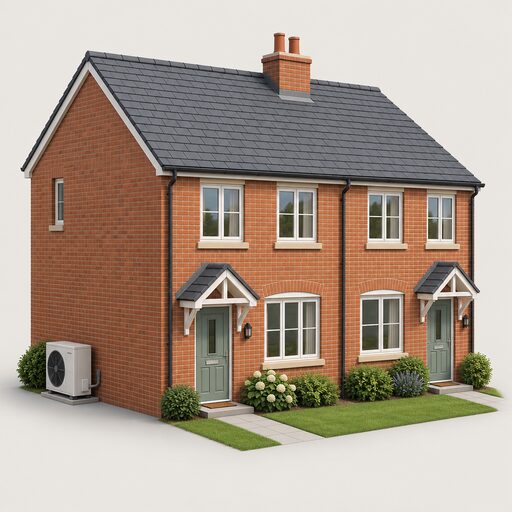 Which Homes Suit a Heat PumpMost UK homes can have a heat pump fitted, so the real question is whether yours makes it easy or expensive.
 Home HeatingMost Scottish homes are heated by mains gas, so what happens to the rest?
 Energy Supply in ScotlandScotland makes far more low-carbon electricity than it uses and sends the rest south.
 Cost of Energy IndependenceA heat pump and better insulation are the usual starting point, but what does the whole job really cost, and what help is there with the bill?
 Planning Permission in ScotlandDo you need planning permission for a heat pump in Scotland?