
In this answer
Short answer
The honest answer is that there is no single figure, and any page that gives you one is oversimplifying. The published estimates for a UK household cluster in a band: around £270 a year median saving based on Homewise use to date1, up to £300 annually for the average UK household implementing energy-efficient measures2, and around £350 a year from small changes around the home in both Great Britain and Northern Ireland3. The £290 headline sits inside that spread. It is a mid-point drawn from several sources, not a guaranteed return on any particular house.
What drives the variation is that a saving is not a payment. It is a quantity of gas or electricity your home no longer buys, multiplied by whatever that unit costs you. Change the house, the heating system, the tariff or the household's habits and the number moves. The Energy Saving Trust is explicit that actual savings vary by property type, size and location, existing insulation levels, heating system, occupancy patterns, energy tariffs, installation quality and how people use their home after improvements4.
This page sets out what the evidence supports: the size of the headline saving, why it differs so much between homes, which measures carry the largest published figures, what happens to savings when wholesale costs rise, how efficiency work connects to fuel poverty policy, and what the grant landscape and the Warm Home Discount are actually worth.
Why the saving varies so much from home to home
The gap between a £270 median and a £467 window upgrade is not a contradiction. It reflects what each figure measures. The lower numbers describe broad, mixed samples of households doing a range of things. The higher numbers describe one specific measure applied to a house that has not yet had it.
Homewise states plainly that savings vary depending on each home's retrofit need and the resident's budget1. That is the whole mechanism in one line. A home with no loft insulation has more to gain from insulating the loft than a home that already has 300mm. A household that heats every room all day has more to gain from controls than one that already runs a tight schedule.
The Energy Saving Trust's methodology lists the variables that move the result: property type, size and location, existing insulation levels, heating system, occupancy patterns, energy tariffs, installation quality, and how people use their home after the work4. Several of those are behavioural, which is why two identical houses on the same street can report different savings from the same measure.
There is also a scale effect. If everyone living in homes below Energy Performance Certificate band C were improved to EPC C today, the aggregate saving is put at £10.6bn each year8. That is a national figure, not a household one, but it shows how much of the total opportunity sits in the worst-performing homes.
For a household, the practical implication is that the only reliable way to estimate your own saving is to start from your own home's data. An Energy Performance Certificate gives the property's current energy efficiency rating, its potential rating, suggestions for how to improve the rating, and estimated energy costs for heating, lighting and hot water9. Owner-occupiers in England can get improvement recommendations including estimated costs and bill savings from GOV.UK10. Home Energy Scotland offers a home energy saving tool to help you understand how energy efficient your home is and what changes could help reduce energy use11.

Where the biggest savings come from: insulation, heating and controls
The measures with the largest published figures are not always the cheapest, and the cheapest are not always the smallest. It is worth separating the two.
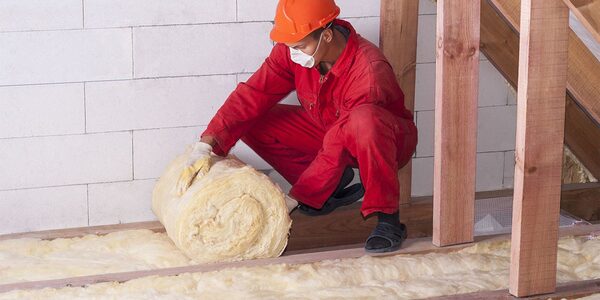
Insulation and draught-proofing. Good loft insulation can cut the energy bills in a typical house by about £130 a year12. Draught-proofing is a smaller measure with a smaller figure, but it is one of the few that a household can often do without a trade. National Energy Action's recommended improvements include keeping homes insulated with loft insulation and draught-proofing, alongside using heating controls effectively, setting timers and lowering boiler temperatures13.
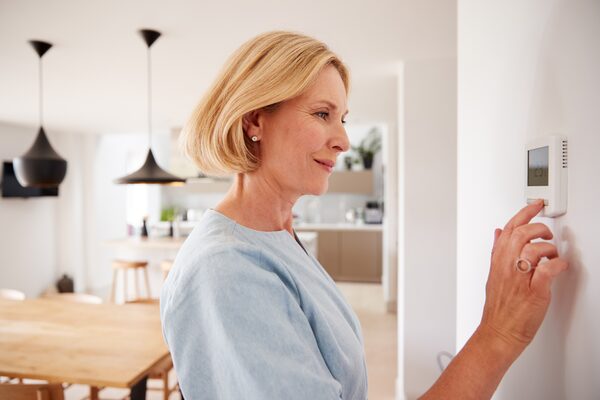
Heating controls. A full set of heating controls is put at £100 a year for an average semi-detached house in Great Britain and £110 in Northern Ireland6. The same source notes that reducing room temperatures by 1°C can save up to 10% on an annual fuel bill14. Ofgem's consumer protection guidance gives a worked example for a large house on electric heating with high usage, around £300 a month: low control gives a 2% heating bill saving, £6 a month; medium control 4%, £12 a month; high control 6%, £18 a month15.
Windows. Upgrading windows to current standards is put at £467 average annual saving per household at current capped energy prices5. That is the largest single-measure figure in this set, and it is also one of the most expensive measures to install, so the annual saving and the payback period are very different questions.
Small behavioural changes. Switching appliances off at the wall instead of leaving them on standby could save up to £45 a year8. Adjusting a thermostat can save a typical household around £90 a year3. These are not upgrades, but they are savings, and they cost nothing.
| Measure | Published annual saving | Basis |
|---|---|---|
| Loft insulation | about £130 | Typical house12 |
| Heating controls | £100 (GB), £110 (NI) | Average semi-detached, full set6 |
| Windows to current standards | £467 | Average household, current capped prices5 |
| Standby switch-off | up to £45 | Appliances off at the wall8 |
| Thermostat adjustment | around £90 | Typical household3 |
Do savings get bigger if energy prices rise?
Yes, in principle, and the mechanism is straightforward. A saving is energy you did not buy. If the unit price of that energy rises, the cash value of the same physical saving rises with it. A measure that saves a fixed amount of gas or electricity each year is worth more at a higher unit price than at a lower one.
The price cap gives a sense of how much wholesale costs move. The wholesale cost allowance increased by £86, or 11%, from £755 to £841, for 1 April to 30 June 202516. That is one component of the cap, not the whole bill, but it shows the direction and scale of movement within a single quarter.
There is a longer historical point here too. Analysis of household energy bill increases found they were caused primarily by the rising cost of gas, not by environmental policies17. That matters for how efficiency savings should be understood: the dominant driver of bill pressure has been the price of the fuel itself, which is exactly what an efficiency measure reduces the need for.
The flip side is that rising prices also lengthen the payback period on measures you have already paid for, because the capital cost is fixed at the point of installation while the annual return grows. For a household weighing a measure, the relevant question is not only what it saves today but how sensitive that saving is to future prices. The evidence supports the direction of the effect; it does not support a specific forecast.
How efficiency improvements cut fuel poverty
Fuel poverty policy treats efficiency as a primary lever rather than a side measure. The Institute for Public Policy Research estimates that 70 per cent of spending on low-income households would be spent on efficiency improvements for the fuel-poor, as opposed to 20 per cent at present18. That is a proposed reallocation, not current spending, but it shows where the independent analysis points.
The household-level figure is more concrete. Each fuel-poor household in receipt of energy efficiency improvements would achieve average annual bill savings of £23018. That is lower than the broad household averages above, which makes sense: fuel-poor households tend to under-heat already, so the measured saving is smaller even though the improvement in living conditions may be larger.
The devolved picture differs. The Scottish Government's ambition is to maximise the number of fuel-poor households having attained the equivalent of an EPC B by 204019, and its earlier strategy set a target of maximising the number of homes with households in fuel poverty achieving a level of energy efficiency equivalent to EPC C by 203020. Northern Ireland's draft fuel poverty strategy lists three objectives: make homes more energy efficient, collaborate and build capacity, and protect consumers21.
National Energy Action's recommended improvements go wider than winter warmth: improving homes so they stay warm in winter and cool in summer, investing in ventilation, shading and passive cooling, ensuring energy is affordable for essential needs including cooling, and providing targeted support for vulnerable households22. That framing matters because efficiency work done only for winter can leave a home uncomfortable or unsafe in a heatwave.
For a household in fuel poverty, the practical route is usually through an advice service rather than a private installer. Home Energy Scotland, NI Energy Advice and the regional Warm Homes Hubs all exist to connect households to funded work. There is more on this in free home energy advice in England and checking what grant help you can get before you start work.
Grants, schemes and the warm home discount: £51 more on the bill
The grant landscape is fragmented and changes often. What follows is what the published scheme rules say, not a recommendation to apply for any particular one.
The Warm Home Discount is a one-off £150 discount off household electricity bills7, and around 6 million households now benefit from a £150 rebate off their winter energy bill23. It is a rebate, not an efficiency measure: it reduces the bill without reducing the energy the home needs. Eligibility in England and Wales includes qualifying benefits such as Housing Benefit24. The scheme requires large domestic energy suppliers to provide an annual discount of £150 to eligible households25, and the cost to bill payers rose from £15 to around £37 each26.
On the efficiency side, the Warm Homes: Local Grant offers 50% of the cost up to £7,500 for energy performance improvements, with a specific route for a private landlord's second and subsequent properties in England27. The Green Homes Grant is described as grants of up to £10,000 to make homes warmer, reduce energy bills and help protect the environment28. Energy UK estimates that the Warm Homes: Energy Upgrade Grant would serve 252,000 households with an average of £620 annual savings, representing 37% of a typical bill, with aggregate annual savings of £157 million and £2.9 billion in lifetime bill savings29.
| Scheme | Published value | Notes |
|---|---|---|
| Warm Home Discount | £150 one-off electricity bill discount | Around 6 million households7 |
| Warm Homes: Local Grant | 50% of cost up to £7,500 | Private landlord route, England27 |
| Green Homes Grant | Grants up to £10,000 | Warmer homes, lower bills28 |
| Warm Homes: Energy Upgrade Grant | £620 average annual saving | 37% of a typical bill, 252,000 households29 |
The £51 in the heading is the difference between the £37 cost to bill payers and the £15 it was before26. It is a cost, not a saving, and it sits on every bill payer's account rather than only on those receiving the discount.
What this means for a household's energy independence
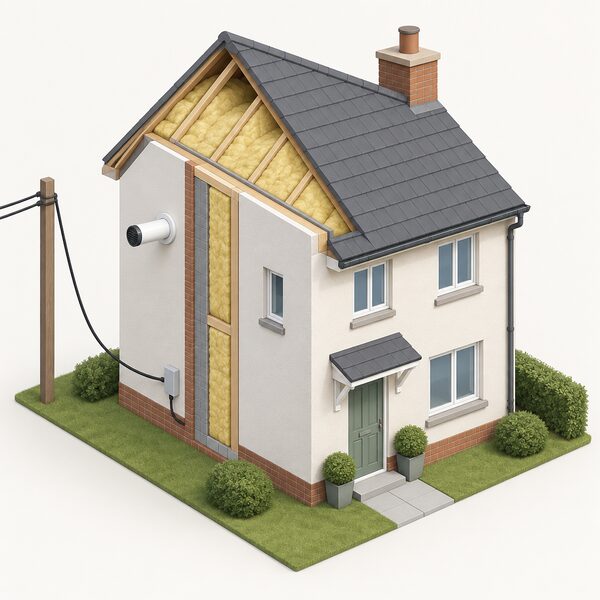
Efficiency savings reduce the amount of energy a home must buy, which reduces exposure to price movements and to the supplier relationship. They do not remove either. A well-insulated home still draws from the grid, still has a supplier, and still depends on the wholesale gas price for whatever heating fuel it uses.
The measures with the largest published savings, windows and heating controls, are also the ones that most directly reduce the demand a household places on external systems. Insulation reduces the heat that must be generated in the first place. Controls reduce the heat generated when it is not needed. Neither makes a home self-sustaining, and neither is a substitute for a supply of energy.
What they do is shrink the bill that a household is exposed to, and make the remaining demand easier to meet from other sources later. That is the sequence most whole-house plans follow, and it is why the order of work matters as much as the measures themselves. There is more on that in what order should home energy improvements be done in and in the full guide to getting started.
Sources29 cited
- Homewise, Energy Saving Trust, 2026
- Make home more energy efficient, The CPA, 2023
- Make your home more energy efficient, Confused.com, 2026
- Our data, Energy Saving Trust, 2026
- Window of opportunity, GGF, 2026
- Tips to improve the EPC rating of your home, Energy Saving Trust, 2026
- Warm Home Discount statistics 2025 to 2026, GOV.UK, 2026
- About fuel poverty, End Fuel Poverty Coalition, 2026
- What is an EPC, Retrofit Academy, 2025
- Make sure your home is energy efficient, Citizens Advice, 2026
- Reduce my bills, Home Energy Scotland, 2026
- Draught-proofing, Which?, 2026
- Get prepared, National Energy Action, 2026
- Help and advice, UKIFDA, 2026
- Load control consumer protection guidance, Ofgem, 2026
- Summary of changes to energy price cap, 1 April to 30 June 2025, Ofgem, 2025
- Household energy bill increases caused primarily by rising cost of gas, Committee on Climate Change, 2011
- Help to Heat: a solution to the affordability crisis in energy, IPPR, 2026
- Energy efficiency in homes, Scottish Government, 2026
- Heat in Buildings Strategy: fairer Scotland duty assessment, Scottish Government, 2021
- Fuel poverty consultation, Northern Ireland Department for Communities, 2026
- Tips for babies in a heatwave, National Energy Action, 2026
- DESNZ annual report and accounts 2025 to 2026, DESNZ, 2026
- The Warm Home Discount Scheme: if you live in England and Wales, GOV.UK, 2026
- Warm Home Discount statistics 2025 to 2026, GOV.UK, 2026
- Warm Home Discount (Amendment) Regulations 2025Regulations2025), Hansard, 2025
- Warm Homes Local Grant, Greater Manchester Combined Authority, 2026
- Grants and funding, Tameside Council, 2026
- Clean heat: supporting low-income households, Energy UK, 2026
 Insulation Savings and PaybackHow much can you really save by adding insulation, and does it depend on your home, your heating and how you use it?
 Do Smart Controls Save Money?Do smart heating controls really cut your bills, and by how much?
 The Full Where to Start GuideWhich home improvements actually cut your bills, and which should you do first?
 Cost of Energy IndependenceA heat pump and better insulation are the usual starting point, but what does the whole job really cost, and what help is there with the bill?
 Changing Habits SavingsWhat the evidence says behavioural change saves: around £90 to £120 a year for one degree off the thermostat, £100 to £110 a year for using a full set of heating controls, and £304 to £351 a year for a bundle of small changes.
 Household Energy ConsumptionHow much gas and electricity does a typical UK home use in a year?