
In this guide
Grant help for home energy improvements exists, but almost all of it is conditional on the order in which a household acts. The largest current scheme, the Boiler Upgrade Scheme, pays £7,500 towards an air-to-water heat pump or a biomass boiler, and £9,000 for eligible off-gas-grid properties, and it is applied for by the installer rather than the householder1. The Warm Home Discount provides a £150 rebate off the winter energy bill, reaching around 6 million households in winter 2025-26 and confirmed through to 2030-313.
The critical point is timing. A property that has already been given government funding or support for a heat pump or biomass boiler cannot receive a Boiler Upgrade Scheme grant, and the eligible technology must not have been installed or commissioned within the last 120 days1. Installing first and asking about grants afterwards is the single most common way a household rules itself out.
This page sets out what is funded, who applies, how the schemes interact, and where the official eligibility checkers sit for each nation. The detail of each scheme sits on its own page; what follows is the order of operations and the conditions that decide whether a household qualifies at all.
What grant help exists for home energy improvements
Support for home energy work in the UK comes through several distinct routes, and they are not interchangeable. The Boiler Upgrade Scheme provides upfront capital grants towards the cost of installing approved heat pumps and biomass boilers in homes and small non-domestic buildings in England and Wales9. The Warm Homes Local Grant delivers energy performance improvements and low carbon heating improvements through local authorities, aimed at achieving energy bill savings10. Energy supplier schemes and grants fund making energy-saving improvements to the home11. In Northern Ireland, grants exist for householders to make their homes more energy efficient by installing loft and cavity wall insulation and a new boiler or heating system12.
The older landscape still shapes expectations. The Green Homes Grant voucher scheme provided grants to homeowners and landlords to make energy efficient improvements to homes, and the National Audit Office has reported on how that scheme was delivered13. The Home Upgrade Grant Scheme provided funding to upgrade low energy-efficiency homes off the gas grid that are occupied by low income families15. Both are useful context for why current schemes are structured the way they are, with tighter eligibility and installer-led delivery.
For a household, the practical question is which route matches the property and the circumstances. A gas-heated home in England or Wales looking at a heat pump is in Boiler Upgrade Scheme territory. A low-income household in an energy-inefficient home is more likely to be in Warm Homes Local Grant territory, which is administered by councils rather than by a national body10. An off-gas-grid home on low income sits closer to the Home Upgrade Grant model15. Northern Ireland runs its own advice and grant-finding route through the NI Housing Executive's energy advice tool, which notes that there may be energy grant help to allow changes to be made17.
The Welsh Government has its own scheme, Green Homes Wales, which can be used alongside the UK Government's Boiler Upgrade Scheme, which provides grants for heat pump installations across England and Wales18. That is one of the few explicit statements of compatibility between schemes, and it matters because most other combinations are restricted.
The Boiler Upgrade Scheme: £7,500 towards a heat pump or biomass boiler
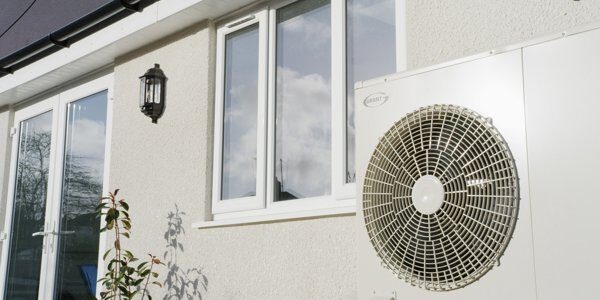
The Boiler Upgrade Scheme is the headline grant for low carbon heating in England and Wales. It provides households in England and Wales with an up-front grant of £7,500 to help cover the cost of replacing fossil fuel heating with a heat pump or biomass boiler19. The scheme opened on 23 May 2022 and closes on 30 December 20296. It supports the decarbonisation of homes and small and medium non-domestic buildings in England and Wales6.
The grant levels are not uniform across technologies. The approved grant categories and values set the figure at £7,50020. Alongside that, £2,500 grants exist for air-to-air heat pumps and £5,000 off the cost and installation of a biomass boiler21. The documents do not resolve every figure: one official guidance source gives £5,000 where the approved values give £7,500, and the two have not been reconciled. Where a household is weighing a biomass boiler against a heat pump, the difference in grant value is material and the published figures disagree.
The eligible technologies are air-to-water heat pumps, air-to-air heat pumps, ground source heat pumps including water source heat pumps and shared ground loops, and biomass boilers5. The property must be replacing a fossil fuel heating system such as gas, oil or LPG, or an electric heating system excluding existing heat pumps22. The installation capacity must be no more than 45kW, which covers most homes, or a shared ground loop capacity of 300kW for ground source installations.
The scheme is open to domestic and small non-domestic properties23. It provides upfront capital grants to support the installation of heat pumps and biomass boilers in homes and non-domestic buildings7. The grant is a capital contribution towards the cost, not a payment to the household, and it is applied against the invoice by the installer.
How the installer-led application works, from voucher to discount
The Boiler Upgrade Scheme is installer-led. Installers who are MCS certified can apply for and redeem vouchers on behalf of property owners24. The application is installer-led, with the installer applying for the grant on the property owner's behalf6. The property owner's chosen installer applies for the grant, discounts it from the invoice, applies to Ofgem for a grant voucher, and redeems the voucher after installation and commissioning6.
It is an installer-led two stage application process, which means the property owner's chosen installer will apply for and redeem the voucher25. The BUS grant application is a two-stage process: the installer submits a voucher application, Ofgem issues the voucher, the installer submits a voucher redemption application, and the installer receives the grant payment26. Ofgem administers the scheme on behalf of the Gas and Electricity Markets Authority27.
The installer must submit the total quote amount including any VAT before the grant is deducted, the total cost of the heat pump unit or biomass boiler unit without the grant deducted, the quote reference number, and the date on the quote28. That means the household's agreed quote is part of the application, and the figures on it are checked.
The chosen installer must be certified by the Microgeneration Certification Scheme, a nationally recognised certification body6. Social housing is not eligible, and properties classed as social housing are not eligible for BUS funding, which includes shared ownership properties29.
Voucher validity is time-limited. Validity runs within six months for ground-source heat pumps29. Validity periods cannot be extended under any circumstances, and a new application may be submitted if a voucher expires before work is complete25. Because the installer holds the voucher, the installation window is set by the voucher rather than by the household's own timetable.
"We are not able to extend validity periods under any circumstances."
The £9,000 uplift for off-gas-grid homes
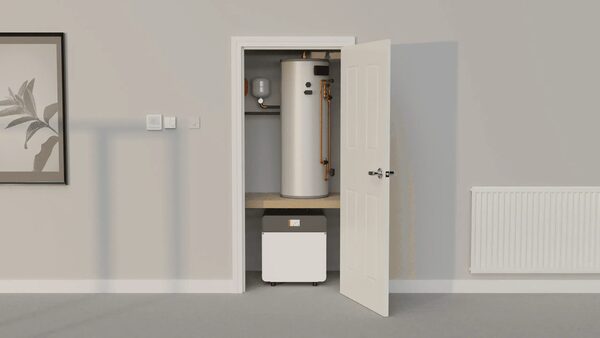
From 21 July 2026, eligible off-gas grid properties are able to apply for an uplifted grant of £9,0005. The uplifted grant value of £9,000 applies to air-source or ground source heat pumps in eligible off-gas grid properties5. The £9,000 figure is also given as the amount off the cost and installation of air-to-water or ground source heat pumps in eligible off-gas grid properties24.
The condition is straightforward: the property must not be fuelled by mains gas30. That is the test that separates the standard grant from the uplifted one. A home heated by oil, LPG or electricity rather than mains gas is in the uplifted category; a home on mains gas is not.
The uplift matters most in rural areas, where off-gas-grid homes are concentrated and where the cost of a heat pump installation is often higher because of the fabric of the building and the distance from installers. The £9,000 figure is £1,500 above the standard £7,500 grant, and both figures are stated here so the difference is visible rather than implied.
The uplifted grant is available for air-to-water or ground source heat pumps, not for air-to-air heat pumps or biomass boilers. A household off the gas grid considering a biomass boiler is looking at the biomass grant value rather than the uplifted heat pump figure.
The scheme's budget position is less settled than the grant values. One official statistics source gives £295 million for 2025/26, with 2024/25 funding increased by £30 million, while an official guidance source gives £450 million. The two figures have not been reconciled, and unspent budget is not carried over to the next scheme year26. That carry-over rule is the one that matters most to timing: a scheme year's allocation does not roll forward, so a delay across a year boundary can change what is available.
Warm Home Discount: £150 off your bill each winter
The Warm Home Discount is a bill rebate rather than a capital grant. The scheme primarily provides support through the provision of £150 energy bill rebates, funded through a levy on all domestic electricity suppliers3. Around 6 million households now benefit from a £150 rebate off their winter energy bill4. The scheme covers England, Scotland and Wales and will run until 31 March 20313.
The rebate is £150 per household, and the scheme has been confirmed through to 2030-314. It is described in local authority guidance as a £150 rebate off electricity bills11. The Warm Home Discount reaching around 6 million households is the measure of its scale4.
One change affects how the cost is recovered. From April 2026, the recovery of Warm Home Discount costs shifts from the standing charge to the unit rate on household energy bills4. That changes who bears the cost across the customer base, though not the £150 rebate itself.
The rebate is not a grant for work. It reduces a winter bill and does not fund an installation. It also cannot be combined with ECO funding for any measures: ECO and WHD funding cannot be combined for any measures8. A household receiving the Warm Home Discount and considering ECO-funded insulation is therefore looking at two separate routes, not a stacked one.
The £150 figure is the one carried by the scheme's own pages and by the annual report, and the £140 figure has not been reconciled with them.
Where Scotland differs: Home Energy Scotland and self-build limits
Scotland runs a separate grant and loan route through Home Energy Scotland. Owner occupiers can get up to £7,500 for energy-efficiency improvements such as insulation and up to £7,500 for clean heating systems such as heat pumps31. People living in rural areas can apply for extra grant funding and could get up to £1,500 extra for energy-efficiency improvements and up to £1,500 extra for clean heating systems31.
That structure differs from the Boiler Upgrade Scheme in an important way: it separates fabric improvements from heating system improvements, and it funds both. A Scottish household can therefore seek support for insulation and for a heat pump through the same service, where an English or Welsh household looking at the Boiler Upgrade Scheme is looking at a heating-only grant.
Home Energy Scotland is also the advice route. Advisors can be reached by calling 0808 808 2282, with phone lines open Monday to Friday 8am to 8pm, and 9am to 5pm on Saturdays32. The service runs free online sessions, including a "Save energy at home" webinar32.
Area-based schemes operate alongside the national grant and loan route. Energy Efficient Scotland area-based schemes are delivered through local authorities, which is the Scottish equivalent of the local authority delivery model used for the Warm Homes Local Grant in England33.
The self-build position is one of the sharper differences. New build properties which the developer is still building are not eligible for Boiler Upgrade Scheme funding1. If a household moves into a finished new build with a fossil fuel boiler, a grant for a heat pump may be available under the scheme1. The distinction is between a property still under construction and a completed one being occupied.
Which technologies are funded and which are not
The funded list under the Boiler Upgrade Scheme is specific. Air-to-water heat pumps, air-to-air heat pumps, ground source heat pumps including water source heat pumps and shared ground loops, and biomass boilers are eligible5. The BUS provides upfront capital grants to support the installation of heat pumps and biomass boilers in residential and non-residential properties27.
Hybrid systems are the clearest exclusion. You cannot get a grant for a hybrid heat pump system, for example a combination of gas boiler and air source heat pump7. That rules out the Boiler Upgrade Scheme for a household wanting to keep a gas boiler as a backup or top-up.
Hybrid heat pumps do appear elsewhere. Hybrid heat pumps are an eligible measure under the Warm Homes Local Grant10. So the technology is not unfunded in principle; it is unfunded through the Boiler Upgrade Scheme and funded through a local authority route instead. That distinction matters because the two schemes have different eligibility tests and different delivery models.
The replacement requirement also shapes what counts. The property must be replacing a fossil fuel heating system such as gas, oil or LPG, or an electric heating system excluding existing heat pumps22. A household replacing an existing heat pump is not in scope.
| Technology | Boiler Upgrade Scheme | Warm Homes Local Grant |
|---|---|---|
| Air-to-water heat pump | Funded, £7,500 standard, £9,000 off-gas-grid2 | Low carbon heating improvements10 |
| Air-to-air heat pump | Funded, £2,50021 | Not specified |
| Ground source heat pump | Funded, £7,500 standard, £9,000 off-gas-grid2 | Low carbon heating improvements10 |
| Biomass boiler | Funded, £5,00021 | Not specified |
| Hybrid heat pump | Not funded7 | Eligible measure10 |
Rules on combining schemes: BUS, ECO and Warm Home Discount
Combination rules are where most households get caught out, because the schemes look additive and are not. Funding from BUS and ECO cannot be blended for the same measure or be included within an ECO4 project8. ECO and WHD funding cannot be combined for any measures8.
The practical effect is that a single installation cannot draw on two funding streams. A heat pump funded through the Boiler Upgrade Scheme cannot also have part of its cost met through ECO. Insulation funded through ECO cannot also be part-funded through the Warm Home Discount.
Where schemes can sit alongside each other, they do so by funding different measures. Green Homes Wales can be used alongside the UK Government's Boiler Upgrade Scheme, which provides grants for heat pump installations across England and Wales18. That is an explicit statement of compatibility, and it is the exception rather than the rule.
The Warm Homes Plan brings several strands together. It includes the existing WH:LG, WH:SHF and BUS schemes, and new plans for loans to consumers for home retrofits and investment in the retrofit supply chain34. The Warm Homes Local Grant is a government grant scheme to provide energy performance upgrades and low carbon heating via local authorities34.
For a household, the sequence is therefore: establish which measures are wanted, establish which scheme funds each measure, and check that no two schemes are being asked to fund the same measure. The combination rules are stated in the delivery guidance for ECO4 and apply across the schemes it covers8.
Budget, timing and how long the schemes run
The Boiler Upgrade Scheme runs from 2022 to 2025 according to one official guidance source, while the scheme's own pages give an opening date of 23 May 2022 and a closing date of 30 December 202923. The two statements have not been reconciled, and the closing date on the scheme's own application pages is the later one.
The Warm Home Discount is confirmed through to 2030-31 and covers England, Scotland and Wales, running until 31 March 20314. That gives it a longer confirmed horizon than the Boiler Upgrade Scheme.
Local delivery has its own timescales. Liverpool City Council was awarded £5.8m to spend on improving the energy efficiency of approximately 450 homes over a three-year period35. That is the shape of local authority delivery: a fixed allocation, a fixed number of homes, and a fixed period.
Budget carry-over is the timing rule that bites hardest. Unspent budget is not carried over to the next scheme year26. A scheme year's allocation that is not committed within the year does not roll forward, which means the availability of grant funding can change at a year boundary even where the scheme itself continues.
Quarterly reporting gives a view of how the scheme is running. The most recent quarterly report covers the period from 1 May 2026 to 31 July 20267. The scheme launched on 23 May 2022 to support the decarbonisation of heat in buildings9. The annual report covers April 2025 to March 20269.
For a household, the timing implications are concrete. The voucher window is six months for ground-source heat pumps and cannot be extended29. The scheme year boundary affects budget availability26. The installer controls the application, so the household's own schedule is secondary to the installer's capacity and the voucher window.
Where to check eligibility for each nation

The official eligibility checkers differ by nation, and using the right one avoids an application that fails at the first test.
In England and Wales, the Boiler Upgrade Scheme eligibility check sits on GOV.UK, and the scheme is administered by Ofgem1. The property must have a valid energy performance certificate, and the certificate number must be provided6. Even properties that are exempt from needing an EPC still require a valid EPC to be submitted at voucher application stage25.
In Scotland, Home Energy Scotland is the route for both advice and grant and loan applications, reachable on 0808 808 228232. Area-based schemes run through local authorities33.
In Wales, Green Homes Wales operates alongside the Boiler Upgrade Scheme, and the Welsh Government has published its position on the scheme18.
In Northern Ireland, the NI Housing Executive's energy advice tool is the starting point, and it notes that there may be energy grant help to allow changes to be made17. Belfast City Council publishes home heating guidance for householders12.
Local authority routes exist across England. Greater Manchester, London and Liverpool each run Warm Homes Local Grant allocations, and eligibility is set locally within the national programme10. Tameside Council's grants and funding page and East Hertfordshire's grants page are examples of council-level signposting11.
Some organisations signpost rather than fund. Your Home, Better does not offer grants or funding, but can identify sources that could help towards the costs of home energy projects11. That distinction is worth holding onto: an advice service that identifies funding is not the same as a funding body.
Contacts for Boiler Upgrade Scheme questions
General enquiries about the scheme go to BUS.enquiry@ofgem.gov.uk22. Complaints about Ofgem's administration of the scheme go to feedback@ofgem.gov.uk22. Where documents need to be provided directly to Ofgem, the address is BUS.propertyowner@ofgem.gov.uk22.
Ofgem administers the scheme on behalf of the Gas and Electricity Markets Authority27. That means Ofgem handles the administrative side, while the installer handles the application itself. A household with a question about whether a voucher has been issued, or about the handling of an application, is dealing with Ofgem; a question about the installation itself is a matter for the installer.
The distinction matters when something goes wrong. If a voucher expires, the remedy is a new application rather than an extension, and that is an administrative process25. If an application is handled incorrectly, the complaint route is the feedback address rather than the general enquiries address22.
Sources36 cited
- Check if you're eligible for the Boiler Upgrade Scheme, GOV.UK, 2026-09-17
- What you can get from the Boiler Upgrade Scheme, GOV.UK, 2026-09-17
- Warm Home Discount, Ofgem, 2026-09-17
- DESNZ annual report and accounts 2025 to 2026, GOV.UK, 2026-09-17
- Boiler Upgrade Scheme guidance for installers v5.1, Ofgem, 2026-07-02
- Boiler Upgrade Scheme, Find Government Grants, 2026-09-18
- Boiler Upgrade Scheme quarterly report issue 17, Ofgem, 2026-08-31
- ECO4 delivery guidance v3.2, Ofgem, 2025-12-08
- Boiler Upgrade Scheme annual report April 2025 to March 2026, Ofgem, 2026-07-31
- Warm Homes Local Grant, Greater Manchester Combined Authority, 2026-09-17
- Get help with your energy bills, Ofgem, 2026-09-17
- Home heating, Belfast City Council, 2026-09-20
- Heat pump deployment quarterly statistics, UK 2024 Q3, DESNZ, 2024-12-05
- Green Homes Grant, National Audit Office, 2021-09-08
- Heat pump deployment quarterly statistics, UK 2025 Q1, DESNZ, 2025-06-05
- Warm Homes Local Grant 2025-2028, London Assembly, 2025-04-03
- NI Home Energy Saving Tool, Northern Ireland Housing Executive, 2026-09-17
- £5 million to help Welsh households invest in greener homes, Welsh Government, 2026-03-05
- Public Accounts Committee report on the Boiler Upgrade Scheme, UK Parliament, 2024-05-26
- Notice of approved grant categories and values for the Boiler Upgrade Scheme, GOV.UK, 2026-07-21
- Carbon Budget and Growth Delivery Plan: heat and buildings factsheet, GOV.UK, 2026-06-23
- Boiler Upgrade Scheme guidance for property owners V5, Ofgem, 2026-04-28
- Grants and funding, Tameside Council, 2026-09-17
- Boiler Upgrade Scheme, Ofgem, 2026-09-17
- BUS property owner guidance V2.3, Ofgem, 2023-09-25
- Boiler Upgrade Scheme quarterly report issue 14, Ofgem, 2025-11-26
- Boiler Upgrade Scheme guidance for installers V5, Ofgem, 2026-04-28
- Boiler Upgrade Scheme installer guidance, Ofgem, 2022-07-21
- BUS guidance for property owners v5 draft, Ofgem, 2026-03-25
- Boiler Upgrade Scheme installers, Ofgem, 2026-09-17
- Home Energy Scotland grant and loan, House of Commons Library, 2026-05-13
- Energy Efficient Scotland area-based schemes, West Lothian Council, 2026-09-17
- Apply for a Warm Homes Local Grant, Liverpool City Council, 2026-09-17
- Warm Homes Plan research briefing, House of Commons Library, 2026-09-17
- Home and business grants, schemes and advice, East Hertfordshire District Council, 2026-09-17
- Boiler Upgrade Scheme guidance for property owners v5.1, Ofgem, 2026-07
 The Full Grants and Schemes GuideWhich grants can you actually get right now, and how do you apply for them?
 Grants and Energy IndependenceCan you get a grant for solar panels or a battery?
 Apply for a Home Energy GrantThe application sequence common to funded schemes: the checker, the survey or assessment, the installer, the paperwork and the sign-off.
 Check Which Energy Grants ApplyWhich energy grants can you actually get right now, and which have closed?
 Financing an InstallationPaying monthly for a boiler, solar panels, battery or heat pump sounds simple, but who actually lends you the money and what happens if the work goes wrong?
 The Full Heat Pumps GuideWill a heat pump keep my house warm in winter, and what does one cost to buy and run?