
In this guide
Payback is the plainest test a household can apply to an energy measure: how many years of saving it takes to get the money back. The calculation used in building regulations guidance is simple division. The cost of implementing the measure, not the whole cost of the project, is divided by the annual energy saving that measure achieves1. Nothing in that sum allows for interest, inflation, or a change in energy prices, which is why the same measure can be quoted at very different paybacks by different sources.
On typical published figures, a rooftop solar photovoltaic system costs around £6,100 for an average 3.5 kilowatt peak installation and saves between £530 and £650 a year, giving a payback of 10 to 12 years2. Heating controls sit at the other end: building regulations guidance in England treats seven years as the economic feasibility threshold for installing thermostatic room controls, against 15 years for any other measure3. Turning a thermostat down by one degree costs nothing at all and, according to official advice in Northern Ireland, could save as much as 10 per cent on heating bills.
The 15 year test matters beyond the household budget, because it is the line that decides whether a measure is required at all when work is done to a building. Where an upgrade is not technically or functionally feasible, an element should be brought to the best standard achievable within a simple payback of no greater than 15 years. That single number shapes much of what a builder is obliged to do.
What a payback period is, and why it matters
Simple payback is defined in draft building regulations guidance for Wales as the marginal additional cost of implementing an energy efficiency measure divided by the value of the annual energy savings achieved by that measure, taking no account of VAT5. A later version of the Welsh test instead calculates payback of the initial cost within 15 years through energy savings, using the latest version of SAP and taking account of VAT in both cost and saving. Those are two different sums, and a reader comparing published figures should expect them to disagree for that reason alone.
Payback is not the same as rate of return, and it is not the same as lifetime saving. A measure with a 12 year payback and a 25 year life delivers roughly half its life as pure saving; a measure with a 12 year payback and a 12 year life delivers none. Domestic battery storage is the clearest case, with payback periods in the region of 8 to 12 years, which is similar to its reported lifespan4. Solar panels sit the other way round, lasting 25 years or more against a 10 to 12 year payback2.
Payback also drives policy. In the private rented sector in England and Wales, the prohibition on letting non-domestic property below EPC band E does not apply where the cost of purchasing and installing a recommended improvement fails a simple seven year payback test, that is, where expected savings on energy bills over seven years from completion are less than the cost of repaying it. That exemption lasts five years6. A Welsh consultation response put the household tolerance lower still, concluding that any payback mechanism would need to cover the cost of the investment within ten years to be acceptable to homeowners7.
And some measures never clear the bar. Work on Scottish tenements acknowledged that certain energy efficiency measures may never be cost effective in terms of payback times for owners and will require additional support8. Payback is a useful filter, not a verdict on whether a home should be improved.
Solar PV: 10 to 12 years on a typical £6,100 system
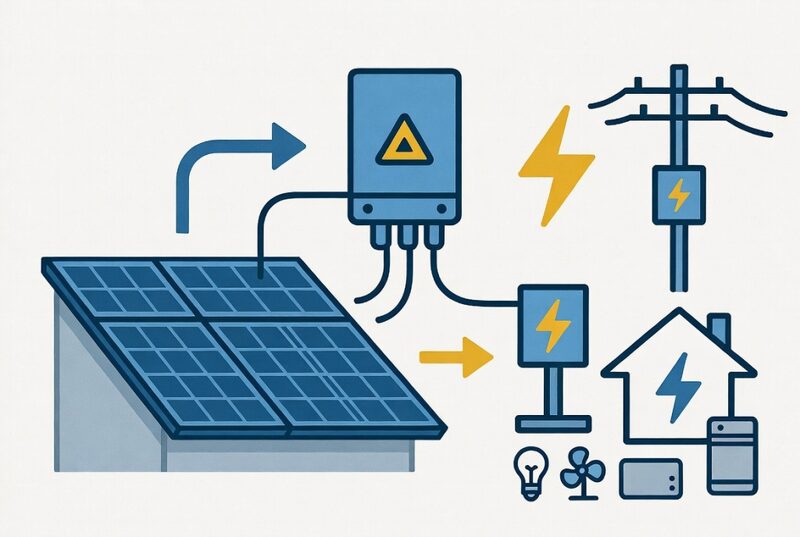
Panels capture energy from the sun and turn it into electricity for the home to use. The direct current produced passes through an inverter to become alternating current. An average system is around 3.5 kWp, uses between six and 12 panels, and covers 10 to 20 square metres of roof2. An independent assessment puts a typical domestic system at around 3.5 kWp as well9.
The published payback figures cluster tightly, then spread at the edges:
| Source and type | Payback quoted | Basis |
|---|---|---|
| Council guidance, October 2025 | 10 to 12 years2 | £6,100 system saving £530 to £650 a year |
| Energy Saving Trust, August 2026 | about 10 to 12 years10 | Current payback period |
| Which?, June 2026 | 10 to 13 years9 | Typical rooftop system, bill savings |
| Centre for Alternative Technology, March 2026 | 10 to 15 years11 | Domestic PV system |
| Bristol Warm Homes Plan, April 2025 | 6 to 12 years12 | Council guidance |
| Centre for Sustainable Energy, November 2025 | 9 years to 16 years13 | High daytime use versus low daytime use |
The spread is not disagreement about the hardware. It is disagreement about who is at home. Rates for selling electricity to the grid are much lower than tariffs for using electricity from the grid, so using solar electricity in the house is far more cost-effective than exporting it2. One analysis found that even using an import price of 20p per kWh and an export price of 10p per kWh, payback may only increase to just over 15 years11.
For independence, solar is the measure that most directly reduces the volume bought from a supplier, and the panels outlast their own payback by a decade or more. The dependence that remains is real: the inverter, the grid connection, the export tariff, and the fact that the system must be registered with the local network operator, usually by the installer2.
Heating controls and heat pumps: the shorter paybacks
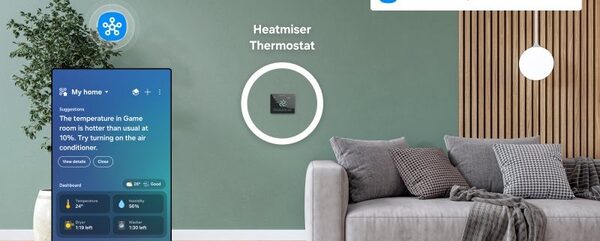
Building regulations guidance in England sets a seven year economic feasibility threshold for the installation of thermostatic room controls, against 15 years for any other measure3. That lower figure is itself an official statement that controls are expected to pay back quickly; a measure only gets a tighter test when it is cheap relative to what it saves.
Controls are also the highest-volume measure in delivery statistics. Heating controls account for 514,780 notified measures in published scheme data14, and make up 8% of reported installations in social housing fund statistics15. Under the Boiler Plus policy, a boiler installation had to include time and temperature controls and one additional energy efficiency measure: weather compensation, a smart thermostat, flue gas heat recovery or load compensation16. In ECO4 the requirement for a full set of heating controls in the property following a boiler installation was removed in August 202517.
Heat pump paybacks depend almost entirely on what is netted off. Energy Saving Trust analysis finds it is possible for a heat pump to pay for itself within two to four years where government grants apply, there is no gas standing charge, and a replacement boiler is avoided, and as little as four years with a good tariff, grants, and the cost of a replacement boiler deducted18. A government options assessment expected a dual fuel household to pay back the increased cost of a higher-specification unit within six years19. An industry report modelled 14 years for a heat pump scenario in a typical gas-heated home20. These are not contradictions so much as four different questions.
Solar water heating is quoted at less than ten years where it replaces direct electric heating, but where it displaces gas, and without upfront grants to boost the market, the financial payback will be many years21. Micro-CHP appliances were described by an industry body as having long payback periods, typically over 8 years22.
How usage patterns and location change the answer
The same hardware on the same roof pays back at different speeds depending on how much of the day the house is occupied and how the roof is oriented. For a typical system of around 3.5 kWp, the annual bill saving is put at £650 a year if someone is home all day, but £530 a year if everyone is out until 6pm, because rates for selling electricity to the grid are much lower than the tariffs for buying it back. Orientation moves the same hardware again: a system facing east or west tends to get around 15 to 20% less energy than one facing directly south23.
| Location | South-facing, no shading | East-facing, modest shading |
|---|---|---|
| London | 11 years 3 months | 16 years 1 month |
| Belfast | 11 years 11 months | 17 years 4 months |
| Edinburgh | 12 years 2 months | 18 years 0 months |
| Cardiff | not given | 15 years 8 months |
Orientation costs more than latitude. A system facing east or west tends to get around 15 to 20% less energy than one facing directly south2. Occupancy matters by a similar order: a typical home saves £650 a year if someone is home all day, against £530 a year if everyone is out until 6pm2. Centre for Sustainable Energy guidance reaches the same conclusion from the other direction, with installation costs repaid in as little as nine years for households using a lot of electricity during the day and closer to 16 years where little is used during daylight hours13.
Plug-in solar sits in a different cost bracket and pays back faster. Independent comparison puts plug-in panels at 3.6 to 7.1 years against 10.9 to 12.2 years for rooftop systems24. A parliamentary briefing notes calculated annual electricity bill savings of £110 a year, and therefore a five year payback with a £500 upfront cost25; the underlying analysis gives the same £110 a year saving on a typical upfront cost of around £500 for an 800 watt system26.
Lifespans and what happens after payback
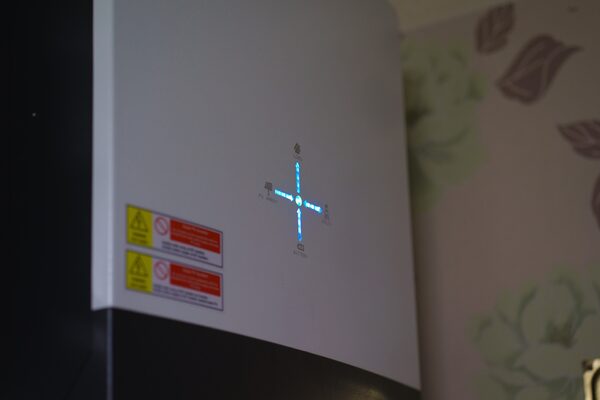
Payback tells you when the spending is recovered. What follows depends on how much life is left. Panels last 25 years or more, but inverters usually need replacing after around 12 years2. A second source puts inverter replacement at about 10 to 12 years10; the two documents disagree slightly and the difference falls inside the normal payback window either way, so the replacement is a cost to anticipate rather than a windfall after break-even.
Battery storage is the counter-example. With payback in the region of 8 to 12 years and a similar reported lifespan, the measure can approach the end of its useful life at about the point it breaks even4. Where whole buildings are concerned, the arithmetic stretches much further: the carbon emissions from demolishing and building new can take 10 to 30 years, and sometimes up to 40, to be offset by the improved efficiency of the new building27. That is carbon payback rather than financial payback, and it is a different calculation again.
Fabric measures have no moving parts to fail and no tariff to lose, which is why guidance frames them differently. Scottish government assessment notes that fabric first measures can help to reduce the cost of achieving thermal comfort28. The case for a fabric first approach rests partly on that: insulation continues saving long after it has paid for itself, and it reduces the size and therefore the cost of the heating system that follows it. For the sequencing question, see what order energy improvements should be done in.
Grants, VAT and funding that shorten the payback
Anything that reduces the capital cost shortens the payback proportionally, because payback is a straight division. VAT relief is the broadest such reduction. Energy-saving materials installed in residential accommodation and certain charitable buildings are subject to VAT relief at 0% until 31 March 202729, a position confirmed across HMRC guidance30 and policy documents31. The measure was announced as a temporary VAT cut on the installation of energy efficiency projects such as solar panels, insulation and heat pumps, in place for five years to 202732. Separate legislation extends the reduced VAT rate applying from 1 April 2027 to the installation of energy-saving materials into buildings used solely for a charitable purpose33.
Scotland has run loan and cashback support with different caps at different dates, and the published figures differ by year because the schemes changed:
| Scheme and date | Support stated |
|---|---|
| Home Energy Scotland Loans and Cashback, October 2021 | Up to 40% cashback up to £6,000 for energy efficiency measures34 |
| Home Energy Scotland Loan and Cashback, November 2022 | Maximum funding £15,000 for energy efficiency measures, including maximum cashback of £6,00035 |
| SME Loan and Cashback, October 2021 | Cashback grant of up to £20,000 for renewable and energy efficiency measures34 |
| SME Loan and Cashback, October 2022 | 30% cashback grant up to £10,000 for energy efficiency measures36 |
| SME Loan and Cashback, November 2022 | 75% cashback grant up to £20,000 for energy efficiency measures35 |
The current Scottish SME Loan and Cashback scheme funds the installation of energy efficiency measures, clean heating and renewables37. In England and Wales, the Boiler Upgrade Scheme applies where a household is replacing a fossil fuel heating system38. Where there is no valid EPC, alternative evidence may include a utility bill dated within three months, the most recent fuel receipt, photographs of the existing heating system, and an expired EPC where available39. Independent work on financing has also pointed to models that pay a cashback incentive if and when the home reaches a specified level of reduction in energy demand or heat loss40. Checking entitlement in advance is covered in checking what grant help you can get before you start.
Roof, orientation and property limits on solar payback
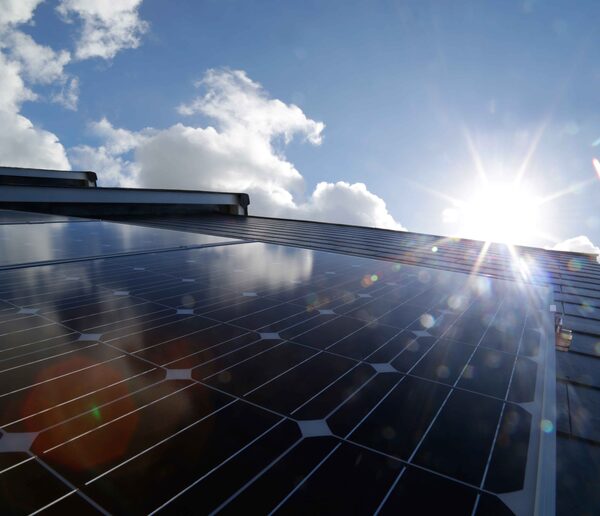
Before payback arithmetic is worth doing, the roof has to work. Guidance is direct about the preconditions: the roof must be in good condition, have sufficient space, and receive ample sunlight throughout the day, and where a roof is heavily shaded solar panels may not be the most suitable option41. Panels can be installed on both pitched and flat roofs, but on a flat roof they need to be tilted and spaced to avoid shading one another2.
Permission is usually straightforward. Solar installations are generally treated as permitted development and will generally not need planning permission42, a position repeated in council guidance across England43. Listed buildings are the firm exception.
"solar panels on listed buildings will need planning permission and listed building consent"
There are exceptions for listed buildings and homes in conservation areas2, and where permitted development rights do not apply, planning permission will be required41. Restrictions can also come from conditions attached to the original planning permission, an Article 4 Direction, or the property deeds41. On industrial buildings and warehouses, permission is required if the installation is used for any purpose other than the undertaking concerned, if it is within 5 metres of any boundary of the curtilage of the premises, or if the external appearance of the building is materially affected44. Installation may also require approval under the building regulations, because of the additional loading on the roof structure and the associated electrical works41.
Output is less weather-dependent than many expect. Solar PV requires only daylight and not direct sunlight to generate electricity45, panels work during daylight even when it is cloudy or overcast because they use light rather than heat9, and good generation can still be achieved on a cloudy day. These constraints and choices are explored further in rooftop or ground mount solar.
The 15-year test and where it applies
The economic feasibility test in building regulations guidance asks whether a measure achieves a payback of its initial cost within 15 years through energy savings1. Approved Document L guidance sets the same threshold and defines economically feasible as a simple payback period of 15 years or less5. In England, the test is expressed as two thresholds: 7 years for the installation of thermostatic room controls, and 15 years for any other measure3.
The practical effect shows up when existing elements are renovated or retained. Where the improved U-value would not achieve a simple payback of 15 years or less, the element is not required to meet it3. Guidance on loft insulation in Wales puts the fallback the same way: where an upgrade is not technically or functionally feasible, the element should be upgraded to the best standard which can be achieved within a simple payback of no greater than 15 years46. Floor insulation guidance uses an identical fallback of no greater than 15 years simple payback47.
Two points follow for a household. First, the 15 year figure is a regulatory floor for what must be done, not advice on what is worth doing: measures well outside it may still be sensible for comfort, carbon or resilience, and measures inside it are not thereby recommended. Second, the inputs are prescribed. The Welsh test is calculated using the latest version of SAP, taking account of VAT in both cost and saving48, while the earlier draft took no account of VAT5; the English test is grounded in the National Calculation Methodology48. A householder's own sum, using their own tariff, will not reproduce the regulatory answer.
Measurement matters too. Published impact analysis of energy efficiency measures covers installations from mid-May 2023 to mid-May 2024, with savings estimated in 2024, and notes that the Energy Company Obligation accounted for around 80% of such measures installed during the period49. Separately, a consultation has proposed reducing the validity period of EPCs from ten to five years50, which would change how often the assumptions behind a recommendation report are refreshed. For checking what actually happened after the work, see measuring savings after energy improvements, and for the wider sequence, the getting started guide.
Sources50 cited
- Approved Document L Volume 1, consultation version, Welsh Government, 2025
- Solar panels: costs, savings and payback, Hammersmith and Fulham Council, October 2025
- Approved Document L, Conservation of fuel and power, Volume 1: Dwellings, UK Government, 2023 amendments
- Battery storage advice, Centre for Sustainable Energy, October 2025
- Approved Document L, draft consultation version, Welsh Government, December 2019
- Guidance on PRS exemptions and exemptions register evidence requirements, GOV.UK, May 2026
- Summary of consultation responses, Welsh Government, October 2015
- Tenements Short Life Working Group final report, Scottish Government, November 2023
- Solar panel myths: five common concerns debunked, Which?, June 2026
- Solar power facts, Energy Saving Trust, August 2026
- Solar photovoltaic information service, Centre for Alternative Technology, March 2026
- Bristol Warm Homes Plan, Bristol City Council, April 2025
- A complete guide to solar PV, Centre for Sustainable Energy, November 2025
- ECO public reports and data, Ofgem, August 2026
- Warm Homes Social Housing Fund statistics, GOV.UK, August 2026
- Written evidence on heating policy, UK Parliament, 2026
- Summary of updates to ECO4 delivery guidance and measures table, Ofgem, August 2025
- Flexible futures: integrating smart tariffs with low carbon home technologies, Energy Saving Trust, July 2026
- Raising minimum standards for heat pumps: options assessment, UK Government, November 2024
- Green heating can cut bills by over £3,000 a year, Solar Energy UK, December 2022
- Solar water heating information service, Centre for Alternative Technology, June 2025
- Consultation response on domestic heating, Heating and Hotwater Industry Council, August 2018
- Are solar panels worth it?, Which?, June 2025
- Plug-in solar panels, Which?, September 2026
- POSTnote on plug-in solar, UK Parliament POST, June 2026
- How plug-in solar can save UK homes on energy bills, Carbon Brief, April 2026
- High Rise Retrofit and Upgrade Programme, Phase 1, City of Edinburgh Council, April 2026
- Heat in Buildings Strategy strategic environmental assessment, Scottish Government, February 2021
- VAT rates on goods and services, HMRC, July 2026
- VAT: energy-saving materials and grant-funded heating supplies, HMRC
- Extension of VAT energy saving materials relief, GOV.UK, January 2024
- Major acceleration of homegrown power in Britain's plan for greater energy independence, GOV.UK
- Explanatory note to SI 2024/24, legislation.gov.uk, 2024
- Heat in Buildings Strategy, Scottish Government, October 2021
- Heat Pump Sector Deal Expert Advisory Group: Scottish Government response, Scottish Government, November 2022
- Heat in Buildings Strategy 2022 update: progress, Scottish Government, October 2022
- Heat in Buildings progress report 2025, Scottish Government, October 2025
- Getting help with your energy bills, Birmingham City Council, April 2026
- Boiler Upgrade Scheme guidance for property owners, Ofgem, March 2026
- All the things I could do: financing green home upgrades, Nesta, May 2023
- Solar photovoltaic (PV) panels, London Borough of Bromley
- Solar panels and planning permission, Cornwall Council
- Switch Together Birmingham: buying solar panels and battery storage, Birmingham City Council, January 2026
- Solar panels guidance, City of York Council
- Generating your own energy: solar electricity, Welsh Government, September 2018
- Building regulations: loft insulation, Welsh Government
- Building regulations: floor insulation, Planning Portal, 2026
- Building regulations Part L and F review, stage 2A, Approved Document L, Welsh Government, November 2020
- National Energy Efficiency Data Framework report, summary of analysis 2026, GOV.UK, June 2026
- EPC reform consultation analysis, Scottish Government, January 2025
 Payback and SavingsHow long until a home battery pays for itself, and why do quoted payback times vary so much?
 The Full Where to Start GuideWhich home improvements actually cut your bills, and which should you do first?
 Planning Energy IndependenceCutting what you use, moving heating off gas, putting solar on the roof and adding a battery all help, but none of them takes you off the grid completely.
 New Electricity ConnectionWho do you contact for a new or upgraded electricity connection, and what will it cost?
 Home Energy ModelThe energy rating on your EPC is about to be worked out differently when you buy, sell or build a home.
 Installation Cost TrendsTracks the published median and average installed costs of domestic solar, heat pumps and batteries and how they have moved.