
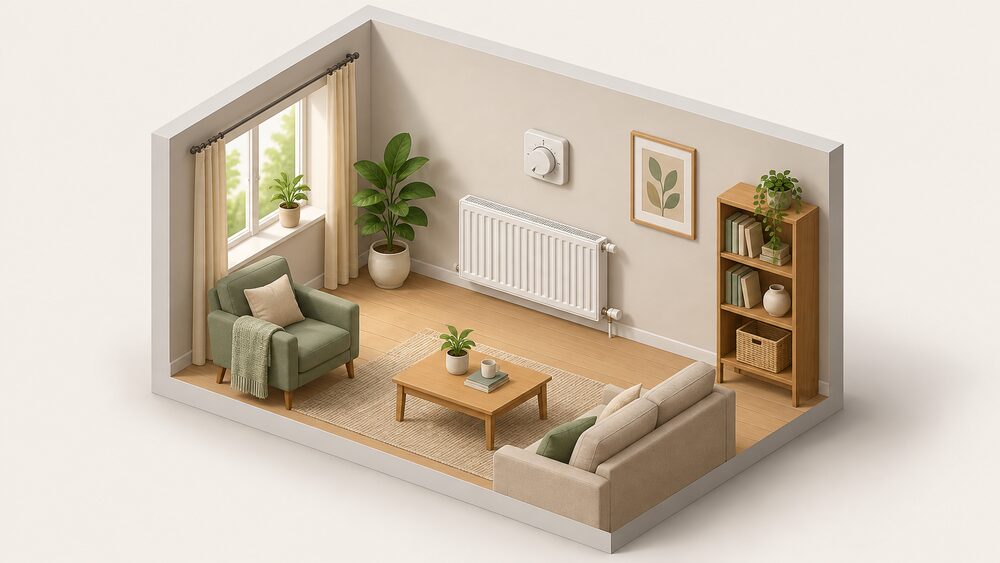
Short answer
Turning a room thermostat down by one degree is the most repeated energy-saving instruction in the UK, and the figures behind it are consistent in shape but not in size. Official guidance from Northern Ireland's government puts the saving at as much as 10 per cent on heating bills1, and the Energy Saving Trust estimate quoted by Which? is about 10 per cent from turning the main thermostat down one degree2. Independent guidance from ivie is more cautious, putting the range at 4% to 8% on the heating bill for every degree lowered3.
In pounds, the quoted annual saving runs from around £60 to around £120, depending on the home, the region and the tariff. Which? gives £85 to £90 a year for a typical home4, Smart Energy GB quotes around £605, and the Energy Saving Trust's own worked example, turning the thermostat from 22°C to 21°C, gives £120 in Great Britain and £80 in Northern Ireland6. The saving is real, modest, and comes from the same mechanism in every case: a lower setpoint means the boiler or heater runs for fewer hours.
The saving from one degree: up to 10% of heating bills
The percentage figure is the one most often quoted, and it comes from several directions. Northern Ireland's official insulation guidance states that turning the thermostat down by just one degree Celsius could save as much as 10 per cent on heating bills1, and the same wording appears in the central heating controls guidance on the same site8. The energy efficiency tips page repeats it for central heating: turning it down by one degree could cut heating bills by up to 10 per cent9. The Energy Saving Trust estimate, quoted by Which?, is about 10 per cent from the main thermostat2.
Not every source is that generous. ivie puts the range at 4% to 8% per degree3, and the Chartered Institute of Plumbing and Heating Engineering quotes around 7% from turning the thermostat down from 20°C to 19°C10. East Hertfordshire District Council goes further in the other direction, stating that reducing the thermostat by 1°C could save up to 25% of heating bills and associated carbon11, a figure well above every other source here and best treated as an outlier.
The spread has a physical explanation. A one degree reduction saves a proportion of the heat a home would otherwise have used, and that proportion depends on how far the indoor temperature sits above the outdoor temperature, how quickly the home loses heat, and how the heating is controlled. A well-insulated, draught-free home with a condensing boiler running at a low flow temperature will see a different percentage from a leaky home with an oversized boiler. The 10 per cent figure is best read as an upper estimate for a typical home, and 4% to 8% as the more conservative working range.
For a household's energy independence, the point is that this is a saving available without any purchase, installation or supplier change. It reduces the volume of gas or electricity the home must buy, which is the most direct form of independence a household can take.
What the figures work out at in pounds: £60 to £120 a year
The pound figures are more useful than the percentages because they can be checked against a bill, and they cluster into three bands.
| Source | Annual saving | Basis |
|---|---|---|
| Which? | £85 to £90 | Typical home, one degree4 |
| Smart Energy GB | Around £60 | One degree5 |
| Confused.com | £90 | One degree12 |
| Uswitch | Up to £90 | One degree13 |
| Energy Helpline | Up to £80 | One degree14 |
| Consumer Council (NI) | £80 | 1°C reduction15 |
| Northern Gas Networks | Up to £100 | One degree16 |
| Energy Saving Trust | £120 GB, £80 NI | 22°C to 21°C6 |
| Cadent Gas | £90 | 22°C to 21°C, main living areas17 |
| Consumer Council | £80 | 1°C reduction18 |
| Power NI | Around £30 | One degree19 |
The Northern Ireland figures sit consistently lower than the Great Britain ones, and the Energy Saving Trust states the reason plainly: turning the thermostat down from 22°C to 21°C can save around £120 a year in GB or £80 in NI6. That regional gap reflects different energy prices and housing stock rather than a different physical response to the temperature change.
The £30 figure from Power NI is the lowest in the set and applies to a room thermostat reduction of one degree19. It is not contradicted by the others so much as narrower in scope, and it is worth noting that a household on a low tariff or in a small, well-insulated flat will sit at the bottom of the range.
Does one degree matter for carbon as well as cost?
Yes, and the carbon figure is quoted alongside the money in several sources. Smart Energy GB states that lowering the thermostat, even by just one degree, will reduce home emissions and, as a bonus, save money on bills20. The Energy Saving Trust figure quoted by Netatmo puts the combined saving from lowering radiator temperature by one degree at £55 and 300kg of carbon dioxide a year7.
That 300kg figure is the only quantified carbon saving in the sources here, and it is attached to radiator temperature rather than the thermostat setpoint, though the two are linked in a central heating system. It gives a sense of scale: a one degree reduction across a household's heating is a meaningful emissions cut, not a rounding error.
The carbon saving matters for independence in a different way from the cash saving. A home that uses less gas is less exposed to gas price movements and to the import prices that feed them. A home that uses less electricity is less exposed to wholesale electricity prices. Neither makes a home self-sufficient, and the grid connection, the supplier relationship and the fuel source all remain. What a one degree reduction does is shrink the volume of energy the household must buy from outside, which is the part of the bill a household controls most directly.
How to turn it down without losing comfort
The comfort objection is the main reason people do not make the change, and the sources address it directly. The Energy Saving Trust states that draught-free homes are comfortable at lower temperatures, so a household may be able to turn the thermostat down and save even more21. That makes draught-proofing the enabling measure: sealing gaps around doors, windows, letterboxes and pipework allows a lower setpoint without a cold room.
The recommended winter range is between 18°C and 21°C, described as the lowest comfortable temperature for most people6. The Energy Saving Trust's worked example starts at 22°C and reduces to 21°C, then notes that going down to 18°C saves a further 7%10. That gives a household a staged path rather than a single leap.
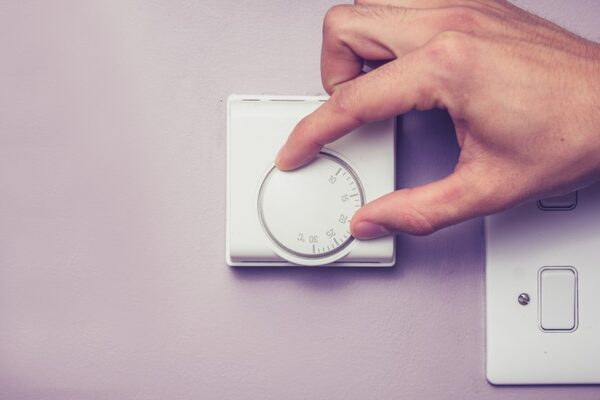
A room thermostat works by keeping the home at a steady temperature: it turns the heating on until the set temperature is reached, then switches it off6. A timer or programmer is a separate control that decides when the heating is allowed to run at all. The two work together, and the thermostat setting determines how much energy is used during the periods the timer permits.
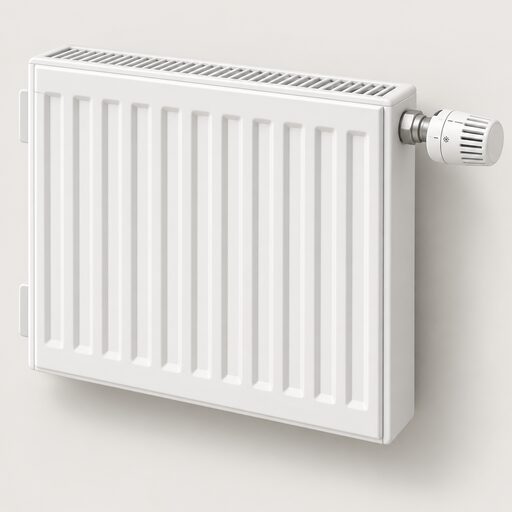
Smart controls can automate the reduction, but they do not change the physics. Smart Energy GB states that a smart thermostat could save money but savings are not guaranteed, and that any cost benefit comes from reducing wasted heating rather than from the thermostat itself, so results vary from home to home23. For renters, the same guidance notes that reducing the thermostat by one degree can lower bills without sacrificing comfort24, which matters because a thermostat adjustment is one of the few measures available without the landlord's consent.
For a household working through the wider set of controls, how to use heating controls to save money covers the timer, thermostat and radiator valves together, and how to bleed a radiator deals with the air that stops a radiator heating evenly in the first place.
Sources24 cited
- Insulation, nidirect, 2026-09-02
- Tips to reduce your heating bills, Which?, 2026-06-02
- The best way to run your central heating to save money, ivie, 2026-09-20
- Draught-proofing, Which?, 2026-05-05
- Ultimate energy saving tips guide, Smart Energy GB, 2026-04-24
- Thermostats and heating controls, Energy Saving Trust, 2026-02-10
- Low the temperature of your radiator: what difference does 1C make, Netatmo, 2026-09-20
- Central heating controls, nidirect, 2026-09-02
- Energy efficiency tips, nidirect, 2026-09-17
- How to save money on energy bills, CIPHE, 2026-09-17
- Home and business grants, schemes and advice, East Hertfordshire District Council, 2026-09-17
- Make your home more energy efficient, Confused.com, 2026-07-06
- Free energy saving tips, Uswitch, 2025-10-14
- Electric heaters vs storage heaters, Energy Helpline, 2026-09-20
- Energy efficiency, Consumer Council, 2026
- Energy efficiency, Northern Gas Networks, 2026-06-25
- Energy efficiency, Cadent Gas, 2026-09-20
- Save energy and money, Consumer Council, 2026-09-20
- Code of practice on efficient use of electricity, Power NI, 2026-09-20
- How can I reduce my carbon footprint, Smart Energy GB, 2026-03-16
- Stay warm in winter: five areas to add insulation in your home, Energy Saving Trust, 2025-02-07
- Central heating wars: have you switched off yours yet, Which?, 2020-03-27
- What is a smart thermostat, Smart Energy GB, 2026-08-19
- Smart meters for renters, Smart Energy GB, 2026-03-16
 Changing Habits SavingsWhat the evidence says behavioural change saves: around £90 to £120 a year for one degree off the thermostat, £100 to £110 a year for using a full set of heating controls, and £304 to £351 a year for a bundle of small changes.
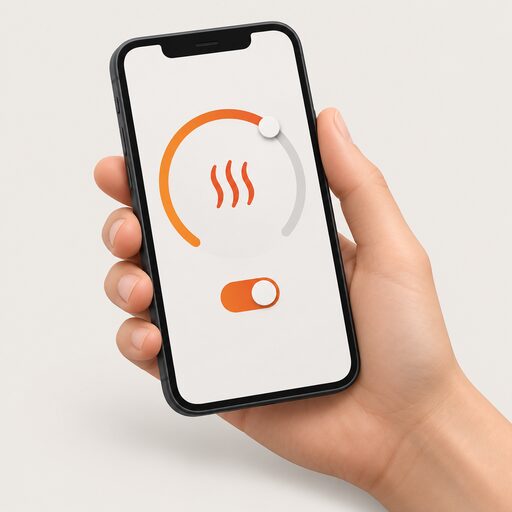 Do Smart Controls Save Money?Do smart heating controls really cut your bills, and by how much?
 Thermostat and Room TemperaturesWhat temperature should a thermostat be set to, and does it differ from room to room?
 Smart Thermostats ExplainedWhat does a smart thermostat actually do, and is it worth it?
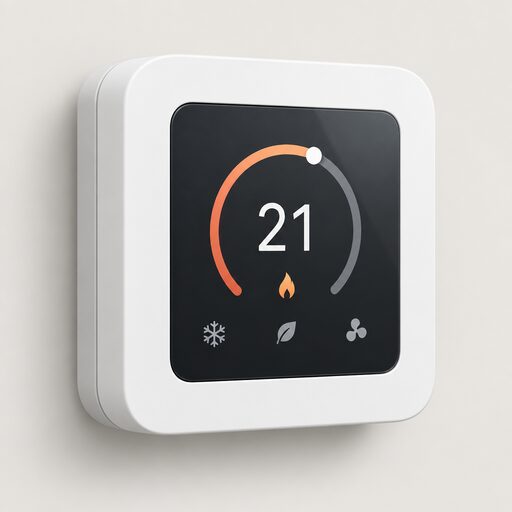 Heating Controls CostA smart thermostat usually costs between about a hundred and two hundred and fifty pounds, but fitting can push that higher.
 How Much Does a Heat Pump CostA heat pump usually costs around eleven thousand pounds installed, though quotes vary a lot depending on your home.