

In this guide
A domestic heat pump in the UK is usually quoted as a single installed price covering the unit, the pipework, the hot water cylinder, any radiator changes and the electrical work. Independent estimates of that installed price cluster around £11,700 on average1, with a parliamentary committee putting the average at around £11,600 and reporting a wider spread of between £8,000 and £15,000 depending on the work needed to the home2. Those are gross figures before grant support.
In England and Wales the Boiler Upgrade Scheme takes £7,500 off the cost and installation of an air source or ground source heat pump, and £9,000 for eligible off gas grid properties replacing oil or liquefied petroleum gas heating3. The discount is applied by the installer to the quote before any payment is made, so what a household actually pays is the gross price minus the grant4. Reported figures for that residual sum run to an average of around £5,000, and in favourable cases as little as £500 of upfront cost [5 placeholder].
Ground source systems sit in a different bracket again: the average installation cost is close to £25,000 because of the ground loop or borehole. Air-to-air systems, which blow warm air rather than feeding radiators, are cheaper to fit but attract a much smaller grant. The rest of this page sets out where each figure comes from, what drives the variation, and what remains a dependence once the heat pump is in.
What a heat pump costs in the UK: the short answer
The honest answer is a range, and the range is wide because the price is set by the house as much as by the machine. Smart Energy GB gives £14,000 to £28,000 in Great Britain depending on the type, a figure that takes in ground source as well as air source8. Nesta estimates it currently costs about £10,500 to buy and install a heat pump, with a range from £8,000 to £15,0009. The Committee of Public Accounts recorded an average of around £11,600 and noted that at that price an average heat pump is four times more expensive than a gas boiler2. The Centre for Sustainable Energy quotes £6,000 to £18,000 for installation in an average flat or small home6. A trade commentary published in September 2026 framed the choice as £13,500 for a heat pump against £2,500 for a replacement boiler10.
These are not contradictions so much as different samples and different dates. Some include the cylinder and radiator changes, some do not; some average across all housing types, some across scheme-supported installations only. Nesta's modelling is explicit that costs include the unit price, materials and labour, and may include associated necessary upgrades such as hot water tanks, new radiators and pipework, including VAT, while excluding insulation carried out at the same time11.
Median costs by house type from the same modelling show the shape of it:
| Home type | Median installed cost |
|---|---|
| Flat | £9,70011 |
| Semi-detached or terraced house | £12,00011 |
| Detached house | £14,00011 |
Official scheme statistics show the market moving. The median cost of an air-to-water heat pump in 2026 Q2 was 11% lower in real terms than in the same quarter of the first full scheme year, 2023 Q2, when the median was £14,54512. The same data set puts the lower quartile of installed capacity at 6.0 kW and the upper quartile at 10.8 kW in 2026 Q2, a reminder that a large house needs a larger and dearer machine12.
Typical installed costs by heat pump type
Type drives the biggest single difference in price. An air source unit sits outside on a base or bracket and needs no excavation. A ground or water source system needs a loop field or a borehole, and that groundwork is the reason the average installation cost is close to £25,0005. An older estimate attributed to the Climate Change Committee put the average cost of fitting a heat pump in a UK home at around £26,000, a figure that is now well above what installed air source systems are reported to cost13.
| System | Reported cost | Source type |
|---|---|---|
| Air source, typical installed | around £11,7001 | independent |
| Air source, reported range | £7,000 to £14,00014 | independent |
| Heat pump in average flat or small home | £6,000 to £18,0006 | independent |
| Ground or water source, average | close to £25,0005 | independent |
| Air source, after VAT, labour and BUS grant | £6,500 to £11,50015 | official |
Within air source, a monobloc unit on a simple radiator circuit in a well insulated semi is at the cheap end. A larger detached house with a high heat loss, an old cylinder that must be replaced, several undersized radiators and an electrical supply that needs attention is at the expensive end. The published ranges are wide precisely because these variables are not optional extras: they are what makes the system work at a low flow temperature. Heat pump sizing and radiators and emitters are where most of the cost variation between two apparently similar houses is generated.
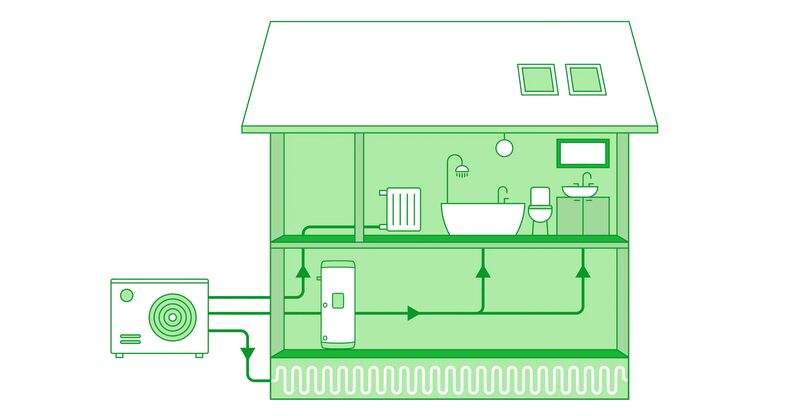
The Boiler Upgrade Scheme: £7,500 off, or £9,000 off gas grid
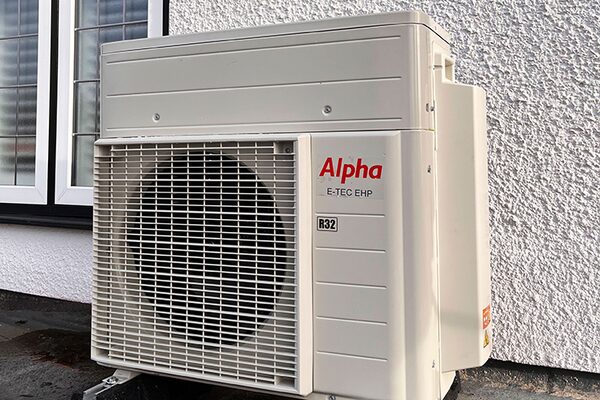
The Boiler Upgrade Scheme provides upfront capital grants towards the cost of installing approved heat pumps and biomass boilers in homes and non-domestic buildings in England and Wales16. It launched on 23 May 2022 and, as of 28 April 2026, has been extended to 2030; the published closing date for applications is 30 December 20293.
Grant values depend on technology:
| Technology | Grant | Voucher validity |
|---|---|---|
| Air-to-water heat pump | £7,5004 | 3 months17 |
| Ground source heat pump (including water source and shared ground loops) | £7,5004 | 6 months17 |
| Air-to-air heat pump (residential only) | £2,5004 | 3 months17 |
| Hybrid heat pump system | No grant18 | n/a |
From 21 July 2026, eligible off gas grid properties can apply for an uplifted grant of £9,000 for an air-to-water or ground source heat pump, where the system being replaced is fuelled by oil or liquefied petroleum gas. The uplift is in place until 31 March 2027; properties that do not qualify may still be eligible for the standard £7,5004. Which? reports the uplift as aimed at heating oil homes, with the condition that the property is off the gas grid19.
Technical limits apply. Air-to-water and ground source systems must achieve an in situ seasonal coefficient of performance of at least 2.8. Capacity is capped at 45 kWth for an individual heat pump system, 70 kWth for a multi heat pump system, and 300 kWth in total for shared ground loop systems with each connected heat pump not exceeding 45 kWth4. All heating systems installed under the scheme must meet the relevant MCS standards approved and published by the Secretary of State4.
Who qualifies, and who does not
Eligibility turns on the property, the system being replaced and the installer.
- The property must be in England or Wales4. There is no Boiler Upgrade Scheme in Scotland or Northern Ireland.
- The heating system being replaced must have been a fossil fuel system such as gas, oil or LPG, or an electric heating system that does not include a heat pump20.
- Properties classed as social housing are not eligible, and that includes shared ownership properties20.
- New build properties still being built by the developer are not eligible, although someone who moves into a finished new build fitted with a fossil fuel boiler may be able to get a grant21.
- Self-build properties are eligible for heat pumps only, not biomass4.
- Biomass boilers may only be installed in properties in rural areas, with emissions certified at no more than 30g/GJ net heat input for particulate matter and 150 g/GJ for NOx4.
- One grant per property, and only one voucher can be redeemed per property; a property is not eligible if a previous grant has already been received for a heat pump or biomass boiler at the same address18.
- The installer must be certified by the Microgeneration Certification Scheme3.
The energy performance certificate rule has changed. From 28 April 2026, properties are no longer required to have a valid EPC to apply4. Older published material, including the scheme listing, still states that a property must have a valid energy performance certificate3, and local guidance frames eligibility in terms of the home being energy efficient enough. Where documents disagree, the April 2026 installer guidance is the later statement of the rule.
How the grant is applied: installer-led, upfront discount
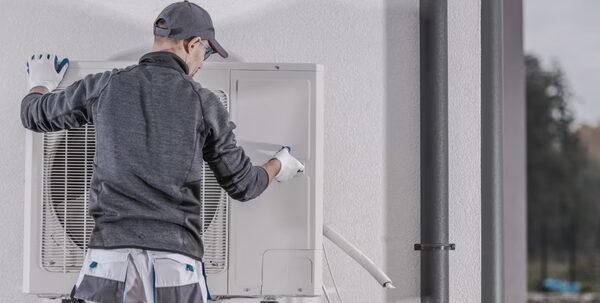
There is no consumer application form. The scheme is installer-led: MCS certified installers apply for and redeem vouchers on behalf of property owners23. Ofgem administers it3.
- The installer submits a voucher application to Ofgem.
- Ofgem issues the voucher.
- The installation is completed and commissioned.
- The installer submits a voucher redemption application.
- The installer receives the grant payment.24
Where the system is installed before the application, that application must be properly made within 120 days of the commissioning date4. Installers must keep all documentation relied on in voucher applications and redemptions for six years from the date the application was properly made4.
For the householder, the money never passes through their hands:
"The grant is applied upfront as a discount to the cost of your installation. You do not receive the grant directly"
Installers must deduct the full grant value from the quote before any payment is made by the property owner4, and Which? notes the grant should be shown on both the quote and the invoice19. Which? also reports that the grant brings the average upfront cost down to around £5,000, and that depending on requirements a household could, in favourable circumstances, install a heat pump for as little as £500 in upfront cost25. Government guidance published in March 2024 put the post-grant figure at around £6,500 to £11,500 including VAT and labour15. The Energy Saving Trust, comparing against a boiler replacement that would have been needed anyway, puts the additional cost of a heat pump at £5001. Air-to-air systems receive £2,50026, which is why the air-to-air grant question comes up so often.
Other costs that change the total: VAT, servicing and running costs
Quoted installed prices generally include VAT, and Nesta's cost definition states so explicitly while excluding insulation works carried out at the same time11. Official cost modelling similarly includes one-off installation costs and some home retrofit costs such as replacing radiators [29 placeholder].
Beyond the installation, three recurring costs matter.
Servicing. The Energy Saving Trust puts typical servicing at around £150, varying by type of heat pump7. Home Energy Scotland gives around £150 to £300 per service27. Nesta's modelling assumes total maintenance of £750 for a heat pump over 15 years, against £1,200 for a gas boiler over the same period11. What counts and what voids cover is covered under servicing and maintenance.
Running costs. The Centre for Sustainable Energy puts heat pumps at around £800 to £1,050 a year to run, describing them as one of the cheapest electric heating options6. Whether that beats a gas boiler depends on the tariff and the efficiency achieved: a Northern Ireland building regulations discussion document modelled running costs increasing by as much as 20% against an illustrative gas boiler example28. A consumer body estimate puts potential savings at £38514. The detail sits on heat pump running costs.
Policy costs on electricity. The Heat Pump Association calculates that levies add a total of £398 to a typical heat pump consumer's annual electricity bill, split £218 across heating and £180 across non-heating uses29. This is a structural cost, not something an installer can quote away, and it is the single clearest reason heat pump running costs do not always fall as far as the efficiency figures suggest.
Planning fees can also appear. In Scotland the planning application fee for domestic air source heat pumps is £20230. In Wales, reported fees are £283 for smaller scale works and £585 for larger works31. Most installations fall under permitted development, so most households pay neither; see planning permission in Scotland and in Wales.
Scotland, Wales and Northern Ireland

Support is not uniform across the UK, and the differences are large enough to change what a household pays.
| Nation | Capital support | Notes |
|---|---|---|
| England | Boiler Upgrade Scheme, £7,500 or £9,000 off gas grid4 | Installer-led, Ofgem administered23 |
| Wales | Boiler Upgrade Scheme, same values4 | Wales accounted for 13% of government-supported installations in the year ending June 202532 |
| Scotland | Home Energy Scotland: up to £7,500 grant plus £7,500 interest-free loan33; reported grants of £7,500 to £9,00034 | Rural and island uplift raises the heat pump grant flat rate to £9,00035 |
| Northern Ireland | No Boiler Upgrade Scheme; scheme is England and Wales only4 | Building regulations modelling referenced running cost increases of up to 20%28 |
Scotland's rural uplift also raises the maximum limit of the energy efficiency grant, giving up to £18,000 in grant funding compared with £15,000 in non-rural areas35. Wales has a substantial share of scheme-supported activity: 1,493 installations were recorded in Wales in 2025 Q2, and in the year ending March 2025 Wales accounted for 14% of government-supported installations across the UK32. Welsh Government guidance on heat pumps advises contacting an installer who belongs either to the Microgeneration Certification Scheme or the relevant Competent Person Scheme36. Planning guidance from the Planning Portal relates to the regime for England, and notes that policy in Wales may differ37.
Budget matters for anyone timing an installation. The Boiler Upgrade Scheme had an initial budget of £150m per financial year for 2022 to 20254. Funding for 2024/25 was later increased by £30 million and a higher budget of £295 million set for 2025/2638, while other published guidance gives £450 million for the same period; both figures are in circulation and cannot be reconciled here. Unspent budget is not carried over to the next scheme year39. Ofgem publishes quarterly and annual reports and aims to publish monthly operational updates4.
Looking further ahead, a January 2026 government announcement set out a £7,500 universal grant for heat pumps under the Warm Homes Plan41. Heat pump policy and targets tracks how the schemes succeed one another.
What the cost buys in terms of independence, and what it does not
A heat pump changes the fuel a home depends on; it does not remove dependence. Space heating and hot water move from a gas, oil or LPG supply to the electricity supply. For a household off the gas grid on oil or LPG, that is a real shift: deliveries, tank storage and a volatile fuel price are replaced by a metered supply and a standing charge. At national level, the Energy Saving Trust estimates the UK can save around £1,100 in wholesale gas costs for every heat pump installed42, which is an import-exposure argument rather than a household one.
What remains is substantial. The home is now wholly reliant on the electricity network and a supplier for heat as well as light and power, and on the £398 a year of levies loaded onto that electricity29. The efficiency that makes the running cost work, a seasonal coefficient of performance of at least 2.8 under scheme rules4, depends on the installation being sized and commissioned correctly. Warranty and spares depend on the manufacturer continuing to trade. Many units are managed through a controller or app, which adds a further dependency. Pairing with solar and battery storage reduces, but does not remove, the grid dependence.
On pure capital cost the comparison is uncomfortable and the sources say so: at around £11,600 an average heat pump is four times more expensive than a gas boiler2, and the trade figure of £13,500 against £2,500 for a replacement boiler makes the same point10. The grant closes most but not all of that gap, and only in England and Wales, only for eligible properties, and only once per address18. Whether that trade is worth making is a judgement about fuel exposure, the age of the existing system and how long the household expects to stay, not a calculation with one right answer. Further detail sits on heat pumps and household energy independence and on the wider heat pumps guide.
Sources42 cited
- Renewable technologies: what really cuts energy bills, Energy Saving Trust, 2026-08-12
- Decarbonising home heating report, UK Parliament Committee of Public Accounts, 2024-05-26
- Boiler Upgrade Scheme listing, Find Government Grants service, 2026-09-18
- Boiler Upgrade Scheme guidance for installers v5.1, Ofgem, 2026-07-02
- Ground and water source heat pumps, MCS, 2026-06-09
- Electric heating advice, Centre for Sustainable Energy, 2026-06
- Heat pump questions answered, Energy Saving Trust, 2026-05-27
- How do heat pumps work, Smart Energy GB, 2026-03-16
- Heat pumps as an employee benefit, Nesta, 2026-09-17
- Commentary on heat pump and boiler costs, Energy and Utilities Alliance, 2026-09-14
- How to make heat pumps more affordable: assumptions and methods, Nesta, 2024-06-13
- Boiler Upgrade Scheme statistics, July 2026, GOV.UK, 2026-08-27
- Existing and future technologies for retrofitting the UK housing stock, CREDS, 2021-06-08
- Heat pumps vs boilers, The CPA, 2025-02-18
- Heat pumps explained: experts answer your questions, GOV.UK, 2024-03-28
- Boiler Upgrade Scheme overview, Ofgem, 2026-09-17
- Boiler Upgrade Scheme annual report 2024 to 2025, Ofgem, 2025-07
- Boiler Upgrade Scheme: what you can get, GOV.UK, 2026-09-17
- New £9,000 heat pump grant for heating oil homes, Which?, 2026-07-16
- Boiler Upgrade Scheme guidance for property owners V5, Ofgem, 2026-04-28
- Boiler Upgrade Scheme: check if you are eligible, GOV.UK, 2026-09-17
- ECO4 delivery guidance v3.2, Ofgem, 2025-12-08
- Boiler Upgrade Scheme scheme page, Ofgem, 2026-09-17
- Boiler Upgrade Scheme quarterly report issue 14, Ofgem, 2025-11-26
- Heat pumps vs boilers, Which?, 2025-09-22
- Carbon Budget and Growth Delivery Plan: heat and buildings factsheet, GOV.UK, 2026-06-23
- Living with a heat pump, Home Energy Scotland, 2024-02
- Building regulations discussion document and pre-consultation, NI Direct, 2023-10-11
- Accelerating heat pump deployment: domestic interim heat pump tariff background paper, Heat Pump Association, 2024-01
- Permitted development rights impact assessments, Scottish Government, 2026-09-17
- 10 things to make getting a heat pump easier, Nesta, 2026-02-12
- Heat pump deployment quarterly statistics UK 2025 Q2, GOV.UK, 2025
- Scotland's Climate Change Plan 2026 to 2040, Scottish Government, 2025-11-06
- Is now a good time to get a heat pump, Energy Saving Trust, 2025-12-12
- National Islands Plan annual report 2022, Scottish Government, 2023-03-31
- Building regulations: heat pumps, Welsh Government, 2026-09-17
- Heat pumps and planning, Planning Portal, 2026-09-17
- Boiler Upgrade Scheme briefing CBP-9889, House of Commons Library, 2026-09-17
- Boiler Upgrade Scheme quarterly report issue 13, Ofgem, 2025-08-29
- Boiler Upgrade Scheme annual report April 2025 to March 2026, Ofgem, 2026-07-31
- Families to save in biggest home upgrade plan in British history, GOV.UK, 2026-01-20
- Impacts of the gas crisis on households and businesses: response, Energy Saving Trust, 2026-04-22
 Ground Source Heat Pump CostWhat a ground source heat pump costs in the UK, splitting groundworks and drilling from the heat pump and internal works, and how the £7,500 Boiler Upgrade Scheme grant and the £9,000 off-gas-grid uplift change the figure.
 Heat Pump Running CostsWhat does a heat pump cost to run each year, and is it cheaper than a gas boiler?
 Cost of Energy IndependenceA heat pump and better insulation are the usual starting point, but what does the whole job really cost, and what help is there with the bill?
 High Temperature Heat PumpsHigh-temperature heat pumps deliver flow temperatures of roughly 65 to 80°C, close to boiler levels, so existing radiators can often stay in place.
 Which Homes Suit a Heat PumpMost UK homes can have a heat pump fitted, so the real question is whether yours makes it easy or expensive.
 The Full Heat Pumps GuideWill a heat pump keep my house warm in winter, and what does one cost to buy and run?