In this guide
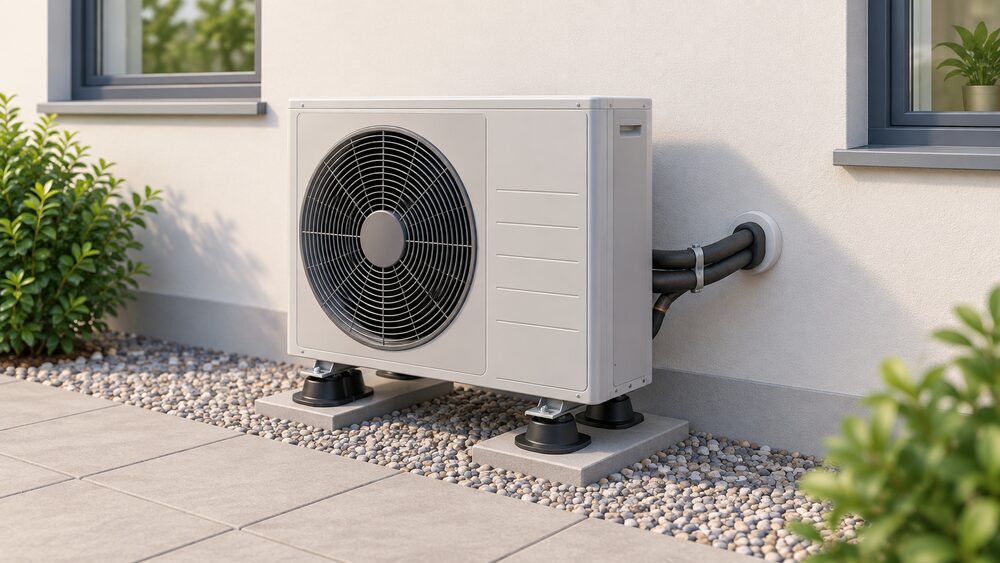
A domestic heat pump is a quiet appliance by the standards of the equipment it replaces. Energy Saving Trust puts the typical range for a heat pump while it is running at between 40 and 60 decibels, and describes the sound as typically no louder than a fridge freezer or gas boiler, with strict rules controlling the maximum noise permitted1. The Department for Energy Security and Net Zero's own review concluded that heat pumps are now very quiet, with sound levels similar to a gas boiler or fridge, and that complaints from neighbours are rare3.
The number that governs an installation is not the 40 to 60 dB range but the planning limit. Current noise regulations restrict heat pump noise to a maximum of 42 dB within one metre of a neighbour's windows, and the standards body MCS sets the same 42 decibels as measured at the nearest neighbouring property4. Where a unit exceeds the MCS standards and permission is needed, the test becomes 37 dB LAeq at any time, measured on the boundary of the site with any neighbouring residential property5.
What separates a heat pump nobody notices from one that generates complaints is rarely the model. It is siting, vibration isolation, pipework and whether the assessment was done properly in the first place. A minority of installations can still create considerable problems, most often when systems are poorly installed or inappropriately located6.
How noisy is a heat pump? The short answer
The honest answer is that a heat pump is a low hum, roughly the loudness of a refrigerator and comparable to the average boiler, and that the range across real installations is wide because the installation, not the box, decides4. The majority of heat pumps are "as quiet or quieter than a gas boiler flue", according to Phil Hurley, then chairman of the Heat Pump Association9. Manufacturers have innovated to reduce noise levels, so units are much quieter than they were9.
That said, the outdoor fan units can generate a considerable level of noise, and noise can be an issue on some sites10. Truly noisy heat pumps are increasingly rare thanks to improved technology and design, but a minority of installations can still create considerable problems, most often when systems are poorly installed or inappropriately located6. The distinction matters for a household weighing up a purchase: the technology is not the risk, the siting and commissioning are.
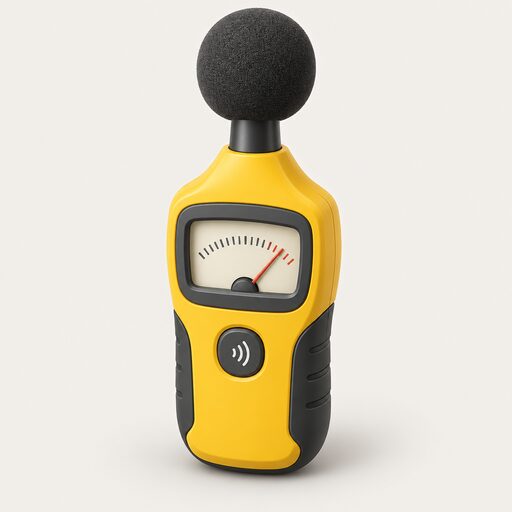
Two different measurements sit behind the numbers a household will see. Sound power level is a property of the machine, expressed as an A-weighted figure in dB(A), and it is what a manufacturer declares and what a noise assessment starts from. Sound pressure level is what a person or a microphone actually experiences at a given spot, and it falls with distance and changes with the surroundings. The MCS assessment calculator takes the declared sound power level and calculates the sound pressure level at each assessment position11. Confusing the two is the most common reason a household expects a quiet unit and gets a complaint.
"The average heat pump produces a low hum that is approximately about as loud as a refrigerator, and comparable to the average boiler"
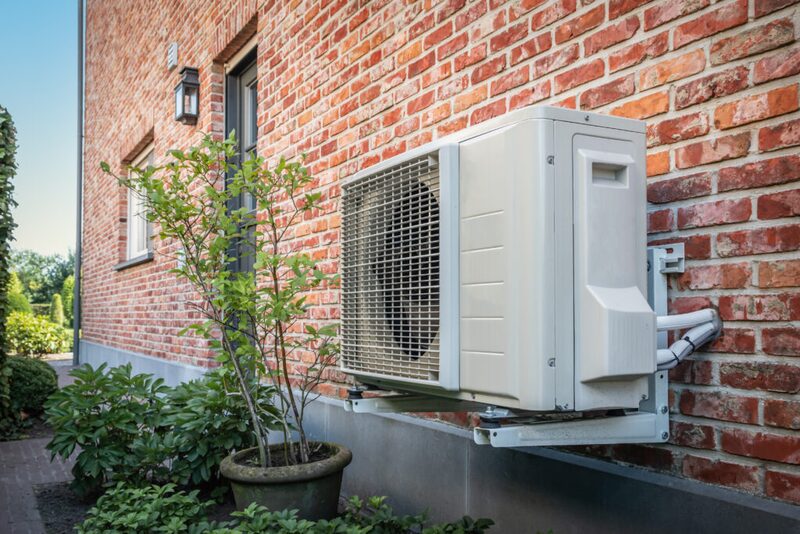
Typical noise levels: fridge freezer or gas boiler territory
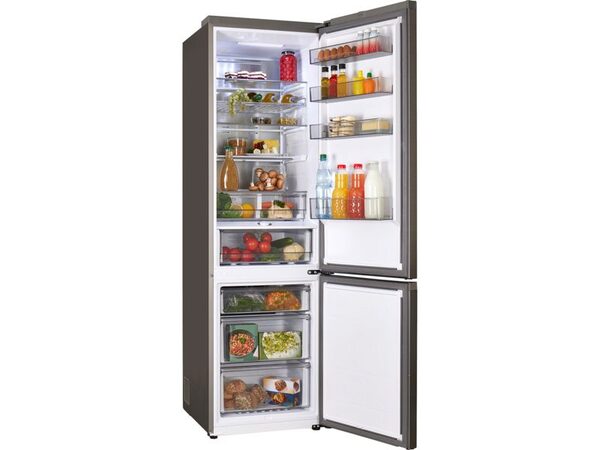
The comparison a household can actually use is with appliances it already lives with. Energy Saving Trust places a heat pump typically no louder than a fridge freezer or gas boiler2. The government's own review reached the same conclusion, finding sound levels similar to a gas boiler or fridge and complaints from neighbours rare3. Nesta's summary is that the average unit produces a low hum approximately as loud as a refrigerator and comparable to the average boiler4.
The 40 to 60 decibel range is a sound pressure range, and it is wide because it depends on the manufacturer and the installation quality12. A unit at the quiet end of that range, well sited, will be inaudible from inside a neighbouring property. A unit at the loud end, mounted hard against a wall with rigid pipework, can be audible in the next garden. The same model can produce either outcome.
Ground source heat pumps sit outside this comparison in a useful way. They have no outdoor fan unit at all, and official consultation material describes them as quieter as well as more efficient8. For a household whose main concern is the noise of an outdoor unit, the ground loop removes the question entirely, at the cost of the excavation or borehole a ground source system requires.
| Appliance or source | Typical level | Source |
|---|---|---|
| Heat pump, running | 40 to 60 dB | Energy Saving Trust1 |
| Heat pump, described | No louder than a fridge freezer or gas boiler | Which?2 |
| Heat pump, described | Low hum, about as loud as a refrigerator | Nesta4 |
| Ground source heat pump | Quieter than air source | Welsh Government consultation8 |
Where the noise comes from: the outdoor unit, the indoor unit and the pipework
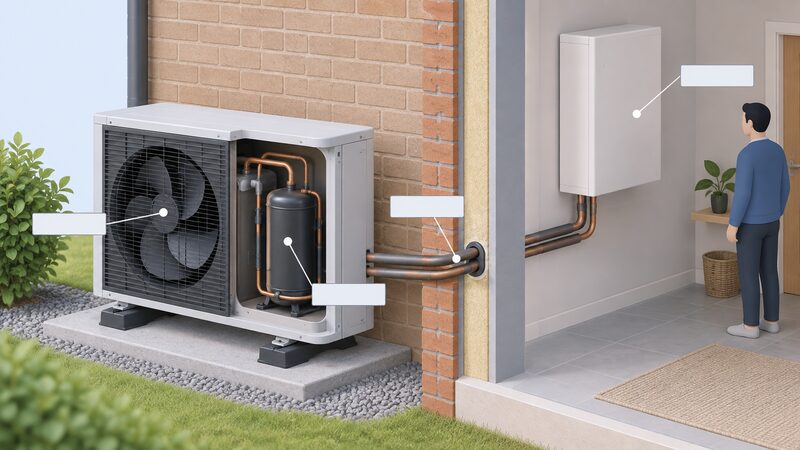
Air source heat pumps are located on the outside of buildings, connected through the wall to an internal unit10. Air-to-air models usually have one unit outside and at least one unit inside, connected by pipes carrying a refrigerant between them13. The fan and the compressor are the main sound sources in air source heat pumps7.
Inside the home, the picture changes. Pipework and components, especially if installed without sufficient vibration isolation, can act as amplifiers, and low-frequency noise can come from buffer tanks and circulation pumps6. Noise from the outdoor unit should not transmit through solid walls and double-glazed windows; if it is clearly audible inside, reflective surfaces or poor pipework installation might be to blame6. That is a useful diagnostic: a unit heard through a closed, double-glazed window is usually a symptom of a mounting or pipework problem rather than an inherently loud machine.
Indoor units are a separate consideration. Air-to-air heat pumps can have indoor units that are noisier than other heat pumps, because the indoor head contains its own fan13. For a household considering air-to-air, the indoor noise is the figure to check, not the outdoor one.
Manufacturers have addressed the compressor side directly. Warmflow's heat pumps include a quiet operating mode that can be put on a built-in timer to reduce the noise of the unit, and resonance avoidance settings to isolate and avoid the compressor speeds that cause most noise at a given installation site14. Those are maker claims about that maker's products, but they illustrate where the engineering effort goes: not the fan alone, but the compressor speeds that resonate with a particular wall.
The 42 dB limit: how UK rules cap heat pump noise
The planning framework fixes a maximum rather than a recommended level. In the UK, the legal noise limit for heat pumps is 42 decibels15. The Town and Country Planning Act 1990 set a maximum noise pressure level at the assessment position of 42 dB(A), irrespective of distance to the heat pump16. The same figure appears in local authority guidance: noise levels for an air source heat pump on its own must stay at or below 42 decibels from a metre distance away from any habitable room17.
Where a unit exceeds the MCS standards and planning permission is needed, a tighter test applies: noise levels must not exceed 37 dB LAeq at any time, as measured on the boundary of the site with any neighbouring residential property5. The MCS assessment calculator uses a pass/fail noise limit of 37.0 dB(A)11. So there are two figures in play, and which one applies depends on whether the installation is permitted development or needs permission.
One official source describes it as at or below 42 decibels from a metre distance away from any habitable room, for the heat pump on its own17. Another describes a unit that cannot exceed 42 dB at a distance of one metre from the centre of a neighbour's habitable room window, known as the assessment point5. The two are close but not identical in wording, and the difference between a habitable room and its window centre matters at the margin.
For two units, the Welsh Government's summary of consultation responses states that two units in operation together must not exceed the 40 dB limit under MCS 020(a)18. That is a combined figure, not 42 dB each, and it is the point at which cumulative noise from neighbouring installations starts to be regulated rather than assumed away.
The MCS noise assessment: how your installation is checked
The MCS noise assessment is the mechanism that turns a manufacturer's sound power figure into a pass or fail for a specific address. Installations must comply with MCS 020(a), which sets installation standards including assessment of sound impact on neighbours19. It is recommended that the installer carries out a noise assessment before installation to confirm that noise levels are acceptable20.
The calculator itself takes the heat pump make and model, the installation location, the distance from the heat pump to each assessment position in metres, and a description of the assessment position11. It supports single, two and four heat pump assessments, with up to four assessment positions per assessment, and it includes an option for line of sight described as partial view11. The output is the sound pressure level, and for multi-unit assessments the total from all heat pumps11.
The inputs are where the judgement sits. The directivity of the installation is one: a heat pump installed on the ground and against a single wall is given a directivity of Q4 in official worked guidance21. A unit in a corner radiates differently from one on an open gable end, and the calculator accounts for that.
Nesta has questioned the method rather than the limit, stating that the way MCS currently calculates whether a heat pump is complying with the rules could be improved4. That is a technical criticism of the calculation, not a claim that installations are too loud. For a household, the practical implication is that the assessment is a modelled prediction, and the installed result depends on the installer building what was modelled.
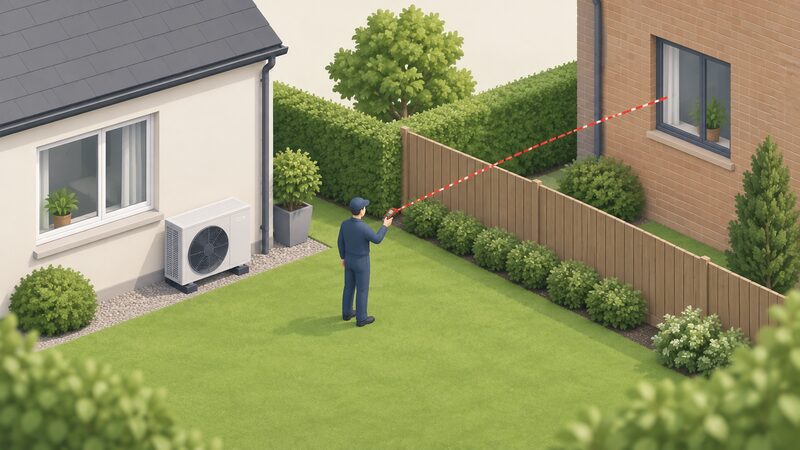
Placement and siting: what makes the difference between quiet and annoying
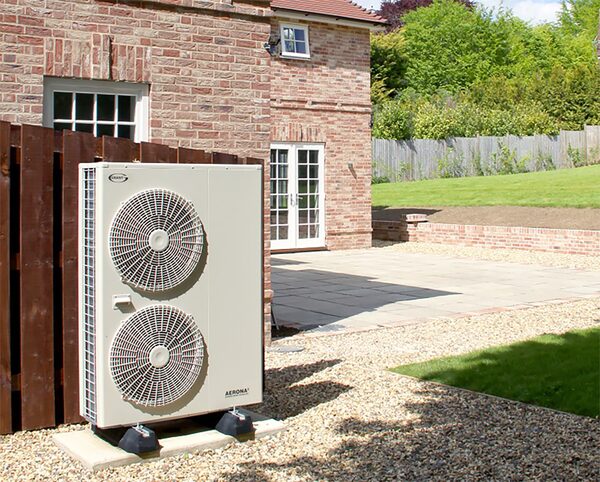
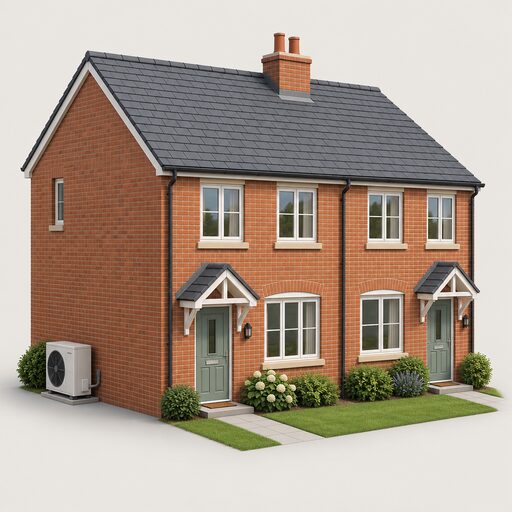
Siting is the single largest variable a household controls. Positioning a unit at the back of the house gives it lots of room to dissipate the noise from the fans and the compressor, and it is important to let the heat pump breathe6. A unit boxed into a narrow side return has nowhere for the sound to go.
The factors that a noise assessment weighs are existing background noise levels, the characteristics of the noise, noise levels at all operating modes including defrost cycles, the distance between the unit and neighbouring properties, and any noise barriers or mitigation measures20. Background noise is on that list for a reason: a unit that is inaudible against a busy road may be intrusive on a quiet cul-de-sac, and the assessment is relative to what is already there.
Planning rules interact with siting directly. Permission may be needed if the intended heat pump location is within one metre of the property boundary, if the heat pump does not pass a noise assessment, if other fan units already exist at the property, or if the property is in a World Heritage Site, a conservation area or is a Listed Building2. The one metre boundary rule is the one that catches most urban installations, and it is under review: a 2024 consultation proposed removing the current limitation on installations within one metre of property boundaries, while still ensuring proper consideration of noise22.
For new dwellings, official guidance takes the opposite approach and pushes units close to the wall: heat pumps which serve individual dwellings should be located no more than one metre from the dwelling23. That is about pipe runs and efficiency rather than noise, and it shows that distance rules serve different purposes in different contexts.
Reducing noise: barriers, vibration isolation and maintenance
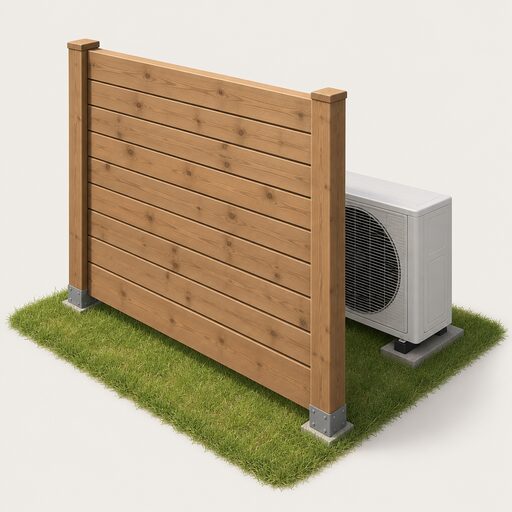
Mitigation works, within measurable limits. A barrier is recognised as a mitigation measure in noise assessment, and one Welsh study suggested a reduction of up to 10 dB with a barrier7. A worked example in official guidance gives a brick wall between the heat pump and the assessment position a reduction of 5 dB, and notes that moving less than 25cm can enable the assessment position to be seen, removing the benefit21. Line of sight is the whole game with a barrier: if the neighbour's window can see the unit, the barrier is doing much less.
The MCS guidance for installers covers noise mitigation considerations during installation, service and maintenance, and addresses what to do if a heat pump has become noisy as well as what to do if there has been a noise complaint24. That framing is useful for a household: noise is treated as something that can develop and be corrected, not a fixed property of the equipment.
Vibration isolation is the other lever, and it is the one most often skipped. Pipework and components installed without sufficient vibration isolation can act as amplifiers6. Resonance avoidance settings on some models isolate and avoid the compressor speeds that cause most noise at a given site14. Together these address the low-frequency component that travels through structure rather than air, which is the part a barrier cannot stop.
Maintenance matters because a failing fan bearing or a loose panel changes the sound. The MCS guidance places service and maintenance within the scope of noise mitigation, which means a unit that has become noisy over time is a service issue before it is a planning issue24.
| Measure | Reported effect | Source |
|---|---|---|
| Barrier | Up to 10 dB suggested reduction | Welsh Government study7 |
| Brick wall between unit and assessment position | 5 dB reduction | Official worked example21 |
| Moving the assessment position less than 25cm | Removes the barrier benefit by restoring line of sight | Official worked example21 |
| Vibration isolation on pipework and components | Prevents pipework acting as an amplifier | Independent reporting6 |
Quiet Mark: what the certification does and does not tell you
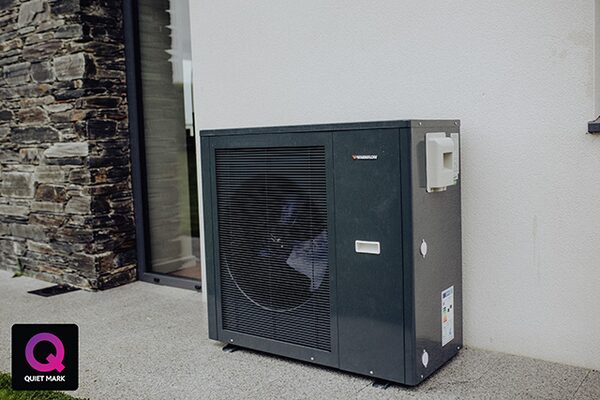
Quiet Mark is a certification scheme that assesses how a product sounds rather than only how loud it is. It assesses sound quality beyond the dB rating of products, but does not publish dB levels7. That is the central limitation for a household using it as a shopping filter: a Quiet Mark listing tells you a unit was judged on the character of its noise, not that it has a lower sound power figure than an uncertified rival.
What the certification does indicate is that a unit is unlikely to need extra treatment. Quiet Mark-certified heat pumps, due to their low-level noise operation, will not require additional acoustic insulation12. For a household weighing up whether to budget for a barrier or acoustic enclosure, that is a meaningful statement.
Quiet Mark lists certified quiet heat pumps by brand and model. Samsung's EHS Mono HT range appears in single phase and three phase variants, including the AE080BXYDEG, AE120BXYDEG, AE140BXYDEG, AE080BXYDGG and AE140BXYDGG25. Quiet Mark also lists a Daikin outdoor unit, the 5MWXM68A9, as part of a multi air conditioner product page26. That unit has a declared heating capacity of 6.8 to 10.0 kW, a cooling capacity of 5.2 to 9.0 kW, dimensions of 734 x 974 to 1044 x 401 to 408 mm, a weight of 60 to 73 kg, a 220 to 240V single phase 50Hz power supply, R-32 refrigerant and a maximum piping length of up to 75 m26.
For a planning assessment, none of that substitutes for the declared A-weighted sound power level of the specific model at the specific installation. Quiet Mark is a useful shortlist; the MCS calculator is the test.
| Model | Quiet Mark listing | Source |
|---|---|---|
| Samsung EHS Mono HT AE080BXYDEG | Single phase quiet heat pump | Quiet Mark25 |
| Samsung EHS Mono HT AE120BXYDEG | Single phase quiet heat pump | Quiet Mark25 |
| Samsung EHS Mono HT AE140BXYDEG | Single phase quiet heat pump | Quiet Mark25 |
| Samsung EHS Mono HT AE080BXYDGG | Three phase quiet heat pump | Quiet Mark25 |
| Samsung EHS Mono HT AE140BXYDGG | Three phase quiet heat pump | Quiet Mark25 |
| Daikin 5MWXM68A9 outdoor unit | Listed on a Quiet Mark product page | Quiet Mark26 |
Noise as a statutory nuisance: your rights under the Environmental Protection Act 1990
Planning limits and statutory nuisance are separate regimes, and the second one applies regardless of whether an installation complied. Noise nuisance is a statutory matter controlled by the Environmental Protection Act 1990, and it is not replaced by the Microgeneration Certification Scheme27. A unit that passed its MCS assessment can still attract a nuisance complaint if it is audible in a neighbour's home at the wrong hours.
Local councils are legally obligated to investigate any complaints relating to nuisance, as per the Environmental Protection Act 199028. The same framework covers smoke and fumes, and the enforcement pattern is instructive: where someone served with an abatement notice has used the best practicable means to stop or reduce the problem, that may be grounds for appeal or a defence to prosecution for non-compliance29. For a heat pump owner, that means documented mitigation, servicing records and evidence of reasonable steps are the practical protection.
The scale of the issue is worth keeping in perspective. Nearly a fifth of heat pump users, 19%, said that intrusive noise was a problem in a Welsh Government user study7. That is a minority but not a negligible one, and it is higher than the "complaints are rare" framing suggests. Nesta, considering the low incidence of noise complaints to date, argued that tightening the rules further would be overly cautious and unnecessary4.
Cumulative noise from multiple installations has been studied. Research on the noise impact from multiple air source heat pumps being installed in terraced and semi-detached housing areas found that having more than one heat pump running in a street will not audibly increase noise levels4. That finding is about street-level cumulative effect, not about a single unit close to one neighbour's window, which remains the case that generates complaints.
What heat pump noise means for a household's energy independence
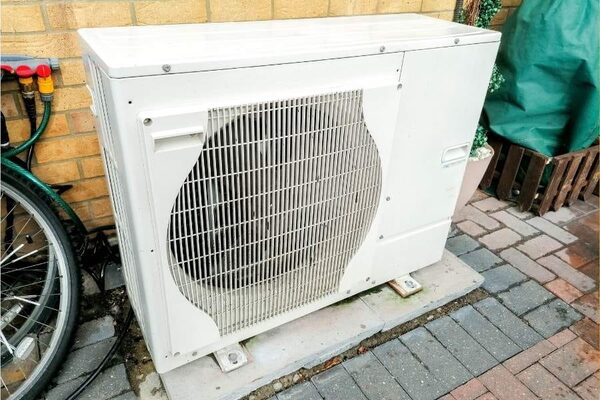
Noise is the constraint that most often decides where an outdoor unit can go, and siting in turn decides how well the system performs. A unit pushed to a boundary or boxed into a recess to keep it away from a neighbour may end up with restricted airflow, longer defrost cycles and lower efficiency. The trade-off between a quiet installation and an efficient one is real, and it is resolved at the survey stage rather than afterwards.
The dependence a heat pump leaves in place is the same one it addresses. A household with an air source unit still draws electricity from the grid and still relies on a supplier, and the outdoor unit still runs on the coldest nights when demand is highest. Air source heat pumps are less efficient in winter when the air temperature is colder, which means more running hours and more noise exposure at exactly the time neighbours are indoors10. A ground source unit removes the outdoor fan and the associated noise, and is described as quieter as well as more efficient, but it depends on having the land or a borehole to install the loop8.
What a household gains is the removal of a gas connection and the flue that goes with it, and a heating source that sits inside its own property boundary. What it takes on is a new relationship with its neighbours, expressed in decibels at a window. The planning framework exists precisely because that relationship is the part of the installation a household does not fully control.
For the wider picture on how heat pumps fit into household energy independence, and for the siting and clearance rules that determine where a unit can go, the heat pump guide and the page on where a heat pump outdoor unit can go set out the framework. The MCS 020 noise assessment page covers the calculation in detail, and heat pump planning permission in England covers the permitted development conditions that the noise test feeds into.
Sources29 cited
- Heat pump fact check, Energy Saving Trust, 2026
- Would a heat pump work for your home?, Which?, 2024
- Heat pumps explained: experts answer your questions, GOV.UK, 2024
- Having more than one heat pump running in a street won't audibly increase noise levels, Nesta, 2024
- Air source heat pumps: householder planning advice, Central Bedfordshire Council, 2026
- One person's background hum is another's sleepless nightmare, Flexi-Orb, 2025
- ASHPs noise and permitted development rights in Wales: phase 1 report, Welsh Government, 2024
- Heat pump applications surge after increase in government grant, GOV.UK, 2023
- Burning questions, Quiet Mark, 2022
- Air source heat pumps fact sheet, Pendle Borough Council, 2026
- MCS 020(a) noise assessment calculator, MCS Certified, 2025
- The 11 quietest heat pumps on the market, tested by the experts, Quiet Mark, 2025
- F-gas regulation in Great Britain: HFC phasedown reform de minimis assessment, Defra, 2025
- Can heat pumps be quiet?, Quiet Mark, 2023
- Air and ground source heat pumps, Croydon Council, 2026
- In pursuit of silence: the Quiet Mark certified guide to no heat pump noise, Quiet Mark, 2023
- Building regulations renewables guidance, Bedford Borough Council, 2026
- Changes to permitted development rights: summary of responses, Welsh Government, 2025
- Planning permission for heat pumps, Welsh Government, 2026
- Air source heat pumps, Westmorland and Furness Council, 2026
- MCS 020 noise assessment guidance, Mid Sussex District Council, 2019
- Air-to-air heat pumps, Energy Saving Trust, 2026
- Air source heat pump guide, Eastleigh Borough Council, 2025
- MCS publishes guidance to support installers to mitigate heat pump noise, MCS Certified, 2025
- Samsung Electronics, Quiet Mark, 2026
- Daikin 4 port multi air conditioner 5MWXM68A9, Quiet Mark, 2026
- Planning is holding back heat pumps: here's how to fix it, Nesta, 2024
- Can my neighbour complain about my log burner?, HETAS, 2026
- Stove users enforcement guide, HETAS, 2026
 MCS 020 Noise AssessmentWill your air source heat pump be too noisy for next door?
 Air Conditioning NoiseHow loud will an air conditioner be inside your home, and how much noise will the outdoor unit make for you and your neighbours?
 Where the Outdoor Unit Can GoWhere can you put a heat pump outside your home?
 Which Homes Suit a Heat PumpMost UK homes can have a heat pump fitted, so the real question is whether yours makes it easy or expensive.
 The Full Heat Pumps GuideWill a heat pump keep my house warm in winter, and what does one cost to buy and run?
 How They Perform in UK HomesHow well do heat pumps really work in UK homes, and why do some run far better than others?