In this guide
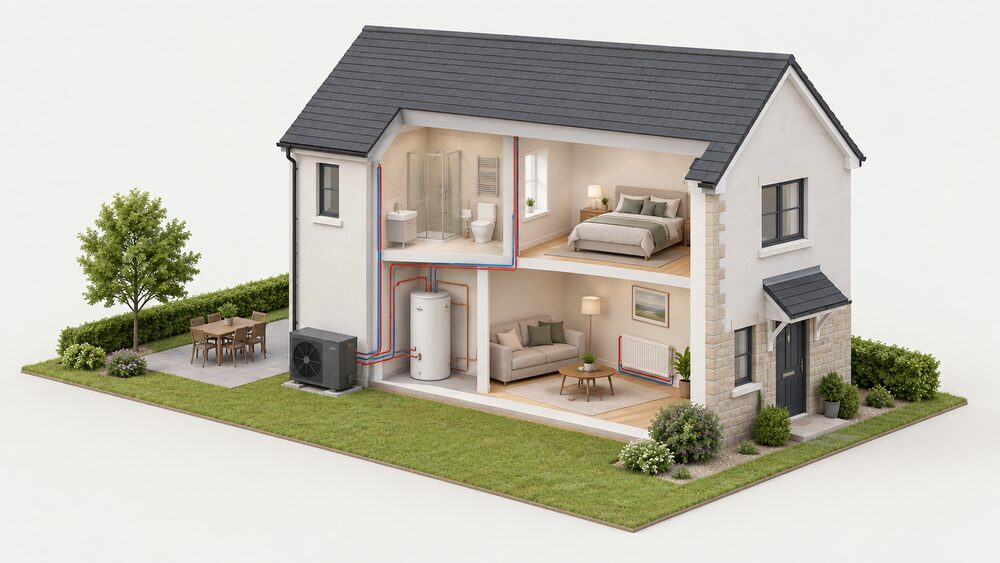
Warmflow is a Northern Ireland heating manufacturer that has spent decades in the oil heating trade and now sells the Zeno range of heat pumps alongside its boilers and cylinders. The Zeno air source units come in 8kW, 12kW and 20kW modulating outputs, and the ground source models run at up to 18kW on single phase electricity with a Copeland inverter driven compressor1.
The range is built around variable speed compressor technology that modulates output to match the heat demand of the house rather than switching on and off at a fixed rate4. Ground source models use plate heat exchangers with a large surface area and fully integrated variable speed pumps for the brine and heating circuits, and Warmflow states a high efficiency of 508% for the ground source unit2.
For a household, the appeal is a British Isles manufacturer with a renewables line that sits beside a continuing oil boiler business, which matters in rural areas where oil is still the incumbent fuel. The dependence that remains is the same as for any heat pump: electricity from the grid, a competent installer, and a warranty that has to be registered to be worth anything1.
Warmflow: a Northern Ireland heating maker with 50 years in the trade
Warmflow's product catalogue is organised into oil boilers, cylinders, renewables and support, which places the Zeno heat pumps inside a business that still makes and sells oil-fired equipment1. That is not a side line. In Northern Ireland and in parts of rural Great Britain, oil remains the dominant off-gas fuel, and a manufacturer that serves both markets can offer a household a route off oil without abandoning the trade it knows.
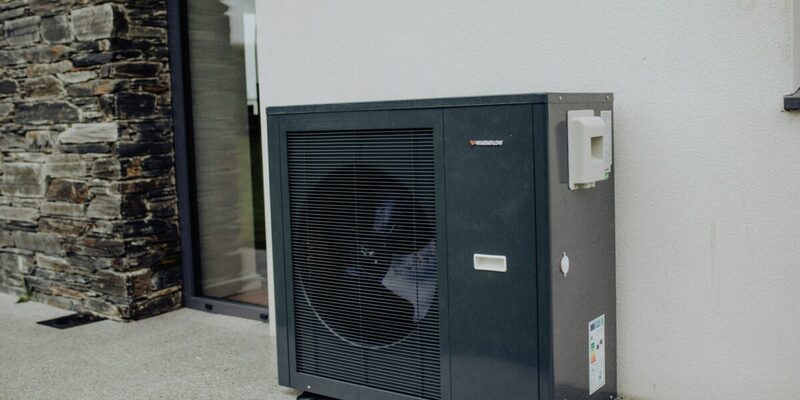
The company's own case-study material describes Zeno air source heat pumps being specified for new-build housing, including a development where the anthracite grey casing was chosen to blend with the property's exterior3. The units on that project were installed by heating engineers for whom it was a first Zeno installation, which is a useful reminder that installer familiarity with a brand varies by region3.
For a household weighing energy independence, a manufacturer based in Northern Ireland shortens the parts and service chain compared with an imported unit, though it does not change the fundamental position: the heat pump runs on electricity, and the home remains connected to the grid and to an electricity supplier. What changes is the fuel, not the dependence on a network.
The Zeno range: air source and ground source heat pumps
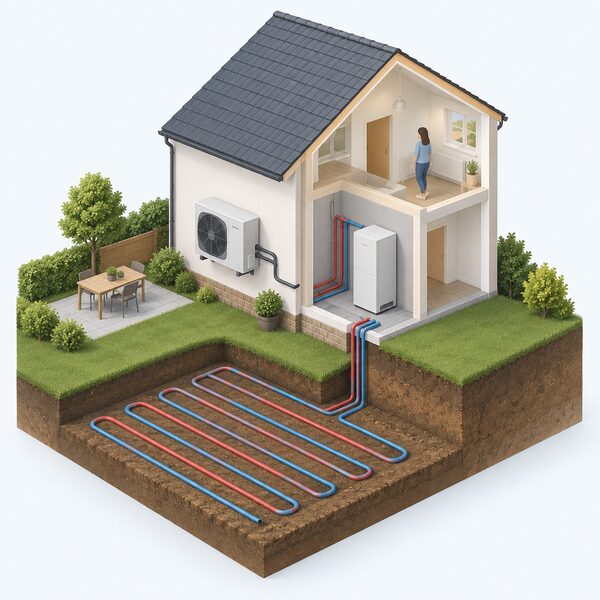
Warmflow sells two distinct Zeno products. The air source line is the Zeno R290 Air Source Heat Pump, listed in the company's renewables catalogue1. The ground source line is documented on its own product page, with a specification that includes plate heat exchangers, integrated pumps and an electronic controlled expansion valve that lets the unit run at a range of flow temperatures to optimise system efficiency2.
The wider heat pump market splits into air source, ground source and water source types, and the ground source category includes open and closed loop systems underground5. Building regulations guidance for developers treats air source, ground source and water source as the three options available depending on the needs and location of the site6. Warmflow's Zeno range covers two of those three.
Ground source units draw heat from the ground rather than the air, which is why they need either boreholes or a horizontal loop array, and why they are usually specified where land is available. A ground source heat pump can raise the temperature from the ground to more than 60 degrees C if needed, which makes it suitable for retrofit properties with existing radiators7. That is a meaningful difference from the low flow temperatures often associated with air source units.
| Zeno product | Type | Output | Key components |
|---|---|---|---|
| Zeno R290 Air Source Heat Pump | Air source | 8kW, 12kW, 20kW modulating3 | Variable speed compressor4 |
| Zeno ground source | Ground source | up to 18kW single phase2 | Copeland inverter compressor, plate heat exchangers, integrated pumps2 |
Air source outputs: 8kW, 12kW and 20kW modulating units
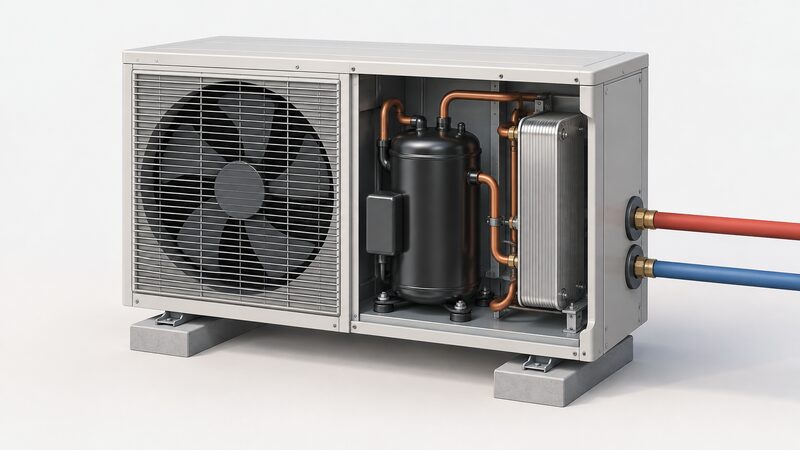
The Zeno air source range is offered in three outputs: 8kW, 12kW and 20kW, all described as modulating3. Modulating means the compressor speed varies continuously rather than running at a single fixed rate, so the unit can match a low heat demand on a mild day and ramp up in cold weather. Warmflow's own description is that the unit uses variable speed compressor technology to automatically modulate output depending on heat demand4.
That matters for running costs and for comfort. A fixed-output unit cycles on and off, which produces wider swings in room temperature and more wear on the compressor. A modulating unit holds a steadier flow temperature, which is also what a heat pump needs to run efficiently in a well-matched system.
The three outputs cover a wide span of UK housing. An 8kW unit suits a smaller or well-insulated property, while a 20kW unit is aimed at larger or less insulated homes with higher heat loss. Sizing is not a matter of picking the biggest unit that fits: an oversized heat pump short-cycles, and an undersized one cannot hold temperature in a cold snap. A heat loss calculation is what determines the right figure, and that calculation should be done before any quotation is accepted.
For comparison, other manufacturers publish different output ladders. Vaillant's aroTHERM Split is available in 3.5kW, 5kW, 7kW, 10kW and 12kW outputs, and one Daikin outdoor unit is listed with a heating capacity of 6.8 to 10.0 kW8. Warmflow's ladder is coarser, with a larger jump between the 12kW and 20kW units, so the accuracy of the heat loss calculation matters more at the top end of the range.
Ground source: up to 18kW on single phase electricity
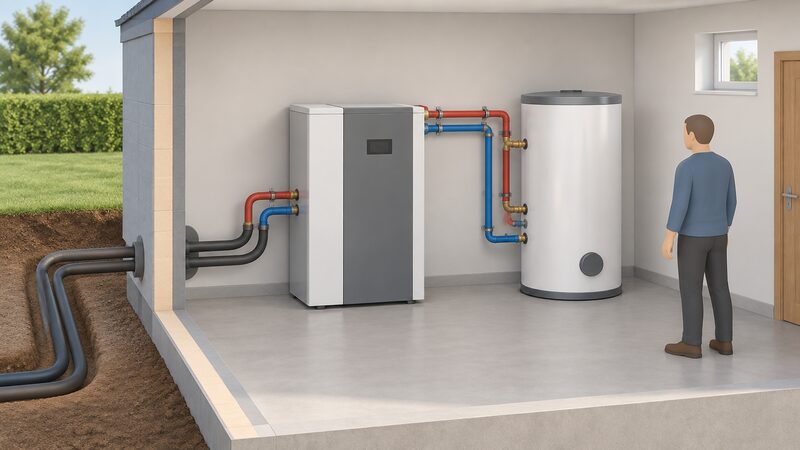
The Zeno ground source heat pump runs at an output of up to 18kW on single phase electricity, using a Copeland inverter driven compressor2. The published model table gives an output range of 4.5 to 18 kW for the GS03 unit2. Single phase matters because most UK homes have a single phase supply, so a unit at this output can be installed without a three phase connection in many cases.
Warmflow states a high efficiency of 508% for the ground source unit2. That figure is a maker's claim and should be read as a coefficient of performance under favourable conditions rather than a year-round average. Ground source units benefit from stable ground temperatures, which is why they hold efficiency better than air source units in cold weather, but the figure a household actually experiences depends on the ground loop design, the flow temperature the system runs at, and how the house is heated.
The specification includes plate heat exchangers with a large surface area, described as maximising the heat extracted from the ground and the heat supplied to the heating system, and fully integrated variable speed high efficiency pumps for the brine and heating circuits2. An electronic controlled expansion valve optimises system efficiency by allowing the heat pump to run at a range of flow temperatures2. The compressor is described as a low noise, high efficiency scroll type, and the controls are a user-friendly interface covering all aspects of heat pump and system control2.
Ground source installations are more disruptive and more expensive than air source because of the ground works, but they are eligible for the Boiler Upgrade Scheme, which covers ground source heat pumps including water source heat pumps and shared ground loops10. Shared ground loop networks, where several properties draw from one borehole array, are a route for denser housing where individual loops are not practical.
Inside the unit: Copeland inverter compressor and integrated variable speed pumps
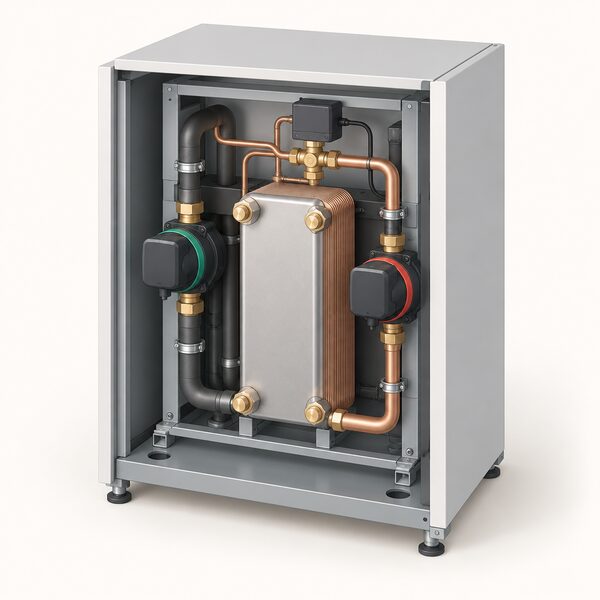
The Zeno ground source unit is built around a Copeland inverter driven compressor, which Warmflow describes as the heart of the system, and a variable speed inverter driven scroll compressor chosen for low noise and high efficiency2. Inverter drive is what allows the modulation described across the range: the compressor speed is varied electronically rather than fixed by the mains frequency.
The hydronic side is integrated rather than supplied as separate components. Warmflow lists fully integrated variable speed high efficiency pumps for both the brine circuit and the heating circuit, plate heat exchangers with a large surface area, and an electronic controlled expansion valve2. Other manufacturers take a similar approach: LG's Therma V R290 monobloc units house the plate heat exchanger, water pump, flow sensor, pressure sensor, deaerator and safety valve inside the outdoor unit11.
Integration reduces the number of separate boxes on a plant room wall and the number of joints that can leak, but it also means a failed pump or sensor is a manufacturer's part rather than a generic one. That is a service consideration rather than a performance one, and it is the same trade-off every monobloc maker makes.
The controls are described as a user-friendly interface covering all aspects of heat pump and system control2. What the published material does not state is whether that interface supports remote access, app control or weather compensation curves, so a household should ask the installer what control options are included with the specified unit rather than assume.
Cylinders designed to work in tandem with Zeno heat pumps
Warmflow states that all Zeno ground source products are compatible with its range of specially designed heat pump cylinders2. That matters because a heat pump cylinder is not the same as a cylinder designed for a gas or oil boiler: it needs a larger coil surface area to transfer heat at lower flow temperatures, and it is usually larger in volume to store enough hot water for the household's demand.
Matching the cylinder to the heat pump is one of the details that determines whether a system delivers hot water comfortably. A cylinder with an undersized coil will recover slowly and may force the heat pump to run at a higher flow temperature than the space heating needs, which reduces efficiency across the whole system. Warmflow's own cylinder line sits in the same catalogue as the heat pumps, so a matched pair is available from one manufacturer1.
The company also sells cylinders as a standalone product category, which means the cylinder range is not limited to heat pump applications1. For a household converting from oil, the existing cylinder is often a vented type fed from a tank in the loft, and a conversion to a heat pump normally means moving to a mains-pressure cylinder as part of the work.
Where Zeno fits: markets, availability and installer routes
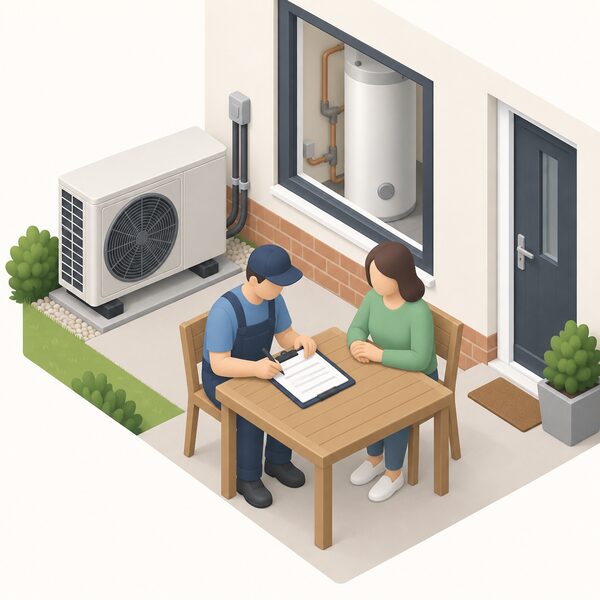
Warmflow publishes separate contact routes for Northern Ireland and the Republic of Ireland on one side and Great Britain on the other, for product information and for finding an installer1. That split reflects the company's home market: Northern Ireland has a large off-gas housing stock and a long-established oil heating trade, and it is where the brand is best known.
For grant-funded work in Great Britain, the installer applies for the Boiler Upgrade Scheme grant on the householder's behalf through Ofgem, and the householder can get a quote through the MCS find a heat pump installer tool or by contacting an energy supplier13. Official guidance advises contacting an installer who can provide the necessary advice, preferably one belonging to the Microgeneration Certification Scheme or the relevant Competent Person Scheme14.
There is also a network notification step. Once a heat pump is installed, the installer should notify the distribution network operator, and the connection process depends on whether the unit is listed on the Energy Networks Association online register and classed as Connect and Notify15. That is an administrative step rather than a technical barrier, but it is one the installer has to complete.
Independent guidance for households includes a quiz to help people find the right heat pump for their home, installation guides and case studies16. Consumer research on adoption barriers identifies cost, trust in the technology, a perceived lack of skilled trusted installers, planning consent issues for historic and stone-built properties, space for an outdoor unit and hot water tank, disruption and noise as the recurring concerns17.
Warranty registration through the online connect platform
Warmflow states that the standard warranty is activated through its online connect platform1. Registration is what starts the cover, and it is normally completed by the installer at commissioning or by the householder shortly afterwards. Without it, a household may find itself outside the terms even where the unit was fitted correctly.
The published material does not state the length of the standard warranty in years, so no figure is given here. What is clear is the mechanism: an online platform rather than a paper card, which means the registration record is held by the manufacturer and can be checked later.
Warmflow recommends a yearly system check by the installer or a qualified person, involving cleaning filters and checking system pressures2. That is a maintenance recommendation rather than a warranty condition as published, but servicing records are commonly requested when a claim is made, and a system that has not been checked for several years is harder to argue about.
For comparison, Octopus Energy offers an eight-year warranty on its own-brand heat pumps and a five-year warranty on other brands it installs18. Warranty terms across the market vary widely, and the length is less important than the conditions attached to it.
Cost, ownership and what a Zeno means for household energy independence
No published price for a Warmflow Zeno heat pump appears in the material behind this page, so none is given. Heat pump prices in the UK are installer-quoted after a survey, and the figure depends on the unit, the cylinder, any radiator changes, the electrical work and the ground works for a ground source installation. A household should expect to receive a quotation covering specific components rather than a headline unit price.
The grant position is clearer. The Boiler Upgrade Scheme covers ground source heat pumps, including water source heat pumps and shared ground loops10. The installer applies on the householder's behalf through Ofgem13. Air source units are also within the scheme's scope, and the eligibility rules are set out in the scheme guidance.
On independence, a Zeno heat pump changes what the house depends on. It removes the oil tank and the oil delivery, and it removes the flue and the combustion risk. It does not remove the electricity connection, and it does not remove the need for a supplier. A ground source unit with a well-designed loop draws its heat from the property's own ground, which is as close to a self-contained heat source as a domestic system gets, but the compressor, pumps and controls still run on imported electricity.
The wider market is moving toward flexibility. Trials have explored business models including Heat Pump Finance, Heat Pump as a Service, Comfort as a Service, Pay as you Save, heat pump flexibility schemes, smart electricity tariffs, Community-Owned Renewable Heat and a Retrofit One-Stop Shop17. Heat batteries such as the tepeo Zero Emission Boiler charge when electricity is cheaper or greener rather than using carbon intensive solutions such as gas or oil, and create a charging schedule to enable the most cost-efficient heating for the home19. Those models change when electricity is bought, not whether it is bought.
Certification is the other lever a household has. The Heat Pump KEYMARK scheme applies to all heat pumps, combination heat pumps and hot water heaters, and includes a quality check of the production sites20. A unit carrying a recognised certification mark has been tested to a published standard, which is a more reliable signal than a marketing claim.
Sources21 cited
- Warmflow, Warmflow, 2026
- Zeno ground source heat pumps, Warmflow, 2026
- A modern heating solution for stunning new builds, Warmflow, 2024
- The 11 quietest heat pumps on the market, Quiet Mark, 2025
- Heat pumps, REA, 2026
- What the Future Homes Standard means for homeowners, NICEIC, 2026
- How ground source heat pumps work, Which?, 2026
- Vaillant flexoTHERM ground source heat pump, Quiet Mark, 2026
- InstaGen IG6 heat pump, Quiet Mark, 2026
- Boiler Upgrade Scheme guidance for installers, Ofgem, 2026
- LG Therma V R290 Monobloc 9kW, Quiet Mark, 2026
- LG Therma V R290 Monobloc 12kW, Quiet Mark, 2026
- Acer Mechanical Services certification, Energy Saving Trust, 2026
- Building regulations: heat pumps, Welsh Government, 2026
- Heat pumps: apply for a new connection, Electricity North West, 2026
- Newly launched website provides guidance on heat pumps, Nesta, 2024
- How to break down the barriers to heat pump adoption, Energy Systems Catapult, 2026
- Heat pumps vs boilers, Which?, 2025
- Heat pump, UK Government, 2026
- Heat Pump KEYMARK benefits for consumers, Heat Pump KEYMARK, 2026
- Heat Pump KEYMARK, EHPA, 2026
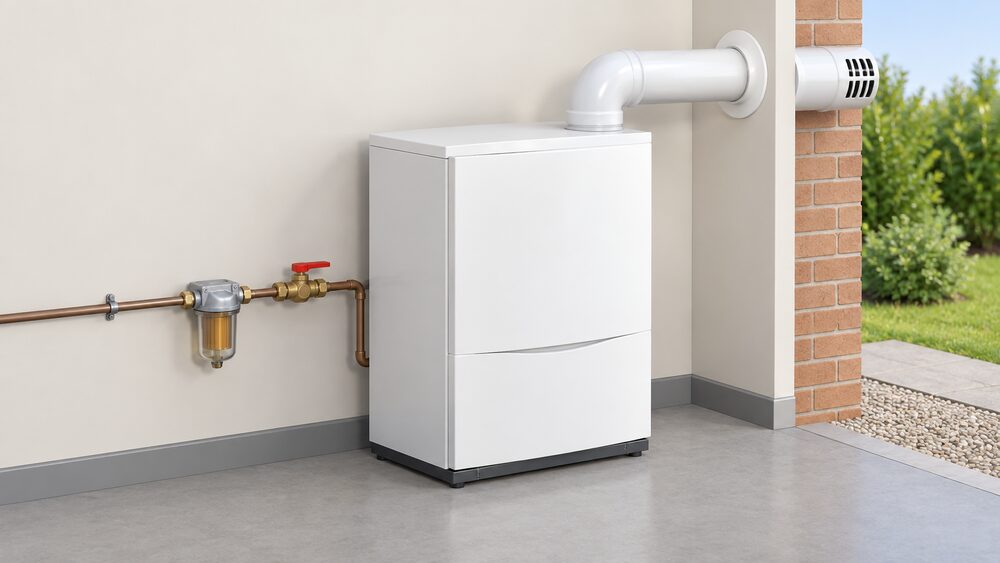 Warmflow oil boilersIs a Warmflow oil boiler worth fitting in a home off the gas grid, and what does the warranty really cover?