In this guide
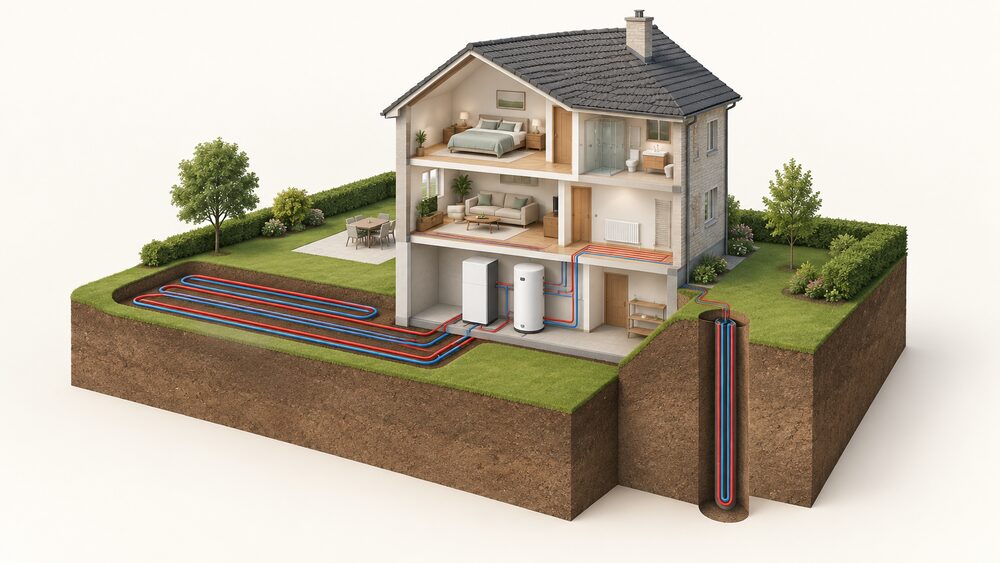
A ground source heat pump, also called a ground-to-water heat pump, moves heat from the ground outside into the house1. Lengths of pipe are buried in a borehole or a horizontal trench, usually as a closed circuit filled with a mixture of water and antifreeze, and the heat pump, working through an evaporator, a compressor and a condenser, raises that low grade heat and transfers it to a hot water tank which feeds the heating distribution system2. It provides both space heating and domestic hot water3.
Performance is the reason households consider it. A typical ground source heat pump is described as 320 to 420% efficient, generating 3.5 to 4.5 units of heat for each unit of electricity used. Official planning guidance puts the figure at 3 to 4 units of heat per unit of electricity2. The price of that performance is groundworks. Published UK installation figures range from around £15,000 where the ground loop is buried in trenches to around £57,000 where a borehole must be drilled1, roughly twice the cost of an air source installation.
Grant support narrows the gap. The Boiler Upgrade Scheme offers £7,500 off the cost and installation of a ground source heat pump in England and Wales, and since 21 July 2026 an uplifted grant of £9,000 for air-to-water or ground source heat pumps in eligible off-gas grid properties, available until 31 March 20275. Uptake remains small: in Summer 2025, 78% of owner-occupiers said they were aware of ground source heat pumps, but only 1% had one installed8.
What a ground source heat pump is and how it works
The ground a metre or more below a garden holds heat through the year. A ground source heat pump transfers energy from that natural heat stored in the earth to heat the home and domestic hot water9. Guidance for Northern Ireland describes the sequence plainly: the system uses heat stored in the ground to pre-heat water for the heating system, and this water is then heated to the required standard using electricity10.
The circuit has two halves. Outside, a buried loop of pipe carries thermal transfer fluid, a mixture of water and biodegradable antifreeze known as the brine. The brine absorbs heat from the ground and passes it through a heat exchanger into the heat pump11. Inside, the refrigerant circuit does the upgrading: an evaporator takes heat from the brine, a compressor raises its temperature, and a condenser gives that heat to the water in the hot water tank and the heating system2. Because the process moves existing heat rather than burning fuel, the heat output is higher than the electricity input, around 1kW of electricity for 4kW of heat generated12.
The unit itself lives indoors. Heat pumps for domestic ground and water source systems are self-contained, generally designed for indoor use, usually with a footprint of about 600 x 600 mm13. In practice that means finding space roughly the size of a fridge-freezer, though smaller versions around the size of an under-counter fridge are available for smaller homes. There is no outdoor fan box, which is the visible difference from an air source heat pump.
Heat is delivered at a lower temperature than other forms of heating, which is why the system pairs naturally with underfloor heating and larger emitters.
Horizontal loops or boreholes: which collector suits your land
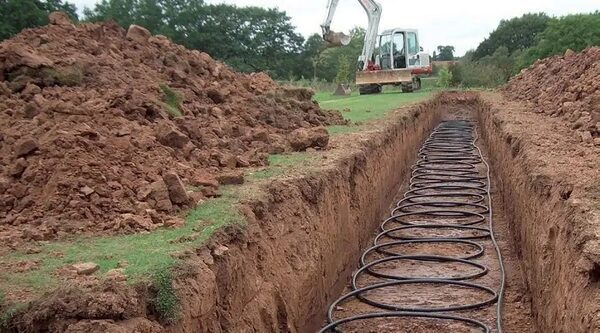
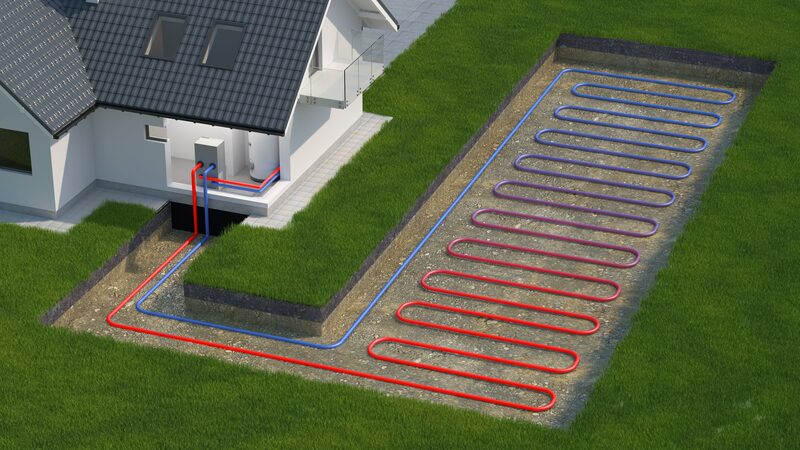
There are two ways to get the pipe into the ground: pipes laid in trenches, or vertical pipes within boreholes14. The choice is usually decided by how much land there is, not by preference.
Horizontal collectors are used when there is a lot of land, and the pipe is generally laid out in long straight runs15. Trenches are shallow, around one to two metres deep, or roughly two metres in depth16. Excavation is needed for the ground loop system17, and the area disturbed is substantial, which is why significant outdoor space is listed as the main disadvantage of the technology3.
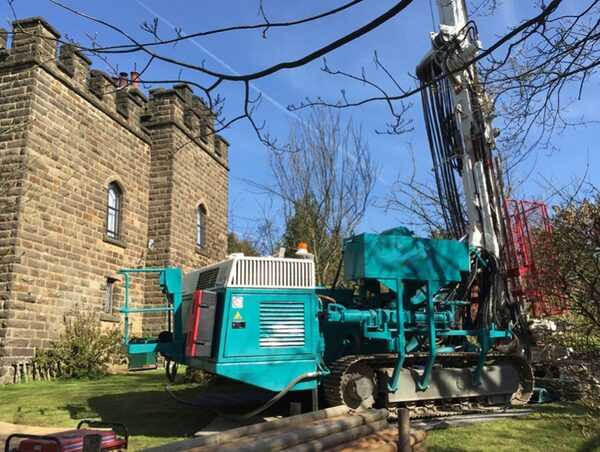
Vertical collectors suit smaller gardens. A borehole is only about 20cm wide, and somewhere between 75 and 200 metres deep. Other UK figures put domestic boreholes at around 75 to 100 metres15 and at 90 to 160 metres12, and drilling to 200 metres is possible depending on system size, though the bore remains less than a metre in diameter. Vertical collectors are described as more efficient, and also more expensive15. Where several boreholes are drilled for one property, separate control of each collector loop is needed13.
| Collector | Depth | Land needed | Relative cost |
|---|---|---|---|
| Horizontal trench | one to two metres | a lot of land, long straight pipe runs15 | lower, around £15,000 total install1 |
| Vertical borehole | 75 to 200 metres, about 20cm wide | suits smaller gardens16 | higher, up to around £57,000 total install4 |
One point householders rarely hear: there are no British Standards specifically for collector loops, nor for the installation of such loops13. Design quality therefore rests on the competence of the installer and on scheme certification rather than on a single national loop standard. The detail of loop design, spacing and ground conditions is covered under ground loops and boreholes, and shared arrays across several dwellings under shared ground loop networks.
Efficiency: 320 to 420% in the published figures
The coefficient of performance is the ratio of heat delivered to electricity consumed. For ground source, published UK figures cluster between 3 and 4.5. Which? states a typical ground source heat pump should be 320 to 420% efficient, and that it can generate 3.5 to 4.5 units of heat for each unit of electricity, using 4.0 in its own worked example. The Planning Portal gives 3 to 4 units of heat per unit of electricity2, the Chartered Institute of Plumbing and Heating Engineering gives around 1kW of electricity per 4kW of heat12, and Nesta describes ground source systems as providing 3 to 4 times the amount of heat as the electricity they use3. The Energy Saving Trust's general heat pump figure is three to four times as much heat, 300 to 400%4.
The documents differ at the edges rather than in substance: the spread reflects different assumptions about flow temperature, ground conditions and whether a seasonal or an instantaneous figure is being quoted. For comparison, an air source heat pump is put at around 1kW of electricity per 3 to 4kW of heat12, and a typical heat pump of any type at 2.5 to 4.5 units of heat per unit of energy18.
Ground source scores higher for a physical reason. Deep ground temperature is relatively stable through the year, so the pump is not fighting a cold outdoor air temperature on the coldest days, which is also why ground source models can be more reliable11. Ground conditions still matter: efficiency is described as generally higher than air source but dependent on ground conditions19.
Flow temperature is the other lever. The mechanics of COP, SCOP and SPF are set out under heat pump efficiency.
Cost: from around £15,000 for trenches to £57,000 for a borehole
There is no published list price for a ground source heat pump: the figures below are whole installations, quoted by installers after survey, and they vary more than for any other domestic heating technology.
| Source and date | Figure |
|---|---|
| Energy Saving Trust, July 2026 | around £15,000 with the ground loop buried in trenches1 |
| Energy Saving Trust, July 2026 | around £57,000 if a borehole must be dug4 |
| Energy Saving Trust, via Electricity North West, September 2026 | £24,000 to £49,000 depending on property size20 |
| Energy Saving Trust, via Uswitch, January 2026 | £28,000 to £57,000 depending on trenches or borehole16 |
| Which?, May 2026 | as much as £29,000 with a trench loop, more for a borehole |
These figures are not all the same measurement. The £15,000 figure is a typical trench installation; the £24,000 to £49,000 band is sized by property; the £28,000 to £57,000 band spans both collector types. Taken together they set a floor around £15,000 and a ceiling around £57,000, with drilling the single largest swing factor.
The Energy Saving Trust lists the drivers: access to the ground and whether trenches or a borehole are used, the brand, model and size of heat pump, the size of the property and its heat need, whether it is a new build or an existing property, and whether radiators need upgrading or underfloor heating installing1. Getting quotes from at least three certified installers is the recommended approach1. Fuller treatment of prices sits on ground source heat pump cost and how much a heat pump costs.
The Boiler Upgrade Scheme: £7,500, or £9,000 off the gas grid
The Boiler Upgrade Scheme gives £7,500 off the cost and installation of a ground source heat pump6. The wider government commitment behind it is £2.7bn in funding to 2030 covering £7,500 towards the cost and installation of ground and air source heat pumps, including water source heat pumps21.
From 21 July 2026, eligible off-gas grid properties can apply for an uplifted grant of £9,000 for an air-to-water or ground source heat pump5. The uplift targets off-grid properties heated by LPG or oil22, and it runs until 31 March 20277. Two grant values therefore apply at once, £7,500 as the standard rate and £9,000 where the off-gas-grid conditions are met, and the guidance documents present both.
Voucher validity differs by technology, and ground source gets the longer window because of the groundworks:
- Ground source heat pump vouchers are valid for 6 months from issue23.
- Air-to-water, air-to-air and biomass boiler vouchers are valid for 3 months25.
The grant is claimed through a certified installer, who may apply on the householder's behalf. The Boiler Upgrade Scheme covers England and Wales; support elsewhere differs, and the national picture is set out under heat pump grants across the UK.
Where a ground source heat pump fits best
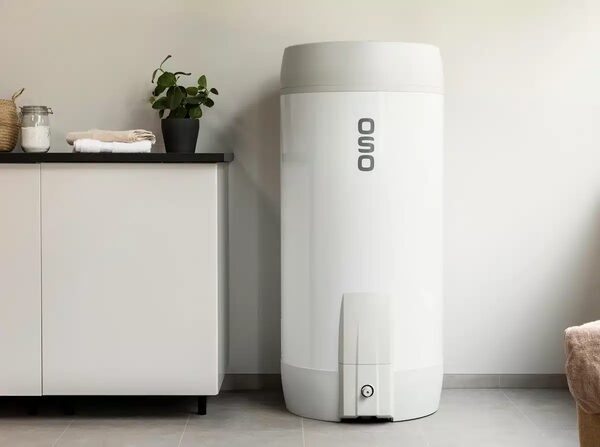
Because the heat is delivered at a low temperature, the fabric of the house does much of the work. Ground source systems are better suited to well-insulated homes with thorough draught-proofing in place16, and official guidance states that heat pumps are best suited to buildings with good insulation levels, with insulation added internally or externally where a home does not already have it27. Checking the home's energy efficiency and, if appropriate, adding loft and cavity wall insulation before installing is the standard sequence. MCS takes a broader view, saying heat pumps can work in all types of homes, including those that have less insulation28; the two positions are about cost and comfort at a given flow temperature rather than about whether the machine functions.
Emitters matter as much as insulation. Ground source heating is most effective with underfloor or air heating systems16, and works best with underfloor heating, which requires lower flow temperatures than radiators. Where existing radiators are retained, sizing has to be checked, which is where heat pump sizing and heat loss calculations come in.
Hot water needs storage. Unlike combi boilers, heat pumps do not provide hot water instantly, so a hot water cylinder is needed29. A household replacing a combi boiler with no existing tank will need suitable space for a new hot water storage cylinder30, in addition to the fridge-freezer sized space for the heat pump. Options are compared under hot water cylinders for heat pumps.
Nesta places the technology as mostly suited to large homes with lots of outdoor space, supported by the Boiler Upgrade Scheme3. That is the honest summary: land, insulation and cylinder space are the three gates.
Planning permission, permits and building regulations
In most cases no planning application is needed. The installation of a ground source heat pump or a water source heat pump on domestic premises is usually considered to be permitted development31. In Wales, permitted development rights permit the installation, alteration or replacement of a ground source heat pump or water source heat pump within the curtilage of a dwellinghouse32. In Northern Ireland the equivalent right, Part 2 Class F, covers the provision of a ground or water source heat pump within the curtilage of a dwellinghouse33. Councils in England describe the same position, covering installation, alteration or replacement of a microgeneration ground source heat pump within the curtilage of a dwellinghouse or a block of flats34, and confirm that installation within the curtilage of a house or block of flats does not require planning permission27.
The exceptions are heritage. Installing a ground source heat pump within a conservation area property's curtilage is permitted development, but installing one and its associated housing or boxing equipment within the curtilage of a listed building will need listed building consent35. Renewable energy solutions on listed buildings might be acceptable but will require listed and or planning consent36. Guidance for listed buildings and conservation areas is consistent that the council should be contacted to check local requirements31. Note the contrast with air source: on a listed building, both planning permission and listed building consent are typically needed for an outdoor air source unit27. Nation by nation detail is on the planning pages for England, Scotland, Wales and Northern Ireland.
Permitted development is not an exemption from building control. Installation of either a ground source or air source heat pump will have to comply with the Building Regulations37, and the relevant requirements are the same for ground source as for air source29. Approved Document L expects the information handed to the owner for a ground source installation to include details of the fluids used and their commissioned concentrations26.
Installation: survey, groundworks and certified installers
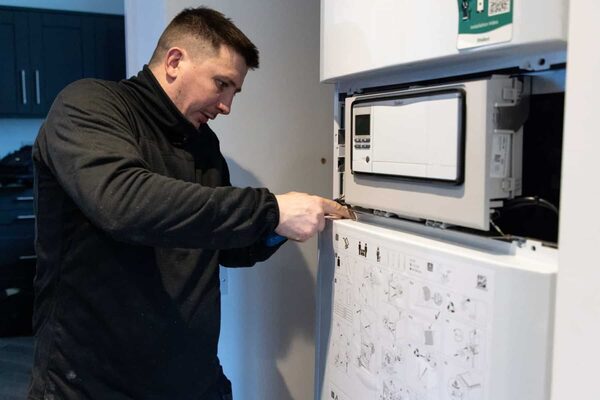
The sequence begins with assessment, not with digging. A certified contractor will assess the home's heating requirements before proposing the most suitable heat pump size and model, and may apply for a government grant on the householder's behalf. The Energy Saving Trust recommends quotes from at least three installers accredited through the Microgeneration Certification Scheme1, and certified installers use MCS certified ground and water source heat pumps, meaning the product has been tested for quality, reliability and performance28.
- Survey and heat loss assessment, sizing and system design.
- Ground assessment and choice of trench or borehole; grant voucher application where applicable.
- Groundworks: excavation for trenches, or drilling for boreholes, and laying the collector loop.
- Indoor work: heat pump unit, cylinder, emitter changes, electrical connection.
- Commissioning, including recording the fluids used and their concentrations26, and handover.
Fitting the heat pump itself typically takes one to two days for a professional installer. The groundworks sit outside that figure, and disruption during installation is rated high29. Installing a ground source heat pump is not a DIY job. The 6 month voucher validity for ground source under the Boiler Upgrade Scheme23 is a reasonable guide to the outer span of a project from voucher to completion. The process in general is described under heat pump installation.
"Installing a ground source heat pump is not a DIY job."
Ground source versus air source: what the extra cost buys
The trade is consistent across every source: ground source costs more to install and performs better once running.
| Ground source | Air source | |
|---|---|---|
| Installation cost | around twice an air source installation; described in one case study as four to five times more expensive38 | usually less expensive39 |
| Efficiency | around 1kW electricity per 4kW heat12 | around 1kW electricity per 3 to 4kW heat12 |
| Groundworks | trenches or boreholes, significant outdoor space3 | no buried pipes, easier and cheaper to install40 |
| Unit location | indoor, about 600 x 600 mm footprint13 | external unit required41 |
| Noise | quieter42 | 40 to 60 decibels on average18 |
Ground source gives lower running costs and lower CO2 emissions, but costs more to install39. It is usually more efficient than an air source heat pump but more expensive to install30, and higher set-up costs are the recognised trade against generally higher efficiency19. Ground source also requires more outdoor work to install38.
Where the extra spend tells is on fuel displaced and on weather. A ground source unit will save much more money if it is replacing an electric or coal-based system, and may not be suitable where the home is on mains gas16; that judgement is about the price of the fuel being replaced, not about the machine. Stable underground temperatures are the performance argument, addressed further under ground source versus air source in cold weather. For households without the land, air-to-water heat pumps do the same job from outdoor air.
What owning one means for household energy independence
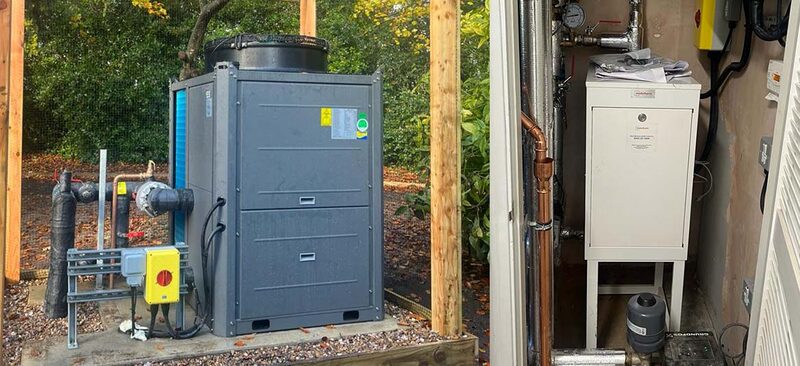
A ground source heat pump changes what a household depends on, it does not remove dependence. Gas, oil or LPG deliveries go, and with them the exposure to those fuel markets. In their place, the home depends entirely on mains electricity: the compressor and circulation pumps stop when the supply does, and there is no fuel stored on site. The heat, though, is local and permanent, drawn from the ground under the property, with the electricity used only to upgrade it, three to four units of heat for every unit drawn from the grid43.
The ground array is the most durable part of the asset. Long life expectancy is listed as an advantage of individual ground source systems3, and once a borehole is drilled or trenches backfilled, that infrastructure belongs to the property. The dependence that remains is on the manufacturer for the indoor unit, its refrigerant circuit and its spares, on a certified installer for servicing, and on the grid for every kilowatt-hour consumed. Pairing with on-site generation shifts part of that, and the interaction is covered under heat pumps and household energy independence.
Metering is worth noting: under the Domestic Renewable Heat Incentive, an air source or ground source heat pump had to be metered for the householder to receive scheme payments44, a reminder that grant and incentive schemes attach conditions to the equipment as well as to the installer.
Adoption is still thin on the ground. In Summer 2025, 78% of owner-occupiers were aware of ground source heat pumps against 84% for air source, and only 1% of owner-occupiers had already installed one8. Stated likelihood to install or already have a ground source heat pump was reported at 18% and at 14% across the periods covered, and the published figures differ on that point8. For most UK households the barrier is not the technology but the land and the capital: significant outdoor space3 and an installed cost that starts around £15,000 and can reach around £57,0001, against a grant of £7,500 or £9,0006.
Sources44 cited
- Ground source heat pumps, Energy Saving Trust, 2026-07-16
- Heat pumps: sustainability and planning, Planning Portal, 2026-09-17
- Ground source heat pumps (individual), Nesta, 2025-02-03
- In-depth guide to heat pumps, Energy Saving Trust, 2026-07-16
- Boiler Upgrade Scheme guidance for installers v5.1, Ofgem, 2026-07-02
- Boiler Upgrade Scheme, Find a Government Grant, 2026-09-18
- Boiler Upgrade Scheme (BUS), Ofgem
- Public Attitudes Tracker: heat and energy use in the home, Summer 2025, DESNZ, 2025-10-28
- VAT: energy-saving materials and grant-funded heating supplies, HMRC, 2026-09-17
- Heat pumps and renewable heat, nidirect, 2026-09-02
- How heat pumps work: a guide for homeowners, NICEIC, 2025-09-17
- Heat pump systems, CIPHE, 2026-09-17
- Ground source and water source heat pumps: low carbon equipment and building regulations, Scottish Government, 2010-03
- Generating your own energy: heat pumps, Welsh Government, 2018
- Understanding heat pumps, APHC, 2025-05-21
- Ground source heat pumps, Uswitch, 2026-01-06
- Heat pumps, nidirect, 2025-02-24
- Heat pumps vs boilers, Which?, 2025-09-22
- Advice on improving energy efficiency, Eryri National Park Authority, 2022
- Ground source heat pumps, Electricity North West, 2026-09-19
- Carbon Budget and Growth Delivery Plan: heat and buildings factsheet, GOV.UK, 2026-06-23
- Boiler Upgrade Scheme statistics, July 2026, DESNZ, 2026-08-27
- Boiler Upgrade Scheme: installers, Ofgem, 2026-09-17
- Boiler Upgrade Scheme annual report 2024 to 2025, Ofgem, 2025-07
- Boiler Upgrade Scheme guidance for installers v5, Ofgem, 2026-04-28
- Approved Document L, Volume 1: Dwellings, Ministry of Housing, Communities and Local Government, 2023
- Heat pumps, New Forest District Council, 2026-09-17
- Ground and water source heat pumps, MCS, 2026-06-09
- Air and ground source heat pumps, Croydon Council, 2026-09-17
- Deciding if a heat pump is right for you, Citizens Advice, 2025-12-08
- Heat pumps: common projects, Planning Portal, 2026-09-17
- Planning permission: heat pumps, Welsh Government, 2026-09-17
- Planning (General Permitted Development) Order (Northern Ireland) 2015, schedules, legislation.gov.uk, 2026-09-17
- Renewable energy: planning advice, Rother District Council, 2026-09-17
- Improving energy saving and sustainability in conservation areas and listed buildings, Brighton & Hove City Council, 2026-09-17
- Making alterations to a listed building, Bristol City Council, 2026-09-17
- Heat pumps: building regulations, Planning Portal, 2026-09-17
- Air source heat pump for a rural off-gas home, Energy Saving Trust, 2026-01-05
- Air source heat pumps vs ground source heat pumps, Energy Saving Trust, 2026-07-16
- Fact sheet 5: air source heat pumps, Pendle Borough Council
- Heat in Buildings Strategy: strategic environmental assessment, Scottish Government, 2021-02
- HFC phasedown reform: de minimis assessment, Defra, 2025-09-02
- Heat pumps: expert guide for homeowners, Development Bank of Wales, 2024-11-07
- Installer metering questions: heat pumps, Ofgem, 2017-09-01
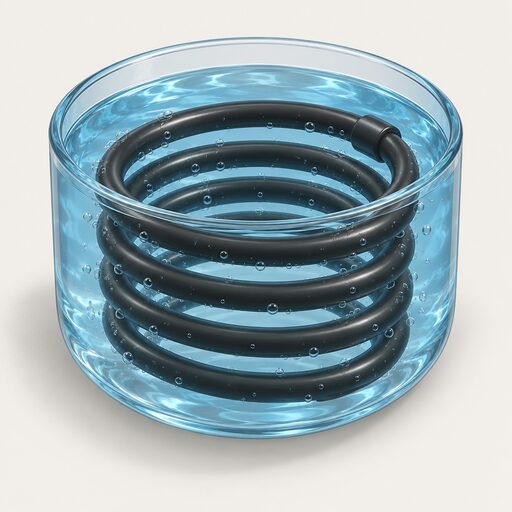 Water Source Heat PumpsYour home sits near a river, lake or the sea.
 Ground Source Heat Pump CostWhat a ground source heat pump costs in the UK, splitting groundworks and drilling from the heat pump and internal works, and how the £7,500 Boiler Upgrade Scheme grant and the £9,000 off-gas-grid uplift change the figure.
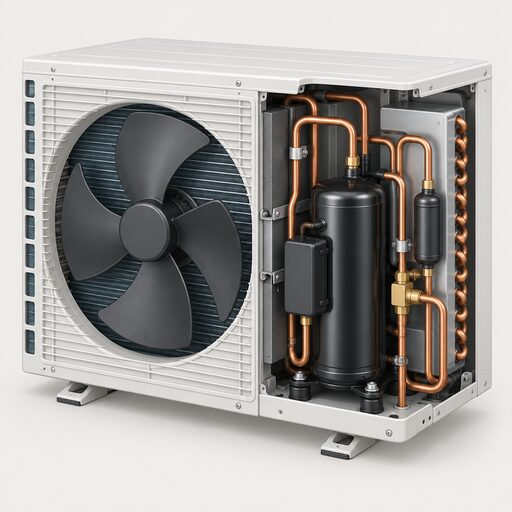 Air Source Heat PumpsHow an air source heat pump takes heat from outdoor air, the difference between air-to-air and air-to-water systems, typical efficiency, the £7,500 Boiler Upgrade Scheme grant, noise and planning limits, and what ownership means for a household's energy independence.
 The Full Heat Pumps GuideWill a heat pump keep my house warm in winter, and what does one cost to buy and run?
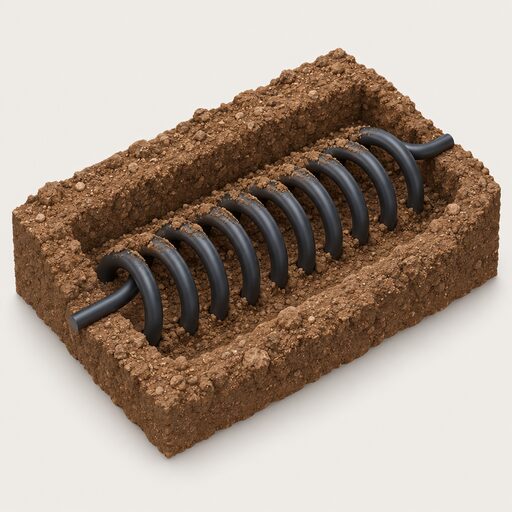 Shared Ground Loop NetworksA shared ground loop lets several homes draw heat from one set of underground pipes, each with its own heat pump.
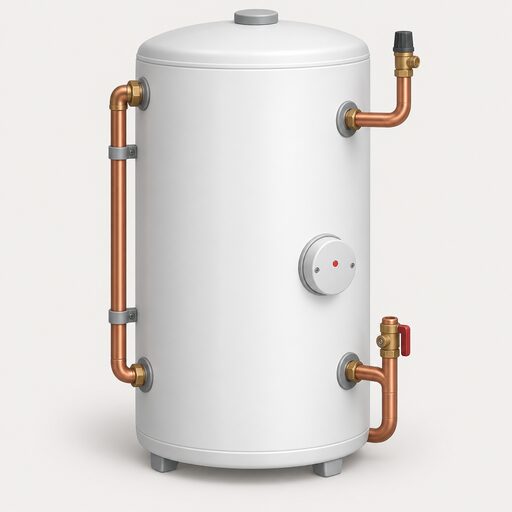 Air-to-Water Wet SystemsAir-to-water heat pumps feed radiators, underfloor heating and a hot water cylinder, and are the most common domestic heat pump in the UK.