
In this answer
Short answer
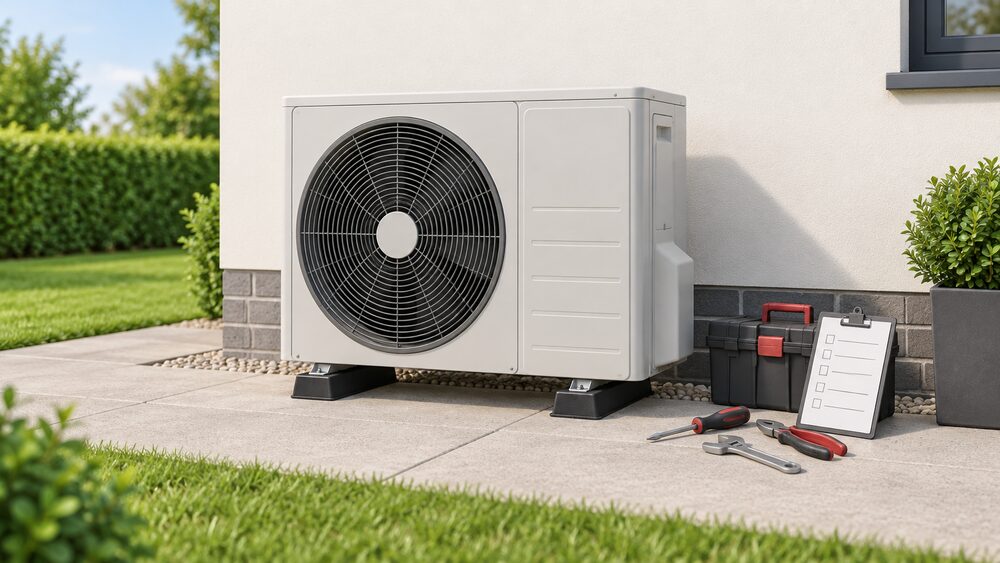
An air source heat pump is expected to last somewhere between 15 and 25 years, depending on which figure is used and how the unit is maintained. MCS Certified, the certification body for the UK's renewable heating installers, puts the average at up to 20 years1. AgilityEco gives 15 to 20 years and notes the few moving parts that make that possible2. Aira quotes 20 to 25 years for a typical air source unit3, and the Welsh Government's own noise research used a working assumption of approximately 25 years for the lifespan of units4.
The spread is not a contradiction so much as a difference in what is being measured. A manufacturer's design life, a field average and a well-maintained best case are three different numbers. What they agree on is the shape of the answer: an air source heat pump is a long-life appliance, comparable to a good boiler and often longer, and its working life is decided less by the calendar than by installation quality, servicing and whether the unit is sized correctly for the house.
For a household, that lifespan is the payback window. A heat pump that runs for 20 years spreads its installation cost over two decades of heating, and every year of service it delivers is a year not spent buying gas. The dependence that remains is electricity from the grid, and a service contract with whichever company maintains it.
How long an air source heat pump lasts: 15 to 25 years depending on the source
The headline figures cluster into two groups. The first is 15 to 20 years: AgilityEco's product guidance2, Daikin's advice that a well-maintained heat pump typically operates reliably for 15 to 20 years5, and ScottishPower's typical lifespan of between 15 and 20 years6. The second is 20 years and above: MCS Certified's up to 20 years1, Good Energy's statement that the typical lifespan of an air source heat pump is up to 20 years7, Hive's 20+ years8, and CIPHE's independent guidance that heat pumps can have a lifespan of 20+ years9. Aira sits at the top of the range with 20 to 25 years3, and the Welsh Government's research used approximately 25 years4.
The lower figures tend to come with a qualifier about maintenance, and the higher ones describe a unit that has had it. Daikin's 15 to 20 years applies to a well-maintained heat pump5, which implies the figure is a floor for cared-for units rather than a ceiling. E.ON states that regular maintenance can help a unit last for 20 years or more10, which is the same claim from the other direction.
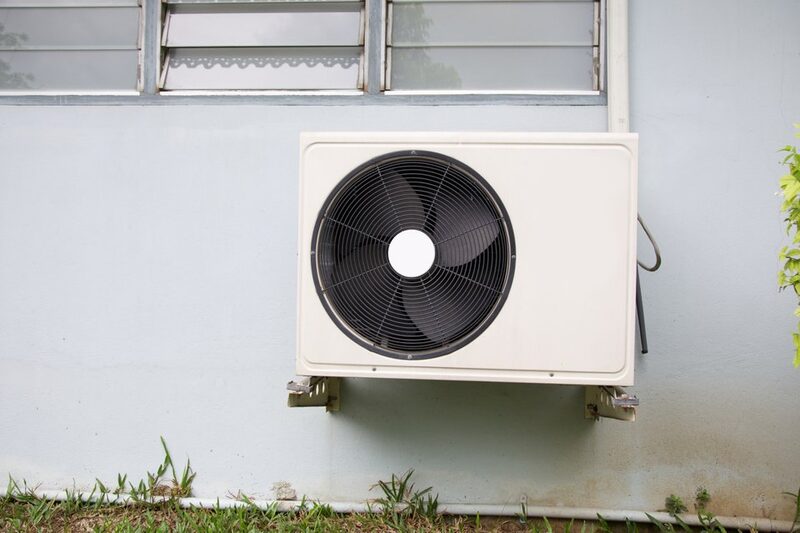
What drives the difference in practice is the compressor, the one genuinely hard-working component, and the conditions it works under. A unit that is correctly sized runs shorter, gentler cycles than one that is oversized or undersized. A unit with clear airflow around the outdoor fan and a clean evaporator coil holds its efficiency. A unit installed with the right refrigerant charge and left alone holds it longer still.
Servicing: the yearly check that keeps a heat pump running efficiently
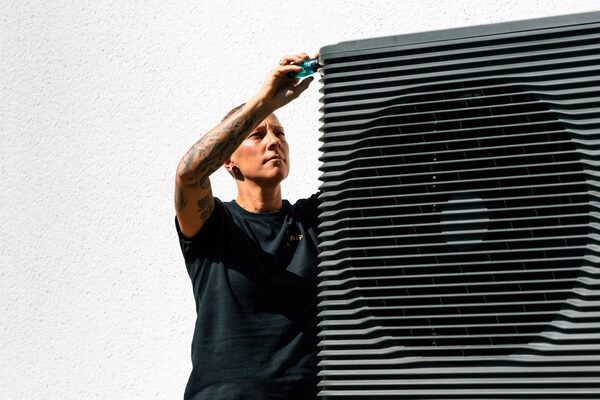
Every source that gives a service interval gives the same one: a year. MCS Certified describes air source heat pumps as having few moving parts that generally need only a simple yearly service to keep running efficiently1. Hive recommends booking a service every 12 months11. Daikin advises annual servicing, ideally scheduled before the heating season, and links it to both efficiency and warranty compliance5. Ideal Heating states that all heat pumps require servicing annually12. E.ON Next and the government's own heat pump guidance both say the same10.
The purpose is not just longevity. The government's guidance frames it as keeping the unit clean so it runs efficiently and sounds as quiet as possible13, which matters because noise is one of the planning conditions many installations sit under. A dirty evaporator or a failing fan bearing is a noise complaint waiting to happen.
What a service covers is straightforward: the outdoor unit is cleaned and checked, refrigerant pressures and electrical connections are inspected, and the system is run to confirm it heats and delivers hot water as it should. Alpha recommends an annual service for the outdoor unit14. For a household, the practical point is that servicing is the one recurring cost of ownership, and it is the lever that moves a unit from the 15 year end of the range towards the 20 year end.
Do heat pumps last longer than gas boilers?
The comparison is usually made in the other direction, but the figures are consistent. EDF puts the average boiler at around 15 years and air source heat pumps at up to 20 years15. Daikin gives heat pumps generally 15 to 20 years, with ground source systems reaching 25 years, which it describes as double the average boiler life16. The Chartered Institute of Plumbing and Heating Engineering gives heat pumps 20+ years9, and the CPA's comparison of heat pumps and boilers lists 20+ years for heat pumps17.
The reason is mechanical. A gas boiler burns fuel inside a heat exchanger and has a fan, a pump, a diverter valve and a flue, all of which wear. A heat pump moves heat rather than creating it, and its outdoor unit has few moving parts beyond the compressor and fan1. That is why the servicing burden is lighter and the expected life longer.
For energy independence, the difference is what the appliance depends on. A boiler depends on a gas connection and a gas supplier, and its life is tied to the gas network's. A heat pump depends on electricity, which a household can increasingly generate itself. A longer-lived appliance also means fewer replacement cycles, and fewer embodied carbon and cost hits over the same period.
Air source vs ground source: which lasts longer
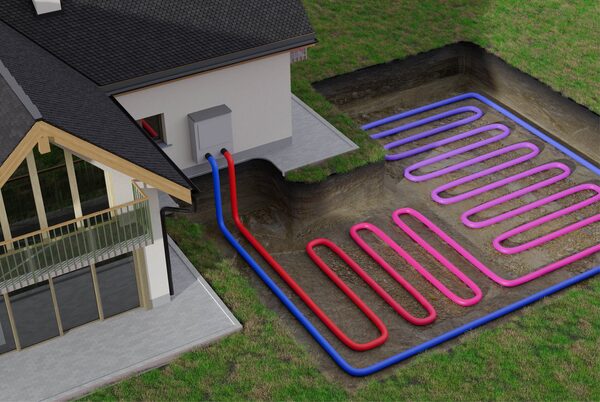
Ground source heat pumps are consistently given the longer life. MCS Certified puts ground and water source heat pumps at around 20 years with regular, scheduled maintenance and proper care18. MasterTherm quotes 25 years or more for the ground loop and 20 years or more for the heat pump itself, against 15 to 20 years for air source19. Aira states that ground source heat pumps usually last longer than air source and air to water heat pumps20. Nesta lists long life expectancy as one of the technology's advantages21.
The reason is that the ground loop is buried and stable. It is not exposed to frost, wind, rain or summer heat, and it runs at a steadier temperature than outdoor air, which is easier on the compressor. The heat pump unit itself sits indoors in most ground source installations, away from the weather.
That longer life comes with a higher entry cost. Which? reports that a ground source installation is around twice the cost of an air source heat pump installation22. Energy Saving Trust notes that ground source gives lower running costs and lower CO2 emissions but costs more to install23, and Eryri Council's energy efficiency advice describes ground source heat pumps as generally more efficient, dependent on ground conditions, but with higher set-up costs24.
| Air source | Ground source | |
|---|---|---|
| Unit lifespan | 15 to 20 years2, up to 20 years1, 20 to 25 years3 | Around 20 years18, 20+ years19 |
| Ground loop | Not applicable | 25+ years19 |
| Installation cost | Baseline | Around twice air source22 |
| Running costs | Higher than ground source | Lower than an equivalent air source system23 |
| Exposure | Outdoor unit, exposed to weather | Loop buried, unit usually indoors |
For a household, the trade is longer life and lower running costs against a much larger upfront sum and the disruption of digging or drilling. The independence picture is similar for both: either way the household is buying less gas and depending more on electricity.
What this means for a household's energy independence
A heat pump's lifespan is the length of the household's independence from gas. Over 15 to 25 years, a home that switches stops buying gas for heating and hot water, and the money that would have gone to a gas supplier goes instead to electricity, which can increasingly be generated on the roof or bought on a tariff of the household's choosing.
The dependence that remains is real and worth stating plainly. The heat pump runs on grid electricity unless the household has its own generation and storage, so it still depends on a supplier and a network. It depends on a manufacturer for parts, on an installer for the annual service, and on refrigerant rules that may change over its life. A unit installed today may outlive the company that made it, and spares availability is a genuine factor in whether a 20 year old unit is worth repairing.
What the household controls is the servicing record, the siting of the outdoor unit and the sizing decision made at installation. Those three things are what separate a unit that reaches 20 years from one that does not.
Sources24 cited
- Air source heat pump, MCS Certified, 2026
- Heating systems, AgilityEco, 2026
- Protect your home from rising energy costs, Aira, 2026
- ASHP noise and permitted development rights in Wales: phase 1 report, Welsh Government, 2023
- Air source heat pump service, Daikin UK, 2026
- Air source heat pumps, ScottishPower, 2026
- Heat pumps, Good Energy, 2026
- Air source heat pumps, Hive, 2026
- Air source heat pumps (ASHP), CIPHE, 2022
- Free air source heat pump servicing offer, E.ON Next, 2026
- Air source heat pump servicing guide, Hive, 2025
- Heat pumps, Ideal Heating, 2026
- Heat pumps explained: experts answer your questions, GOV.UK, 2024
- Customer support FAQ, Alpha Innovation, 2026
- Debunking air source heat pump myths, EDF Energy, 2025
- How does a heat pump work, Daikin UK, 2026
- Heat pumps vs boilers, CPA, 2025
- Ground and water source heat pump, MCS Certified, 2026
- Ground source heat pump cost guide UK, MasterTherm, 2026
- How long a heat pump lasts, Aira, 2024
- Ground source heat pumps (individual), Nesta, 2025
- How ground source heat pumps work, Which?, 2026
- Air source heat pumps vs ground source heat pumps, Energy Saving Trust, 2026
- Advice on improving energy efficiency, Eryri National Park Authority, 2022
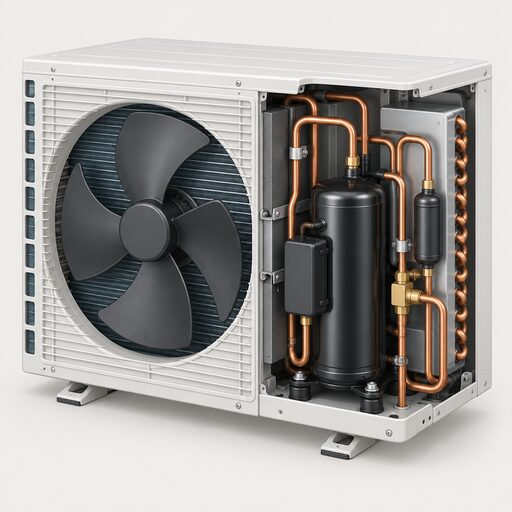 Air Source Heat PumpsHow an air source heat pump takes heat from outdoor air, the difference between air-to-air and air-to-water systems, typical efficiency, the £7,500 Boiler Upgrade Scheme grant, noise and planning limits, and what ownership means for a household's energy independence.
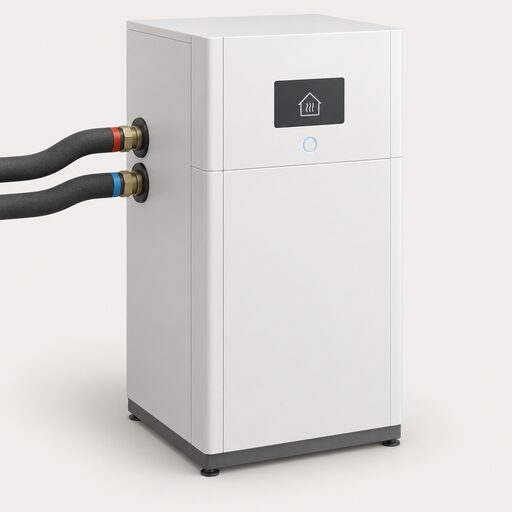 Ground Source Heat PumpsA ground source heat pump takes warmth from the ground to heat your home and water.
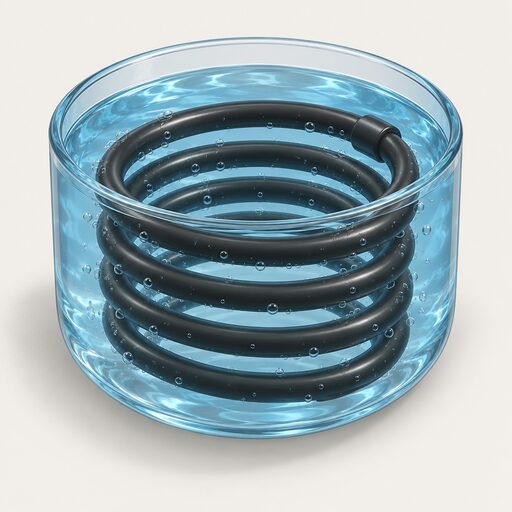 Water Source Heat PumpsYour home sits near a river, lake or the sea.
 Servicing and MaintenanceHow often does a heat pump need servicing, and what actually happens during the visit?
 Heat Pump Running CostsWhat does a heat pump cost to run each year, and is it cheaper than a gas boiler?
 Manufacturer WarrantiesHow long does a boiler, heat pump or solar panel warranty actually last, and what do you have to do to keep it valid?