In this guide
Microgeneration Beyond Solar: Micro Wind, Micro Hydro, Micro-CHP and Fuel Cells
Microgeneration is the production of heat or electricity at household scale. In UK law it means equipment with a capacity of no more than 50 kilowatts for electricity or 45 kilowatts thermal for heat, drawing on a listed set of sources that includes wind, water, fuel cells and combined heat and power as well as solar.1 Solar PV is the most familiar member of the family. This page covers the others: small wind turbines, micro hydro, micro combined heat and power (micro-CHP) and domestic fuel cells.
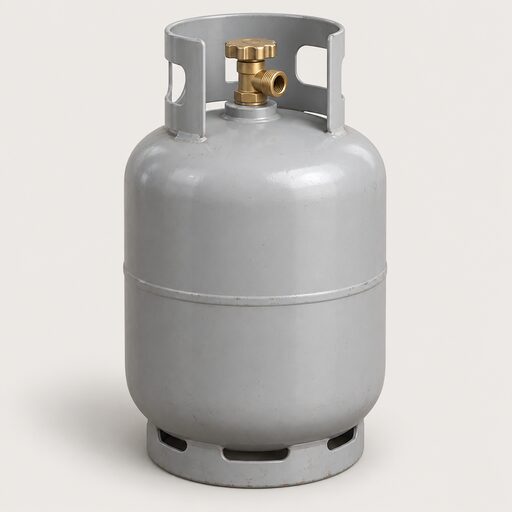
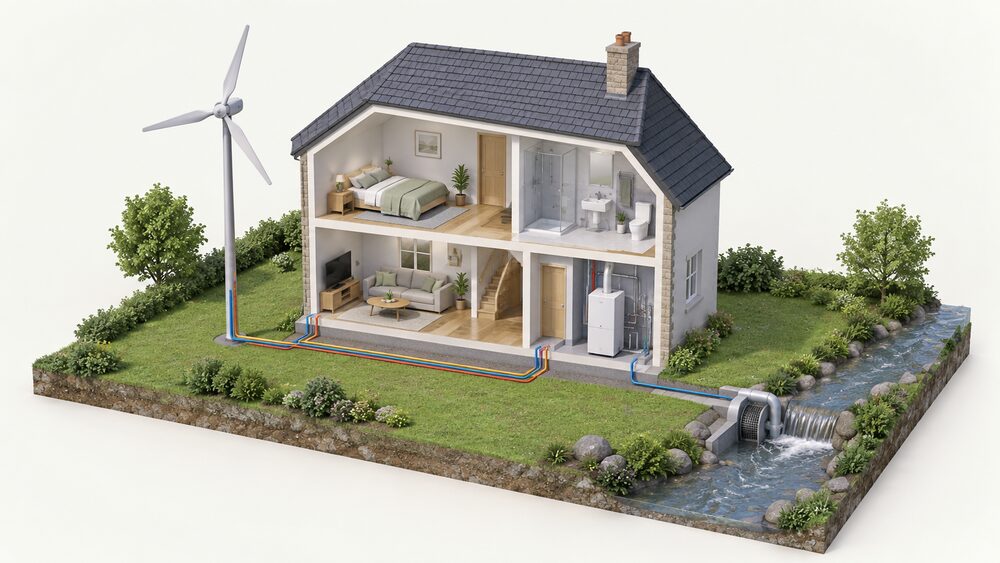
The four technologies differ sharply in what they ask of a site and in the independence they deliver. Wind and hydro use a resource found on the property itself, and can run a home with no mains connection. Micro-CHP and today's fuel cell units are boilers that also generate electricity: a typical domestic unit produces up to 1kW of electricity once warmed up, heat outweighs electricity at a ratio of about 6:1, and the fuel is usually mains gas or LPG.2
All four are recognised in planning law, in the Microgeneration Certification Scheme (MCS) and, in Great Britain, in the Smart Export Guarantee. The sections below set out what each is, where it fits, what permissions it needs and what the evidence says about cost.
What microgeneration means: the 50kW and 45kW limits
The term has a statutory meaning. Scottish planning guidance states that microgeneration "has the meaning given in section 82(6) of the Energy Act 2004", and summarises it as equipment with an output of up to 50 kilowatts of electricity or 45 kilowatts of thermal (heat) energy.6 The policy note to the 2024 Scottish order gives the same two figures: 50 kilowatts in relation to electricity generation and 45 kilowatts thermal in relation to heat production.7
Northern Ireland's permitted development legislation uses the same limits and spells out the qualifying sources:
"relies wholly or mainly on biomass, biofuels, fuel cells, photovoltaics, water (including waves and tides), wind, solar power, geothermal sources, combined heat and power systems and other sources of energy or technologies for the generation of electricity or the production of heat"
Fuel cells and combined heat and power therefore sit inside the definition by name, alongside wind and water. The definition turns on the source and the size, not on whether the fuel is renewable, which is why a gas-fired micro-CHP boiler counts.
The 50kW figure recurs wherever the term is used. MCS is described in government scheme guidance as the quality assurance organisation for "microgeneration (small scale renewable 50kW or smaller) technologies".8
Different rules draw the line in different places
"Small scale" is not one threshold. A household meets several, each belonging to a different body:
| Rule or body | Where the line falls |
|---|---|
| Statutory definition of microgeneration | 50 kilowatts electricity, 45 kilowatts thermal1 |
| Micro hydro, planning guidance | Less than 100 kilowatts3 |
| Smart Export Guarantee, small wind and solar | 5MW or less4 |
| Smart Export Guarantee, micro-CHP | 50kW or less4 |
| NIE Networks, micro generation | 3.68kW or less single phase, or up to 11.04kW three phase9 |
| NIE Networks, small scale generation | Greater than 3.68kW and up to 17kW single phase; three phase greater than 11.04kW9 |
NIE Networks' own pages disagree on the upper three-phase limit for small scale generation: one gives up to 2MW and another gives up to 5MW.9 The network operator also reports that the majority of small scale applications are up to 50kW for solar PV and up to 250kW for wind.9 For a household the lower thresholds are the ones that matter, because they decide which connection process applies. The detail is on the pages covering G98 and G99 connection and connecting a generator in Northern Ireland.
At the very bottom of the range, 2026 regulations define a plug-in microgenerator as one intended for connection to a low voltage consumer's installation by means of a standard plug and socket, with a maximum rated alternating current output not exceeding 800 watts.11
Micro wind: small turbines for homes and small sites
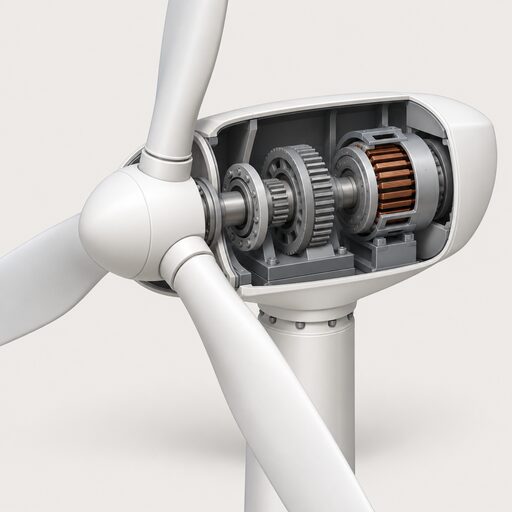
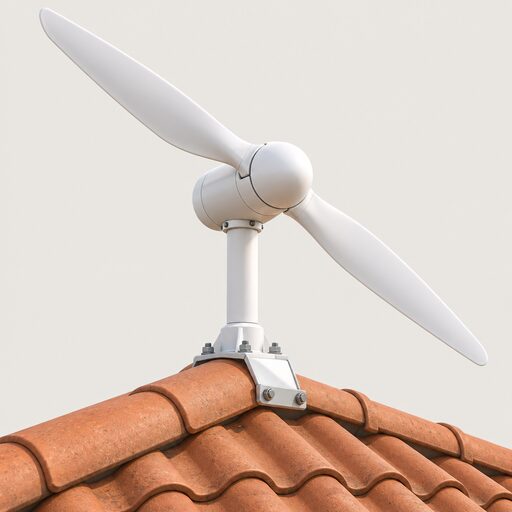
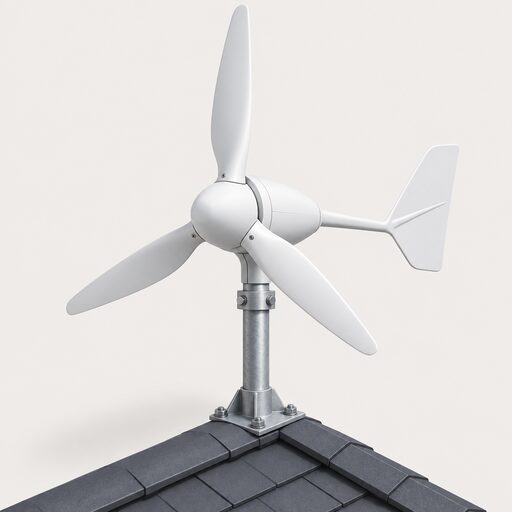
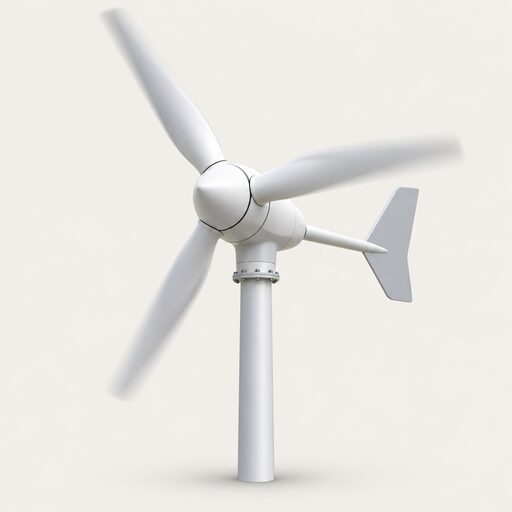
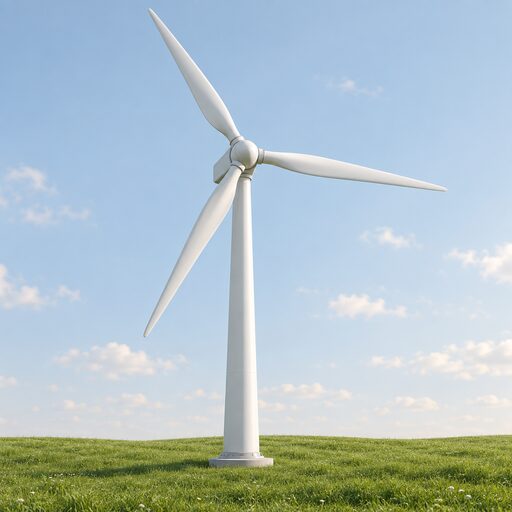
Small-scale turbines generate electricity from wind, and official planning guidance is blunt about the condition attached: they "depend on wind speed and location".12 The range of machines is wide. At the smallest end are turbine units that generate around 100W and charge a battery.13 At the other end are pole-mounted machines serving a home or small business. The main forms are described on the page about domestic wind turbines, and the question of roof or pole mounting has its own comparison.
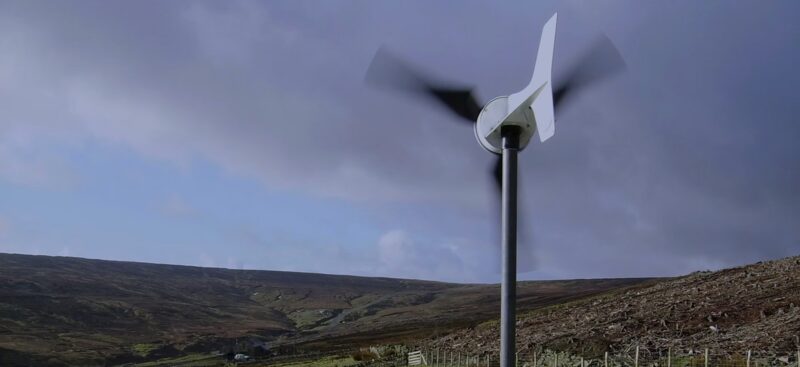
A turbine can be used in two ways. Connected to the grid, any unused or excess electricity can be exported and sold to the local electricity supply company. Off grid, it charges batteries, and nidirect notes that it is common to run such a system with a diesel generator for use during periods of low wind speeds.5 That is the honest measure of wind's contribution to independence: it displaces bought electricity when the wind blows, and needs storage, a second generator or the grid when it does not. The practicalities are covered under off-grid wind power.
The Energy Saving Trust's field trial of domestic small-scale wind, published in July 2009, concluded that consumers should consider small-scale wind "as one option from a potential suite of microgeneration technologies".14 The report's title, Location, Location, Location, states its central finding. The pages on wind speed and siting and turbine output and sizing take this further.
Life, servicing and warranty
Guidance on turbine life is consistent. nidirect states that wind turbines can have a life of up to 22.5 years but need service checks every few years.5 MCS says that with regular upkeep a small wind turbine can last over 20 years, with maintenance checks generally needed every few years.15 The Centre for Alternative Technology gives a lifetime of around 20 years and notes that some moving parts may have to be replaced within it.16
A maker's warranty is far shorter than the machine's working life, so most of that life is spent outside warranty and dependent on parts and service remaining available. The pages on installation and maintenance and maintenance cost cover what that involves.
Planning differs by nation
Permitted development rights for turbines are set separately in each nation. In Scotland, the class covering a free-standing wind turbine applies only where it "is used only for the purposes of domestic microgeneration".17 Each nation has its own page: England, Scotland, Wales and Northern Ireland.
Micro hydro: power from flowing water
A micro hydro plant is one that generates less than 100 kilowatts.3 The Renewable Energy Consumer Code uses the same threshold, noting that systems with a capacity of less than 100 kilowatts are sometimes referred to as micro-hydro.18 That is twice the statutory ceiling for microgeneration, so a scheme can be "micro hydro" in planning language while exceeding the 50 kilowatt limit used elsewhere.
The principle is simple. The energy from flowing water is converted into kinetic energy in a turbine, which drives a generator to produce electricity.19 The Planning Portal adds that "useful power may be produced from even a small stream".3 What a particular stream can deliver depends on the height the water falls and the volume flowing, which is the subject of the page on head and flow. The choice of machine follows from those two numbers, as set out under hydro turbine types.
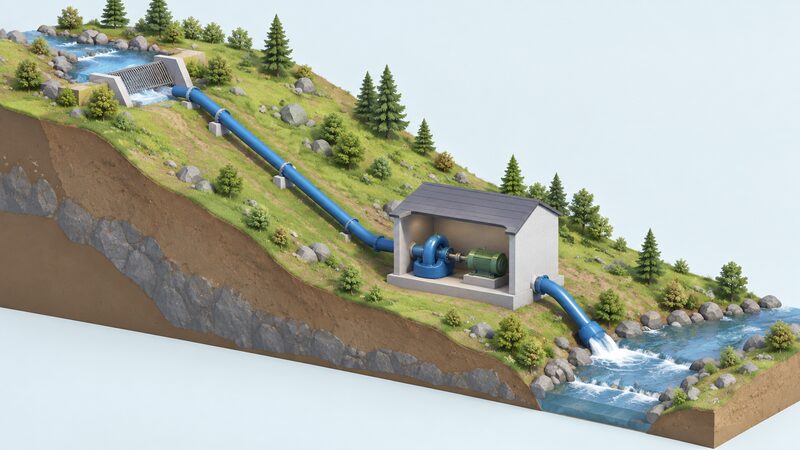
The site requirement is absolute. Electricity North West puts it plainly: a household can install micro hydro if it has a stream or river flowing through its land.19 Most homes do not, which makes hydro the rarest of the four technologies and, where it is possible, the strongest for independence. The Planning Portal states:
"For houses with no mains connection but with access to a micro hydro site, a good hydro system can generate a steady, more reliable electricity supply than other renewable technologies at a lower cost"
In off-grid use the power goes first to lighting and electrical appliances, but space and water heating can be supplied when available power exceeds demand.3 That arrangement is explained on the pages about micro hydro for space and water heating and dump loads and diversion controllers.
On cost, the sources agree on the shape but give no figures. Planning Portal guidance from September 2024 describes micro hydro as ideal for off-grid homes, "offering long-term savings despite high initial costs".12 Smart Energy GB says it can be especially cost-effective for rural or off-the-grid homes, farms and businesses close to a suitable water source.20 Prices are site-specific and installer-quoted; see micro hydro cost.
Hydro also sits slightly apart in certification. Home Energy Scotland's landlord loan requires the installer and product to be MCS certified for the system being installed, except for micro-hydro systems.21 The permissions that do bind a hydro scheme concern the water itself: abstraction licences and permits and fish passage and environmental requirements. The full overview is on the micro hydro power page.
Micro-CHP: a boiler that generates electricity as a by-product
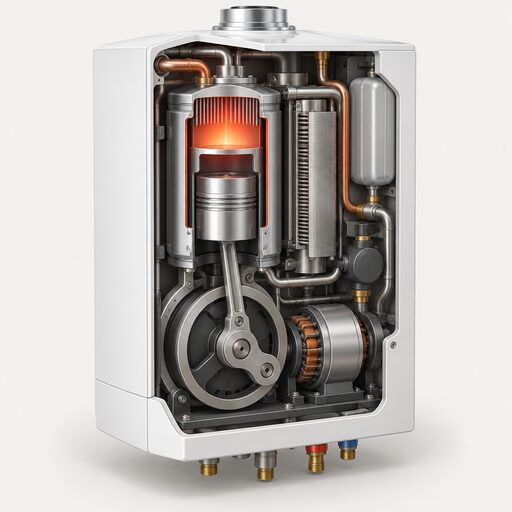
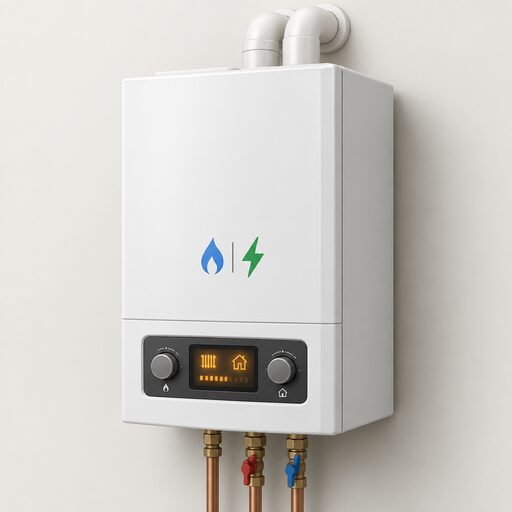
The Energy Saving Trust defines micro-CHP as a system that generates heat and electricity from a single source "where, usually, electricity is a by-product".22 Ofgem's Feed-in Tariff reporting defines it as a technology that generates heat and electricity simultaneously from the same energy source, normally natural gas.23 In the home it looks and behaves like a boiler. Northern Ireland's official guidance says its primary function is to run central heating, and that a CHP unit is gas-fired.24
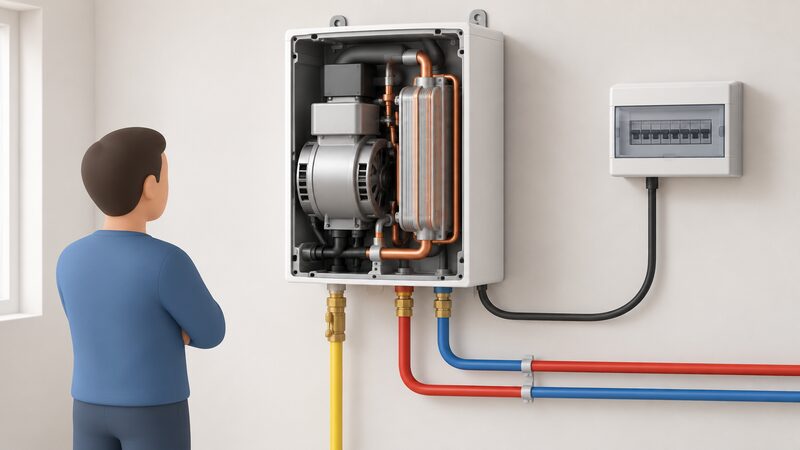
The fuel is usually fossil gas
MCS states that micro-CHP systems for homes typically use mains gas or liquefied petroleum gas as fuel.25 The Energy Saving Trust adds that some models are powered by oil or bio-liquids, including biodiesel.2 MCS is candid about the consequence: while it uses fossil fuels, micro-CHP "is still considered a low-carbon option because it uses fuel more efficiently than separate heating and grid electricity".25
For independence this is the decisive fact. A micro-CHP unit reduces how much electricity a home buys, but every unit of that electricity comes from delivered fuel. The household trades some dependence on an electricity supplier for continued, slightly increased, dependence on a gas supplier or LPG deliveries.
Replacing an existing boiler
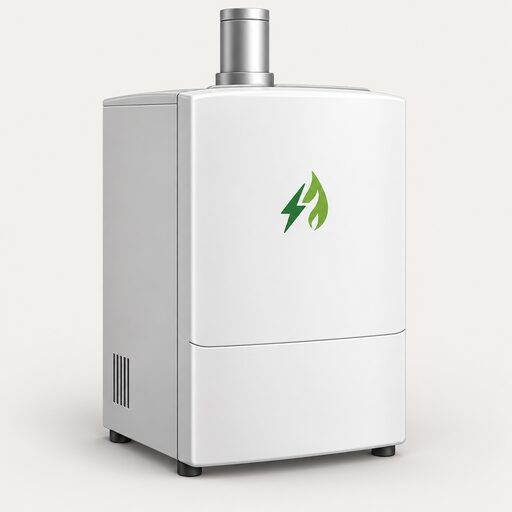
The Energy Saving Trust states that where a home already has a conventional boiler, a micro-CHP unit should be able to replace it, as it is roughly the same size, and that units can be mounted on a wall or stand on the floor.2 MCS gives the same description of compact units in similar sizes and styles to standard boilers.25 The comparison pages set micro-CHP against a condensing gas boiler and an air source heat pump.
Micro-CHP output: heat first, with up to 1kW of electricity
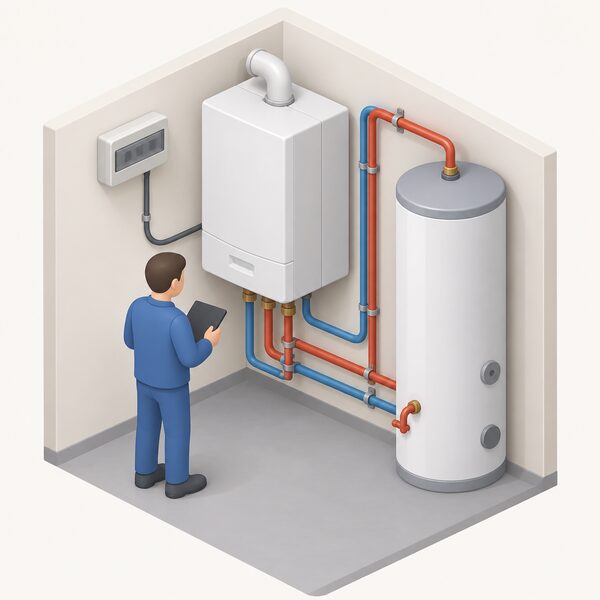
The main output of a micro-CHP system is heat, with some electricity generation, at a typical ratio of about 6:1 for domestic appliances. A typical domestic system will generate up to 1kW of electricity once warmed up.2 nidirect gives the same order of size: about 1kW of electricity while it is running.24
Two conditions govern how much that amounts to:
- The micro-CHP boiler needs to be on for it to generate any electricity.2
- The amount generated over a year depends on how long the system is able to run.2
The heating industry's own consultation response describes the current generation of micro-CHP as "heat-led", with an operating pattern largely determined by the household's demand for heating and hot water.26 In practice that means generation in the heating season and very little in summer. It is the opposite seasonal profile to solar PV, and no annual output figure can be given without knowing a home's heat demand. The page on micro-CHP cost and output works through this, and micro-CHP performance estimates explains how installers must model it.
The case made for the technology rests on efficiency. The same industry response states that micro-CHP can typically achieve combined heat and electricity efficiency of more than 90%, and cites analysis by Cogen Europe suggesting primary energy savings of more than 25%.26 These are an industry body's figures in a consultation, not field measurements.
Two capacity limits, two schemes
| Scheme | Micro-CHP capacity limit | Status |
|---|---|---|
| Feed-in Tariff | Fossil fuel-derived CHP up to 2kW27 | Closed scheme |
| Smart Export Guarantee | 50kW or less4 | Open, Great Britain |
The 2kW figure defined "microCHP" for the Feed-in Tariff. The history is on the pages about the Feed-in Tariff for wind, hydro and micro-CHP and the micro-CHP tariff rate.
Fuel cells and the other routes to low-carbon heat and power
A domestic fuel cell is a form of micro-CHP. Ofgem's guidance on micro-CHP generating equipment lists the possible prime mover as "either gas engine, small gas turbine, or fuel cell".28 Ofgem's list of approved innovation measures under ECO4 describes one such product, the Viessmann Vitovalor 300PT2, as a domestic sized micro-CHP unit that contains a low temperature fuel cell.29 The engine-based and fuel cell variants are compared under micro-CHP types and fuel cell heating vs micro-CHP, with more on the technology at domestic fuel cells and on the product at Viessmann Vitovalor.
Building standards recognise the technology. Scotland's domestic technical handbook lists low and zero carbon generating technologies as including wind turbines, water turbines, heat pumps, solar thermal and photovoltaic panels, combined heat and power units fired by low emission sources, fuel cells, biomass boilers and stoves, and biogas.30
Micro-CHP and fuel cells therefore sit outside the main route of government support for heating, a point that bears directly on the grants available. See grants and funding for micro wind, hydro and micro-CHP.
Planning permission and where a flue can go
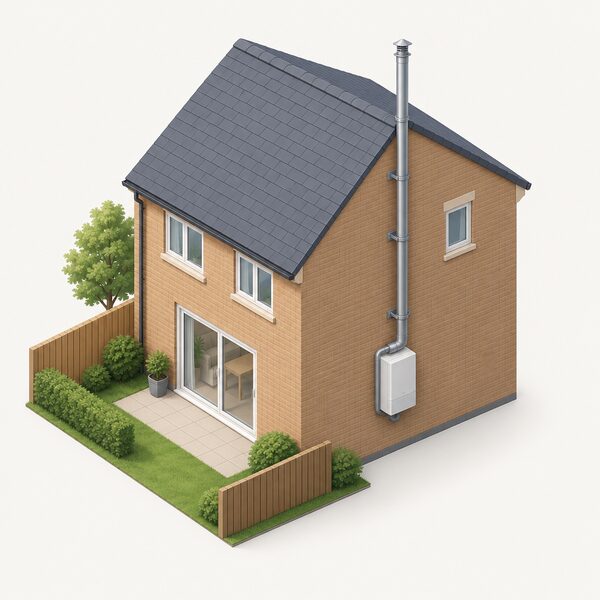
For micro-CHP, the planning question is almost entirely about the flue. Planning Portal guidance states that planning permission is not normally needed when installing a micro-CHP system in a house if the work is all internal. Where an external flue is needed, it is normally permitted development subject to conditions:32
- Flues on the rear or side elevation are allowed to a maximum of one metre above the highest part of the roof.
- In a conservation area or World Heritage site, the flue should not be fitted on the principal or side elevation if it would be visible from a highway.
- An outside building to store fuel or related equipment is subject to the same rules as other extensions and garden outbuildings.
Welsh Government guidance gives the same position: an external flue for a micro-CHP system will normally be permitted development if the conditions are met.33
Scotland words its restriction differently. Planning permission is required if the flue is to be attached to the principal elevation of a dwellinghouse or flat within a conservation area or World Heritage Site. The same circular states that planning permission is needed for biomass heating flues on dwellinghouses or flats within an Air Quality Management Area.34 Scottish guidance also notes that non-domestic scale microgeneration equipment will generally require planning permission.17
Listed buildings
Council guidance on listed building consent names "central heating or other flues, solar panels, air con and heat recovery units and pipework" among minor works that may require consent.35 The page on listed building consent for microgeneration covers this in detail.
Building regulations
In England, a micro-CHP installation must adhere to the building regulations set out in Approved Document L, Volume 1.36 The electrical side is covered under electrical safety and wiring.
MCS certification, installers and grid export
MCS is the certification scheme for microgeneration products and installation companies, covering technologies of 50kW or smaller. All MCS installers are required to be a member of a UKAS approved certification body, which assesses their competence.8 The scheme covers small wind turbines and micro-CHP units. The Energy Saving Trust's micro-CHP guidance says to check the installer is MCS-approved.2 More detail is on the pages about MCS certification for wind and hydro and MCS certification for micro-CHP.
Certification matters most because it is the gateway to export payments. MCS sets out the Smart Export Guarantee's reach: it applies to those who have solar panels, small wind (5MW or less) or micro-CHP (50kW or less), and who live in England, Scotland or Wales.4 The Energy Saving Trust states that the technology and installer must be certified under MCS or equivalent, and that suppliers may ask for an MCS certificate.37 Ofgem's annual report confirms that for solar PV, wind and micro-CHP installations up to 50kW this means presenting an MCS certificate or equivalent.38
Two limits apply:
- The scheme does not extend to Northern Ireland. There, nidirect states that excess electricity from a grid-connected turbine can be exported and sold to the local electricity supply company, which is a commercial arrangement and not a guarantee.5 See export payments in Northern Ireland.
- Export payments come from a licensed supplier, so a generating household remains tied to a supplier relationship for that income. The page on selling electricity from a wind, hydro or CHP generator covers the terms.
What micro-CHP costs to buy, run and maintain
No published UK retail price for a domestic micro-CHP unit is available; prices are installer-quoted. What the evidence does establish is the direction:
- A micro-CHP system will cost more than a traditional boiler.2
- Servicing costs and maintenance should be similar to a standard boiler, although a specialist will be required.2
- Running cost depends on the fuel price and running hours, since the unit burns gas or LPG to make both outputs.
The specialist requirement is a dependence in its own right. A household with a conventional boiler can call on any registered heating engineer; one with a micro-CHP unit relies on a much smaller pool of trained people, and on the maker continuing to support the product. Two micro-CHP products once sold in the UK illustrate the risk: the Baxi Ecogen, which was withdrawn, and the Flow Energy boiler, whose maker collapsed.
Historic support was tied to the Feed-in Tariff. In July 2012 the heating industry's consultation response referred to a 12.5p/kWh generation tariff for micro-CHP, expected to be maintained to at least 30,000 installations.26 That scheme is closed to new entrants, so the figure describes the past, not what a new installation would receive.
Brands and product ranges sold in the UK
The facts available cover a small number of makers, mostly in small wind. They are described here, not ranked.
| Maker or supplier | What it offers | Stated terms |
|---|---|---|
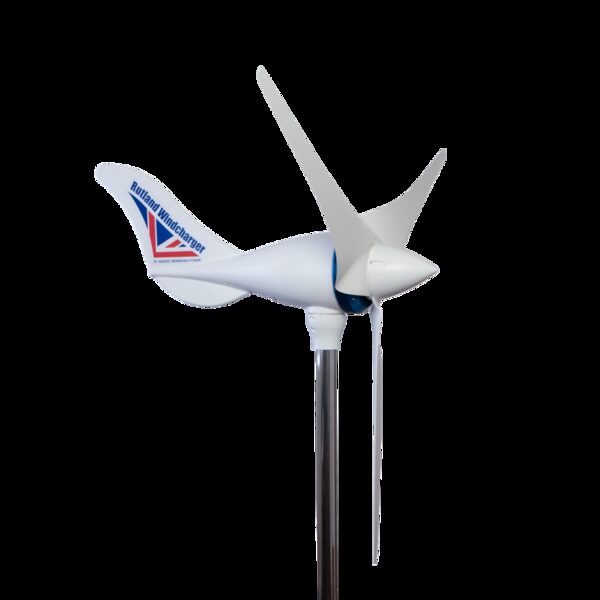
| Marlec (Rutland Windchargers) | Small battery-charging wind turbines | "We warrant our products for 2 years from date of purchase."39 |
| Leading Edge | British-built wind turbines, designed and manufactured in the UK | The maker states its turbines are "Warranted to 40m/s (100mph)"40 |
| Viessmann (Vitovalor 300PT2) | Domestic micro-CHP unit containing a low temperature fuel cell | Listed by Ofgem as an ECO4 innovation measure29 |
Marlec's range is covered under Rutland Windchargers and Marlec Engineering. Leading Edge has its own page at Leading Edge wind turbines, and the two are set side by side at Rutland vs Leading Edge.
Alongside the workmanship guarantee that MCS installers must give, a buyer's protection rests on the maker's own warranty and on the maker still trading. Several UK small wind makers have failed, leaving owners without support. Their stories are told on the pages for Proven Energy, Evance, Windsave and Ampair.
What each technology does for independence
| Technology | Resource | What dependence remains |
|---|---|---|
| Micro wind | Wind at the site | Storage, a backup generator or the grid in calm periods; parts and service over a life of around 20 years |
| Micro hydro | A stream or river on the land | Water permissions; very few homes have a site |
| Micro-CHP | Mains gas or LPG | A fuel supplier for every unit generated; specialist servicing; electricity only when heating runs |
| Fuel cell micro-CHP | Usually gas | As micro-CHP, plus reliance on a single maker's product support |
The fuller treatment is on the pages about microgeneration and energy independence and which microgeneration suits which home and site.
Sources40 cited
- The Planning (General Permitted Development) Order (Northern Ireland) 2015, legislation.gov.uk
- Micro combined heat and power, Energy Saving Trust, 5 August 2022
- Hydro electricity, Planning Portal, 2026
- Smart Export Guarantee, MCS, 27 April 2026
- Wind, nidirect, 18 May 2026
- Circular 1/2024: householder permitted development rights, definitions, Scottish Government, 28 May 2024
- Policy note to the Scottish permitted development amendment order 2024, legislation.gov.uk, March 2024
- Warm Homes: Social Housing Fund Wave 3 scheme guidance addendum, UK Government, June 2026
- Micro, small scale and large scale renewable generation, NIE Networks
- Generation connections FAQs, NIE Networks
- Statutory instrument 2026 No. 848, legislation.gov.uk, 2026
- Sustainable home energy solutions, Planning Portal, 2 September 2024
- Domestic wind turbines guide, Uswitch, 6 January 2026
- Location, Location, Location: domestic small-scale wind field trial report, Energy Saving Trust, July 2009
- Small wind turbines, MCS, 18 August 2026
- Wind power, Centre for Alternative Technology, 27 June 2025
- Guidance on householder permitted development rights (updated 2021), Scottish Government, 1 April 2021
- Renewable Energy Consumer Code, RECC, 1 July 2026
- Hydro, Electricity North West
- What is hydropower and how does it work, Smart Energy GB, 19 August 2026
- Private Rented Sector Landlord Loan, Home Energy Scotland
- Energy jargon buster, Energy Saving Trust, 20 March 2026
- Feed-in Tariffs annual report, scheme year 13, Ofgem, December 2023
- Micro combined heat and power, nidirect
- Micro CHP, MCS, 17 August 2026
- Consultation response on micro-CHP and the Feed-in Tariff, Heating and Hotwater Industry Council, July 2012
- Guidance for FIT generators, version 18, Ofgem
- Feed-in Tariffs: decision on the treatment of replacement generating equipment, Ofgem, 13 December 2021
- ECO4 approved innovation measures, Ofgem, April 2023
- Building standards technical handbook 2022: domestic, statement of sustainability, Scottish Government, 1 June 2022
- Public Accounts Committee report on decarbonising home heating, UK Parliament
- Micro combined heat and power: planning permission, Planning Portal, 2026
- Planning permission: micro combined heat and power, Welsh Government
- Circular 1/2024: householder permitted development rights, flues, Scottish Government, 28 May 2024
- Getting consent for works to a listed building, North Northamptonshire Council
- Micro combined heat and power: building regulations, Planning Portal, 2026
- Smart Export Guarantee, Energy Saving Trust, 20 May 2026
- Smart Export Guarantee annual report, year 5, Ofgem, December 2025
- Rutland 504 Windcharger product page, Marlec
- Wind turbines, Leading Edge