
In this comparison
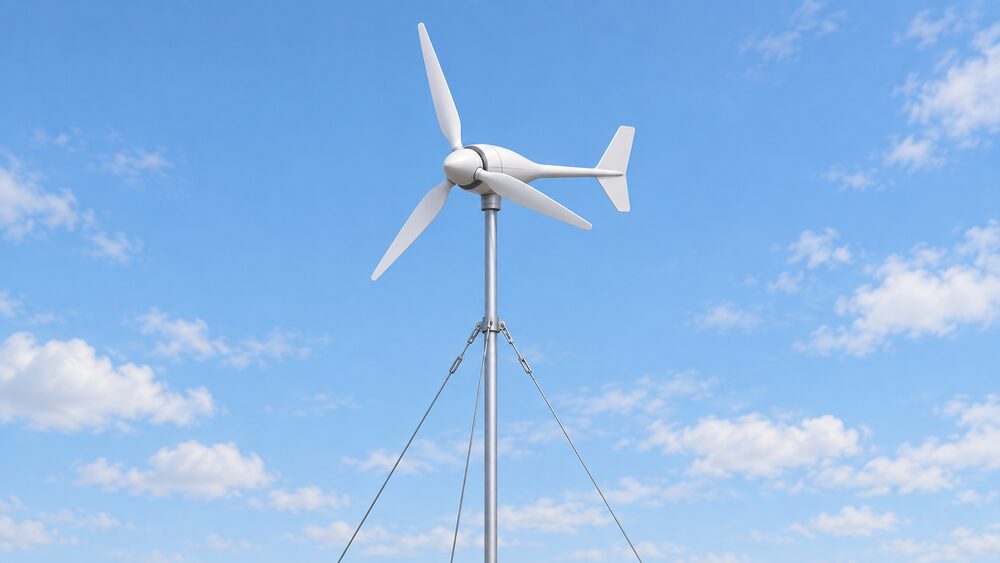
Rutland and Leading Edge are the two names most UK buyers meet when they start looking at small wind turbines, and they are not really rivals in the way a boiler comparison is. Both are British makers of small machines aimed at the same duty: exposed sites, boats, remote cottages and off-grid battery systems. Independent guidance names them together, noting that "The UK companies Marlec and Leading Edge make small turbines that can generate a few hundred watts of power in a strong wind"1.
That output figure is the single most important thing to understand before comparing specifications. A few hundred watts in a strong wind is a battery-charging scale of generation, not a whole-house supply. The Energy Saving Trust's position is that a domestic turbine suits an exposed or isolated location, and that systems work best in exposed, windy places and are less suitable for built-up or sheltered areas2.
Where the two brands separate is in the published detail: the LE-300 Standard's storm rating, its five year warranty, its voltage options and its UK manufacture4. Rutland's Windcharger range has the longer heritage in marine and off-grid use. This page sets out what each publishes, what the independent evidence says about small wind generally, and what either machine can and cannot do for a household's energy independence.
Rutland and Leading Edge at a glance
Both brands sit in the small end of the market, below the machines that independent guidance describes as a jump up: larger turbines generating a few kilowatts of power, similar to the peak output of a solar PV array, which can be grid connected and could make several thousand units of electricity per year1. Those larger machines, from makers such as SD Turbines and Britwind, have rotors several metres in diameter on a high tower and are not suitable for most homes1.
The physics that governs both brands is the same. Wind forces the blades round, driving the turbine that generates electricity, and the faster the wind, the more energy produced7. The relationship is steep: a rotor with a 10 metre diameter will capture one hundred times as much wind as one with a one metre diameter, which is why small machines depend so heavily on siting8.
Horizontal axis turbines, the default design with a propeller-style rotor, tend to be the most efficient2. Vertical axis machines take up less space but tend to be less efficient than horizontal turbines2. Building-mounted turbines cost less to install than pole-mounted ones, but tend to be less efficient, and studies show them to be far less effective owing to lower wind speeds3. Both Rutland and Leading Edge machines are small horizontal axis units intended for pole or mast mounting rather than roof fixing.
The practical comparison, then, is not which brand is better in the abstract but which published specification matches the site, the battery bank and the mounting arrangement. The table below sets out the LE-300 Standard's figures as its maker publishes them.
| LE-300 Standard specification | Figure |
|---|---|
| Maximum wind survival | 27m/s (60mph)4 |
| Blade material | Glass reinforced, UV resistant nylon4 |
| Output voltage | 12, 24 or 48V (48V on request)4 |
| Mounting pole | 48.3 or 50.0mm outer diameter, 3mm wall thickness4 |
| Warranty | 5 years4 |
| Country of manufacture | Made in the UK4 |
| Marine version | Available by request, optimised for marine conditions4 |

British manufacturing: Rutland's heritage and Leading Edge's Herefordshire workshop
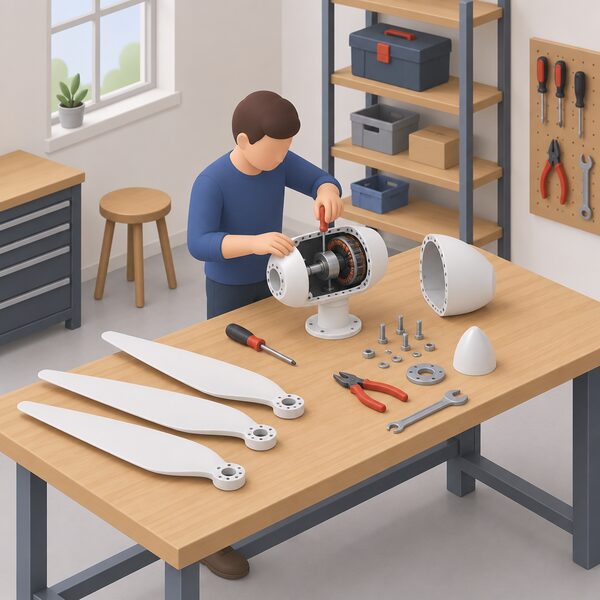
Leading Edge states that it has designed and built small wind turbines since 2009, and describes its machines as British-designed and British-manufactured9. The LE-300 Standard is listed as made in the UK4. That places it in a small group of British small-wind manufacturers rather than among the imported machines that fill the cheaper end of the market.
UK manufacture matters for reasons that are practical rather than sentimental. A turbine on an exposed site needs blades, bearings and a replacement yaw assembly at some point over a life that official guidance puts at up to 22.5 years, with service checks every few years to make sure they work efficiently6. A maker with a British workshop and a spares operation is easier to deal with than an importer who has moved on to another product line. The UK small wind sector has lost several manufacturers over the years, and the collapse of a maker leaves owners hunting for compatible parts.
There is a certification dimension too. Permitted development for a stand alone wind turbine in Wales depends on the installation complying with the Microgeneration Certification Scheme Planning Standards or equivalent standards10. MCS certification has been extended to small wind products, with the scheme announcing a milestone when a new wind turbine product achieved certification11. A household relying on permitted development rather than a full planning application needs the product and the installer to sit inside that framework.
"The UK companies Marlec and Leading Edge make small turbines that can generate a few hundred watts of power in a strong wind"
Survival in storm winds: the 40m/s claim and the 27m/s warranty
Storm survival is where small wind buyers ask the hardest questions, and it is where published figures need reading carefully. The LE-300 Standard is described by its maker as designed to withstand storm force winds up to 27m/s (60mph)4. That is the figure the maker publishes for this model, and it is the one to work from when matching a turbine to an exposed site.
The distinction that matters is between a survival rating and a warranty term. A survival rating says the machine is built to endure a gust of that speed without structural failure. A warranty says what the maker will repair or replace, and under what conditions. The LE-300 Standard carries a five year warranty4. Buyers on very exposed sites, coastal locations or hilltops should read the warranty conditions in full, because storm damage and blade wear are the two failure modes that small turbines actually suffer.
Mounting is part of survival. The LE-300 Standard mounts on a pole of 48.3 or 50.0mm outer diameter with a 3mm wall thickness4. An undersized or poorly guyed mast is a common cause of turbine loss, and the maker's pole specification is the minimum to work to. A marine version of the turbine is available by request, fully optimised for marine conditions4, which is relevant to coastal sites where salt exposure accelerates corrosion.
Voltage options: 12V, 24V and 48V systems
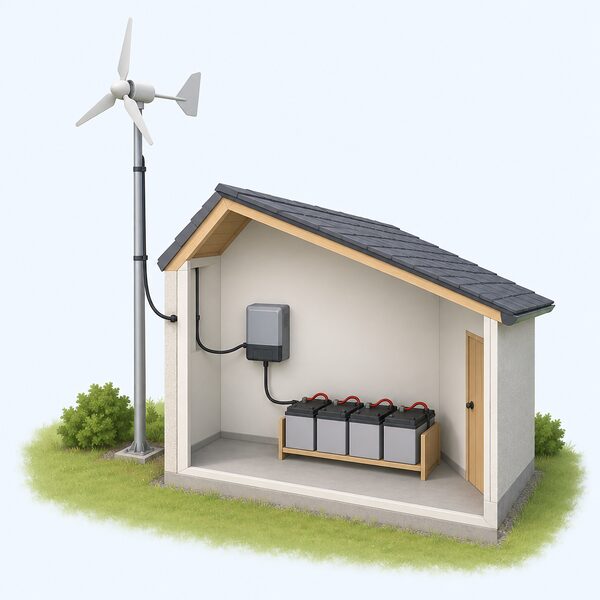
The LE-300 Standard is offered in 12, 24 or 48V, with the 48V option available on request4. The voltage is not a preference; it is set by the rest of the system. A turbine charges a battery bank through a charge controller, and the turbine's output voltage must match the bank.
The trade-off is current against cable loss. At a given power, a 12V system carries four times the current of a 48V system, so it needs thicker cable or accepts more loss over the run from mast to battery. Small boats and single-battery remote installations commonly run at 12 or 24V because the rest of the boat or cabin electrics does. Larger off-grid battery stores, and installations where the mast is a long way from the battery room, favour 48V.
A device called an inverter connects the solar panels or wind turbines to the main wiring in the house12. On a grid-connected system the inverter also handles the interface with the mains, and any unused or excess electricity can be exported to the grid and sold to the local electricity supply company6. On an off-grid system there is no export; the battery is the destination for everything the turbine produces, and surplus power has to be diverted or dumped once the bank is full.
For a household weighing the two brands, the voltage question usually decides the model rather than the maker. If the existing battery bank is 24V, the turbine must be a 24V machine. Rutland's Windcharger range and the Leading Edge LE-300 both cover the common voltages, so the choice comes down to which published specification, warranty and mounting arrangement fits the site.
Which turbine suits which household setup
The honest answer for most UK houses is neither. Independent guidance is clear that systems work best in exposed, windy locations and are less suitable for built-up or sheltered areas2, and that a house needs to be in an exposed or isolated location for wind to be a suitable renewable energy option3. The Energy Saving Trust advises considering a turbine only where the local annual average wind speed is five metres per second or more6, and independent guidance repeats the same five metres per second threshold13.
Where a small turbine does fit, it fits a specific kind of property. Off-grid setups such as boats or remote cottages are the natural home for a few-hundred-watt machine1. A rural property with a long, exposed fetch of wind and a battery bank already installed is the other. On marginal sites, spending a few hundred pounds on wind monitoring equipment such as a mast and data logger before spending thousands on a turbine is a recognised step8.
For a grid-connected house, the comparison is usually with solar rather than with another turbine brand. Energy Systems Catapult's Living Lab data shows that the combination of electric vehicle, solar, battery and heat pump, described as a full stack configuration, was the second most common combination, covering 208 homes, or 10% of low carbon technology homes14. Wind appears in that picture far less often than solar, for the simple reason that most roofs have a usable solar resource and most gardens do not have a usable wind resource.
| Setup | What a small turbine contributes |
|---|---|
| Off-grid cottage or boat | Battery charging at a few hundred watts in a strong wind1 |
| Rural property, exposed site, 5 m/s or more | A contribution alongside solar and storage6 |
| Grid-connected suburban house | Little; sheltered sites are unsuitable2 |
| Roof-mounted installation | Possible, but far less effective owing to lower wind speeds3 |
What ownership means for energy independence
A small wind turbine buys a household a measure of independence from the grid, and the size of that measure is set by the wind resource, not by the brand. The stronger the wind, the more energy produced3. On a genuinely exposed site with a five metres per second annual average or better6, a few hundred watts of charging capacity keeps a battery bank topped up and covers small loads indefinitely. On a sheltered site it covers very little.
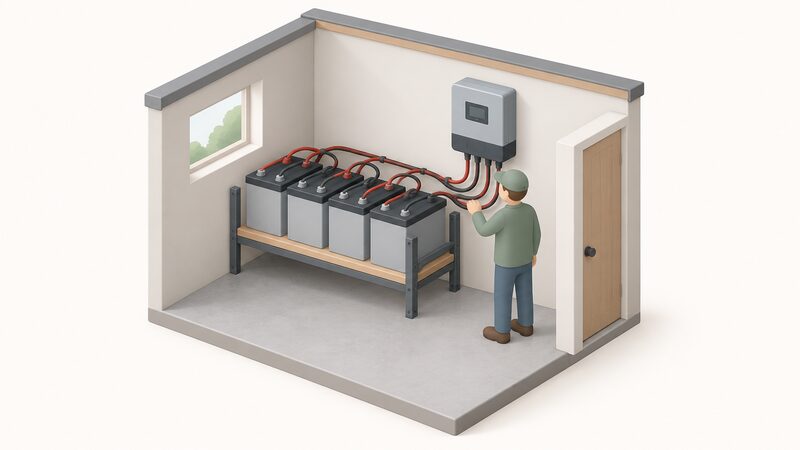
The dependence that remains is worth stating plainly. A grid-connected turbine still relies on the grid for the periods when the wind does not blow, and on a supplier for the electricity it buys in those periods. An off-grid turbine relies on the battery bank, the charge controller and the inverter, and on the household's willingness to manage load. It also relies on the manufacturer for spares over a working life that official guidance puts at up to 22.5 years6. If the maker withdraws from the market, that reliance becomes a problem.
Ownership models have widened the options. Ripple Energy introduced a model that allowed energy consumers to own a wind turbine15, and part ownership of a wind farm through Ripple Energy has been offered to customers in other contexts16. Community and shared ownership sit alongside individual machines, and the argument for homegrown energy is that more of it means greater energy independence17. Wind's share of the generating mix reflects that: wind accounted for 11.90% of capacity by technology type at the end of 202418.
For a household, the three benefits of a domestic turbine are usually stated as free electricity, electricity storage and cutting or eliminating the home carbon footprint3. The first two depend on the site. The third depends on how much of the year the machine is actually turning.
Where a small turbine falls short
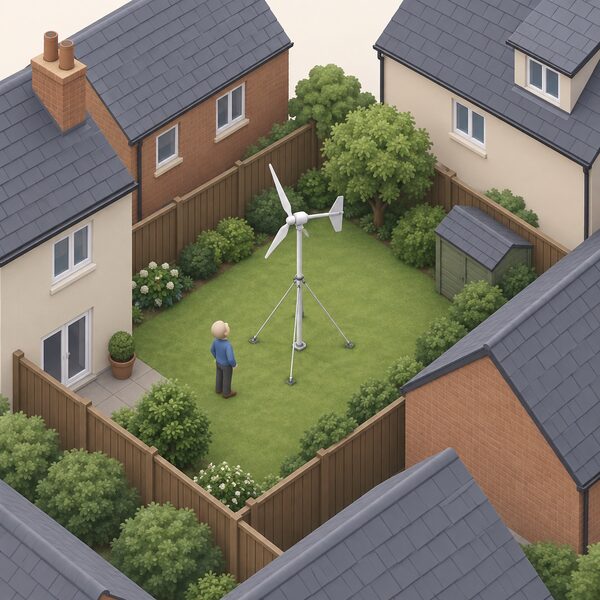
The limits are as important as the benefits. Small turbines are less suitable for built-up or sheltered areas2, and building-mounted machines are far less effective owing to lower wind speeds3. Attaching a turbine to a house also imposes structural loads: size, weight and force exerted on fixed points would be considerable8.
Planning and building rules bite as well. Permitted development for a stand alone turbine requires non-reflective materials on the blades19. In a conservation area, a wind turbine would not be permitted if installed on a wall or roof slope of the dwellinghouse or a building within the curtilage which fronts a highway20, and in Wales a stand alone turbine in a conservation area must not be visible from a highway bounding the curtilage10. Building-mounted installations raise their own questions about structural loading8.
There is a funding limit too. The Home Energy Scotland Grant and Loan will not cover the cost of any extended warranty beyond the one-year warranty all certified installers must offer free of charge21. A five year maker warranty such as the LE-300's4 is therefore a commercial term the household carries itself, not something a grant will pay for.
On the tax side, wind and water turbines were reintroduced as qualifying energy-saving materials in Great Britain only, from April 202222, having previously not qualified as energy-saving materials23. That is a Great Britain position; Northern Ireland sits outside it, and households there should check the current treatment rather than assume the GB rules apply.
Sources23 cited
- Domestic wind power, Centre for Alternative Technology, 2023-10-01
- Wind turbines, Energy Saving Trust, 2026-05-20
- Generating renewable electricity, Energy Saving Trust, 2025-12-11
- Leading Edge LE-300 Standard wind turbine, Wind and Sun, 2026-09-20
- Could you generate your own energy, Energy Saving Trust, 2024-04-12
- Wind, nidirect, 2026-05-18
- Wind power, Centre for Alternative Technology, 2025-06-27
- Wind turbines and building regulations, Planning Portal, 2026
- Leading Edge wind turbines, Leading Edge Power, 2009-01
- Planning permission for wind turbines, Welsh Government, 2026-09-17
- Milestone for small wind sector, MCS Certified, 2025-01-23
- What is domestic distributed generation, UK Power Networks, 2026-09-17
- Wind turbines, Uswitch, 2026-01-06
- What can the Living Lab tell us about home energy technology adoption, Energy Systems Catapult, 2025-11
- What are the benefits of community owned wind power, Energy Saving Trust, 2026-09-17
- Our homes net zero toolkit, Energy Systems Catapult, 2025-07-31
- Solar energy Scotland manifesto, Solar Energy UK, 2026-09-17
- Feed in Tariffs quarterly report issue 59, Ofgem, 2024-12-31
- Planning permission for stand alone wind turbines, Planning Portal, 2026-09-17
- Class H: installation of wind turbine on domestic premises, legislation.gov.uk, 2026-09-17
- Home Energy Scotland grant and loan terms and conditions, Home Energy Scotland, 2026-09-17
- VAT energy saving materials VENSAV2080, HM Revenue and Customs, 2022-04-01
- VAT energy saving materials VENSAV3020, HM Revenue and Customs, 2026-09-17
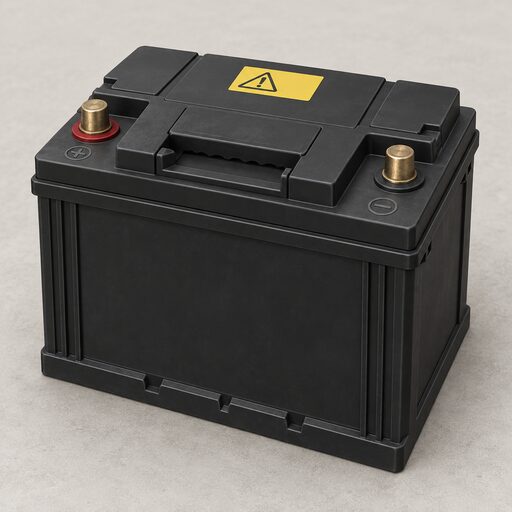 Off-Grid Wind PowerHow much power can a small wind turbine actually make for a house, boat or caravan that is not on the grid?
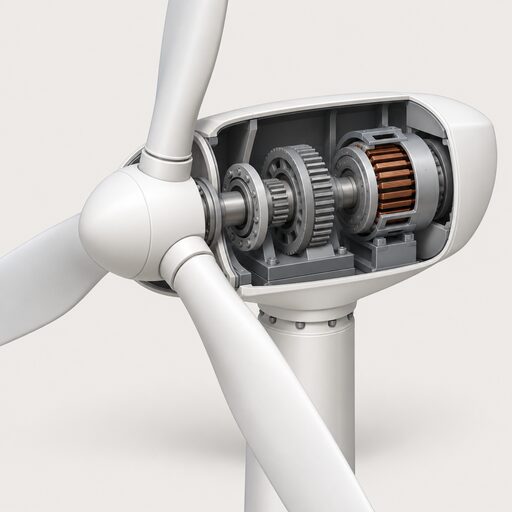 Domestic Wind TurbinesCan a wind turbine really power a home, and is your site windy enough?
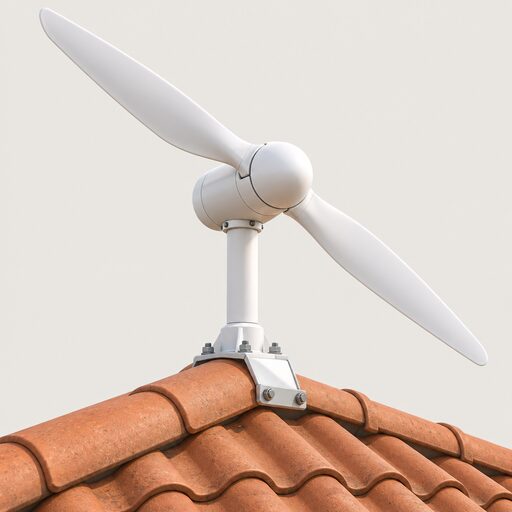 Building-Mounted Wind TurbinesWill a wind turbine on your roof actually make enough electricity to be worth it?
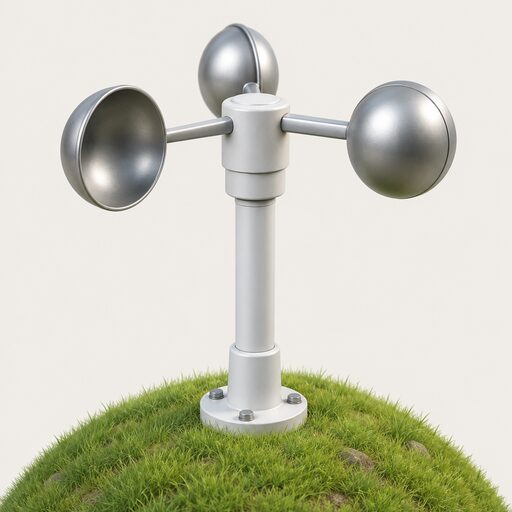 Wind Turbine Output and SizingHow much electricity a home wind turbine makes depends far more on your wind than on its size.
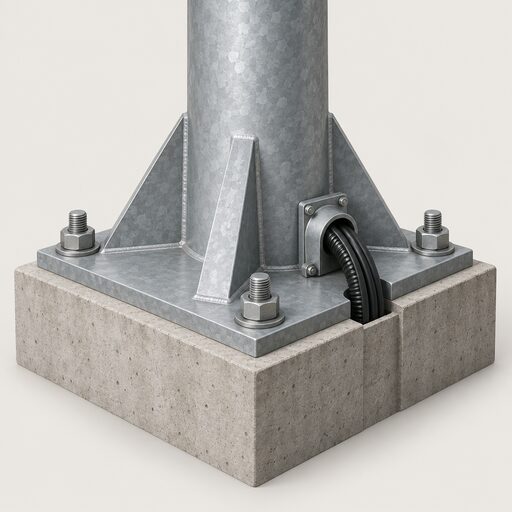 Wind Turbine InstallationWill a wind turbine actually pay for itself in a normal British garden, and how much wind does your spot really need?
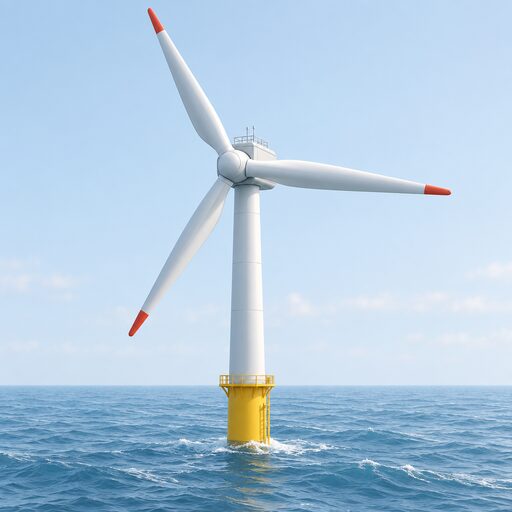 Wind Power on the UK GridOffshore wind now supplies a big share of Britain's electricity, and it keeps growing.