
In this comparison
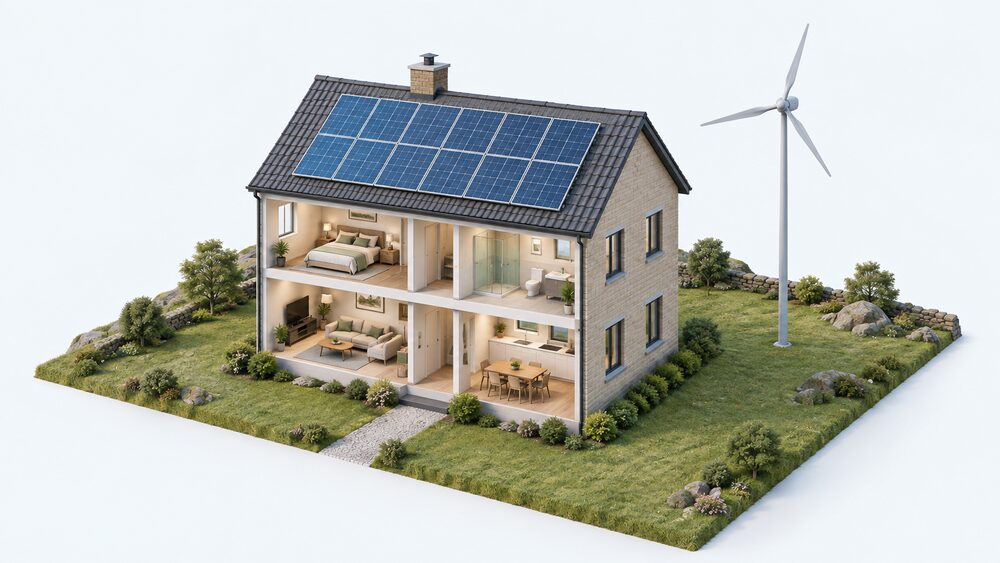
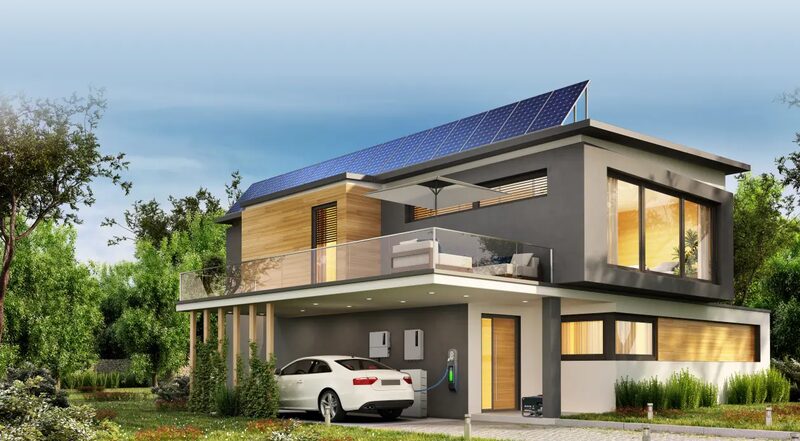
Households comparing solar panels with small wind turbines are usually asking the same question: which technology gives a home more independence from the grid, a supplier and volatile prices? The answer depends less on the technology itself than on the site. Solar works on most roofs and is the most widely adopted home generation technology in the UK, with around 1.65 million homes generating their own solar energy as of June 20261. Small wind suits exposed or isolated locations, and is especially practical for remote areas where connecting to the grid may be costly or challenging2.
The two are not mutually exclusive. A wind-solar hybrid system means a household is covered in low light and low wind conditions, because the two sources peak at different times2. For most UK homes, solar is the practical starting point; wind becomes viable where the site is exposed and the grid connection is weak or expensive.
What neither technology does on its own is remove dependence. A solar PV system can draw energy from the national grid in the same way as when there was no solar PV, whenever consumption exceeds generation3. Generating at home lowers the amount of electricity imported and paid for, but the grid remains the backup. Cutting the cable entirely is a separate decision, covered in going off grid.
Why households want to generate their own power
The motivation is overwhelmingly financial, but not only financial. Two-fifths of households (38%) say reducing electricity bills is their main motivation for installing home energy generation, and three in 10 (29%) want more control over rising energy costs1. A further 40% say volatile energy prices have made them more likely to install home energy generation systems1.
Cost remains the main barrier. One in three households (35%) are put off installing solar panels due to the upfront cost1. That figure is echoed in separate research: 35% of households without solar panels are put off roof-mounted solar by the upfront cost9. The pattern is consistent across surveys: the desire for independence is high, the capital cost is the obstacle.
There is also a property-value dimension. Two-thirds of people surveyed in 2026 said they were willing to pay more for a house with renewable or low-carbon energy sources like solar panels, heat pumps or EV chargers if it guaranteed lower energy bills in the longer term10. That suggests home generation is increasingly read as a household asset rather than a cost.
For a household, the independence on offer is partial but real. Generating your own electricity instead of relying on the grid is the core benefit5. It reduces exposure to import prices and to the wholesale market, though it does not eliminate either. The household import dependence page sets out how much imported energy a typical UK home still uses.
Solar and small wind: two routes to the same independence
Solar and small wind convert different resources, and that shapes where each works.
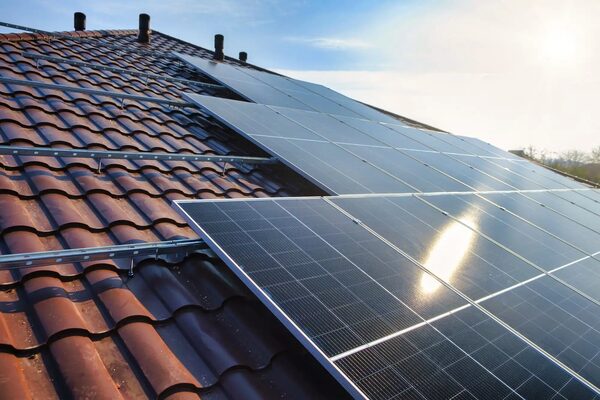
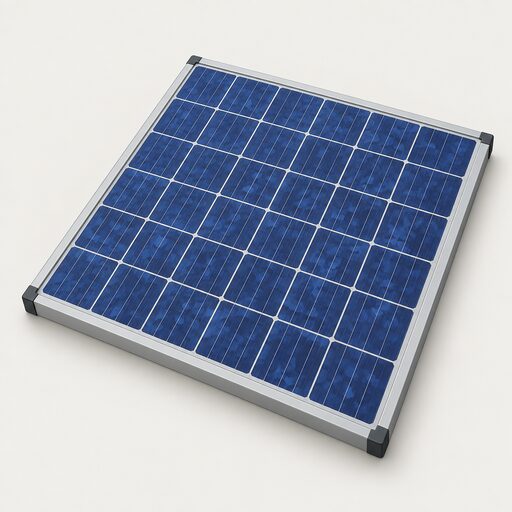
Solar photovoltaic panels could power your home, reduce your bills and may earn you money11. Household solar panel systems are typically up to 4kWp4, and the most common size of a solar system within a home is 3.5kWp5. Output depends heavily on orientation. A system facing east or west tends to get around 15 to 20% less energy than one facing directly south, and a north-facing roof produces around 30% less12. Southern areas of the UK receive around 20% more solar energy than those furthest north4.
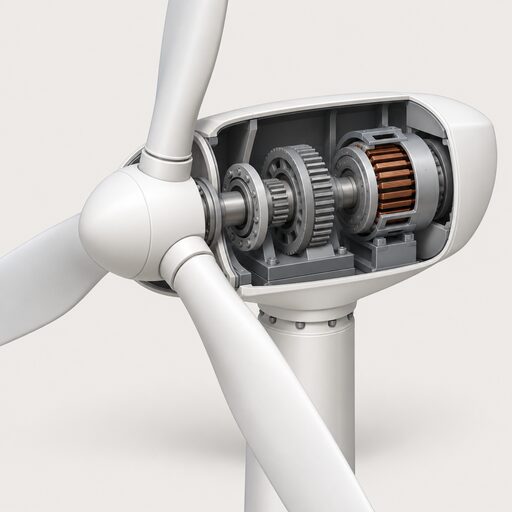
Small-scale turbines generate electricity from wind, and these depend on wind speed and location13. The stronger the wind, the more energy produced3. Wind energy relies on consistently strong winds to generate electricity efficiently, so wind farms are usually built in remote locations such as close to the coast or on open land14. For a domestic turbine, if your house is in an exposed or isolated location, it could be a suitable renewable energy option3.
The two can be combined. A wind solar hybrid system means that you're covered in low light and wind conditions2. Self-build guidance suggests exploring options for other renewable sources like wind or heat pumps if suitable for your location15.
| Solar PV | Small wind | |
|---|---|---|
| Resource | Sunlight, strongest south-facing12 | Wind, strongest in exposed sites3 |
| Typical domestic scale | Up to 4kWp; most common 3.5kWp4 | Home or small business scale2 |
| Best location | Most roofs; south-facing ideal12 | Exposed or isolated locations3 |
| Output variability | 15 to 20% less east or west; 30% less north12 | Depends on wind speed and location13 |
| Grid connection | Can draw from grid when needed3 | Remote areas where grid connection is costly2 |
Cost: what home generation really involves
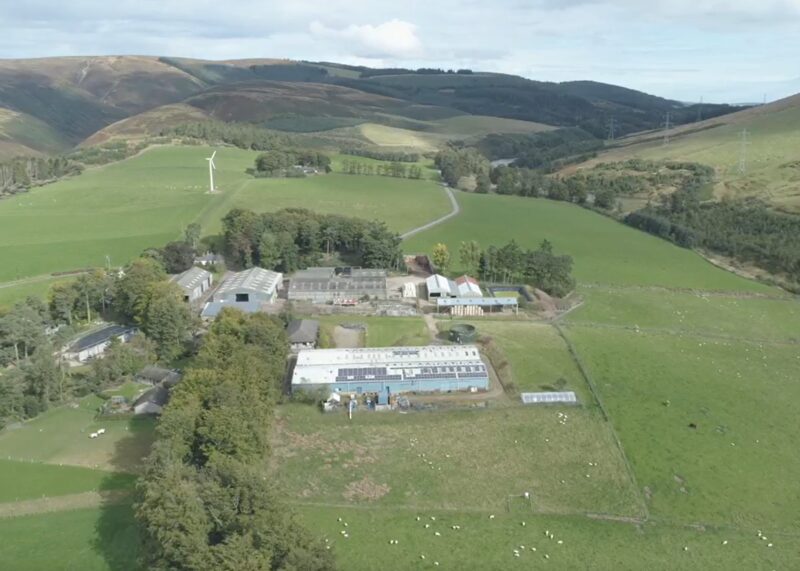
The cost picture for home generation has shifted dramatically at the global level. The global average cost for new electricity generation has fallen by 88% for solar PV and 60% for wind since 20108. Solar is described by the solar industry as the cheapest source of energy17. Onshore wind was 39% lower in global average lifetime cost of electricity generation than fossil fuel generators in 2021, and offshore wind is 60% cheaper than fossil fuels18.
Those are global generation costs, not installed domestic system prices. For a household, the cost of solar power is dependent on the size of your home, the type of system you choose, and whether you opt for battery storage5. Prices for domestic systems are installer-quoted, and no published price range for a complete domestic solar or small wind installation is available.
One cost pressure sits upstream. In 2022, the International Energy Agency estimated it was 20 to 35% more expensive to manufacture solar panels in the US and Europe than in China due to higher energy and labour costs19. That affects the price of equipment, though not the installation cost itself.
For households without grant support, solar panels, heat pumps and other energy efficiency measures may still offer an attractive payback20. The payback calculation matters because household solar generation takes longer to pay for its upfront costs than some other measures21. The cost of energy independence page works through the full capital picture.
Reliability: the weak point of going off grid
Reliability is where the two technologies diverge most sharply, and where off-grid ambitions meet their hardest constraint.
Solar output is predictable in shape but variable in volume. It falls in winter, on cloudy days and on north-facing roofs, where output is around 30% less4. A solar-only off-grid home therefore needs storage sized for the worst week of the year, not the average. The winter gap is the central problem.
Wind is variable in a different way. Wind energy relies on consistently strong winds to generate electricity efficiently14. A domestic turbine in a sheltered suburban garden will rarely see those conditions. In an exposed or isolated location, it could be a suitable renewable energy option3.
Micro hydro is the outlier. For houses with no mains connection but with access to a micro hydro site, a good hydro system can generate a steady, more reliable electricity supply than other renewable technologies at a lower cost23. That is a site-specific option, not a general one.
The practical answer for most off-grid homes is a combination: solar for the bulk of summer generation, wind where the site supports it, and storage to bridge the gaps. The sizing generation and storage page covers how that calculation works.
"For houses with no mains connection but with access to a micro hydro site, a good hydro system can generate a steady, more reliable electricity supply than other renewable technologies at a lower cost."
Staying connected to the grid versus cutting the cable
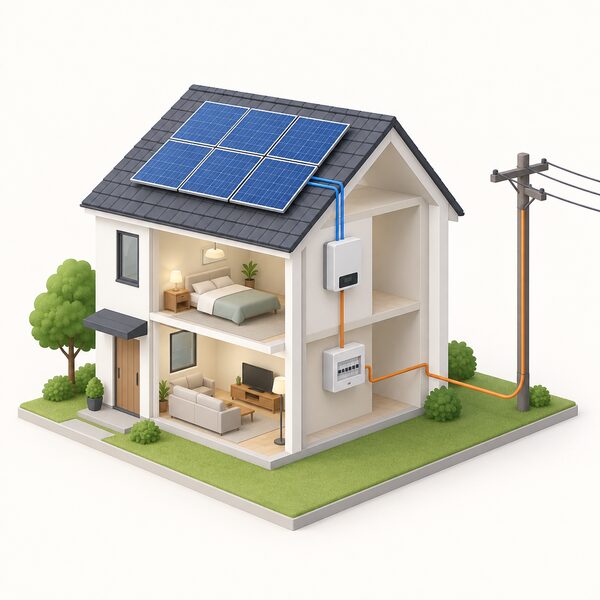
Staying connected is the default, and for most households it is also the rational choice. A solar PV system can draw energy from the national grid in the same way as when there was no solar PV, whenever consumption is more than the solar generated electricity24. Generating at home lowers the amount of electricity imported and paid for from the grid3, but the grid remains the backup.
Cutting the cable changes the economics entirely. An off-grid system must cover the worst-case generation period with storage and oversizing, and it loses the grid as a free backup. The disconnecting from the electricity grid page sets out what that involves.
There is also a grid-connection cost on the generation side. The only way to connect wind farms to the wider power grid is through the installation of newer infrastructure like power lines, which can be expensive14. For a domestic turbine in a remote location, the cost of a grid connection can be a significant part of the decision, which is why small wind is especially practical for remote areas where connecting to the grid may be costly or challenging2.
For households that stay connected, the smart meter and time-of-use tariffs change the picture. At off-peak times, such as overnight when it is windy, demand is lower and more electricity comes from renewable sources, meaning lower emissions25. An in-home display will usually show the energy you're buying from your supplier rather than everything you generate26, so a household with solar needs to look at the generation data separately. The self-consumption page explains how much of your own generation you actually use.
What home generation means for UK energy security
At national scale, home generation is no longer marginal. Wind and solar accounted for 32.91% of UK electricity generation in 2023 and 34.28% in 20247. UK solar generation in 2025 was 30% above 2024 annual generation, itself a record-breaking year27. Domestic-scale solar capacity, meaning installations up to 10kW, stood at 6.3 GW as of June 202627.
The mix matters. Research by the Royal Society suggests that the optimal solar/wind mix is 20/8019. That is a national planning figure, not a household one, but it illustrates why both technologies have a role: solar peaks in summer, wind peaks in winter.
The household contribution is real but partial. With over 1.3 million homes in the UK generating electricity from solar panels, renewable technology is quickly becoming mainstream3. Rooftop solar can reduce bills for households by around £500 a year for a typical UK home that installs solar, based on the current energy price cap6. More homegrown energy means greater energy independence17.
The dependence that remains is structural. A grid-connected home still relies on the grid for winter and overnight supply, on a supplier for billing and export payments, and on imported equipment for much of the hardware. The household resilience and national risk page looks at where household independence meets national planning.
Sources27 cited
- Solar panel survey, Uswitch, May 2026
- Small wind turbines, MCS Certified, 18 August 2026
- Are home renewables right for you, Energy Saving Trust, 11 December 2025
- Buying advice for solar panels, Which?, 12 August 2026
- Solar PV, Flexi-Orb, 22 April 2025
- UK Solar Roadmap, Department for Energy Security and Net Zero, June 2025
- Energy statistics, Uswitch, 17 December 2025
- Northern Ireland's fourth carbon budget, Climate Change Committee, 19 March 2025
- Plug-in solar survey, Uswitch, August 2026
- Green energy, Uswitch, 2026
- Solar photovoltaic panels, London Borough of Bromley, 17 September 2026
- Solar panels advice, Energy Saving Trust, 27 August 2026
- Sustainable home energy solutions, Planning Portal, 2 September 2024
- What are wind farms all about, Smart Energy GB, 16 March 2026
- Generating renewable electricity, Energy Saving Trust, 11 December 2025
- Scotland's carbon budgets, Climate Change Committee, 21 May 2025
- Solar energy Scotland manifesto, Solar Energy UK, 17 September 2026
- The link between energy bills and fossil fuels, End Fuel Poverty Coalition, 9 September 2025
- POST note on solar, Parliamentary Office of Science and Technology, 25 June 2026
- Support to generate your own electricity, nidirect, 22 September 2025
- Balancing act, Citizens Advice, 5 October 2023
- Solar panels, London Borough of Hammersmith and Fulham, 17 September 2026
- Hydro electricity, Planning Portal, 2026
- How do I retrofit my home: solar panels, Oxfordshire County Council, 17 September 2026
- Should I switch to a time of use tariff, Energy Saving Trust, 23 January 2026
- How do smart meters work, Smart Energy GB, 27 August 2026
- UK solar homes power equivalent of five hours of daily air con use, Ember, June 2026
 Domestic Wind TurbinesCan a wind turbine really power a home, and is your site windy enough?
 The Full Solar Panels GuideHow much do solar panels cost, and what could they save you each year?
 Solar and Energy IndependenceHow far domestic solar cuts dependence on suppliers and the grid, what self-consumption really looks like across the year, what a battery, diverter or EV adds, and the grid-outage limit of ordinary inverters.
 Panel TypesWhich solar panels are best for a UK home, and how much do they cost?
 Solar Panel CostsA typical UK home pays somewhere between four and eleven thousand pounds for solar panels fitted, with most landing in the middle.
 Data and Energy IndependenceHow many UK homes actually make their own power, and is that number really growing?