
In this guide
Sizing a self-sufficient home system starts with a number the household already owns: the kilowatt hours it consumed over the last twelve months. Everything else, array size, battery capacity, roof area, follows from that figure. MCS defines self-sufficiency, or grid electricity independence, as "the percentage of electricity consumed in the property over a year which is met by either behind the meter solar or electrical energy storage", and its domestic self-consumption method is written for homes using between 1,500 kWh and 6,000 kWh a year1.
For a household consuming 5,000 kWh a year, maker guidance points to a system between 5 and 7 kilowatt peak, typically 12 to 18 high efficiency modules, with the advice to choose 6 or 7 kilowatt peak rather than exactly five so there is a buffer2. A system of that size in the UK generates in the order of 3,830 to 4,500 kWh a year on one maker's figures, and 4,300 to 5,700 kWh on another's for a 5 to 6 kW array. Without storage, only about 30 to 40 per cent of that generation is used in the house. Great British Energy states that adding a battery increases self-consumption from 30 to 40 per cent to 70 to 80 per cent3. Maker guidance pairs a 5 kWp array with 10 kWh to 13.5 kWh of usable battery4.
That is the honest ceiling. A well-sized solar and battery system displaces most of a household's annual imports; it does not remove the grid connection, the supplier relationship or the winter dependence. The sections below work through each sizing step and what each one costs in money, roof area and residual dependence.
Self-sufficiency in kilowatt hours, not in panels
Two measures do most of the work. Self-consumption is "the amount of solar electricity generated by a domestic solar PV system which is subsequently consumed within the property and not exported to the distribution network", and it can be quoted in kWh or as a percentage of total PV generation. Self-sufficiency, by contrast, is measured against consumption: the share of the electricity the property uses over a year that comes from behind-the-meter solar or storage1.
The distinction matters for sizing. A large array raises generation but not necessarily self-sufficiency, because surplus midday output leaves the house. MCS worked examples show the split clearly. A household at home all day, consuming 3,879 kWh a year with 4,059 kWh of solar generation, self-consumed 29 per cent without storage. A household out for half the day, consuming 5,783 kWh against 2,456 kWh of generation, self-consumed 39 per cent1. The second household had far less generation but used a higher proportion of it, because its demand and its output overlapped better.
So the sizing question is not "how many panels fit on the roof" but "how many kilowatt hours does this house need, and in which hours". The array sets the annual total. The battery, and the shape of the household's day, set how much of that total is actually consumed on site. The remainder is exported, and exported units are a commercial arrangement with a supplier, not independence. Further detail on the measurement side sits in self-consumption and self-sufficiency ratio.
How much electricity a UK household uses: 1,500 to 6,000 kWh a year
Ofgem's typical domestic consumption value for electricity is 2,500 kWh a year5, the same figure the Energy Saving Trust quotes for Great Britain from 1 July7. MCS designed its domestic self-consumption method around the 1,500 to 6,000 kWh band1, which brackets almost all non-electrically-heated homes.
Within that band, household size drives most of the variation. One supplier's figures give 1,600 kWh a year for a typical one to two person home or one to two bedrooms, 2,500 kWh for two to three people, and 3,800 kWh for four to five people8. Maker guidance offers a narrower average of 2,700 to 3,500 kWh a year.
| Household | Annual electricity | Source type |
|---|---|---|
| Ofgem typical domestic consumption value | 2,500 kWh5 | Independent |
| 1 to 2 people / bedrooms | 1,600 kWh8 | Supplier |
| 2 to 3 people | 2,500 kWh8 | Supplier |
| 4 to 5 people | 3,800 kWh8 | Supplier |
| MCS domestic method scope | 1,500 to 6,000 kWh1 | Independent |
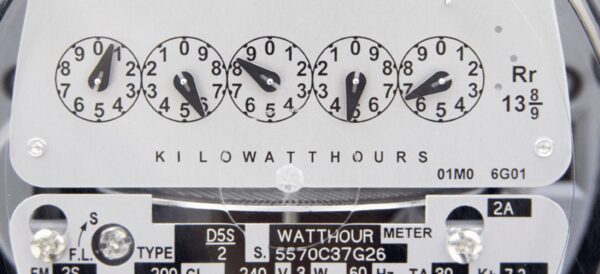
These are starting points only. A home with a heat pump, electric heating or an electric vehicle sits above the band: one case study property used 7,000 kWh a year9. Reading twelve months of meter data is the only way to get the figure that matters, and it should be read before, not after, an installer proposes a system size. The pattern within the year matters as much as the total, which is why the winter gap is treated separately, and why cutting base load often changes the sizing answer more cheaply than adding panels.
Sizing the array: a 5,000 kWh household needs 5 to 7 kWp
For 5,000 kWh of annual consumption, maker guidance recommends a system between 5 and 7 kilowatt peak, usually 12 to 18 high efficiency modules, and notes that "choosing a system size closer to 6 or 7 kilowatt peak instead of exactly five creates a helpful buffer"2. The yield reference it uses, 1,100 kWh per kWp, is for a south-facing roof in Southern Germany or Austria, not the UK, so it should be read as an upper case rather than a British expectation2.
Two other sizing rules appear in maker material. The first is a generation target above consumption: a home using 4,000 kWh a year should target 4,800 kWh of annual generation, typically a 5 kWp array. The second is a simple division: annual kWh divided by sun hours, days and an efficiency factor, which for 12,000 kWh at 5 sun hours a day and a 0.75 factor gives about 8.8 kW, described as needing about a 9 kW system10. The same source puts the general range at between 5 kW and 10 kW for homes on average. Another maker's table gives 5.5 to 6.0 kW, or 14 to 15 panels of 400 W, for a five-bedroom home using 12 or more kWh a day11.
Official material takes a different angle. Northern Ireland's building regulations discussion document states that "a house with a roof plan area of more than 59m2 would be typically expected to have an array larger than 3.68kWp assuming an export capable connection is provided"12, which is a planning benchmark rather than a demand-led calculation. The point of tension is real: roof-led sizing and demand-led sizing rarely produce the same number, and the demand-led figure is the one that governs self-sufficiency. Where the roof cannot carry the demand-led array, the gap is permanent and should be stated at design stage, not discovered later.
What a 5 kWp system actually generates in the UK
Output figures cluster tightly for mid-sized domestic arrays. The Centre for Alternative Technology states that a well-sited domestic system of about 3.5 kW peak could produce around 3,000 to 3,500 kWh per year13. Which? puts a 4 kWp system at around 3,500 kWh a year depending on location14, and an installer gives the same 3,500 kWh a year for an average domestic 4 kWp system, sustained for 25 years15.
For a 5 kW array, one maker states around 3,830 to 4,500 kWh a year, averaging approximately 10.5 kWh a day16; the same maker elsewhere gives around 3,830 kWh annually, so the upper bound is not consistent across its own material. Another maker's table gives 4,300 to 5,700 kWh a year for a 5 to 6 kW system of 13 to 15 panels17.
| System | Stated annual generation |
|---|---|
| 3.5 kWp, well sited | 3,000 to 3,500 kWh13 |
| 4 kWp | around 3,500 kWh14 |
| 5 kW with battery | 3,830 to 4,500 kWh16 |
| 5 to 6 kW (13 to 15 panels) | 4,300 to 5,700 kWh17 |
Losses explain part of the spread. Inverter conversion and cable resistance typically account for 10 to 15 per cent of total production2, which is why nameplate capacity multiplied by a headline yield overstates what reaches the consumer unit. Orientation, shading and the region within the UK account for the rest. MCS's domestic self-consumption method applies where "the total expected annual electricity generation from the solar PV system is less than 6,000 kWh per year"1, which is a useful marker of where domestic-scale sizing stops.
Why solar alone reaches only about 30 to 40 per cent self-consumption
The single most important number in sizing is not generation but the share of it used in the house. Great British Energy, quoted in a parliamentary briefing, states that adding a battery to a solar installation increases self-consumption from 30 to 40 per cent to 70 to 80 per cent3. Uswitch puts the no-battery figure at 30 to 50 per cent, rising to 80 per cent or more with storage18. Maker guidance converges on around 30 per cent without storage and 70 to 90 per cent with a correctly sized battery.
The cause is timing. Solar output peaks in the middle of the day; household demand peaks in the morning and evening. The MCS examples quantify it: 29 per cent self-consumption for a home occupied all day with generation slightly exceeding consumption, and 39 per cent for a home occupied half the day with generation well below consumption1. Neither is close to self-sufficient.
"Great British Energy says adding a battery to a solar installation increases self-consumption from 30 to 40% to 70 to 80%"
This is the practical justification for storage in a self-sufficiency design, and it is also the limit of storage: a battery shifts energy by hours, not by seasons. It raises the annual self-sufficiency percentage substantially while leaving December and January largely dependent on imports. How much a battery increases self-consumption covers the mechanism in more detail.
Battery sizing: 10 kWh for a 5 kWp array, 6 to 13.5 kWh in real systems
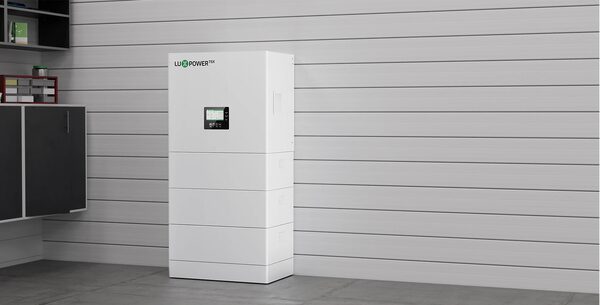
Maker sizing guidance pairs arrays and batteries directly: a 5 kWp array with 10 kWh to 13.5 kWh of usable battery, and a 4 kWp array with 5 kWh to 8 kWh usable, or 10 kWh if the household intends to charge extensively on overnight grid tariffs4. That last condition is worth noting: a battery sized for tariff arbitrage is larger than one sized for solar shifting, and the two purposes are not the same.
Monitored UK installations show the real spread. In a project evaluating solar PV with electric heating, "the solar PV system sizes ranged from 3.89kW to 5.81kW, with batteries between 6kWh and 13.5kWh in capacity"19. Case study homes used smaller kit: one household fitted six solar panels with a 5 kWh battery. A supplier's standard packages offer battery size options of 5 or 10 kWh20.
Usable capacity is not nameplate capacity. One maker illustrates that a fully charged 5 kWh battery discharged to 80 per cent leaves 4 kWh available, enough to run a 1,000 watt appliance for four hours or a 10 W bulb for approximately 400 hours [36 does not apply here]. Sizing should therefore be done on usable kWh against evening and overnight load, which for most homes is a few kilowatt hours rather than the day's whole consumption.
Autonomy days, the number of days a battery can carry the house with no generation, are the off-grid version of this calculation, and a grid-connected battery of 10 kWh will not deliver more than a fraction of a winter day for a high-consumption home. Households considering true autonomy should read going off-grid and getting through a UK winter off-grid alongside this page.
Space, losses and the buffer: roof area and what erodes output
Roof area sets a hard ceiling on the demand-led array. The Energy Saving Trust states that a 4.5 kWp system typically covers between 20 and 30 square metres of roof, typically using around 12 panels6. Which? gives at least 20 square metres for an average 4 kWp system21. A London borough puts a 3.5 kWp system at between 10 and 20 square metres of roof surface22, and one maker suggests roughly 15 to 20 square metres for a 4 kWp system using modern 400 W and above panels, specifying "unshaded, structural roof space" [not cited separately].
| Array | Stated roof area | Panels |
|---|---|---|
| 3.5 kWp | 10 to 20 m²22 | not stated |
| 4 kWp | at least 20 m²21 | not stated |
| 4.5 kWp | 20 to 30 m²6 | around 126 |
Scaling the 4.5 kWp figures upward to a 5 to 7 kWp array is where roof-led and demand-led sizing collide, and no published figure in this material gives the area for a 6 or 7 kWp domestic array. What is clear is that a house without a large, unshaded, south-leaning roof plane cannot reach the array size that 5,000 kWh of annual demand implies, and the design must then accept a lower self-sufficiency percentage rather than pretend otherwise.
Losses take a further slice: 10 to 15 per cent of total production goes to inverter conversion and cable resistance2. That is the main reason for sizing generation above consumption rather than equal to it, as in the 4,000 kWh household targeting 4,800 kWh of generation, and for choosing 6 or 7 kWp where 5 kWp would be the arithmetic answer2.
What real households achieve with solar and storage
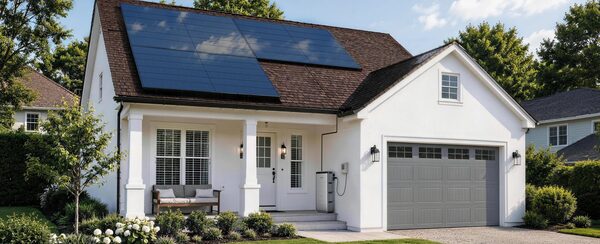
Published outcomes sit below the theoretical maximum and above the no-battery baseline. The Centre for Sustainable Energy's example of a 3.5 kW solar PV system with a 6 kWh battery states the household "might now be able to use 70% of the solar generated energy"23. An installer's case study for a property consuming 7,000 kWh a year found that a 6.5 kWp PV system with 10 kWh of battery storage "would provide approximately 70% of the property's electricity requirement"9. MCS's own worked example for a household at home all day, with 7.5 kWh of usable storage, gives 69 per cent self-consumption, equal to 2,801 kWh of the 4,059 kWh generated24.
An Energy Saving Trust case study household with solar and a heat pump reports using around 3,000 kWh of its output25. One installer states that a typical household with solar and battery storage can produce up to 80 per cent of their annual demand15, and a maker puts the realistic target band at 50 to 70 per cent self-sufficiency for UK households11. Uswitch data cited in a press release gives a 70 per cent self-consumption rate for households with solar and a 10 kWh battery26. Across the UK, homes have 6.6 GW of solar capacity installed27.
| Configuration | Result achieved or modelled |
|---|---|
| 3.5 kW PV + 6 kWh battery | 70% of solar generation used23 |
| 6.5 kWp PV + 10 kWh battery, 7,000 kWh home | ~70% of electricity requirement met9 |
| MCS example, 4,059 kWh generation, 7.5 kWh usable storage | 69% self-consumption, 2,801 kWh24 |
| Solar and battery generally | up to 80% of annual demand15 |
The consistent finding is around 70 per cent. That is a large reduction in imports and it is not self-sufficiency. Roughly three tenths of the year's electricity still arrives over the grid, concentrated in the darkest months, and the household remains a supplier customer for that remainder as well as for export payments. Can a UK home be completely energy self-sufficient examines where the remaining fraction goes.
Cost of a solar and battery system, and what payback estimates disagree about
The Energy Saving Trust states that domestic solar panel systems are generally around 4.5 kWp and cost around £7,600, with battery storage adding around £5,000 to £8,0006. Which? reports solar and battery packages from £7,51828. Uswitch gives a solar-only range of around £4,600 to £8,000 depending on panel quality and system size18. Maker and trade figures for full solar-and-battery installations run from £8,000 to £11,000 for a 2 to 3 kW small home system and £12,000 to £18,000 for a 5 to 6 kW larger home system29.
Batteries on their own average around £4,500 on top of an existing solar system30, and one trade source states that battery systems "typically start from around £4,000 and last about ten years"31. That ten-year life sits well inside the 25 years quoted for panel output15, so a self-sufficiency design should assume at least one battery replacement within the array's life.
Savings estimates carry the same spread. One trade source reports a £2,500 battery raising annual savings to £93230. Maker material gives £1,000 to £1,300 a year for 5 kW solar plus battery storage, while the same maker elsewhere gives £650 to £850 a year for the same configuration, a difference it does not reconcile. Another maker estimates around £1,207 a year for a 5.82 kWp array with 12 panels and a 5.1 kWh battery. None of these is an official figure. What energy independence costs sets these numbers against the wider picture.
What the sizing does and does not buy in independence
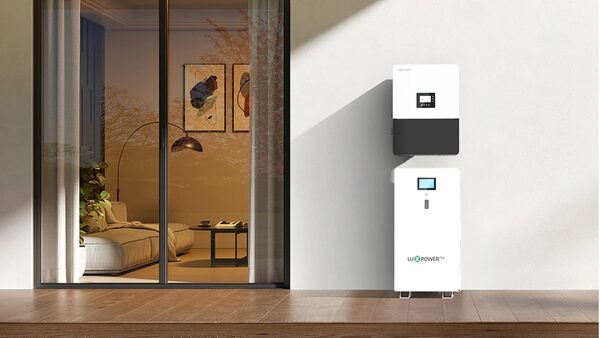
A correctly sized system changes the household's position materially. On the published evidence, moving from panels alone to panels plus a battery lifts the share of generation used at home from roughly 30 to 40 per cent to roughly 70 to 80 per cent3, and case examples land around 70 per cent of total electricity demand met on site9. That is a genuine reduction in import dependence.
The dependencies that remain are specific. The grid connection stays, for the winter shortfall and for export. The supplier relationship stays, for the imported units and for any export payment. The inverter and battery are manufacturer products with finite lives, the battery at about ten years31, and many are managed through a maker's app or cloud service, which is examined in local control versus the manufacturer's cloud. And the seasonal mismatch is untouched by battery sizing: no domestic battery in the 6 to 13.5 kWh range found in real UK installations19 carries a household across a dark week.
Sizing honestly means stating the target self-sufficiency percentage at the outset, deriving array and battery from measured annual and daily consumption rather than roof area, and accepting that the last 20 to 30 per cent of a UK household's electricity is the expensive part. The whole-system view, including heat and vehicle loads, is set out in designing a whole-home energy system and in the full guide to household energy independence.
Sources33 cited
- MCS 032: Domestic solar PV self-consumption method, MCS, 2025
- How many solar panels do I need for 5,000 kWh, LONGi, 2026-09-17
- POSTnote on domestic energy storage, UK Parliament POST, 2026-06-25
- What size battery for solar panels, Jackery, 2026-06-17
- How much energy do I use, Uswitch, 2026-07-10
- Solar panels advice, Energy Saving Trust, 2026-08-27
- What is the energy price cap, Energy Saving Trust, 2026-09-07
- Average energy bill in the UK, EDF, 2026-07-10
- Batteries and 70 per cent self supply, Spirit Energy, 2026
- How much solar do I need for my house, Luxpower, 2025-09-05
- How much electricity does solar power produce, Jackery, 2026-07-10
- Building regulations discussion document, Department of Finance Northern Ireland, 2023-10-11
- Solar photovoltaic information, Centre for Alternative Technology, 2026-03-10
- Electric central heating, Which?, 2025-09-22
- Solar energy pros and cons, Spirit Energy, 2026
- 5kW solar system with battery UK, Bluetti, 2023-10-21
- Solar power for your home, Bluetti, 2026-08-06
- Solar panels guide, Uswitch, 2026-09-16
- Evaluating solar PV with electric heating, National Energy Action, 2025-07-03
- Solar and battery options, Octopus Energy, 2026-09-17
- Buying advice for solar panels, Which?, 2026-08-12
- Solar panels, Hammersmith and Fulham Council, 2026-09-17
- Battery storage advice, Centre for Sustainable Energy, 2025-10
- MGD 003: Solar PV self-consumption guidance, MCS, 2022-04-01
- Russell and Kate's solar and heat pump story, Energy Saving Trust, 2026-08-13
- Britain's homes with solar panels reap £40 million, Uswitch, 2026-06-28
- Three million households plan to get solar panels, Uswitch, 2026-05
- Solar panel costs, Which?, 2026-08-03
- Solar panel cost UK, Aira, 2026-06-19
- Battery storage and solar panels, The CPA, 2026-01-06
- Solar battery storage guide, The IAA, 2026-09-20
- Solar panel myths debunked, Which?, 2026-06-09
- Solar panels, Home Energy Scotland, 2026-09-20
 System SizingMost UK homes need a solar system of around four kilowatts, which takes up roughly twenty square metres of roof.
 Self-ConsumptionHow much of the electricity from your own solar panels do you actually use, and how much goes to the grid?
 What Size Battery?How much electricity does your home use in a day, and how much of that falls in the hours when power is cheap or your solar panels are generating?
 Solar and Energy IndependenceHow far domestic solar cuts dependence on suppliers and the grid, what self-consumption really looks like across the year, what a battery, diverter or EV adds, and the grid-outage limit of ordinary inverters.
 Off-Grid Battery SystemsHow many days of power do you need when there is no sun?
 Home Battery Install StatisticsHow many homes in the UK actually have a battery, and is that number growing quickly?