In this guide
Community energy in England is the part of the energy system that households own collectively rather than buy from a supplier. Groups form as community benefit societies, co-operatives or charities, raise money through grants and share offers, and build generation or flexibility assets that the community controls. The value is not only in the electricity: the Catapult energy systems consultation on unlocking community energy at scale states that community energy projects "can offer substantial value in the transition to a Net Zero energy system"1.
The English funding picture in late 2026 is dominated by two live local funds and one national one. The London Community Energy Fund has a total budget of up to £1.3m across three streams, with £10,000 for feasibility, £60,000 for delivery and £3,000 for the development fund2. The Bristol City Leap Community Energy Fund offers between £1,000 and £50,000 depending on project type and size, and closes on 23 September 20263. Great British Energy's community energy funding closes on 12 November 20263.
What follows sets out how English groups are structured, what each fund will and will not pay for, what operating projects look like, and where the limits of community ownership lie for a household trying to reduce its dependence on the grid and on imported gas.
What community energy is, and how it works in England
Community energy in England is defined less by technology than by ownership. A group of residents, a parish council or a charity sets up a legal entity, raises capital, and holds the asset on behalf of the community. The Catapult consultation argues that the definition should be widened: "The definition of community energy should include providing flexibility to the grid, e.g. through storage or demand management"1. That matters because it brings batteries, demand shifting and smart controls inside the tent, not just generation.
The second structural point is that community energy is not only about megawatt hours. The same consultation notes that projects, "depending on where they are sited, might also help alleviating grid constraints"1. A battery or a flexible load sited where the local network is congested has value to the network operator that a solar array in a quiet area does not. That is the argument for treating community energy as infrastructure rather than as a hobby.
The third is market access. The consultation states that "Enabling community energy schemes to become 'secondary suppliers' would allow households to more easily purchase locally generated electricity, unlock the flexibility needed to manage fluctuating demand, and offer new business model opportunities for community owned assets"1. Secondary supplier status does not exist in England today; it is a proposal. Until it does, a household buying into a local scheme is usually buying a share of a generator, not a new electricity supply.
In practice, English groups work through a small number of routes:
- A community benefit society raising a share offer, where members provide capital and any surplus is reinvested.
- A local authority partnership, where a council hosts the fund or the asset and the group delivers.
- A hub organisation, which carries the back-office overheads for smaller groups across a county or region.
The community energy page covers the UK-wide picture, and community energy share offers explains the co-operative ownership model in detail.
Funding: the London Community Energy Fund and its three streams

The London Community Energy Fund is administered by the Greater London Authority and is open, with funding available across three streams for community energy projects in London2. Its scope is broad: it supports community projects across London that reduce greenhouse gas emissions, lead to collective action to reduce, manage and generate energy, promote community-led development and delivery of energy projects that provide direct benefit to the local community, increase community awareness and action on clean energy, and increase the resilience of communities that are vulnerable to the impacts of climate change and high energy costs2.
The three streams are sized for different stages of a project's life.
| Stream | Purpose | Grant | Notes |
|---|---|---|---|
| One | Feasibility | £10,000 | Closes 11:59pm, 30 September 20262 |
| Two | Delivery | £60,000 | Closes 11:59pm, 30 September 20262 |
| Three | Development fund | £3,000 | Opens October 20262 |
The overall budget is a total of up to £1.3m2.
The unusual feature is the core costs rule. Up to 25 percent of each grant is available to support the core costs of community energy organisations2. Most grant schemes fund activity, not the staff time that holds a volunteer group together, and that restriction is a common reason small groups stall between one project and the next.
Eligibility is deliberately weighted towards small organisations. The fund is particularly targeted at small organisations with charitable aims operating in London, and applications are welcomed from community groups that have not previously been involved in energy projects2. That is a stated preference for first-time applicants, not a bar on experienced ones.
Alongside the GLA fund, Great British Energy and the local authorities Camden and Haringey offer funding opportunities to support community energy projects2. Great British Energy has also opened two new funding opportunities designed to support the growth of community energy and strengthen collaboration between community energy organisations and public sector partners3.
Bristol City Leap Community Energy Fund: grants of £1,000 to £50,000
The Bristol City Leap Community Energy Fund is open and offers between £1,000 and £50,000, depending on the project type and size3. It closes on 23 September 20263. The band is wide because it covers both small feasibility-style work and larger delivery, so the grant size a group receives depends on what it is proposing to do rather than on a fixed stream structure.
Bristol City Leap is a partnership rather than a standalone grant programme. It brings together Bristol City Council, Ameresco, Vattenfall Heat UK, and local partners5. That structure matters to a community group: the fund sits inside a wider city energy programme with a heat network and retrofit agenda, so a project that connects to the city's own plans has a natural home.
Bristol also runs a separate loan route for households. The maximum loan available is £20,0006. That is a household finance product, not a community grant, and the two should not be confused: the community fund grants money to groups, while the loan is repaid by the household.
For groups outside Bristol and London, the funding landscape is more fragmented. Community Energy England's funding listings include:
- A community fund offering £300 to £20k in England3
- The Bristol Water Better Futures Fund, offering between £2,000 and £10,0003
- The SES Water Better Futures Community Fund, offering between £1k and £7k3
- A Community Energy Kickstart with £1.5M of funds available3
- Baywind Energy Co-operative Ltd, with £1 million for solar and hydro sites, actively looking for solar sites above 20kW and hydro sites, focused in Cumbria but open to projects across the country3
The funding for community energy projects page covers the national schemes in more depth, including the routes that are not England-specific.
The Rural Community Energy Fund for England's rural communities

Rural England has a different funding problem from cities. Projects are smaller, grid connections are longer and more expensive, and the volunteer base is thinner. The schemes that reach rural households tend to be administered through local authorities rather than through energy-specific funds.
For households off the gas grid, the government has distributed heating oil support through local authorities via the Crisis and Resilience Fund in England7. That is crisis support, not community energy, but it is often the first point of contact between a rural household and any energy scheme at all.
The Social Housing Decarbonisation Fund is an England-only scheme to improve the energy performance of social housing in England, providing funding to upgrade low energy-efficiency social housing and supporting the installation of energy performance measures in social homes in England8. Funding is for local authorities and social housing landlords9. A community group cannot apply directly, but a group working with a housing association can be a delivery partner.
The Boiler Upgrade Scheme sits alongside these. Its installer guidance lists £5,000 for biomass boilers in limited circumstances10. That figure is a grant to a household, not to a group, and it is worth knowing because rural community energy projects often pair a shared asset with individual household measures.
The pattern across rural England is that community energy is rarely funded by a single dedicated rural pot. It is assembled from local authority crisis funds, social housing programmes, household grants and whatever the group can raise itself. The land and building rights for community energy projects page covers the site access questions that rural groups face first.
Low Carbon Hub: a community benefit society in Oxfordshire
Low Carbon Hub is the clearest English example of a hub model. It helps communities in Oxfordshire set up and manage projects4. It is a community benefit society, meaning any surplus is reinvested into community energy projects, energy efficiency programmes, and local carbon-cutting initiatives4. That is the defining feature of the model: there are no shareholders taking a dividend out of the surplus.
Its scale is meaningful. Low Carbon Hub has nearly 2,000 investor members who support its work, and its operations are powered by 50+ renewable projects4. Those two figures together describe a mature organisation: a large member base providing capital, and a portfolio large enough to need professional management.
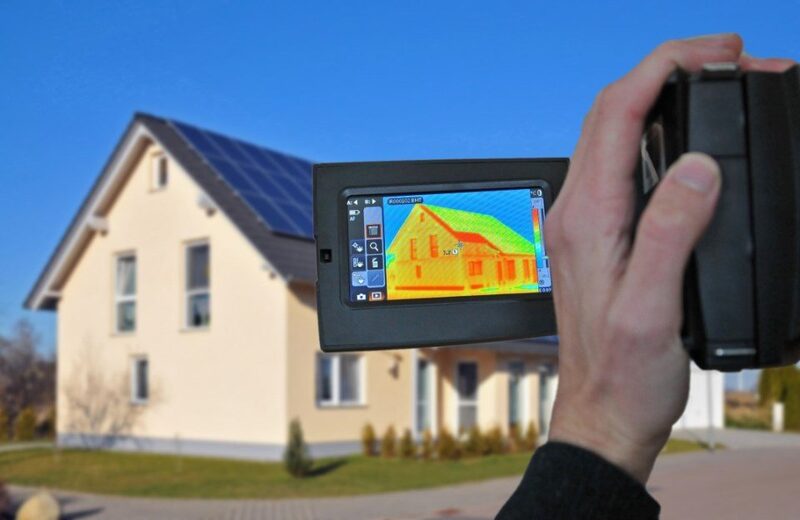
The hub also runs a practical service for smaller groups. It has two thermal imaging cameras for local Low Carbon Hub Community Groups, and if you are part of one of those groups you are welcome to borrow one free11. The cameras can be used for household surveys or community building scans11. Groups get free use of the thermal imaging cameras, training, support, and ready-to-use resources to run local projects11. Homeowners get clear images of heat loss in their homes, plus guidance on simple next steps and where to find funding11. Free, independent advice is available through Cosy Homes Oxfordshire11.
That combination, a member-funded asset base plus free tools for member groups, is what distinguishes a hub from a grant programme. The hub carries the overheads so that a village group does not have to. The Low Carbon Hub page covers the organisation in more detail.
What community-owned projects look like in practice: hydro, solar and batteries
English community assets cluster into three technologies, and each has a different relationship with the household.
| Technology | What it does | Main constraint |
|---|---|---|
| Hydro | Steady, predictable generation | Few viable sites in England3 |
| Solar | Scales from roof to field, no moving parts | Grid connection and export value |
| Battery and flexibility | Shifts when the community draws from the grid | Depends on being counted as community energy1 |
Hydro is the oldest and the most site-specific. Baywind Energy Co-operative Ltd holds £1 million for solar and hydro sites and is actively looking for solar sites above 20kW and hydro sites, focused in Cumbria but open to projects across the country3. Hydro output is steady and predictable, which makes it easier to finance than solar, but the number of viable sites in England is small.
Solar is the most common. It scales from a roof to a field, it has no moving parts, and the planning route is well understood. The constraint is not generation but grid connection and export value.
Batteries and flexibility are the newest category, and the one the Catapult consultation argues should be inside the definition of community energy1. A community battery does not generate anything, but it can shift when the community draws from the grid and, sited well, can help alleviate grid constraints1. For a household, a community battery is the asset most likely to change when its electricity is cheap, because it can be charged when the local network has room.
The Welsh figures give a sense of what domestic-scale community generation adds up to. Wales recorded 70,575 domestic projects, 209 MWe, 142 MWth and 500 GWh12. Those are Welsh, not English, but they show the shape of the domestic contribution: a very large number of small installations producing a modest but real share of capacity.
"Enabling community energy schemes to become 'secondary suppliers' would allow households to more easily purchase locally generated electricity, unlock the flexibility needed to manage fluctuating demand, and offer new business model opportunities for community owned assets"
Project LEO and the Witney Green Recovery project: £5m and 14.2MW of grid capacity
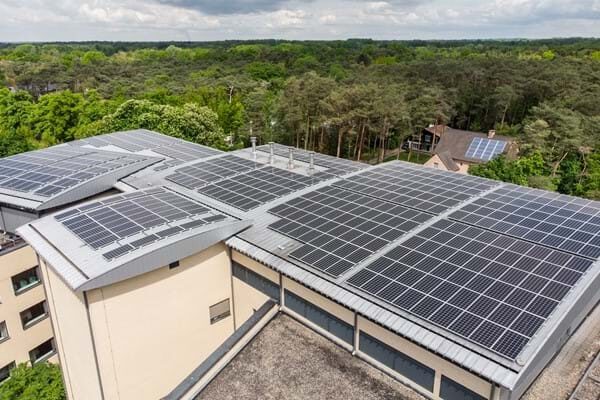
Smart local energy systems are the framework that English demonstrator projects such as Project LEO and the Witney Green Recovery project were built around. The Welsh Government's Ynni Cymru Capital Grant Scheme describes the delivery model: smart local energy systems can be delivered by community energy organisations, social enterprises, public sector bodies, and SMEs developing innovative local energy solutions8. That is the same consortium shape that English demonstrators used, with a distribution network operator, a university, a local authority and community groups around one table.
The point of these projects is not the generation figure. It is the grid capacity they free up. A smart local energy system coordinates generation, storage and demand so that the local network can carry more without reinforcement, and the value of that coordination is measured in megawatts of capacity that did not have to be built.
The nearest dated English figures in the current record are smaller and more specific. The Renewable Heat Infrastructure Network Operating System project in Leeds has a contract value of £197,928.4913. That is a single project contract, not a programme budget, and it shows the scale at which innovation funding actually operates.
At the national level, GB continues to progress towards the government's Clean Power ambition, with a current interconnection capacity of 10.3GW14. That figure is about interconnectors, not community assets, but it sets the context: community-scale flexibility is being counted alongside large infrastructure in the same national picture.
For comparison, the Welsh capital scheme shared over £12.9 million across 48 successful projects8, and the Fair Isle Unified Low Carbon Electricity Storage and Generation Project received £1.5 million15. Those are the order of magnitude for a serious community generation and storage scheme.
How community energy connects to household energy independence
Community energy changes a household's position in three ways, and it is worth being precise about which.
- It can change who owns the generation. A household that buys a share in a community solar array owns a fraction of a generator, and the return comes as interest or as a community benefit rather than as a bill reduction. That is ownership, not self-supply. The self-sufficiency ratio page explains why owning generation elsewhere does not reduce the imports a home draws at the meter.
- It can change when electricity is cheap. A community battery or a flexible load shifts demand, and the Catapult consultation argues that flexibility should count as community energy precisely because it changes the shape of local demand1. For a household on a time-of-use tariff, that is a direct financial effect.
- It can change the local network's headroom. Projects sited well can help alleviate grid constraints1, which is what allows more homes on the same street to connect generation and storage without an expensive reinforcement.
What community energy does not do is remove a household's dependence on the grid or on a supplier. A community scheme is still connected, still metered, and still exposed to wholesale prices unless the household has its own generation and storage. The household energy independence guide sets out the full picture, and joining a community energy scheme versus installing your own solar compares the two routes directly.
The Scottish comparison is instructive. The Community and Renewable Energy Scheme encourages community ownership of renewable energy projects across Scotland, helping to maximise the benefits of renewable energy systems, and ensuring that the delivery of community energy comes with benefits for people in Scotland16. It has offered funding of over £58 million to date17, and made an additional £3 million available to support decarbonisation of Scotland's most remote and rural off-grid communities13. England has no single equivalent programme at that scale. The community energy in Scotland page covers the devolved position.
Key dates and deadlines to watch

The English community energy calendar in late 2026 is unusually compressed. Three deadlines fall within eight weeks of each other, and one stream opens after the others close.
| Date | What happens |
|---|---|
| 23 September 2026 | Bristol City Leap Community Energy Fund closes3 |
| 30 September 2026, 11:59pm | LCEF ninth round feasibility and delivery streams close2 |
| October 2026 | LCEF development stream opens, details to follow2 |
| 12 November 2026 | Great British Energy community energy funding closes3 |
Beyond the funding calendar, the wider scheme dates that affect English households are worth noting. Energy Company Obligation 4 phase 3 ran from 1 April 2024 to 31 March 202518. The Energy Performance of Buildings (England and Wales) Regulations 2012 post-implementation review covers a 5-year period from January 2018 to January 202320. The Energy Bills Support Scheme GB published end of scheme data on 19 October 202321. UK energy in brief 2026 was last updated on 3 August 202622.
For groups that need advice rather than money, the contact routes are specific. Community Energy Plus can be reached on 0800 954 1956 or at advice@cep.org.uk23. Ofgem's ECO team handles general questions at eco@ofgem.gov.uk24, and the Ofgem contact centre for ECO and GBIS households is a freephone number, 0808 169 4447, Monday to Friday, excluding bank holidays, from 9.30 am to 4.30 pm25. The Energy Company Obligation is a government energy efficiency scheme in Great Britain to tackle fuel poverty and help reduce carbon emissions26.
Sources26 cited
- Unlocking community energy at scale: call for evidence, Energy Systems Catapult, 2025-01-13
- London Community Energy Fund (LCEF) ninth round, Community Energy England, 2026-09-17
- Obtaining funding, Community Energy England, 2026-09-20
- Mythbusting our most frequently asked questions, Low Carbon Hub, 2025-12-10
- Our climate action on buildings, Bristol City Council, 2026
- Get a grant or loan to improve your home energy efficiency, Bristol City Council, 2026
- Over £50 million to help families struggling with soaring heating oil costs, GOV.UK, 2026-03-16
- £12.9 million to support Welsh communities transition to renewable energy, Welsh Government, 2025-09-17
- Social Housing Decarbonisation Fund, GOV.UK, 2024-05-13
- Boiler Upgrade Scheme guidance for installers v5.1, Ofgem, 2026-07-02
- Thermal imaging camera loan, Low Carbon Hub, 2026-08-05
- Energy generation in Wales 2021, Welsh Government, 2021
- Heat Pump Ready Programme stream 1 phase 1 projects, GOV.UK, 2026-05-28
- Clean Flexibility Roadmap: July 2026 update, GOV.UK, 2026-09-17
- Low Carbon Infrastructure Transition Programme, Scottish Government, 2024-06-28
- Local and small-scale renewables, Scottish Government, 2026-09-17
- Heat in Buildings Strategy 2022 update: progress, Scottish Government, 2022-10-31
- ECO public reports and data, Ofgem, 2026-09-17
- ECO public reports and data, Ofgem, 2026-09-17
- Energy Performance of Buildings Regulations 2012 post-implementation review 2018 to 2023, GOV.UK, 2026-04-02
- Energy Bills Support Scheme payments made by electricity suppliers to customers, GOV.UK, 2023-10-19
- UK energy in brief 2026, GOV.UK, 2026-08-03
- Winter wellbeing, Cornwall Council, 2026-06-30
- Energy Company Obligation (ECO) contacts, guidance and resources, Ofgem, 2026-09-17
- Retrofit measures: ECO4 and GBIS, UK Parliament, 2025-10-13
- Energy Company Obligation (ECO): homeowners and tenants, Ofgem, 2026-09-17
 Community Energy in the UKWhat community energy means in practice, the legal structures used, and the types of project householders can join or benefit from.
 Community Energy in ScotlandCommunity energy in Scotland lets you join a local scheme for cheaper, greener heat and power, or get advice and funding to make your own home warmer and cheaper to run.
 Community Energy StatisticsHow much of the UK's energy comes from projects owned by local people, and is that number growing?
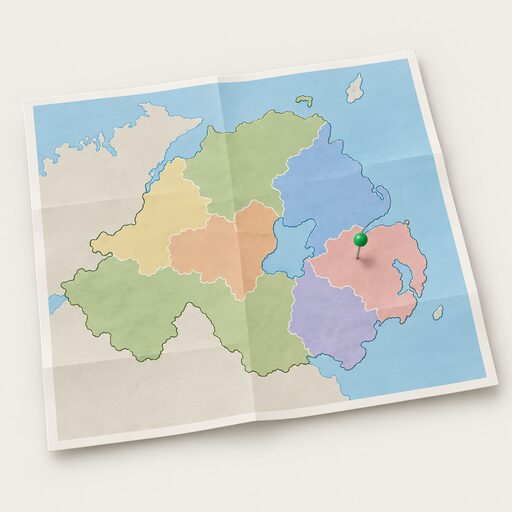 Community Energy in NICan a community group in Northern Ireland sell power to its neighbours, and is there funding to get a project off the ground?
 Community Wind and HydroExplains how community-owned wind and hydro projects are organised, financed and shared with local households, and the scale of installed community capacity across the UK.
 Community Energy in WalesWales wants more of its energy owned by local people, not big companies.