

In this guide
Cosy Homes Oxfordshire is a home retrofit service covering the county, launched in early 2019 and delivered as a partnership between the Low Carbon Hub and RetrofitWorks1. It is a one-stop shop rather than an installer: the household gets an assessment, a written plan and an introduction to vetted contractors, and then decides what to commission. The service describes itself as supporting a household from the beginning to the end of an eco-retrofit journey1.
The model is the whole house, fabric first approach, aimed at clients who are able to pay2. That last point shapes everything about it. This is not a grant scheme and it does not sell boilers or heat pumps. It is a paid-for planning and coordination service, and the published eligibility is homeowners or landlords in Oxfordshire3.
The pilot phase ran for two years on funding from the Department of Business, Energy and Industrial Strategy and ended in March 2021. The service now continues without grant funding, aiming to become a self-sustaining business for delivering whole house retrofit projects1. That transition, from funded pilot to trading service, is the single most useful thing to understand about it.
What Cosy Homes Oxfordshire is and who runs it
The service is a partnership project delivered by the Low Carbon Hub and RetrofitWorks1. The Low Carbon Hub has been the lead project partner, with RetrofitWorks and the National Energy Foundation alongside it4. The National Energy Foundation also helped establish the scheme during its pilot phase1.
It launched in early 2019 to help make homes across Oxfordshire more energy efficient, and it works collaboratively with low carbon community groups across the county to encourage uptake locally1. That community route matters: the scheme was designed to reach households through groups they already trusted rather than through advertising, and the first phase until March 2019 was spent working closely with those communities to develop the programme before full rollout to homeowners5.
Public engagement ran through a webinar series. In autumn 2020 the scheme held fortnightly online webinars exploring topics relating to home retrofit and energy efficiency, hosted by Cathy Ryan, then Community Engagement Manager at the Low Carbon Hub6. The scheme has also published its own explainer material on the whole house approach, on what energy efficiency means, and on the units and jargon used in retrofit1.
The funding history is worth setting out plainly. The consortium won a bid with the Department for Business, Energy and Industrial Strategy to lay the foundations for developing a home retrofit scheme in Oxfordshire, backed by quality assurance measures and whole job coordination5. The scheme then received two years of pilot funding from the same department, and that pilot phase ended in March 20211. Since then it has continued without grant funding1.

A whole house approach, not one measure at a time
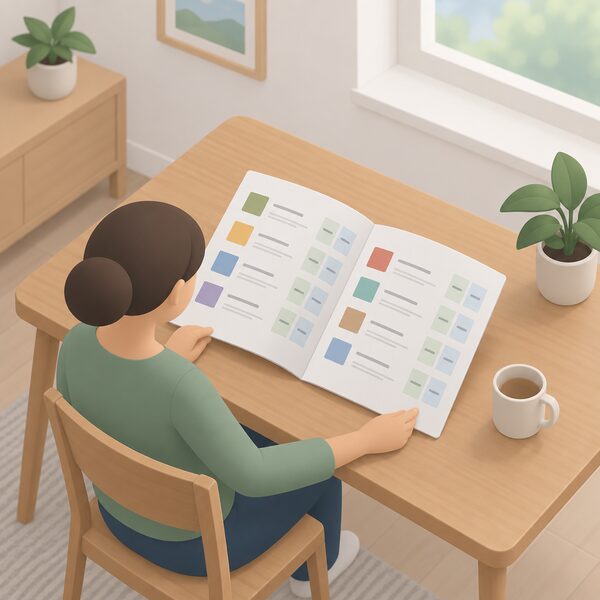
The scheme's central argument is that retrofit measures should be planned together rather than bought one at a time. It uses the whole house, fabric first approach, aimed at clients who are able to pay2. Fabric first means the building's envelope, its insulation, airtightness and ventilation, is addressed before the heating system is replaced, so that a smaller and cheaper heat source can do the job.
This is not a fringe position. The Welsh Government has described its own approach to decarbonising existing homes as a whole house, pragmatic approach7. The logic is the same in both cases: measures interact, and a sequence chosen badly costs more than the sum of its parts.
The practical consequence for a household is that the plan comes before the shopping. A Whole House Plan documents a variety of energy efficiency measures and outlines the costs and carbon savings1. It is a document a household can act on in stages, or take to a builder, or use to decide that a particular measure is not worth doing in this house.
"The recommendations are then formulated into a tailored Whole House Plan that documents a variety of energy efficiency measures and outlines the costs and carbon savings"
Where the scheme sits in the wider landscape of assessment and planning is set out in whole house plans and in retrofit assessors and coordinators. The order in which measures are best done is covered in what order should home energy improvements be done in.
How the service works: from first contact to Whole House Plan
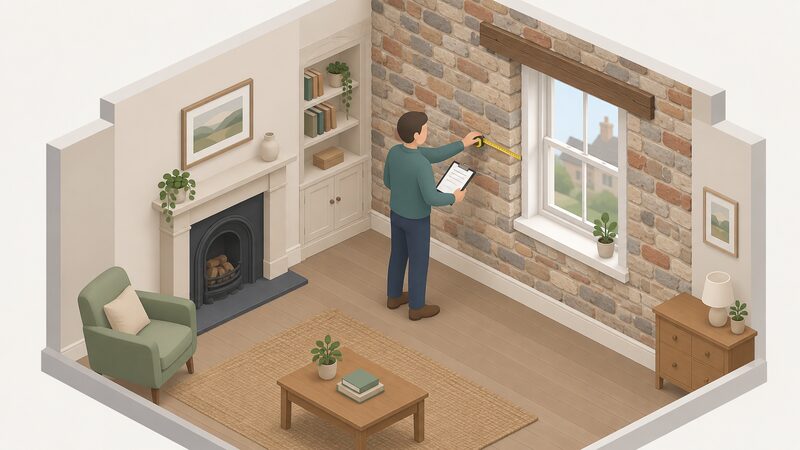
The process begins with a visit from a Retrofit Coordinator or an Energy Assessor who conducts an assessment of a home to identify appropriate energy efficiency measures1. The first step in the process is a home assessment, carried out by a member of the RetrofitWorks team8.
The recommendations from that assessment are then formulated into the tailored Whole House Plan1. From there the household gains access to a pool of trusted contractors who are vetted and rigorously assessed by the RetrofitWorks team, and throughout the process an independent Retrofit Coordinator keeps a check on the quality of the service1.
The published route in is the free Plan Builder tool on the Cosy Homes Oxfordshire website3. The scheme describes what it provides as guidance on selecting the right measures for a home and connecting the household with seasoned and reliable contractors3.
The planned customer journey assumed eight weeks between a customer registering and deciding which measures to go ahead with4. That is the design assumption recorded during the pilot, and it covers assessment and planning only. Installation lead times sit outside it. Where a measure needs householder planning consent, decisions on those applications should be made within eight weeks9.
- Register interest through the Cosy Homes Oxfordshire website and its Plan Builder tool3
- Home assessment visit by a Retrofit Coordinator or Energy Assessor1
- Whole House Plan produced, documenting measures, costs and carbon savings1
- Introduction to vetted contractors from the RetrofitWorks pool1
- Quality assessment by an independent Retrofit Coordinator through the works1
The Whole House Plan: what it contains and what it costs
The Whole House Plan is the deliverable. It documents a variety of energy efficiency measures and outlines the costs and carbon savings1. The Smart Flex Heat Pump Trial, which works with homeowners across Oxfordshire, lists a free home assessment and Whole House Plan from Cosy Homes Oxfordshire, with expert support to identify other energy measures10.
On price, the position is that the assessment and plan are described as free, and the paid work is the retrofit itself. The scheme's own figures from the pilot give a sense of scale: the average project value was around £25,000, with the service serving projects above £10,0004. Those are 2021 figures from the pilot phase and describe the projects the service took on, not a price list.
For context on what a whole house plan costs elsewhere, published guidance on retrofit options puts the most expensive planning option sometimes in the range of £75011. That is a general figure for the market, not a Cosy Homes Oxfordshire price. A full planning history report from a local authority, a different product entirely, is £75 for residential use12.
The scheme has run promotions on the plan in the past. A match-funded energy health check promotion for West Oxfordshire with CAPZero has ended, and the scheme continues to support Oxfordshire homeowners1. Wider cost context for whole house work is at what a whole-house retrofit costs in the UK.
| Item | Figure | Basis |
|---|---|---|
| Home assessment and Whole House Plan | Free | Scheme material and trial guidance10 |
| Minimum project value, pilot | £10,000 | Pilot case study, 20214 |
| Average project value, pilot | around £25,000 | Pilot case study, 20214 |
| Whole house plans paid for, November 2019 | 83 | Pilot update8 |
| Whole house plans delivered, November 2019 | 56 | Pilot update8 |
| Houses planning improvements, November 2019 | 16 | Pilot update8 |
Vetted contractors and the Retrofit Coordinator's role
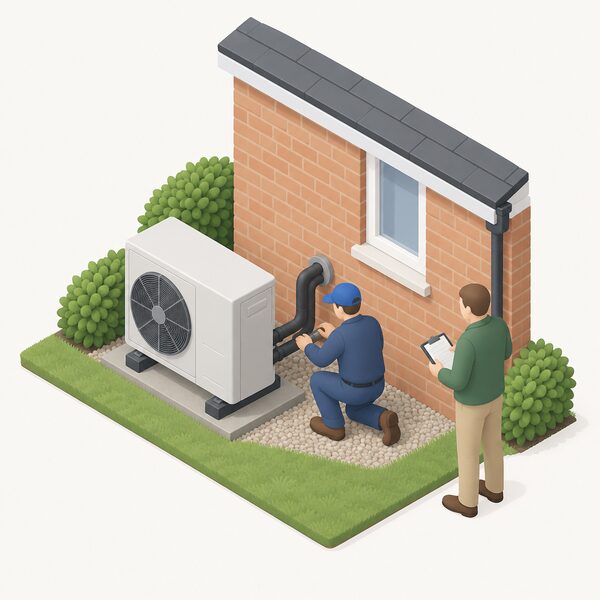
The contractor pool is the part of the service that carries the most weight for a household. Homeowners gain access to a pool of trusted contractors who are vetted and rigorously assessed by the RetrofitWorks team1. The supplier types in that pool include general builders, contractors, installers, energy assessors, architects and refurbishment specialists8.
Oversight is separate from delivery. An independent Retrofit Coordinator keeps a check on the quality of the service and performs quality assessments1. The Cosy Homes Oxfordshire service works with a pool of vetted contractors who perform to a high standard for heat pump installation, with installation quality assessed by a Retrofit Coordinator10.
That separation is the recognised model. In Wales, the Green Homes Wales scheme provides fully funded access to a Retrofit Coordinator to create a detailed home assessment providing energy efficiency and decarbonisation advice, and an independent Retrofit Coordinator oversees all works to ensure they are safe, high quality and fully compliant13. Where a loan is involved under that scheme, the Retrofit Coordinator must be registered with the UK Government's TrustMark scheme15.
The role itself is demanding. Consultation feedback on the Retrofit Coordinator position was that it would be key, and would require broad knowledge and practical experience in refurbishment, renovation, whole house retrofit and new build construction16. A household using any coordination service is relying on that judgement, which is why the independence of the coordinator from the contractors being paid matters.
Who it is for: eligibility, housing types and project sizes
The published eligibility is homeowners or landlords in Oxfordshire3. The service area is Oxfordshire, and the scheme describes itself as a one-stop-shop home retrofit service for homeowners throughout the county1.
Project size is the practical filter. During the pilot the service was serving projects above £10,000, with an average project value of around £25,0004. A household planning a single measure, a loft top-up or a few radiators, is not the intended client. The whole house model only pays for itself when there is enough work to sequence.
The scheme's own material frames the offer around people who are able to pay2. That is a deliberate positioning: it is not a fuel poverty scheme and it does not means-test. Households looking for grant-funded work are directed elsewhere, and the county has separate provision for that.
For households outside the county, or in it but on a low income, the relevant routes are different. Free energy advice is available through Cosier Homes, which covers people in Berkshire and also offers free energy advice in Dorset, Hampshire, the Isle of Wight and parts of Oxfordshire, West Sussex or Surrey17. Nationally, the Warm Homes Local Grant is aimed at low income households in private housing in England, including off-grid homes18. The general map of advice provision is at regional retrofit advice services, and the England-specific routes are at free home energy advice in England.
Pilot funding, current status and how the scheme has developed

The scheme's funding history explains its present shape. It received two years of pilot funding from the Department of Business, Energy and Industrial Strategy, and that pilot phase ended in March 20211. The National Energy Foundation helped establish the scheme during its pilot phase1. The consortium bid that preceded it was led with the same department to lay the foundations for a home retrofit scheme in Oxfordshire, backed by quality assurance measures and whole job coordination5.
The pilot produced real numbers. By November 2019 the scheme recorded 83 Whole House Plans paid for, 56 delivered, and 16 houses planning improvements8. By March 2021, over 550 homeowners had registered with Cosy Homes, with around 50 of those on a waiting list to have their initial home assessment booked in4. That gap between registrations and assessments is the clearest evidence of a capacity constraint rather than a demand problem.
Since March 2021 the service has continued without grant funding, aiming to become a self-sustaining business for delivering whole house retrofit projects1. That is a harder commercial position than a funded pilot: the service has to cover its costs from the work it coordinates.
The wider Oxfordshire picture has moved on. The Home Upgrade Grant phase 2 funding was to deliver whole-house retrofit installations to at least 310 properties across Oxfordshire that are not heated by mains gas19. The Warm Homes Local Grant is run by Oxfordshire County Council in partnership with Welcome the Warmth, a council-run scheme20. Applications for that go through the council website or the retrofit team at retrofit@oxfordshire.gov.uk20.
Where the scheme has fallen short: supply chain and the rental strand
The pilot's own assessment was candid on two points. The biggest barrier for Cosy Homes has been the readiness of the supply chain for retrofit in Oxfordshire to work in a coordinated way4. The rental strand was largely unsuccessful4.
The supply chain finding is the more consequential. A coordination service depends on there being enough competent firms to hand the work to, and enough of them willing to work to a coordinator's sequence rather than sell whatever they install. Where that capacity is thin, the plan is only as good as the firms available to deliver it.
The rental outcome is consistent with the wider evidence on the private rented sector. In England, 23% or 990,000 occupied private rented sector dwellings are estimated to fail the Decent Homes Standard22. The disparity between tenures is stark: in Yorkshire and the Humber, 38% of private rented sector homes are estimated to fail, compared with 18% of owner occupied and 10% of social rented homes22. A service built around projects above £10,000 and aimed at clients able to pay has structural difficulty reaching a tenure where the landlord does not live in the property and the tenant cannot commission work.
Scotland's figures show the same pattern in a different system: 35% of homes in the social rented sector and 52% of owner occupied homes do not achieve the required standard23. The tenure gap is not an Oxfordshire peculiarity.
For a household, the honest reading is this. The whole house plan model works where there is a household with capital, a house with enough scope, and local firms able to deliver. Where any of those three is missing, the model struggles, and the pilot's own record says so. What a household should expect in practice is a good plan and a variable route to getting it built.
Independence: what the service changes and what it does not

The service changes one thing materially: it puts a plan and an independent quality check between the household and the firms selling the work. That is a real transfer of leverage. A household that would otherwise take three quotes for a boiler and hope for the best instead gets a documented sequence of measures, a vetted contractor pool and a coordinator checking the result1.
What it does not change is the underlying dependence. The household still owns the asset, still pays for the work, and still depends on the grid and a supplier for whatever heating fuel remains. A whole house plan does not disconnect anything. It reduces how much energy the house needs, which reduces exposure to price, but the connection stays.
There is also a dependence on the service itself continuing. Cosy Homes Oxfordshire has run without grant funding since March 2021 and aims to be self-sustaining1. A household that has paid for a plan holds the document regardless, but the contractor pool and the coordinator oversight depend on the organisation trading. That is worth weighing against the free assessment.
The comparison with other coordination models is instructive. Green Homes Wales pairs a funded Retrofit Coordinator with a loan product, and requires the coordinator to be TrustMark registered where a loan is involved13. Cosy Homes Oxfordshire pairs a free plan with a contractor pool and no lending. Both put coordination at the centre; they differ in who pays for it and what happens if the household cannot.
For households weighing whether to start with a plan or with a single measure, the relevant pages are what should you do first and should you retrofit all at once or in stages. The wider route to reducing reliance on suppliers is at planning a route to household energy independence.
Sources23 cited
- Cosy Homes Oxfordshire project page, Low Carbon Hub, 2025
- Routes to retrofit: improving domestic energy efficiency in Oxfordshire, Low Carbon Hub, 2023
- Cosy Homes Oxfordshire programme page, Low Carbon Hub, 2026
- Learnings from launching a home retrofit service, two years in, Low Carbon Hub, 2021
- Low Carbon Hub and partners win bid to bring home retrofit project to Oxfordshire, Low Carbon Hub, 2019
- Cosy Homes Oxfordshire webinar series, Low Carbon Hub, 2020
- Time to raise the bar on Wales' housing standards, Welsh Government, 2022
- An update on Cosy Homes Oxfordshire, Low Carbon Hub, 2019
- Householder planning consent, Planning Portal, 2026
- Smart Flex Heat Pump Trial, Low Carbon Hub, 2025
- Five top tips from Which? to cut your energy bills, Welsh Government, 2026
- Common queries about planning permission, Wiltshire Council, 2026
- Green Homes Wales, Development Bank of Wales, 2026
- £5 million to help Welsh households invest in greener homes, Welsh Government, 2026
- Green Homes Wales loan standard terms and conditions, Development Bank of Wales, 2026
- Analysis of responses: Scottish skills requirements consultation, Scottish Government, 2021
- Cosier Homes energy advice in Berkshire, Centre for Sustainable Energy, 2025
- Warm Homes Local Grant and Social Housing Fund briefing, House of Commons Library, 2026
- Oxfordshire awarded £6.4m to help low income households tackle energy inefficiency, Oxfordshire County Council, 2023
- Residents urged to stay safe as Oxfordshire expands support to make homes warmer, Oxfordshire County Council, 2026
- Council initiative helps Witney mum keep her energy bills down, Oxfordshire County Council, 2026
- English Housing Survey 2021 to 2022: private rented sector, Ministry of Housing, Communities and Local Government, 2023
- Tackling fuel poverty in Scotland: periodic report engagement responses, Scottish Government, 2025