
In this answer
Short answer
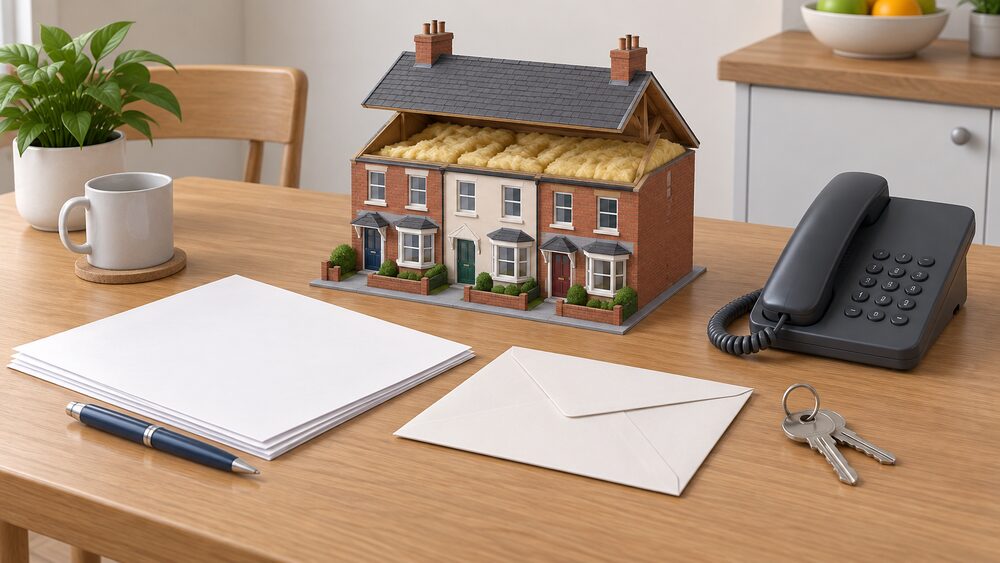
The proposed Northern Ireland domestic retrofit pilot is a one-stop shop model, not a live grant scheme. Independent guidance describes an initial pilot domestic retrofit scheme that would be followed by a more substantive offering, which would later become the main interface on all energy matters in Northern Ireland1. No start date, budget, eligibility rules or application route for that pilot have been published. A household searching for it today will not find an open scheme to apply to.
What does exist is the Northern Ireland Sustainable Energy Programme (NISEP), a collection of energy saving schemes across Northern Ireland offering fully funded or part-funded energy efficient home improvements, varying by location, tenure and income2. The Utility Regulator approved the NISEP schemes for 2026/2027 and published the full list3. Funding covers measures such as boiler upgrades, LED light bulbs and draught proofing4, and 19 domestic schemes support householders to install a range of measures including cavity wall and loft insulation5.
The distinction matters for a household's energy independence. A one-stop shop would give a single route into advice, assessment and funding, replacing a landscape where a household has to find the right scheme manager for each measure. Until it exists, the practical route is the current scheme list, and the dependence on oil, on a supplier and on the grid remains what it is.
The proposal on record, and what it is not
There is no named Northern Ireland domestic retrofit pilot scheme open to householders. The proposal on record is a sequence: an initial pilot domestic retrofit scheme, then a more substantive offering, then a service that becomes the main interface on all energy matters in Northern Ireland1. That is a description of intent, not a scheme with rules.
The case for it rests on the state of the building stock. Independent guidance states that significant retrofitting of buildings is needed to improve energy efficiency, reduce demand and adapt energy sourcing1. Northern Ireland has committed to reaching net zero by 20507, and has set a renewable electricity target of 70% by 20308. Cutting the energy a home needs is the demand side of both.
The nearest working equivalent in the Republic of Ireland is the National Home Retrofit Scheme, run by the Sustainable Energy Authority of Ireland, which funds the development of multiple business and community led one-stop shops, with the aim of testing and developing the best one-stop shop model to meet energy targets by 20301. That is a different jurisdiction and a different funding route, but it shows the shape the Northern Ireland proposal is reaching for.
For a household, the honest position is that the pilot cannot be applied for. What can be applied for is NISEP, whose schemes are listed and managed individually. The gap between the two is the whole point of the proposal: a single front door instead of a search.
Who it would cover
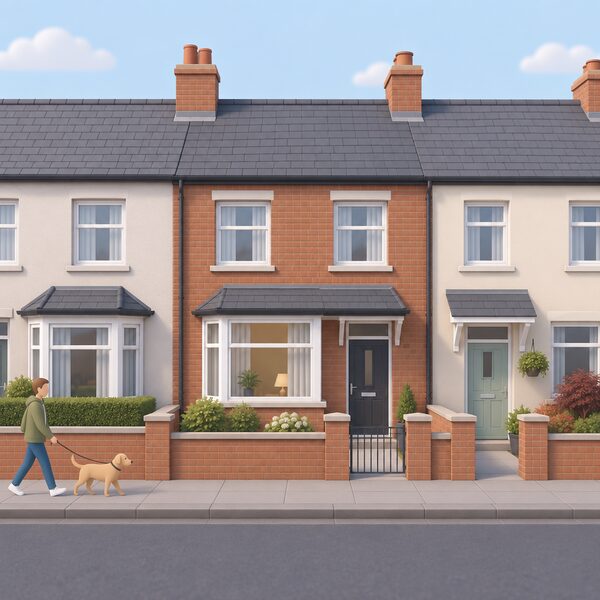
The published proposal does not set tenure, income or property criteria for the pilot. What it does say is that the later service would become the main interface on all energy matters in Northern Ireland, which implies a broad reach rather than a single tenure1. The pilot phase, by definition, would be narrower.
Existing Northern Ireland schemes show how eligibility is normally drawn, and are the best guide to what a pilot might look like. NISEP states that homeowners, private tenants and non-domestic or commercial properties might be eligible6. The Affordable Warmth Scheme provides grant support to eligible low-income homeowners and private tenants in Northern Ireland to improve the energy efficiency of their homes9, and is aimed at fuel poor households in privately rented or owner-occupied properties5.
Social housing sits on a separate track. The Northern Ireland Housing Executive's Low Carbon Retrofit Programme aimed to upgrade 300 homes by spring 202510. Registered social landlords and local authorities are the recipients of the Welsh Optimised RetroFit Programme, which is a whole house, pragmatic approach to decarbonising existing homes11, and the same tenure split appears in the West Midlands pilot, which is place-based, cross-tenure and holistic12.
Fuel poverty measurement in Northern Ireland uses the 10% indicator, where a household is fuel poor if the fuel costs required to maintain a satisfactory heating regime are greater than 10% of household income13. That definition shapes who the existing schemes are designed to reach, and would shape a pilot.
| Scheme | Who it reaches | Status |
|---|---|---|
| Proposed NI domestic retrofit pilot | Not yet defined | Proposed1 |
| NISEP | Homeowners, private tenants, some non-domestic properties6 | Open, schemes listed for 2026/20273 |
| Affordable Warmth Scheme | Low-income homeowners and private tenants9 | Open |
| Housing Executive Low Carbon Retrofit Programme | Housing Executive stock, 300 homes by spring 202510 | Programme target |
| Optimised RetroFit Programme (Wales) | Registered social landlords and local authorities11 | Devolved, not open to NI households |
Conditions and exclusions in the schemes that exist
Because the pilot has no published rules, the conditions that matter are those attached to the schemes a household can actually use, and they are strict in places.
NISEP funding is not open to every property. Self-build properties under construction, new build properties and older houses that are having building works undertaken to extend the property are not eligible for NISEP funding6. Funding is only available for the applicant's primary residence, so a second home does not qualify6. Applications are made scheme by scheme: identify the scheme you want to apply for and check that you are eligible to receive funding, then contact the relevant scheme manager via the telephone number or email address provided for further details3.
Other conditions in the wider landscape show how tightly devolved schemes are drawn. The Welsh Retrofit Coordinator Grant excludes properties outside of Wales and is only valid for Phase 3 if an unsecured loan available through the scheme has been successfully applied for14. The Scottish Home Energy Efficiency Equity Loan pilot considered other repairs on a case by case basis, not including purely cosmetic work15. These are not Northern Ireland rules, but they illustrate the pattern: territorial limits, linked-loan conditions and exclusions for work that is not energy related.
Two Northern Ireland specific points bear on any retrofit work. There are currently no statutory requirements for domestic electrical installation work in Northern Ireland, although organisations register and assess electrical contractors in the area16. And connection requirements for small generation are governed by the Electricity Safety, Quality and Continuity Regulations (Northern Ireland) 2012 and Engineering Recommendation G98/NI17. Any retrofit that adds generation meets those rules, not the GB ones.
How a pilot phase would work
The proposal describes a sequence rather than a process. An initial pilot domestic retrofit scheme would be followed by a more substantive offering that would later become the main interface on all energy matters in Northern Ireland1. The pilot is the test phase; the one-stop shop is the destination.
Comparable programmes show what a pilot phase involves. The West Midlands Buildings Retrofit Pilot forms part of the wider Trailblazer Devolution Deal, devolving funding for grant-funded retrofit schemes to a local level, and it replaced three centrally funded programmes: Warm Homes: Social Housing Fund, Warm Homes: Local Grant and the Public Sector Decarbonisation Scheme12. To access funding, project or programme proposals have to be made, likely requiring similar details to the national schemes with particular exceptions and additional requirements12. It encourages place-based, cross-tenure and holistic approaches that use innovations and take a joined-up view of the local area12.
Wales has run the same idea through the Optimised RetroFit Programme, which embraces a test and learn approach to decarbonising homes11 and is available to registered social landlords and local authorities to install a variety of home decarbonisation measures18. A related Welsh pilot, Tai Clyd Caerdydd, explores the value of taking a neighbourhood level approach to cross-tenure retrofit, supporting communities through the work19.
For a Northern Ireland household, the practical process today is unchanged: find the scheme, check eligibility, contact the scheme manager3. The measures NISEP funds include boiler upgrades, LED light bulbs and draught proofing4, and cavity wall and loft insulation across its domestic schemes5. Support may be fully funded or part-funded depending on location, tenure and income2.

What the pilot would change, and what it would not

A single front door would remove the search cost of matching a household to a scheme manager, and would put advice, assessment and funding in one place. That is the independence gain: less reliance on knowing which scheme exists, and a route that covers the whole house rather than one measure at a time.
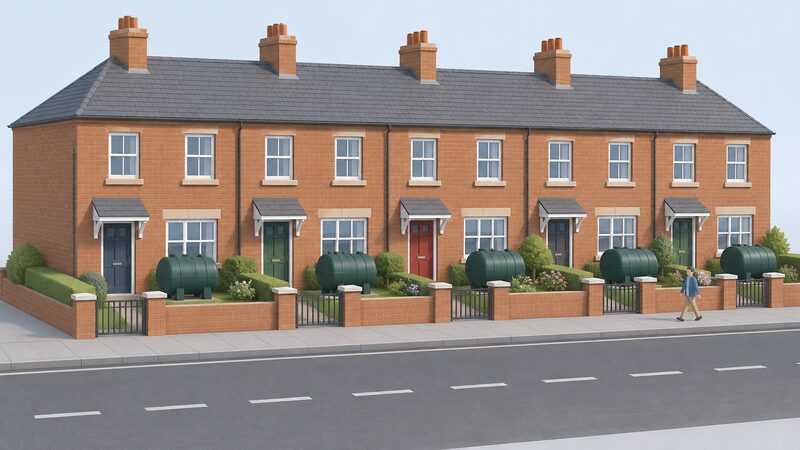
The dependence that remains is substantial. Northern Ireland homes are still connected to the grid and, for many, heated by oil delivered by a supplier. Smart time-of-use tariffs are not available in Northern Ireland and there is no standing charge for mains gas20. Independent guidance notes that if you live in Northern Ireland there is not a specific heat pump grant currently available, though a household can still get heat pump ready and apply for funding for insulation via NI Energy Advice20. Northern Ireland also has one of the best wind resources in Europe21, but that is a generation resource, not a household one.
Costs have moved in a way that sharpens the case. Households in Northern Ireland paid 2.02% more on average than they did the previous year22. Public charging infrastructure is thin by UK standards, with Northern Ireland's total of 707 devices by far the lowest of anywhere in the UK23, and 371 rapid and ultra-rapid chargers recorded24. Those are transport figures, but they describe the same pattern of a smaller installed base.
A pilot scheme would not change any of that on its own. It would change how a household finds its way into the support that exists, and it would test whether a neighbourhood level, cross-tenure approach works in Northern Ireland conditions. Until it opens, the schemes listed by the Utility Regulator are the route, and the Northern Ireland Sustainable Energy Programme is where the detail sits. For how Northern Ireland's arrangements compare with the other nations, see home energy across the UK nations.
Sources24 cited
- Decarbonisation in Northern Ireland: the potential of a one-stop shop, Energy Saving Trust, 2025-10-01
- Financial support for home energy, Energy Saving Trust, 2026-09-14
- Northern Ireland Sustainable Energy Programme list of schemes 2026/2027 published, Utility Regulator, 2026-04-01
- Cost of living and winter support, Belfast City Council, 2026-09-20
- Northern Ireland, National Insulation Association, 2026
- NISEP, Energy Saving Trust, 2026-09-07
- Research briefing CBP-9888, House of Commons Library, 2026-07-10
- Attitudes to the Energy Transition 2024/2025, Consumer Council for Northern Ireland, 2025-10
- Funding for homeowners, Elmhurst Energy, 2026-07
- NI fuel poverty strategy, Energy Saving Trust, 2025-07-03
- Optimised RetroFit Programme, Welsh Government, 2021-11-04
- The Buildings Retrofit Pilot, West Midlands Combined Authority, 2026-09-17
- Fuel poverty modelled estimates for Wales, October 2024, Welsh Government, 2025-10-16
- Retrofit Coordinator Grant terms and conditions, Development Bank of Wales, 2026
- Home Energy Efficiency Equity Loan pilot: homeowner feedback survey analysis, Scottish Government, 2022-03-14
- Building regulations, Electrical Safety First, 2026-09-17
- Plug-in solar consultation document, Department for Energy Security and Net Zero, 2026-06-16
- Grant funding will support decarbonising 100 homes in Flintshire, Welsh Government, 2024-06-04
- Written statement: first 100 days commitment, warmer and more energy efficient homes, Welsh Government, 2026-07-16
- Air source heat pumps, Energy Saving Trust, 2026-07-16
- Wind, nidirect, 2026-05-18
- Energy statistics, Uswitch, 2025-12-17
- EV charging statistics, Uswitch, 2025-07
- EV charging statistics, Zapmap, 2026-08
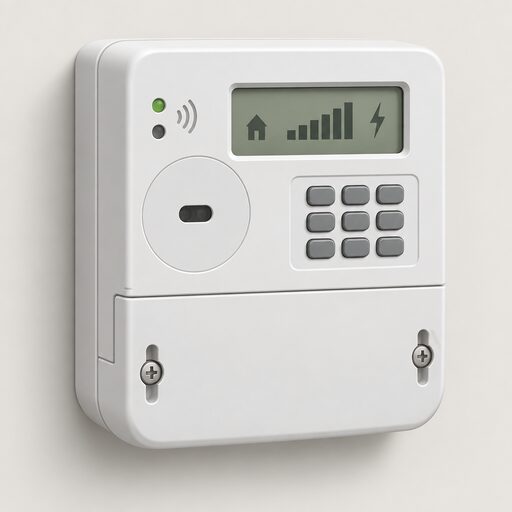 NIE Networks Meter ReplacementExplains the programme replacing electricity meters across Northern Ireland, who carries out the work and how appointments are made.
 Installer in Northern IrelandHow do you check an installer in Northern Ireland is properly registered, and who do you complain to if the work goes wrong?
 Community Energy in NICan a community group in Northern Ireland sell power to its neighbours, and is there funding to get a project off the ground?
 Home Energy Planning Rules in NIDo you need planning permission for solar panels or a heat pump in Northern Ireland?
 Utility Regulator NIWho sets your energy prices in Northern Ireland and who can you complain to?
 Housing Stock Data for NIMost homes in Northern Ireland heat with oil, so why are the grants and help different from the rest of the UK?