
In this answer
Short answer
No smart meters are being installed in Northern Ireland yet. As of early 2026, no smart electricity meters had been installed in homes there, and the Consumer Council states plainly that there are currently no smart electricity meters in Northern Ireland, although they have already been rolled out in Great Britain and the Republic of Ireland1. Which? confirms that smart meters are not currently being installed in Northern Ireland, but that this is set to change3.
The Department for the Economy has announced plans for the rollout of smart meters for all homes in Northern Ireland, starting in 20282. Independent analysis proposed a rollout over six years starting in 2027, and recommended that this would be most cost-effective, so the announced start date and the analysed start date differ3. The programme covers electricity smart meters only, not smart gas meters4.
For a household, the practical answer is that there is nothing to book and no installer to contact. Consumers do not have to do anything to receive their smart meter: NIE Networks and electricity suppliers will contact consumers when it is time for installation2. All meters are provided by NIE Networks, and energy suppliers are responsible for installing smart meters1.
No smart meters are being installed in Northern Ireland yet
The starting point for any household question about installation is that the installation stage has not begun. The Consumer Council's factsheet records that as of early 2026 no smart electricity meters have been installed in homes in Northern Ireland yet1. Its consumer guidance repeats the position: there are currently no smart electricity meters in Northern Ireland, but they have already been rolled out in Great Britain and the Republic of Ireland2. Which? frames the same fact as a pending change rather than a permanent gap, noting that smart meters are not currently being installed in Northern Ireland but that this is set to change3.
That means no supplier, installer or network operator in Northern Ireland is currently taking smart meter installation bookings for domestic properties. The absence is not a matter of a household missing an appointment or failing to request one; the programme itself has not reached the point of installation.
Public attitudes data collected in November 2024 suggests reasonable appetite once the rollout arrives. Among consumers aware of smart electricity meters, nearly half, 46%, felt positive about their roll-out, 31% were neutral and 18% were negative7. Awareness and availability are separate things: smart electricity meters are not currently available in Northern Ireland, though they are likely to be installed in the coming years7.
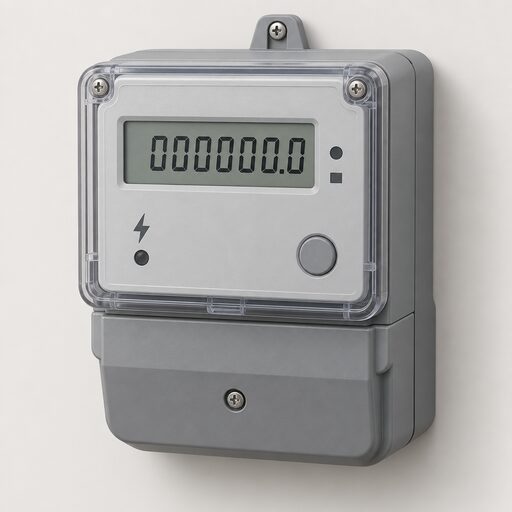
For household energy independence, the position is straightforward: a Northern Ireland home has no smart metering capability today, so it cannot use the consumption data, remote reading or tariff functionality that smart meters provide elsewhere. The dependence on manual meter reading and on the existing metering arrangement remains until the rollout reaches the property.
The rollout: NIE Networks, suppliers and what households need to do
The division of roles in Northern Ireland is unusual and worth setting out, because it differs from what households in Great Britain experience. NIE Networks owns all electricity meters in Northern Ireland, including both credit meters and keypad meters6. It maintains the meters at the properties of all customers across Northern Ireland no matter who the supplier is, and it serves over 910,000 customers including homes, businesses and farms8. All meters are provided by NIE Networks1.
Installation, by contrast, sits with the supplier. Energy suppliers are responsible for installing smart meters, and the standard route is to contact the supplier to check availability5. In Great Britain the roll-out is implemented by energy suppliers across the country, who are installing millions each year10. The Northern Ireland arrangement splits the hardware from the work: the network provides the meter, the supplier installs it.
The reassuring part for households is that no action is needed now. Consumers do not have to do anything to receive their smart meter, and NIE Networks and electricity suppliers will contact consumers when it is time for installation2. There is no queue to join and no application form to complete.
When installation does happen, the process is well documented from the Great Britain experience. Installation takes a couple of hours, with each supply switched off during the changeover11. The meter should be installed with minimal disruption, key safety checks should be carried out during the appointment, and an In-Home Display should be offered and demonstrated12. Installers are also expected to provide energy efficiency advice13.
Electricity meters only: what the implementation plan covers
The Northern Ireland plan is an electricity plan. The Department for the Economy is developing an electricity smart meter implementation plan, but not a smart gas meter plan4. Which? states that there are no plans to install smart gas meters3. Households that use mains gas for heating will therefore keep their existing gas meter while the electricity meter is upgraded.
The territorial extent of the rollout is broad. All homes in Northern Ireland are covered, and businesses, including small and medium sized firms, will also be covered by the rollout2. The NIE Networks meter replacement programme reaches all customers across Northern Ireland no matter who the supplier is8.
Data use is defined narrowly in the Northern Ireland documentation. Meter data will be used only for accurate billing by the supplier and NIE Networks, and for anonymous system wide analysis by SONI, the System Operator for Northern Ireland, to improve grid operation1. There is no central repository of smart meter data in the UK14. On wider access, the Energy Saving Trust agrees with the proposal to allow trusted organisations to have access to aggregated and anonymised data from smart meters for lawful purposes, without insurmountable barriers to accreditation15.
The consumer protection framework that will apply is still being settled. Ofgem's guaranteed standards for installation appointment availability apply to first time smart meter installations only, meaning the installation of a smart meter in a premise where one is not already installed16. That standard would only apply where a consumer is technically eligible for an installation, that is where there is a solution17. The technical specification work behind the programme is long running: the smart metering implementation programme draft technical specifications were published as a policy paper in 201118. A Public Accounts Committee report noted that the programme only has a plan to 2025 and does not know when it will be able to bring the Programme to a close19.
Why Northern Ireland has a separate system from Great Britain
Northern Ireland has different connection arrangements from Great Britain, which is one reason the metering programme runs on its own timetable20. The regulatory structure differs too. In a 2022 debate on domestic energy prices, the arrangements were described in these terms:
The separation is not merely administrative. Northern Ireland has a different regulator, the Utility Regulator for Northern Ireland, no price cap, and an entirely different set of suppliers from Great Britain, which is why energy price support had to be delivered through a distinct Northern Ireland scheme rather than the Great Britain one12.
That separation explains why a smart meter programme that has been running in Great Britain for years has not reached Northern Ireland homes. In Great Britain, smart meters are replacing analogue gas and electricity meters as part of the national infrastructure upgrade to improve and modernise Great Britain's energy system12. The communications technology differs by region as well: the smart meter network primarily uses long range radio in the north of Great Britain, including Scotland, and 2G or 3G cellular elsewhere3. The North region of Great Britain primarily uses long range radio, while the Central and South regions use 2G or 3G21.
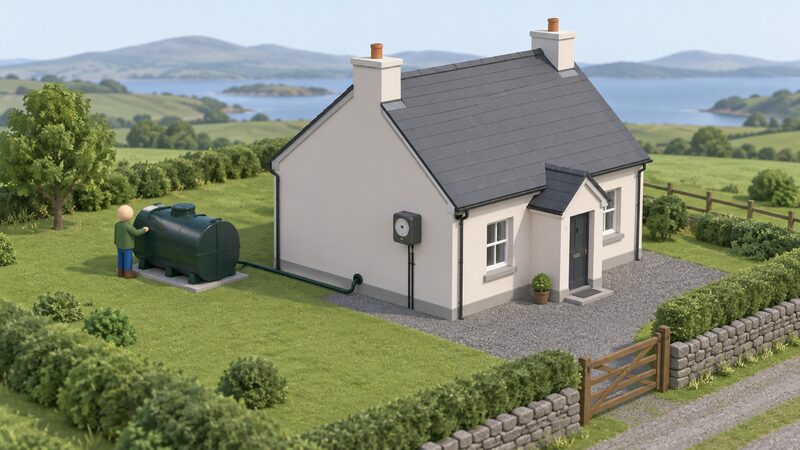
Northern Ireland's wider energy picture reinforces the case for a separate approach. Northern Ireland has seen slower uptake of renewables compared to the rest of the UK, largely due to the lack of grants for domestic solar and heat pump installations22. Around 500,000 homes in Northern Ireland rely on oil as a primary heating source, a heating pattern that has no equivalent in most of Great Britain23. Fuel poverty is measured differently as well: in Northern Ireland the 10% indicator applies, where a household is fuel poor if fuel costs required to maintain a satisfactory heating regime are greater than 10% of household income24. England, Wales and Northern Ireland have committed to reaching net zero by 205025.
What smart meters would mean for tariffs and bills
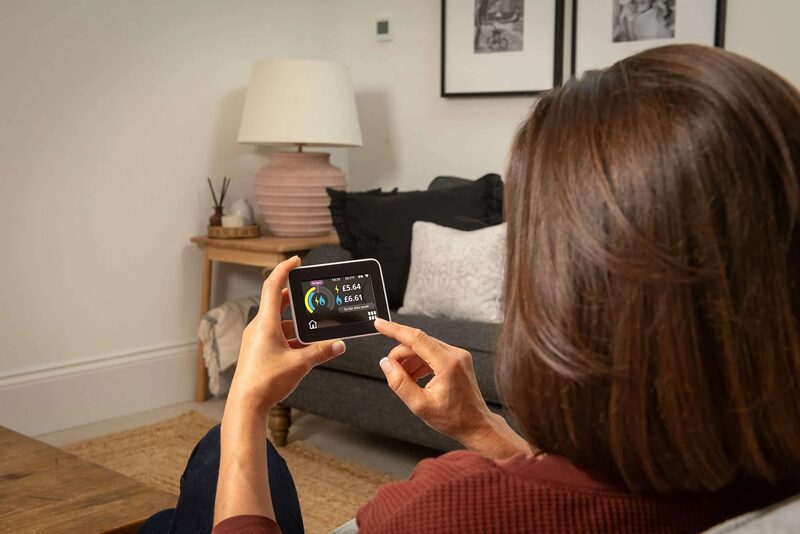
The tariff case for smart meters rests on what suppliers can offer once meters are in place. Smart meters will enable suppliers to offer a greater range of time-of-use tariffs, and similar services, in the future26. Having a smart meter lets a household take advantage of advanced time of use tariffs4. A smart meter is not compulsory, but it is needed to access the full benefits of flexible schemes and smart tariffs27.
For households on lower incomes or in rented housing, the tariff point is significant. Smart meters will be essential for tenants to access smart tariffs, which can often lead to lower energy bills, and in-home displays can support tenants to better manage their energy usage28. Prepayment is one of the most common ways of paying for electricity and gas in Northern Ireland, so the interaction between smart metering and prepayment matters more there than in most of Great Britain29.
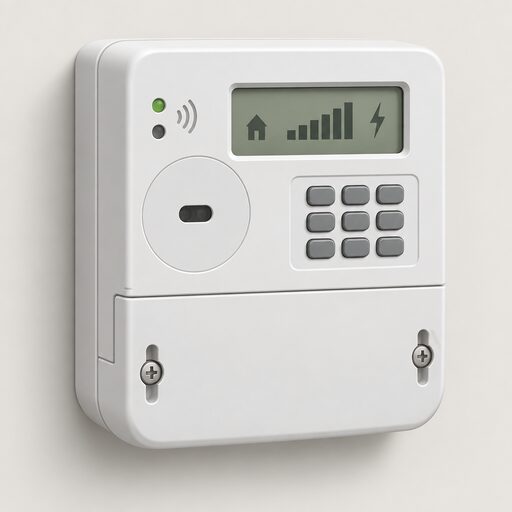
The Northern Ireland rollout is also framed around network and system benefits, not only household ones. The stated benefits are reducing electricity costs, more accurate bills, supporting a more reliable electricity network, and helping Northern Ireland meet its net zero emissions targets2. Smart meters record electricity usage in much the same way as a traditional meter but can automatically send consumption information to NIE Networks at regular intervals2.
On cost, installation is free. Getting a smart meter installed is free for UK energy customers5. In Wales, consumer guidance states that installation typically takes about 90 minutes and is free of charge30. No smart meter installation price applies to Northern Ireland households because no installation is available yet.
How the rollout fits with Northern Ireland's energy picture
The rollout is one part of a wider set of household energy measures in Northern Ireland, and it sits alongside them rather than replacing them. The Northern Ireland Sustainable Energy Programme funds a range of measures, which may include LED light bulbs, low-flow or eco shower heads, hot water tank jackets, reflective radiator panels, draught proofing measures and remote smart heating controls31. Properties with oil heating at the time of application will be able to have a replacement oil system installed if natural gas is not available31.
For homes off the gas grid, the metering question and the heating question are separate. Around 500,000 homes in Northern Ireland rely on oil as a primary heating source23. An electricity smart meter does not measure oil use, and the implementation plan does not cover gas meters, so a household heating with oil gains consumption visibility for electricity only.
The independence picture is mixed. A smart meter gives a household its own consumption data, an in-home display and access to time-of-use tariffs, which reduces dependence on estimated billing and on a single flat rate. What remains is dependence on the grid, on NIE Networks as the owner of the meter, and on the supplier as the installer and the party that decides which tariffs to offer. The meter does not generate anything, and it does not remove the need for a supplier relationship.
The timeline is the main constraint. The announced rollout starts in 20282. The analysed alternative is a six year rollout starting in 20273. Until installation reaches a property, a Northern Ireland household has no smart metering capability at all, and the practical position is to wait for contact from NIE Networks or the supplier rather than to seek an installation that cannot yet be arranged.
Sources31 cited
- Smart Electricity Meters Fact Sheet, Consumer Council, April 2026
- Smart meters, Consumer Council, 2026
- What is a smart meter?, Which?, 7 April 2026
- Guide to smart meters, Energy Saving Trust, 15 July 2026
- Energy saving tips, National Grid, 17 September 2026
- Bills and metering, Consumer Council, 2026
- Attitudes to the Energy Transition 2024/2025, Consumer Council, November 2024
- Meter replacements, NIE Networks, 19 September 2026
- Emergency power cuts, NIE Networks, 19 September 2026
- Do you have to have a smart meter by law?, Smart DCC, 2026
- How to get a smart meter, Smart DCC, 2026
- Smart meters: your rights and expectations, GOV.UK, 8 August 2025
- Getting a smart meter installed, Smart Energy GB, 16 March 2026
- Data protection and smart meter data, Open Energy, 20 September 2026
- Smart electricity meters in Northern Ireland, Energy Saving Trust, 3 July 2025
- Final decision: smart meter GSOPs, Ofgem, 30 January 2026
- Smart Meter Guaranteed Standards of Performance, Ofgem, 28 March 2025
- Smart metering implementation programme: draft technical specifications, GOV.UK, 4 August 2011
- Public Accounts Committee report, UK Parliament, 20 October 2023
- G98 Single Premises, Energy Networks Association, 17 September 2026
- Best and worst energy companies, Which?, 28 October 2025
- Surging renewables forward in Northern Ireland, MCS Certified, 8 November 2024
- Lyons announces agreement on home heating oil support, Department for Communities, 16 April 2026
- Fuel poverty modelled estimates for Wales, Welsh Government, 16 October 2025
- Research briefing CBP-9888, UK Parliament, 10 July 2026
- Supporting energy security, Smart Energy GB, 8 April 2026
- How smart meters work with heat pumps, Smart Energy GB, 24 April 2026
- Revised Decent Homes Standard, Energy Saving Trust, 13 April 2026
- How to understand your energy bill, Which?, 14 March 2022
- Smart meters, Welsh Government, 2026
- Northern Ireland Sustainable Energy Programme, Energy Saving Trust, 7 September 2026
 Smart Meters in Northern IrelandWhen are smart meters coming to Northern Ireland?
 NIE Networks Meter ReplacementExplains the programme replacing electricity meters across Northern Ireland, who carries out the work and how appointments are made.
 Power Cuts in Northern IrelandNorthern Ireland has a single electricity distribution network, run by NIE Networks, and its own reporting number, registers and compensation arrangements.
 Energy Bills in Northern IrelandNorthern Ireland has no price cap.
 Suppliers in Northern IrelandNorthern Ireland runs its own energy market, with its own regulator, its own suppliers and no price cap.
 Utility Regulator NIWho sets your energy prices in Northern Ireland and who can you complain to?