
In this guide
Smart metering in Great Britain is not a law that obliges households to accept a meter. It is a set of obligations on energy suppliers, written into the standard licence conditions for gas and electricity supply, underpinned by the Smart Meters Act 2018 and by a multi-party industry agreement called the Smart Energy Code. Installation itself is voluntary for the customer: by law suppliers are required to offer smart meters to all their customers by a set deadline, and customers can decline the offer1. The duty to offer, install, maintain and keep the meter working sits with the supplier.
The binding phase of that duty has just changed shape. Under the Rollout Framework covering 2022 to 2025, energy suppliers were required to meet binding annual targets for installing smart and advanced meters2. That four-year obligation ran from 1 January 2022 to 31 December 2025 and has now concluded, which Ofgem describes as marking a transition to a new phase in the smart meter programme2. In its place, the government consulted on a Smart Metering Policy Framework Post 2025, published on 8 August 2025 and closed to responses on 3 October 2025, proposing that suppliers complete the rollout by installing smart meters in all remaining domestic premises by the end of 20301.
The scale of what is already installed sets the context for the new rules. As of the end of March 2025 there were 39 million smart meters in domestic and non-domestic premises across Great Britain, over two-thirds of all meters4. Ofgem reports that the vast majority of smart meters in Great Britain are operating in smart mode, and publishes performance statistics for suppliers with over 150,000 customers5. The remaining regulatory effort is concentrated on two things: the households that still do not have a meter, and the meters that are installed but have stopped communicating.
Where the legal duty actually sits
The obligation runs from statute to licence to code. Smart metering implementation has been government policy since 2011, when the government first required energy suppliers to act4, and in 2012 a legal obligation was placed on suppliers requiring them to take all reasonable steps to install smart meters in all homes8. The operational rules live in the standard licence conditions that every licensed gas and electricity supplier must comply with; Ofgem's licence guide on metering, billing and payments points readers to a separate smart metering licence guide, described as a thematic guide to help stakeholders navigate and understand the rules relating to smart and advanced metering9.
Above the licence sits primary legislation. The Smart Meters Act 2018 (Commencement) Regulations 2024, made under powers conferred by section 14(3) of that Act, brought sections 11 to 13 into force on 30 April 2024, and those Regulations extend to England and Wales and Scotland11.
Alongside the licence sits the Smart Energy Code, a multi-party agreement which defines the rights and obligations of industry parties involved in the end-to-end management of smart metering in Great Britain12. It is one of the key elements of the regulatory framework supporting the rollout13, governing how suppliers, network operators and the Data Communications Company interact with meters and with each other. A household never signs the Smart Energy Code, but the terms on which its meter is enrolled, read and communicated with are set there rather than in any contract it holds.
The practical consequence is that a householder with a complaint about a smart meter is dealing with a supplier that has licence obligations, not with a device warranty. Energy suppliers are responsible for providing and installing smart meters to all their customers and must meet the government's overall timescale and targets14, and it is the supplier a household contacts about availability and faults.
Rollout targets: from 2020 to the proposed 2030 deadline
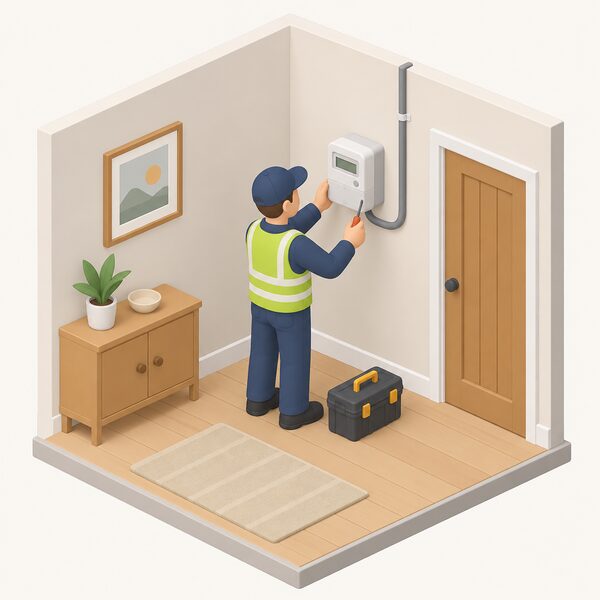
The programme has repeatedly missed its own dates, and the regulatory history explains why the post-2025 framework looks different. The original commitment was to roll out 53 million smart meters by the end of 2020, with the government stating that all households and businesses would be offered a smart meter by the end of 2020. Progress fell well short: 24.2 million smart meters were in homes and small businesses in Great Britain as of March 2021, representing 44% of all meters15. The Public Accounts Committee noted that only 57% of all meters in Great Britain were smart at March 2023, over a decade after the rollout began16. Smart meters are now installed in half of UK properties, on a 2026 parliamentary briefing17.
| Point in time | Coverage reported | Source type |
|---|---|---|
| March 2021 | 24.2 million meters, 44% of all meters15 | Official briefing |
| August 2022 | 27.76 million smart meters in operation in Great Britain18 | Independent, citing government report |
| March 2023 | 57% of all meters in Great Britain were smart16 | Parliamentary committee |
| End March 2025 | 39 million meters, over two-thirds of all meters4 | Official costs and benefits report |
Those figures are not directly comparable: some count meters installed by large suppliers only, some include non-domestic premises, and some count operating rather than installed meters. Quarterly official statistics on the rollout in Great Britain report both operating and installed meters for large energy suppliers, which is why headline totals differ between publications19.
The proposed replacement obligation is a completion duty rather than an annual quota: complete the smart meter rollout by installing smart meters in all remaining domestic premises by the end of 20301. Implementing the proposals would require amendments to conditions in the Standard Licence Conditions for Gas and Electricity, with proposed amendments also to the DCC licence3.
Annual deployment plans replace annual installation quotas
The post-2025 design shifts from counting installations to scrutinising plans. The government proposed a requirement for energy suppliers to submit annual deployment plans, and progress against those plans, to Ofgem3, outlining the activities they will undertake to meet their domestic installation, operational and replacement obligations1.
Three supplier obligations are grouped in the proposals:
- Installation: take all reasonable steps to install smart meters in all remaining domestic premises by the end of 20301.
- Operational: take all reasonable steps to ensure smart meters in traditional mode are back working in smart mode no later than 90 days from the date the supplier is first aware1.
- Replacement: take all reasonable steps to pre-emptively replace smart metering assets so they continue to communicate when wide area network services end1.
The third of those is the one most households will eventually notice, because it converts a network retirement into a supplier duty. The consultation also asked whether to extend Data Request powers to five years after 31 December 20303. That consultation has now closed, with the page last updated on 10 March 20261; where a proposal here is described as proposed, it remains at consultation stage rather than a settled licence change.
Citizens Advice, the statutory consumer advocate, responded to the post-2025 framework consultation and has been involved in the smart meter rollout since its inception, advocating to keep consumer needs at the heart of the programme20. Its published recommendations include that the forthcoming rollout framework should incentivise suppliers to install smart meters for all consumers who want one and tackle barriers for consumers less likely to have a meter, including those in the private rented sector22, and that the back-billing window for customers with smart meters be reduced to six months22.
Keeping a meter in smart mode: the 90 day standard
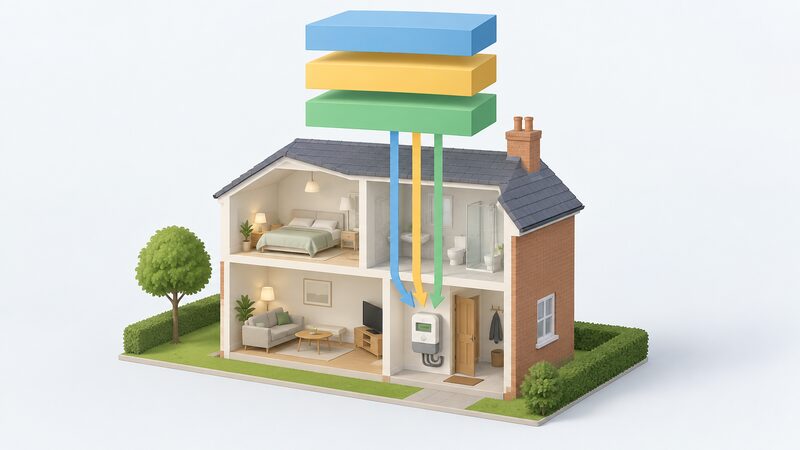
A meter that has dropped into traditional, or dumb, mode still measures energy but no longer sends readings automatically. This is the area where new enforceable consumer rights are being created. The clean flexibility framework restates the duty as ensuring meters are back working in smart mode as soon as possible and no later than 90 days6.
Ofgem consulted in August 2025 on a Guaranteed Standard for smart meters not operating in smart mode. The trigger is a meter not operating in smart mode for over 90 days due to an issue within the energy supplier's control to resolve23. The consultation set out the following detail:
| Element | Position consulted on |
|---|---|
| Start of the clock | The day after the last expected automatic meter reading is "day 1"23 |
| Existing faulty meters | For historic non-communicating meters, the day of implementation counts as day 123 |
| Extra time | 30 extra days where a comms hub or WAN incident is raised with the DCC23 |
| Repeat compensation | Every six months the meter continues not to operate in smart mode23 |
| Repeat clock start | From the date the supplier failed the original standard, not from day 123 |
| Meters covered | Gas and electricity SMETS1 and SMETS2, including unenrolled SMETS1 meters23 |
| Excluded | In-home displays are excluded from the proposal23 |
| Implementation | Minded to implement from April 2026, with compensation from July 2026 onwards23 |
Exemptions were proposed where the consumer requested no communication, where no appropriate technical solution is available, and in respect of the consumer's own role in booking appointments or interacting with the meter23. The consultation also noted that the 90 days previously consulted on was calendar days, with proposed drafting in the statutory instrument expressed in working days23, so the two documents count time differently. Ofgem's final decision records a drafting point raised by respondents: the standard references the Electricity and Gas Acts, which could inadvertently include advanced metering, and respondents asked for the definition to be updated to clarify that the standards apply only to SMETS meters24. Ofgem intends to review the outcomes of the standards in the first quarter of 2027.
Citizens Advice said it strongly supports Ofgem's decision to introduce new Guaranteed Standards for smart metering and welcomed the follow-up consultation25. The scale of the underlying problem is visible in network data: more than 37 million smart meters are installed in over 22 million homes and small businesses across Britain26, while the DCC has reported nearly 18 million homes, more than 29 million meters and 75 million devices connected to Britain's smart meter network27. The gap between installed meters and connected meters is what the 90 day standard is aimed at. Households experiencing this can read more on smart meter faults and troubleshooting and on why a smart meter goes into dumb mode.
Cost, consent and the right to refuse
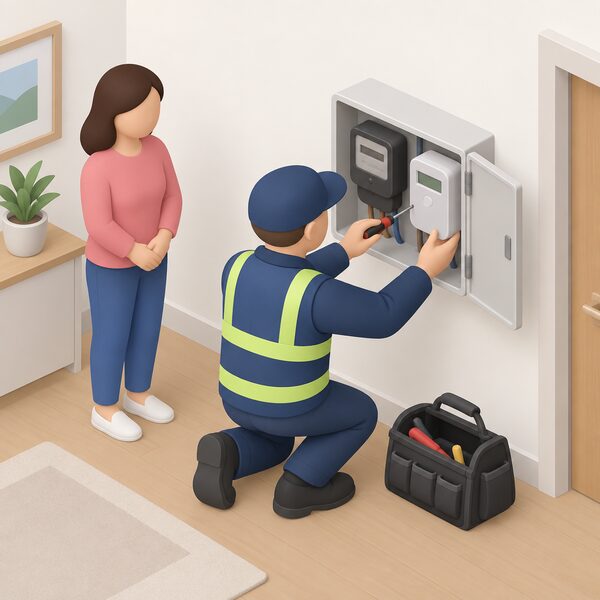
Two rules define the household's position. The first is cost: energy suppliers are obliged to offer everyone in Britain a smart meter at no extra cost7, and installation is described as free for energy customers28. There is no separate bill at the door for a standard exchange; the programme is funded nationally through energy bills, and the government scheme was costed at £12 billion in 2013. The detail is covered on how much a smart meter costs.
The second is consent. It is not a legal requirement in the UK for individuals to have a smart meter installed in their homes; installation is voluntary8. Suppliers have targets to install smart meters in homes and businesses29, and must aim to install one in every home, but the offer can be refused. Conversely, every household in the UK is entitled to request a smart meter, and most homes in Great Britain can now upgrade, with availability depending on location, existing meter type and supplier rollout schedules. Where a property cannot be fitted, the reasons are set out in why you might not be able to get a smart meter, and the refusal position in are smart meters compulsory.
Information duties run alongside. Government best practice guidance covers the delivery of energy efficiency advice to households during smart meter installation visits, framed around putting consumers in control of their energy use by helping them to save money. Smart Energy GB, the not-for-profit, government-backed campaign, is responsible for helping everyone in Britain understand smart meters, but it is not an energy supplier, does not make or fit meters, is not the technical authority and has no regulatory authority30. Complaints and rights advice sit with Citizens Advice, which the government has given a formal role to monitor and advise on customer experiences and energy supplier service, and which publishes quarterly five star ratings on energy suppliers' customer service including complaints. In England and Wales its consumer helpline is 0808 223 1133, with a Welsh language line on 0808 223 1144, open Monday to Friday, 9am to 5pm31.
Data, security and product rules
Smart meter data is governed by Ofgem rules and by data protection legislation, and the meters themselves by product safety law. Smart meters are covered by strict UK product safety laws, which ensures that all smart meters have the same quality and safety standards regardless of supplier, and meters installed as part of the national rollout follow UK and EU product safety legislation covering the correct use of radio equipment and emissions. Smart metering systems must comply with relevant regulations and international standards, including those on exposure to electromagnetic fields set by the International Commission on Non-Ionizing Radiation Protection32.
Communication is carried over the Data Communications Company network, a dedicated secure system rather than a home broadband connection, with the DCC operating under its own licence27. Meters were designed in consultation with UK security experts and can only measure the amount of energy used. One historical point is worth noting for older installations: it has been reported that households that installed smart meters before the 2014 rollout may have fewer protections and may not meet future security standards32. That distinction underlies the difference between SMETS1 and SMETS2 meters, and what smart meter data is collected and who can see it goes further into consent.
Four nations: where the rules stop
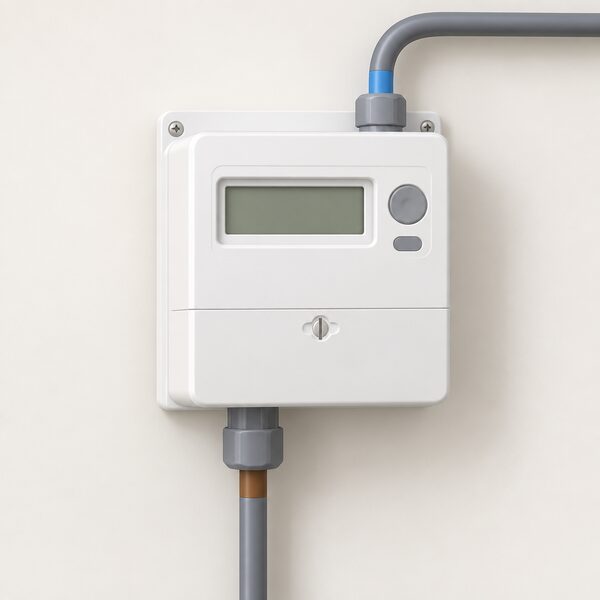
The Great Britain framework is not a UK-wide framework. The Smart Meters Act 2018 (Commencement) Regulations 2024 extend to England and Wales and Scotland11, and the post-2025 policy framework applies to England, Scotland and Wales1. Smart metering implementation has been government policy since 2011 in those three nations4, and Age UK describes smart meters as being offered to every household in England, Wales and Scotland33.
| Nation | Position |
|---|---|
| England | Covered by the GB supply licence conditions and the post-2025 framework1 |
| Scotland | Same GB framework; commencement regulations extend to Scotland11 |
| Wales | Same GB framework; a UK Government impact assessment cited in Welsh consultation work modelled average reductions of 2.8 per cent for electricity and 2 per cent for gas34 |
| Northern Ireland | Outside the GB framework; separate arrangements, with initial smart electricity meter installations expected to begin in early 2028 |
Devolution does not change the licence conditions, because energy supply licensing is reserved, but consumer advocacy is split: Citizens Advice is the statutory consumer advocate for consumers in England and Wales31, while Scotland has its own arrangements. Lane pages cover smart meters in Scotland, in Wales and in Northern Ireland.
What the regulations do, and do not, do for energy independence
A smart meter does not generate, store or supply energy. What the regulatory framework delivers to a household is visibility and eligibility: accurate consumption data at intervals of an hour or less, an entitlement to be offered a meter at no extra cost, and, increasingly, an enforceable expectation that the meter keeps working. The rollout is described officially as creating a new platform for innovation, increasing the detail and accuracy of energy consumption data and tariff information. That data is the gateway to time-of-use tariffs, the demand flexibility service and export payments, all of which require the meter to be in smart mode.
The dependencies are real and should be stated as plainly as the benefits. A household with a smart meter depends on its supplier for installation, for fault resolution and for the data feed; on the DCC network for communication; on a mobile or mesh signal at the property; and on the continuing operation of licence conditions it has no control over. When wide area network services change, the meter only keeps working because a supplier is obliged to replace the asset1. In-home displays, which are what most people actually use, sit outside the proposed smart mode Guaranteed Standard23. Modelled savings are modest: the government impact assessment cited in Welsh consultation work put average reductions at 2.8 per cent for electricity and 2 per cent for gas34.
Set against that, the system-level case is about resilience rather than household autonomy. Smart meters help Britain's energy system keep track of where and when energy is being used, and the resulting flexibility is said to reduce fossil fuel use and support the integration of more homegrown renewable energy sources such as wind and solar into the energy system35. Data on a household's own use puts the occupant in a position to act36, but acting on it requires either a display, a consumer access device or a home energy management system. The regulations secure the meter; they do not secure independence from the supplier that reads it. The wider picture is set out in the smart meters and home energy management guide and in smart meters, monitoring and energy independence.
Sources36 cited
- Smart metering policy framework post 2025, GOV.UK, 8 August 2025 (updated 10 March 2026)
- Supplier smart metering installation targets, Ofgem, 2026
- Smart metering policy framework post 2025 consultation document, GOV.UK, August 2025
- Smart metering 2025 costs and benefits report, UK Parliament deposited papers, 2025
- Smart meter performance, Ofgem, 2026
- Clean flexibility roadmap, July 2026 update, GOV.UK, 2026
- Smart meter costs: are smart meters free, Smart Energy GB, 16 March 2026
- Smart meter statistics, Uswitch, 30 April 2025
- Licence guide: metering, billing and payments, Ofgem, 22 February 2019
- Licence guide: smart metering, Ofgem, 22 February 2019
- The Smart Meters Act 2018 (Commencement) Regulations 2024, legislation.gov.uk, 28 March 2024
- Written evidence on the Smart Energy Code, UK Parliament, June 2016
- Stage 1 of the Smart Energy Code, GOV.UK, 18 April 2013
- Can I get a smart meter, Smart Energy GB, 16 March 2026
- Smart meters, POSTnote 655, UK Parliament POST, March 2021
- Delayed smart meter programme fails to hit targets, Public Accounts Committee, 2023
- POSTnote 715, UK Parliament POST, 7 June 2026
- The truth behind smart meter myths, Which?, 2026
- Smart meters in Great Britain, quarterly update March 2024, GOV.UK, 30 May 2024
- Citizens Advice response to DESNZ smart metering framework post 2025, Citizens Advice, 3 October 2025
- The state of smart: consumer experiences of smart meters, Citizens Advice, 3 February 2026
- The state of smart: consumer experiences of smart meters (Wales), Citizens Advice, 3 February 2026
- Smart meter Guaranteed Standard statutory consultation, Ofgem, 8 August 2025
- Final decision on smart meter Guaranteed Standards, Ofgem, 30 January 2026
- Citizens Advice response to Ofgem statutory consultation on smart Guaranteed Standards, Citizens Advice, 13 September 2025
- Working to support customers with non-communicating smart meters, Smart DCC, 2026
- How smart can a smart meter be in the connected home, Smart DCC, 2024
- Does a smart meter save money, Smart DCC, 2024
- Do I have to get a smart meter, Smart Energy GB, 1 April 2026
- Smart Energy GB FAQs, Smart Energy GB, 8 August 2025
- Consumer protection rights, GOV.UK, 17 September 2026
- The verdict on smart meter privacy, security and health concerns, Carbon Brief, 8 July 2014
- Energy meters guidance, Age UK, 10 September 2026
- Summary of consultation responses on smart metering, Welsh Government, 16 October 2015
- Benefits for you, Smart Energy GB, 18 August 2026
- Protecting data on the smart meter network, Smart DCC, 2026
 Smart Meter InstallationCan your supplier make you have a smart meter, and how long should you wait for an appointment?
 Why You Cannot Get a Smart MeterWhy can some homes not have a smart meter fitted, and what counts as a good enough reason?
 Prepayment Meters and DebtCan your energy supplier force you onto a prepayment meter because you owe them money?
 Smart Meter Faults and FixesYour smart meter has stopped working.
 Meters and Energy IndependenceDo smart meters really save you money, and can you still get one fitted for free?
 Monitoring in Flats and RentalsCan you get a smart meter in a rented flat, and who decides?