
In this guide
The Demand Flexibility Service (DFS) is a national scheme that pays homes and businesses for changing when they use electricity. It was designed to ease winter evening pressure on the grid by cutting demand at peak times and reducing reliance on more expensive generation1. It launched in winter 2022/23 and is administered by the National Energy System Operator (NESO), with households taking part through a registered supplier, aggregator or app1.
The headline numbers are large. In its first winter, 1.6 million households and businesses took part and collectively shifted 3.3GWh of electricity, saving over 3,300MWh, enough to power around 10 million homes across Great Britain3. Over 2.6 million homes and businesses have taken part in previous years, and the service has saved an estimated 7,000MWh of electricity at peak times, enough to power the lighting in 54,000 homes for a year5.
For an individual household, the sums are much smaller. Financial rewards have typically been between £1 and £5 per event, and recent payouts have been closer to £0.5 per kWh6. The service is voluntary, free to join, and carries no penalty for sitting an event out6.
What the service actually does
The DFS rewards people for changing the times when they use the most electricity10. It was designed to make it easier for homes and businesses to take part in the electricity market and be rewarded for shifting when they use electricity, and originally to help manage potential winter pressures by reducing demand during evening peak periods1. It was built to be accessible to any household or business with a smart meter9.
The mechanism is a turn-down event. The system operator tells providers that it wants demand reduced in a given window, providers notify their customers, and customers who cut their use relative to their normal pattern are paid for the difference. The pressure points are typically weekday evenings, between 4pm and 7pm9. Each event usually lasts for around an hour in the evenings when demand for electricity is at its peak5.
The service has since widened. The fourth iteration, launched on 14 April 2026, rewards customers for both reducing electricity use (demand turn-down) and increasing electricity use (demand turn-up)9. Up until then it had only been used in the opposite way, when there was pressure on the grid11. The updated scheme now offers free or cheaper electricity during sunny, low-demand periods12. The service, in place since the winter of 2022/23, is being extended to homes and businesses12.
"The service will now reward customers for both reducing electricity use (demand turn-down) and increasing electricity use (demand turn-up)"
The figures: what has been delivered
The published results fall into two groups: what the service has delivered in aggregate, and what an individual household can expect.
On the aggregate side, the numbers are consistent across official and independent sources. The first winter saw 1.6 million households and businesses sign up and collectively reduce or shift peak energy demand by 3.3GWh13. The government's statutory security of supply report gives the same participation figure and the same saving of over 3.3GWh4. Energy UK reports that 1.6 million households and businesses supported the service by shifting demand, saving over 3,300MWh of electricity, enough to power around 10 million homes across Great Britain3.
The service then moved to a year-round footing. From December 2024 to March 2025, DFS delivered 3.9GWh of flexibility across 44 events4. Between December 2024 and April 2025, 11,900MWh of shiftable electricity demand was procured14. Energy Saving Trust puts the cumulative saving at an estimated 7,000MWh of electricity at peak times, enough to power the lighting in 54,000 homes for a year5.
| Period | Participation | Flexibility delivered |
|---|---|---|
| Winter 2022/23 | 1.6 million households and businesses13 | 3.3GWh13 |
| December 2024 to March 2025 | Not stated | 3.9GWh across 44 events4 |
| December 2024 to April 2025 | Not stated | 11,900MWh procured14 |
| Cumulative estimate | Over 2.6 million have taken part in previous years5 | 7,000MWh at peak times5 |
At household level, the figures are modest. Financial rewards for DFS participants are typically small, between £1 and £5 per event6. Recent payouts have been closer to £0.5 per kWh7. The service has cost around £11 million a year to implement at its peak7.
What drives participation and reward size
The reward a household receives depends on how much electricity it can shift, and that depends on what it uses at peak times. The service rewards people for changing the times when they use the most electricity, so a household with little peak-time electricity use has little to shift10.
The Centre for Sustainable Energy identifies which households tend to earn more: homes with electric heating (but not night storage heaters that charge up overnight), homes with at least one adult and two or more children with gas heating, and those with an electric vehicle charged at peak times6. People living alone in homes with gas heating tended to earn low rewards6. For Economy 7 or special EV tariff customers, participating will not provide much saving, because there is no high peak-time usage to reduce6.
Motivation is not purely financial. Of those surveyed by the system operator, 76% selected financial benefits as their main motivation13. But research on smart prepayment customers found a variety of motivations beyond bill savings, especially around learning about energy saving, enjoyment, and treating events as an opportunity to disconnect and do something different15. Where participants were able to be flexible, it was mainly through manual changes in the timings of activities, often against a background of already low electricity use15.
The reward mechanism itself varies by provider. The electricity companies are paid a set amount by the system operator for every kWh of electricity their customers shift. Some pass all of this on to participants, others only pass on some of it, and others enter their customers into a prize draw instead8. Rewards vary depending on your supplier, but the more electricity you save during each event the greater your rewards will be5. Rewards can take the form of pounds or points that you can use towards paying for your energy bills5.
How events are called and measured
An event is the period when a household is asked to reduce its electricity use. It is normally for one hour between 4pm and 8pm8. Notification tells you the date and time of each event, and this might be on the same day or the day before5. In the 2023/24 season, most events were held in the evening peak, for one hour between 4pm and 8pm, with customers notified by their provider the day before; that year customers could be notified the day before or in the morning of the event3.
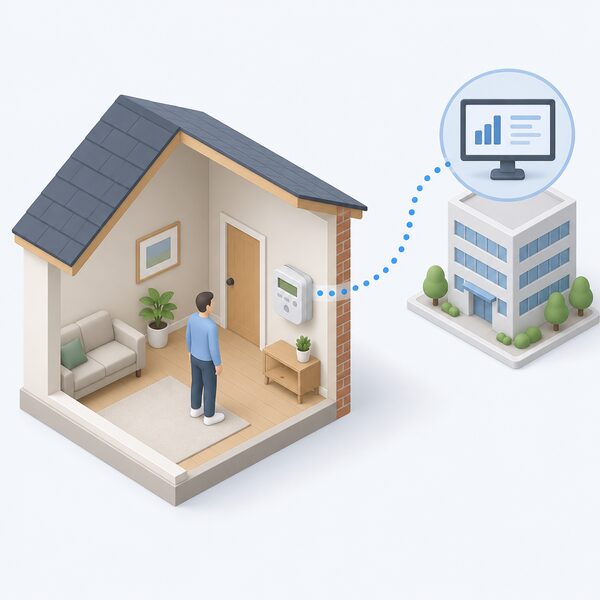
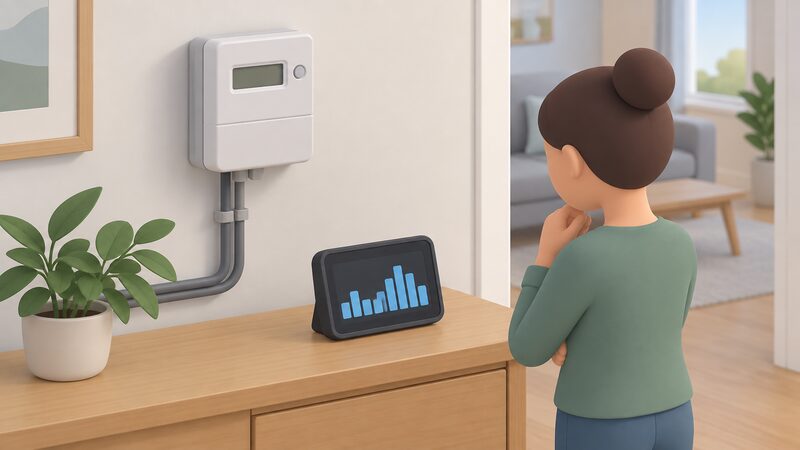
Measurement rests on a baseline. The baseline is calculated on each half hour of the day for either the 10 most recent weekdays (for weekday events) or the four most recent weekend days (for weekend events)8. To create that baseline, a provider needs a smart meter capable of sending half-hourly readings, a baseline measure of the last 60 days of electricity usage, and marketing consent2. Customers must authorise their provider to access their smart meter so it can be read every half hour for the duration of the service3.
The reward is then based on the difference between normal use and event use. If a household normally uses 10kWh during peak time and uses 3kWh during the DFS event, it will have reduced its consumption by 7kWh (70%)8. That reduction, priced at the provider's rate, becomes the reward.
Who can take part, and the smart meter requirement
The service is open to anyone who wants to reduce their energy consumption, including households and businesses2. It was designed to be accessible to any household or business with a smart meter9. It is also being offered to small businesses, working in the same way as the version offered to homes and requiring a smart meter2.
The conditions are specific. Participants must live or have a business in England, Scotland or Wales, get energy from a registered supplier or third-party app, and have a working smart meter so the supplier can accurately and quickly measure energy use5. You can also take part using registered third-party apps that connect to your smart meter5. Consumers without a smart meter can request one from their energy supplier at no extra cost2.
Participation is completely voluntary, so you only take part if it works for you2. Participation is always voluntary and customers can choose whether to take part in each event9. It is free to take part and you do not lose anything if you do not manage to shift any electricity use6. DFS is voluntary and there are no penalties for not participating3.
The rules that protect participants
The DFS sits inside a wider consumer protection framework. Ofgem's load control guidance sets out the licence conditions that apply: treating customers fairly, recommending suitable services and prohibiting mis-selling, allowing customers to exit a service, and a requirement that any fees charged by flexibility service providers which are associated with a customer's service exit must be proportionate16.
Beyond the licence conditions, there is a voluntary compliance scheme. Flex Assure states that limited formal regulation currently covers how providers sell, deliver and support flexibility services for homes, and that its code fills that gap, setting clear standards now so consumers are protected while the market develops17. The code sets enforceable rules on sales, onboarding, rewards, data, and complaints17. Its supporters include the regional Distribution System Operators who manage local electricity networks, and NESO's Power Responsive programme17. NESO's registered provider tables show whether providers are members of the Flex Assure compliance scheme1.
Consumer bodies have set out the principles they expect. Flexibility offers must be fair and inclusive for consumers, and there must be clear, transparent information and fair terms and conditions18.
The exclusivity rule is the one participants most often meet. You must not sign up to an equivalent demand flexibility scheme with another provider while signed up to a given scheme, and the system operator only lets users participate in one scheme at a time19. The same rule applies across the equivalent schemes19.
How it differs across the UK nations
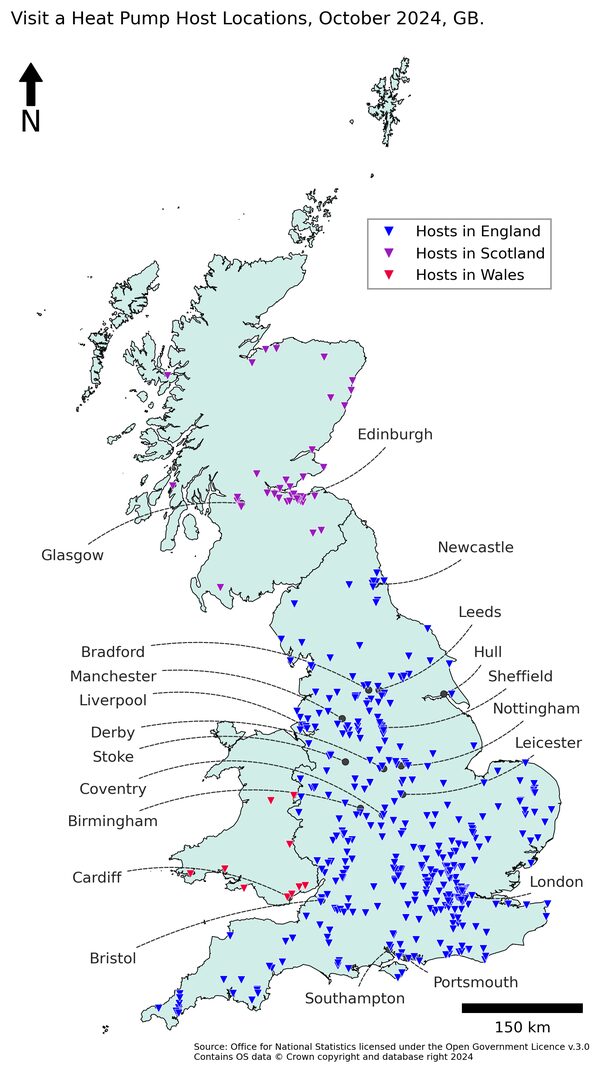
The service does not run in Northern Ireland5. Participants must live or have a business in England, Scotland or Wales5. Northern Ireland has separate energy market and grid arrangements, so the scheme's eligibility wording excludes it.
Within Great Britain, the service has been delivered across 12 regions, to help ensure flexibility is used where it is most needed9. In future versions, payments may vary depending on where flexibility provides the greatest benefit9. For the fourth iteration, however, the DFS pays the same price across all regions9.
Regional variation is a familiar feature of the wider energy market. The default tariff cap level varies across Great Britain, because the costs of transporting energy from the generation source to the customer, the network charges, vary by region20. The DFS has so far avoided that pattern in its pricing, but the direction of travel points towards locational payment.
Flexible schemes and tariffs more broadly are available to selected customers from selected suppliers, and eligibility and availability vary, with consumer action required21. That caveat applies across all four nations: even where the DFS operates, not every supplier offers it, and the terms differ.
What it means for household energy independence
The DFS is a grid service, not a self-sufficiency measure. It reduces the need to turn on fossil fuel power plants by lowering energy use at peak times5. Domestic flexibility services like DFS cut emissions by displacing fossil-fuel generation3. Energy flexibility means adjusting the balance of supply and demand to keep the system running smoothly, such as moving energy use away from peak times or using more energy when renewables generate more21. By using energy flexibly, a household helps to balance supply and demand in our energy system, meaning less pressure on the system at peak times and preventing energy being wasted10.
That is a system benefit, and it is worth being precise about what it does not do. Taking part does not reduce a household's dependence on the grid, a supplier or a manufacturer's platform. It deepens the relationship with all three: the household needs a registered provider, a working smart meter sending half-hourly data, and often an app or aggregator to receive event notifications. The reward arrives through the supplier, on the supplier's terms.
The distinction matters when set against a definition of independence. Grid electricity independence is the percentage of electricity consumed in the property over a year which is met by either behind-the-meter solar or electrical storage, and grid electricity independence is the fraction of electricity consumed in the property which is met by self-consumed electricity22. The DFS does not move either figure. It changes when electricity is drawn, not how much comes from the grid.
Where the service does help is in the wider flexibility picture. When supply is tight, the options are to reduce or shift energy demand, increase local generation, or discharge a battery23. A household with a battery or solar can act on all three; a household with only a smart meter can act on the first. The DFS pays for the first, and the fourth iteration extends that to paying for using more electricity when renewables are generating9.
The scale is also worth keeping in perspective. The service could be three times larger, an increase of 1GW, according to Energy UK's 2023 assessment3. At its peak, when most successful, it cost around £11 million a year to implement7. Against the cost of building peaking plant, that is small; against a household's bill, the reward is smaller still.
The history, and what replaced or extended it
The DFS launched in winter 2022/231. It started in late 2022 and encouraged people to lower their energy use during peak times over the winter months5. The first live session, on 23 January 2023, saw 400,000 customers participate and receive £3.37 per kWh of electricity demand they reduced13. The service ran between November 2022 and March 202324.
The first winter's results were substantial. Between November and March, 1.6 million households and businesses participated, according to the system operator13. The scheme was then extended. For winter 2023/24, changes included the lead time given by the system operator, changes to metering requirements, and the ability for providers to make the service opt-out rather than opt-in13. The core service that year ran from 30 October 2023 to 31 March 20243. The system operator paid providers overall £3,000/MWh of turn-down for the first six one-hour tests, likely to happen before 31 December; the price paid for the final six tests depended on the available volume in the market, and if combined volume exceeded 1.25GW the auctions for the final six tests would be fully competitive3.
The structural change came in November 2024. The DFS transitioned from being a winter-only emergency measure to an all-year-round service9. It became a year-round service and moved to operate as an in-merit margin tool from 27 November 20241. Since November 2024, changes allow households and businesses to participate across the entire year, instead of being limited to just the winter months2. In 2024 the DFS was changed to an all-year-round scheme14.
The fourth iteration launched on 14 April 2026 with several important changes: a reduced eligibility threshold of 0.1MW, the introduction of bi-directional flexibility, zonal procurement, and primacy and a self-nominated baseline option1. A lower minimum participation threshold makes it easier for more providers and customers to participate9. From 7 October 2026, DFS will launch the capability to procure constraint management actions, and participants will be able to take part in both margin and system tagged actions1.
| Date | Change |
|---|---|
| Winter 2022/23 | Service launched; 1.6 million participants; 3.3GWh shifted1 |
| 30 October 2023 to 31 March 2024 | Core service period for the second winter3 |
| 27 November 2024 | Became a year-round service and an in-merit margin tool1 |
| 14 April 2026 | Fourth iteration: 0.1MW threshold, bi-directional flexibility, zonal procurement1 |
| 7 October 2026 | Constraint management actions and margin and system tagged actions1 |
The evidence on how it lands with households
The service has been evaluated at scale. NESO has drawn on over 23,500 consumer perspectives1. The system operator surveyed 23,717 people, got 134 to keep diaries explaining their experience, and interviewed 329 people13.
The findings are mixed. Participants showed variable levels of understanding of the reasons why DFS events happen15. The irregular and infrequent nature of DFS events meant that changes were generally acceptable, although the idea of making them more constant was less attractive15. There was little presence of low-carbon technologies like solar panels, domestic batteries, heat pumps and electric vehicles among the participant sample15. The small sample of participants cannot fully represent prepayment customers15.
On fairness, the picture is more positive than earlier analysis suggested. No concerns around the fairness of rewards were heard among participants, unlike in forum analysis and previous DFS evaluation15. The research recommends that policymakers and system planners take a more strategic interest in knowledge, awareness and satisfaction alongside demand response magnitude15. Mechanisms that could increase reliability include recognising consistency of response as well as magnitude, supporting automation of response, gamification approaches, seeking commitments or pledges to respond, and providing tips on effective energy saving15.
The participant base has not been representative. In the system operator's survey, 95.7% of respondents fell within the white ethnic category, compared to 82.7% of the British population, and only 2.4% of respondents were Asian British, compared to 8.7% of the British population13.
For a household weighing up participation, the practical picture is this: the sums are small, the effort is manual for most participants, and the benefit is to the system as much as to the bill. The service is free to join, voluntary, and carries no penalty for missing an event6.
Sources24 cited
- Demand Flexibility Service, NESO, 2026-09-17
- Understanding the Demand Flexibility Service scheme, Smart Energy GB, 2026-03-16
- Energy UK explainer: Demand Flexibility Service, Energy UK, 2023-10-30
- Statutory security of supply report 2025, Department for Energy Security and Net Zero, 2025-12-17
- Demand Flexibility Service, Energy Saving Trust, 2026-05-21
- Taking part in the Demand Flexibility Service, Centre for Sustainable Energy, 2024-02
- BEAMA response to eVED consultation, BEAMA, 2026
- How much could you earn from the Demand Flexibility Service?, Centre for Sustainable Energy, 2026-06-22
- Energy UK explains how consumer-led flexibility works in power markets, Energy UK, 2026-04-14
- Using energy flexibly, Smart Energy GB, 2026-04-14
- Free electricity: here's how to opt in, Which?, 2026-04-23
- Waste not, want not: homes with batteries to cash in from free power offer, Solar Energy UK, 2026-04-15
- Q&A: How Great Britain's Demand Flexibility Service is cutting costs and CO2 emissions, Carbon Brief, 2023-11-28
- Smart Metering 2025 Costs and Benefits Report, Department for Energy Security and Net Zero, 2024
- Smart prepayment customers' experience of the Demand Flexibility Service, Nesta, 2024-10-07
- Load control consumer protection guidance, Ofgem, 2026-08-07
- Flex Assure for homes, Flex Assure, 2026-09-19
- Citizens Advice response to Ofgem's call for evidence on consumer impacts of market-wide settlement reform, Citizens Advice, 2019-04-01
- Power Hours terms, Uswitch, 2026-09-14
- Default tariff cap: policy consultation overview, Ofgem, 2018-05-25
- Energy flexibility, Smart Energy GB, 2026-08-17
- MCS 032 2025, MCS, 2025-01-01
- How does energy get to our homes?, Low Carbon Hub, 2023-06-02
- Supporting energy security, Smart Energy GB, 2026-04-08
 Flexibility Payments for HomesCan you really get paid for using less electricity at peak times, and how much would a household actually earn?
 Demand Flexibility and the GridGetting paid to shift your electricity use away from peak times is now a real option for households with a smart meter.
 Time-of-Use Tariffs ExplainedCan you pay less for electricity by using it at different times of day?
 Smart Charging RewardsCovers the schemes that pay or reward households for shifting car charging, including the Demand Flexibility Service, app-based reward programmes and supplier incentives.
 Balancing Services and FrequencyKeeping the lights on means matching what the country uses with what is being generated, second by second.
 Vulnerable Households EnergyIf someone in your home relies on powered medical equipment, or needs extra warmth because of a health condition, what help is available?