
In this answer
Short answer
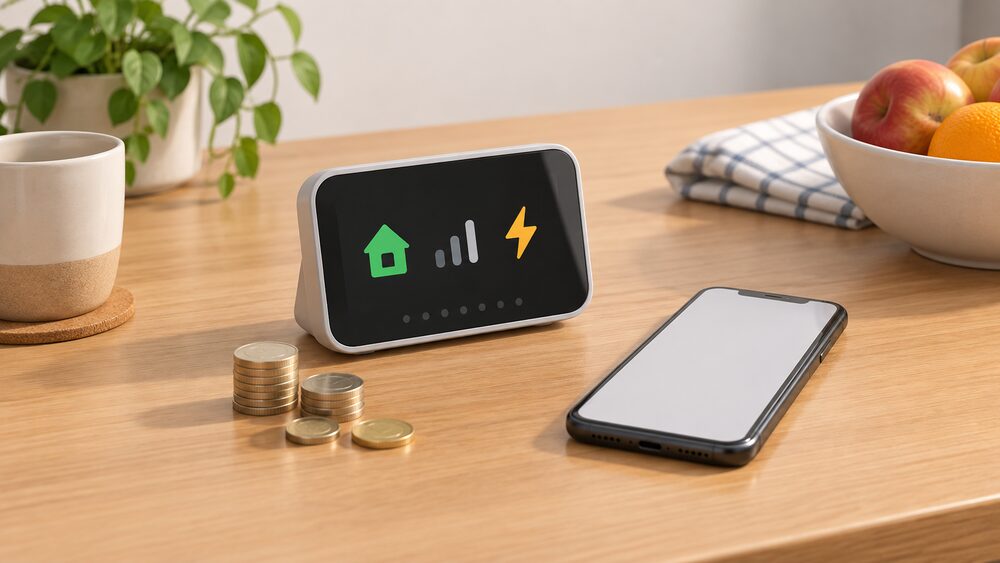
The Demand Flexibility Service (DFS) pays households for using less electricity at peak times, and the honest answer to whether it is worth it is: modestly, and mostly as a top-up rather than a saving in its own right. It started in late 2022 and, as of 2026, operates as a year-round service rather than a winter-only scheme1. In its first winter it drew 1.6 million households and businesses, which shifted over 3,300MWh of electricity, described by Energy UK as enough to power around 10 million homes across Great Britain3.
The money is real but small. Rewards vary by supplier, and the more electricity saved during each event, the greater the reward2. One worked example from the Centre for Sustainable Energy shows a household that normally uses 10kWh in peak time and cuts to 3kWh reducing consumption by 7kWh, or 70%4. What that converts to in pounds depends entirely on the rate the supplier chooses to pass on.
The case for taking part rests less on the cash and more on what the service does for a household's position: it turns a smart meter into an earning asset and gives some control over when electricity is bought. The dependence that remains is significant. Participation runs through a supplier, an aggregator or an app, the reward rate is set by that intermediary, and the events themselves are called by the system operator, not the household.
What the Demand Flexibility Service is and how it works
The DFS exists to make it easier for homes and businesses to take part in the electricity market and be rewarded for shifting when they use electricity1. Its original design was narrower: it was built to help manage potential winter pressures by reducing demand during evening peak periods and reducing reliance on more expensive generation1. That is why the scheme is associated with evening events, though it now runs across the year.
The mechanism is a baseline comparison. A household's normal consumption over a recent period is measured, and during an event the reduction against that baseline is what earns money. The Centre for Sustainable Energy's example makes the arithmetic concrete: normal peak use of 10kWh falling to 3kWh during an event is a 7kWh reduction, or 70%4. The reward follows the size of that reduction, not the size of the household's bill.
The environmental case is that domestic flexibility services like DFS cut emissions by displacing fossil-fuel generation3. The Energy Saving Trust puts it plainly: the service reduces the need to turn on fossil fuel power plants by lowering energy use at peak times2. There is a second, newer purpose. NESO has described a service used to reward consumers for increasing electricity use during periods of surplus summer electricity9, which is the mirror image of the winter peak events and explains the move to year-round operation.
For a household, the practical meaning is that the DFS is not a tariff. It is a layer on top of whatever tariff is already in place, paying for behaviour rather than supply. That distinction matters for judging it: the service cannot lower the unit price of electricity, only reduce how much is bought at the moments the system is under strain.
Payments: what a household can actually earn
There is no national rate. Electricity companies are paid a set amount by the system operator for every kWh their customers shift, and some pass all of it on, some pass on only part, and others enter customers into a prize draw instead4. That single design choice explains most of the variation households report between providers, and it means any figure quoted as "the DFS rate" is really one supplier's choice.
The scale of the scheme gives a sense of the aggregate. The government's statutory security of supply report records that DFS delivered 3.9GWh of flexibility across 44 events between December 2024 and March 20255. Spread across participants, that is a system-level number rather than a household one, but it shows how small each individual contribution is relative to the whole.
For a household-level figure, the clearest published example is a reward of +£8.40 in a month7. That is an illustration of what a flexibility reward can look like, not a promise, and it sits alongside the scheme's own history: at the time of the cited reporting, some companies had earned up to £8,000 from the service1. The gap between a company aggregating thousands of homes and a single household shifting a few appliances is the honest shape of the economics.
| Measure | Figure | Period | Source |
|---|---|---|---|
| Households and businesses taking part | 1.6 million | Winter 2022/23 | 5 |
| Flexibility delivered | 3.9GWh across 44 events | Dec 2024 to Mar 2025 | 5 |
| Electricity shifted | over 3,300MWh | Last winter | 3 |
| Example monthly reward | +£8.40 | One month | 7 |
| Company earnings, reported | up to £8,000 | At time of reporting | 1 |
The variation is not a flaw in the reporting; it is the design. Because the payment chain runs from system operator to supplier to household, the household's share is a commercial decision made upstream. A household comparing the effort of an event against the reward is really comparing it against its supplier's chosen pass-through rate.
Who can take part: supplier, meter and smart charging requirements
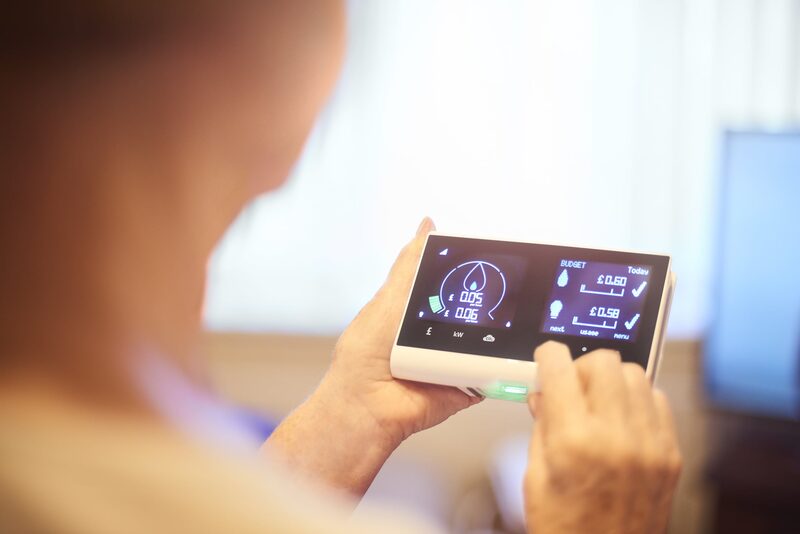
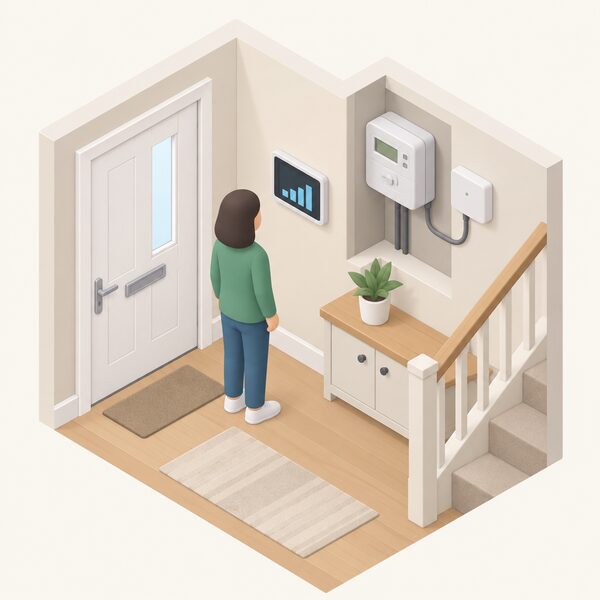
The entry condition is a smart meter. To accurately measure energy usage during an event and create a baseline, a smart meter capable of sending half-hourly readings is required, along with a baseline measure of the last 60 days of electricity usage and marketing consent10. The service was designed to be accessible to any household or business with a smart meter8, and the scheme guidance is blunt: you have to have a smart meter if you want to take part11.
The meter must be working in smart mode and set to send readings every half an hour6. A meter that has lost its wide area network connection, or that is still being read manually, will not generate the data the event settlement needs. Smart meters also enable participation in flexibility and demand response services more broadly12, so the same hardware opens the door to other schemes.
Sign-up runs through participating energy suppliers, aggregators and apps6. NESO's own registration process is aimed at organisations wishing to become registered providers, beginning with an introductory call to its Demand Flexibility Service team1. Households do not register with NESO directly.
Where a household has no smart meter, the route in is a meter installation. Suppliers are expected to ensure customers who want a smart meter can receive one quickly13, and the meter itself is not a chargeable item in the way an appliance would be. The dependence here is worth naming: the household cannot join on its own terms, only through a supplier that is enrolled and a meter that is communicating.
What taking part asks of you
The ask is behavioural. A notification arrives telling the household the date and time of each event, and it may come on the same day or the day before2. That short notice shapes everything about how people respond. Research on smart prepayment customers found that where participants were able to be flexible, it was mainly through manual changes in the timings of activities, often against a background of already low electricity use14.
That finding is the most useful thing a household can know before signing up. The people who responded best were not running heavy loads and then switching them off; they were already light users who moved small activities around. The same research found motivations beyond bill savings, including learning about energy saving, enjoyment, and treating events as an opportunity to disconnect and do something different14. Those non-financial returns are part of why participation holds up when the payments are small.
Providers have experimented with ways to make response more reliable. Mechanisms explored include recognising consistency of response as well as magnitude, supporting automation of response, gamification, seeking commitments or pledges to respond, and providing tips on effective energy saving14. The same work recommends that policymakers and system planners take a more strategic interest in knowledge, awareness and satisfaction alongside demand response magnitude14, which is an acknowledgement that the scheme's value is partly about engagement rather than pure kilowatt hours.
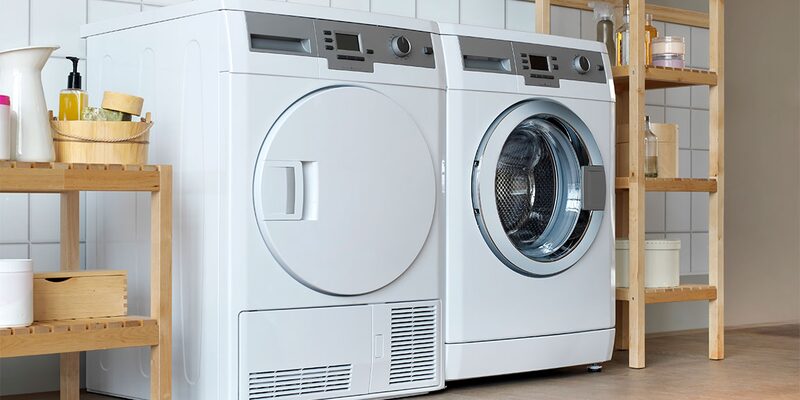
For a household, the practical questions are whether the timing suits the daily routine and whether the appliances in question can move. Shifting a wash or a charge to a different hour is straightforward; shifting heating or cooking is not. The service rewards the first kind of flexibility and cannot manufacture the second.
Where the earnings fall short of the effort
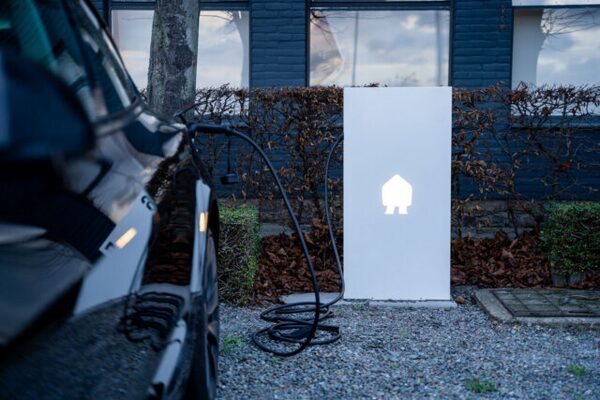
The strongest argument against treating the DFS as a money-maker is that the reward is capped by the household's own peak usage. Guidance for Economy 7 and special EV tariff customers is explicit: participating in the DFS won't provide much saving as you don't have high peak time usage to reduce15. A household that has already moved its load off the evening peak has nothing left to shift, and the scheme pays for reduction, not for virtue.
The same logic applies to any household that is already a light user. If peak consumption is small, the maximum possible reduction is small, and the reward follows. This is why the scheme's own research found response concentrated among people already using little electricity at peak times14.
There is a wider structural point about how much consumer benefit the flexibility programme delivers. In its response to the Energy Smart Appliances consultation, BEAMA argued that SSES will at present fail to achieve its desired outcomes without further incentives to participate in flexibility, and that limited consumer benefits will continue to undermine the entire SSES programme16. That is an industry body saying the household incentive is too thin to carry the policy.
Against that, the system-level case is strong. Flexibility can reduce the amount of investment needed in the distribution network by around 15%17. That saving accrues to the network and, ultimately, to bills, but it does not arrive in a household's account as a payment. The gap between the private reward and the public benefit is the central tension in judging the service.
"SSES will at present fail to achieve its desired outcomes with out further incentives to participate in flexibility ."
A household weighing effort against reward should also note that the reward mechanism is not the only one. Energy suppliers are able to financially reward customers if they run appliances during off peak hours, typically overnight18, which is a different proposition from cutting use during an event. The two can coexist, and the overnight version often suits a household better because it does not require doing less, only doing it later.
DFS alongside other savings: price cap changes and the Warm Home Discount
The DFS is one small element in a household's wider position, and it should be judged against the other support and pricing mechanisms in play. The Warm Home Discount is the larger, more certain intervention. Energy suppliers with more than 1,000 domestic customers, plus other suppliers who elect to take part, offer the discount and recoup the costs from the energy bills of all their customers19. Housing Benefit is among the qualifying benefits20.
The discount's future is unsettled. Citizens Advice has proposed reforming the Warm Home Discount so that it increases the level of support, provides tiered support to different households based on their energy need, and receives funding from the Treasury to reduce the bill burden21. Until that happens, the scheme operates on its current basis, and the DFS sits alongside it rather than replacing any part of it.
Other payments exist on a different footing. The Winter Heating Payment is a single, annual payment of £59.75 made to all eligible households for winter 2025/2619. The Cold Weather Payment is £25 per qualifying week for some households22. The Winter Fuel Payment is worth £200 per household, or £300 if someone is aged 80 or over23. None of these is a flexibility payment, and none is affected by taking part in the DFS.
The direction of travel for flexibility itself is toward more, not less. The DFS is relaunching in April 2026 with new features, including rewards for customers that shift their electricity use to times of high renewable generation8. A lower minimum participation threshold will make it easier for more providers and customers to participate8. In future versions, payments may vary depending on where flexibility provides the greatest benefit8, which would introduce regional differences into what a household can earn.
For a household, the sensible framing is that the DFS is a small, variable, behaviour-linked top-up that depends on a supplier's willingness to pass money through. It rewards a smart meter and a willingness to move load, and it does nothing for a household that has already moved its load or that has little peak usage to give up. The independence it offers is partial: control over timing, not over price, and only for as long as the supplier chooses to share the payment.
Sources23 cited
- Demand Flexibility Service, NESO, 2026-09-17
- Demand Flexibility Service, Energy Saving Trust, 2026-05-21
- UK solar homes power equivalent of five hours of daily air con use during heatwave, Ember, 2023-10-30
- How much could you earn from the Demand Flexibility Service?, Centre for Sustainable Energy, 2026-06-22
- Statutory security of supply report 2025, GOV.UK, 2025-12-17
- Understanding energy flexibility, Smart Energy GB, 2026-08-17
- What is flexibility, FlexAssure, 2026-09-19
- How consumer-led flexibility works in power markets, Energy UK, 2026-04-14
- UK solar homes power equivalent of five hours of daily air con use during heatwave, Ember, 2026
- Understanding the Demand Flexibility Service scheme, Smart Energy GB, 2026-03-16
- Do smart meters cost more, Smart Energy GB, 2026-03-16
- Smart meters, MCS Certified, 2026-07-24
- Smart meter Guaranteed Standards of Performance draft impact assessment, Ofgem, 2025-11-06
- Smart prepayment customers' experience of the Demand Flexibility Service, Nesta, 2024-10-07
- Taking part in the Demand Flexibility Service, Centre for Sustainable Energy, 2024-02
- BEAMA response to Energy Smart Appliances Regulations consultation, BEAMA, 2026-02-05
- Electricity distribution networks study: government response, GOV.UK, 2025-07-07
- Demand Flexibility Service: running appliances at cheaper times, Electrical Safety First, 2026-09-19
- The Warm Home Discount Scheme: if you live in England and Wales, GOV.UK, 2026-09-17
- Energy prices and the Warm Home Discount, House of Commons Library, 2026-02-26
- Essential bills made affordable: a blueprint for targeted support, Citizens Advice, 2025-12-01
- Your home energy checklist, National Energy Action, 2026-09-10
- How to get support if you miss out on the Winter Fuel Payment, Which?, 2025-10-04
 Flexibility Payments for HomesCan you really get paid for using less electricity at peak times, and how much would a household actually earn?
 Smart Charging RewardsCovers the schemes that pay or reward households for shifting car charging, including the Demand Flexibility Service, app-based reward programmes and supplier incentives.
 Demand Flexibility and the GridGetting paid to shift your electricity use away from peak times is now a real option for households with a smart meter.
 Fixed and Variable TariffsCompares capped standard variable tariffs with fixed deals, including exit fees, contract end and rollover.
 Double GlazingMisted up panes, noisy streets, rooms that never feel warm: is new double glazing worth the money, and how much could it cut your bills?
 Tech and Energy IndependenceAssesses which technologies in development would genuinely increase a household's control over its own energy, and which deepen dependence on suppliers, networks or cloud services.