In this guide
Equiwatt is a UK climate technology company that helps households earn rewards for reducing peak time energy usage and carbon emissions through a free app1. The app uses electricity smart meters and smart technology to let users take part in a community-powered virtual power plant, and rewards are earned by cutting usage during short grid balancing events1.
The mechanism is a forecast. Equiwatt users reduce their energy usage during an event to beat their own predicted consumption, powering down appliances or shifting usage to other times of day, and earn points based on how much energy and carbon dioxide they helped to save1. Points are redeemed in an in-app gift store1. Joining costs nothing, but earning anything depends on a compatible smart meter connected to the app and sending half-hourly readings2.
That is the trade at the centre of the service. A household gets a free route into demand flexibility without switching supplier or tariff, and in return hands over half-hourly consumption data to a third party app and, for automation, depends on a narrow list of smart plugs and a cloud connection. The sections below set out what the app does, what it requires, what it pays and where the limits sit.
What equiwatt is and how the app works
Equiwatt describes itself as a UK based climate technology company that helps households earn rewards for reducing their peak time energy usage and carbon emissions via a free app1. The technical framing is a virtual power plant: many homes acting together, coordinated through the app, to cut demand at moments when the grid is tight. The app uses electricity smart meters and smart technology to enable that participation1.
In practice the household sees a forecast and an event. Equiwatt users reduce their energy usage to beat their forecast by powering down home appliances and shifting usage to other times of day, or they automate participation by connecting compatible smart home devices and electric vehicles1. Where a user successfully reduces usage during an event and beats the forecast, points are earned based on how much energy and carbon dioxide were saved, and those points are redeemable in the in-app gift store1.
Two things follow from that design. First, the reward is measured against the household's own baseline, not against a fixed target, so a home that already uses very little at peak has less room to beat its forecast. Second, the app is a coordination layer, not a supplier: it does not sell electricity, does not replace the meter, and does not change who bills the household. The dependence it creates is on the meter connection, the app account and, for automation, the devices listed further down.
Cost and eligibility: free to join, but you need a smart meter with half-hourly data
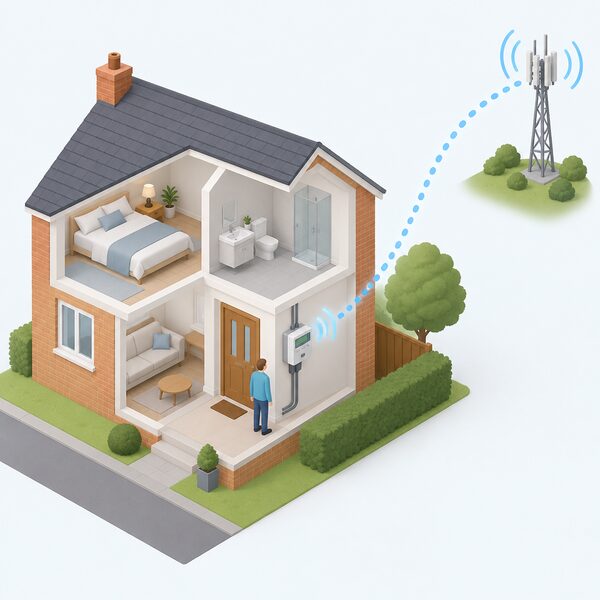
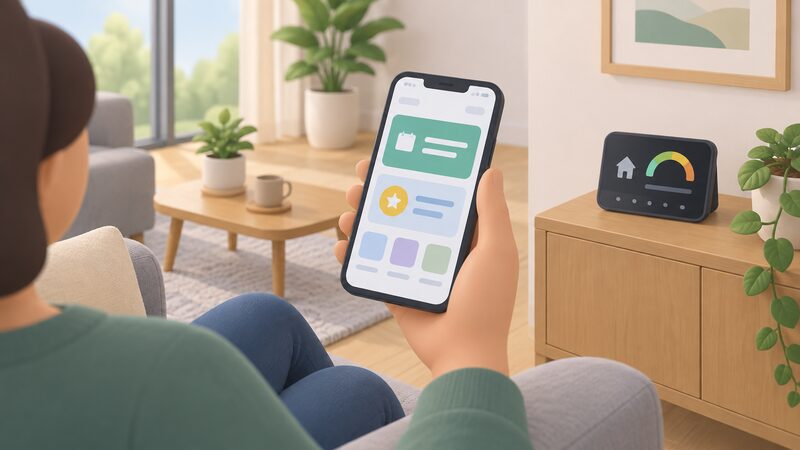
The app itself is free1. The eligibility condition is the meter. Equiwatt states that a compatible smart meter must be connected to the equiwatt app to earn points with it2. That mirrors the wider flexibility market: Smart Energy GB's guidance is that a smart meter working in smart mode and sending half-hourly readings is required to take part in energy flexibility schemes3, and FlexAssure says a smart meter is needed in most cases, with suppliers able to arrange free installation4.
Half-hourly data is the common thread across every comparable scheme. Time-of-use tariffs require a smart meter that records half-hourly consumption5, and the same requirement appears in the rules of supplier-run reward schemes: Uswitch's Power Hours terms require a registered app user with a connected electricity smart meter providing half-hourly readings, living at the registered address, with a valid UK bank account6. Its Electricity On Us scheme requires the smart meter to be connected to the Uswitch account, the app downloaded, and half-hourly readings flowing within 14 days of connection7.
Smart meter installation is free, and the advice is to speak to the energy supplier to arrange one8. A household without a smart meter, or with one that is not sending half-hourly readings, cannot earn points through equiwatt regardless of how much load it shifts.
Connecting your smart meter: methods, verification and the 24-month revalidation rule
Equiwatt's compatibility guidance is reassuring at first reading: if the meter has been installed in the last few years, it will likely be compatible with the app2. The same page gives the counterweight: a meter installed before 2018 may not be compatible with equiwatt2. Between those two statements sits the practical question of what happens when a working connection stops working.
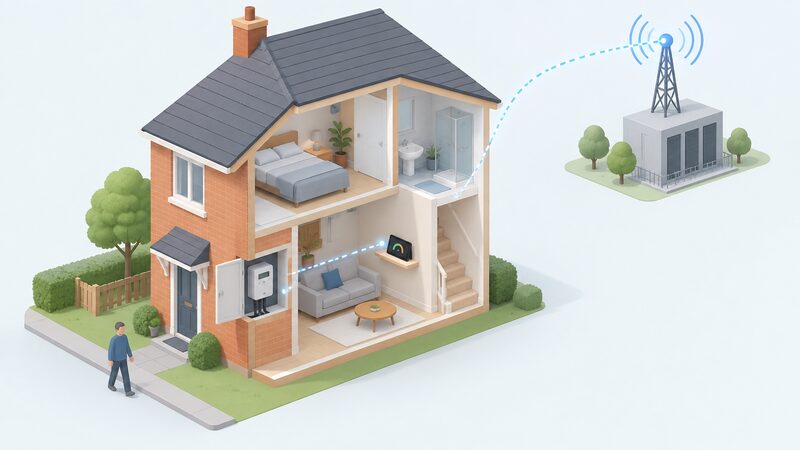
Meter connections are not permanent. Electricity meters can carry an expiry date9, and where a connection lapses the app reports it as expired rather than silently failing. Equiwatt's own support route for a meter that will not connect has involved staff identifying a missing MPAN entry as a bug, fixing it, and asking the user to email their bill so the meter could be added manually; a later app version added a manual MPAN entry option that resolved the issue2.
The verification chain matters for independence. The app does not read the meter directly over the home network. It relies on the smart metering infrastructure delivering half-hourly data to a third party, which is the same dependency that any app-based flexibility service carries. Where the data stops, the rewards stop, and the household has no local fallback because the app holds no local copy of the consumption history.
PowerDOWN and powerSmart events: how points are earned and redeemed
Equiwatt runs two kinds of event. PowerDOWN events are the original mechanism: users reduce their energy usage to beat their forecast by powering down home appliances and shifting usage to other times of day, or automate participation by connecting compatible smart home devices and electric vehicles1. PowerSmart events were launched in December 2024 as equiwatt's route into NESO's Demand Flexibility Service, alongside new app features including multi-event notifications, expanded eGift rewards, a spot prize competition and smart device automations for all users.
The Demand Flexibility Service is the national scheme underneath this. It rewards people for changing the times when they use the most electricity10, and customers sign up through participating energy suppliers, aggregators and apps3. In its winter 2022/23 first season it incentivised 1.6 million households and businesses11. Equiwatt is one of the app-based aggregator routes into that scheme rather than a supplier scheme.
Points timing is worth knowing before chasing a balance. Points for participating in an event manually appear within 24 to 48 hours as pending2. They are pending, not settled, during that window.
Equiwatt has also added reward mechanics beyond the basic points. In March 2026 it introduced Streaks and Entries into weekly and monthly prize draws for taking part in grid balancing events, and at the same time stopped awarding prize draw entries for selecting appliances, requiring delivery of an energy shifting forecast instead.
Earning potential: over £150 a year with a compatible plug and smart meter
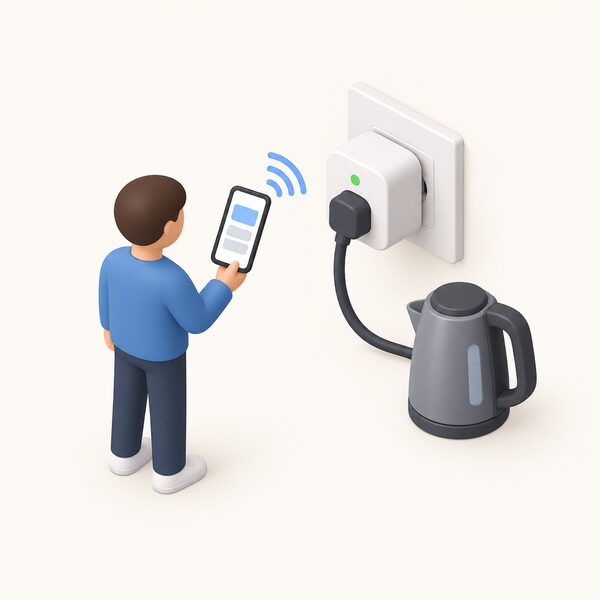
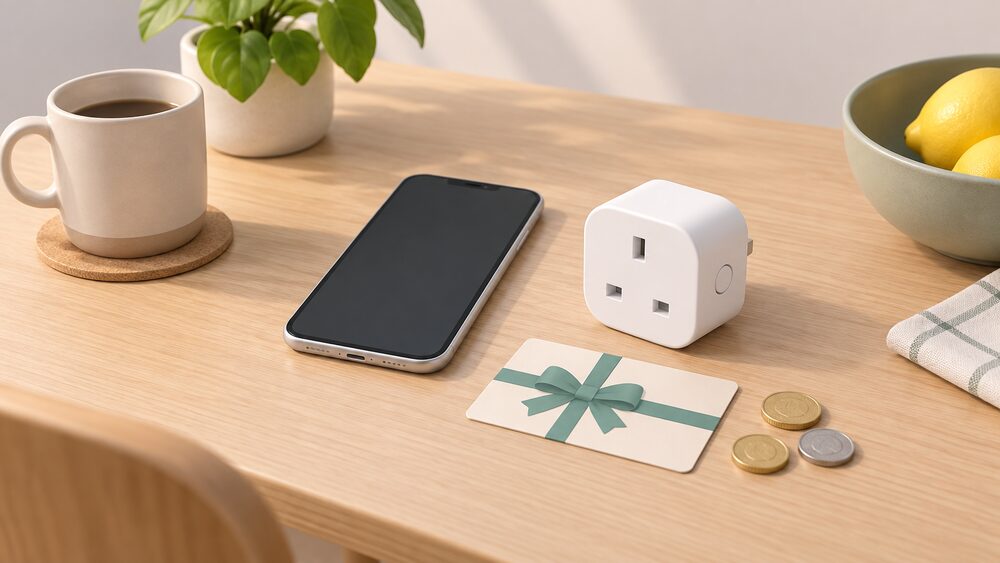
The headline earning figure for equiwatt is over £150 a year, and it comes with two conditions attached: a compatible smart meter and a compatible smart plug. Without the plug, participation is manual and the household has to be present to power things down. With it, the app can automate the reduction.
That figure sits inside a wider range of published flexibility and smart tariff values, which is useful context for judging it. The Energy Saving Trust's modelling found that savings of up to around £800 a year are possible when smart tariffs are integrated with low-carbon home technologies12. A vehicle-to-grid modelling scenario captured an annual value of £436 under current market conditions13. Those are modelled or scenario figures for specific technology combinations, not what a household should expect from an app alone.
For scale, a 150W electric blanket run for eight hours a night at maximum setting costs £114.36 a year at July 2026 price cap rates14. A flexibility reward of over £150 a year is therefore meaningful against real appliance running costs, but it is earned in small increments across many events rather than paid as a lump sum.
| Figure | Value | Basis |
|---|---|---|
| Equiwatt headline earning | over £150 a year | with a compatible plug and smart meter |
| Energy Saving Trust modelled savings | up to around £800 a year | smart tariffs with low-carbon technologies12 |
| Vehicle-to-grid scenario value | £436 a year | modelled under current market conditions13 |
| Electric blanket running cost | £114.36 a year | 150W, eight hours a night at maximum setting, July 2026 price cap rates14 |
Smart plugs: Kasa HS110 and KP115 only, with IFTTT as the workaround
Automation runs through TP-Link's Kasa platform, and the compatibility list is short. Only the HS110 and KP115 energy monitoring smart plugs are compatible with the equiwatt app15. Other makes or models cannot currently be connected to automate participation via a Kasa account15. Equiwatt confirmed in February 2026 that only HS110 and KP115 Kasa plugs are supported and that Tapo plugs are not supported, having ruled out near-term Tapo integration in November 2024 and pointed users to the Open API or IFTTT instead.
Setup has a prerequisite: the smart plug must be set up in the Kasa Smart App, plugged in and connected to the home WiFi network before it is added to equiwatt15. Once in place, additional compatible TP-Link smart plugs added to a Kasa account automatically sync with equiwatt and are added to the account15.
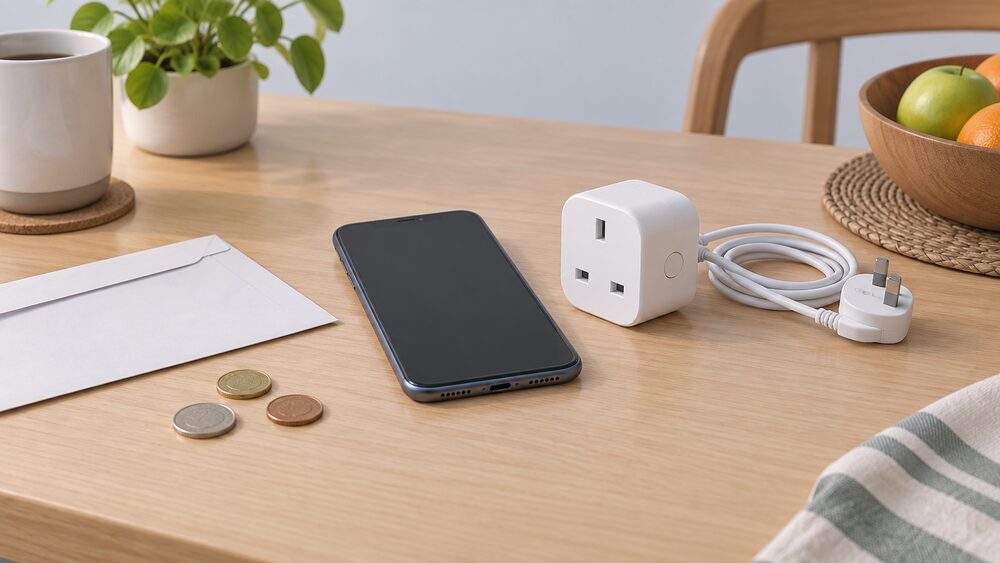
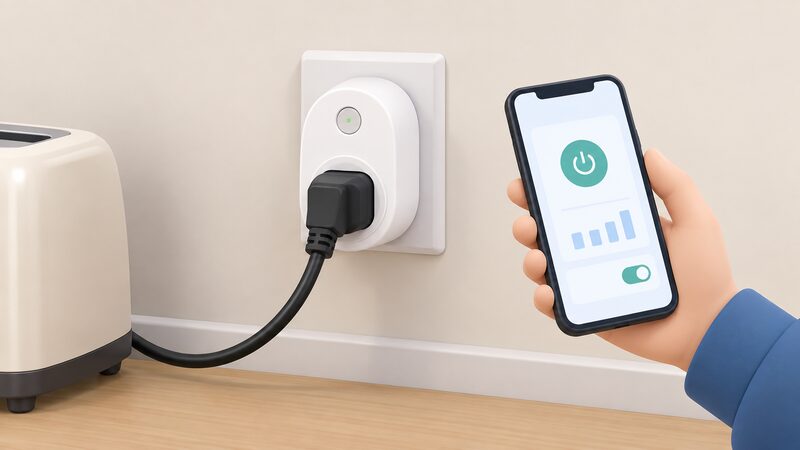
Smart plugs generally are a simple intervention: they plug directly into an existing wall socket and normal appliances plug into them, with an app on a phone or tablet needed to control them16. The energy monitoring variants add consumption measurement, which is what makes them useful to a flexibility service.
The integration has not been trouble-free. Users reported Kasa plugs going offline in the equiwatt app in March 2025 while still working in the Kasa app; equiwatt confirmed its engineering team was investigating in May 2025, identified and resolved a bug in June 2025 and advised users to disconnect and reconnect their Kasa account, reported fresh fixes in July 2025, and faced a further report of a plug that would not register in August 2025. The practical lesson is that automation depends on two cloud platforms agreeing with each other, and either can break the chain.
EVs, batteries and chargers: connecting low carbon technology
Electric vehicles are supported directly where the model is recognised, and manually where it is not. Equiwatt's manual route is for an electric vehicle currently not supported by the app: go to the Manage tab and select Add Electric Vehicle, scroll to the bottom of the list and select Can't find your EV?, then enter the brand, model and year and continue17.
Adding an EV to a flexibility app is a different proposition from adding a smart plug, because the load is far larger and the connection has physical consequences. Installing low carbon technology such as an electric vehicle charger or heat pump is one of the stated reasons to apply for a domestic adding more power service18. Low carbon technologies including domestic solar generation and electric vehicle chargers have driven a rise in connection applications19, and EV chargers and other low-carbon technologies can push a home's electricity demand above the available supply, which may require an upgrade20. Installing any low carbon technology such as an electric vehicle charger or solar panels in the UK requires approval from the local network operator9.
Equiwatt's app added a beta energy tariff integration in June 2025, letting users view rates, contract details and time-of-use rates, with AlphaESS battery owners holding an export MPAN able to earn export rewards. That extends the app from demand reduction into tariff visibility and, for one battery brand, export.
DFS participation, the 80% reward share and the one-provider rule
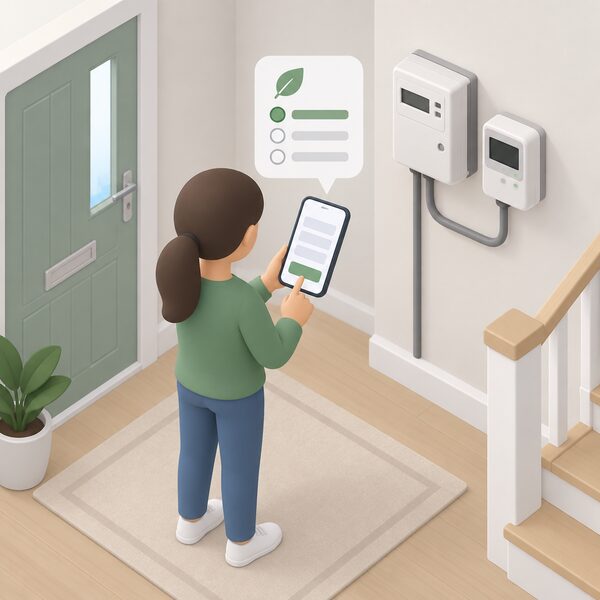
The Demand Flexibility Service pays participants for shifting peak electricity use, and it is administered nationally rather than by any one app. Customers sign up through participating energy suppliers, aggregators and apps3, which is why equiwatt, supplier schemes and other apps all draw on the same events.
The rule that catches households out is exclusivity. When signing up to Power Hours, participants are automatically enrolled in Reduce & Earn sessions too, and can only be registered with one NESO DFS scheme at a time21. The same constraint appears elsewhere: being signed up to a provider DFS scheme such as British Gas' PeakSave Winter, E.ON Next's #PowerSwitch or Octopus Energy's Saving Sessions prevents signing up with ivie22. NESO DFS events, including Reduce & Earn and Increase & Earn, do not form part of the Uswitch App Free Electricity Scheme6.
The practical consequence is that a household cannot stack multiple DFS rewards on the same event. Choosing equiwatt means choosing it over a supplier's own scheme for those events, and the comparison is not only about the headline rate but about which devices can be automated and how reliably the meter data flows.
Where the app's independence ends
Equiwatt gives a household a free, supplier-agnostic route into flexibility rewards, and that is a genuine form of independence: no tariff change, no lock-in to an energy company, and the ability to switch supplier or tariff at any time, which households paying a supplier directly can do, with switching typically taking a few days23.
The dependencies that remain are specific. The household stays on the grid and with a supplier; the app does not generate or store anything. Participation depends on a compatible smart meter sending half-hourly readings2, on a third party receiving that data, and on the meter connection staying live, with meters installed before 2018 possibly incompatible2 and meter connections carrying expiry dates9. Automation depends on two specific TP-Link plug models15 and on two cloud platforms staying in agreement, which the 2025 Kasa incidents show is not guaranteed. EV participation depends on the vehicle being supported or added manually17, and on the home's supply being adequate for the charger in the first place20.
For a household weighing this up, the honest position is that equiwatt is a low-commitment way to earn something from load shifting that is already happening, with the reward capped by how much peak usage there is to shift and by how much of it can be automated. It is not a route to energy independence, and it does not reduce the household's reliance on the grid, a supplier or a manufacturer's cloud service. It reduces the cost of that reliance slightly, in exchange for data and a device dependency.
Sources24 cited
- What is equiwatt?, equiwatt, 2026
- How can I earn points with my smart meter?, equiwatt, 2026
- Energy flexibility, Smart Energy GB, 2026
- For homes, FlexAssure, 2026
- Air source heat pump costs and savings, Which?, 2026
- Power Hours terms, Uswitch, 2026
- 10 Hours Electricity On Us scheme terms, Uswitch, 2026
- Cheaper bills with energy flexibility, Centre for Sustainable Energy, 2026
- Getting a smart meter installed, Citizens Advice, 2026
- Getting smarter with energy, Centre for Sustainable Energy, 2026
- Statutory security of supply report 2025, Department for Energy Security and Net Zero, 2025
- Flexible futures: integrating smart tariffs with low-carbon home technologies, Energy Saving Trust, 2026
- V2GB: vehicle to grid Britain, Cenex, 2026
- How much does it cost to use an electric blanket?, Uswitch, 2026
- How do I add my TP-Link smart plug to my equiwatt account?, equiwatt, 2026
- Smart plugs, Centre for Sustainable Energy, 2025
- How can I add my EV manually?, equiwatt, 2026
- Adding more power, UK Power Networks, 2026
- Statutory voltage limits, Energy Networks Association, 2026
- If your electricity supply can't cope with the new equipment, NIE Networks, 2026
- Free electricity, Uswitch, 2026
- 9 ways to flex your energy around peak times, ivie, 2026
- Switch your home energy supplier, Ofgem, 2026
- How to read your energy bill, Confused.com, 2025
 equiwattHow the equiwatt app pays households for shifting electricity use, what the events are, what it earns, and the smart meter conditions attached.