
In this comparison
equiwatt is a third-party rewards app that pays households for shifting electricity use without changing energy supplier, and it takes part in the same national Demand Flexibility Service (DFS) that suppliers run their own schemes under. The choice between the two is not a choice between a good scheme and a bad one: it is a choice about who holds the relationship, who sees the data, and what happens when something breaks. The service itself is run by NESO, which describes it as a way to "make it easier for homes and businesses to take part in the electricity market and be rewarded for shifting when they use electricity"1.
The scale is real. DFS incentivised 1.6 million households and businesses in its first winter, 2022/232, and the fourth iteration now rewards customers for both reducing electricity use (demand turn-down) and increasing it (demand turn-up)3. It is delivered across 12 regions, so payments may in future vary depending on where flexibility provides the greatest benefit3.
The constraint that shapes everything else is exclusivity. A household can only take part with one registered provider4. That single rule decides whether a home ends up with equiwatt or with a supplier scheme, and it cannot be worked around by signing up to both.
What equiwatt is, and how it differs from a supplier scheme
equiwatt offers rewards to electricity users for shifting their electricity use, without the need to change energy supplier8. That last clause is the whole proposition. A supplier-run scheme is an extension of the billing relationship: the supplier already holds the meter data, already sends the bill, and already has a commercial reason to keep the household on its books. A third-party app sits outside that relationship and asks the household to connect its own meter data to a platform the supplier does not control.
The underlying service is the same. DFS was designed to help manage potential winter pressures by reducing demand during evening peak periods and reducing reliance on more expensive electricity generation1, and it reduces the need to turn on fossil fuel power plants by lowering energy use at peak times4. Events are usually scheduled when periods of high expected demand coincide with low forecast generation9. Demand side response more broadly covers a range of services that vary the demand of both domestic and commercial consumers to help balance the power grid10.
Where the routes diverge is in who pays and how. The electricity companies are paid a set amount by the National Grid ESO for every kWh of electricity their customers shift; some pass all this on to DFS participants, others only pass on some of it, and others enter their customers into a prize draw instead11. A supplier scheme therefore bundles the reward into the bill. equiwatt converts the same underlying value into points, eGift rewards and prize draw entries held in an app.
That difference matters for energy independence in a specific, limited way. A household on a supplier scheme depends on the supplier for both energy and reward, and switching supplier means leaving the scheme. A household on equiwatt keeps the reward relationship separate from the supply relationship, which is a genuine degree of separation, but it takes on a new dependence: on equiwatt's servers, its app, its integrations and its continued operation. Neither route removes the grid, the meter or the need for a registered provider.
How equiwatt fits into the Demand Flexibility Service
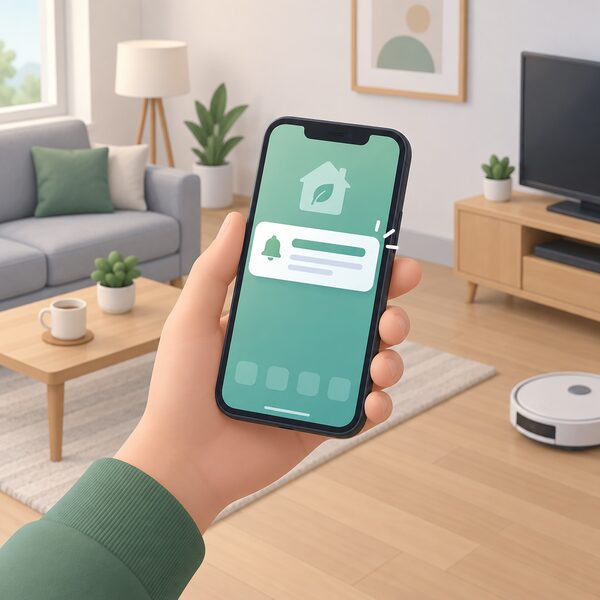
equiwatt is not an alternative to DFS. It is one of the routes into it. The service uses several energy saving events throughout the year4, and a participant needs to be with a supplier registered to take part4. equiwatt launched PowerSmart events for NESO's Demand Flexibility Service on 12 December 2024, alongside new app features including multi-event notifications, expanded eGift rewards, a spot prize competition and smart device automations for all users.
The scheme has widened since its first winter. The fourth iteration rewards customers for both reducing electricity use and increasing it3, which matters for households with solar, batteries or an EV that can absorb surplus power. NESO has also described a service to reward consumers for increasing electricity use during periods of surplus summer electricity12, a different use case from the winter peak events that DFS began with.
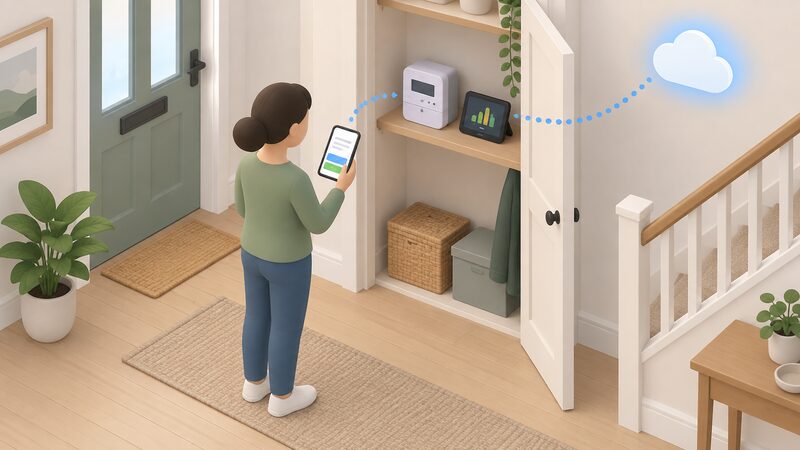
For a household, the practical consequence is that the events arrive through the app rather than through the supplier's own notification. That is convenient, and it is also a single point of failure: if the app does not receive the event, or the meter data does not reach the platform, the household cannot respond and cannot be paid. The national service continues regardless.
"The service will now reward customers for both reducing electricity use (demand turn-down) and increasing electricity use (demand turn-up)"
Who can join: smart meter, supplier and tariff requirements
The entry requirements are set by the scheme, not by equiwatt. A household needs a working smart meter so the energy supplier can accurately and quickly measure energy use4, and a smart meter capable of sending half-hourly readings, plus a baseline measure of the last 60 days of electricity usage and marketing consent5. A smart meter working in smart mode is needed to take part in flexible schemes, and a smart meter is needed for most flexible tariffs13.
Smart meters also open the tariff side of flexibility. They can access more flexible tariffs, including dual-rate tariffs14. Flexible schemes and tariffs are available to selected customers from selected suppliers, with eligibility and availability varying and consumer action required13. The service is also being offered to small businesses, working in the same way as the version offered to homes and requiring a smart meter5.
| Requirement | Detail |
|---|---|
| Meter | Working smart meter sending half-hourly readings4 |
| Baseline | Last 60 days of electricity usage5 |
| Consent | Marketing consent, plus opt-in for half-hourly data access5 |
| Supplier | Must be registered to take part in DFS4 |
| Exclusivity | One registered provider only4 |
| Cost | Free to take part7 |
The consent point is not a formality. Suppliers must receive explicit opt-in consent from the customer to access half-hourly energy consumption data, or to use energy consumption data of any detail for marketing purposes16. That rule sits in the supply licence conditions covering access to and privacy of the consumption data stored on smart meters16. A household joining equiwatt is granting that access to a third party rather than to its supplier.
Smart plugs, EVs and manual participation
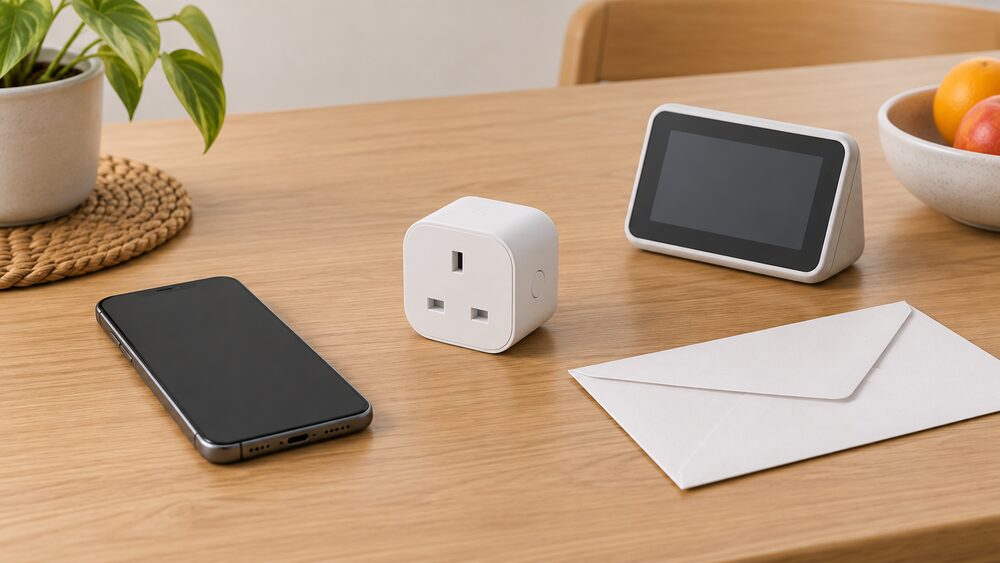
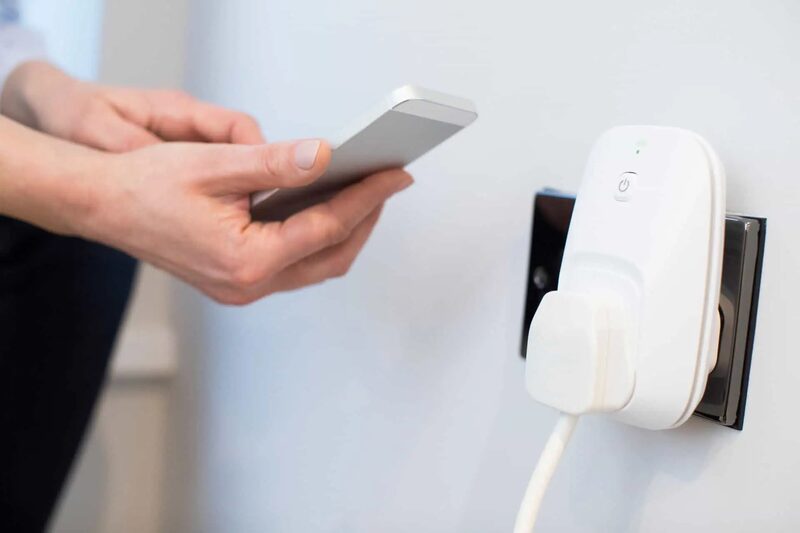
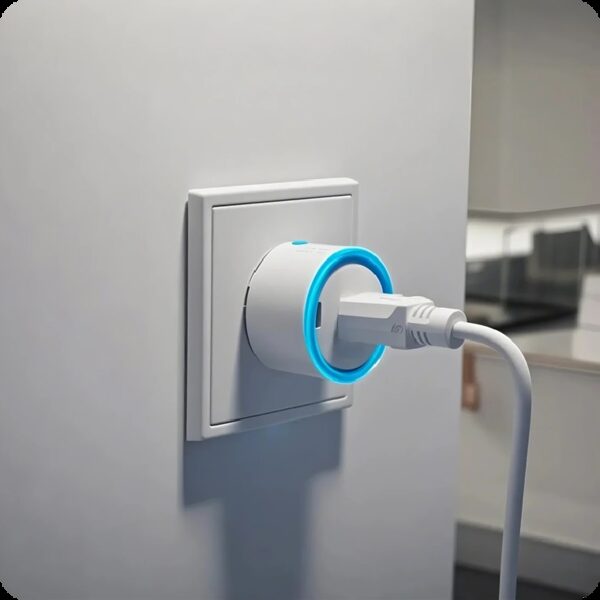
There are three broad ways to take part, and equiwatt supports all of them to different degrees. The first is manual: the household receives an event notification and switches appliances off or delays them by hand. The second is through a smart plug, which connects household appliances directly to the equiwatt platform and enables automatic participation in equivents without any manual intervention to turn appliances off6. The third is through larger assets.
Homeowners can participate in demand response flexibility services using a number of assets, such as EV charge points, heat pumps, adjustable thermostats, air conditioning, smart appliances and batteries17. Smart EV charging lets a car charge when electricity is cheapest and greenest, often overnight, without changing routine13. More broadly, a household can sign up for an electricity tariff with different prices at different times, or agree for its energy supplier or another company to manage when certain appliances switch on and off18.
equiwatt has extended its automation reach. On 10 June 2025 it launched a beta energy tariff integration in its app, letting users view rates, contract details and time-of-use rates, with AlphaESS battery owners holding an export MPAN able to earn export rewards. On 18 March 2026 it introduced Streaks and Entries, two new ways to earn rewards for taking part in grid balancing events, and stopped awarding prize draw entries for selecting appliances, requiring delivery of an energy shifting forecast instead.
Earnings and rewards: points, prize draws and the 80% share
Rewards vary depending on the supplier, but the more electricity you save during each event the greater the rewards will be4. That relationship is the only reliable rule. The form the reward takes differs: usually money off the electricity bill or entry into a prize draw7, or pounds or points that can be used towards paying for energy bills4. One independent source gives an example of +£8.40 in a month19, which is an illustration rather than a forecast.
The pass-through question is the one households ask most often. The electricity companies are paid a set amount by the National Grid ESO for every kWh of electricity their customers shift; some pass all this on to DFS participants, others only pass on some of it, and others enter their customers into a prize draw instead11. Where a supplier keeps part of the payment, the household's share is smaller than the value the shift created. equiwatt's model converts the same payment into points and entries, and its own reward structure has changed over time, with eGift rewards expanded in December 2024 and Streaks and Entries added in March 2026.
Two conditions limit what any household can earn. Only electricity use is considered, so a household without electric heating generates no reward by turning down a thermostat11. And for Economy 7 or special EV tariff customers, participating in DFS will not provide much saving because there is no high peak time usage to reduce7. A household already off peak at the event window has little left to shift.
Data, privacy and the 24-month address revalidation
Joining equiwatt means moving meter data outside the supplier relationship. The safeguards are established. Suppliers must ensure that the transfer of personal data complies with the UK GDPR20, and local authority schemes processing flexibility data do so under UK GDPR and the Data Protection Act 2018, the council's data protection policy, the ICO Data Sharing Code and DESNZ guidance21. The supply licence conditions covering access to and privacy of consumption data stored on smart meters are conditions 47 and 41 of the electricity and gas supply standard licence conditions16.
The practical limit is coverage. Electralink does not have access to comprehensive domestic smart meter data22, which is why a platform such as equiwatt depends on the household's own connection and consent rather than on a central feed. Where a scheme shares data onward, the pattern is explicit: Uswitch's Increase & Earn terms state that the smart meter MPAN number, half hourly electricity consumption, and baseline and increase data are shared with NESO via Hildebrand23. A household joining a flexibility scheme should expect its half-hourly consumption to travel to the scheme operator and to NESO.
Address revalidation is the recurring administrative task. Because the MPAN identifies the supply point rather than the person, a household that moves address, or whose meter record changes, has to re-establish the link. equiwatt's own history shows how fragile that link can be: a missing MPAN entry was identified as a bug in January 2026 and a manual MPAN entry option was released on 30 January 2026. An import MPAN application normally requires a brief description of what the MPAN will supply24.
Known issues with Kasa plugs, Tapo and smart meter connections
equiwatt's smart plug support is narrow and has been unstable. Only the Kasa TP-Link HS110 and KP115 smart plugs are supported, and Tapo plugs are not supported, confirmed in a staff reply on the equiwatt community forum on 23 February 20266. equiwatt staff had already confirmed on 28 November 2024 that no Tapo integration was planned in the near term, pointing users to the Open API or IFTTT. An earlier statement on 3 October 2024 said the blocker sat with Kasa and that IFTTT control of Tapo plugs would leave beta the following week.
The Kasa integration itself has a documented fault history. A user reported on 4 March 2025 that Kasa plugs kept going offline in the equiwatt app while working in the Kasa app. equiwatt confirmed on 1 May 2025 that its engineering team was aware of the TP-Link Kasa integration issue and investigating. On 11 June 2025 it said a bug believed to have caused the issue had been found and resolved, and advised users to disconnect and reconnect their Kasa account. On 28 July 2025 it reported fixing a fresh batch of Kasa plug issues and said it would ask users to re-connect while exploring other integration solutions. On 28 August 2025 a user reported that the app would not let them register a Kasa plug at all.
Smart meter connections have had their own problems. A forum user reported on 25 June 2025 that no smart meter data appeared in the equiwatt app after 22 June 2025, despite the meter having been connected for many months. On 21 January 2026 equiwatt staff identified the missing MPAN entry as a bug, fixed it, and asked the user to email their bill so the meter could be added manually, before releasing an app version with manual MPAN entry on 30 January 2026.
There is a wider context. Research into early consumer experiences of smart meters identified issues related to switching and loss of smart meter functionality, billing, viewing smart meter data, energy saving and installations25, and early smart and advanced meters lacked full interoperability, reverting to traditional or dumb mode if the consumer switched supplier25. A household that switches supplier while relying on a flexibility app should expect to re-establish its data connection.
Supplier schemes vs equiwatt: which route suits which household
The two routes suit different circumstances, and the exclusivity rule means the decision is usually forced rather than free. A household can only take part with one registered provider4, and ivie's guidance repeats that only one DFS service provider can be signed up at a time26. Being signed up to a supplier scheme such as British Gas PeakSave Winter, E.ON Next #PowerSwitch or Octopus Energy Saving Sessions prevents signing up with ivie26, and the same logic applies in reverse. Uswitch's Power Hours terms state that signing up automatically enrols the household in Reduce & Earn sessions too, and that only one NESO DFS scheme can be registered at a time27.
A supplier scheme is the simpler route for a household that wants the reward to arrive through the bill, has no interest in managing integrations, and does not intend to switch supplier. The trade-off is that the reward relationship ends if the household switches. Switching is straightforward in principle: if you pay a supplier directly for the electricity or gas you use at home, you can choose to switch to a different supplier or tariff at any time28. A new, flexible Centralised Switching Service for gas and electricity switches is intended to respond to that demand29.
equiwatt suits a household that wants the reward kept separate from supply, is willing to run a supported smart plug or connect a battery or EV, and accepts the app as a dependency. It also suits a household that wants to combine flexibility with time-of-use tariff visibility, which the beta tariff integration added in June 2025.
Neither route is a route to independence from the grid. Both depend on a registered provider, a working smart meter in smart mode, and a scheme operated by NESO. What equiwatt adds is a degree of separation between the company that sells the energy and the company that rewards the shifting of it. What it adds in return is a dependence on a third party's app, integrations and servers, and a support history that shows those integrations can fail for months at a time.
For households weighing the wider picture, the Demand Flexibility Service explained sets out the national scheme, household flexibility and reward schemes compares the routes available, and Equiwatt: energy saving app and flexibility rewards covers the app itself. Households without a smart meter should start with can I join a demand flexibility service without a smart meter, and those concerned about data should read smart meter data: what is collected and who can see it.
Sources29 cited
- Demand Flexibility Service (DFS), NESO, 2026-09-17
- Statutory Security of Supply Report 2025, GOV.UK, 2025-12-17
- How consumer-led flexibility works in power markets, Energy UK, 2026-04-14
- Demand Flexibility Service, Energy Saving Trust, 2026-05-21
- Understanding the Demand Flexibility Service scheme, Smart Energy GB, 2026-03-16
- What is a smart plug?, equiwatt, 2026
- Taking part in the Demand Flexibility Service, Centre for Sustainable Energy, 2024-02
- Flexibility: the key to combatting future energy price shocks, Low Carbon Hub, 2021-10-27
- Smart prepayment customers' experience of the Demand Flexibility Service, Nesta, 2024-10-07
- Demand side response, UK Parliament POST, 2026-06-07
- How much could you earn from the Demand Flexibility Service?, Centre for Sustainable Energy, 2026-06-22
- UK solar homes power equivalent of five hours of daily air con use during heatwave, Ember, 2026
- Using energy flexibly, Smart Energy GB, 2026-04-14
- Getting a smart meter, Ofgem, 2026
- Get help with your smart meter, Ofgem, 2026-09-17
- Smart metering data privacy: final proposals, Ofgem, 2014-08-29
- Flexibility case study: homeowner, Electricity North West, 2026-09-19
- Flexibility services, UK Power Networks, 2026-09-20
- What is flexibility?, FlexAssure, 2026-09-19
- ECO4 guidance: supplier administration, Ofgem, 2026-07-06
- ECO4/GBIS Flex statement of intent, Leeds City Council, 2024-12-23
- Data protection and smart meter data, Open Energy, 2026-09-20
- Power Hours terms, Uswitch, 2026-09-14
- MPAN only, UK Power Networks, 2026-09-17
- Early consumer experiences of smart meters, Citizens Advice, 2016-06-17
- 9 ways to flex your energy around peak times, ivie, 2026-09-20
- Free electricity, Uswitch, 2026-09-20
- Switch your home energy supplier, Ofgem, 2026
- Delivering faster and more reliable switching, Ofgem, 2017-09-21
 Smart Meter InstallationCan your supplier make you have a smart meter, and how long should you wait for an appointment?
 Meters and Energy IndependenceDo smart meters really save you money, and can you still get one fitted for free?
 Export Rates Per kWhHow much will your supplier pay you for the solar power you send to the grid, and why do rates vary so much from one company to another?
 Smart Meter Installation DayWhat happens during a smart meter fitting appointment: how long it takes, the supply interruption, the safety checks, the in-home display demonstration, who can book it, and what happens when gas and electricity come from different suppliers.
 Green Energy TariffsDoes a green tariff really mean greener electricity comes into your home, or just that your supplier buys renewable certificates to match what you use?
 Smart Meter Faults and FixesYour smart meter has stopped working.