In this guide
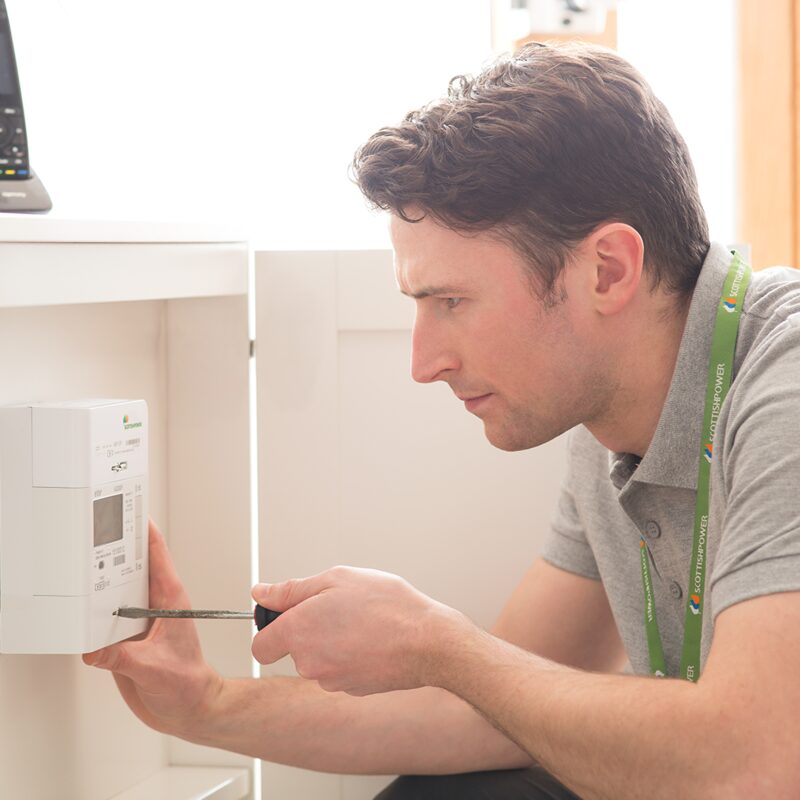
A smart meter installation is a meter exchange carried out at the property by the energy supplier or a contractor working on its behalf. It takes approximately one hour for each meter, so roughly two hours where both an electricity and a gas meter are changed on the same visit1. Each supply has to be switched off during its own changeover, typically for about 30 minutes per meter1. The old meters are removed and the new ones normally go exactly where the old ones were2.
There is no separate fee. Domestic smart meters and the in-home display that comes with them are provided at no extra cost, with no upfront charge and no extra amount on the bill; the programme's costs are recovered across energy bills over time3. The work is booked through the supplier named on the bill, which will telephone or email to agree a time5. Someone aged 18 or over has to be on the property throughout1.
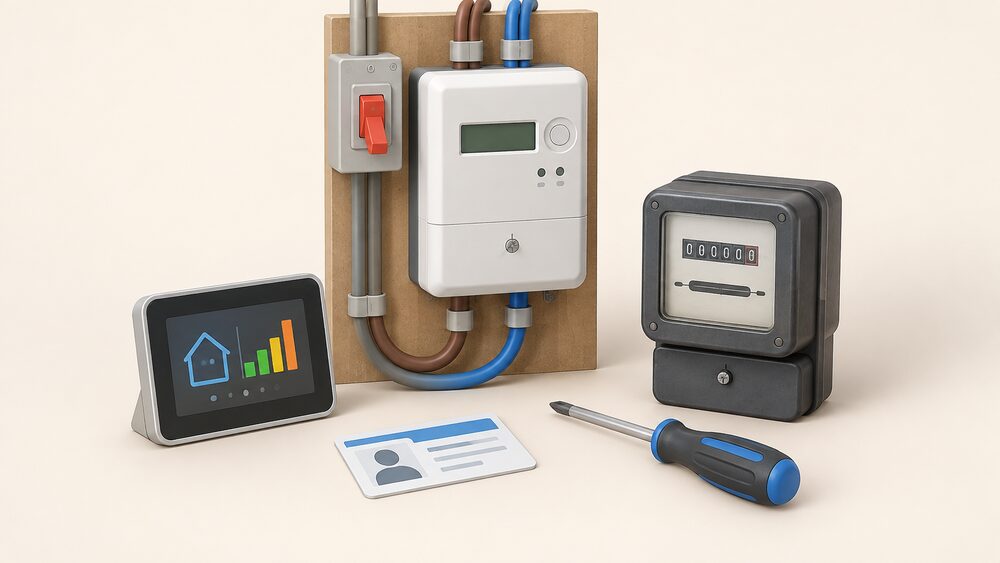
Beyond swapping the hardware, the visit includes safety checks on the meter position and connections, commissioning of the new meter so that readings reach the supplier automatically, and a demonstration of the in-home display. Government guidance sets the expectation directly: installation with minimal disruption, key safety checks during the appointment, and an in-home display offered and demonstrated6.
The visit step by step
The pattern of a domestic appointment is consistent across suppliers because the work itself is a regulated meter exchange rather than a discretionary job. The installer arrives within the agreed window and identifies themselves: they should present a valid identity card showing the company name and phone number as well as their own name and photograph9. Most visits are handled by a single technician, and one supplier states that where two are sent the household is told before they arrive10.
The installer then locates the existing meters and inspects the position and connections before any work starts. The electricity supply is isolated, the old meter disconnected and removed, and the new meter fitted in its place. Gas follows the same sequence with its own interruption. Once the hardware is in, the meter is commissioned: the mobile signal at the meter position is checked, the in-home display is set up and paired, and the meter is registered so that readings are sent automatically10. That automatic reading flow is the point of the exercise. Once the meter is installed, readings go to the supplier without anyone reading a dial, which is what removes estimated bills1.
The visit ends with a demonstration. The display is handed over and explained, and government guidance treats that demonstration as part of the service rather than an optional extra6. Suppliers are also constrained in what else they may do while in the home: no sales transactions can be carried out at a domestic installation visit, and consent must be obtained in advance of the visit if the installer intends to discuss any purchasable goods or services, with marketing stopping on request11. Which? puts the same rule from the householder's side, noting that the installer needs permission in advance if they intend to talk about their own products12.
How long it takes: about an hour per meter
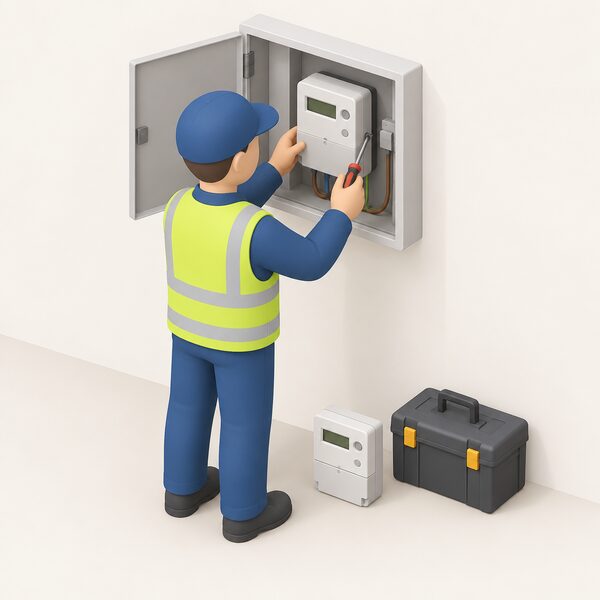
The figure quoted by the independent sources is consistent. Smart Energy GB gives approximately one hour to install each smart meter, and about two hours for the whole process where electricity and gas are done together1. Which? gives around one hour for each installation2, and the Data Communications Company describes installation as taking a couple of hours with each supply switched off during the changeover3. Supplier figures match: E.ON Next aims to change a meter in about an hour, so a couple of hours for both10, and ScottishPower gives around an hour per meter13.
Two organisations quote a single shorter total. The Welsh Government's guidance and the Energy Saving Trust both describe a typical installation as taking about 90 minutes14. These are not contradictory so much as differently framed: 90 minutes sits between the one-hour single-fuel job and the two-hour dual-fuel job. The honest expectation for a household is an hour for one meter and up to two hours for two, with the visit possibly running longer if the meter position is awkward or the signal check needs work.
| Source type | Single meter | Both meters |
|---|---|---|
| Smart Energy GB, 2026 | approximately 1 hour1 | about 2 hours1 |
| Which?, 2026 | around 1 hour2 | not stated separately |
| DCC, official | not stated separately | a couple of hours3 |
| Energy Saving Trust, 2026 | about 90 minutes typical15 | not stated separately |
| E.ON Next, 2026 | about 1 hour10 | a couple of hours10 |
| ScottishPower, 2026 | around 1 hour13 | not stated separately |
Installers group appointments by location so that they do not have to travel long distances between jobs, which reduces the emissions from travel and is one reason why availability is patterned by area rather than offered freely on any date7.
Cost: no separate fee for the installation
Every independent and official source in this area says the same thing: there is no charge to the household for a domestic smart meter installation. The Consumer Council for Northern Ireland states plainly that there will be no separate fee for a smart electricity meter installation16. Smart Energy GB gives no extra cost for the meter and the display screen, and no extra amount on the bill4. The Energy Saving Trust describes installation as completely free with no upfront charge15.
What "free" means here is worth stating precisely, because it bears on independence. The Welsh Government's guidance is explicit that there is no direct cost for a smart meter and that any expenses are recouped through energy bills over time14. Smart Energy GB's landlord guidance says the same from the other direction: the meter will not cost anything extra to install because the cost has been covered through everyone's bills18. The household is not billed for the visit, but the programme is paid for by bill payers collectively. Our page on how much a smart meter costs sets out that accounting in more detail.
Suppliers repeat the position for their own customers: ScottishPower states that smart meters are being installed in homes across Great Britain at no extra cost to customers13, and E.ON Next offers installation at no extra cost where the home is eligible19. Prices for domestic smart metering are not installer-quoted; there is no quoted range because there is no charge to quote.
Who comes to your home and the rules they must follow

The rollout is led by energy suppliers, not by network operators or government20. Which? states the rule on who turns up: it will always be the energy supplier or a third party working on its behalf that comes to the house to change the meter12. Smart Energy GB notes that a supplier may use a different company to install the meter and should say so17. That matters for doorstep safety: a visit should be expected, confirmed in advance, and the caller should carry the identity card described above9.
Suppliers work to the Smart Metering Installation Code of Practice, which sets out rules for suppliers to follow when conducting installations22. Separately, energy companies must take all reasonable steps to install smart meters in customers' homes, an obligation written into their gas and electricity supply licences23. Obligation to offer is not the same as power to compel: there are no provisions allowing anyone to enter a property by force to install a smart meter, and consumers retain the right to refuse24. The rules are covered further in our page on smart meter rules and supplier obligations.
The Ofgem guaranteed standards give the appointment itself a deadline. A supplier must offer a domestic consumer an appointment to take place within six weeks of the request, or pay compensation, and for microbusiness consumers the window is a 60 working day, or twelve week, period7. The same standard applies only where a consumer is technically eligible for an installation, meaning where a working solution exists at the property25. Citizens Advice describes the domestic timing as an offer of an appointment within 30 working days of asking, and adds that where compensation is owed and not paid within 10 working days, a further 40 pounds is due26. Ofgem intends to review the outcomes of these standards in the first quarter of 202727. Our page on smart meter guaranteed standards covers the fault-repair limbs of the same regime.
Power off, safety checks and your wifi during the changeover
The supply must be off while a live meter is removed. Smart Energy GB gives typically 30 minutes for each meter, gas and electricity, installed1, and elsewhere describes the electricity supply being turned off for up to an hour to allow for installation28. OVO states that power is switched off for about 30 minutes each where both meters are changed29. Which? frames the interruption as around an hour for each fuel2. The spread reflects the difference between the isolation itself and the whole time the installer is working on that fuel. Planning for a loss of power of up to an hour per fuel is the safe assumption, and it is the reason reliance on mains-powered medical equipment should be raised in advance30.
Anything running on mains electricity stops during that window. A broadband router is turned off along with everything else, but once it is switched back on the smart meter will not affect the wifi connection, because the meter does not use the home's broadband28. That is also why a home internet connection is not needed in order to have a smart meter fitted at all: the meter communicates over its own network. See how smart meters communicate and do smart meters need wifi.
Safety checks are a stated part of the appointment6. Smart Energy GB describes installers looking for potential problems with the electricity and gas while they are there, such as defective wiring, broken fuses or faulty boilers31. Those checks can stop the job: if the installer thinks there could be a major risk to safety, they can decide not to install the meter until the problem is fixed32. Some providers may also offer a free energy efficiency inspection during the installation14.
Booking the appointment and who needs to be there
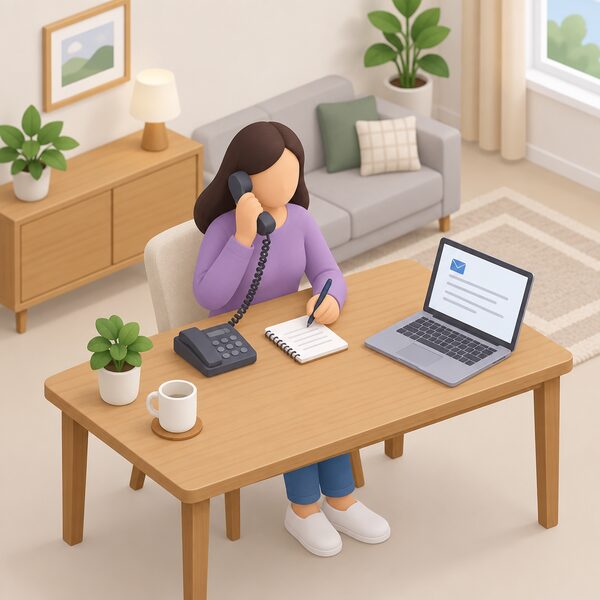
The first step is to contact the energy supplier7. Ofgem's guidance says the same for households still on a radio teleswitch meter, who are directed to contact their supplier to arrange a new smart meter33, and Smart Energy GB publishes freephone and textphone numbers for a range of suppliers for those who prefer to call34. Suppliers run their own booking channels: ScottishPower offers booking through an online account, booking without an online account, or a call line open Monday to Friday, 9am to 6pm35. The supplier will then telephone or email to agree a time5, and a confirmation should follow by email, message or phone2.
Attendance is not optional. Smart Energy GB states that the account holder or another person aged 18 or over needs to be present during the installation, and that being in the same room as the work is not required but being on the property is1. A carer can normally book an appointment for the person they support, and can ask the supplier to be added as a named third party to help with billing, appointments and meter-related questions30.
Circumstances that affect the visit are best flagged early. Which? advises telling the energy company when making the appointment, or at least several days before the installation, about anything unusual regarding the home or the meter2. Suppliers ask about household circumstances for the same reason: E.ON Next lists anyone in the home of pensionable age, over 80, under 5 or under 17, medical conditions or dependency on the energy supply, sheltered accommodation, an appointment being kept by someone else, and a need for British Sign Language as things to declare when booking10. The supplier should explain what will happen, how long the appointment may take and whether the supply needs to be switched off briefly30.
Renters, landlords and who is entitled to arrange it
The rule is simple: whoever pays the energy bills organises the installation18. Only the person paying the bills can request an installation from the supplier36. Government guidance frames it as an entitlement: any household that pays for energy, whether owning or renting, should be able to book an installation where a meter is expected to work in the property6.
- Renter is the account holder: the tenant can ask the supplier for a smart meter without the landlord's permission23. The Energy Ombudsman notes that a private renter whose bills are in their name, or who prepays for energy, can choose to have one, after checking the tenancy agreement and letting the landlord know37.
- Landlord pays the bills directly: it is the landlord's decision, and the tenant would need them to organise it23.
- Prepayment households: a renter who prepays for energy is treated as the bill payer for this purpose37.
- Moving out: the in-home display stays in the property, because it is paired to that property's meter39.
There is a limit on the entitlement. There is currently no requirement for suppliers to install a smart meter on request, although a household can ask for one37. Our page on smart meters and monitoring in flats and rented homes covers the tenancy side further.
Where the meter goes and what happens to the old one
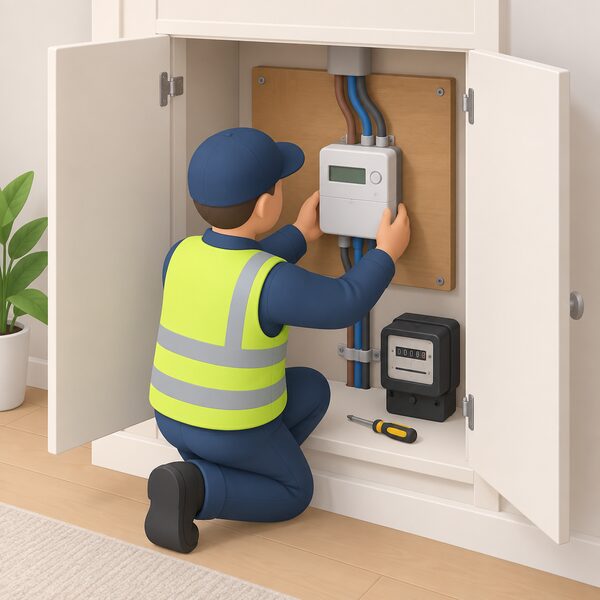
New meters normally go exactly where the old ones were7, which is usually the same place as the analogue meter, such as a cupboard or outside the front door40. The meter is connected to the mains electricity supply and the gas pipe entering the home, so its position is fixed by where the service enters, not by signal convenience41. Where the position is awkward or the mobile signal is poor, the property may not be technically eligible, which is dealt with in why you might not be able to get a smart meter.
The old meter is removed and taken away by the installer; E.ON Next states that old meters are taken to be recycled10. Nothing remains for the household to dispose of.
The meter fitted today is a second-generation device: cross-compatibility means it keeps its smart functions across all suppliers, using the purpose-built national network, and it is now the meter type for any new installation37. Readings are sent automatically over the DCC's secure network to the supplier8. First-generation meters, fitted earlier in the rollout, are either being migrated into the new secure smart data network or replaced with a second-generation meter by the end of the rollout42. The difference is explained in SMETS1 and SMETS2 smart meters.
Looking further ahead, the government has consulted on requiring suppliers to complete installation in remaining domestic premises by the end of 203043, and communications hubs using 2G or 3G will need replacement with 4G-capable equipment before those networks switch off by the end of 203338. A meter fitted now is therefore part of an infrastructure that is itself scheduled for further change, and that change is arranged by the supplier, not the household.
The in-home display and what comes with the meter
Every smart meter installation comes with an in-home display8. It is a portable touchscreen device showing near real-time energy usage data45, and government guidance describes it as offered and demonstrated during the appointment6. Ofgem describes its function simply: it shows how much energy is being used during the day33. The display gives a close real-time estimate of usage and costs based on information received from the meter46, which is why the figures on the screen are useful for comparison rather than as a billing record.
Its practical value is behavioural. Smart Energy GB points out that the display lets a household see the difference that measures such as insulation make to energy use47. For a household working towards lower demand, that visibility is the main thing the installation adds. More on the device in in-home displays, and on alternative routes to the same data in consumer access devices.
Gas and electricity from different suppliers
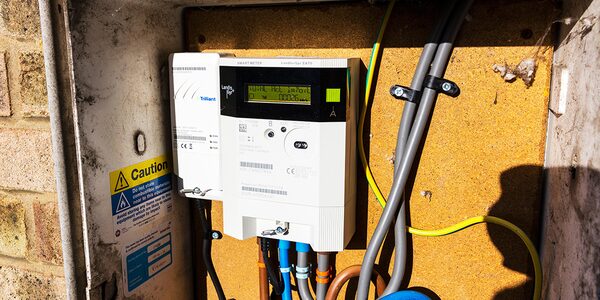
Where the two fuels are with different companies, each supplier is responsible for its own meter, so two separate installations are needed, one from each48. Two appointments have to be booked, one with each supplier2. The DCC and Smart Energy GB both recommend changing the electricity meter first3, because the gas meter communicates through the electricity meter's communications hub.
Where only one fuel is held with a supplier, only that meter is changed: E.ON Next states that for single-fuel customers it will only change the meter for the fuel it supplies10. Suppliers must take all reasonable steps to ensure smart meters automatically send them gas and electricity readings, and should promptly investigate any suspected or identified issue, resolving it themselves or with third parties and keeping the consumer informed6. Where a gas meter is fitted but not reporting, see in-home display shows electricity but no gas.
Refusing, or running the meter in traditional mode
Smart meters are not compulsory, and acceptance is the householder's choice11. Citizens Advice states that a household does not have to accept one26. A supplier can also be asked to fit a smart meter with its communications switched off, so that it operates as a traditional meter2. In that arrangement, and in the parallel case of a pre-programmed replacement for a radio teleswitch meter, manual readings have to be sent and the full benefits of a smart meter are not available, but the supply and heating continue to work.
There is a practical constraint on refusal. The Energy Ombudsman notes that while refusal is a right, replacement options may be limited if a traditional meter is faulty or unsafe37. Which? makes the same point more bluntly, observing that in theory a household is not obliged to have one, but most energy companies no longer stock traditional meters, so a smart meter is what is fitted when a meter needs replacing2. See are smart meters compulsory in the UK.
What the installation changes for a household's independence
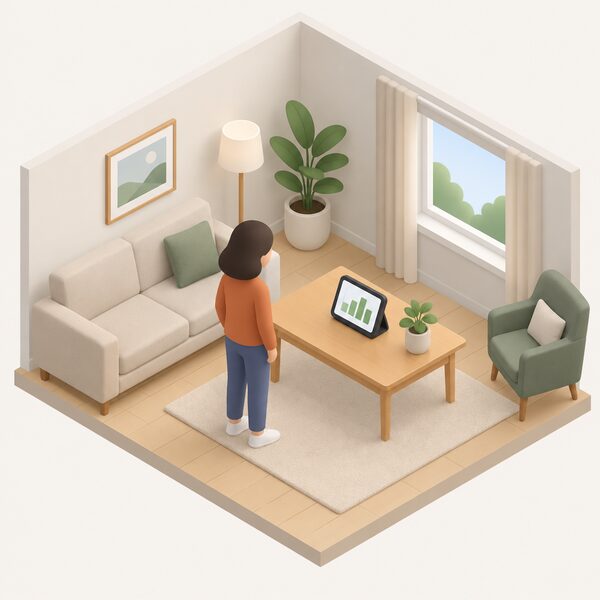
A smart meter changes measurement, not supply. After the visit the household is still connected to the grid and still buying from a supplier; what changes is that the supplier receives readings automatically and the household can see its own consumption on a display in near real time. That visibility is genuinely useful for reducing demand and for deciding what to change, and it is the gateway to time-of-use tariffs and flexibility schemes covered elsewhere in the smart meters and home energy management guide.
The dependencies that remain are worth naming. The meter and the display are supplied and owned through the supplier, not the household. Readings travel over the DCC's network rather than the home's own connection, so the data path is outside household control8. Switching supplier is unaffected for a second-generation meter37, but a first-generation meter may lose functionality on a switch and require manual readings until it is migrated; most have now been connected to the central network and have regained their smart functions49. E.ON Next similarly warns that on switching supplier a meter may lose some functionality, such as sending readings or feeding information to the display10. And the hardware itself has a scheduled obsolescence: 2G and 3G communications equipment is due for replacement before those networks close by the end of 203338. Households wanting data they hold themselves, independent of a supplier's app, will find the options in local data access and home energy monitors.
Sources49 cited
- The smart meter installation process, Smart Energy GB, 2026-04-01
- Smart meter installation, Which?, 2026-02-26
- How to get a smart meter, Data Communications Company
- How to get a smart meter, Smart Energy GB, 2026-08-03
- Smart meters: your rights and expectations, GOV.UK, 2025-08-08
- Final decision on smart meter guaranteed standards, Ofgem, 2026-01-30
- Getting a smart meter installed, with Johnny Vegas, Smart Energy GB, 2026-03-16
- How do smart meters save energy, Data Communications Company, 2026
- The accessible in-home display, Smart Energy GB, 2026-03-16
- Smart meter installation, E.ON Next, 2026-09-17
- Do I have to get a smart meter?, Smart Energy GB, 2026-04-01
- Do I have to accept a smart meter?, Which?, 2026-05-12
- Smart meters, ScottishPower, 2026-09-17
- Smart meters, Welsh Government, 2026
- Guide to smart meters, Energy Saving Trust, 2026-07-15
- Smart electricity meters fact sheet, Consumer Council for Northern Ireland, 2026-04
- Smart meter costs: are smart meters free?, Smart Energy GB, 2026-03-16
- Smart meters for landlords, Smart Energy GB, 2026-03-16
- EV time of use tariffs, E.ON Next, 2026-09-17
- Smart meters advice and guidance, National Grid, 2026-09-17
- How to spot an energy scam, Energy Saving Trust, 2026-06-19
- Designation of the Smart Metering Installation Code of Practice, Ofgem, 2013-04-25
- What is a smart meter?, Which?, 2026-04-07
- Smart meters research briefing, House of Commons Library, 2026-09-20
- Smart meter guaranteed standards of performance, Ofgem, 2025-03-28
- Getting a smart meter installed, Citizens Advice, 2026-09-17
- Smart meter guaranteed standards statutory consultation, Ofgem, 2025-08-08
- Smart meters and wifi: does a smart meter need wifi?, Smart Energy GB, 2026-03-16
- Are smart meters safe?, OVO Energy, 2026-09-17
- Smart meters and carers, Smart Energy GB, 2026-08-19
- Making your home safer, Smart Energy GB, 2026-04-01
- Smart meters are safe, Smart Energy GB, 2026-03-16
- Get help with your smart meter, Ofgem, 2026-09-17
- Smart meters and carers, Smart Energy GB, 2026-08-26
- Book a smart meter appointment, ScottishPower, 2026-09-17
- Can I get a smart meter?, Smart Energy GB, 2026-03-16
- Smart meters, Energy Ombudsman, 2026-09-20
- Smart meters explained, Uswitch, 2026-07-29
- Smart meters for renters, Smart Energy GB, 2026-03-16
- Data access and privacy, Smart Energy GB, 2026-03-16
- Do I already have a smart meter?, Smart Energy GB, 2026-03-16
- Myth busting smart meter problems, Smart Energy GB, 2026-09-17
- Smart metering policy framework post 2025: consultation document, DESNZ, 2025-08
- Does a smart meter need wi-fi?, Data Communications Company, 2026
- Smart meters and decarbonisation, Data Communications Company, 2026
- Smart meters vs home energy monitors, Smart Energy GB, 2026-08-17
- Insulation and energy saving, Smart Energy GB, 2026-03-16
- How can I read a smart meter?, Smart Energy GB, 2026-08-17
- Smart meter problems and solutions, Which?, 2026-08-24
 Smart Meter InstallationCan your supplier make you have a smart meter, and how long should you wait for an appointment?
 Meters and Energy IndependenceDo smart meters really save you money, and can you still get one fitted for free?
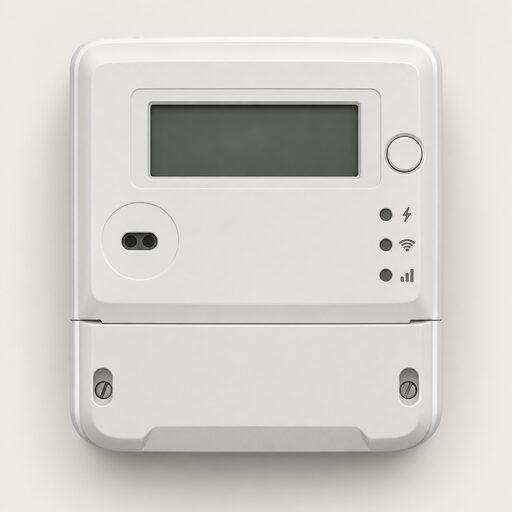 Smart Meter Faults and FixesYour smart meter has stopped working.
 Smart Meter Data and Who Sees ItWhat does your smart meter actually record, and who gets to see it?
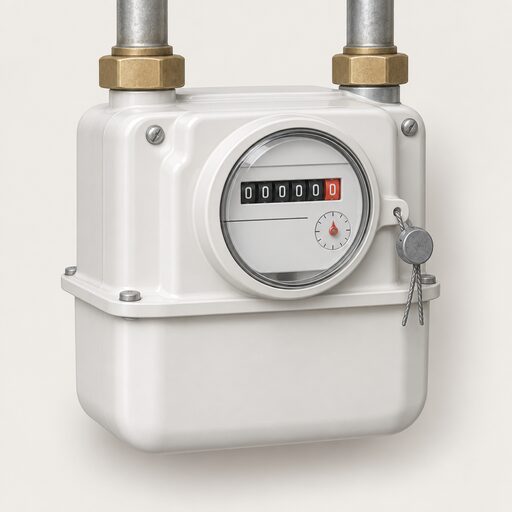 Meter Standards and AccuracyHow UK smart meters are certified for accuracy, how their readings become a bill, what happens when a meter stops communicating, and how a metering or billing dispute is escalated to a supplier and then to the Energy Ombudsman.
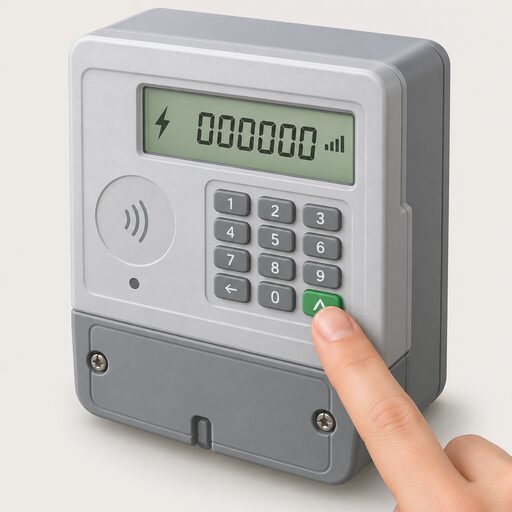 Get a Reading From a Smart MeterHow to bring up a meter reading on a smart electricity or gas meter when a manual reading is still needed, and the difference between the meter itself and the in-home display.