
In this answer
Short answer
A smart meter does not stop working when 3G closes. The Data Communications Company, which runs the national smart meter network, states that smart meters switch seamlessly to the 2G network and continue to operate as normal after the 3G switch-off1. The meter keeps recording energy use accurately, and manual readings remain possible2.
What does change is the communications route. Older communications hubs that rely on 2G or 3G must be replaced with 4G-capable devices, and government guidance states that all smart meters still connected to 2G and 3G must be replaced before the services are switched off by 20333. The replacement is the supplier's responsibility, and Welsh Government guidance says an upgrade for an older smart meter is usually done at no extra cost to the household4.
The practical worry is not a dead meter but a meter that stops sending readings automatically, sometimes called dumb mode. Ofgem reports that over three million smart meters were not operating in smart mode in the first quarter of 20255. That figure covers all causes, not just network technology, but it shows how common loss of smart functionality already is.
What the 3G switch-off means for smart meters
The 3G network is being retired, and the smart metering system has been built to survive that. The DCC's position is that a smart meter continues to operate as normal following the 3G switch-off because it switches seamlessly to the 2G network1. The 2G network itself is scheduled to close in 2033, and the plan is for the smart meter network to transition to 4G before the 2G and 3G networks are switched off1.
The cost of that transition sits outside the original rollout accounting. The Smart Metering 2025 Costs and Benefits Report maintains a distinction between the original rollout and the technological upgrade from 2G and 3G networks to 4G, and excludes the costs related to that transition, with benefits for 2034 reduced to reflect the 2G and 3G switch-off6. In other words, the upgrade is a recognised, separately accounted piece of work rather than an unexpected failure.
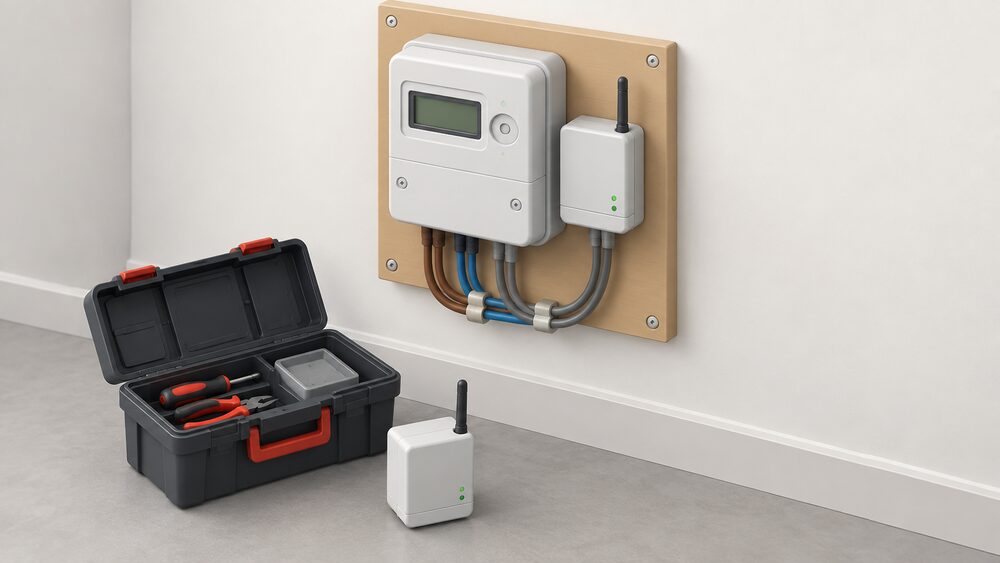
For a household, the meaning is narrow. The meter is not being withdrawn because the mobile technology underneath it is changing. The communications hub, the small unit that carries the signal, is the part that ages out. Everything else, including the metering and the display of usage, continues.
Which meters are affected: the long-range WAN hub issue
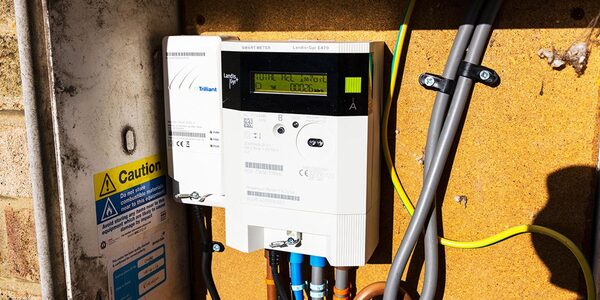
The smart meter network does not use one technology everywhere. It primarily uses long range radio in the north of Great Britain, including Scotland, and 2G or 3G cellular in the central and south regions7. That regional split matters: a household in Scotland may never have depended on 3G at all, while a household in the south is more likely to sit on a cellular hub that will need replacing.
First-generation SMETS1 meters use a third-party communications network to send metering information to the supplier8. Some SMETS1 meters could lose smart functionality when a consumer switched energy supplier9, and independent reporting in 2020 described first-generation meters often losing their smart functionality, including the ability to submit readings automatically, on switching10. Consumer research from 2016 recorded the same loss of smart functionality, such as remote meter reads, on switching supplier11.
There is a second, separate connectivity issue that has nothing to do with 3G. The communications hub is typically situated within or near the electricity meter, and if the gas meter is too far away it may not be able to communicate with it8. A gas meter move can also result in the wireless connectivity of the meter being lost12. These are physical and radio-range problems, and they can produce the same symptom as a network change: a meter that records but does not report.
What happens if your meter loses signal
A meter that loses its communications link does not stop being a meter. Ofgem states that a smart meter not operating in smart mode will still record energy usage accurately, and that manual readings remain possible2. The failure modes listed by Ofgem are that the meter may stop recording the energy you use, or may no longer send readings to your supplier, and the causes include losing connection with the supplier, losing connection after a supplier change, or being installed without connection to the national communication system2.
The in-home display is the part most likely to go quiet, because it depends on the same link. The meter itself does not use the household internet connection; smart meters use their own secure system to connect to the supplier and the in-home display15. That is why a broadband outage does not affect a smart meter, and why a mobile network change can.
A smart meter cannot cut off power by itself16. That is a firm limit on what connectivity loss can mean. The meter measures and reports; it does not hold a switch over the household's supply. Where a supply is cut off because of a faulty meter, the route is the energy supplier, not the network operator17.
"If you have a smart meter that is not operating in smart mode, it will still record your energy usage accurately."
Replacement of older communications hubs: who pays and how it works
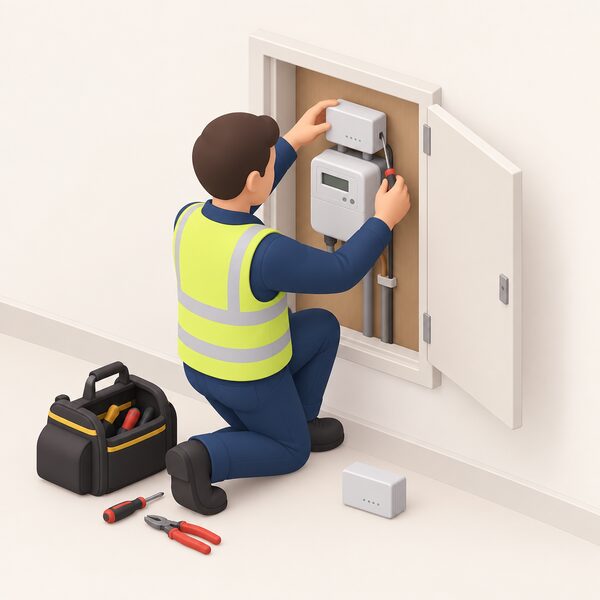
The upgrade is usually done at no extra cost to the household. Welsh Government guidance states that if you already have an older smart meter you might need an upgrade to meet new technical standards, and this is usually done at no extra cost4. Getting a smart meter in the first place is free: Ofgem guidance says to contact your supplier to get a smart meter for free18.
The exception is narrow. Only under exceptional circumstances would an energy supplier be expected to change a smart meter to a traditional meter, and the supplier may charge the costs if it agrees8. Independent guidance notes that some suppliers may charge for the installation of a traditional meter, while a smart meter would be installed as a replacement without charge20.
| Situation | Who acts | Cost position |
|---|---|---|
| Older smart meter needs a technical upgrade | Supplier arranges | Usually no extra cost to the household4 |
| Smart meter stops working | Supplier fixes or replaces | Supplier responsible for maintenance4 |
| Household wants a smart meter | Supplier installs | Free18 |
| Household wants to revert to a traditional meter | Supplier, exceptional circumstances only | Supplier may charge if it agrees8 |
The scale of the work is significant. The National Audit Office has noted that additional home visits to replace communications hubs will be needed ahead of the network closures3. The DCC runs a programme specifically for upgrading Britain's first-generation smart meters9. For a household, the practical expectation is a visit, not a new metering regime.
What to do now: checking your meter and contacting your supplier
The first step is to establish what is actually fitted. The meter itself rarely tells you which network it uses. The supplier holds that record, and Ofgem's guidance is that if a smart meter stops working, the household should contact the supplier, which is responsible for maintenance and will fix or replace the meter as needed4. If you suspect an issue with your smart meter, or your supplier identifies one, the supplier should promptly investigate it, resolving it themselves or with third parties and keeping the consumer informed21.
There is a switching caveat worth knowing. You can switch suppliers if you have a smart meter, but the new supplier might not offer all smart meter services such as remote meter readings, and the meter may need replacing22. Older meters are not easily switched between suppliers and do not necessarily give access to future data services such as advanced time of use tariffs23.
For households on the Radio Teleswitch Service, which is a separate switch-off, the route is the same: contact your supplier to arrange to have a new smart meter installed19. Moving to a smart meter allows continuation on a time of use tariff with cheaper electricity at night, and where a smart meter cannot be installed the supplier may install a different type of meter that can still offer a cheaper night rate, varying between suppliers24. You are not obliged to accept a smart meter25. In some cases a supplier may offer to install smart meter technology but disable the communications function, so it will not send readings automatically23.
Smart meters and household energy independence: why connectivity matters
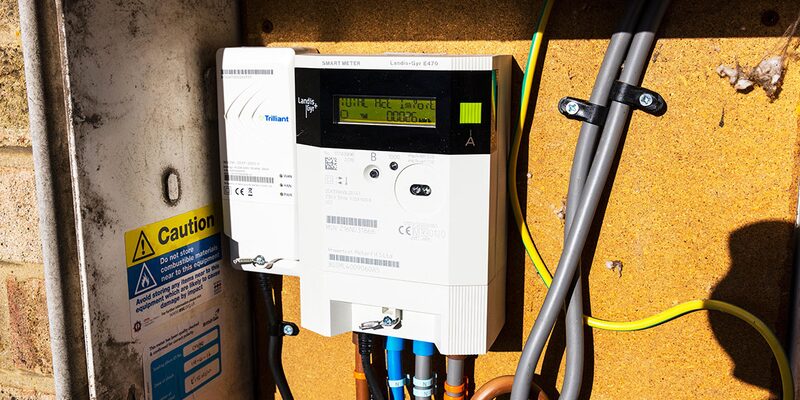
A smart meter is a grid-connected device. It does not use the household internet connection; it uses its own secure system to connect to the supplier and the in-home display15. That design keeps it working when broadband fails, but it also means the household does not own or control the communications path. The dependence is on the supplier and on the national network, not on the home's own infrastructure.
What the connectivity buys is participation. Smart meters allow energy suppliers to offer incentives for households who can reduce their energy use during peak hours, helping to balance supply and demand and reduce pressure on the grid26. The data provided by a smart meter puts households in control of energy usage, so they can take energy-saving steps to reduce CO2 emissions26. Automatic meter readings are the mechanism behind accurate billing without manual effort27.
The limits are worth stating plainly. Smart meters only measure household energy use and do not know when individual appliances are turned on or off27. A smart meter cannot cut off power by itself16. And a meter that is not operating in smart mode loses the automatic reporting that makes time of use tariffs and flexibility schemes workable, even though it keeps measuring2. For a household pursuing energy independence, the smart meter is a reporting and tariff instrument, not a source of autonomy. It depends on a supplier, a communications network and a national data system. The independence it supports is indirect: better data, access to cheaper off-peak rates, and eligibility for flexibility payments. Where that link fails, the fallback is manual readings and a standard tariff.
Sources27 cited
- Do smart meters use 3G?, Smart DCC, 2024
- Smart meter performance, Ofgem, 2026
- Tough new rules force suppliers to fix faulty smart meters, GOV.UK, 2026-03-10
- Smart meters, Welsh Government, 2026
- Smart meter Guaranteed Standards of Performance Draft Impact Assessment, Ofgem, 2025
- Smart Metering 2025 Costs and Benefits Report, Department for Energy Security and Net Zero, 2025
- What is a smart meter?, Which?, 2026-04-07
- Smart meters, Energy Ombudsman, 2026-09-20
- Upgrading Britain's first-generation smart meters, Smart DCC, 2026
- Energy smart meter installation roll-out faces further setbacks, Which?, 2020-10-20
- Early consumer experiences of smart meters, Citizens Advice, 2016-06-17
- Connections FAQ, SGN, 2026-09-17
- Final decision: smart meter GSOPs, Ofgem, 2026-01-30
- Response to Ofgem consultation on supplier Guaranteed Standards of Performance, Consumer Scotland, 2025-10-10
- Understanding smart meters, National Energy Action, 2026-04-21
- Can a smart meter cut off power?, Smart Energy GB, 2026-04-24
- Plan for a power cut, Ofgem, 2026
- Get help with your smart meter, Ofgem, 2026-09-17
- Getting a smart meter, Ofgem, 2026
- Do smart meters cost more?, Smart Energy GB, 2026-03-16
- Smart meters: your rights and expectations, GOV.UK, 2025-08-08
- Problems with services, Isle of Anglesey County Council, 2025-10
- Guide to smart meters, Energy Saving Trust, 2026-07-15
- RTS meter switch off, Energy Saving Trust, 2026-05-08
- RTS: what you need to know, Act on Energy, 2026-08-26
- Smart meters and decarbonisation, Smart DCC, 2026
- Automatic meter readings, Smart Energy GB, 2026-04-07
 SMETS1 and SMETS2 MetersIs your smart meter an old first generation model or a newer one, and does it matter?
 Smart Meter Faults and FixesYour smart meter has stopped working.
 Three-Phase MeteringYour home has a three-phase supply.
 Meters and Time-of-Use TariffsDo you need a smart meter for a time-of-use tariff, and does it have to send readings every half an hour?
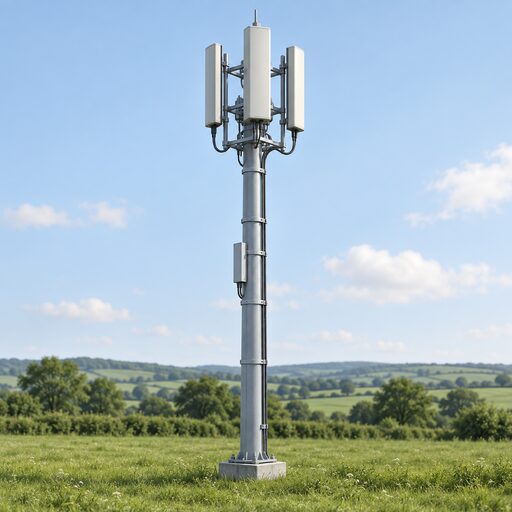 How Smart Meters CommunicateSmart meters send readings without using your home wifi or broadband, so they still work if your internet goes down.
 Smart Meter RulesCan your supplier make you have a smart meter?