In this guide
Home Energy Grants and Schemes in the UK: The Full Guide
Home energy grants in the UK fall into three kinds. The first is capital grants towards equipment, led by the Boiler Upgrade Scheme, which takes £7,500 off the cost and installation of an air source, ground source or water source heat pump in England and Wales1. The second is fabric and whole-house upgrades for lower-income households. In England the main route is the Warm Homes: Local Grant, which is delivered through councils, offers up to £30,000 of measures per property and is aimed at households with a combined income of less than £36,0003. The third is help with bills. The main example is the Warm Home Discount, a £150 rebate paid for by a levy on all domestic gas and electricity customers4.
Energy policy is largely devolved, so the schemes on offer depend on where the home is. The Boiler Upgrade Scheme covers England and Wales only2. Scotland runs its own Home Energy Scotland Grant and Loan Scheme. Northern Ireland routes households through NI Energy Advice. Several schemes that still draw search traffic have also closed. The Great British Insulation Scheme ran to 31 March 20265, and the Green Homes Grant, the Home Upgrade Grant and the Domestic Renewable Heat Incentive no longer accept new applicants.
This page sets out what each scheme pays for, who administers it, who is inside and outside its rules, how the schemes interact and when they end. Each scheme has its own detailed page within grants and schemes.
The main home energy grants in the UK at a glance
The table lists the principal schemes, what each one funds, where it applies and who runs it. Citation markers sit in the cells.
| Scheme | What it funds | Where | Run by | Status |
|---|---|---|---|---|
| Boiler Upgrade Scheme | Upfront grants for heat pumps and biomass boilers | England and Wales | Ofgem | Open, closing 30 December 20291 |
| Warm Homes: Local Grant | Insulation, energy-efficient heating and renewable energy installations | England | Local authorities | Open3 |
| Warm Homes: Social Housing Fund | Energy performance improvements to social housing | England | Local authorities and social landlords | Open8 |
| Warm Home Discount | £150 energy bill rebate | Great Britain | Energy suppliers, overseen by Ofgem | Open, confirmed to 2030-314 |
| Home Energy Scotland Grant and Loan Scheme | Grant, interest-free loan or both | Scotland | Scottish Government programme | Open7 |
| Green Homes Wales | Can be used alongside the Boiler Upgrade Scheme | Wales | Welsh Government programme | Open9 |
| NI Energy Advice | Referrals to energy grants and other help | Northern Ireland | Public advice service | Open10 |
| Great British Insulation Scheme | Insulation and some heating controls | Great Britain | Ofgem | Closed 31 March 20265 |
The rows differ in kind. The Boiler Upgrade Scheme is a national grant with one set of rules, and any property that meets the conditions is eligible. The Warm Homes: Local Grant goes through councils, so both access and the offer depend on the local authority. In Northern Ireland the government's own page for householders is an advice service that makes "referrals to energy grants and other sources of help"10. Belfast City Council adds that its home heating grants "are available to homeowners and private tenants"11.
Councils in England commonly act as the front door. East Herts runs a Home Energy Support Service that gives information on grants and helps residents check eligibility, alongside benefits support and debt advice3. Birmingham City Council points owner-occupiers to the government's help to heat grants12. The Welsh Government describes its Warm Homes Programme as providing "home energy efficiency improvements to eligible households"13. Ofgem's consumer guidance also lists energy supplier schemes and grants for "making energy-saving improvements to your home"14. Further reading: council energy grants and the nation pages for England, Scotland, Wales and Northern Ireland.
Closed schemes that still appear in searches
| Scheme | What it was | Status |
|---|---|---|
| Green Homes Grant vouchers | Grants to homeowners and landlords in England for energy efficient improvements, September 2020 to March 2021 | Closed15 |
| Warm Homes Fund | Listed by an energy supplier as no longer accepting new applications | Closed16 |
| Domestic Renewable Heat Incentive | Payments over 7 years to households in England, Scotland and Wales for renewable heating | Closed to new applicants, payments continuing17 |
| Home Upgrade Grant Phase 1 | £218 million allocated to low-income homes off the gas grid | Closed18 |
An energy supplier's grants page states that "The Green Homes Grant scheme is no longer accepting new applications" and says the same of the Warm Homes Fund16. The closed home energy grants page covers each of these.
Boiler Upgrade Scheme: £7,500 towards a heat pump
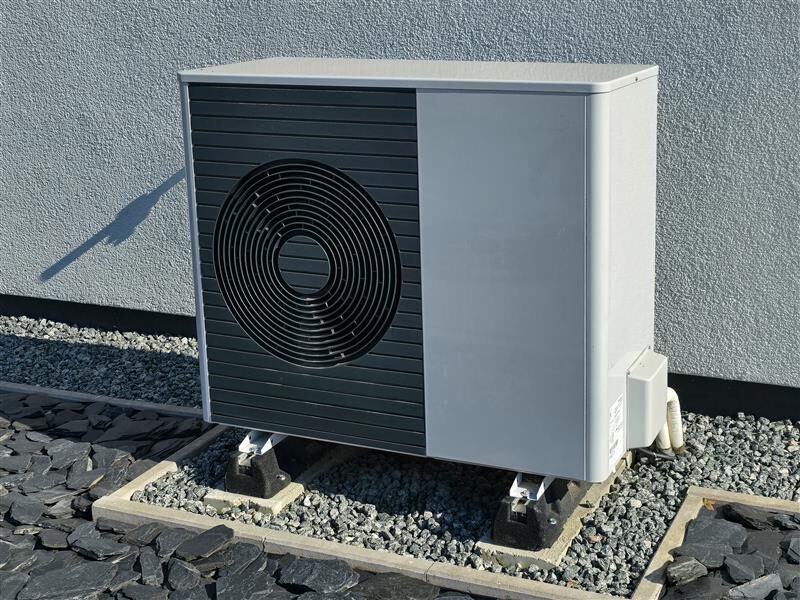
The Boiler Upgrade Scheme is a government scheme that gives upfront grants to cut the cost of installing heat pumps and biomass boilers in homes and non-domestic buildings1. Ofgem administers it. The scheme launched on 23 May 2022 to support the decarbonisation of heat in buildings19. It applies to homes and small and medium non-domestic buildings in England and Wales2.
The current grant for heat pumps is a single figure. Ofgem's scheme page gives "£7,500 off the cost and installation of air-to-water heat pumps, ground source heat pumps and water source heat pumps"1. The government's grant listing states the same £7,500 separately for an air source and a ground source heat pump2. Some local guidance still quotes an earlier, lower figure of £5,000, so the documents a householder may come across do not all agree. The two official scheme pages, both read in September 2026, give £7,500.
"£7,500 off the cost and installation of air-to-water heat pumps, ground source heat pumps and water source heat pumps"
The money is paid as "upfront capital grants"19. The installer takes it off the invoice and the householder pays the balance. Earlier arrangements paid for heat generated over a period of years. A householder therefore needs to finance only the net cost. The size of that net cost is installer-quoted and depends on the property.
The budget is set by scheme year. Ofgem's quarterly reports note that "Unspent budget is not carried over to the next scheme year"20. Ofgem publishes a quarterly report on the scheme, and the most recent covers 1 May 2026 to 31 July 202621.
Further detail: the Boiler Upgrade Scheme, how much the grant is, biomass boiler requirements and whether hybrid heat pumps qualify.
Who qualifies for the Boiler Upgrade Scheme, and who does not
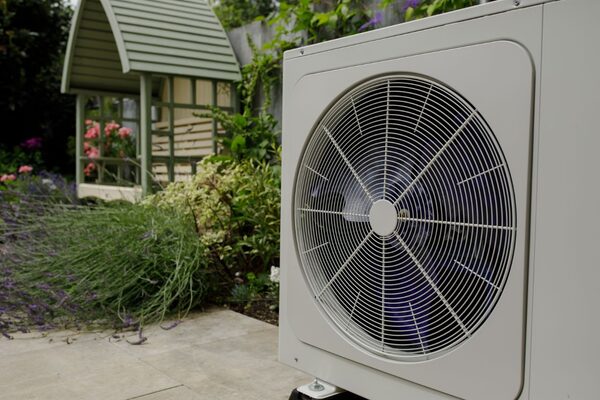
The scheme is open to buildings. It has no income or benefits test. Government heat pump statistics describe it as "targeted towards domestic and non-domestic properties in England and Wales" and add "Self-build properties are eligible"22. Ofgem's quarterly reports refer to "homes and non-domestic buildings"23.
The published scheme rules set these conditions2:
- The property must be in England or Wales.
- The property must have a valid energy performance certificate.
- The installer must be certified by the Microgeneration Certification Scheme (MCS), which the grant listing calls a nationally recognised quality assurance scheme.
- The technology must be an eligible one: a heat pump or a biomass boiler1.
The EPC condition holds even where other requirements are waived. Ofgem's property owner guidance says of exempt properties: "It is important to note these properties will still require a valid EPC to be submitted at voucher application stage."24 The page on EPC and insulation requirements covers this.
Geography is the main exclusion. Homes in Scotland and Northern Ireland are outside the Boiler Upgrade Scheme. Scottish homeowners use the Home Energy Scotland Grant and Loan Scheme, which offers "a grant, interest free loan or a combination"7. The Welsh Government confirms that the scheme covers Wales, describing it as one "which provides grants for heat pump installations across England and Wales"9.
The MCS rule affects household independence. Self-installation is not a route to the grant, and neither is an installer without the certification. Further reading: MCS installer requirements, Boiler Upgrade Scheme eligibility, landlords and second homes, social housing and homes with a gas boiler.
How the Boiler Upgrade Scheme application works: an installer-led, two-stage voucher process
The property owner does not apply. The grant listing states: "The application is installer-led, with the installer applying for the grant on the property owner's behalf."2 Ofgem's quarterly reports set out the sequence25:
- Stage 1a: the installer submits a voucher application, and Ofgem checks whether the pre-installation eligibility criteria are met.
- Stage 1b: if the application succeeds, Ofgem issues the voucher.
- Stage 2a: after the installation is commissioned, the installer submits a voucher redemption application.
- Stage 2b: once Ofgem has established that the remaining eligibility requirements are met, the grant payment is made to the installer.
The householder acts only at the start. The installer gives Ofgem the owner's details, and "Ofgem will email you, asking you to consent to the installer applying on your behalf"26. Only MCS certified installers can apply for and redeem vouchers27.
Vouchers were first issued on 23 May 2022 for eligible technologies installed from 1 April 202229. The rule on validity matters to anyone planning work. If groundworks, a network connection upgrade or a supplier delay pushes the project beyond the voucher's life, there is no extension and the application starts again. The page on voucher redemption deadlines covers this.
Contacting Ofgem about the scheme
| Purpose | Address |
|---|---|
| General queries | BUS.enquiry@ofgem.gov.uk30 |
| Complaints about Ofgem's administration | feedback@ofgem.gov.uk30 |
| Reporting suspected fraud or misuse | counterfraud@ofgem.gov.uk30 |
| Right of review submissions | BUS.Review@ofgem.gov.uk31 |
| Property owners providing documents directly to Ofgem | BUS.propertyowner@ofgem.gov.uk32 |
Full walkthrough: applying for the Boiler Upgrade Scheme. Fraudulent offers that use the scheme's name are covered under energy grant scams.
Great British Insulation Scheme: insulation and heating controls for the least efficient homes
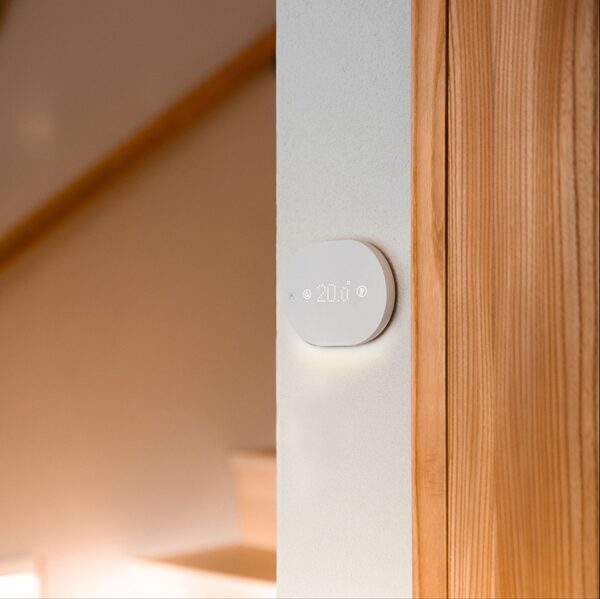
The scheme was formerly known as ECO+33. It was a government energy-efficiency scheme administered by Ofgem, "designed to deliver improvements to the least energy-efficient homes in Great Britain" in order to tackle fuel poverty and reduce bills34. It was an obligation placed on energy suppliers, and Ofgem's delivery guidance explains "how a supplier meets its obligations"35. Northern Ireland was never covered.
The Commons Library briefing records that the scheme was intended to help around 300,000 households. It opened eligibility to households in lower council tax bands: bands A to D in England and A to E in Scotland and Wales, provided the home's energy efficiency rating was band D or lower18. The briefing reports that 25% of measures delivered were heating controls, as of December 202518.
The scheme delivered "the rapid installation of value-for-money insulation measures and, in some cases, heating controls"36. Its rules were as follows36:
- All installers had to be TrustMark-registered businesses.
- All measures had to be delivered to PAS2030/2035 standards.
- Cavity wall insulation, including party wall insulation, was available to both eligible groups.
- Certain heating controls, such as room thermostats, were allowed as a secondary measure in owner-occupied homes in the low-income group.
- There was no minimum requirement for a measure to raise the property's SAP rating.
- Higher-cost measures, such as solid wall insulation, were more likely to require a contribution from the household.
Guarantees still matter to households that had measures installed. "Ofgem does not administer appropriate guarantees or financial protection" for measures under the scheme, and the current list of appropriate guarantees is on the TrustMark website36. The government's application page says the scheme "helps people get free or cheaper insulation to reduce their home's energy bills"37. Ofgem's scheme team can be reached at GBIS.enquiry@ofgem.gov.uk38. Further reading: the Great British Insulation Scheme, its eligibility rules and how it compared with ECO4.
Warm Homes: Local Grant: up to £30,000 of measures through local authorities in England
The Warm Homes: Local Grant is the current government-funded route to whole-house upgrades for lower-income households in privately owned homes in England. Local authorities deliver it, and the scheme "provides grants to low-income households living in privately owned properties"39. It does not operate in Scotland, Wales or Northern Ireland.
The headline figure varies between documents. East Herts Council states: "Up to £30,000 of measures is available per property." It describes the scheme as supporting "households with a combined income of less than £36,000"3. The Greater Manchester Combined Authority publishes a different structure for energy performance improvements39:
| Property | Share of cost covered | Cap |
|---|---|---|
| Owner occupier, or a private landlord's first property in England | 100% | £15,000 |
| A private landlord's second and subsequent properties in England | 50% | £7,500 |
The two sources do not explain the gap. The £15,000 and £7,500 caps are given for "energy performance improvements", while the £30,000 figure is for measures per property overall. The council delivering the scheme in a given area is the authority on what applies there. Fuller criteria sit behind the income headline, and the page on Warm Homes: Local Grant eligibility sets them out.
The July 2026 policy guidance lists a wide range of eligible energy performance measures. They include insulation types, heating controls, hot water cylinder measures, low energy lighting, solar PV, solar thermal, digital and smart controls, draughtproofing, double and triple glazing, energy efficiency doors and domestic batteries40. This makes it the one open grant in England that can pay for generation and storage as well as fabric, for households that qualify. The pages on solar panel grants and battery storage grants develop this.
Funding for 2025 to 2026 was announced at £88m in November 202441. The government publishes statistics on measures installed under the scheme in domestic properties in England. A release came out in August 2026 and a further one is scheduled for October 202642. Social housing in England has a separate fund, the Warm Homes: Social Housing Fund, which "supports local authorities and social housing landlords in England to improve the energy performance of social housing"8. Main page: the Warm Homes: Local Grant.
Warm Home Discount: a £150 annual rebate on electricity bills
The Warm Home Discount pays for nothing in the home. Ofgem describes it as "a fuel poverty reduction scheme, reducing the energy costs of low-income and vulnerable households across Great Britain since its inception in 2011", and says it delivers "primarily through the provision of £150 energy bill rebates, funded through a levy on all domestic gas and electricity customers"4. The government's response to its consultation on continuing the scheme uses the same words44.
The current figure is £150. The government's statistical release states that the scheme "requires large domestic energy suppliers to provide an annual discount of £150" to eligible households45, and defines it as "A one-off £150 discount off household electricity bills"46. A House of Commons Library briefing calls it a "£150 annual rebate on energy bills to support low-income and vulnerable" households47. An older parliamentary committee report gives "a one-off £140 payment applied to eligible customers' electricity bills" and two and a half million households supported48. That report describes the scheme at an earlier point.
The Department for Energy Security and Net Zero's annual report for 2025 to 2026 records "the Warm Home Discount reaching around 6 million households" in winter 2025-26, and the scheme's "continuation" until 2030-316. It also records a change in how the scheme is paid for:
"shift the recovery of Warm Home Discount costs from the standing charge to the unit rate from April 2026"
Households that receive the rebate also pay the levy, as every domestic gas and electricity customer does. Recovering the cost through the unit rate ties each household's share to how much energy it uses. It is no longer a flat daily amount.
The discount covers Great Britain and excludes Northern Ireland. Scotland has its own regulations, which define scheme years 16 to 20 as those beginning in 2026 to 203049. Park home residents, who often buy electricity through a site owner, have a separate route that "offers £150 towards energy costs for eligible park home residents"50. Further reading: the Warm Home Discount, who qualifies, what to do without a letter and how it compares with the Winter Fuel Payment.
Which scheme fits which home: a chooser

Three questions sort the schemes: where the home is, who owns it, and whether the household is on a lower income. The table applies them using the rules above.
| Situation | Scheme whose rules fit | Key condition |
|---|---|---|
| Owner in England or Wales replacing heating with a heat pump, any income | Boiler Upgrade Scheme | Valid EPC, MCS certified installer2 |
| Self-build in England or Wales | Boiler Upgrade Scheme | Self-build properties are eligible22 |
| Lower-income household in a privately owned home in England | Warm Homes: Local Grant | Combined income of less than £36,000, delivered by the council3 |
| Social housing tenant in England | Warm Homes: Social Housing Fund, through the landlord | The landlord applies, not the tenant8 |
| Homeowner in Scotland | Home Energy Scotland Grant and Loan Scheme | Grant, interest-free loan or both7 |
| Household in Wales | Boiler Upgrade Scheme, Green Homes Wales, Warm Homes Programme | Green Homes Wales can be used alongside the Boiler Upgrade Scheme9 |
| Household in Northern Ireland | NI Energy Advice referral | Grants available to homeowners and private tenants in Belfast10 |
| Low-income or vulnerable household in Great Britain needing bill help | Warm Home Discount | £150 rebate4 |
Scotland's scheme differs most from the English pattern. The Scottish Government set out its design as giving households "the option and flexibility of accessing a loan, grant or combination of both"51. For energy efficiency measures such as insulation, "grant funding is available up to 75% of the combined cost of measures up to a maximum grant amount of £7,500", and with the rural uplift "rural households can claim up to £18,000 in grant funding"7. The pages on Home Energy Scotland grant vs loan and the rural uplift cover this.
The National Audit Office's review of the Green Homes Grant shows why targets in this area are read with caution. That scheme was meant to "enable up to 600,000 households" to "save up to £600 on their energy bills" by installing energy efficiency and low carbon heat measures52. It ran from September 2020 to March 2021 only15. For comparisons between specific schemes: Boiler Upgrade Scheme vs ECO4, Warm Homes: Local Grant vs the Great British Insulation Scheme and Nest Wales vs the Warm Homes: Local Grant.
Rules on combining grants, and what cannot be stacked
The general rule in the published guidance is that two public funds cannot pay for the same measure. Ofgem's ECO4 delivery guidance gives two explicit rules5:
- "Funding from BUS and ECO cannot be blended for the same measure or be included within an ECO4 project."
- "ECO and WHD funding cannot be combined for any measures", which applies to energy efficiency measures delivered under the Warm Home Discount's industry initiatives.
The Warm Homes: Social Housing Fund Wave 3 guidance takes the same line for landlords: "Grant funding from other Energy Efficiency Schemes cannot be used as co-funding."53 The same document notes that where grants go to a local authority or combined authority for its own social housing stock, this "will not be considered a subsidy"53.
The rule concerns the same measure, and different measures in the same home are treated separately. The first ECO4 rule prohibits blending "for the same measure" and including Boiler Upgrade Scheme funding "within an ECO4 project". It does not address separately funded work done at a different time. One combination has explicit official confirmation: "Green Homes Wales can be used alongside the UK Government's Boiler Upgrade Scheme"9. The Warm Home Discount rebate is a credit on a bill, which puts it in a different category from installation funding. The detailed pages are ECO4 and other grants and Boiler Upgrade Scheme or ECO4 for a heat pump.
Some services that sound like grant schemes pay no grants. Tameside Council states that Your Home, Better "does not offer grants or funding, but can identify sources that could help towards the costs of home energy projects"54. Loans are a separate matter again, and they are covered under interest-free loans for home energy.
How long each scheme runs, and key dates to watch
| Scheme | Period or key date |
|---|---|
| Boiler Upgrade Scheme | Opened 23 May 2022, closing date 30 December 20292 |
| Great British Insulation Scheme | Ended 31 March 20265 |
| Warm Home Discount | Confirmed to 2030-316. Scheme years 17 to 20 each run 1 April to 31 March4 |
| Warm Home Discount (Scotland) | Scheme years 16 to 20, beginning 2026 to 2030. The first runs from commencement to 31st March 202749 |
| Green Homes Grant vouchers | September 2020 to March 202115 |
| Energy Bills Support Scheme | Six monthly instalments of £66 or £67 from October 202255 |
| Green Gas Support Scheme | Open for four years from 30 November 202156 |
| Domestic Renewable Heat Incentive | Payments run for 7 years per participant17 |
| Home Energy Scotland Grant and Loan | 9 months to complete work and submit a claim57 |
Published end dates do not always agree. The government's grant listing gives the Boiler Upgrade Scheme a closing date of 30 December 20292. At least one council page still describes it as running "from 2022 to 2025"3. The grant listing is the scheme-rules source and the more recently maintained of the two. Because unspent Boiler Upgrade Scheme budget does not carry into the next scheme year20, availability in any one year depends on that year's budget as well as the closing date.
Scotland's scheme has a working deadline. Applicants "have set period of time to complete work and submit their claim (currently 9 months for HESGL)"57. The Scottish Government has published monthly processing-time data for April 2025 to January 202658.
A tax measure sits alongside the grants: the Value Added Tax (Installation of Energy-Saving Materials) Order 2022, statutory instrument 2022 No. 36159. The pages on VAT relief on energy-saving materials, the relief's end date and the position in Northern Ireland explain what it covers. Households still receiving Domestic RHI payments have continuing duties, which are set out under ongoing obligations.

What these grants mean for household energy independence
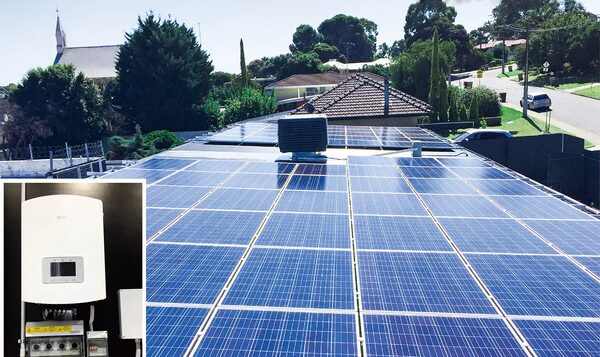
The schemes move a household towards self-sufficiency to very different degrees.
Bill rebates leave dependence unchanged. The Warm Home Discount takes £150 off a bill4. It does not alter how much energy the home needs or where that energy comes from. The rebate is delivered through a supplier and paid for by a levy on all gas and electricity customers.
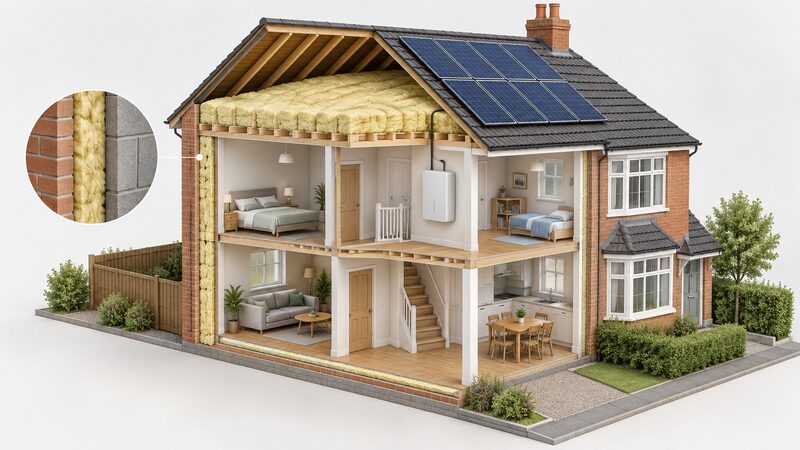
Insulation lowers demand permanently. Fabric measures of the kind funded by the Great British Insulation Scheme and the Warm Homes: Local Grant reduce the energy a home must buy from any source. They need no app and carry no cloud service or manufacturer tie. For a household's security they are the most durable gain. They also make a heat pump, solar array or battery work better.
A heat pump swaps one dependence for another. The Boiler Upgrade Scheme helps a home in England or Wales stop burning gas or oil, which removes exposure to those fuels and their import markets. The home then depends wholly on electricity, and so on the grid and a supplier, unless it also generates and stores its own power. The Boiler Upgrade Scheme does not fund generation or storage.
Only one open scheme in England funds generation and storage together. The Warm Homes: Local Grant lists solar PV, solar thermal and domestic batteries among its measures40, but it is limited to lower-income households in privately owned homes. Better-off households have no equivalent capital grant for solar or batteries in England.
The remaining dependence is on the schemes themselves. The Green Homes Grant offered "grants of up to £10,000"54 and closed within seven months15. The Home Upgrade Grant's first phase allocated £218 million to low-income homes off the gas grid and has since closed18. The Great British Insulation Scheme ended in March 20265. The record shows that schemes open and close on the government's timetable. A household's planning horizon may be longer. Rural Scottish households can claim up to £18,000 in grant funding7. That sum shows how far the offer diverges across the UK for otherwise similar homes. The page on grants and household energy independence examines these trade-offs in depth.
Sources59 cited
- Boiler Upgrade Scheme (BUS), Ofgem, 2026-09-17
- Boiler Upgrade Scheme grant listing, GOV.UK Find a Grant, 2026-09-18
- Home and business grants, schemes and advice, East Herts Council, 2026-09-17
- Warm Home Discount (WHD), Ofgem, 2026-09-17
- ECO4 delivery guidance v3.2, Ofgem, 2025-12-08
- DESNZ annual report and accounts 2025 to 2026: performance report, Department for Energy Security and Net Zero, 2026-09-17
- Energy saving home improvements, Scottish Government, 2026-09-17
- Reforming consumer protection for home upgrade schemes: consultation document, GOV.UK, 2026-06-17
- £5 million to help Welsh households invest in greener homes, Welsh Government, 2026-03-05
- Energy saving grants in your area, nidirect, 2026-09-17
- Home heating, Belfast City Council, 2026-09-20
- Getting help with your energy bills, Birmingham City Council, 2026-04-15
- Buildings and utilities news round-up March 2023, Welsh Government, 2023-03-01
- Get help with your energy bills, Ofgem, 2026-09-17
- Heat pump deployment quarterly statistics, United Kingdom, 2025 Q2, GOV.UK, 2025-09-04
- Energy efficiency grants, E.ON, 2026-09-20
- Domestic Renewable Heat Incentive annual report, April 2025 to March 2026, Ofgem, 2026-07-17
- Research briefing CBP-9889, House of Commons Library, 2026-09-17
- Boiler Upgrade Scheme annual report, April 2025 to March 2026, Ofgem, 2026-07-31
- Boiler Upgrade Scheme quarterly report, issue 13, Ofgem, 2025-08-29
- Boiler Upgrade Scheme quarterly report, issue 17, Ofgem, 2026-08-31
- Heat pump deployment quarterly statistics, United Kingdom, 2026 Q1, GOV.UK, 2026-06-11
- Boiler Upgrade Scheme quarterly report, issue 15, Ofgem, 2026-02-27
- Boiler Upgrade Scheme guidance for property owners v2.3, Ofgem, 2023-09-25
- Boiler Upgrade Scheme quarterly report, issue 15 (PDF), Ofgem, 2026-02-27
- Boiler Upgrade Scheme leaflet, May 2022, GOV.UK, 2022-05
- Boiler Upgrade Scheme (BUS), Welsh language page, Ofgem, 2026-09-17
- Boiler Upgrade Scheme guidance for property owners v5 (draft), Ofgem, 2026-03-25
- Heat pump deployment quarterly statistics, United Kingdom, 2025 Q3, GOV.UK, 2025-12-04
- Boiler Upgrade Scheme guidance for property owners v5.1, Ofgem, 2026-07
- Boiler Upgrade Scheme guidance for installers v5.1, Ofgem, 2026-07-02
- Boiler Upgrade Scheme guidance for property owners v5, Ofgem, 2026-04-28
- Great British Insulation Scheme, Ofgem, 2026-09-17
- Great British Insulation Scheme: energy suppliers, Ofgem, 2026-09-17
- Great British Insulation Scheme delivery guidance, Ofgem, 2025-08-07
- Great British Insulation Scheme: supply chain, Ofgem, 2026-09-17
- Apply for support from the Great British Insulation Scheme, GOV.UK, 2026-09-17
- Great British Insulation Scheme: contacts, guidance and resources, Ofgem, 2026-09-17
- Warm Homes: Local Grant, Greater Manchester Combined Authority, 2026-09-17
- Warm Homes: Local Grant policy guidance, July 2026, GOV.UK, 2026-07
- Help to save households money and deliver cleaner heat to homes, GOV.UK, 2024-11-21
- Warm Homes: Local Grant statistics, August 2026, GOV.UK, 2026-08-27
- Warm Homes: Local Grant statistics, October 2026 (announcement), GOV.UK, 2026-09-07
- Continuing the Warm Home Discount scheme: government response, GOV.UK, 2026-01-30
- Warm Home Discount statistics, 2025 to 2026, Department for Energy Security and Net Zero, 2026-06-18
- Warm Home Discount statistics, 2025 to 2026 (report), Department for Energy Security and Net Zero, 2026-09-17
- Research briefing SN06163, House of Commons Library, 2026-02-26
- Environmental Audit Committee report, session 2019 to 2021, UK Parliament, 2026-09-20
- Warm Home Discount (Scotland) regulations, SI 2026/488, legislation.gov.uk, 2026-04-30
- Home energy support schemes, Cheshire West and Chester Council, 2026-09-17
- Heat pump sector deal expert advisory group: Scottish Government response, Scottish Government, 2022-11-11
- Green Homes Grant Voucher Scheme, National Audit Office, 2021-09-08
- Warm Homes: Social Housing Fund Wave 3 scheme guidance addendum, GOV.UK, 2026-06
- Energy saving grants and funding, Tameside Council, 2026-09-17
- Research briefing CBP-9461, House of Commons Library, 2026-09-20
- Key terms explained: Domestic Renewable Heat Incentive, Ofgem, 2026-09-17
- FOI release 202400442664, Scottish Government, 2025-01-20
- Home Energy Scotland Grant and Loan Scheme: application and claim processing times, Scottish Government, 2026-03-12
- The Value Added Tax (Installation of Energy-Saving Materials) Order 2022, legislation.gov.uk, 2026-09-17