

In this comparison
Both schemes have closed to new applications. The Great British Insulation Scheme ran from April 2023 until March 2026 and was not extended. ECO4 stopped accepting new applications after the Chancellor's 2025 Autumn Budget confirmed the end of the green levy, and the scheme itself runs until 31 December 2026 to allow work already committed to be completed1.
For a household comparing them, the practical difference was always the shape of the offer. ECO4 focused on whole house retrofits for low-income, vulnerable and fuel poor households, while GBIS complemented it by delivering mostly single insulation measures to a wider pool of households in the least efficient homes4. Both were funded by energy companies through a levy on bills, not by government grants paid directly to homeowners, and both were administered by Ofgem2.
The comparison below sets out how the funding worked, who qualified under each route, what each paid for, how applications ran through suppliers, what the schemes delivered, and what closure means for work already in progress.
GBIS and ECO4 at a glance
The two schemes were designed as a pair, with GBIS explicitly supporting ECO4 rather than replacing it. Ofgem's own description is that GBIS complements the Energy Company Obligation scheme, yet unlike ECO4's whole house approach, it mostly delivered single insulation measures1. Local authority statements of intent repeat the same framing: GBIS would support ECO4 in the delivery of predominantly single measures targeted at a wider range of households11.
That pairing shaped everything else. ECO4 was launched in 2022 and focused on whole house retrofits, targeting low-income, vulnerable and fuel poor households13. GBIS continued ECO4's focus on reducing fuel poverty and energy bills but aimed to deliver rapid installation of energy efficiency measures to a wider pool of households in the least efficient homes14. Both operated across Great Britain, so England, Scotland and Wales, with separate arrangements in Northern Ireland15.
The schemes also shared a reputation problem. The National Audit Office found that ECO4 and GBIS combined with the consumer protection and quality assurance system resulted in an overly complex system, with many different actors and no central document clearly setting out how the system should operate16. In a Commons debate on 17 June 2026, the government stated that ECO4 and GBIS had some of the highest levels of non-compliance that Government have seen9.
| ECO4 | GBIS | |
|---|---|---|
| Approach | Whole house retrofits14 | Mostly single insulation measures1 |
| Target group | Low-income, vulnerable and fuel poor households6 | Wider pool of households in the least efficient homes14 |
| Launched | 202214 | April 20231 |
| Closed to new applications | No new applications can be funded3 | March 2026, not extended1 |
| Scheme end | 31 December 20262 | March 20261 |
| Administrator | Ofgem6 | Ofgem1 |
| Territorial extent | Great Britain15 | Great Britain15 |
Two schemes, one levy: how the funding works

Neither scheme was a government grant. ECO4 was funded by energy companies and not by councils, and the Energy Company Obligation places legal obligations on energy suppliers to deliver energy efficiency measures to domestic premises2. The money comes from a levy on energy bills, which is why the schemes are described as supplier-funded rather than taxpayer-funded17.
The obligation has run since 2013, when the first ECO scheme began, and ECO4 is its latest iteration17. ECO4 was worth £4 billion and was due to end on 31 March 2026 before the extension to 31 December 20265. The government announced in Budget 2025 that funding for ECO would end in March 2026, while energy efficiency measures under the ECO continue until the end of 20267.
A strict rule governed how the money could be combined. Funding for measures delivered under ECO4 cannot be blended with funding from other government schemes or grants, and the same restriction applied to GBIS19. Funding from the Boiler Upgrade Scheme and ECO cannot be blended for the same measure or be included within an ECO4 project13. Any measures outside ECO4 delivered to the same property would have to be installed either before or after the ECO4 measures22. For a household, that meant one funding route per measure, chosen in advance.
Suppliers could move delivery between the two schemes within limits. A supplier could deliver up to 75% of its GBIS obligation through ECO4 projects, and had to deliver at least 25% through GBIS measures23. ECO4 delivery reassigned to GBIS was subject to a conversion factor of 1.251, meaning £1 of ECO4 delivery equalled £1.251 for GBIS10. That is an accounting mechanism between suppliers and the regulator, not something a household could use to move its own application.
Who qualifies: ECO4's whole-house route vs GBIS's wider net
ECO4's core route was aimed at low-income, vulnerable and fuel poor households, and it was designed to tackle fuel poverty and help reduce carbon emissions6. GBIS cast a wider net: it continued the fuel poverty focus but aimed at a wider pool of households in the least efficient homes, which is why it mostly delivered single measures rather than a full retrofit14.
Beyond the core routes, both schemes ran Flex routes administered by local authorities. Councils had to publish a statement of intent defining who was eligible for funding before any Flex referrals could happen25. Those statements set local criteria, and they varied. Essex, for example, required residents to live in Essex and be a homeowner, private tenant or landlord, with residents of Southend and Thurrock excluded, and used a household income threshold below £31,00026. Ceredigion's guidance required applicants to own their own home or have the landlord's permission27.
Tenure rules mattered. Under ECO4, a privately rented house generally needed an energy efficiency rating of E, F or G, and the landlord's permission was required28. ECO4 Flex rules were stricter still: private rented sector households had to be in EPC bands E, F or G for all eligible routes29. Premises counted as private domestic premises if they were not owned or let by a social landlord, unless let by the social landlord at or above market rate13.
One condition applied throughout: eligibility for ECO4 or GBIS Flex did not guarantee that funding was available14. A household could meet every published criterion and still receive nothing, because the decision on which projects to fund sat with suppliers.
What each scheme pays for: single measures or the whole house
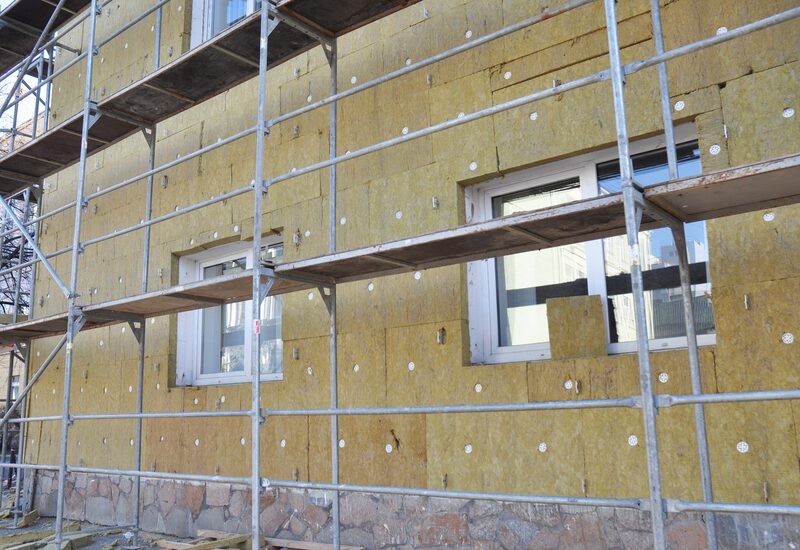
The clearest dividing line between the two schemes is what they installed. ECO4 focused on whole house retrofits, assessing a property and treating it as a system14. GBIS mostly delivered single insulation measures, targeting the least efficient homes quickly rather than comprehensively1.
That difference shows in the measures each scheme supported. GBIS was designed to support ECO4 in delivery of predominantly single measures targeted at a wider range of households, and local authority statements of intent describe it the same way11. Under GBIS, innovation measures scored a 25% or 45% uplift, as applied in ECO4, in the low-income group only29.
ECO4's measure mix was broader. Across the Energy Company Obligation as a whole between 2013 and December 2025, 25% of measures were cavity wall insulation, 21% were new boilers, 18% were loft insulation, 23% were other heating measures mainly new heating controls, 6% were solid wall insulation and 4% were other insulation7. Those figures cover the full obligation, not ECO4 alone, but they show the balance between insulation and heating work.
One exclusion is worth noting for anyone comparing routes. Measures approved under the ECO4 DLM route were not eligible for delivery under GBIS6. A household could not take a measure approved under one scheme's route and have it installed under the other.
How to apply through your energy supplier
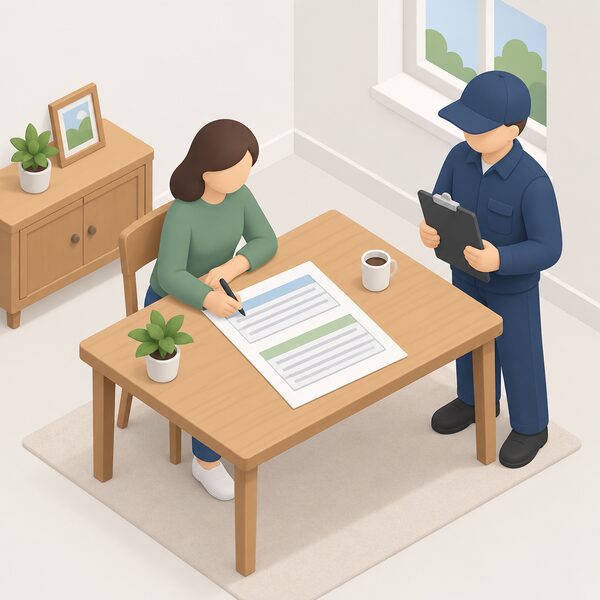
Ofgem administers both schemes but does not accept household applications. Eligible residents needed to contact a participating energy supplier, with the list published on Ofgem's website28. Applications were then made through a TrustMark-registered or approved ECO and GBIS installer11.
The process had a fixed sequence. A survey of the property had to be done to determine suitable measures and certain other criteria, and not all properties were eligible26. Before the first measure was installed, both Section A, covering eligibility, and Section B, the pre-installation survey, had to be completed on the eligibility and pre-installation declaration20. That form exists to confirm the eligibility of properties receiving measures under either scheme and to collect project-level information before installation20.
Suppliers also had to manage their own obligations. They could apply to reassign ECO4 ABS to their GBIS obligation, and from after July 2025 they had to provide an indication of what ECO4 delivery they proposed to reassign to GBIS13. A formal request to Ofgem to reassign ECO4 ABS to GBIS was required by 31 July 202624. Suppliers had to deliver at least 25% of their GBIS total home heating cost reduction obligation through GBIS measures, and could deliver up to 75% through ECO4 projects24.
For a household, the practical consequence was that the supplier, not the council and not Ofgem, decided whether to take the project on. A council could confirm eligibility under a Flex route and still no installer would be funded to carry out the work.
Track record: what has been delivered and where it fell short
The Energy Company Obligation has delivered at scale since 2013: 4.4 million measures in 2.6 million homes across Great Britain between 2013 and December 20257. But ECO4's own delivery fell well short of its predecessors. ECO4 delivered around one-third fewer installations than under ECO3 and almost 70% fewer than ECO17.
Quality was the sharper problem. A small percentage of installations, 6% of external wall insulation and 2% of internal wall insulation, were found to have health and safety risks to the occupants8. Around 30,000 homes had defects following external and internal wall insulation installations under ECO4 and GBIS8. The government told the Commons that ECO4 and GBIS had some of the highest levels of non-compliance that Government have seen9.
The complexity finding explains part of it. The National Audit Office concluded that ECO4 and GBIS combined with the consumer protection and quality assurance system resulted in an overly complex system, with many different actors and no central document clearly setting out how the system should operate16. Ofgem consulted on mid-scheme changes, and eight respondents disagreed with the proposed approach to the rural data set transition alone23.
"ECO4 and GBIS combined with the consumer protection and quality assurance system resulted in an overly complex system, with many different actors and no central document clearly setting out how the system should operate."
For households, the track record matters less as history than as a warning about what to check on any installation: who carried it out, what guarantee backs it, and whether the work was notified under the correct scheme.
The end of funding and what comes after
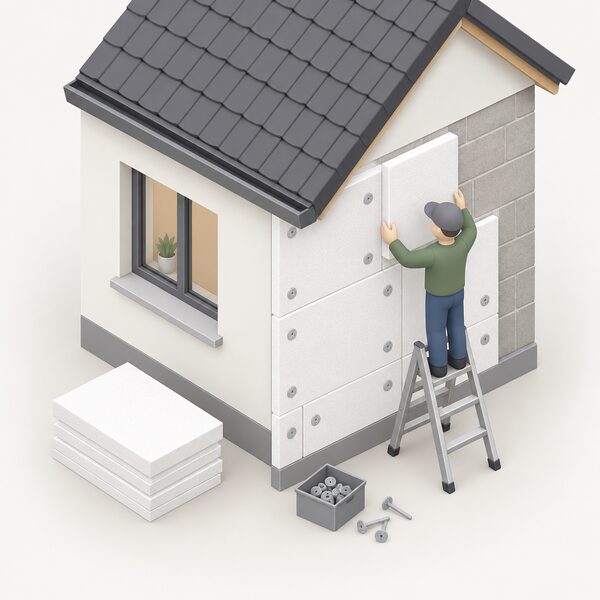
The end came in two stages. The government announced in Budget 2025 that funding for ECO would end in March 2026, and energy suppliers stopped advertising or accepting applications for ECO4 funding7. Birmingham City Council's announcement is explicit about the cause: following the Chancellor's 2025 Autumn Budget, which confirmed the end of the green levy and consequently the end of ECO4 funding, installer partners could no longer secure funding from energy companies3.
GBIS closed first. It ran from April 2023 until March 2026 and was not extended, unlike ECO41. ECO4 was extended to 31 December 2026, following a nine-month extension, and no new applications can be funded2. The scheme's published guidance confirms the ending of funding for both the Energy Company Obligation and the Great British Insulation Scheme30.
What replaces them is not set out in the same documents. The Warm Homes Plan and its associated grant programmes are separate schemes with their own eligibility rules, and the funding blending restriction means a household cannot combine a closed ECO4 measure with a new grant for the same work19. For anyone who missed the window, the practical position is that the supplier-funded route to insulation has ended, and any future support comes through different programmes with different criteria.
What closure means for applications already in progress
Work already committed can still be completed. ECO4 runs until 31 December 2026, and installation extensions will not allow installation dates beyond that overall scheme deadline24. Suppliers can carry over measures with either PAS2017 or PAS2019 standards, and administration moved to the PAS2035:2023 and PAS2030:2023 standards from the end of the transition period on 30 March 202523.
The conversion rules still apply to work in the pipeline. ECO4 delivery reassigned to GBIS is subject to a conversion factor of 1.251, and suppliers had to formally request reassignment by 31 July 202624. A measure does not count as a qualifying action on ECO4 if it has been notified under the Great British Insulation Scheme, so a project cannot be moved between schemes after notification13.
If an installation turns out to be defective, the route to remedy survives the scheme. Original installers are liable for fixing the installation, and costs of up to £20,000 should be covered by a guarantee when the installer has ceased to trade or failed to remediate8. Families affected should first contact the installer who carried out the installation, and where the installer is no longer trading or unable to remedy damages, they can contact their guarantee provider to initiate a claim9. The government has acknowledged that the cost of damage from faulty ECO4 and GBIS solid wall insulation can exceed the £20,000 limit covered by a valid guarantee9.
For a household's energy independence, the legacy of both schemes is a better insulated building fabric, which reduces the heat needed to keep a home warm and therefore reduces reliance on bought energy. What neither scheme removed is the underlying dependence: the work was funded by a levy on bills, delivered by a supplier's chosen installer, and backed by a guarantee that only pays out up to a fixed limit. The insulation stays with the house; the funding mechanism, and the risk that sits with it, does not.
Sources30 cited
- Great British Insulation Scheme, Ofgem, 2026
- Energy Company Obligation (ECO), Ofgem, 2026
- End of ECO announcement, Birmingham City Council, 2026
- Great British Insulation Scheme: homeowners and tenants, Ofgem, 2026
- Design of the Energy Company Obligation ECO4 2022 to 2026, GOV.UK, 2021
- ECO4 New Measures and Products Guidance v3.0, Ofgem, 2026
- The Energy Company Obligation, House of Commons Library, 2026
- Energy Company Obligation: research briefing, House of Commons Library, 2026
- Energy Market Consumer Protection debate, Hansard, 2026
- ECO4 and GBIS mid-scheme changes: final stage impact assessment, GOV.UK, 2025
- Statement of intent for ECO4 and the Great British Insulation Scheme, Birmingham City Council, 2024
- ECO4 eligibility requirements, Ofgem, 2023
- ECO4 delivery guidance v3.2, Ofgem, 2025
- ECO4 Flex and GBIS Flex information document, Ceredigion County Council, 2025
- Written statement: Housing Cabinet Secretary responds to UK government action on GBIS and ECO4, Welsh Government, 2025
- Public Accounts Committee report on ECO4 and GBIS, UK Parliament, 2026
- Energy saving grants and funding, Tameside Council, 2026
- Energy Company Obligation statistics, House of Commons Library, 2022
- ECO4 delivery guidance version 4.0, Ofgem, 2026
- ECO4 and GBIS Eligibility and Pre-Installation Declaration v1.1, Ofgem, 2026
- Energy Company Obligation ECO4 guidance: delivery V1, Ofgem, 2022
- ECO4 eligibility requirements form v1.0, Ofgem, 2022
- Summary of Guidance Updates: Proposed Administration of Mid-scheme Changes to ECO4 and GBIS, Ofgem, 2025
- Decision on administration of mid-scheme changes to ECO4 and GBIS, Ofgem, 2025
- Energy Efficiency Advice, Torridge District Council, 2026
- Energy Company Obligation ECO4 and GBIS Flex, Essex County Council, 2026
- ECO4 and ECO Flexible Eligibility, Breckland Council, 2026
- Energy Company Obligation: research briefing, House of Commons Library, 2026
- GB Insulation Scheme: government response, GOV.UK, 2023
- Domestic Energy Tariff Reductions 2026: guidance for energy suppliers, GOV.UK, 2026
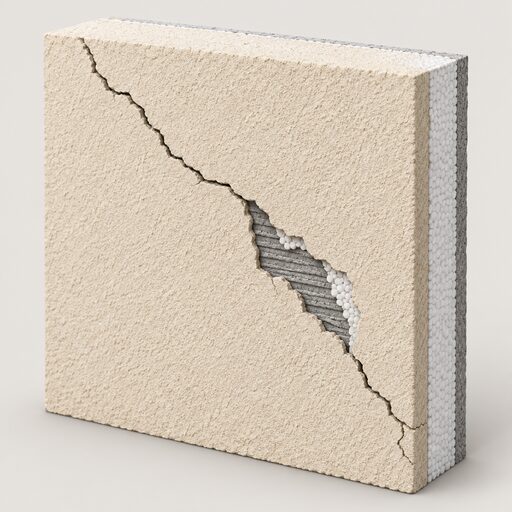 ECO4 and GBIS Install FailuresYour home may have insulation fitted under ECO4 or GBIS that was not done properly.
 Grid-Scale Battery StorageConnected and pipeline battery capacity in Great Britain, what these assets are paid to do, how long they can run, and how grid batteries differ in purpose and scale from a home battery.
 Closed Energy PoliciesIf a scheme you used has closed, do you still get paid?
 Welsh Building Regs InsulationDo insulation or glazing rules in Wales differ from England?
 Will Gas Boilers Be Banned?What has actually been legislated, proposed or dropped on gas and oil boiler phase-out across the four UK nations, and the difference between new build rules and replacement in existing homes.
 Finding an Insulation InstallerHow to find, verify and check an insulation, glazing or ventilation installer in the UK: the registration schemes, trade bodies and guarantee arrangements that cover the work, how to compare quotes, what a written specification should state, and how complaints and disputes are handled.