

In this comparison
The Energy Company Obligation (ECO) is a legal obligation placed on energy suppliers to improve the energy efficiency of domestic properties, funded through a charge on the bills of all customers of regulated energy companies with more than 250,000 customers1. It is not a government grant paid from taxation, and it is not a scheme a household applies to centrally. Suppliers are the obligated parties, and suppliers decide what they will fund.
The scheme started in 2013 and requires energy suppliers to fund heating and insulation measures1. It applies across Great Britain, and ECO4 applies in England, Scotland and Wales3. Between 2013 and December 2025 it delivered 4.4 million measures in 2.6 million homes across Great Britain5. The current obligation is closing to new applications and has been extended to 31 December 20266.
For a household, the practical consequence is that the route to funding runs through a supplier, not through a form on a government website. Which supplier you approach matters, because each sets its own priorities, its own funding levels and its own choice of installers7.
What the Energy Company Obligation is and who must fund it
ECO is a requirement placed upon energy companies to help improve the domestic energy efficiency of lower income homes8. It provides funding to improve energy efficiency in difficult to treat housing and the homes of those most in need9. The obligation is designed to tackle fuel poverty and help reduce carbon emissions2.
The obligation sits on suppliers rather than on government, installers or households. Energy suppliers are legally required to help reduce heating costs for low income and vulnerable households by delivering energy efficiency and heating measures10. That legal character matters: a supplier that fails to deliver is exposed to enforcement, not merely to criticism.
The scheme has run in phases. ECO3 obligated 26 suppliers over its course11. Suppliers have, in aggregate, exceeded all their obligation targets up to the end of ECO35. The current phase, ECO4, requires medium and large energy suppliers to support energy efficiency improvements for eligible households8.
Funding is raised through a charge on the energy bills of all customers of regulated energy companies with over 250,000 customers1. That means the cost is spread across the customer base of the larger suppliers, including households that will never receive a measure. It is a levy on bills, not a grant from the Exchequer, and it is one of the reasons the scheme is described as redistributive rather than as public spending.
Scotland has a distinct constitutional position. New Scottish powers over the obligation were created under the Scotland Act 2016, and the Scottish Government has set out its own strategic approach to fuel poverty3. The scheme itself remains Great Britain-wide, but the devolved administration has a parallel interest in how it operates north of the border.
Which suppliers are obligated, and how targets are shared
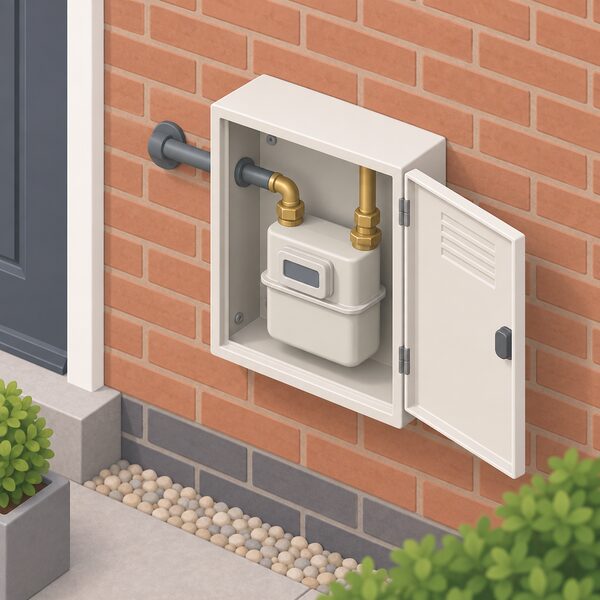
The obligation falls on medium and large energy suppliers2. The threshold is a customer test: a supplier must supply at least 150,000 customers in the relevant qualification year to be obligated for a given phase4. Suppliers that exceed the thresholds have an obligation calculated on each unit of supply above the allowance4.
The overall target is divided between suppliers based on their relative share of the domestic gas and electricity market2. For the Home Heating Cost Reduction Obligation element, the target for delivery is divided between obligated suppliers according to each obligated supplier's relative share of the domestic gas and electricity market4. A supplier with a larger share of domestic supply therefore carries a larger target.
This produces a market in obligations. Only obligated suppliers may take part in trades4, which allows a supplier that has over-delivered to transfer the excess to one that has fallen short, rather than face enforcement. Ofgem uses information gathering powers under the ECO4 Order to require suppliers to provide information about proposals, evidence of compliance and the costs of achieving obligations4.
The practical effect for a household is that the supplier of gas and electricity is not necessarily the supplier that holds the obligation. Ofgem states that a household can contact any of the obligated energy suppliers to find out how they may be able to help with the ECO scheme, even if they are not the household's energy provider7. Ofgem publishes a list of participating suppliers and their contact details12.
"As the ECO scheme is being wound down, availability of help from suppliers may vary depending on how close they are to"
What ECO pays for: insulation, heating and solar measures
ECO places an obligation on energy suppliers to deliver measures such as insulation, heating, and solar panels6. Qualifying householders can access funding to upgrade heating or improve home insulation through the government's Energy Company Obligation scheme8. Council guidance describes the same scope as funding energy-saving measures including insulation and heating for low-income and vulnerable households13.
The historical shape of the scheme is broader than the current phase. The Affordable Warmth element of ECO was designed to provide basic heating and insulation measures for the poorest and most vulnerable households14. ECO3 continued to obligate suppliers to deliver energy efficiency measures15. ECO4 requires larger energy suppliers to deliver a target of annual bill savings by installing energy efficiency and heating measures to homes16.
Two conditions attach to installation. All ECO4 measures except district heating connections must be installed by, or under the responsibility of, a person registered with TrustMark or equivalent for the measure, and lodged with TrustMark or equivalent17. Installers under ECO must be TrustMark accredited and will have a registration number, except in the case of installers of district heating connections7.
That registration requirement is the household's main protection against poor work. It also means the installer is not chosen by the household in the first instance: it is up to energy suppliers to determine which energy efficiency measures they want to fund, the level of funding they provide, and the retrofit coordinator or installers they choose to work with7.

How much the scheme costs, and who pays
The scheme is funded through a charge on the energy bills of all customers of regulated energy companies with over 250,000 customers1. The cost therefore sits on the standing or unit charges of every domestic customer of a large supplier, whether or not that household is eligible for a measure.
The published sources do not give a per-household annual figure for the current obligation. What can be said is structural: the levy is collected by suppliers and spent by suppliers, and the level of support a household receives is a supplier decision rather than a published tariff. Ofgem states plainly that ECO is not a grant scheme and that different companies or installers may provide different levels or types of support7.
That has two consequences. First, two households with identical circumstances and identical properties can receive different offers, because they approached different suppliers. Second, the value of a measure is not quoted as a cash grant but as the cost of the work a supplier is willing to fund.
Ofgem's role as administrator: targets, audits and enforcement

Ofgem is the ECO administrator18. Its role involves setting targets for each obligated energy supplier, ensuring compliance, and monitoring their progress towards these targets7. Its work includes calculating energy suppliers' obligations and tracking performance against them2.
The administrator's powers are not advisory. Ofgem may take enforcement action where a supplier fails to meet the requirements of the ECO4 Order4, and its formal enforcement powers can include opening investigations, making orders and imposing penalties19. Ofgem administers 12 schemes on behalf of the UK government and the devolved administrations, and intends to add the Energy Company Obligation scheme to its future reporting19.
Audit is part of the routine. Ofgem sends suppliers an annual sample of measures that they have notified throughout the duration of the year20. Where it identifies that local authorities have not carried out adequate due diligence checks, it will include this in its report20. That matters for ECO4 Flex, the route by which councils declare households eligible under flexible criteria.
Ofgem also publishes monthly reports showing how energy suppliers are progressing towards their targets and the number and types of measures installed12. Suppliers have, in aggregate, exceeded all their obligation targets up to the end of ECO35, which suggests the target-setting mechanism has generally been met rather than missed.
The limits of the administrator's role are worth stating. Ofgem has no oversight of the contractual arrangements between the obligated energy companies and those organisations carrying out the work21. It also cannot guarantee that the energy supplier will undertake remedial works21. Where an issue remains after the earlier stages of a complaint and the measure is an ECO measure within the current scheme, Ofgem expects the supplier to have a process in place that would assist with the rectification of the issues21.
Who qualifies, and how to apply through your supplier
Eligibility begins with benefits. Ofgem lists Child Benefit, Pension Guarantee Credit, income-related Employment and Support Allowance, income-based Jobseeker's Allowance, Income Support, Universal Credit, Housing Benefit, and Pension Credit Savings Credit7. Council guidance adds Child Tax Credit and Working Tax Credit, and notes that income thresholds apply to Child Benefit9. Housing Benefit is a qualifying benefit under the Affordable Warmth route8.
The application route is direct contact with a supplier. Eligible residents need to contact a participating energy supplier, a list of which can be found on Ofgem's website13. Ofgem publishes obligated supplier contact details12. There is no queue and no central allocation: a household can approach more than one supplier.
Two caveats sit on top of eligibility. First, eligibility for ECO does not necessarily mean that an energy supplier or installer will decide to install energy efficiency measures in your home7. Second, the property must be suitable for the measure a supplier is willing to fund, which is why the scheme has always had a strong focus on difficult to treat housing9.
For households that do not meet the benefit tests, the flexible route exists. Ofgem, as administrator of ECO4, publishes separate guidance for local authorities, the devolved administrations and suppliers17. Councils use it to declare households eligible on low income or vulnerability grounds. The ECO4 Flex route and the ECO4 eligibility rules are worth reading together, and the wider Energy Company Obligation page sets out how supplier funding works in practice.

Where ECO falls short
The most important limitation is that ECO is not a grant scheme7. A household cannot apply for a fixed sum and then choose how to spend it. The supplier decides the measure, the funding level and the installer, and different companies may provide different levels or types of support7.
The second limitation is the gap between eligibility and delivery. Eligibility for ECO does not necessarily mean that an energy supplier or installer will decide to install measures9. A household can meet every published criterion and still receive nothing, because the decision rests with the supplier.
The third is the boundary of the administrator's remit. Ofgem has no oversight of the contractual arrangements between the obligated energy companies and those organisations carrying out the work21, and it cannot guarantee that the energy supplier will undertake remedial works21. Complaints about an installation follow Ofgem's published complaints process12, and there is separate guidance on complaints about standard cavity wall insulation installation21.
The fourth is the quality record of some measures delivered under earlier phases. Ofgem commissioned a chartered surveyor report into hard to treat cavity wall insulation22, which is a reminder that the scheme's history includes remediation as well as installation.
The scheme's end: funding, applications and what happens next

The Government announced in Budget 2025 that funding for ECO would end in March 20265. The scheme has been extended to 31 December 2026 and is closing to new applications6. Council guidance states that the scheme runs until 31 March 20268, which conflicts with the extension date; the later position is the extension to 31 December 2026.
There is a tail beyond the closing date. Ofgem's supplier administration guidance states that there is no limit on the number of applications a supplier can make on or before 31 March 20274. That window allows projects already under way to be notified and counted towards targets after the scheme stops accepting new households.
The scheme's expiry has been a live question in Parliament. The Environmental Audit Committee examined whether the Government was committed to the ECO beyond 2026, when it is due to expire23. The consultation on extending the ECO4 end date set out the position that the obligation requires the larger energy suppliers to deliver a target of annual bill savings by installing energy efficiency and heating measures to homes16.
For a household, the practical reading is that the supplier-funded route is time-limited. The successor landscape includes the Great British Insulation Scheme and the Warm Homes: Local Grant, and the home energy grants pillar sets out how the schemes fit together. Households weighing a heat pump against an ECO4 measure can compare the two on the Boiler Upgrade Scheme vs ECO4 page.
What ECO means for a household's energy independence
ECO improves the fabric and the heating system of a home at no capital cost to the household, and that is a real transfer of value. Insulation reduces the energy needed to hold a temperature, and a heating upgrade can reduce the cost of each unit of warmth. Both reduce exposure to price movements on the gas and electricity a household buys.
The dependence that remains is substantial. The measure is funded by a levy on bills, so the household is paying into the scheme through its supplier whether or not it receives anything1. The choice of measure, installer and funding level rests with the supplier7. The work is delivered by a TrustMark registered installer chosen by the supplier rather than by the household7. And the household remains connected to the grid and to a supplier for its ongoing energy.
There is also a governance dependence. Ofgem sets targets, audits and can enforce7, but it does not oversee the contract between the supplier and the installer, and it cannot guarantee remedial works21. A household that receives a measure is relying on the supplier's own process if something goes wrong.
The scheme is therefore best understood as a supplier-funded improvement to a grid-connected home, not as a step towards self-sufficiency. It lowers demand and can lower bills, and it does so within a framework where the supplier holds the decisions and the bill payer holds the cost.
Sources23 cited
- The Energy Company Obligation, House of Commons Library, 2026
- Energy Company Obligation (ECO), Ofgem, 2026
- Tackling fuel poverty in Scotland, Scottish Government, 2026
- ECO4 supplier administration guidance, Ofgem, 2025
- ECO statistics and scheme end, House of Commons Library, 2026
- ECO extension and closure, House of Commons Library, 2026
- ECO: homeowners and tenants, Ofgem, 2026
- ECO4 scheme, West Lindsey District Council, 2026
- ECO4 scheme, Derbyshire County Council, 2026
- ECO4 Flex and GBIS Flex information, Ceredigion County Council, 2025
- ECO3 final determination report, Ofgem, 2023
- ECO contacts, guidance and resources, Ofgem, 2026
- ECO4 and ECO Flexible Eligibility, Breckland Council, 2026
- Energy Company Obligation evidence, Energy and Climate Change Committee, 2011
- ECO2 final determination report, Ofgem, 2019
- Extending the ECO4 end date, Department for Energy Security and Net Zero, 2025
- ECO4 new measures and products guidance, Ofgem, 2026
- ECO4 guidance: new measures and products, Ofgem, 2026
- Supplier performance report, Ofgem, 2024
- GBIS guidance for local authorities, Ofgem, 2026
- Complaints about standard cavity wall insulation installation, Ofgem, 2018
- Chartered surveyor report: hard to treat cavity wall insulation, Ofgem, 2013
- Energy Company Obligation inquiry, Environmental Audit Committee, 2025
 Green Energy TariffsDoes a green tariff really mean greener electricity comes into your home, or just that your supplier buys renewable certificates to match what you use?
 Suppliers and IndependenceCan you really cut your energy bills by making your own power, and how much of your supplier do you still need?
 Cost of Energy IndependenceA heat pump and better insulation are the usual starting point, but what does the whole job really cost, and what help is there with the bill?
 Check Supply Capacity FirstAdding a heat pump, car charger or home battery can push your electricity supply past what it can safely handle.
 Who Owns Which Energy SupplierWho is actually behind the company that sends your energy bill?
 Financing an InstallationPaying monthly for a boiler, solar panels, battery or heat pump sounds simple, but who actually lends you the money and what happens if the work goes wrong?