In this guide
Cavity wall insulation is one of the cheapest fabric measures a UK household can buy, and one of the most complained about. The failures are not usually the material itself. They are the assessment that never happened, the wall that should never have been filled, and the paperwork that was never filed. Cavity wall insulation is a cost effective way of reducing fuel bills where it has been installed correctly, and that qualification carries most of the weight1.
The scale of the problem is documented. The Scottish Government's review of retrofit assessment found that assessments fail to account for key building conditions, such as existing moisture risks or the state of cavity wall insulation, often assuming these features are in good condition rather than verifying them2. A government press release in January 2025 described substandard installation ranging from missing or incomplete paperwork, insufficient ventilation, or missing or exposed insulation, which if left unchecked could lead to damp and mould3.
For a household, the independence question is straightforward. Filling a cavity reduces the heat that leaves through the wall, which reduces the gas or oil the home must buy and the amount it draws from the grid. What it does not do is remove dependence on the grid, the supplier or the boiler. It is a fabric measure, not a generating one, and its value depends entirely on whether the wall was suitable in the first place.
What cavity wall insulation is and how it is installed
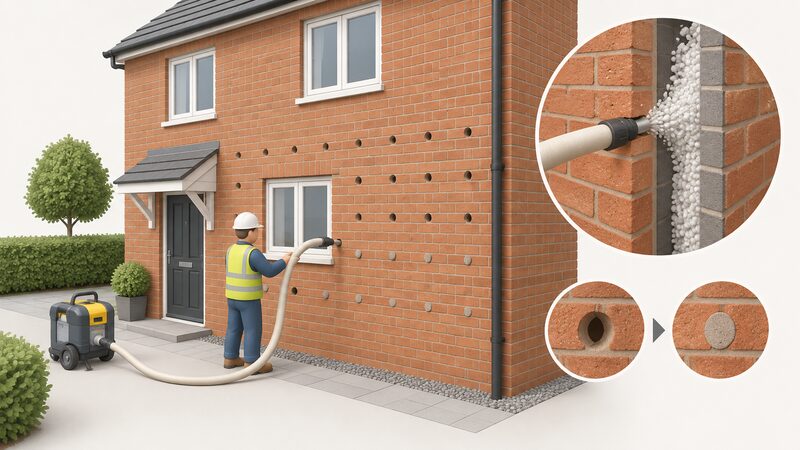
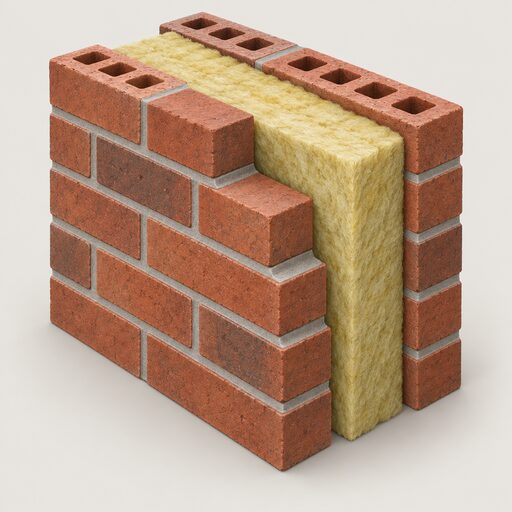
A cavity wall is two skins of masonry with a gap between them. Filling that gap slows the movement of heat through the wall. The insulation is blown into the cavity from the outside and disruption to the householder is minimal, with installation taking just a couple of hours for a typical three-bedroom house5.
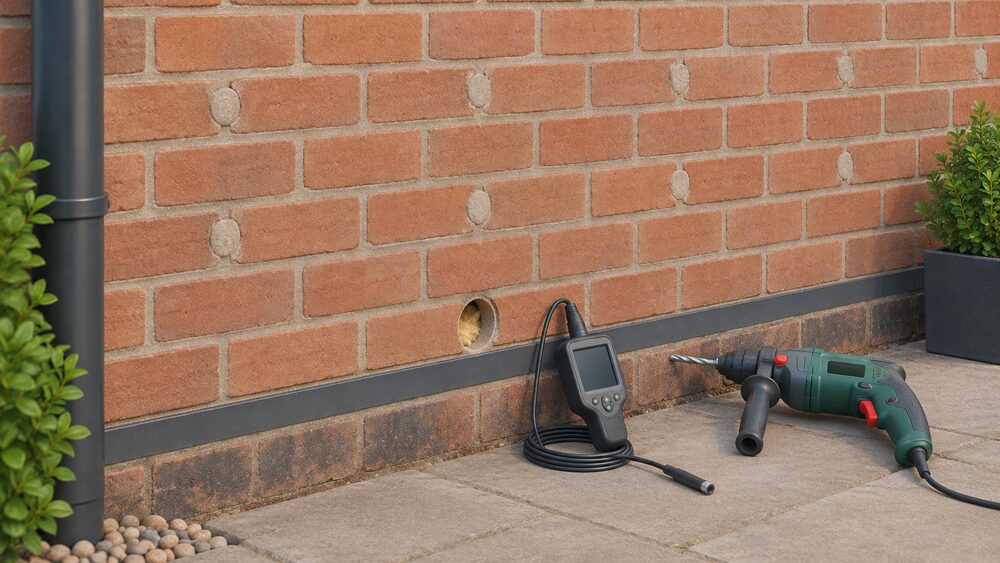
The work is done by injection. A professional injects the insulation material through the external wall into the gap between the inner and outer layers of brickwork4. Holes are drilled at intervals across the elevation, material is pumped in until the cavity is full, and the holes are made good. The main materials used are Mineral Wool (Glass or Rock Wool), EPS Bead (Polystyrene bead) and PU Foam (Polyurethane Foam)6. Three cavity wall insulation measure variants are defined by their range of thermal conductivity: 0.027, 0.033, or 0.0406.
The cavity can be fully filled with insulation or partially filled, and the manufacturer should be consulted before proceeding7. Where a partial fill is used, an air gap is generally required, the size of which will vary depending on the specific products used for the wall construction and insulation8. The insulation should go at least 150mm below the DPC level7. At the base of the cavity, the bottom should be filled with lean mixed concrete with a slant towards the external skin, or have a cavity tray installed that also slants towards the outer skin9.
Which homes are suitable: cavity width, wall condition and exposure
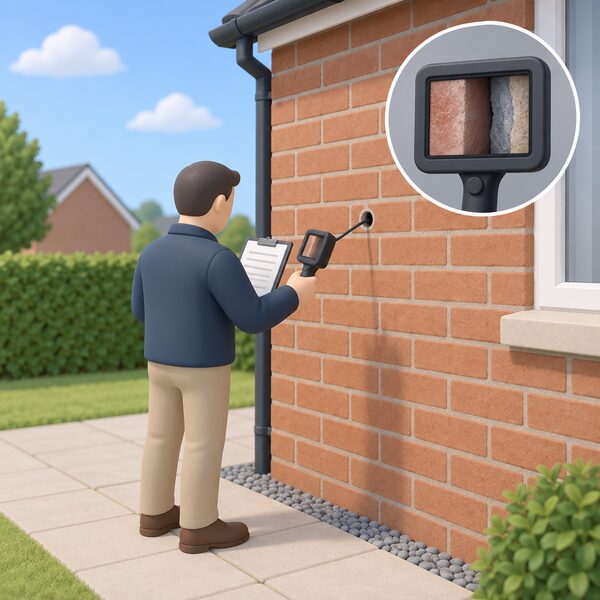
Suitability is decided before anything is drilled, and it turns on three things: whether there is a cavity at all, what condition the wall is in, and how exposed the elevation is to wind driven rain.
Prior to installing cavity wall insulation, the wall should be assessed to ensure its condition, construction type, and exposure10. Welsh Government guidance is explicit that this means properly assessing important factors such as construction and condition of external walls, their exposure to wind driven rain, and, post installation, ensuring appropriate maintenance and householder information is available11.
Age is a rough guide rather than a rule. Cavity wall insulation is primarily applicable for homes newer than the 1920s12. Homes built in the last couple of decades are likely to have had insulation put in the cavities when they were built4. Where existing wall cavities are unfilled, they should be insulated where suitable to achieve the maximum U-value in the relevant column of Approved Document L10.
There are hard exclusions. A wall may be suitable to receive external wall insulation if it is of solid construction or has fully filled and insulated cavities, but cavity walls that are uninsulated or partially insulated should be assumed as not suitable for the application of external wall insulation unless expert advice is sought10. For listed buildings, introducing new materials to the property, such as insulation, requires listed building consent13.
| Check | What it decides |
|---|---|
| Cavity present and width | Whether fill is possible at all |
| Wall condition and construction type | Whether the wall can take the material10 |
| Exposure to wind driven rain | Whether the elevation is at risk11 |
| Existing insulation state | Whether the cavity is already full or partial10 |
| Listing or conservation status | Whether consent is needed first13 |
Where cavity wall insulation falls short: the damp and moisture risks
Damp after cavity fill is the failure households report most often, and the mechanisms are well documented. The first is bridging: if the cavity is not kept clear at the base, or the insulation sits above the damp proof course, moisture can travel across. The insulation should go at least 150mm below the DPC level, and the cavity base should be filled with lean mixed concrete with a slant towards the external skin or have a cavity tray installed that also slants towards the outer skin7.
The second is exposure. A wall on a coast or an exposed hillside takes wind driven rain, and the assessment of exposure is one of the factors that should be checked before installation11. The third is the state of the wall itself. Assessments fail to account for key building conditions, such as existing moisture risks or the state of cavity wall insulation, often assuming these features are in good condition rather than verifying them2.
The fourth is ventilation. Substandard installation ranges from missing or incomplete paperwork, insufficient ventilation, or missing or exposed insulation, which if left unchecked could lead to damp and mould3. Insulation that tightens a building without addressing how it breathes moves the moisture problem indoors rather than removing it.
For traditional buildings, the guidance is more cautious still. Internal wall insulation inevitably creates cold walls which are inherently more susceptible to moisture risk, and while it can be useful where the masonry is unavoidably damp, it does not represent best practice in building conservation14. The same logic applies to any intervention that changes how a solid or traditional wall manages moisture.
Problems in new build and recently insulated homes: voids and wet material
Not every failure is old. Newer homes and recently insulated properties produce their own pattern of problems, and voids are the commonest.
A void is a section of cavity that never received material, or received it and lost it. It shows up as a cold patch, a higher bill than the neighbours, or a damp stain in one location. The cavity can be fully filled with insulation or partially filled, and where a partial fill is used an air gap is generally required, the size of which will vary depending on the specific products used7. Getting that specification wrong on a new build leaves gaps that are invisible from outside.
Wet material is the second pattern. Mineral wool that has been saturated does not dry out readily inside a sealed cavity, and its thermal performance falls away. Where at least 50 per cent of the cavity walls are originally insulated prior to retrospective cavity wall insulation, the measure is treated as a partial fill variant under the current guidance6. That distinction matters because it changes what a subsequent installer is dealing with.
The regulatory backdrop has tightened. The Secretary of State approved SAP version 10.3 for new dwellings and the 2026 National Calculation Methodology for buildings other than dwellings in England on 24 March 202615. For existing dwellings, the improved U-value for wall cavity insulation in Table 3.3 of Approved Document L is 0.55 W/(m2·K)15, and the same target appears in the ECO4 measure guidance6.
Cost, savings and payback: what the figures say
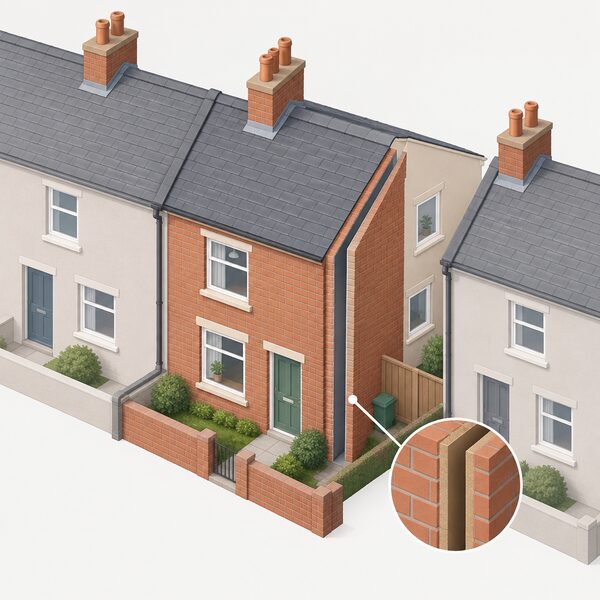
The headline economics are modest but real. Checkatrade estimated the average cost of cavity wall insulation at £1,800 for a mid-terrace, rising to £4,600 for a detached house in 20264. Energy Saving Trust figures used in the same guide put the average cost for a semi-detached dwelling with gas heating at £2,700, with annual savings of £2004. Payback is put at around 9 to 12 years depending on property type4.
The penalty for doing nothing is stated by NI Direct: cavities that are not insulated can add up to 25 per cent onto your heating bill5. That is the figure that makes the case for the measure, and it is also the figure that makes a botched installation expensive, because a failed fill delivers neither the saving nor a dry wall.
Official statistics give a lifetime figure rather than an annual one. The ECO3 final determination reported cavity wall insulation lifetime bill savings of £1,319.5616. That is a different measure from an annual saving and should not be read as one.
| Measure | Average cost | Annual saving |
|---|---|---|
| Cavity wall, semi-detached, gas heating | £2,700 | £2004 |
| External solid wall, semi-detached, gas heating | £15,000 | £2804 |
| Internal solid wall, semi-detached, gas heating | £12,000 | £2804 |
Disruption is rated low for cavity wall insulation, against low for external wall insulation and high for internal wall insulation4. Prices are installer-quoted, and the figures above are averages rather than quotations for a specific property.
Guarantees: the 25-year CIGA and IAA cover and what it protects against
Reputable cavity wall insulation should come with a 25-year guarantee, either backed by the Cavity Insulation Guarantee Agency or an equivalent independent insurance-backed scheme4. The Cavity Insulation Guarantee Agency guarantee lasts for 25 years or longer10.
What the guarantee covers is specific. Complaints that involve workmanship or materials are covered by the independent CIGA 25 Year Guarantee that is provided for all CIGA installations17. It is not a building insurance policy and it does not cover unrelated defects in the property.
The claims route is set out in the CIGA Complaints Procedure v217. Complaints should clearly specify the nature of the complaint and include photographs, copies of any existing correspondence, full contact details including email if available, and the name and registration number of the CIGA member involved17. The registration number is the detail most often missing, and it is the one that ties the claim to the installation.
"complaints that involve workmanship or materials then these are covered by the independent CIGA 25 Year Guarantee that is provided for all CIGA installations"
Welsh Government guidance for consumers covers faults, guarantees, complaints and claims arising from cavity wall insulation installations in Welsh properties11. Where a guarantee is held, it is worth keeping the certificate with the property papers, because a future buyer's solicitor will ask for it.
Building regulations: the building notice you or your installer must submit

Cavity wall insulation is notifiable work. The installation of cavity wall insulation is specifically defined as notifiable building work in the Building Regulations, which means that for all buildings which are not exempted from the Regulations it will be necessary to submit a building notice to a building control body stating that cavity wall insulation work will be carried out7.
Who submits it depends on the installer. If the installer is registered with The Cavity Insulation Guarantee Agency, the installer will in most cases submit the building notice7. In any case building owners should always check that a building notice will be submitted7. That check is the householder's own safeguard, and it costs nothing to make.
The regulations also govern the material. The Building Regulations require that the insulation material used is suitable for the wall construction concerned8. If you want to insert insulation into a cavity wall, the appropriate requirements will be applied to ensure the insulation material is suitable, and that in the case of some foam insulants, the risk of formaldehyde gas emission is assessed9. In the case of some foam cavity wall insulating materials an assessment of the risk of the emission of formaldehyde gas will need to be carried out8.
Related work follows the same pattern. Installing insulation requires an application for approval under the Building Regulations, but this can be included as part of any application for the overall project18. Installing insulation to a loft area requires an application for approval under the Building Regulations19. Installing or replacing a heating system is also covered alteration work20.
Grants and schemes: ECO4, the Warm Homes Plan and what comes next
Cavity wall insulation is an eligible measure under several current schemes, and the funding landscape is shifting.
The Warm Homes Local Grant funds cavity wall insulation among a longer list of energy performance improvements that also includes external wall insulation, internal wall insulation, loft insulation, room in roof insulation, flat roof insulation, under floor insulation, park home insulation, draughtproofing, hot water cylinder insulation, low energy lighting, heating controls, solar PV, battery storage, and in rare cases double or triple glazing and energy efficient doors21. Eligible applicants will receive upgrades such as insulation, energy-efficient heating systems, and renewable energy installations21.
ECO4 Flexible Eligibility can fund solid wall insulation, cavity wall insulation, room in roof insulation, loft insulation, flat roof insulation, electric storage heater upgrade, first time central heating to air source heat pump, boiler upgrade from oil, LPG and solid fuel to air source heat pump, and solar photovoltaic panels, with the specific measures determined by the ECO provider, agent or installer22. The Warm Homes Plan is described as covering solar panels, batteries, heat pumps and insulation24.
In Northern Ireland, the Whole House Warmer Homes NI scheme lists solid wall insulation, cavity wall insulation where required, loft insulation, and heating measures25. The Decent Homes Standard summary table requires cavity wall insulation if there are cavity walls that can be insulated effectively, or loft insulation meeting current NI Building Regulations standards if there is loft space26.
Scotland has its own routes. The Home Energy Efficiency Equity Loan pilot covers insulation including the external wall, internal wall, cavity wall, lofts, rooms in roofs, flat roof, underfloor and primary pipework27. Edinburgh's local heat and energy efficiency strategy sets out the city's approach28. In Wales, ECO Flexibility Funding operates through local authorities22. Cornwall's Home Improvement loan lists cavity wall among eligible works under the insulation category29. Where a recommended energy efficiency measure is not considered appropriate because written expert advice indicates it would have a negative impact on the fabric or structure of the property, an exemption can apply30.
Checking and maintaining insulation over time
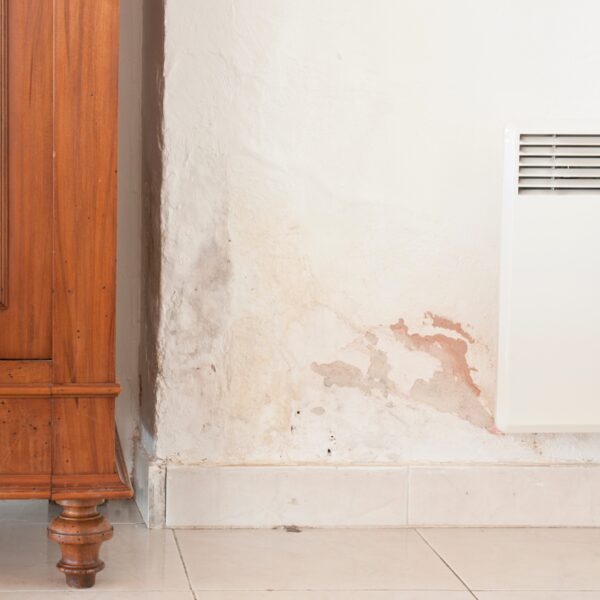
There is no fixed inspection interval in the guidance, but there is a clear duty at both ends of the job. Before installation, the wall should be assessed to ensure its condition, construction type, and exposure10. After installation, appropriate maintenance and householder information should be available11.
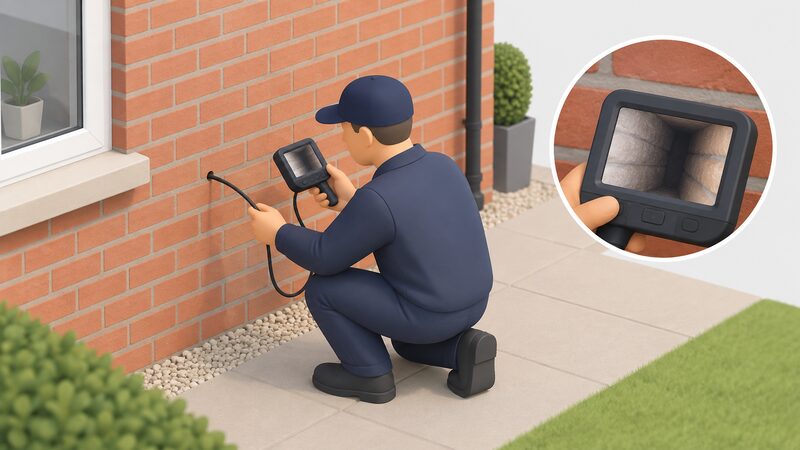
In practice, that means keeping the guarantee certificate, knowing which material was used, and watching for the signals that something has gone wrong: a cold patch on one wall, a damp stain at skirting level, mould in a corner that was previously dry, or a heating bill that rises while the rest of the house behaves. Any of those justifies an inspection of the cavity rather than a guess.
Where a cavity has failed, extraction is the remedy. The old material is removed before any replacement is injected, which is a longer job than the original fill. The alternative approach for solid walls, maintaining a cavity between the masonry wall and forming a separate insulated layer, is a different technique and does not apply to a filled cavity wall14.
For the household's energy independence, the honest position is this. A correctly installed cavity fill reduces the heat lost through the wall, which reduces the fuel bought and the load drawn from the grid. It does not generate anything, does not store anything, and does not remove the need for a supplier or a boiler. Its contribution to independence is measured in units not purchased, and it is only realised if the wall was suitable and the work was done properly.
Sources30 cited
- Written statement: cavity wall insulation Wales, Welsh Government, 2017
- Review of retrofit assessment in Scotland, Scottish Government, 2025
- Action taken to protect households with poor quality insulation, GOV.UK, 2025
- Wall insulation types and costs, Uswitch, 2026
- Cavity wall insulation, nidirect, 2026
- ECO4 new measures and products guidance, Ofgem, 2026
- Building regulations: cavity wall insulation, Welsh Government, 2026
- Building regulations for cavity wall insulation, Planning Portal, 2026
- Building regulations: external walls, Welsh Government, 2026
- Approved Document L Volume 1 consultation version, Welsh Government, 2025
- Issues arising from cavity wall insulation installations, Welsh Government, 2022
- Thermal resistance, Planning Portal, 2026
- When listed building consent is required, Buckinghamshire Council, 2026
- Guide to the conversion of traditional buildings, Scottish Government, 2026
- Approved Document L Volume 1: dwellings, HM Government, 2026
- ECO3 final determination report, Ofgem, 2023
- Consumer complaints process, Cavity Insulation Guarantee Agency, 2026
- Building regulations: external walls, Planning Portal, 2026
- Building regulations: energy efficiency for extensions, Planning Portal, 2026
- Building regulations: energy efficiency, Planning Portal, 2026
- Warm Homes Local Grant, Greater Manchester Combined Authority, 2026
- ECO4 Flex and GBIS Flex information document, Ceredigion County Council, 2025
- Home and business grants, schemes and advice, East Hertfordshire District Council, 2026
- DESNZ annual report and accounts 2025 to 2026, Department for Energy Security and Net Zero, 2026
- NISEP list of schemes 2026-27, Utility Regulator Northern Ireland, 2026
- Current Decent Homes Standard summary table, Northern Ireland Department for Communities, 2025
- Home Energy Efficiency Equity Loan pilot: homeowner feedback, Scottish Government, 2022
- Edinburgh local heat and energy efficiency strategy, City of Edinburgh Council, 2026
- Eligible and non-eligible works, Cornwall Council, 2025
- Guidance on PRS exemptions and exemptions register evidence requirements, GOV.UK, 2026
 Cavity Wall InsulationCavity wall insulation could cut your heating bill, but is your home suitable?
 Insulation StandardsHow do you know your insulation was fitted to a proper standard, and who backs the guarantee if the installer disappears?
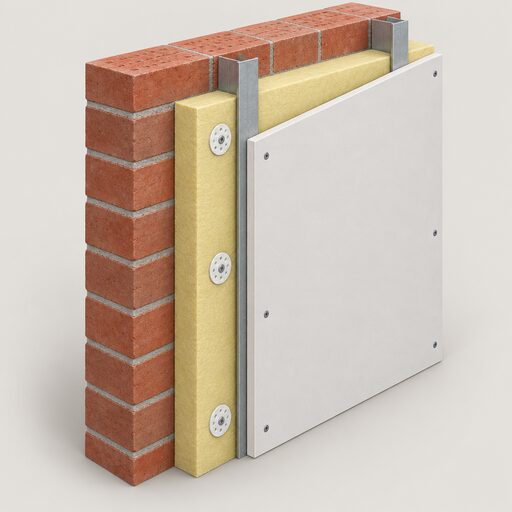 Solid Wall InsulationSolid walls lose far more heat than cavity walls, so what can actually be done about it?
 When Your Installer Goes BustWhat happens to deposits, part-completed work, workmanship guarantees and complaints when a home energy installation company fails, and how to claim on deposit protection, an insurance-backed guarantee, card or finance cover, and who honours the manufacturer's warranty.
 Workmanship WarrantiesIf something goes wrong with your solar panels, who actually fixes it and who pays?
 Home Battery WarrantiesHow long does a home battery warranty really last, and what does it actually promise?