
In this answer
Short answer
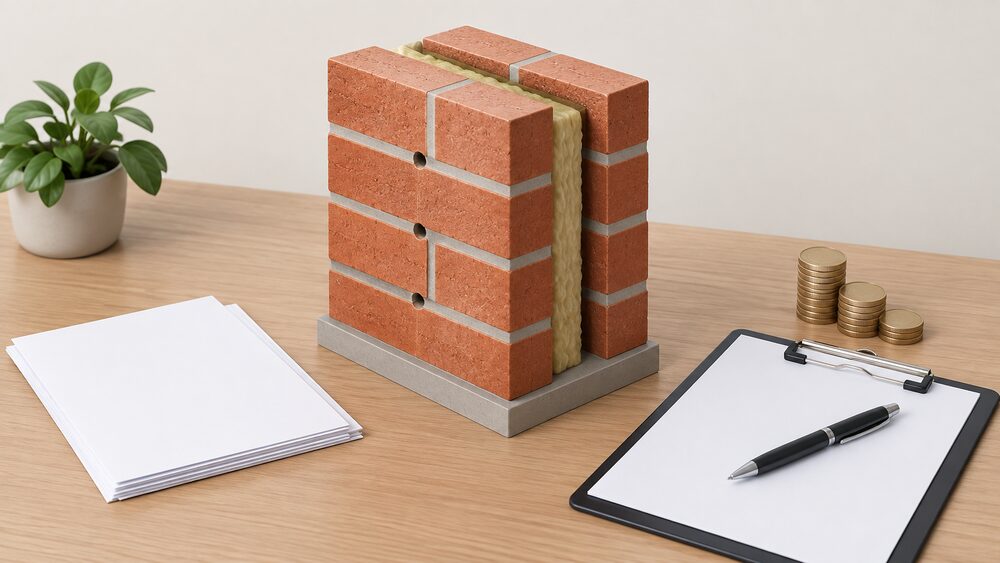
Cavity wall insulation is one of the few home energy measures that lifts an Energy Performance Certificate (EPC) score and cuts running costs at the same time. One improvement table used for landlords lists wall cavity insulation as worth 5 to 10 EPC points, at a cost of £1,000 to £4,5001. The Energy Saving Trust estimates the saving at around £200 a year in Great Britain and £240 in Northern Ireland2.
The cost side is more variable than the saving. The Energy Saving Trust gives around £2,200 for a typical installation in Great Britain and around £1,000 in Northern Ireland, both unsubsidised and based on a gas-heated home3. Prices are installer-quoted, so the figure a household sees depends on wall area, access and whether any remedial work is needed before the cavity can be filled.
What the measure does for independence is straightforward: it reduces the heat a home loses through its walls, so less gas or electricity is bought to hold a given temperature. What it does not do is remove the household from the grid or from a supplier. The cavity still needs a competent installer, the guarantee sits with a third-party agency, and the saving depends on how the home is heated and how it is used.
What cavity wall insulation adds to an EPC rating
The headline figure is 5 to 10 EPC points for wall cavity insulation, taken from an improvement table aimed at landlords working out how to reach a target band1. Points are not the same as bands. A home sitting mid-band can cross into the next letter with 5 to 10 points; a home at the bottom of a band may need more than one measure.
Official statistics give a sense of what a package achieves rather than a single measure. Under the Home Upgrade Grant Phase 2, the average EPC improved by 1 band, with 60 per cent of homes upgraded to EPC C or higher5. That figure covers a whole retrofit package, so it should not be read as the effect of cavity wall insulation alone.
The EPC itself is a modelled document, and its limits matter when reading any predicted gain. The Energy Systems Catapult notes that EPCs do not accurately reflect energy use in a home, and that inconsistencies among assessors' evaluations lead to varying results for the same property6. It also describes a performance gap between the actual energy consumption of buildings and the consumption modelled by EPCs7. A predicted 5 to 10 point gain is therefore a modelled gain, not a metered one.
For a household, the practical reading is that cavity wall insulation is a reliable contributor to a band change but rarely the whole story. The EPC that comes with a property sets out cost-effective measures to improve energy efficiency and rating, and insulation in walls or loft is one of the common measures listed8.
How much it saves on bills, and why the figures differ

The most quoted saving is around £200 a year in Great Britain and £240 in Northern Ireland, from the Energy Saving Trust2. The Consumer Council puts cavity wall insulation at around £185 a year10. A wider independent range of £160 to £470 per year appears in a comparison of DIY and professional insulation11.
Part of the spread is the price basis. One savings estimate is calculated on an electricity price of 24.5 p/kWh and a gas price of 6.29 p/kWh12. Another is based on a gas-heated home with unsubsidised installation costs3. Change either assumption and the cash saving moves, even when the physics of the wall does not.
Part of it is how the home is used and heated. Official guidance for Northern Ireland states that cavities which are not insulated can add up to 25 per cent onto a heating bill13. That is a statement about the penalty of leaving a cavity empty, not a promise about what filling it returns, and the two are often conflated.
There is also a decay effect in the wider evidence. Official statistics on installations in England and Wales between 2011 and 2015 found that savings from loft insulation and new boilers are around a tenth lower in the fifth year after installation than in the first year15. Cavity wall insulation is not the measure studied, but the finding is a reminder that first-year savings figures are the top of the range.
Cavity wall plus loft insulation: the combined effect
Cavity wall insulation is rarely installed in isolation, and the combined case is stronger than either measure alone. Official guidance for Northern Ireland states that installing loft and cavity wall insulation not only lowers the amount of heat escaping, but could also cut fuel bills16. The two measures address different surfaces: the wall and the roof.
Independent analysis puts a figure on combining measures. The National Insulation Association reports that combining loft insulation, glazing replacement and external wall insulation can reduce a home's heat transfer coefficient by approximately 60 per cent17. That is a three-measure package including external rather than cavity wall insulation, so it is a ceiling for what a whole-fabric approach can do rather than a cavity wall figure.
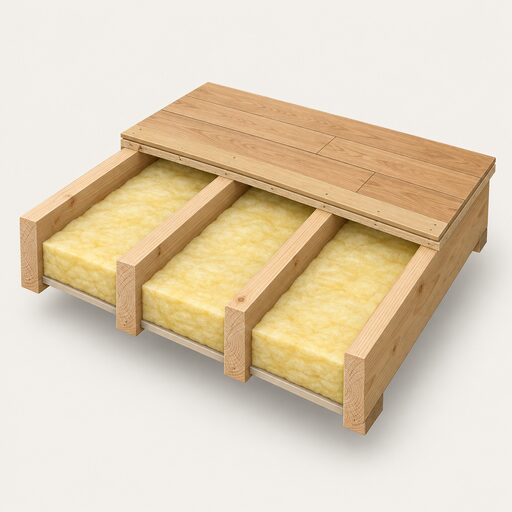
For comparison within the same improvement table, insulating a previously uninsulated roof with 270mm is listed as worth 10 to 15 EPC points at £900, against 5 to 10 points for wall cavity insulation1. Loft insulation is often the cheaper and larger single gain where the loft is bare, which is why the two are usually assessed together.
Cavity wall insulation also brings benefits beyond the meter. Independent guidance lists reducing heat loss, lowering energy bills, reducing the risk of condensation forming on walls, and reducing draughts4. The condensation point matters in older homes, where cold wall surfaces are a common place for moisture to settle.
Suitability, assessment and the rules that apply
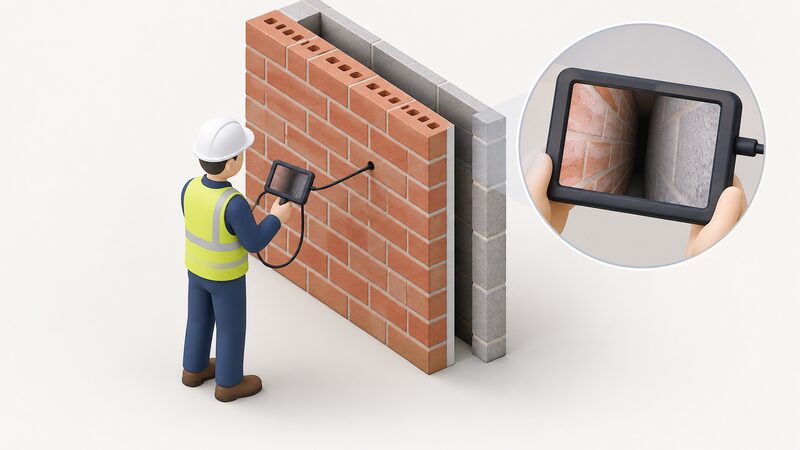
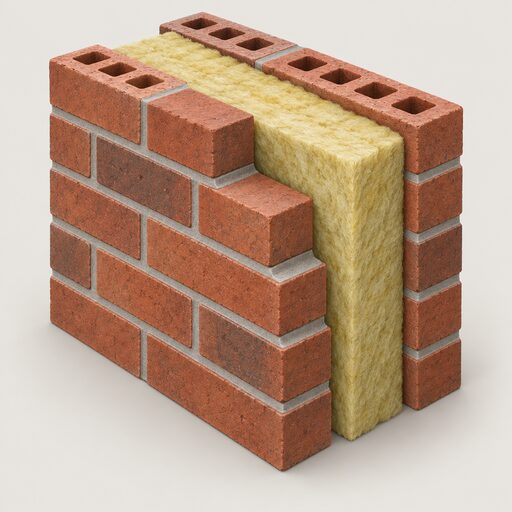
Not every wall can take cavity wall insulation. Independent guidance sets out the general conditions: the external walls are unfilled cavity walls, the masonry or brickwork is in good condition, and the cavity is at least 35mm wide, or 50mm for some forms of insulation4. Where the cavity is already filled, or the wall is solid, the measure does not apply.
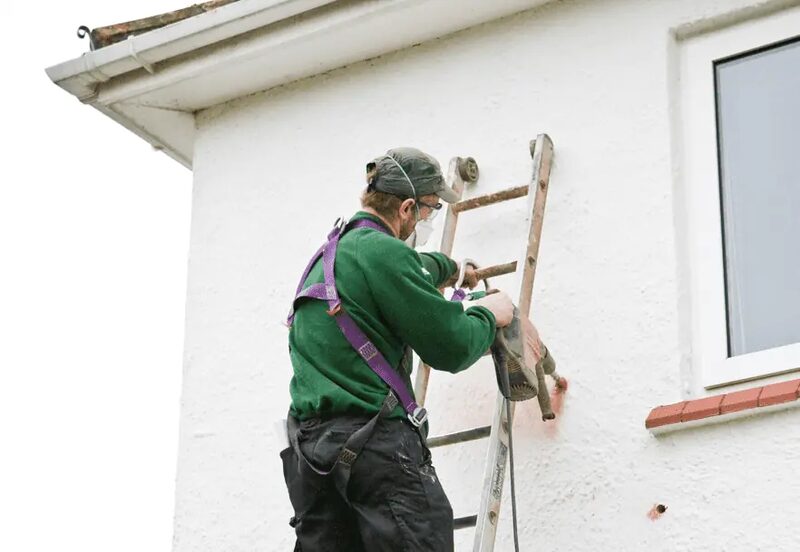
Official guidance for Wales is explicit that the wall should be assessed before installing cavity wall insulation, to confirm its condition, construction type and suitability18. The same guidance states that where existing wall cavities are unfilled, they should be insulated where suitable to achieve the maximum U-value in the relevant column18. The installing firm carries out the assessment, through a surveyor or technician, before installation19.
The technical requirements are set out in building guidance. Insulation should go at least 150mm below the damp proof course level, and the cavity can be fully filled with insulation or partially filled, with the manufacturer consulted before proceeding13. In some cases cavity wall insulation is treated as a project requiring approval, alongside conversions and extensions20.
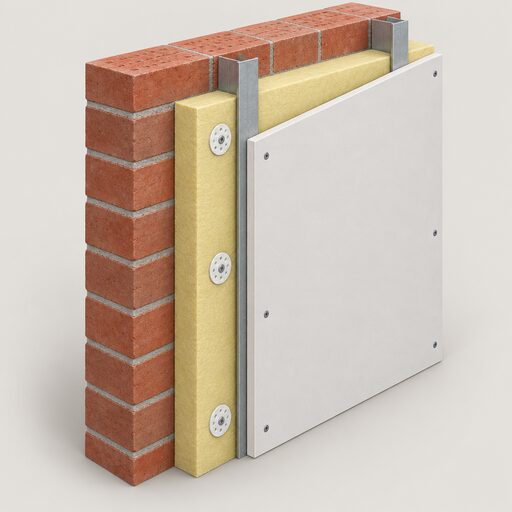
Where a cavity cannot be filled, the alternatives are different measures rather than a variation of the same one. Internal wall insulation can maintain a cavity between the masonry wall and a separate insulated layer21. External wall insulation is another route, and a hybrid system costs more than insulating a standard cavity wall but can deliver larger heating bill savings22.
Damp risk, guarantees and what lasts
The damp question is the one households ask most, and the evidence is measured rather than alarming. Independent guidance states that in some circumstances cavity wall insulation can be the cause of damp, but that this tends to be rare12. Risk is concentrated in exposed walls, narrow or debris-filled cavities, and homes with poor ventilation.
The safeguard is the guarantee. The Cavity Insulation Guarantee Agency guarantee runs for 25 years and covers problems caused by faulty or inappropriate installation of cavity wall insulation4. CIGA registers the property where the cavity walls have been insulated by an installer covered by the guarantee4. The cover is for installation defects, not for unrelated damp, structural movement or later alterations.
That distinction matters for a household weighing independence. The insulation itself is a physical asset in the wall, but the protection depends on a third-party agency and on the installer having been registered. A guarantee is only as good as the scheme behind it, and it does not transfer the household away from the grid or from a supplier.
What the EPC gain means for landlords and rental standards
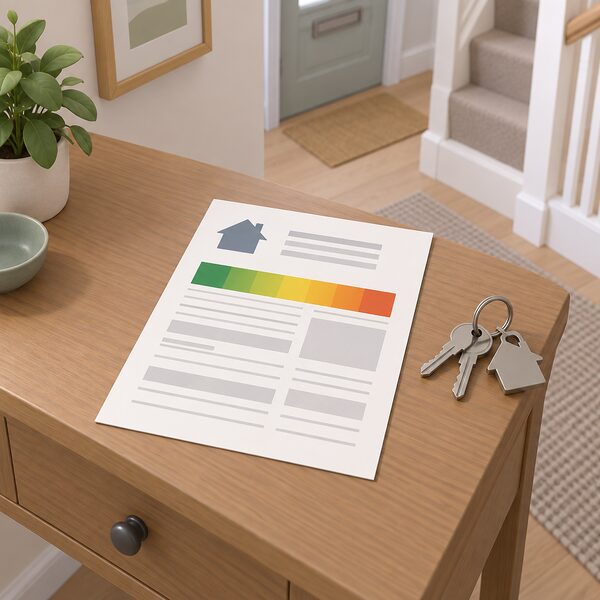
For landlords, the EPC gain is a compliance question before it is a comfort one. Independent guidance states that if an EPC says a home is rated in band F or G, the landlord normally has to make improvements23. Wall insulation sits inside that obligation, and the exemption route exists where it cannot be met.
The exemption is specific. A landlord can apply where the only relevant improvements for the property are cavity, external or internal wall insulation, and expert advice has concluded that the measure is not appropriate because of its potential negative impact on the fabric or structure of the property24. The evidence required is a copy of the written opinion of the relevant expert stating that the property cannot be improved to an EPC E rating because a recommended wall insulation measure would have a negative impact25.
External wall insulation is treated as having a significant impact on the EPC methodology used to calculate ratings, which benefits landlords needing to increase a property rating to band C or better26. Cavity wall insulation is the cheaper route where the cavity exists, and the 5 to 10 point figure is the one to plan around1.
On value, the evidence is about banding rather than the measure. A Halifax study found that an increase in an EPC banding increases home values, and that other efficiency measures can contribute towards this, not just solar27. A maker's support article states that improved energy efficiency can enhance property value28. No published figure isolates cavity wall insulation's effect on price.
Funding is available but conditional. ECO funds insulation, including loft, roofs and walls, and local authorities can refer households under ECO4 Flex29. The Domestic Renewable Heat Incentive required that where an EPC recommended loft or cavity wall insulation, these had to be installed and a new EPC obtained, unless an exemption applied30. For landlords, the landlord funding for energy upgrades page sets out the routes, and landlord duties on energy, heating and home safety covers the compliance side.
Sources30 cited
- Energy Performance Certificates guide, Uswitch, 2026-07-27
- Tips to improve the EPC rating of your home, Energy Saving Trust, 2026-08-03
- Cavity wall insulation, Energy Saving Trust, 2026-05-08
- Cavity wall insulation advice, Centre for Sustainable Energy, 2025-12
- Green Homes Grant LAD and HUG statistics, November 2025, GOV.UK, 2025-11
- EPC C: red herring or a welcome step forward, Energy Systems Catapult, 2025-02-28
- EPCs undermining decarbonisation efforts, Energy Systems Catapult, 2023-12-13
- Energy Performance Certificates, nidirect, 2026-02-26
- EPCs explained, Elmhurst Energy, 2026-09-20
- Save energy and money, Consumer Council, 2026-09-20
- DIY vs professional home insulation, Uswitch, 2025-11-07
- How to stop condensation, Which?, 2026-05-26
- Thermal resistance, Planning Portal, 2026
- Insulation, nidirect, 2026-09-02
- NEED report summary of analysis 2026, GOV.UK, 2026-06-11
- Heating technologies to suit your home, nidirect, 2026-09-17
- The role of insulation in the Warm Homes Plan, National Insulation Association, 2026-03-02
- Approved Document L Volume 1 consultation version, Welsh Government, 2026-09-17
- CWI FAQs, CIGA, 2026-09-20
- Building regulations approval for homeowners, Solihull Council, 2026-09-17
- Guide to the conversion of traditional buildings, Scottish Government, 2026-08-10
- Solid wall insulation systems, SWIGA, 2026-09-20
- Make sure your home is energy efficient, Citizens Advice, 2026-09-17
- Support for landlords, Centre for Sustainable Energy, 2026-06
- Guidance on PRS exemptions and exemptions register evidence requirements, GOV.UK, 2026-05-05
- INCA 18 benefits of EWI, SWIGA, 2026-09-20
- How does solar PV affect property value, EPVS, 2026-03-27
- Will external wall insulation increase my property value, Unilin Insulation, 2026
- ECO4 Flex open, South Cambridgeshire District Council, 2026-09-17
- Domestic Renewable Heat Incentive applicants, Ofgem, 2026
 Cavity Wall InsulationCavity wall insulation could cut your heating bill, but is your home suitable?
 Insulation Savings and PaybackHow much can you really save by adding insulation, and does it depend on your home, your heating and how you use it?
 Improve an EPC RatingWhich home improvements actually raise your EPC score, and by how much?
 Insulation and Glazing CostsTypical installed costs for cavity wall, solid wall, loft and roof insulation, draught-proofing and replacement glazing, by measure and home size, with the savings, VAT position and funding schemes that shape the final bill.
 Roof InsulationHow much heat escapes through your roof, how thick the insulation should be, what it costs and what it saves?
 Solid Wall InsulationSolid walls lose far more heat than cavity walls, so what can actually be done about it?