
In this answer
Short answer
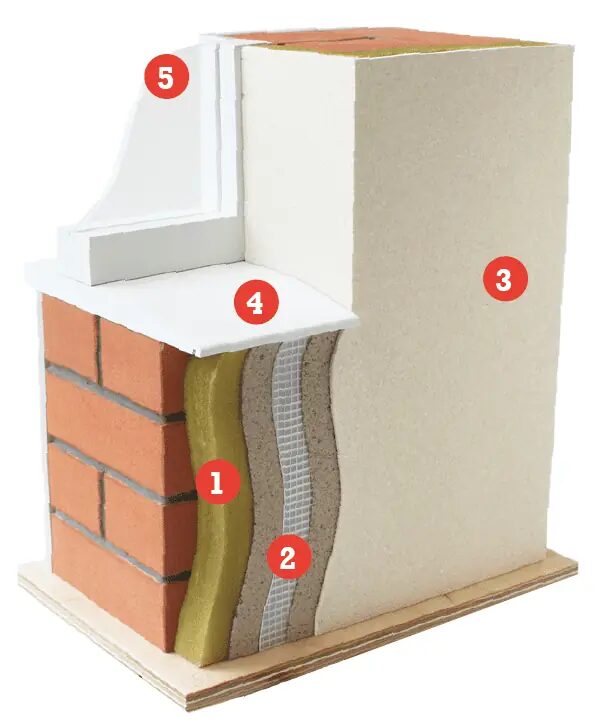
External wall insulation savings depend far more on the house than on the product. Independent guidance puts the annual figure at around £488 for a detached house and £280 for a semi-detached dwelling with gas heating, while a broader survey of solid wall homes gives a range of £150 to £550 a year1. The percentage figures are more stable than the cash ones: external wall insulation is reported to cut heating bills by as much as 35% or more when installed correctly, with research from Northumbria University suggesting an average household saving of 33%4.
The reason the cash range is so wide is that the same wall treatment meets a different starting point in every home. A house with solid walls, no loft insulation and an old boiler has more to save than one already partly improved. External walls account for 35% of heat loss from the average house, and heat loss through the walls can make up to 35% of all heat loss in the home, so the measure addresses the largest single gap in a solid wall property5.
Against that sits the cost. Externally insulating a home averages £12,000, depending on the size of the building and the number of walls, and a separate figure for a semi-detached dwelling with gas heating is £15,0001. The two headline averages do not agree, and prices are installer-quoted rather than published. What follows is what the evidence supports on savings, cost, carbon and the limits of the measure.
Savings by property type: detached, semi-detached, mid-terrace
The published savings are usually given for a house type rather than a wall area, which is why the same measure produces such different numbers. For a detached house, independent guidance gives around £488 a year, and a second source gives approximately £435 per property per year for a gas-heated detached house1. For a semi-detached dwelling with gas heating, the figure is £280 a year2. Solid wall insulation across homes with solid walls is given as £150 to £550 a year3.
Mid-terrace houses are the hardest to pin down, because the sources that quote a figure for them are quoting other measures. Floor insulation, for example, is given as £33 to £65 a year for a mid- or end-terraced or semi-detached house, and £60 a year for a semi-detached house with a suspended ground floor9. Those are floor figures, not wall figures, and they show how much smaller the savings from a single element can be when the exposed area is small. A mid-terrace has two party walls and less external wall than a detached house, so the same treatment has less wall to work on and less heat loss to recover.
The practical expectation is that a detached solid wall house sees the largest cash saving, a semi-detached house sees roughly half to two-thirds of it, and a mid-terrace sees less again. The percentage saving, by contrast, holds up better across types, because a smaller house with a smaller bill can still lose a similar proportion of its heat through its remaining external walls.
Percentage savings: 33% to 35% off heating bills
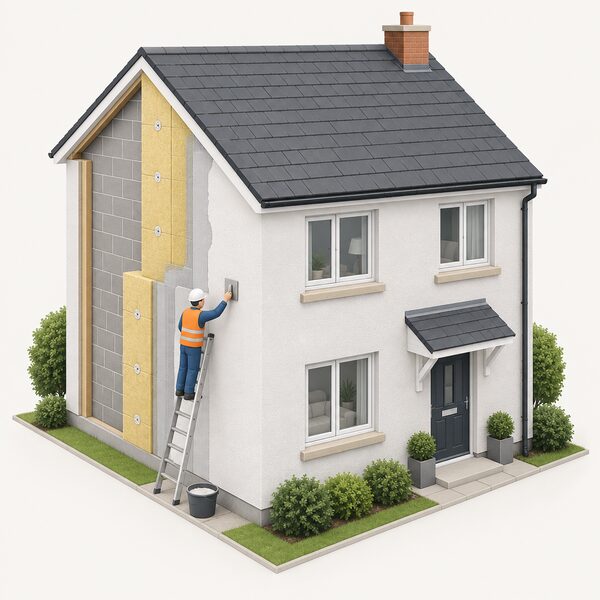
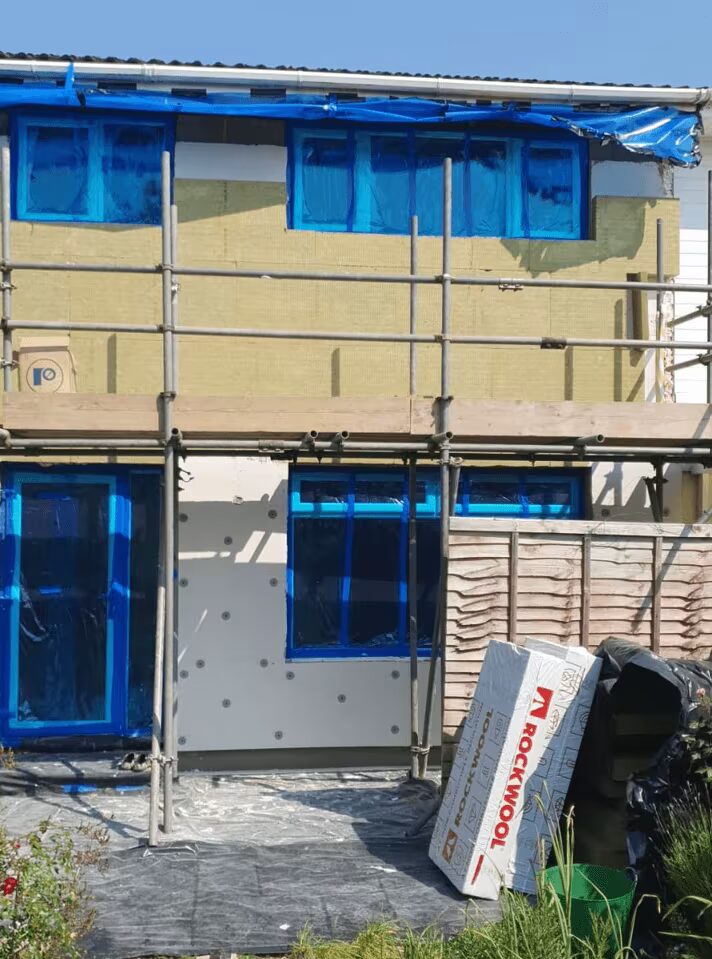
The percentage figures are the ones most often quoted to householders, and they come from a narrower set of sources than the cash figures. External wall insulation is reported to reduce heating bills by as much as 35% or even more when installed correctly, with the caveat that this varies by property and by the type and thickness of insulation used. The same source cites research from Northumbria University suggesting the average household saving is 33%4.
Two supporting figures explain why a third is plausible. External walls account for 35% of heat loss from the average house, and heat loss through the walls can make up to 35% of all heat loss in the home5. If roughly a third of the heat leaving a house goes through its walls, then addressing those walls thoroughly can plausibly recover a similar share of the heating bill, provided the walls are the dominant loss path and the work is done to a decent standard.
A local authority figure sits lower. Improvements including external wall insulation and heat pumps are reported to reduce energy bills by approximately 25%, or £350 per year, in council projects cited as evidence11. That figure bundles two measures together and covers a mixed stock, so it is not directly comparable with a single-measure percentage, but it is a useful reminder that real projects often deliver less than the modelled best case.
For a Scottish comparison, internal wall insulation is given as saving 36% of heat demand in official guidance12. That is a different measure on a different wall build-up, and it shows that the percentage attached to wall insulation generally sits in the low-to-mid thirties rather than at the extremes.
"it can by as much as 35% or even more"
Why the range is so wide: £115 to £488 a year
The spread from roughly £115 to £488 a year is not a disagreement about physics so much as a disagreement about baselines. Each figure assumes a particular house, fuel and starting condition, and the sources rarely state all three.
At the top end, a detached house is given around £488 a year, and a gas-heated detached house approximately £435 per property per year1. Solid wall insulation across homes with solid walls is given as £150 to £550 a year3. In the middle, a semi-detached dwelling with gas heating is given £280 a year, and external insulation of solid walls is given as saving up to £435 each year2. Lower down, internal wall insulation is given as £145 to £800 a year on energy bills, a range so wide it spans both measures14.
Part of the variation is measure confusion. Cavity wall insulation, a different treatment for a different wall type, is given as between £110 and £380 a year depending on the home, around £185 a year by a consumer body, and £160 to £470 per year for injection15. Those figures are sometimes quoted alongside solid wall figures, which makes the solid wall range look wider than it is.
Part of it is regional. Solid wall insulation is given as saving up to £280 in Great Britain and up to £330 in Northern Ireland9. Cavity wall insulation is given as around £200 a year in Great Britain and £240 in Northern Ireland18. Northern Ireland figures run higher, reflecting different fuel prices and a different housing stock.
The honest reading is that a householder should treat any single figure as an illustration, not a quote. The variables that move the number most are the size of the external wall area, the fuel being displaced, the efficiency of the heating system, and how much insulation the house already has.
Cost against saving: a £12,000 outlay and the payback question
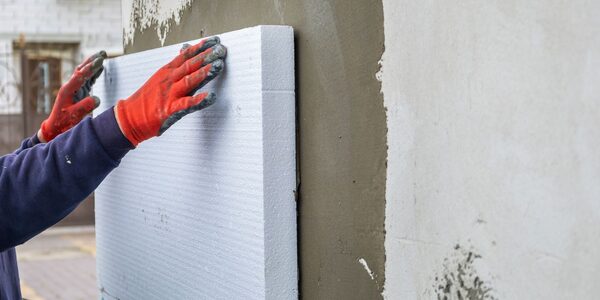
The cost side is better documented than the saving side, and it is where the payback question lives. Externally insulating a home averages £12,000, depending on the size of the building and the number of walls1. A separate figure for a semi-detached dwelling with gas heating is £15,0002. The two do not agree, and both are averages rather than quotes.
Other cost figures frame the same job differently. Internal solid wall insulation for a whole house is given as around £12,000, usually including redecoration, which is a useful comparison because it shows the internal route is not automatically cheaper at whole-house scale9. A typical major retrofit, covering internal wall insulation, external wall insulation, floor insulation, room-in-roof insulation and new windows and doors, is given as £12,000 to £50,00019. Solid wall insulation is described as costing thousands of pounds depending on size and wall condition20.
Internal solid wall insulation for a whole house costs around £12,000, usually including redecoration1. A wider home retrofit figure puts solid wall insulation for a semi-detached home at £12,000 to £15,0002, and a major insulation retrofit covering internal wall insulation, external wall insulation, floor insulation, room in roof insulation, new windows and doors is typically £12,000 to £50,0003. External wall insulation is also costed at £18.00 per square metre of wall at a U-value of 0.18 W/m2K4, a per-area figure rather than a whole-house one, and the only per-square-metre cost in the evidence, so it is the most useful starting point for estimating a specific wall.
Set a £12,000 outlay against a £488 annual saving and the arithmetic is stark: the simple payback runs to decades, before any allowance for maintenance or render renewal. Set it against £280 and it is longer still. That is why the measure is rarely justified on bill savings alone in a home that already has reasonable insulation, and why it is more often considered alongside rendering, cladding replacement or a wider retrofit.
Carbon savings and other benefits: 1.8 tonnes of CO2 and less condensation
The carbon case is stated more consistently than the cash case. External wall insulation can save approximately 1.8 tonnes of carbon dioxide per year, a figure attributed to the Energy Saving Trust, and external insulation of solid walls is given as saving 1,770 kg of CO2 a year, from the same origin7. The two are close enough to be the same estimate expressed differently.
Beyond carbon, the benefits that recur in the evidence are about the building rather than the bill. External wall insulation does not reduce interior space, because it is applied to the outside of the building, unlike internal wall insulation which takes floor area from every room it lines23. A manufacturer states that, when properly installed, external wall insulation can help prevent moisture penetration and condensation, and that when properly installed and maintained it can last the lifetime of the building23. Those are maker claims rather than independent findings, and they carry the usual condition: properly installed and maintained.
The measure is also suitable for new construction and retrofit projects, though historic or listed buildings may have restrictions23. That matters for the householder weighing the work, because consent, appearance and wall construction all bear on whether external insulation is even permissible.
For a household's energy independence, the effect is real but partial. Insulation reduces the heat a home needs to buy, which lowers exposure to gas prices and to whatever the grid does next. It does not remove the need for a heating system, a supplier or a grid connection, and it does not generate anything. It is a demand-side measure: it makes the home need less, rather than making it self-supplying. Paired with a heat pump, the case strengthens, because topping up wall, floor and loft insulation before installing a heat pump will help reduce its running costs24. Independent research found that improving heat pump efficiency from average to good during cold weather could save as much energy as insulating all solid walls in UK homes, which puts the two measures in the same conversation rather than in competition25.
Where external wall insulation falls short
The limits are as important as the savings. External wall insulation is a solid wall measure, so it does not apply to a house with a cavity, which takes cavity wall insulation instead. It changes the outside of the building, which brings planning and consent questions in conservation areas and for listed buildings, and it is not a do-it-yourself job.
The scheme route carries its own risk. Solid wall insulation installed under government schemes may be faulty and eligible for a free check and fix, and the Great British Insulation Scheme is named among the schemes concerned27. That is a remediation route rather than a reassurance, and it means the installer and the guarantee matter as much as the specification.
The savings themselves are modelled rather than metered in most of the figures quoted here, and the range from £115 to £488 a year reflects that. A householder weighing the work should treat the percentage figures as the more reliable guide and the cash figures as illustrations that depend on their own house, fuel and starting condition. For the wider picture of how wall, loft and floor measures compare, see how much insulation saves on energy bills, and for the choice between the two solid wall routes, see internal vs external solid wall insulation.
Sources27 cited
- Solid wall insulation: external, Centre for Sustainable Energy, 2025-07
- Wall insulation types, Uswitch, 2026
- Solid wall insulation costs and savings, Which?, 2026-05-05
- 18 benefits of EWI, SWIGA, 2026-09-20
- The benefits of insulation, CIGA, 2026-09-20
- Retrofit, Act on Energy, 2026
- Solid wall insulation systems, SWIGA, 2026-09-20
- Great British Insulation Scheme statistics, House of Commons Library, 2025-12
- Energy saving upgrades for home renovation, Energy Saving Trust, 2026-05-05
- Retrofit explained, Energy Saving Trust, 2026-02-06
- High Rise Retrofit and Upgrade Programme Phase 1, City of Edinburgh Council, 2026-04-20
- Heat in buildings: retrofit possibilities, Scottish Government, 2023-11-28
- About solid wall insulation systems, SWIGA, 2026-09-20
- Internal wall insulation, INCA, 2026-09-20
- Insulation guide, Uswitch, 2026-09-16
- Energy efficiency, Consumer Council for Northern Ireland, 2026
- DIY vs professional home insulation, Uswitch, 2025-11-07
- Tips to improve the EPC rating of your home, Energy Saving Trust, 2026-08-03
- Watt a Save, Home Builders Federation and Octopus Energy, 2026-02
- 7 tips to keep your home cool during a heatwave, Elmhurst Energy, 2025-08-13
- Great British Insulation Scheme: homeowners and tenants, Ofgem, 2026-09-17
- Great British Insulation Scheme: supply chain, Ofgem, 2026-09-17
- External wall insulation FAQ, Unilin Insulation, 2026
- Is now a good time to get a heat pump, Energy Saving Trust, 2025-12-12
- Buildings energy findings report, CREDS, 2026
- Buildings energy, CREDS, 2026
- Get help with faulty solid wall insulation, Citizens Advice, 2026-09-17
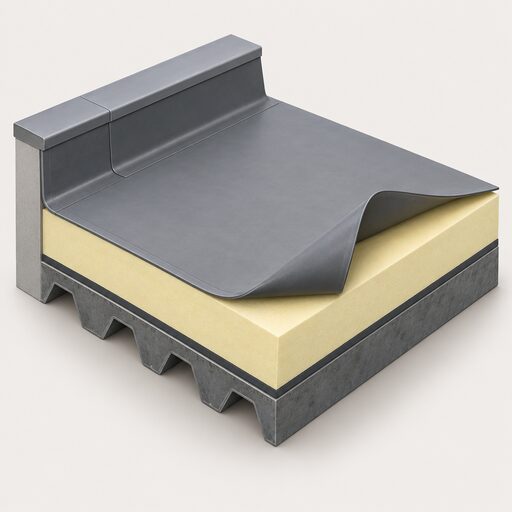 Roof InsulationHow much heat escapes through your roof, how thick the insulation should be, what it costs and what it saves?
 Insulation Savings and PaybackHow much can you really save by adding insulation, and does it depend on your home, your heating and how you use it?
 Do Smart Controls Save Money?Do smart heating controls really cut your bills, and by how much?
 Changing Habits SavingsWhat the evidence says behavioural change saves: around £90 to £120 a year for one degree off the thermostat, £100 to £110 a year for using a full set of heating controls, and £304 to £351 a year for a bundle of small changes.
 Solid Wall InsulationSolid walls lose far more heat than cavity walls, so what can actually be done about it?
 Insulation and Glazing CostsTypical installed costs for cavity wall, solid wall, loft and roof insulation, draught-proofing and replacement glazing, by measure and home size, with the savings, VAT position and funding schemes that shape the final bill.