In this guide
Yes, smart heating controls can save money, but the saving is not a property of the device. It comes from reducing wasted heating, and the published UK figures range from around £90 to £110 a year in typical cases, with one independent guide putting the figure at "hundreds of pounds a year"1. The mechanism is straightforward: a smart thermostat lets a household stop heating rooms and hours it does not need, and the more waste there is to cut, the larger the saving.
The evidence is consistent on the direction and inconsistent on the size. Confused.com puts installing a smart thermostat and controls at up to £110 a year off bills, and a thermostat reduction of one degree at up to £90 a year1. Energy Saving Trust advice quoted by OFTEC puts adjusting a thermostat at around £90 a year for a typical household2. East Hertfordshire District Council states that reducing the thermostat by one degree could save up to 25% of heating bills and associated carbon3. Those are different measures, different baselines and different assumptions, and they should not be added together.
What matters for a household is the condition attached to every one of those figures. A smart thermostat could save money, but savings are not guaranteed: they depend on the home, heating habits, existing controls, energy prices and how the thermostat's features are used4. Where heating is already well controlled, the home is poorly insulated, the thermostat is not set up correctly, features go unused, or habits stay the same, the benefit may be limited4.
What a smart thermostat actually does differently
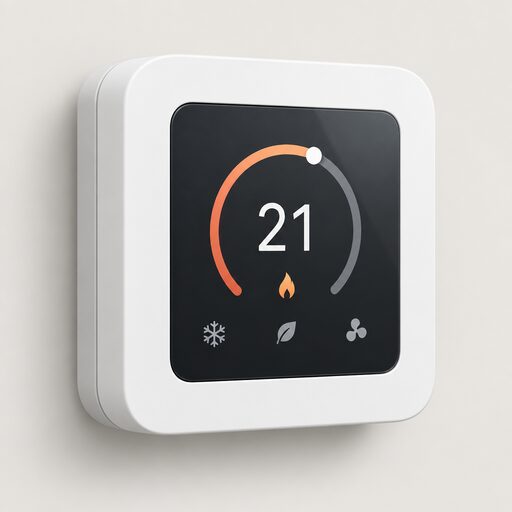
A smart thermostat is an internet-connected thermostat that gives digital control over a home's central heating4. That definition matters because it separates the category from older controls that look similar. A wireless thermostat is not always smart; smart thermostats usually add app control, internet connectivity, automation or other connected features4. A programmable thermostat with a radio link to the boiler is a different product from one that learns, reports and can be driven from a phone.
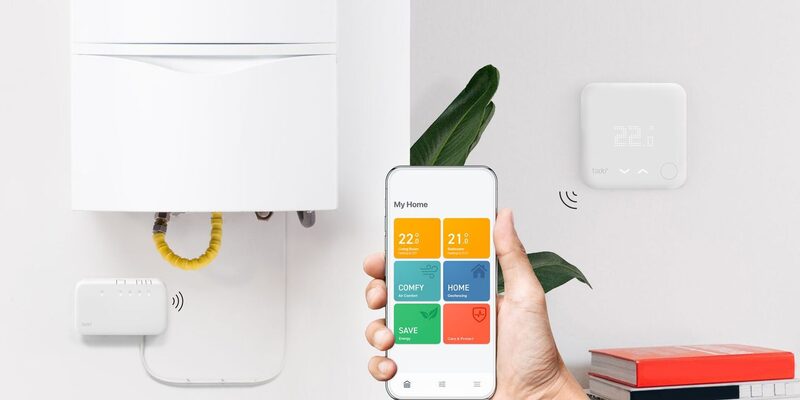
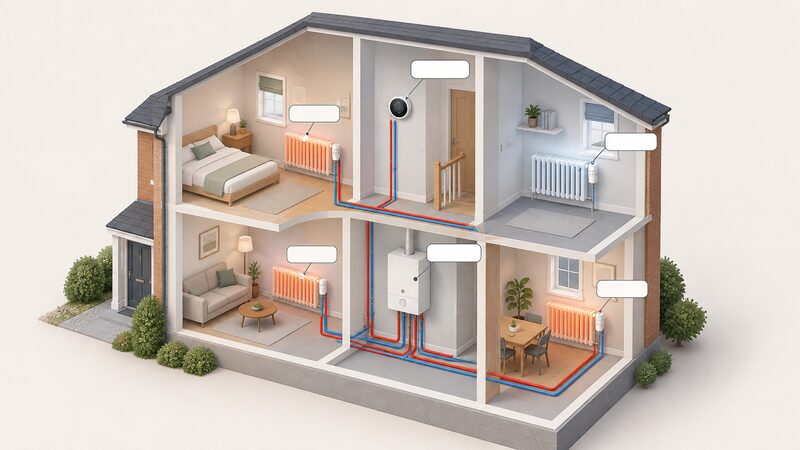
The practical differences are specific. Most smart heating controls link to a phone, and heating can be controlled via smartphone, tablet or laptop, or by telling a smart speaker what is wanted8. Most allow multiple routines to be programmed, so the home is at the desired temperature at the desired times9. They allow heating to be monitored from a smartphone and help to reduce temperature swings10. The saving methods are remote switching off via a phone, more sophisticated sensors to avoid temperature extremes, and heating or pre-heating certain rooms while leaving unused rooms untouched9.
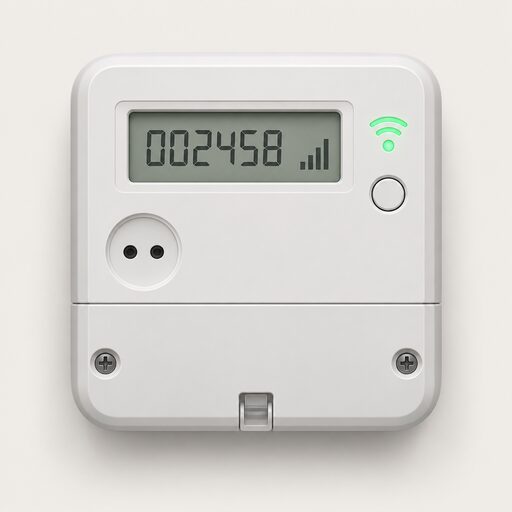
There is a limit worth stating plainly. Smart thermostats only allow tracking of heating, so a household cannot keep an eye on electricity and gas usage through them11. That is the job of a smart meter's in-home display, and the two devices do different things. Smart meters provide valuable information that could help save money on energy bills, but a smart meter does not automatically save energy or money; practical changes are needed12. The same logic applies to the thermostat: it is an instrument for acting on information, not a saving in itself.
The savings evidence: £75 to £110 a year in typical figures
The headline numbers come from consumer guidance and from Energy Saving Trust figures quoted by others. Confused.com lists installing a smart thermostat and controls to fine-tune heating as cutting up to £110 a year from bills, and separately lists reducing the thermostat by one degree as saving up to £90 a year1. OFTEC quotes Energy Saving Trust advice that simple steps such as adjusting a thermostat can save a typical household around £90 a year2. Confused.com's broader energy efficiency guide states that smart thermostats could help save hundreds of pounds a year3.
Those figures are not a single measurement. They are modelled or estimated savings attached to particular actions, and the differences between them reflect what is being changed. Adjusting a thermostat by one degree is a behavioural change that costs nothing. Installing a smart thermostat and controls is a capital purchase that enables a set of behaviours. The £110 figure covers the second; the £90 figures cover the first. A household that buys a smart thermostat and then runs the same schedule as before has done the spending without the behaviour.
The most rigorous UK evidence in this area is not about thermostats at all but about boiler flow temperature. Nesta ran a randomised controlled trial with 61,000 users of an energy advice app, from January 2023 to the end of April 2023, testing whether advice to lower a combi boiler's flow temperature reduced gas use7. The trial estimated households could save around 8% on their annual gas use by lowering the temperature of their combi boiler, but also estimated that if households compensated for the lower room temperature, the initial gas saving would be reduced by over 50%, with the gas saved falling from 8% to 3.6%7.
That compensation effect is the single most useful number on this page. It shows that a control change produces a saving only if the household accepts the resulting comfort level. The same logic governs smart thermostats: the saving is real where the schedule genuinely reduces heated hours, and it evaporates where the household simply overrides it.
Why savings aren't guaranteed: home, habits and heating system
The conditions under which a smart thermostat fails to save are set out clearly in the guidance. The energy-saving benefit may be limited if heating is already well controlled, the home is poorly insulated, the thermostat is not set up correctly, features are unused, or heating habits stay the same4. Each of those is common, and together they explain most of the gap between the headline percentages and what a household actually sees.
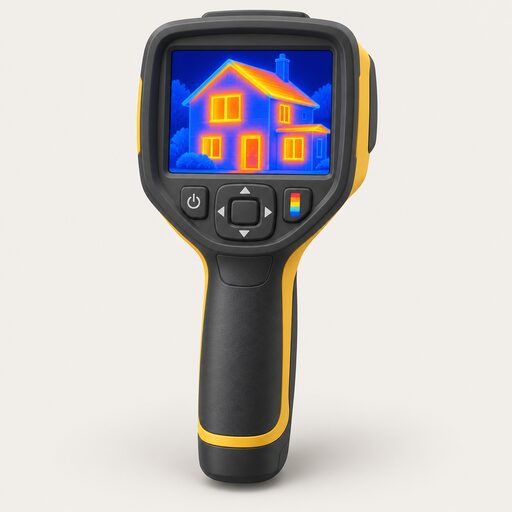
The fabric of the home is the first constraint. Energy Saving Trust estimates that an un-insulated dwelling loses a third of all its heat through the walls and a further quarter through the roof14. In a home losing heat at that rate, a control that trims heated hours is working against a building that is throwing heat away continuously. Controls manage when heat is delivered; they do not change how fast it escapes.
Existing controls are the second constraint. A home that already has a programmer, a room thermostat and thermostatic radiator valves is already capturing much of the available saving, and a smart thermostat adds convenience and finer scheduling rather than a new category of saving. The Great British Insulation Scheme gives average installation costs for room thermostats of £100, boiler programmers £80 and thermostatic radiator valves, which indicates the baseline equipment against which a smart upgrade is being compared6.
Habits are the third. The Nesta trial's compensation finding is the clearest evidence: a change that lowers room temperature produces a saving only if the household does not simply raise the thermostat to compensate7. A smart thermostat with a well-built schedule and unused automation features is an expensive room thermostat.
Where the saving comes from: cutting wasted heat, not the device itself
The clearest statement of the mechanism comes from the guidance itself: any cost benefit comes from reducing wasted heating rather than from the thermostat itself, so results will vary from home to home4. That single sentence should govern how a household reads every percentage on this page. The device is a means of reducing wasted heat; the reduction is the saving.
What counts as wasted heat is specific. Heating a home during hours when nobody is in it is waste. Heating rooms that are not used is waste. Letting a home overheat because the thermostat is badly sited or the schedule is coarse is waste. Smart controls address all three through remote switching off via a phone, sensors that avoid temperature extremes, and room-by-room control that leaves unused rooms untouched9. Heating controls generally exist to set and maintain the temperature in a home and make sure it is warm for the times of day occupants are at home and switched off to save electricity when they are not15.
The distinction between the device and the behaviour also explains why smart meters and smart thermostats are so often confused. Smart meters will not automatically save money, but the in-home display helps a household keep track of how much energy is being used16. A smart meter does not automatically save energy, but it can help manage usage more easily17. Smart meters can help reduce bills by making a household aware of its energy use18. The pattern is identical: the instrument enables the saving, and the household makes it.
Cost to buy: £100 to £200 plus installation
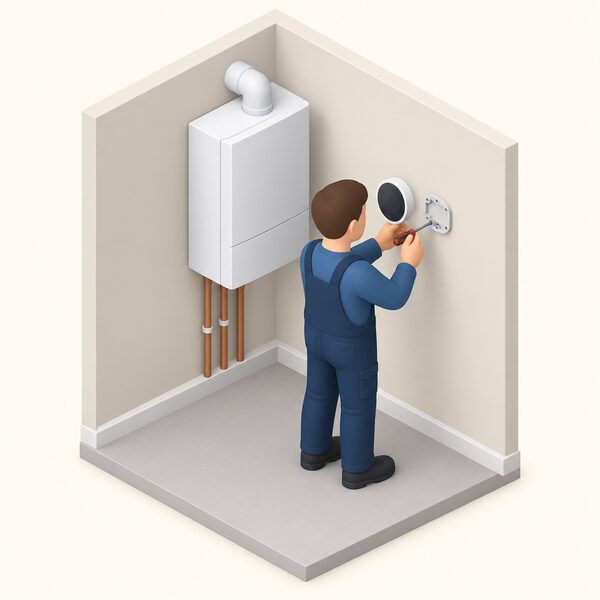
Most smart thermostats cost between £100 and £200, but some have add-ons such as installation which push the total higher5. That is the general range. Named models sit inside it: Which? lists the Worcester Bosch EasyControl Smart Thermostat at £170 and the Google Nest Smart Thermostat E at £19919. Prices are those published on the dates given and are not a quotation for any particular installation.
Installation is the variable that decides whether the purchase pays back. The Great British Insulation Scheme gives an average installation cost for room thermostats of £100, for boiler programmers £80, and for thermostatic radiator valves6. Those are averages for the measures in that scheme, not quotes for a smart thermostat, but they indicate the order of magnitude of the labour involved. Hive recommends professional installation of its smart thermostats19.
Set against a saving of up to £110 a year, a device at £100 to £200 plus installation is a multi-year payback in the best case, and no payback at all where the household's habits do not change1. That arithmetic is the reason the guidance is so careful about conditions. A household already running a tight schedule with good controls is buying convenience and reporting, not a return.
Smart controls versus free alternatives: lowering flow temperature and timer habits
The strongest evidence in this area concerns a change that costs nothing. Nesta's trial found that almost all households can easily and safely lower the flow temperature of their boiler themselves without the need of a gas engineer7. The recommended setting is a flow temperature of 60°C or lower for condensing boilers, to ensure they run as close as possible to condensing mode, though many in the UK are currently installed at between 70°C and 80°C7. Welsh Government guidance notes that condensing combi boilers tend to have heating flow temperatures set to 75-80°C, but that 50-70°C is enough for many homes20.
The trial design is worth understanding because it shows how the saving was tested. Participants were randomly allocated to one of three conditions: a control group, a 60°C condition, and a month-dependent condition7. The 60°C group received an intervention email in January advising them to lower their flow temperature to 60°C. The month-dependent group received three emails: 60°C in January, 55°C at the end of February, and 50°C at the end of March7. All intervention emails included a link to an online walkthrough tool7. The 60°C condition was chosen because it is the temperature the government currently advises7.
The trial also states its own limitation: it will not be able to quantify the average saving made by a household changing its boiler settings, because not everyone who receives the advice will turn down their flow temperatures7. The design is intention-to-treat, so the measured difference is the impact of receiving the advice, not of acting on it7. That is a weaker claim than a headline percentage, and it is the honest one.
Against that, a smart thermostat's distinctive contribution is scheduling and zoning rather than flow temperature. The two are complementary: flow temperature sets how efficiently the boiler runs when it is on, and the schedule sets how often it is on. A household weighing a £100 to £200 device against a free settings change should understand that the free change has the stronger published evidence behind it5.
How savings compare with other efficiency measures: insulation first
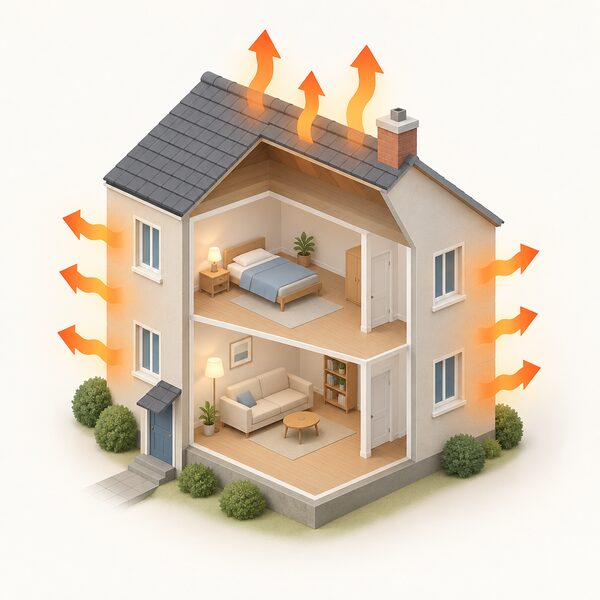
Controls sit inside a hierarchy of measures, and the published evidence puts fabric first. Energy Saving Trust estimates that an un-insulated dwelling loses a third of all its heat through the walls and a further quarter through the roof14. No control setting recovers heat that has already left through an un-insulated wall.
The policy framework reflects that ordering. The Scottish Government's Heat in Buildings strategy sets out that households in fuel poverty will have achieved a level of energy efficiency equivalent to EPC C by 2030, that over a million homes and around 50,000 non-domestic properties will have converted to zero or low emissions heating by 2030, and that poor energy efficiency will have been removed as a driver of fuel poverty by 204021. Heating systems in the vast majority of properties off the mains gas grid are to be zero emissions by 203021. Controls are part of that picture, but they are not the leading measure.
The consumer guidance points the same way. Smart meters put consumers in control of their energy use, allowing them to take energy efficiency measures that can help save money on energy bills, offset price increases and reduce carbon emissions22. The phrase is "allowing them to take" measures, not "replacing" them. A smart meter or a smart thermostat is an enabling device that sits alongside insulation, glazing and heating system improvements.
For a household deciding where money goes first, the sequence in the published evidence is: reduce heat loss through the fabric, then set the heating system to run efficiently, then add finer control over when and where heat is delivered. A smart thermostat bought before the first two steps is being asked to do work it cannot do.
Who says what: Energy Saving Trust, Nesta and other independent sources
The figures on this page come from a small number of organisations, and it helps to know what each is. Energy Saving Trust is a grant-awarding body23. It is authorised and regulated by the Financial Conduct Authority (716195)24. It delivers the Home Energy Scotland Grant and Loan via Home Energy Scotland on behalf of the Scottish Government, and manages Scottish Government heat and energy efficiency schemes through Home Energy Scotland in partnership with advice providers and energy companies26. It offers free and impartial advice on how to reduce carbon emissions, how to use water more sustainably and how to save money on energy bills, with a helpline on 0300 123 123428. It does not provide or run the financial advice, products or services mentioned on its pages25.
Nesta is a registered charity in England and Wales 1144091 and Scotland SC04283329. Its sustainable future mission is to reduce home carbon emissions in the UK by 30% by 203029. Its boiler efficiency trial ran from October 2022 to July 2023, using a randomised controlled trial with 61,000 users of an energy advice app7. Nesta has also recommended that interest free loans should be provided to encourage people to install smart thermostats, insulate their homes, and get other energy saving measures quickly30. In 2017 the Behavioural Insights Team estimated that the Nest Learning Thermostat can save approximately 4.5-5%30.
Energy Systems Catapult is an independent research and technology organisation whose mission is to accelerate Net Zero energy innovation31. Its Warm Home Prescription work sits alongside the consumer-facing smart meter material it publishes16.
"any cost benefit comes from reducing wasted heating rather than from the thermostat itself, so results will vary from home to home"
What this means for household energy independence
A smart thermostat changes who holds the schedule. The household does, from a phone, without waiting for a programmer on a wall. That is a genuine gain in local control, and it is the part of the proposition that does not depend on the size of the saving.
The dependence it leaves in place is worth naming. A smart thermostat connects to Wi-Fi, which allows it to form part of a more connected home heating system4. That connection is what delivers app control, remote programming and multiple routines9. It also means the device's most distinctive features run through a home network and, in most cases, a manufacturer's cloud service. The published guidance does not set out what each model does when the connection drops, so the fallback behaviour is a question for the maker of the specific unit.
The heating itself remains dependent on the same things as before: gas or electricity from a supplier, a boiler or heat pump that needs servicing, and a grid connection. A smart thermostat does not change any of that. It changes when the boiler runs, not what it runs on. For a household thinking about independence, the honest position is that controls improve the efficiency of a system that is still externally supplied, and that the largest single reduction in dependence comes from using less of that supply, whether through fabric improvements or through running the heating less.
There is also a data dimension. A device that reports temperatures, schedules and occupancy to a manufacturer's service is a device that holds information about the home. The published consumer guidance does not address this, and it is a separate question from savings. Households weighing a smart thermostat against a simpler programmable control are choosing between convenience and connectivity on one side and a device that works without a network on the other.
Sources31 cited
- Energy saving tips for the home, Confused.com, 2025-10-14
- Five summer heating tips to help households save money on energy bills, OFTEC, 2026-05-26
- Make your home more energy efficient, Confused.com, 2026-07-06
- What is a smart thermostat, Smart Energy GB, 2026-08-19
- What are smart thermostats, Uswitch, 2026-02-05
- GB Insulation Scheme government response, GOV.UK, 2023-03
- Testing boiler efficiency advice with households, Nesta, 2026-09-17
- Smart homes, lower carbon footprint, Energy Saving Trust, 2026-01-21
- VAT energy saving materials and grant funded heating supplies, GOV.UK, 2026-09-17
- 10 ways to go green with electricity, Electrical Safety First, 2026-09-19
- Do I already have one, Smart Energy GB, 2026-03-16
- Saving money with a smart meter, Smart Energy GB, 2026-03-16
- How carers could prepare for higher energy bills, Smart Energy GB, 2026-03-16
- Scottish House Condition Survey 2024 key findings, Scottish Government, 2026-02
- Make winter feel like summer, Home Energy Scotland, 2026-09-20
- Smart metres, Energy Systems Catapult, 2025-08-19
- Benefits for prepay customers, Smart Energy GB, 2026-08-19
- Bills, Smart Energy GB, 2026-03-16
- How to buy the best smart thermostat, Which?, 2026-09-17
- Five top tips from Which to cut your energy bills, Welsh Government, 2026-03-18
- Energy saving home improvements, Scottish Government, 2026-09-17
- Second annual progress report on the roll out of smart meters, GOV.UK, 2013-12-18
- Home energy generation, Planning Portal, 2026
- Providing energy efficiency advice to your residents, Energy Saving Trust, 2026-09-17
- A networked approach to low carbon heat, Nesta, 2026-09-20
- Home Energy Scotland, Energy Saving Trust, 2026-02-20
- Financial help for energy efficiency and low carbon heating improvements, City of Edinburgh Council, 2026-09-20
- Warm Home Prescription, Energy Systems Catapult, 2025-11-13
- How a smart thermostat can save you money this winter, ivie, 2025-11-18
- Covid-style government response needed to prevent gas shortages, Nesta, 2022-08-24
- Energy Efficiency Advice, Torridge District Council, 2026-09-17
 Changing Habits SavingsWhat the evidence says behavioural change saves: around £90 to £120 a year for one degree off the thermostat, £100 to £110 a year for using a full set of heating controls, and £304 to £351 a year for a bundle of small changes.
 Smart Thermostats ExplainedWhat does a smart thermostat actually do, and is it worth it?
 Heating Controls CostA smart thermostat usually costs between about a hundred and two hundred and fifty pounds, but fitting can push that higher.
 The Full Smart Meters GuideDo smart meters really save you money, and how do you use one to cut your bills?
 Insulation Savings and PaybackHow much can you really save by adding insulation, and does it depend on your home, your heating and how you use it?
 Heat Pump Electricity TariffsA heat pump tariff gives you cheaper electricity for part of the day, so running your heating costs less than on a standard rate.