
In this guide
Heating controls in a rented home sit at the meeting point of two different sets of rules: the tenancy agreement, which governs what a tenant may change, and the energy performance regime, which governs what the building itself must achieve. A smart thermostat is an internet-connected thermostat that gives digital control over a home's central heating1. In a property the householder does not own, fitting one is usually a permanent alteration and normally needs the landlord's consent, while a smart meter follows a separate route: private renters whose energy bills are in their own name, or who prepay, can choose one after checking the tenancy agreement and letting the landlord know2.
The legal baseline for the building is the Energy Performance Certificate. In England and Wales the domestic private rented property minimum standard is band E or above, and landlords of domestic private rented properties, including public sector landlords, may not grant a tenancy to new or existing tenants if the property is rated band F or G unless an exemption applies3. An EPC is valid for a maximum of ten years, or until another EPC is commissioned for the same building, whichever comes first4.
Scotland runs a separate system, with its own consultations on a private rented minimum standard and on EPC reform, and a social rented sector that is measurably more efficient than its private one. What follows sets out what a smart thermostat can and cannot do in a tenancy, who owns and pays for controls, how social landlords use monitoring devices, and what the standards require across the four nations.
What a smart thermostat can and cannot do in a rented home
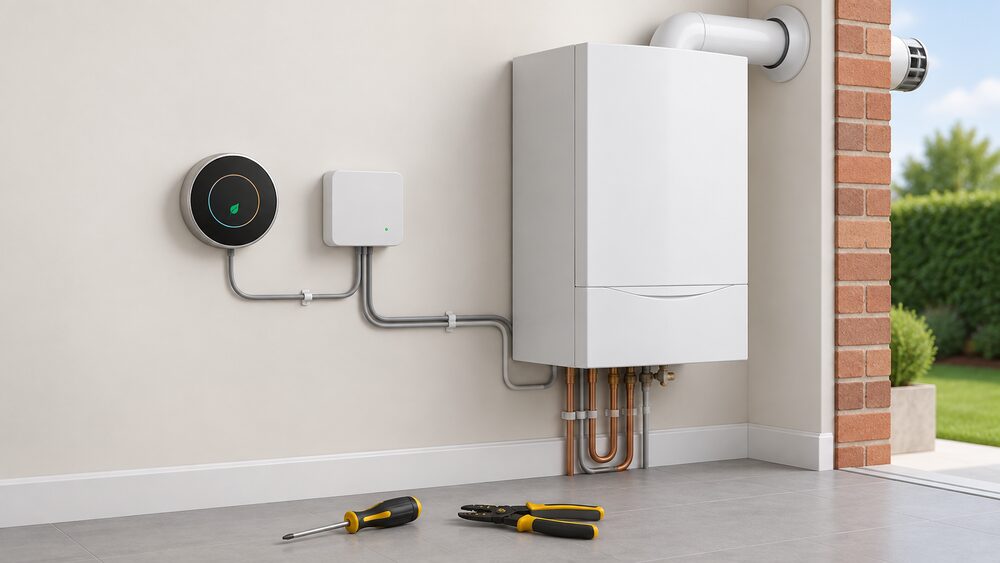
The practical question for a tenant is not whether smart heating works, but which parts of it can be installed without touching the fabric of the building. A smart thermostat gives digital control over central heating through an internet connection1, and the control itself is the easy part. The difficulty is the wiring. A lot of boilers are not Wi-Fi-enabled, so many smart or wireless thermostat systems still include a wired element, and that wiring should be done by a trained professional1. Where a receiver or hub has to be connected to the boiler, the work is a modification to the landlord's appliance and its controls, not a plug-in accessory.
It is also worth separating two things that are often confused. A wireless thermostat is not always smart; smart thermostats usually add app control, internet connectivity, automation or other connected features1. A tenant who already has a wireless programmable thermostat may therefore have most of the scheduling benefit without any smart capability at all, and no alteration is needed to gain it.
Compatibility is the second constraint. Before buying a smart thermostat, the buyer should check that it is compatible with the boiler and heating system, usually in the product description or on the thermostat manufacturer's website1. In a tenancy the householder may not know the boiler model, and the landlord or letting agent holds that information. Where the boiler is old or uses a proprietary control protocol, the check may rule the device out entirely.
Savings are the third limit, and they are not a promise. A smart thermostat could save money, but savings are not guaranteed: they depend on the home, heating habits, existing controls, energy prices and how the thermostat's features are used1. In a rented home the householder often cannot change the things that drive the bill most, such as insulation, glazing or the boiler itself, so the control layer is working on a smaller share of the total.
For a household's energy independence, a smart thermostat shifts some control to the occupant: schedules, setpoints and room-by-room regulation become theirs to set. What remains dependent is the boiler, the wiring, the landlord's consent and, in most cases, a manufacturer's cloud service and app. The device does not reduce reliance on gas or on the grid, and it does not transfer ownership of the heating system.

Who owns and who pays: controls in a landlord's property
Ownership of the heating system stays with the landlord. Ownership of data is a different matter, and the distinction matters in a tenancy because the tenant pays the bill. Smart meter data is classified as personal data, owned by the consumer, and the consumer is the source of consent for any onward data-sharing8. That principle covers consumption data even where the meter and the property belong to someone else.
On installation, the rule for meters is broader than many tenants assume. Any household that pays for energy, whether owning or renting, should be able to book a smart meter installation where it is expected to work in the property9. The condition attached to private renting is procedural rather than prohibitive: a private renter whose energy bills are in their name, or who prepays, can choose a smart meter after checking the tenancy agreement and letting the landlord know2.
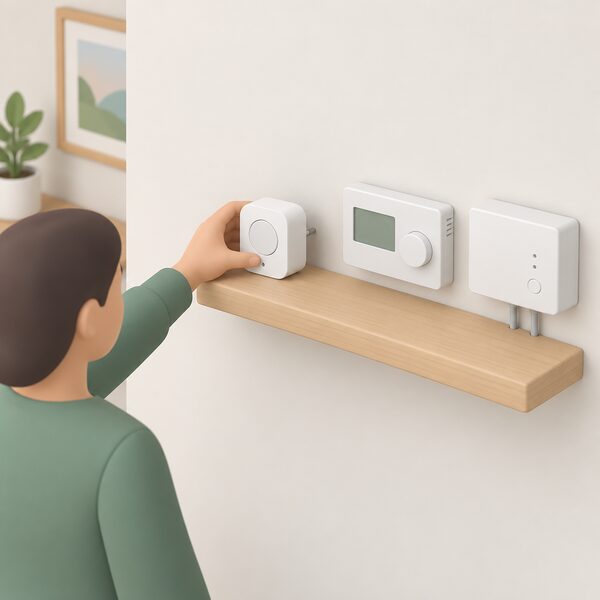
Heating controls follow a different logic. A smart thermostat is not covered by the same right, because it is part of the heating system rather than the metering arrangement. The consent question therefore turns on the tenancy agreement and on whether the installation is reversible. A device that replaces a wired room thermostat leaves a permanent change; a plug-in controller that sits alongside existing controls does not.
| Item | Who owns it | Who decides on replacement | Consent needed from the landlord |
|---|---|---|---|
| Boiler and heating system | Landlord | Landlord | Not applicable |
| Wired room thermostat or receiver | Landlord | Landlord | Yes, for any tenant change |
| Plug-in controller alongside existing controls | Tenant | Tenant | Governed by the tenancy agreement |
| Smart meter | Supplier, installed in the property | Household that pays for energy | Landlord to be informed2 |
| Smart meter consumption data | Consumer | Consumer | Consumer is the source of consent8 |
Where a landlord replaces a heating system, the controls that come with it are the landlord's responsibility, and the tenant's role is to use them as intended. The dividing line in practice is between use and alteration: a tenant can set schedules, adjust thermostatic radiator valves and change setpoints, but cannot rewire the boiler's control connections without agreement.
For energy independence, the position is mixed. The householder controls the settings and, for metering data, owns the data. The capital equipment, the wiring and the choice of system remain with the landlord, so the household's ability to change its own heating infrastructure is limited by the tenancy rather than by technology.
Smart controls as a landlord alert system
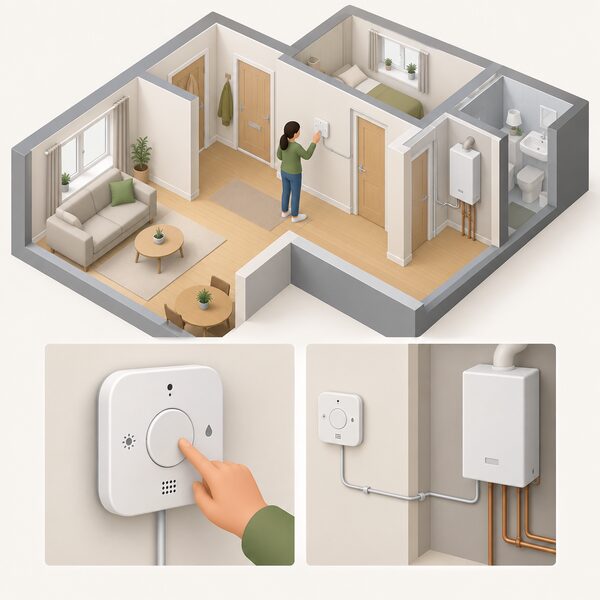
Social landlords have adopted connected heating controls for a purpose that private householders rarely consider: monitoring the condition of the home rather than the comfort of the occupant. The devices used in these schemes are specified in some detail. The Switchee Smart Thermostats product contains five sensors, for temperature, motion, light, air pressure and humidity11. A later specification confirms the same five sensors and adds that the innovation uses GSM connectivity rather than Wi-Fi11.
That connectivity choice is significant in social housing. Mobile network connectivity does not depend on a tenant having a broadband contract, which removes one of the barriers that would otherwise exclude the households most likely to benefit. It also means the device reports whether or not the occupant engages with an app.
The regulatory framing matters too. Under the scoring methodology for one government scheme, a product can only be notified as a smart thermostat where it is listed in the SAP 10 PCDB as a smart thermostat, for use with the heat source of the home where it is installed12. In other words, the device has to be recognised for the specific heating system it is attached to, not merely marketed as smart.
For a household, the trade-off is straightforward to state. A landlord-installed monitoring thermostat can detect cold homes, humidity problems and heating faults without the tenant having to report them, which is a genuine benefit in properties where damp and mould go unreported. The same device gives the landlord a continuous data stream about conditions inside the home. The tenant does not choose the device, does not own it, and may not be able to remove it.
This is the clearest example on this page of the independence question cutting both ways. The household gains earlier detection of problems it might not have noticed. It loses the choice of whether its home is monitored, and the data sits with the landlord rather than the occupant.
The Switchee trial in social housing: what the evidence shows
The evidence base for connected controls in social housing is small and specific, and it is worth describing precisely rather than generalising from. The Switchee devices appear in the approved innovation measures for a government energy efficiency scheme, listed as Switchee Smart Thermostats, comprising the Gen2 Smart Learning Thermostat and Switchee Econa14. The specification records five sensors for temperature, motion, light, air pressure and humidity11.
The housing itself is modest in scale. Active Homes comprises 16 dwellings, flats and houses, for social rent, built with a timber-framed modular SIP system15. That is a new-build development rather than a retrofit of older stock, which limits how far its results can be read across to the general social housing estate.
The wider programme figures give a sense of scale. Across three innovative schemes, 374 energy efficiency measures were delivered, benefiting 148 properties16. These are Northern Ireland figures, reported in the 2024/25 annual report for the energy efficiency scheme there, and they cover a set of measures rather than smart thermostats alone.
What the trial demonstrates is that a social landlord can install connected heating controls at development scale, with sensors that report on the internal environment and connectivity that does not rely on the tenant's broadband. What it does not demonstrate is a measured energy saving attributable to the thermostat, or a figure for reduced damp and mould. The numbers available describe the devices and the properties, not the outcomes.
For a household in social housing, the practical implication is that the controls may not be theirs to choose or replace. Where a landlord has installed a monitored thermostat, the occupant's influence runs through the settings and through reporting faults, not through selecting the device. The independence gained is in the information the landlord holds about the property; the independence retained by the household is limited to how the system is used day to day.
EPC ratings: the baseline for rented homes
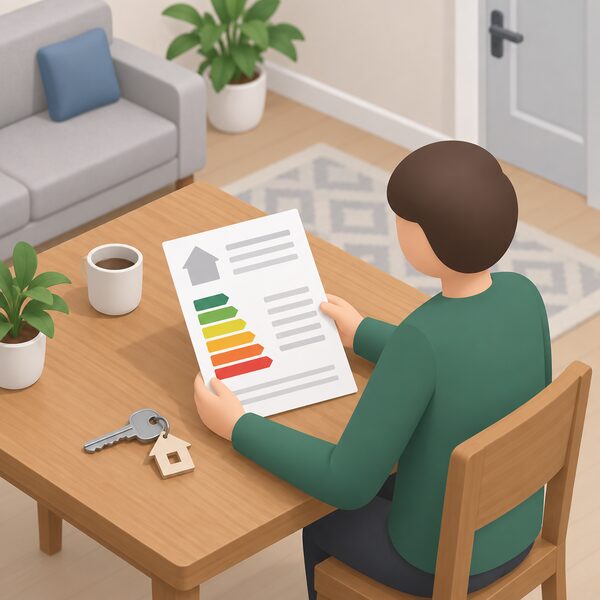
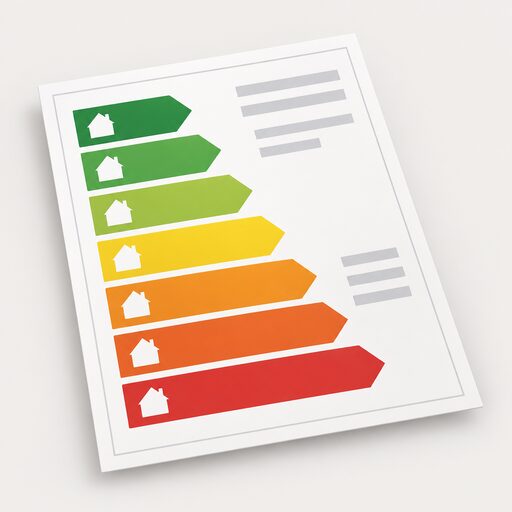
The Energy Performance Certificate is the document that determines whether a rented home meets the legal baseline, and it is worth understanding what it contains. An EPC provides an assessment of a home's energy efficiency17, and buildings are rated on a scale from A to G, with A being the most efficient18. The certificate also carries information on measures which could be made to improve the energy efficiency of the building, and an indicative cost for each improvement18.
EPCs are required whenever a property is built or marketed for sale or rent19, and must be provided when a building is advertised for sale or for let to a new tenant20. They are also required upon completion of construction of a new building20. The certificate is valid for a maximum of ten years, or until another EPC is commissioned for the same building, whichever comes first4, and each EPC is valid for 10 years and can be used multiple times during that period19.
The register is public, and its coverage is partial. EPCs cover around 60% of the housing stock in England and around 55% in Wales, based on Census 2021 analysis by ONS21. In the quarter January to March 2026, 460,000 EPCs were lodged in England and Wales, a 2% decrease compared to the same quarter in 202522. Of those, 416,000 domestic EPCs were lodged in England, a 1% decrease on the same quarter, and 22,000 domestic EPCs were lodged in Wales, an 8% decrease22.
New build performance is markedly better than the existing stock. In the quarter January to March 2026, 87% of new dwellings in England were given an A or B rating, an increase from 86% in the same quarter, and 92% of new domestic properties in Wales received an energy efficiency rating of A22. The 12 months to March 2026 saw 1,649,000 domestic EPCs lodged in England, a 4% increase on the previous 12 months, and 90,000 in Wales, a 10% increase22.
| Measure | England | Wales |
|---|---|---|
| Housing stock covered by an EPC | around 60%21 | around 55%21 |
| Domestic EPCs lodged, January to March 2026 | 416,00022 | 22,00022 |
| Change on same quarter 2025 | 1% decrease22 | 8% decrease22 |
| New dwellings rated A or B, January to March 2026 | 87%22 | 92% rated A22 |
| Domestic EPCs lodged, 12 months to March 2026 | 1,649,00022 | 90,00022 |
For a tenant, the EPC is the one document that describes the building's performance independently of the landlord's account of it. It is also the document that determines whether the tenancy can lawfully be granted at all in England and Wales. Its limits are that it is a modelled assessment rather than a measurement, and that it says nothing about the controls fitted after the assessment was made.
Minimum standards: MEES for private rentals and the social rented sector deadline
The private rented sector minimum energy efficiency standard is the main regulatory lever on rented housing, and it is in transition. In England and Wales the current domestic private rented property minimum standard is band E or above3. Landlords of domestic private rented properties, including public sector landlords, may not grant a tenancy to new or existing tenants if the property has an EPC rating of band F or G, unless an exemption applies3. Exemptions are registered and can be viewed on the private rented sector energy standards exemptions register23.
The proposed future standard is higher. The intention is to introduce regulations requiring private rented sector properties to meet a minimum EPC C, where technically feasible and cost-effective, by 20285. The Scottish Government has set out a parallel ambition: requiring private rented sector properties to meet a minimum standard equivalent to EPC C, where technically feasible and cost-effective, by 20286. A further statement of the same policy describes requiring all private rented sector properties to reach a minimum standard equivalent to EPC C by 2028 where technically feasible and cost-effective at change of tenancy, with a backstop of 2028 for all remaining existing properties24.
The mechanism is still being settled. The consultation on a potential minimum energy efficiency standard for the private rented sector, which would use the reformed domestic EPC's new Heat Retention Rating, closed at the end of August 2025 and is under analysis25. The same consultation is described as having run between 6 June and 29 August 2025, and it sought views on applying the standard to all new lets from 2028 and to all lets from 203326.
There is a transitional provision worth noting for anyone holding a recent certificate. The 2025 update proposes to allow for properties with a current EPC C to be recognised as compliant under the future standard until the EPC expires27.
For a household, the standard determines whether the property can be let at all, and therefore whether the landlord has an incentive to improve the fabric. It does not directly regulate the controls, except insofar as controls affect the rating. The independence effect is indirect: a higher standard forces investment in the building, which reduces the household's exposure to cold and to high bills, but the decision remains the landlord's.
Scotland's social housing stock: how the sectors compare
Scotland's social rented sector is the most energy efficient part of its housing stock, and the figures are consistent across sources. Homes in the social rented sector are now some of the most energy efficient in Scotland, with 85% already achieving EPC D or above5. That is a headline the private rented sector does not match.
The gap to the higher standard is still substantial. 35% of homes in the social rented sector and 52% of owner occupied homes do not achieve EPC C6. The Scottish Housing Quality Standard data show a related pattern: 25% of social sector properties failed, predominantly due to the not Energy Efficient criterion28.
The private rented sector in Scotland performs worse on the tolerable standard. The rate for private rented sector dwellings was lower at 25%28, and a separate consultation records the social rented sector at 5% on the same comparison29. The two figures describe different measures and should not be read as a single ranking, but both point the same way: the social sector is ahead.
Fuel poverty modelling adds a temporal dimension. In the October to December 2026 period, the share of social rented sector households in fuel poverty rose by around 1 percentage point compared to the July to September 2026 period, while the figure remained stable for those in the private rented sector30. The Scottish Government's stated milestones include households in fuel poverty achieving a level of energy efficiency equivalent to EPC C by 2030, and poor energy efficiency being removed as a driver of fuel poverty by 20406.
For a social tenant in Scotland, the practical position is that the building is more likely to be efficient than a private let, and the landlord is more likely to have a programme of improvement. The controls fitted to that building are the landlord's choice. The household's independence comes from the fabric rather than from the thermostat, and the remaining dependence is on the landlord's investment decisions and on the heating system installed.
Barriers landlords report: the Nesta interviews
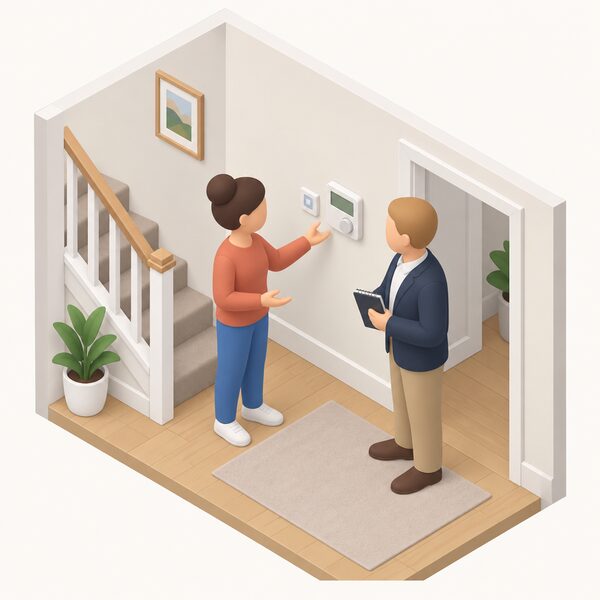
The barriers that landlords describe are practical rather than principled, and they cluster around cost, disruption and the split between who pays and who benefits. The evidence on this is thinner than the regulatory picture, and it should be treated as reported rather than measured.
The funding landscape that landlords can draw on is fragmented by nation and by tenure. In Wales, the Nest scheme offers a range of free, impartial advice and, if you are eligible, a package of free home energy efficiency improvements such as a new boiler, central heating or insulation31. In Greater Manchester, the Warm Homes Local Grant is open to privately rented properties with an EPC rating of band D or E32. Both are examples of support that reaches rented stock, but neither is a general entitlement.
The structural barrier is the same one that runs through this page. A landlord who installs controls or insulation pays the capital cost, while the tenant receives the comfort and the lower bill where the bill is in the tenant's name. Where the bill is in the landlord's name, the incentive reverses. The tenancy length then determines whether the landlord expects to recover the investment through rent.
For a household, the practical consequence is that improvements to rented stock tend to follow regulation and grant funding rather than tenant request. The schemes that exist are means-tested or tenure-specific, and eligibility varies by nation. A tenant seeking a change to the heating controls is therefore negotiating with a landlord whose decision is shaped by the standards described above, not by the household's preferences.
EPC reform: what may change for tenants and landlords
The EPC itself is being redesigned, and the changes will affect how rented homes are assessed and compared. The reform programme covers new ratings, redesigned certificates and improvements to the operational infrastructure20. The purpose of the certificate remains to provide information about the energy efficiency and emissions of a building20.
The most consequential change for rented housing is the proposed basis for the future minimum standard. The reformed domestic EPC's new Heat Retention Rating would be used as a basis for setting the standard25, and the same basis is recorded in the Scottish consultation on a private rented minimum energy efficiency standard30. A rating that measures heat retention rather than a composite efficiency score would shift the emphasis towards the building fabric and away from the heating system and controls.
That has a direct implication for controls. Under the current EPC methodology, controls contribute to the rating, and a smart thermostat can be recognised where it is listed in the SAP 10 PCDB for the heat source it serves12. Under a heat retention rating, the fabric dominates and the control contribution is smaller. A landlord deciding where to spend would be pushed towards insulation and glazing rather than towards a new thermostat.
The timing is not settled. The Scottish consultation on the private rented minimum standard closed on 29 August 202526, and the England and Wales consultation on improving the energy performance of privately rented homes ran as a 2025 update27. The Scottish Government has also consulted on proposals for a Heat in Buildings Bill26, which would sit alongside the EPC regulations.
For tenants and landlords alike, the direction is towards a higher baseline and a different measurement. The household benefit is a warmer, cheaper building; the household cost is disruption during works, and in some cases a rent adjustment. The independence gained is in the fabric of the home, which is the part a tenant can never own but always pays for.
Sources32 cited
- What is a smart thermostat, Smart Energy GB, 2026-08-19
- Smart meters, Energy Ombudsman, 2026-09-20
- Trading standards guidance: other consumer problems, Isle of Anglesey County Council, 2026-05
- Trading standards guidance: other consumer problems, Isle of Anglesey County Council, 2025-09
- Energy efficiency in homes, Scottish Government, 2025-04-22
- Tackling fuel poverty in Scotland: periodic report 2021-2024, Scottish Government, 2025-04
- How do you know if you have a smart meter, Smart DCC, 2026
- Data protection and smart meter data, Open Energy, 2026-09-20
- Smart meters: your rights and expectations, GOV.UK, 2025-08-08
- The Private Tenancies (Northern Ireland) Order 2024, legislation.gov.uk, 2024-05-30
- ECO4 Innovation Approved Innovation Measures v1.17, Ofgem, 2026-02
- Great British Insulation Scheme scoring methodology, Ofgem, 2025-08-06
- ECO4 Measures Table v4.0, Ofgem, 2025-07-29
- ECO4 Innovation Approved Innovation Measures v14, Ofgem, 2023-07
- Building for 2050: low cost, low carbon homes, GOV.UK, 2022-12-05
- 2024-25 NISEP Annual Report, UREGNI, 2026-07
- Solar photovoltaic (PV) panels, London Borough of Bromley, 2026-09-17
- Energy Performance of Buildings (Scotland) Amendment Regulations 2026: BRIA, Scottish Government, 2026-08-24
- Energy Performance Certificates, nidirect, 2026-02-26
- Energy Performance Certificates: a guide, Scottish Government, 2026-08-24
- Energy performance of building certificates in England and Wales: April to June 2025, GOV.UK, 2025-07-31
- Energy performance of building certificates in England and Wales: January to March 2026, GOV.UK, 2026-05-19
- View private rented sector energy standards exemptions, GOV.UK, 2026-05-05
- Energy Performance of Buildings (Scotland) Regulations 2025 update, Scottish Government, 2025-10
- EPC reform consultation: government response, Scottish Government, 2025-10-10
- Proposals for a Heat in Buildings Bill, Scottish Government, 2026-01-29
- Improving the energy performance of privately rented homes: 2025 update, GOV.UK, 2025-02-07
- Scottish House Condition Survey 2024: key findings, Scottish Government, 2026-02
- Private rented minimum energy efficiency standard consultation, Scottish Government, 2026-09-20
- EPC reform consultation: government response, page 1, Scottish Government, 2025-10-10
- Nest: a scheme to make your home warmer and more energy efficient, Isle of Anglesey County Council, 2026-09-17
- Warm Homes Local Grant, Greater Manchester Combined Authority, 2026-09-17
 Monitoring in Flats and RentalsCan you get a smart meter in a rented flat, and who decides?
 Rented Homes and Landlord MetersWho is responsible for the energy in your rented home?
 Renting and Home EnergyThe position of a tenant in a privately rented home: which measures need no permission, which are fixtures the landlord controls, and what the law says about heating, insulation, certificates and bills across the four UK nations.
 Where to Start If You RentRenting means you can switch supplier or get a smart meter yourself, but insulation, glazing and heating need your landlord's agreement.
 Energy in Social HousingWhat must your landlord do if your home is cold, damp or mouldy?
 HMOs and Shared HousesWho is responsible for the electrics, the gas and the fire alarms when you rent a room in a shared house?