
In this answer
Short answer
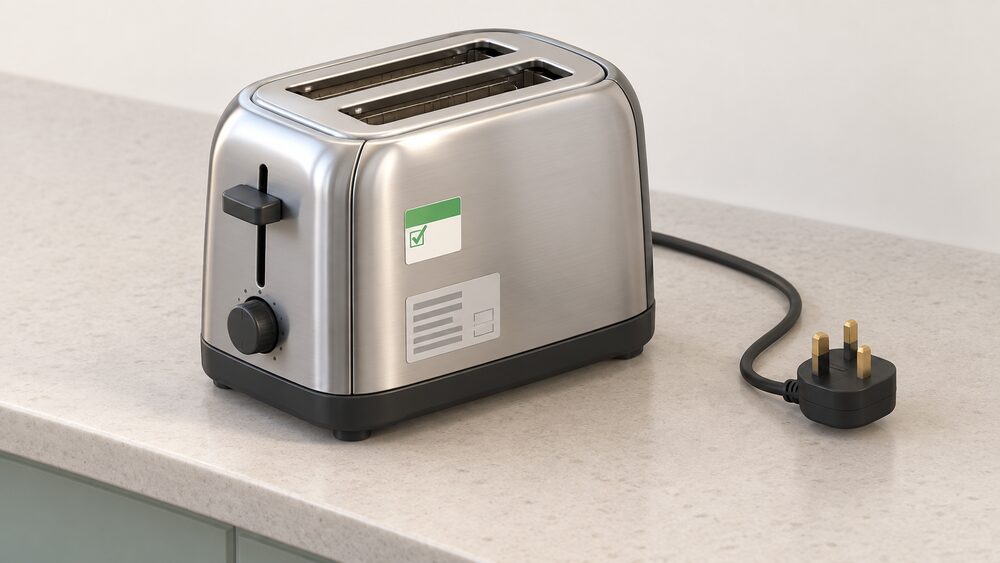
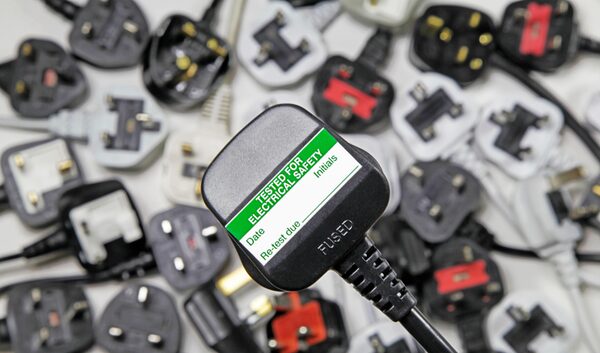
A PAT sticker is a label fixed to a portable appliance after it has been inspected and tested, and it tells you that the item was checked on a particular date. It is not a legal requirement in itself. What the law requires of landlords is that electrical installations are inspected and tested at regular intervals by a qualified person, and that tenants are given proof that installations and equipment have been inspected, tested and checked1.
The distinction matters for anyone renting. Guidance from Electrical Safety First states that appliances provided in rented accommodation should have up to date PAT stickers on them, and adds the exception that this is not required if the appliance is new and has not been used before1. So a missing sticker on a brand new kettle proves nothing either way, while a missing sticker on a ten-year-old toaster supplied with the tenancy is a reasonable question to raise.
For a household's energy independence, the sticker is a small thing with a narrow job. It says nothing about who pays the bill, whether the appliance is efficient, or whether the fixed wiring is sound. It is one piece of evidence about one item, and the wider duties sit elsewhere.
What a PAT sticker is and what it tells you
Portable appliance testing covers the items you plug in and move around: kettles, toasters, microwaves, lamps, vacuum cleaners, chargers. The test checks the appliance and its lead for faults that could cause shock or fire. The sticker records that the check happened.
It is worth separating the sticker from the appliance's own rating label. Electrical Safety First notes that a rating label is required for all manufacturers to have on their appliance, showing either the power of the appliance or the current of the appliance5. That label is a manufacturing requirement and appears on new goods. The PAT sticker is added later, after testing, and is a record of a maintenance action rather than a product standard.
The two labels answer different questions. The rating label tells you what the appliance draws and therefore what it costs to run. The PAT sticker tells you when someone last looked at its safety. Neither tells you the age of the appliance, its efficiency, or how much of your bill it accounts for.
For a tenant trying to understand their home, the sticker is best read as a maintenance record. It is evidence that a landlord or agent has a testing regime in place for the equipment they supply. Where no stickers appear on any supplied item, that is a signal about the regime rather than proof that any individual appliance is dangerous.

Do rented appliances legally need PAT test stickers?
No statute says a landlord must fix a PAT sticker to a kettle. The legal duties are framed around the installation and around evidence.
Official guidance states that landlords must give their tenants proof that they have had installations and equipment inspected, tested and checked2. The same guidance adds that social landlords who provide electrical equipment must also have this tested2. In Northern Ireland, legislation requires a landlord to ensure every electrical installation in the dwelling-house is inspected and tested at regular intervals by a qualified person6.
So the duty is real, but it attaches to inspection and testing, and to showing the tenant that it happened. A sticker is one common way of showing it for portable items. A certificate or report is the usual way for the fixed installation.
"Landlords must give their tenants proof of that they have had installations and equipment inspected, tested and checked"
The practical position for a renter is that a landlord who supplies appliances should be able to say when those appliances were last tested, and should be able to evidence it. Whether that evidence takes the form of a sticker, a register or a report is a matter of how the landlord records it.
Where PAT stickers matter most: HMOs and supplied appliances
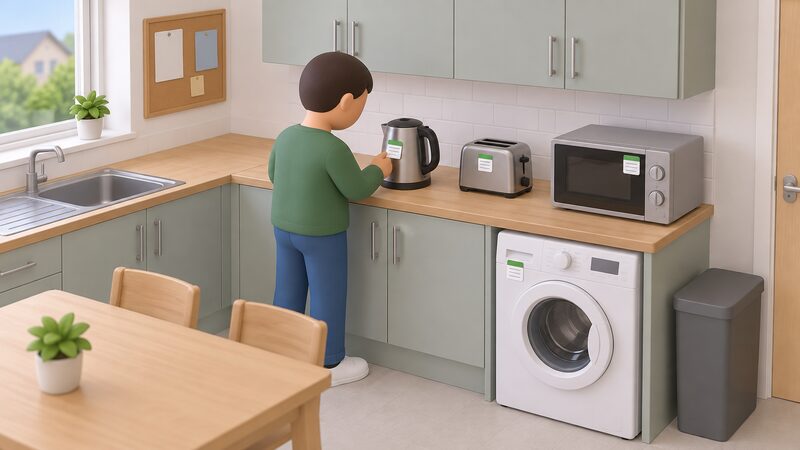
The more appliances a landlord supplies, the more the question matters. In a house in multiple occupation, kettles, toasters, microwaves and shared white goods are commonly provided, and they are used by several people who did not buy them and cannot know their history.
Electrical Safety First advises that tenants should look for PAT (portable appliance test) stickers on things like kettles and toasters, to show the appliance has been tested and is safe for use7. That advice is aimed squarely at shared and furnished accommodation, where the supplied appliance is the norm rather than the exception.
HMO licensing adds a further layer. A licence ensures things such as property standards, management, fire safety, room sizes and suitability for occupation8. Appliance safety sits within that broad remit rather than being a separate sticker rule. In larger buildings, the gas meter itself may sit in a communal area rather than inside the individual home, which is a reminder that shared buildings have shared services and shared risks9.
For a tenant in an HMO, the useful habit is to note which appliances came with the room or the shared kitchen, and to check whether each carries a test date. Where a landlord supplies a furnished property, the same logic applies to the whole inventory.
What a PAT sticker does not cover
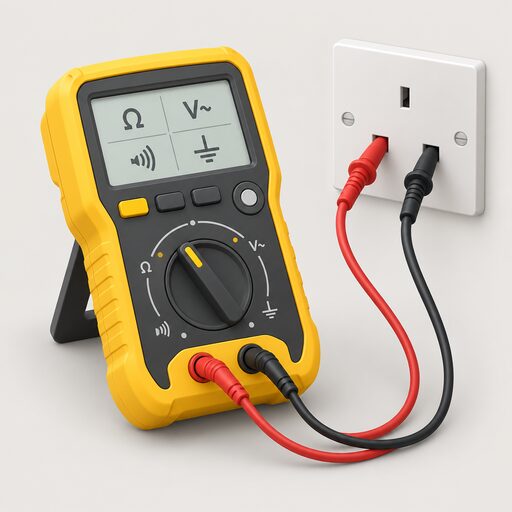
A sticker on a kettle says nothing about the wiring in the wall, the consumer unit, the sockets, or the fixed heating. Those are covered by the installation check, and landlords must have the electrics in their rented properties checked at least every 5 years2.
It also says nothing about gas. Gas safety is a separate regime with its own intervals and its own registered engineers. Landlords must make sure an annual safety check is carried out on each appliance or flue they provide for tenants' use3. Where a landlord provides an LPG appliance, a Gas Safe registered engineer must carry out a safety check at least once every 12 months7.
Nor does a sticker tell you anything about running costs or efficiency. The Standard Assessment Procedure, used for energy ratings, does not account for cooking or appliance use, which are based on a set occupancy calculation using the total floor area of the dwelling10. In other words, the rating on the property and the sticker on the toaster are unrelated pieces of information.
Other safety checks you can ask your landlord for
Beyond portable appliances, several checks have defined intervals and defined evidence.
| Check | Interval | Who provides it |
|---|---|---|
| Electrical installation inspection and testing | At least every 5 years2 | Landlord |
| Gas safety check on appliances and flues provided | Annually3 | Landlord |
| LPG appliance safety check | At least every 12 months7 | Landlord |
| Portable appliance testing of supplied equipment | No fixed statutory interval; evidence of testing required2 | Landlord |
Where a landlord has left an appliance behind from a previous tenant, official guidance is that they should either remove the appliance or arrange for it to be checked for safety by a Gas Safe registered engineer3. That is a clear duty with a clear remedy, and it applies to the appliance nobody chose.
Tenants who own their own gas appliances carry their own duty: they should make sure that gas appliances or flues they own are regularly maintained, with a safety check carried out at least once every 12 months by a Gas Safe registered installer11. In Northern Ireland the same principle applies, with gas appliances or flues you own needing regular maintenance and an annual safety check12.
On reletting, official guidance states that a new inspection and testing is not required where inspection was carried out less than 5 years ago and the report requires no further investigative or remedial work4. That is why a tenant moving into a recently checked property may see an older certificate date.

What to do if an appliance has no sticker

Start with a written question to the landlord or agent: when was this appliance last tested, and can you see the record. Keep the reply. A missing sticker is not automatically a breach, because a new and unused appliance does not need one1.
If the appliance is old, damaged, or shows signs of overheating at the plug or lead, stop using it and report it. The general duty to give tenants proof that equipment has been inspected, tested and checked gives you a legitimate basis for asking2.
For context on how far the fitness rules reach, Northern Ireland's fitness standard for private rented properties covers structural stability, freedom from serious disrepair, freedom from dampness that could damage the occupant's health, adequate lighting, heating and ventilation, adequate piped wholesome water, satisfactory facilities for preparing and cooking food including a sink with hot and cold water, a suitably located water closet for the occupant's exclusive use, a fixed bath or shower and wash-hand basin with hot and cold water, and an effective system for draining foul, waste and surface water13. If a privately rented house fails in one or more of those criteria, it does not meet the fitness standard and is not suitable for people to live in13. Appliance safety sits alongside those structural matters, not above them.
For the wider picture on what a landlord must do and what a tenant can change, see landlord duties on energy, heating and home safety and renting and home energy. Electrical checks specifically are covered in electrical safety checks in rented homes, and shared housing in energy and safety in HMOs and shared houses.
Sources13 cited
- Charity campaigns for safer electrics in rented homes, Electrical Safety First, 2026-09-19
- Electrical safety standards in the private and social rented sectors: guidance, GOV.UK, 2025-11-01
- Gas safety checks: what landlords must do, Health and Safety Executive, 2025-10-28
- Electrical safety standards in the private and social rented sectors: guidance, GOV.UK, 2025-11-01
- Energy and rating labels, Electrical Safety First, 2026-09-19
- The Private Tenancies (Northern Ireland) Order 2006 (Amendment) Regulations (Northern Ireland) 2024, legislation.gov.uk, 2024-11-27
- Charity supports safety for migrant communities, Electrical Safety First, 2026-09-19
- Common queries about planning permission, Wiltshire Council, 2026-09-17
- Locating your meter and turning off the gas, Cadent Gas, 2026-09-20
- SAP 10 FAQs, BRE Group, 2026-09-20
- Gas safety in the home: frequently asked questions, Health and Safety Executive, 2026
- Domestic gas installation and health and safety, nidirect, 2026
- Checking your home is fit to live in, nidirect, 2026-09-17
 Landlord Electrical ChecksWho is responsible for checking the electrics are safe in your rented home, and how often should it happen?
 Controls in Rented HomesCan you change the heating controls in a rented home, and who pays if they break?
 Monitoring in Flats and RentalsCan you get a smart meter in a rented flat, and who decides?
 Renting and Home EnergyThe position of a tenant in a privately rented home: which measures need no permission, which are fixtures the landlord controls, and what the law says about heating, insulation, certificates and bills across the four UK nations.
 HMOs and Shared HousesWho is responsible for the electrics, the gas and the fire alarms when you rent a room in a shared house?
 Gas Safety in the HomeYour landlord has to arrange a yearly gas safety check by a Gas Safe registered engineer and give you the record if you rent.