
In this answer
Short answer
The short answer is at least every five years. Government guidance states that landlords have the electrics in their rented properties checked at least every 5 years, by a properly qualified person1. The same interval appears in the legislation: a private landlord must ensure every electrical installation in the residential premises is inspected and tested at regular intervals by a qualified person, and the report must set the next test at intervals of no more than 5 years2.
That five-year figure is a maximum, not a fixed rhythm. Where the most recent report requires a shorter interval, the shorter interval governs2. Independent guidance for tenanted properties puts it as every 5 years or at each change of occupancy, whichever is sooner3. So a change of tenant can bring the next inspection forward, and a report that flags danger can do the same.
The duty covers the fixed installation, meaning the wiring and its associated fittings, not the tenant's own appliances. It applies to privately rented homes in England, and equivalent or overlapping rules apply in Wales, Northern Ireland and the social rented sector, with differences that matter to anyone checking their position.
At least every 5 years, and sometimes sooner
The five-year interval is the floor of protection, and it is written into both guidance and statute. Government guidance says landlords have the electrics in their rented properties checked at least every 5 years1. The Electrical Safety Standards in the Private Rented Sector (England) Regulations 2020 require a private landlord to ensure every electrical installation in the residential premises is inspected and tested at regular intervals by a qualified person, with the report specifying intervals of no more than 5 years2.
Independent guidance from the electrical safety charity is slightly more demanding in practice. It advises that periodic inspection and testing for tenanted properties should happen every 5 years or at each change of occupancy, whichever is sooner3. That same formulation appears across the charity's product and safety pages, including those covering electric blankets, dehumidifiers, patio heaters and plug-in solar panels3. The reason is straightforward: a new occupant inherits an installation they have never used, and a report that was satisfactory three years ago says nothing about a circuit that has since been overloaded.
The trade body for electrical contractors states that safety checks are required at least every five years9. A consumer guide to electrical safety puts the certificate renewal interval at every five years for landlords of tenanted properties10. The documents agree on the headline figure; they differ only on whether a change of tenancy should trigger an earlier visit, and the independent guidance is the stricter of the two.
For a household, the practical effect is that the date on the last report is not the only date that matters. A tenant moving into a property whose last inspection was four years ago should expect a fresh one, and a landlord letting a property repeatedly may find the five-year clock reset by turnover rather than by the calendar.
What the regulations require of landlords
The five-yearly check sits on top of older duties. The Landlord and Tenant Act 1985 requires landlords of properties with short leases to keep the electrical wiring in repair and in proper working order3. That is a continuing obligation, not a periodic one: wiring must be maintained, and the inspection regime is the mechanism that shows whether it has been.
The 2020 Regulations added the inspection and reporting duty for privately rented homes in England. A landlord must ensure every electrical installation in the residential premises is inspected and tested at regular intervals by a qualified person, and must obtain a report from that person giving the results of the inspection and test and the date of the next inspection and test2. The Welsh regulations use the same construction for a dwelling-house let under a private tenancy12.
The timetable matters. Five-yearly mandatory electrical safety checks came into force on 1 June 2020 for all new tenancies in privately rented properties in England4. The charity that campaigned for the rules urged landlords to comply or risk fines as the date loomed13. Existing tenancies were brought in afterwards, so the duty now covers the sector rather than only new lets.
Separately, the Fitness for Homes and Human Habitation regime in Wales includes ensuring the inspection and testing of the electrical installation among a landlord's obligations14. And the Energy Efficiency (Private Rented Property) (England and Wales) Regulations 2015, which cover a different subject, define their scope to include private, local authority and other public body landlords, as well as a tenant who sub-lets a property falling within scope15. That last point matters: a sub-letting tenant can carry the landlord's duties.
Who carries out the inspection, and what it covers
Government guidance requires the check to be done by a properly qualified person1. Independent guidance is more specific: periodic inspection and testing should be carried out only by electrically competent persons, such as registered electricians7. In social rented housing in England, the checks must be carried out by a competent and qualified person16. The rules name a standard of competence rather than a single register, so the practical test is whether the person is qualified to inspect and test, not which scheme logo appears on their van.
What the inspection produces is an Electrical Installation Condition Report, also known as a Periodic Inspection Report or PIR17. It is an electrical survey to reveal if electrical circuits are overloaded, find potential hazards in the installation, highlight any lack of earthing or bonding and carry out tests on the fixed wiring17. That is a broader exercise than looking at a consumer unit and declaring it tidy.
The scope is the installation, not the contents. Social landlords who provide electrical equipment must also have that equipment tested18. For private landlords, the duty is framed around the electrical installation in the residential premises2. Portable appliances brought in by a tenant are the tenant's own responsibility, and the same charity recommends landlords arrange for periodic inspection and testing to be carried out by a registered electrician at the relevant intervals7.
Where a report is satisfactory and no obvious damage is visible, a new EICR would not be required until five years has passed since the last report was issued4. That is the ordinary case. The exceptions are a change of occupancy, a report that sets a shorter interval, or visible damage that puts the earlier assessment in doubt.
Why the five-yearly check matters
The case for the interval rests on what electricity does in a home. The charity behind the campaign is explicit that it is calling on the government to take action and introduce mandatory five-yearly electrical checks in rented homes19. Its consultation response on the social rented sector in England found respondents overwhelmingly in favour of a key proposal: mandatory, five yearly electrical checks for all social housing tenants6.
The coverage has widened. Tenants in both the private and social rented sectors across the whole of Great Britain are now protected by five-yearly electrical installation safety checks16. That is a statement about the framework rather than about every individual property, and it is worth reading alongside the Northern Ireland position below, where the picture is different.
There is a second, older recommendation that sits behind the five-year rule. The Electrical Safety Council has advised that, as a matter of routine, electrical periodic inspections should be carried out on all homes every ten years, and that the electrician should be asked to include the immersion heater and thermostat during this check20. The ten-year figure is a general recommendation for all homes; the five-year figure is the legal maximum for rented ones. Where the two differ, the rented sector rule is the binding one.
For a household, the inspection is the point at which the installation's condition is recorded by someone competent to judge it. It does not make a home independent of the grid, and it does not remove the need for a supplier. What it does is establish, on a fixed cycle, that the wiring inside the property is safe to use, which is the part of the energy system a household actually controls.
Between inspections: appliances, recalls and tenant safety
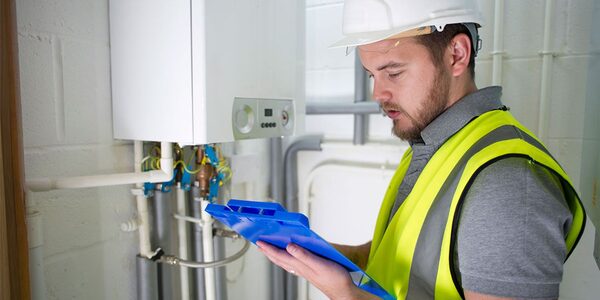
The five-year cycle leaves four years in which nothing is formally checked. Other regimes fill part of that gap, and they are mostly about gas rather than electricity. All permanent and portable gas appliances and flues in a rented property require an annual gas safety check21. A landlord must make sure an annual safety check is carried out on each appliance or flue provided for tenants' use22. For LPG appliances owned and provided for tenants, a Gas Safe registered engineer must carry out a safety check at least once every 12 months23.
Tenants have their own duties on appliances they own. A tenant should make sure that gas appliances or flues they own are regularly maintained, with a safety check carried out at least once every 12 months by a Gas Safe registered installer22. Where a tenant rents their home, they need to contact their landlord to arrange a safety check for all gas appliances and flues by a Gas Safe registered engineer24.
The pattern is that fixed installations are checked on a multi-year cycle and gas appliances annually, while portable electrical items sit largely outside both. That is why the charity's safety advice pages repeat the tenanted-property interval across product categories: the same five-year rule applies whether the property has an electric blanket, a dehumidifier, a patio heater or a plug-in solar panel in use3. A consumer guide to electrical safety likewise frames the certificate as something landlords of tenanted properties must commission every five years10.
Where the rules differ: Wales, Northern Ireland and social landlords
Wales has moved on its own timetable. The Welsh Government has committed to introduce regulations for mandatory five-yearly electrical safety checks on properties in the private and social rental sectors through the Renting Homes (Wales) Act25. Under that Act, landlords of both private and social rented properties will have to undertake electrical safety checks of their property once every five years5. Until the regulations are in force, the position in the private rented sector in Wales has been described as only a recommendation for five-yearly electrical checks26, and the delay has been criticised as putting renters at unnecessary risk5.
Northern Ireland differs more sharply. There are no specific legal requirements for regular electrical checks in social rented housing6. As best practice, the Housing Executive undertakes five-yearly electrical checks on its properties and after a change of tenant6. So the five-year rhythm exists there as practice rather than as a statutory duty in the social sector.
Social landlords in England are covered by their own regime. Checks must be carried out by a competent and qualified person16, and social landlords who provide electrical equipment must also have that equipment tested18. The consultation that preceded the English social sector rules found strong support for mandatory five-yearly checks6.
| Nation and sector | Position on five-yearly electrical checks |
|---|---|
| England, private rented | Required, at intervals of no more than 5 years2 |
| England, social rented | Required, by a competent and qualified person16 |
| Wales, private and social rented | Committed through the Renting Homes (Wales) Act, once every five years5 |
| Northern Ireland, social rented | No specific legal requirement; five-yearly checks are best practice6 |
For a household, the devolution point is practical rather than academic. A tenant in Cardiff, Belfast and Manchester is covered by three different sets of rules, and the enforcement route follows the nation. The wider framework of housing quality standards for social and rented homes is set out in housing quality standards for social and rented homes, and the technical standard behind the inspection itself is covered in electrical safety regulation in UK homes.
Sources26 cited
- Electrical safety standards in the private and social rented sectors: guidance, GOV.UK, 2025-11-01
- The Electrical Safety Standards in the Private Rented Sector (England) Regulations 2020, regulation 3, legislation.gov.uk, 2026-09-17
- Electric blankets, Electrical Safety First, 2026-09-19
- Electrical checks in privately rented homes: your questions answered, Electrical Safety First, 2026-09-19
- Renters put at unnecessary risk due to Welsh Government legislation delay, Electrical Safety First, 2026-09-19
- New Northern Ireland housing report from Electrical Safety First, Electrical Safety First, 2026-09-19
- Plug-in solar panels, Electrical Safety First, 2026-09-17
- Patio heaters, Electrical Safety First, 2026-09-19
- Householders and landlords help hub, NICEIC, 2026-09-17
- Electricity safety guide, Uswitch, 2025-05-07
- The Electrical Safety Standards in the Private Rented Sector (England) Regulations 2020, regulation 3, legislation.gov.uk, 2026-09-17
- The Private Tenancies (Northern Ireland) Order 2024, legislation.gov.uk, 2024-11-27
- Electrical Safety First urges landlords to comply with new safety laws or risk fines, Electrical Safety First, 2026-09-19
- Fitness for homes and human habitation: guidance for landlords, Welsh Government, 2022-01-13
- Energy Efficiency (Private Rented Property) (England and Wales) Regulations 2015: guidance, Isle of Anglesey County Council, 2026-05
- Millions of social renters to be protected from electrical faults as new laws come into force, Electrical Safety First, 2026-09-19
- How to work with your tradesperson, NICEIC, 2026-09-17
- Electrical safety standards in the private and social rented sectors: guidance, GOV.UK, 2025-11-01
- 10 ways to avoid electrical fires in your home, Electrical Safety First, 2026-09-19
- Immersion heater advice from the Electrical Safety Council, Electrical Safety First, 2026-09-19
- Gas safety checks: what they involve, Health and Safety Executive, 2026
- Domestic gas installation and health and safety, nidirect, 2025-10-28
- Gas safety in the home: frequently asked questions, Health and Safety Executive, 2026
- Trace and Repair, Cadent Gas, 2026-09-20
- Wales policy and research, Electrical Safety First, 2026-09-17
- Plug-in solar panels review, Which?, 2026-09-15
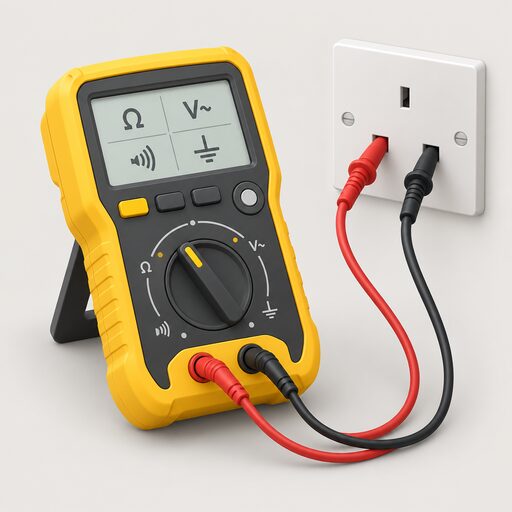 Landlord Electrical ChecksWho is responsible for checking the electrics are safe in your rented home, and how often should it happen?
 Gas Safety in the HomeYour landlord has to arrange a yearly gas safety check by a Gas Safe registered engineer and give you the record if you rent.
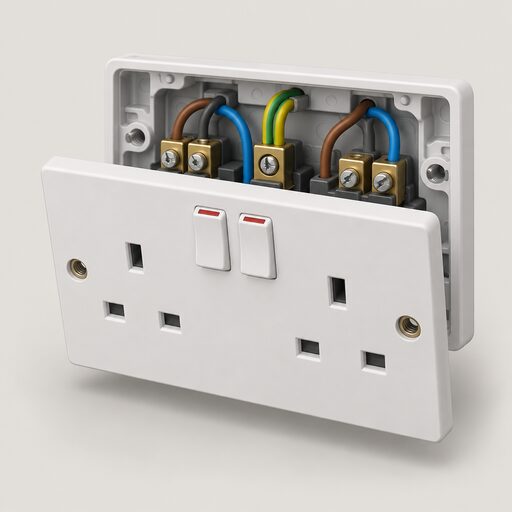 Arrange an Electrical InspectionHow to find and check a registered electrician, what an Electrical Installation Condition Report covers and the intervals usually recommended for owner-occupied homes.
 Renting and Home EnergyThe position of a tenant in a privately rented home: which measures need no permission, which are fixtures the landlord controls, and what the law says about heating, insulation, certificates and bills across the four UK nations.
 Social and Rented Home StandardsWhat condition is your landlord legally required to keep your home in?
 Test Smoke and Heat AlarmsHow often alarms should be tested, what the different beeps mean and when a unit has reached the end of its life.