

In this answer
Short answer
Electrical safety in student accommodation rests on a simple split: the landlord owns the fixed installation and the gas appliances that came with the property, and the tenant owns whatever they plug in. Under the Electrical Safety Standards in the Private and Social Rented Sectors guidance, tenants are responsible for making sure that their own electrical equipment is safe1. Everything fixed, from the consumer unit to the sockets, sits with the landlord.
The duty is set out in the electrical safety standards regulations for the private rented sector in England. A private landlord must ensure that the electrical safety standards are met during any period when the residential premises are occupied under a specified tenancy2. A comparable duty applies in Wales under separate regulations, and in Northern Ireland under the Private Tenancies (Northern Ireland) Order, where a landlord must ensure that the electrical safety standards are met during the period when the dwelling-house is let under the private tenancy3.
For a student in a shared house or a purpose-built block, the practical questions are narrower than the law: what documents can be requested, whether the meter can be changed, whether the supplier can be switched, and what happens if the place is not fit to live in. This page answers those in turn.
Who is responsible for what in a rented home
The division of responsibility in a rented home is not a matter of goodwill; it is set by statute and by the tenancy. The landlord carries the fixed installation and the appliances supplied with the property. The tenant carries their own belongings and, in some cases, appliances they have bought from the landlord.
That last point catches people out. Where a tenant has bought an appliance from the landlord, the tenant becomes responsible for the annual gas safety check and maintenance of that appliance4. The same guidance states that tenants are responsible for the gas safety checks of their own appliances and the flue if the flue only services their appliance4. A second-hand cooker bought from a landlord is therefore the student's responsibility from the moment it changes hands.
For damp, the position depends on tenure. If you rent from the council or a housing association, the landlord is responsible for the damp if it means the home is not safe to live in, or if it is an ongoing serious problem affecting physical or mental health8. In the private rented sector the same principle applies through the fitness standard, but the route to enforcement runs through the council rather than the landlord's own repairs service.
Where a tenant does not own their own home, the landlord is responsible for ensuring that any gas appliances, fittings and flues are safe9. That is the baseline. Everything else, from PAT testing a laptop charger to replacing a broken kettle, sits with the occupant.
Documents to request from your landlord

The single most useful document a student tenant can ask for is the Gas Safety Record. Landlords must carry out an annual safety check and provide a Gas Safety Certificate by law4. Tenants should ask for a copy of the annual gas safety record9, and should ensure their landlord provides a current Gas Safety Record10.
An electronic copy is acceptable, but only on conditions. It must be capable of being reproduced in hard copy format when required, for example for the tenant, the Health and Safety Executive or the housing department; it must be secure from loss and interference; and it must uniquely identify the gas operative who carried out the safety check4. A photograph of a certificate on a phone screen does not meet that test on its own.
Where a landlord cannot get access to carry out the check, the HSE expects evidence of effort. HSE inspectors will look for at least three attempts to complete the gas safety check4. That matters to a tenant because a missing record is sometimes the result of a landlord who never tried, and sometimes the result of a tenant who never answered the door.
"Tenants: know your rights – ask for a Gas Safety Record"
Alongside the gas record, a tenant can ask for the electrical installation condition report that supports the landlord's duty under the Regulations2. Carbon monoxide alarms are a related check: the gas safety guidance for Northern Ireland sets out the alarm and carbon monoxide position for rented homes there11.
Smart meters in rented homes: who can get one and when
A smart meter is available to renters, but the right follows the bill rather than the tenancy. You can apply for one if you are renting, are a prepay customer, or if the meter is located outside your property, for example in a communal meter box in a block of flats12. The Energy Saving Trust confirms that even renters can have a smart meter installed13.
The clearest statement of the rule comes from the Energy Ombudsman: if you are a private renter, and the energy bills are in your name or you prepay for your energy, you can choose to have a smart meter, after checking the tenancy agreement and letting the landlord know14. The National Energy Action view is the same: if you rent your home and the energy bill is in your name, it is your choice to have a smart meter installed15.
Two practical limits apply. First, renters who prepay for their energy can get a smart meter5, and switching from an existing gas or electricity prepay meter to a smart credit meter is straightforward for customers who meet the supplier's conditions12. Second, timing is not guaranteed: where you live, the type of home you live in, and the age and type of your existing meter may mean that your energy supplier will take a little longer to get yours to you16.
| Situation | Can a smart meter be requested? | Source |
|---|---|---|
| Bills in the tenant's name | Yes, it is the tenant's choice | 14 |
| Tenant prepays for energy | Yes | 5 |
| Meter located outside the property | Yes, application possible | 12 |
| Landlord pays the bills | No, the account is not the tenant's | 14 |
When you need your landlord's permission
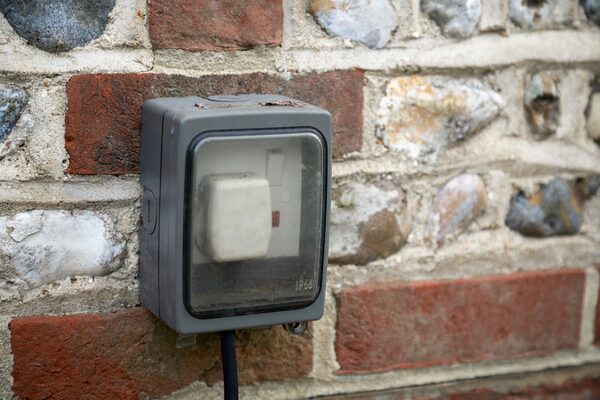
Permission is needed for work that touches the fabric of the building or the supply. If outdoor plug sockets need to be installed or any drilling needs to take place, you will need your landlord's permission17. That covers most of the physical changes a student might want, from an outside socket for a bike charger to a wall-mounted unit.
For leaseholders, usually the case if you own a flat, the terms of the lease and any relevant permissions from freeholders or property management must be checked before installation17. Students in purpose-built blocks rarely own the flat, but the same principle applies through the tenancy agreement and any building management rules.
Some grant-funded work also requires evidence of the right to occupy. The electric vehicle chargepoint grant for renters or flat owners requires supporting evidence when you apply, such as a rental agreement if you rent the property18. That is a useful illustration of how consent is documented in practice: not a verbal nod, but paperwork.
Switching supplier if the bills are in your name
If you pay a supplier directly for the electricity or gas you use at home, you can choose to switch to a different supplier or tariff at any time6. Ofgem states the rule in the same terms for rented properties: if you have to pay your energy bills, you can choose to switch your supplier or tariff at any time6. For students, the position is put plainly by Uswitch: if you pay for your energy directly, you are entitled to switch19.
The exception is where the supply sits under a landlord's contract. Residents on a landlord's business energy contract may not have the right to choose their own energy supplier or switch suppliers themselves20. If you have your own contract with an energy supplier, you may be able to switch your business energy supplier20. In practice, a student in a house where the landlord holds the account cannot switch, because there is no account in the student's name to switch.
Two further points matter. Where a Green Deal loan is attached to the property, you can change electricity supplier as long as the new supplier is taking part in the Green Deal scheme21. And if a supplier goes out of business, you can switch to another supplier if you want to without any exit fees22. Renters who are responsible for their utility bills can switch gas supplier; if the landlord is responsible, they cannot23.
What to do if the home is not fit for habitation
A rented home has to meet a fitness standard. If a privately rented house fails in one or more of the criteria, it does not meet the fitness standard, and it is not suitable for people to live in7. The criteria are specific: the dwelling must be structurally stable; free from serious disrepair; free from dampness prejudicial to the health of the occupants; have adequate provision for lighting, heating and ventilation; have an adequate piped supply of wholesome water; have satisfactory facilities for the preparation and cooking of food including a sink with hot and cold water; have a suitably located water closet; have a suitably located fixed bath or shower and wash-hand basin with hot and cold water; and have an effective system for the draining of foul, waste and surface water24.
Where a tenant considers that a rented home does not meet the fitness standard, the route is to tell the council's Environmental Health office7. That is the enforcement channel, and it applies whether the failure concerns wiring, heating or drainage.
On energy performance, a property let with an EPC rating of F or G must be improved to a minimum rating of E, or an exemption registered where applicable25. Where a landlord claims an exemption on the grounds that third-party consent was refused, the register requires a copy of any correspondence or relevant documentation demonstrating that consent was required and sought and refused, or granted subject to an unreasonably onerous condition25. Some grant funding reaches the private rented sector: the Warm Homes Local Grant covers privately rented properties with an EPC rating of Band D or E, and owner-occupied properties rated D, E, F or G26.
Where the limits of a tenant's control lie
The pattern across all of this is that a student's control over their home's energy and safety runs exactly as far as the bill and the tenancy agreement allow. Where the account is in the tenant's name, the tenant can request a smart meter, switch supplier, and choose a tariff14. Where the account is the landlord's, none of those levers is available, and the tenant's route to change runs through the landlord or the council.
The safety side is different, because the duties are fixed by law rather than by contract. A landlord must ensure the electrical safety standards are met throughout the tenancy2, must carry out an annual gas safety check and provide a certificate4, and must meet the fitness standard7. Those duties do not depend on what the tenancy agreement says, and a clause purporting to transfer them to a tenant would not change the statutory position.
What remains outside a tenant's control is the fabric of the building: the wiring, the boiler, the insulation, the EPC. A student can request documents, report disrepair, and ask for improvements, but cannot compel a landlord to upgrade a home beyond the legal minimum. For more on that boundary, see Renting and Home Energy: What Tenants Can and Cannot Change and Asking a Landlord for Energy Improvements.
Sources26 cited
- Electrical safety standards in the private and social rented sectors: guidance, GOV.UK
- The Electrical Safety Standards in the Private Rented Sector (England) Regulations 2020, regulation 3, legislation.gov.uk
- Private Tenancies (Northern Ireland) Order 2024, legislation.gov.uk
- Gas safety checks: what they involve, Health and Safety Executive
- Smart meters for renters, Smart Energy GB
- Switch your home energy supplier, Ofgem
- Checking your home is fit to live in, nidirect
- Who's responsible for repairs, Citizens Advice
- Gas safety: frequently asked questions, Health and Safety Executive
- Gas Safety Week 2025: know your rights and responsibilities in rented properties, HHIC, 2025
- Gas safety and carbon monoxide, nidirect
- How to get a smart meter, Smart DCC
- Guide to smart meters, Energy Saving Trust
- Smart meters, Energy Ombudsman
- Our view on smart meters, National Energy Action
- What is a smart meter, Smart Energy GB
- Plug-in solar, Centre for Sustainable Energy
- Electric vehicle chargepoint grant: eligibility, GOV.UK
- Tenants guide to switching, Uswitch
- If you live in a home on a business energy contract, Ofgem
- Green Deal energy saving measures, GOV.UK
- What happens if your energy supplier goes out of business, Ofgem
- Gas only energy, Uswitch
- Current Decent Homes Standard summary table, Northern Ireland Department for Communities, 2025
- Guidance on PRS exemptions and exemptions register evidence requirements, GOV.UK
- Warm Homes Local Grant, Greater Manchester Combined Authority
 Landlord Electrical ChecksWho is responsible for checking the electrics are safe in your rented home, and how often should it happen?
 HMOs and Shared HousesWho is responsible for the electrics, the gas and the fire alarms when you rent a room in a shared house?
 Gas Safety in the HomeYour landlord has to arrange a yearly gas safety check by a Gas Safe registered engineer and give you the record if you rent.
 Rented Homes and Landlord MetersWho is responsible for the energy in your rented home?
 Where to Start If You RentRenting means you can switch supplier or get a smart meter yourself, but insulation, glazing and heating need your landlord's agreement.
 Monitoring in Flats and RentalsCan you get a smart meter in a rented flat, and who decides?