
In this guide
The electric vehicle chargepoint grant for renters and flat owners pays 75% of the cost of buying and installing a chargepoint socket, up to a maximum of £5001. It is aimed at households that cannot use the driveway-owner grant, because they rent their home or own a flat, and it requires private off-street parking that is accessible at all times2. The scheme opened on 1 April 2022 and closes on 31 March 20273.
The money does not go to the household. If a claim is approved, OZEV pays the grant to the chargepoint installer, who has to be OZEV-authorised, and the chargepoint model has to be on the eligible list4. The household's role is to apply, provide the evidence and wait for confirmation of eligibility before any installation begins5.
For a household's energy independence, the grant lowers the upfront cost of charging at home rather than removing any ongoing dependence. The chargepoint still draws from the grid, the electricity still comes through a supplier, and the smart functions of most units depend on a manufacturer's app and cloud service. What the grant buys is the ability to charge on your own parking space, at domestic electricity rates, instead of relying on public networks.
What the grant covers: 75% off, up to £500 per socket
The headline figure is consistent across the official scheme pages: 75% off the cost of buying and installing a socket, capped at £5001. The same rate and cap apply to the landlord version of the scheme, where it is expressed as £500 per socket7. East Hertfordshire Council summarises it as up to £500 or 75% of the cost, whichever is lower, for installing a chargepoint socket8.
The cap matters more than the percentage for most installations. Because the grant pays 75% of the cost up to a maximum of £500 per socket, the percentage only governs the payment while three quarters of the quoted price stays below £500; above that point the cap fixes the contribution at £500 however high the quote goes1. The grant is a contribution towards a socket, not a fixed payment, so the household's own share rises with the quoted price.
The £500 figure is the current rate. Earlier versions of the scheme paid less: Zapmap reported a £350 grant for households without driveways or dedicated parking spaces in March 20249, and uSwitch described up to £350 off the cost of installing a charger in July 202510. Carwow reported the change to up to £500 from April 202611. The £350 figures are historical and should not be used to plan a current application.
The grant covers the socket and its installation. It does not cover interest charges, bad debts, profits or entertaining, administration costs, arbitrary inflation and contingency allowances, new land, electricity provided by the relevant infrastructure, ongoing back-office data provision, other ongoing operating costs, warranty extensions beyond three years, transport costs, marketing costs, or costs associated with grid reinforcement12. Those exclusions come from the general chargepoint grant guidance and apply across the schemes.
Who qualifies: renters, flat owners and the parking rule
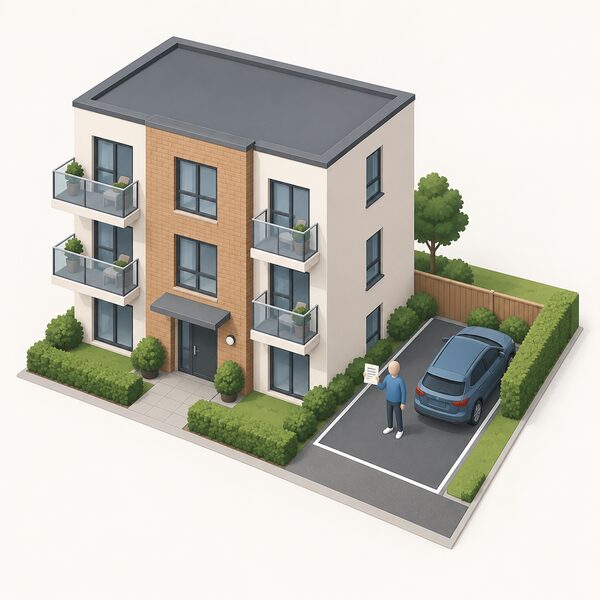
Two routes into the scheme exist. An applicant can own and live in a flat, or rent and live in any residential property, including properties under the shared ownership scheme3. The official eligibility page puts it as living in a flat that you own, including flats bought through shared ownership, or renting a residential property2.
The parking condition is where most applications stand or fall. The home must have its own private off-street parking space, accessible at all times, which the applicant owns or has the legal right to use2. The Find a Grant listing is more specific: the property must have designated, private off-street parking with legal entitlement, accessible at all times3. A space that is shared, unallocated or occasionally blocked does not meet the test.
Proof of the legal right is required. Applicants must have proof of all legal rights and permissions, such as from the freeholder of a block of flats2. For a renter, that means the tenancy agreement and the landlord's consent. For a leaseholder, it means the lease and any consent required from the freeholder or management company. The grant is paid to the installer, so the installation has to be agreed with whoever controls the property before the work is booked.
The scheme is not open to owner-occupiers of houses with driveways. Carwow reported that the Department for Transport stressed the scheme only applies to renters, flat owners, small businesses and homeowners without driveways14. Households with their own driveway and no on-street parking condition fall outside this grant, and the separate on-street parking grant is designed for those who only have on-street parking15.
The vehicle requirement: OZEV's approved vehicle list
The grant is only for vehicles on the list of OZEV-approved electric vehicles2. The list is published by the Office for Zero Emission Vehicles, which provides grants to support the use of electric vehicles, including the installation of charging devices17. All vehicles approved as ultra-low emission vehicles by OZEV are eligible for OZEV residential chargepoint grants18.
The applicant does not have to own the vehicle outright. The grant is for plug-in battery electric and hybrid vehicles, and the applicant must be a registered keeper of a new or second-hand eligible vehicle, be assigned a company car, be leasing an eligible vehicle, be named primary user by an employer, or have ordered an eligible vehicle for delivery within three months3. The eligibility page lists the same routes in shorter form: as a registered owner, if the vehicle has been leased for at least six months, if it has been used as a work vehicle for at least six months, or if one is currently on order2.
The lease term matters where a lease is bundled with a chargepoint. The associated vehicle lease must be for at least six months, and the chargepoint warranty must meet the grant requirements3. A short lease or a bundled chargepoint with a warranty shorter than the scheme requires can disqualify an otherwise sound application.
The vehicle list is not limited to battery electric cars. The cross-pavement charging grant, which sits alongside this scheme, accepts applications for plug-in hybrids listed as eligible by OZEV19. The same principle applies here: eligibility follows the published list, not the general category of the vehicle.
Using an OZEV-authorised installer and an eligible chargepoint
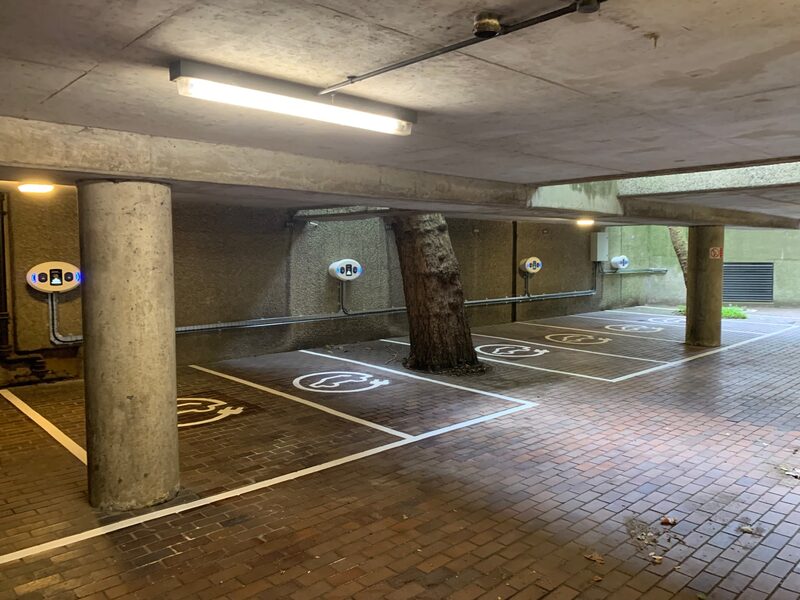
The installation must be carried out by an OZEV-authorised installer, and the chargepoint must be an eligible residential model3. The on-street parking grant states the same requirement in its own words: an eligible chargepoint model installed by an OZEV-approved installer16. The installer list is published by the government20.
The chargepoint model requirement is enforced at claim stage. The general grant guidance states that a claim will be rejected if the chargepoint model is not on the list of eligible chargepoint models12. This is a hard check, not a preference, and it applies to the model rather than the brand.
The installer's role in the process is to quote, install and claim. The landlord scheme describes the sequence: contact an OZEV-authorised installer to get a quote, then select the start new application button, create an account and apply using the form provided to submit details of the property and vehicle to OZEV7. If the applicant is eligible, OZEV will let the applicant and the installer know21.
The payment route runs through the installer. If a claim is approved, OZEV pays the grant to the chargepoint installer16. The household does not receive a cheque or a transfer. In practice the installer discounts the quoted price by the grant amount and recovers it from OZEV, which is why the installer's authorisation status and willingness to handle the claim matter as much as the hardware.
"You must use an OZEV-authorised installer and an eligible residential chargepoint"
How to apply and the documents you need
Applications are made online9. The route changed from April 2026: applicants submit their grant application through the UK Government's Find a Grant platform, and the applicant is responsible for submitting the application directly to OZEV, with installers no longer able to apply on the household's behalf6. That shift puts the paperwork squarely on the household.
The documents required depend on the applicant's status. A renter needs supporting evidence such as a rental agreement2. A leaseholder needs proof of legal rights and permissions, including from the freeholder of a block of flats2. Motability customers can use their Motability lease agreement as an alternative to a utility bill6. Vehicle evidence follows the ownership or use route: registered keeper documents, a lease of at least six months, evidence of use as a work vehicle for at least six months, or an order for delivery within three months2.
The sequence is fixed, and the order matters:
- Check the vehicle is on the OZEV-approved list and that the parking space meets the private, off-street, always-accessible test2.
- Gather the evidence: tenancy agreement or lease, proof of legal rights over the parking space, and vehicle documents2.
- Contact an OZEV-authorised installer for a quote on an eligible chargepoint model7.
- Submit the application to OZEV through the Find a Grant platform and wait for confirmation of eligibility6.
- Only after OZEV confirms eligibility, allow the installer to fit the chargepoint5.
- The installer claims the grant, and OZEV pays it to the installer16.
OZEV will select some installations to be audited, and audits may take place before or after a claim is paid and may include an on-site visit16. Applicants may be asked by OZEV to provide evidence at any time3. Keeping the tenancy or lease documents, the parking entitlement and the vehicle paperwork available after installation is therefore sensible.

When the grant cannot be paid: the exclusions
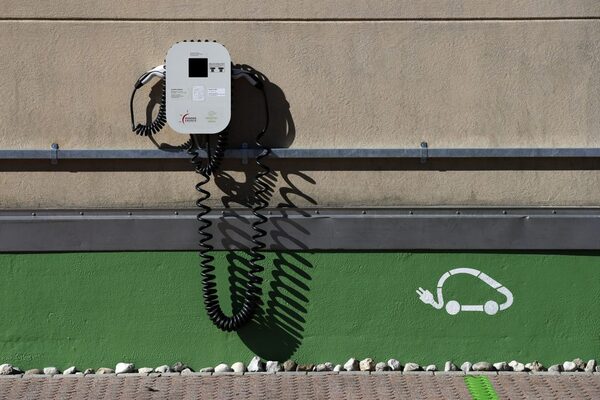
The exclusions are specific and they are enforced. The grant cannot be given if the installation of the chargepoint or infrastructure was a mandatory requirement, including planning application conditions that mandate installation3. A chargepoint required by a planning condition is not eligible for a grant.
A previous claim at the same residence is a disqualifier. The grant cannot be paid if the applicant has already claimed it, or its predecessors, the Electric Vehicle Homecharge Scheme (EVHS) or the Domestic Recharge Scheme3. The eligibility page states the same rule in the second person: you have already claimed the grant or its predecessors2. The on-street parking grant adds that a previous claim under the renters and flat owners grant, EVHS or the Domestic Recharge Scheme also rules out that scheme16.
Property status matters. An application cannot be made for a property that is unoccupied or still being built2. Buildings under construction or being renovated where the Part S Regulations applies on or after 15 June 2022 are excluded in England, and devolved countries have similar regulations, for example the Building (Scotland) Regulations from 5 June 20233. The renters and flat owners listing repeats the England date and the Scotland example3.
Territory matters at the edges. Properties in the Channel Islands or the Isle of Man are not eligible2. Moving house or planning to move is also a disqualifier on the eligibility page2, which follows from the requirement that the chargepoint is installed at the home the applicant lives in.
How the scheme works: OZEV, the claims portal and assessment times
The Office for Zero Emission Vehicles administers the grant. OZEV provides grants to support the use of electric vehicles, including the installation of charging devices17, and it introduced the residential grant family, with Energy Saving Trust delivering webinars on the schemes22. Claims are submitted through the claims management portal12.
Assessment is quick when the paperwork is complete. OZEV estimates up to 10 working days to assess applications and claims, provided no additional evidence is required6. The Scottish domestic charge point grant, which is a separate scheme, states that applicants receive a decision within 8 working days23. Where OZEV requests further evidence, the clock extends.
The scheme has a published notice period. OZEV aims to provide four weeks' notice if the grant ends or the grant amount changes, with claims made before any public announcement honoured subject to the grant criteria3. Funding for the on-street parking grant is confirmed until 31 March 202716, and the wider family of five chargepoint grant schemes runs until the same date13.
The scale of the scheme is visible in the statistics. The renters and flat owners grant has funded the installation of 26,504 sockets, of which 9,301 were in the last 12 months to 1 July 2026, at a total of £9.2 million for socket installations5. The predecessor scheme, the Electric Vehicle Homecharge Scheme, is described in official statistics as the predecessor to the Electric Vehicle Chargepoint Grant24, and the grant scheme statistics have been published since at least July 202225.
Related schemes: landlords, on-street parking and the wider grant family
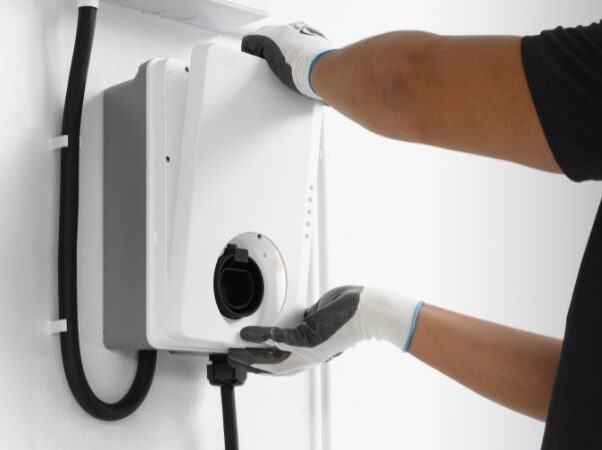
The renters and flat owners grant sits inside a family of five chargepoint grant schemes available until 31 March 202713. Each has its own eligibility rules, and the boundaries between them matter because a previous claim under one can rule out another.
The landlord scheme is the closest relative. It pays 75% off the cost of buying and installing chargepoints up to a maximum of £500 per socket7, and it is open to landlords with property to let, right to manage companies, residents' management companies, freeholders of multi-unit properties, companies owning common areas, public sector organisations, charities managing or owning residential property, registered social housing providers, property management companies representing a landlord, and property factors in Scotland21. Grants can be across several properties or for one property7. The landlord scheme excludes applicants who live in the property, properties that are not residential, chargepoints already installed before OZEV confirms eligibility, holiday accommodation, applicants without a company or VAT registration number, and installations driven by a mandatory requirement7.
The on-street parking grant is for households that do not have private and exclusive access to off-street parking. It pays 75% off the cost to buy and install a socket, up to £50016, and it requires a non-temporary cross-pavement charging solution installed alongside the chargepoint, adequate on-street parking, permission from the local highways authority, and a declaration that the applicant will obtain planning permissions16. It does not confer ownership over, exclusive use of, or reserved access to any on-street parking space16. The cross-pavement charging grant accepts plug-in hybrids listed as eligible by OZEV19, and the Energy Saving Trust administers the cross-pavement element19.
Scotland runs its own domestic charge point grant, restricted to installations at residential properties in Scotland with dedicated off-street parking26. Northern Ireland has a separate chargepoint and infrastructure grant scheme27. The workplace charging scheme pays up to 75% of the total costs of purchase and installation including VAT, capped at £500 per socket27, and the state-funded education version pays up to £2,000 per socket27. The commercial landlord grant covers 75% of the cost of the work up to a maximum of £350 per chargepoint socket13, and the staff and fleets grant pays up to £350 per chargepoint socket installed and up to £500 per parking space enabled with supporting infrastructure13.
For a household, the practical point is that the renters and flat owners grant is the one that fits a flat or a rented home with a private space. Where the parking is on-street, the on-street parking grant is the relevant route, and it comes with the cross-pavement condition and council permission. Where the household owns the freehold of a block, the landlord scheme may apply instead. The EV charging at home guide sets out how the hardware, the electrical requirements and the tariffs fit together once the grant question is settled, and the cross-pavement charging grant page covers the on-street route in detail.
Sources27 cited
- Electric vehicle chargepoint grant for households, GOV.UK, 2026-09-17
- Electric vehicle chargepoint grant for households: eligibility, GOV.UK, 2026-09-17
- Electric Vehicle Chargepoint Grant for Renters and Flat Owners, Find Government Grants, 2026-09-18
- Changes to electric vehicle chargepoint grant schemes from 1 April 2026, GOV.UK, 2026-02-25
- Grant schemes for electric vehicle charging infrastructure statistics, GOV.UK, 2026-07-01
- OZEV grant 2026, Ohme, 2026-09-17
- Electric vehicle chargepoint grant for landlords, GOV.UK, 2026-09-17
- Home and business grants, schemes and advice, East Hertfordshire Council, 2026-09-17
- Grants now available for EV drivers without street parking, Zapmap, 2024-03-18
- Best EV tariffs for multi-car families, uSwitch, 2025-07-02
- Electric car charger grants rise to £500, Carwow, 2026-02-25
- Electric vehicle chargepoint and infrastructure specifications, GOV.UK, 2023-10-10
- Government grants for low emission vehicles, GOV.UK, 2026-04-01
- EV charger grant: driveway owners excluded, Carwow, 2026-03-16
- Electric vehicle chargepoint grants, GOV.UK, 2025-04-08
- Electric Vehicle Chargepoint Grant for Households with On-Street Parking, Find Government Grants, 2026-09-17
- Electric vehicle charging device grant scheme statistics: October 2025, GOV.UK, 2025-11-26
- Residential chargepoints: eligible vehicles, GOV.UK, 2022-07-04
- Cross-pavement charging grant, Energy Saving Trust, 2026-09-14
- Electric vehicle chargepoint installers, GOV.UK, 2026-09-17
- Electric vehicle chargepoint and infrastructure grants for landlords, Find Government Grants, 2026-09-18
- Residential landowners electric vehicle chargepoint scheme, Energy Saving Trust, 2025-09-22
- Domestic charge point funding, Energy Saving Trust, 2026-08-27
- Electric vehicle charging device grant scheme statistics: April 2023, GOV.UK, 2023-06-01
- Electric vehicle charging device grant scheme statistics: July 2022, GOV.UK, 2022-08-18
- Domestic charge point grant fund, Scottish Government, 2024-05-22
- Electric vehicle chargepoint and infrastructure grants, Northern Ireland Executive, 2026-09-18
 Home Charger InstallationWho can fit a home EV charger, and does it need building regulations approval?
 Home EV Charger CostA home charge point usually costs between seven hundred and fifteen hundred pounds fitted, with most people paying around a thousand.
 New Build Charger RequirementsExplains the requirement for charge points and cable routes in new and materially altered homes, set by Part S in England and equivalent rules elsewhere in the UK.
 Charging by Home TypeHow the practical and legal position for home EV charging changes by property type: flats and leasehold consent, terraced homes without frontage, shared car parks and metering, rural properties with long cable runs, and listed or conservation area homes.
 Electrical RequirementsWill your home need a bigger electricity supply before a charge point can go in?
 The Full EV Charging GuideCharging an electric car at home usually means a wallbox, but do you need one, and what will it cost to fit and run?