In this guide
The Electric Car Grant is a discount of up to £3,750 on eligible new battery electric cars, applied by the seller at the point of sale rather than claimed by the buyer afterwards. The seller includes the grant as a discount in the purchase price, so there is no application for a household to make1. The maximum sits in the top band, and after the December 2025 expansion eight models qualified for the full £3,750 reduction2.
The grant replaced the Plug-in Car Grant, which is closed. At its end the Plug-in Car Grant stood at £3,000 for fully electric cars3, having been reduced over time from the 25% of cost, up to a maximum of £5,000, offered under the earlier scheme4. The Electric Car Grant was described on its launch as providing consumers with government support for the first time in three years5.
No purchase grant applies to used electric cars. The grant is a new-vehicle discount, and eligibility is set model by model: around a quarter of battery electric models were eligible at any level during 20256, and one official figure puts the total at 52 models8. The grant was extended to 2030 with £1.3 billion of additional funding announced at the Autumn Budget2.
What the Electric Car Grant pays, and how the discount reaches the buyer
The headline figure is a discount of up to £3,750 on eligible new battery electric cars2. The grant is banded, so the maximum applies to the top band only, and lower bands carry smaller reductions. The December 2025 expansion added four models to the top band, taking the number qualifying for the full £3,750 to eight across what the announcement called some of the most popular brands2.
The mechanism matters as much as the amount. The seller includes the grant as a discount in the purchase price, so the buyer does not apply for it1. There is no claim form, no waiting period and no reimbursement after purchase. The discount is agreed in the showroom or the online order, and the seller handles the grant. That makes the scheme simple for a household, but it also means the buyer has no independent route to the money if a seller does not offer it.
Eligibility is set model by model rather than by price or size alone. Around a quarter of battery electric models were eligible at any level during 20256, and one official figure puts the total at 52 models8. The share has moved as models have been added and removed, and the government noted in August 2025 that full model eligibility had yet to be confirmed9.
| Element | Position | Source |
|---|---|---|
| Maximum discount | Up to £3,750, top band | 2 |
| Models at the top band | 8 after the December 2025 expansion | 2 |
| Share of BEV models eligible at any level | Around a quarter during 2025 | 6 |
| Total eligible models | 52 | 8 |
| Who applies | The seller, as a discount in the purchase price | 1 |
| Used vehicles | No purchase grant | 1 |

What drives the figures: banding, model eligibility and the £1.3 billion
Three things drive what a household actually sees: the band a model sits in, whether the model is on the eligible list at all, and how much money the scheme has behind it.
Banding sets the ceiling. The top band pays £3,750, and the December 2025 expansion took the number of models at that level to eight2. Models in lower bands receive less. Because the bands are set by government rather than by the maker, two cars of similar price can carry different discounts, and a model can move between bands as the scheme is revised.
Model eligibility sets whether any discount applies. Around a quarter of battery electric models were eligible at any level during 20256, and one official figure puts the total at 52 models8. The qualifying models grew faster than the rest of the market in one 2025 month, with qualifying model volume growth of 36.0% against 26.9% for non-qualifying models7. That gap shows the grant moving volume towards the models it covers.
Funding sets the horizon. The Autumn Budget added £1.3 billion for the Electric Car Grant and extended it to 20302. The scheme had already helped over 40,000 drivers choose electric since its launch in July 20252. The grant was described on its launch as providing consumers with government support for the first time in three years5, and the additional money was noted again in later market commentary10.
The closed Plug-in Car Grant, and why used electric cars get nothing
The Plug-in Car Grant is closed. It is the scheme the Electric Car Grant replaced, and it is the reason the current grant was described as the first consumer support in three years5. Its history explains the shape of what exists now.
The Plug-in Car Grant was reduced in stages over its life. At its end it stood at £3,000 for fully electric cars3. Before that, the earlier government grant scheme offered 25% off the cost of a car, up to a maximum of £5,0004. The direction of travel was downward: smaller amounts, tighter eligibility, then closure, then a gap, then the Electric Car Grant.
| Scheme | Position for fully electric cars | Status |
|---|---|---|
| Earlier grant scheme | 25% off the cost of a car, up to £5,000 | Superseded4 |
| Plug-in Car Grant | £3,000 at its end | Closed3 |
| Electric Car Grant | Up to £3,750, top band | Open, extended to 20302 |
Nothing in the current scheme reaches used cars. The Electric Car Grant is a discount on eligible new vehicles, applied by the seller1. A household buying second hand gets no purchase subsidy, however clean the car is. The used market is large and increasingly electrified: there were four million first-half transactions in 2025, one in 10 of those cars were electrified, and zero emission vehicles reached a record 3.4% share12. In the first quarter of 2026 the used market dipped just -0.2% to 2,016,232 units, with electrified vehicles accounting for 11.7% of used cars finding new owners13. None of that activity attracts a purchase grant.
How the grant differs across England, Scotland, Wales and Northern Ireland
The Electric Car Grant is a UK-wide scheme. It is administered through the government's low emission vehicle grant collection1, and the vehicle discount applies across the four nations on the same terms. There is no separate English, Scottish, Welsh or Northern Irish rate for the car discount itself.
The chargepoint grants that sit alongside it are where territorial differences appear. The chargepoint grant for renters and flat owners is a UK scheme14, and the chargepoint grants as a group are published as available until 31 March 2027 with new grant rates15. The cross-pavement channels grant is different: it funds local authorities to install cross-pavement channels in England, and applies to England only16. Its stated objective is to accelerate the rollout of pavement channels for residents without access to off-street parking16.
| Nation | Vehicle discount | Charging support alongside it |
|---|---|---|
| England | UK-wide, same terms1 | Chargepoint grants UK-wide; cross-pavement channels grant, England only15 |
| Scotland | UK-wide, same terms1 | Chargepoint grants UK-wide15 |
| Wales | UK-wide, same terms1 | Chargepoint grants UK-wide; Community EV Car Clubs subsidy15 |
| Northern Ireland | UK-wide, same terms1 | Chargepoint grants UK-wide15 |
Wales runs its own community scheme. The Community EV Car Clubs subsidy awards support by way of grants or loans17. That is a Welsh government measure rather than part of the Electric Car Grant, and it sits alongside the UK-wide vehicle discount rather than replacing it.
For a household, the practical position is that the car discount does not change at the border, but the help with charging does. A buyer in England may have access to a pavement channels route that a buyer in Scotland, Wales or Northern Ireland does not, while the chargepoint grant for renters and flat owners is available across the UK14.
The rules: who applies, what qualifies and what the grant does not do
The rules are short, and most of them concern the seller rather than the buyer.
The seller includes the grant as a discount in the purchase price, so the buyer does not apply for it1. That is the central rule. It means the household's task is to check that the model is eligible and that the seller is applying the discount, not to complete a claim.
Eligibility is model-based. Around a quarter of battery electric models were eligible at any level during 20256, and one official figure puts the total at 52 models8. The government noted in August 2025 that full model eligibility had yet to be confirmed9, so the list is not fixed for the life of the scheme.
The grant is a purchase discount and nothing more. It does not cover home charging equipment, installation, insurance or electricity. Those sit under separate schemes: the chargepoint grant for renters and flat owners helps towards the cost of installing an electric vehicle chargepoint socket at a property14, and the chargepoint grants as a group run until 31 March 202715. The grant for households with on-street parking is restricted to vehicles on the list of OZEV-approved electric vehicles18, and it does not confer ownership over, exclusive use of, or reserved access to any on-street parking space18.
"This means you can buy these vehicles more cheaply."
What the grant means for a household's energy independence
The Electric Car Grant does one thing: it makes an eligible new electric car cheaper to buy. Government guidance states plainly that this means you can buy these vehicles more cheaply19. That is a capital cost reduction, and it is worth being exact about what it does and does not change.
It does not reduce running costs. The grant has no effect on the price of electricity, the cost of a home chargepoint or the cost of public charging. Independence in running terms comes from charging at home from your own supply, ideally with solar, rather than from the discount. A household that buys an eligible car and charges it from the grid at peak rates has gained a cheaper car and nothing more in energy terms.
It does not remove dependence on infrastructure. An electric car charged at home still draws from the grid and still depends on a supplier. Charging away from home depends on the public network. The grant does not change any of that, and it does not confer any right to parking or to a chargepoint: the on-street parking grant explicitly does not confer ownership over, exclusive use of, or reserved access to any on-street parking space18.
What the grant does is lower the entry price of a new electric car, which is the point at which a household can begin to shift its transport energy onto its own supply. The chargepoint grants that sit alongside it, running until 31 March 202715, address the other half of that shift. The vehicle discount and the charging grants are separate schemes with separate conditions, and a household weighing the move needs both to line up.
Sources19 cited
- Government grants for low emission vehicles, GOV.UK, 2025-04-08
- Four more EV models qualify for £3,750 discount under Electric Car Grant, GOV.UK, 2025-12-03
- No deal tariffs would undermine Britain's green recovery, SMMT, 2020-10-22
- Going electric, Committee on Climate Change, 2014-11-11
- August brings strong EV shares in low volume month, SMMT, 2025-09-05
- New car market shrinks in August but EVs reach record share for the year, SMMT, 2025-08
- September new car market delivers record number of EVs, SMMT, 2025-10-06
- Britain's decarbonisation decade takes EVs from niche to normal, SMMT, 2026
- New car registrations stall in July but recovery expected, SMMT, 2025-08
- A disquieting month for UK's new car market, SMMT, 2025-12
- Electric vehicle chargepoint and infrastructure grants for landlords, GOV.UK, 2026-09-18
- Certainty needed to fully charge EV demand, SMMT, 2025-08-08
- EVs charge up used car market with record sales, SMMT, 2026-05-12
- Electric vehicle chargepoint grant for renters or flat owners, GOV.UK, 2026-09-17
- Electric vehicle chargepoint grants, GOV.UK, 2026-04-01
- Apply for the electric vehicle pavement channels grant, GOV.UK, 2025-08-15
- Community EV Car Clubs subsidy scheme, Welsh Government, 2024-02-05
- Electric vehicle chargepoint grant for households with on-street parking, GOV.UK, 2026-09-17
- Zero emission vehicle grants: overview, GOV.UK, 2026-09-17
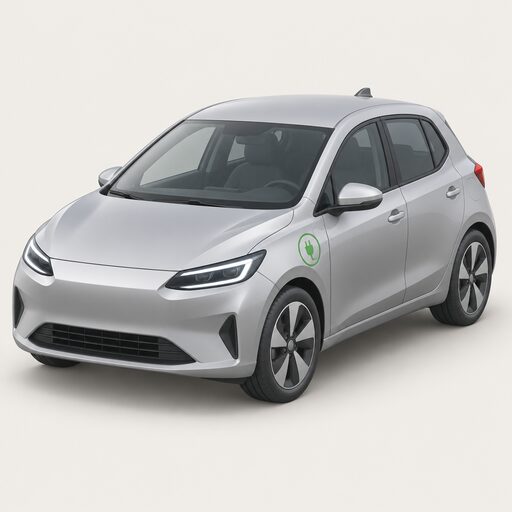 EV Charging Bolt-OnsCan you get cheap electricity for your car without changing the tariff for the rest of your home?
 Electric Vehicle TariffsCharging an electric car at home can cost far less overnight, but only on special electricity plans.
 Cost to Charge an EV at HomeHow home charging cost is worked out from battery size, efficiency, the unit rate paid and the tariff behind it, with full-charge costs of about £8 to £17, cost per mile, annual running costs and what changes for EV owners from April 2028.
 The Full EV Charging GuideCharging an electric car at home usually means a wallbox, but do you need one, and what will it cost to fit and run?
 Charging and Energy IndependenceCharging an electric car at home can cut your fuel costs, but how much does it really free you from the grid?
 EV Tariffs and Home ChargingHow EV-specific import tariffs and charging bolt-ons work, including supplier-controlled charging where the energy company decides when the car draws power, which charge points each scheme supports, and what a household needs in place.