In this guide
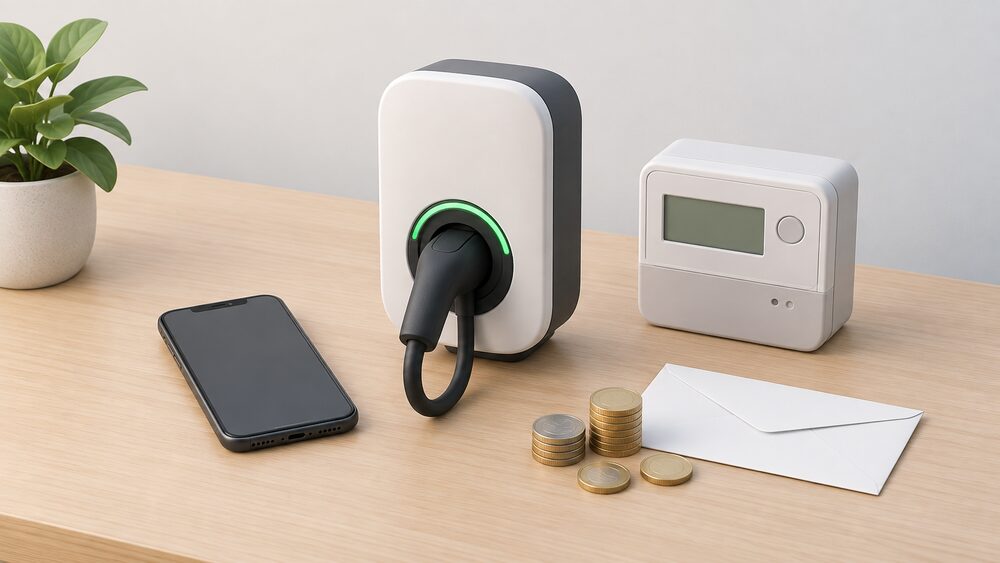
Smart charging rewards are payments, credits or points given to a household for moving when its electric car charges, rather than for charging less. The mechanism is demand flexibility: a signal arrives from a supplier, network operator or app, the charger or the car shifts its load away from the signal window, and the household is rewarded for the difference. The Demand Flexibility Service, run by NESO, is the national framework behind much of this, and it was launched in winter 2022/23 to help manage potential winter pressures by reducing demand during evening peak periods and reducing reliance on more expensive electricity generation1.
The rewards themselves are not a single national rate. Suppliers are paid a set amount by the National Grid ESO for every kWh of electricity their customers shift, and some pass all of it on to participants, some pass on only part, and others enter customers into a prize draw instead2. That single sentence explains most of the variation a household will see between schemes, and it is why two neighbours on different suppliers can earn very different amounts for the same behaviour.
What a household gets in return is usually pounds or points that can be used towards paying for energy bills, or free or cheaper electricity during event periods, or points convertible into rewards such as gift cards3. The equipment side is governed separately: since 2021 the Smart Charge Points Regulations have required that a relevant charge point must not be designed so that it loses its smart functionality if the owner changes electricity supplier5.
What smart charging rewards are and how a car earns them
A reward is earned by changing the timing of a load, not by reducing the total energy a household uses over a year. The Demand Flexibility Service exists to make it easier for homes and businesses to take part in the electricity market and be rewarded for shifting when they use electricity1. The service rewards people for changing the times when they use the most electricity8, and it allowed suppliers to reward customers for reducing their energy use at peak times9.
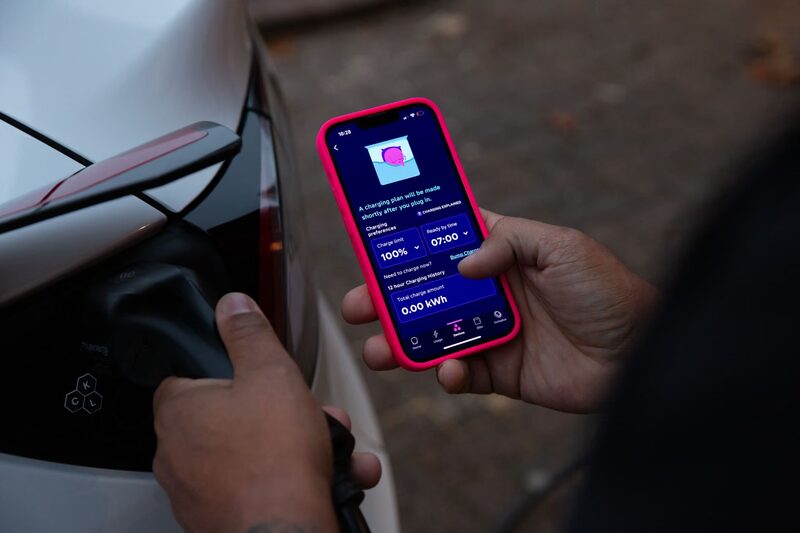
For a car, the practical route is a smart charge point or a smart charging app. An energy smart appliance is defined in official guidance as an appliance, such as an electric vehicle charging point or a heat pump, that is capable of increasing or reducing its electricity demand in response to signals received remotely from a third party10. That definition is the whole basis of the reward: the appliance must be able to respond to a remote signal, and the household must be able to demonstrate the shift through half-hourly metering.
The devices that qualify for flexibility services are listed by the network operator as electric vehicle charge points, heat pumps and storage heaters, and battery storage11. A car charged from a three-pin socket with no smart control is not in that list, because nothing can move the load on command.
Rewards are not confined to the national service. Commercial schemes run alongside it. waEV-smart offers a welcome credit equivalent to 1,000 EV miles after the first 30 days of smart charging, and states that staying smart-charging can earn up to £15 every month, roughly 750 miles of free driving6. Smart Charge, a public network, offers earning Nectar points for charging and was named Best EV charging network 2026 in the medium rapid and ultra-rapid category12. These are maker and network claims about their own products, and they sit alongside, not above, the national framework.
The Demand Flexibility Service: what it is and where it stands now
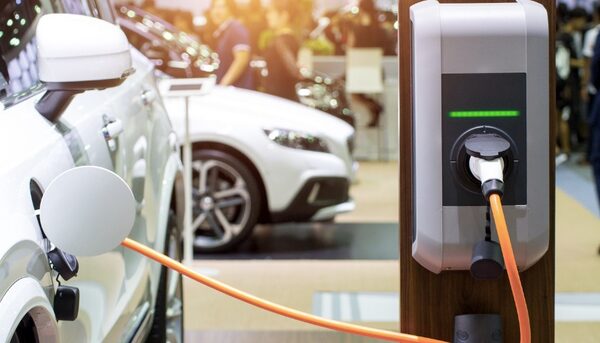
The Demand Flexibility Service is the national mechanism, developed by National Grid ESO and now run through NESO13. It was designed to help manage potential winter pressures by reducing demand during evening peak periods and reducing reliance on more expensive electricity generation, and it launched in winter 2022/231. Its original shape was a turn-down service: households were asked to use less at peak, and suppliers rewarded them for the reduction.
That shape has changed. From 9 April 2026 the service introduced bi-directional flexibility, meaning it rewards customers for both reducing electricity use (demand turn-down) and increasing electricity use (demand turn-up)14. The same date brought a reduced eligibility threshold of 0.1MW, zonal procurement, and additional features including primacy and a self-nominated baseline option1. A further step is scheduled for 7 October 2026, when the service will launch the capability to procure constraint management actions and participants will be able to take part in both margin and system tagged actions1.
The turn-up side is not a gimmick. NESO describes a new service to be used to reward consumers for increasing electricity use during periods of surplus summer electricity15. That is the mirror image of the winter peak problem: when solar output is high, absorbing electricity is useful to the system, and a car is one of the largest controllable loads a household owns.
The service has been reported on across winters. Its winter 2024/2025 overview report covers the winter period from 27 November 2024 to 28 March 20251. For a household, the practical consequence of the 2026 changes is that participation is no longer only about switching things off. A car that can be told to charge at a particular half hour is a flexibility asset in both directions.
Reward rates compared: ev.energy, waEV-smart and equiwatt
Reward rates are not published as a single comparable table, because each scheme sets its own terms and each is paid through a different route. What can be compared is the structure of each offer and the conditions attached.
waEV-smart is the most specific on figures. It offers a welcome credit equivalent to 1,000 EV miles after the first 30 days of smart charging, and up to £15 every month for continued smart charging, described as roughly 750 miles of free driving6. Both figures are the maker's own and apply to its own scheme. The same page states that customers must also have a compatible SMETS2 smart meter installed and be on an eligible dual rate tariff to qualify for rewards6. It also states that rewards are not guaranteed and are subject to change, and that waEV-Smart reserves the right to change the amount of rewards at any time via email notice6.
equiwatt operates through an app and a smart meter connection rather than a charger. Its support material sets out how a household reconnects a smart meter: go to the Manage tab of the app, select Smart Meter, select Reconnect smart meter, then select Continue to confirm you wish to reconnect your smart meter16. That sequence matters because the meter connection is what allows the app to see and reward a shift.
ev.energy is a smart charging app rather than a hardware maker, and the sources here do not give a reward rate for it. What the sources do establish is the general rule that applies across all of them: rewards vary depending on your supplier, but the more electricity you save during each event the greater your rewards will be3. That relationship, not a headline rate, is the reliable way to compare schemes.
| Scheme | Reward structure | Key condition |
|---|---|---|
| waEV-smart | Welcome credit equivalent to 1,000 EV miles; up to £15 every month6 | Compatible SMETS2 meter and eligible dual rate tariff6 |
| equiwatt | App-based, smart meter connected16 | Smart meter reconnection through the app16 |
| Supplier schemes | Pounds or points towards bills; free or cheaper event electricity; gift card points3 | Supplier decides how much of the ESO payment is passed on2 |
Eligibility: smart meters, tariffs and chargers you need
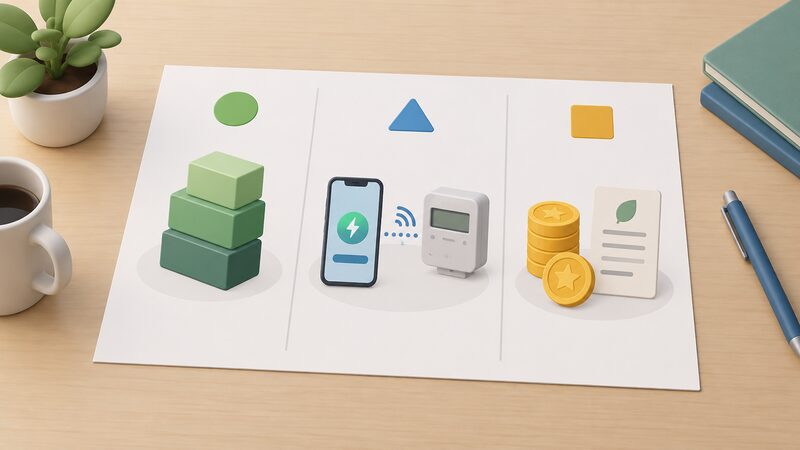
The gate to almost every reward scheme is a smart meter. The Demand Flexibility Service is available to households with a smart meter9, and a smart meter can be installed by an energy supplier at no extra cost7. Without one, a household can still charge an electric car, but it cannot demonstrate a half-hourly shift, which is what the reward is paid on.
The distinction between charging and tariff access is worth stating precisely. You do not need a smart meter simply to charge an EV, but without one you may not be able to access some EV-specific tariffs17. For many EV-specific tariffs, particularly smart or time-of-use tariffs, you will need a working smart meter17. Since flexibility rewards are usually delivered through a tariff or an app linked to one, the smart meter is effectively the entry ticket.
On the equipment side, the qualifying devices for flexibility services are electric vehicle charge points, heat pumps and storage heaters, and battery storage11. A charge point does not have to be a particular brand, but it does have to be able to respond to a remote signal, which is the definition of an energy smart appliance10.
There is also a regulatory floor under the equipment. The Electric Vehicles (Smart Charge Points) Regulations 2021 require that a relevant charge point must not be designed so that it loses its smart functionality if the owner changes electricity supplier5. The same regulations apply to exchanges under warranty if the exchange is made after 30 June 2022, irrespective of when the original unit was made18. That means a replacement charger supplied under warranty is caught by the same smart functionality rules as a new one.
How events work: notification, duration and what happens to your charge
An event is a window in which the system wants load moved. The signal reaches the household through the supplier, the app or the charger, and the household's response is measured against a baseline. The service's 2026 changes include a self-nominated baseline option, which allows a participant to nominate the baseline against which their shift is measured1.
Notification practice is not set out as a single national figure in the sources here. What is documented is that the Electric Vehicle Chargepoint Grant for Renters and Flat Owners aims to provide four weeks' notice if the grant ends or the grant amount changes, with claims made before any public announcement honoured subject to the grant criteria19. That is a grant rule, not an event rule, and it should not be read as the notice period for a flexibility event.
For charge point communications, the contact point given in independent guidance for EV notifications is EV-notifications@energynetworks.org20. That address is for charge point notification to the network operator, which is a separate process from a flexibility event.
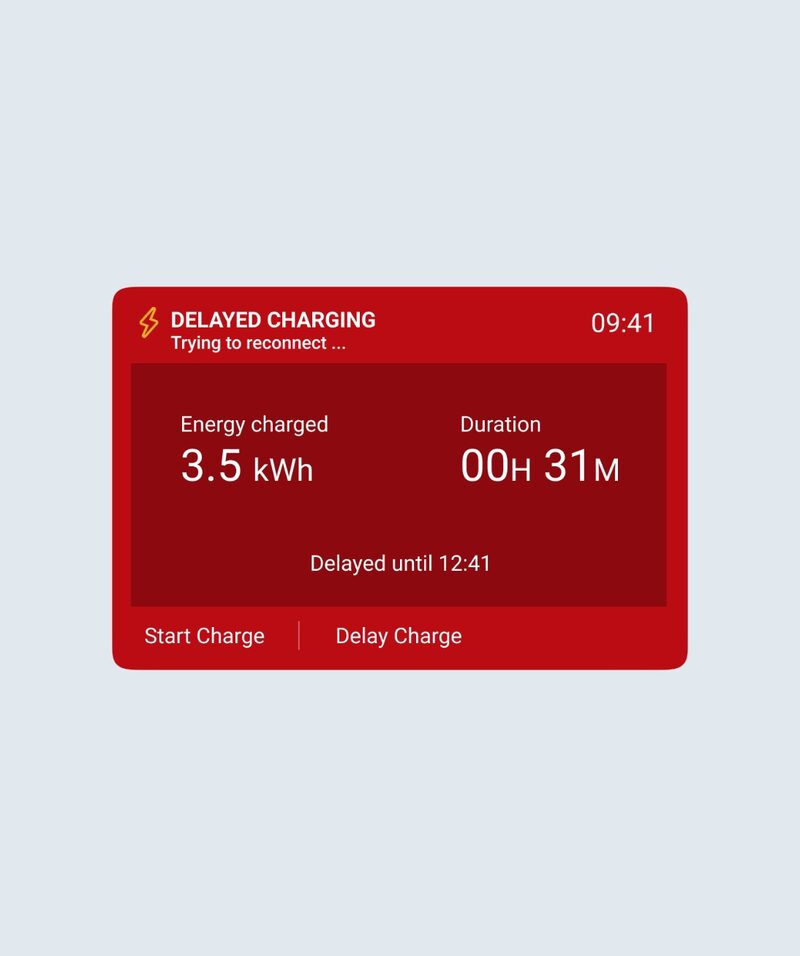
What happens to the charge during an event depends on the direction. In a turn-down event, charging is deferred or reduced; in a turn-up event, charging is brought forward or increased. The service now rewards both reducing electricity use and increasing it14. The car's state of charge at the end of the window is the household's own responsibility, and the charger's behaviour when it cannot reach the network is governed by the requirement that it must still be able to charge18.
What you can earn: cash, gift cards, bill credit and prize draws

The form a reward takes varies as much as its size. The Demand Flexibility Service rewards include pounds or points that you can use towards paying for your energy bills3. Other schemes offer free electricity during event periods, cheaper electricity during event periods, or points convertible into rewards such as gift cards4.
The route by which the money reaches a household is set by the supplier. The electricity companies are paid a set amount by the National Grid ESO for every kWh of electricity their customers shift; some pass all this on to DFS participants and others only pass on some of it, and others enter their customers into a prize draw instead2. A prize draw entry is therefore a legitimate outcome of the same national service, not a separate scheme.
The relationship between effort and reward is at least consistent in direction. Rewards vary depending on your supplier, but the more electricity you save during each event the greater your rewards will be3. A household that shifts a large car battery will generally shift more kWh than one that shifts a washing machine, which is why the car is the most valuable flexibility asset most homes own.
Payment mechanics on the charging side are separate from flexibility rewards. Where a public charging session involves pre-authorisation, the maximum bank release delay can be up to two weeks, with some taking up to two weeks21. That is a public charging payment issue rather than a reward issue, but it affects the same household cash flow.
Charge cards offer a related convenience: they can be used with multiple networks and let you manage your payments in one account, including receipts, and some offer time-limited discounts on charging22. Those discounts are a commercial loyalty mechanism, distinct from a flexibility reward.
The charging guarantee: will your car still be ready when you need it?
The guarantee that matters most is not a reward promise but a regulatory one. A charge point must be configured such that when it loses communications network connectivity it is still able to charge18. That requirement means a smart charger cannot become a brick when the broadband or mobile link drops, and it is the floor beneath any scheme that depends on remote signals.
The second guarantee is about supplier switching. Regulation 6 requires that a relevant charge point must not be designed so that it loses its smart functionality if the owner changes their electricity supplier5. A household that moves supplier keeps a charger that can still take part in flexibility, which is what makes the reward schemes portable in principle.
The third is about warranty exchanges. The Regulations apply to exchanges under warranty if the exchange is made after 30 June 2022, irrespective of when the original unit was made18. A replacement unit therefore carries the same smart functionality obligations as a new one.
What none of these guarantees cover is the state of charge. A charger that defers charging during an event will still charge afterwards, but the timing of the top-up is a scheduling decision, not a protected outcome. The service's own design assumes the household can absorb the shift, which is why the baseline and primacy features exist1.
"A charge point must be configured such that when it loses communications network connectivity it is still able to charge"
Where the schemes fall short: Northern Ireland, Economy 7 and low-usage homes
The schemes are not evenly available across the UK, and Northern Ireland is the clearest gap. The Warm Home Discount scheme is not available in Northern Ireland, and the Affordable Warmth Scheme is available there instead23. The Northern Ireland Sustainable Energy Programme funds various energy saving schemes such as boiler upgrades, LED light bulbs and draught proofing25. None of these is a flexibility reward, and the sources here do not describe an equivalent Northern Ireland flexibility scheme for households.
Northern Ireland does have its own charging support. DfT and OZEV have numerous grants available in Northern Ireland towards the installation of EV charge points and infrastructure26. Home charging is described in official Northern Ireland guidance as the least expensive way to charge an electric vehicle because you can use lower home electricity tariffs27. That is a cost advantage, not a reward scheme.
Northern Ireland energy price guarantee support is given in one official statistics source as up to 19.9 p/kWh discount for electricity and 4.8 p/kWh for gas in Q4 2022, while another gives up to 13.6 p/kWh electricity and 3.9 p/kWh gas28.
Low-usage homes face a different limit. A reward based on shifting load rewards load, so a household that drives few miles has little to shift. The relationship is explicit: the more electricity you save during each event the greater your rewards will be3. Economy 7 households have a related issue, because a tariff with a fixed overnight window already moves load without any event signal, and the sources here do not set out how a flexibility reward interacts with an existing off-peak window.
Data you share and the rules on changing or leaving a provider
Participation in a flexibility scheme means sharing half-hourly consumption data with a supplier, an app or both. The smart meter is the source of that data, and the charger or app is the means by which the shift is executed. The regulatory protection on the equipment side is the supplier change rule: a relevant charge point must not be designed so that it loses its smart functionality if the owner changes their electricity supplier5.
Reward terms are less protected. waEV-smart states that rewards are not guaranteed and are subject to change, and that it reserves the right to change the amount of rewards at any time via email notice6. A household that switches provider should therefore expect to leave the old scheme's terms behind and start again under the new provider's terms, whatever the charger is capable of.
On the grant side, there are conditions that end eligibility. The Electric vehicle chargepoint grant for renters or flat owners lists as an ineligible moving status that you're moving house or planning on moving29. That is a grant condition rather than a flexibility condition, but it illustrates the pattern: support is tied to a situation, and a change of situation can end it.
Workplace charging has its own billing rules. Employers can offer it as a taxable employee benefit or bill employees on a pay-as-you-go basis30. A household that charges at work is therefore outside the home flexibility schemes for those sessions, because the load is not on the home meter.
What comes next: excess renewables, AFIR rules and road tax changes
The direction of travel is towards more flexibility, not less. The Climate Change Committee's priority recommendations include enabling a more rapid transition to EVs, for example by expanding affordable charging infrastructure31. Planning guidance notes that increasing numbers of EVs will require locations of new charging points to be planned together with grid upgrades and the locations of other higher energy demand developments32.
The supply side is changing too. During a heatwave, UK solar homes were reported to have powered the equivalent of five hours of daily air conditioning use15. That is the kind of surplus that turn-up flexibility is designed to absorb, and it is why NESO describes rewarding consumers for increasing electricity use during periods of surplus summer electricity15.
Tax changes are coming for the vehicles themselves. Updated vehicle tax rates were published in official guidance in April 202533. The Vehicle Excise Duty supplement was described in 2024 as due to come in next year relative to that date, with electric vehicles excluded from it at the time34. The sources here do not give a settled figure for what an electric car will pay, and no figure is offered.
For a household, the independence question is straightforward. Flexibility rewards reduce the cost of charging but do not remove dependence on the grid, a supplier and a working communications link. The charger must still charge when the link fails18, and the reward depends on a supplier choosing to pass on what the system pays2. The car remains the largest controllable load in most homes, and the schemes are built to use it.
Sources34 cited
- Demand Flexibility Service, NESO, 2026-09-17
- How much could you earn from the Demand Flexibility Service?, Centre for Sustainable Energy, 2026-06-22
- Demand Flexibility Service, Energy Saving Trust, 2026-05-21
- Free electricity: here's how to opt in, Which?, 2026-04-23
- The Electric Vehicles (Smart Charge Points) Regulations 2021, legislation.gov.uk, 2021-12-15
- waEV-smart, waEV-charge, 2026-09-17
- Do you have to have a smart meter by law?, Smart DCC, 2026
- Getting smarter with energy, Centre for Sustainable Energy, 2026-07
- Understanding energy flexibility, Smart Energy GB, 2026-08-17
- Energy smart appliances, House of Commons Library, 2026-09-20
- Flexibility services, UK Power Networks, 2026-09-20
- Smart Charge, Zapmap, 2026
- Demand Flexibility Service: running appliances at cheaper times, Electrical Safety First, 2026-09-19
- How consumer-led flexibility works in power markets, Energy UK, 2026-04-14
- UK solar homes power equivalent of five hours of daily air con use during heatwave, Ember, 2026
- How do I reconnect my smart meter?, equiwatt, 2026
- EV tariffs and home charging: what consumers need to know, Energy Ombudsman, 2026-09-11
- Guide to the Electric Vehicles (Smart Charge Points) Regulations 2021, Department for Transport, 2026-09-18
- Electric Vehicle Chargepoint Grant for Renters and Flat Owners, Find government grants, 2026-09-18
- Electric vehicle charging installations FAQs, IET, 2026-09-17
- Payment pre-authorisation when charging an EV, ChargeUK, 2026-09-17
- How to use electric car charging points, Which?, 2026-05-20
- Warm Home Discount Scheme, House of Commons Library, 2026-02-26
- Warm Home Discount, Ofgem, 2026-09-17
- Cost of living and winter support, Belfast City Council, 2026-09-20
- Electric vehicle chargepoint and infrastructure grants, Department for Infrastructure, 2026-09-18
- Electric vehicles, nidirect, 2026-09-17
- Northern Ireland energy price guarantee support, House of Commons Library, 2026-08-28
- Electric vehicle chargepoint grant for renters and flat owners, GOV.UK, 2026-09-17
- Electric vehicle charging, SMMT, 2025-06-25
- Faster electrification would cut UK household bills, Climate Change Committee, 2026-06-24
- Planning for EV charging infrastructure, Parliamentary Office of Science and Technology, 2025-01-06
- Electric vehicles: costs, charging and infrastructure, Department for Transport, 2025-04-10
- Budget a missed opportunity to help consumers, SMMT, 2024-03-08
 Demand Flexibility and the GridGetting paid to shift your electricity use away from peak times is now a real option for households with a smart meter.
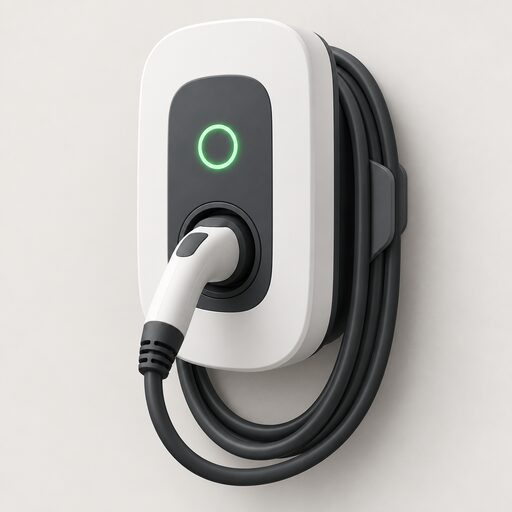 Supplier-Controlled ChargingSmart charging tariffs let your energy supplier decide when your car charges, usually overnight when electricity is cheaper.
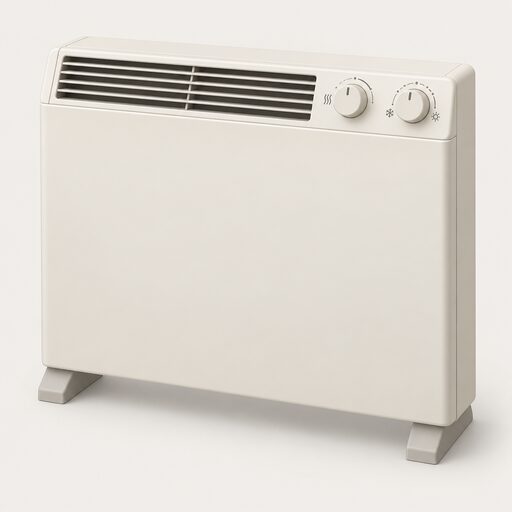 Storage Heater ControlsExplains manual input and output dials, automatic charge control and the smart charging used by modern high-retention heaters.
 Export Tariff ApplicationsHow the Smart Export Guarantee application works, how export readings are collected, and how often payments are made.
 Flexibility Payments for HomesCan you really get paid for using less electricity at peak times, and how much would a household actually earn?
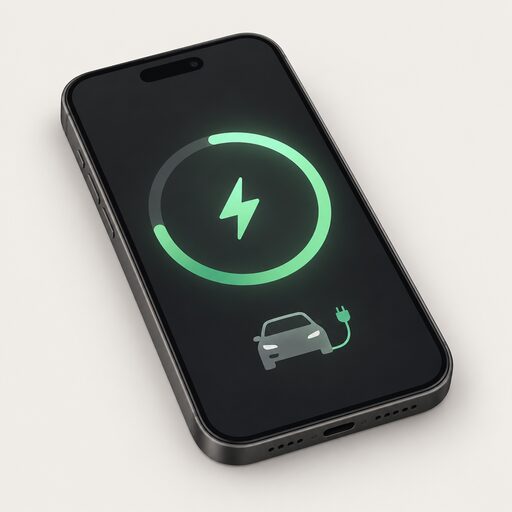 What Is a Smart Charger?A smart EV charger is an internet-connected home charge point that schedules charging around tariff prices, grid demand and household load.