

In this answer
Short answer
The Winter Fuel Payment is an annual, lump-sum payment for older people in England, Wales and Northern Ireland, and it reaches over 12.3 million older people in around 9 million households each winter1. It is not a rebate on a bill and it is not paid by an energy supplier: it is a cash payment from government, made automatically to most eligible households, and it sits alongside the standing charges, unit rates and standing debt that make up a household's actual energy position.
The headline figures for winter 2026 to 2027 are a payment of between £100 and £300, a qualifying week of 21 to 27 September 2026, and payment in November or December 2026 for most recipients2. The scheme is means-tested in a specific and unusual way: a household with total individual income above £35,000 still receives the money, and HMRC then takes it back through the tax code or a Self Assessment return1.
Scotland no longer runs the Winter Fuel Payment at all. It has been replaced there by the Pension Age Winter Heating Payment, a devolved benefit with its own rules and a slightly higher amount5. That single fact changes the answer to almost every question below depending on where in the UK the household lives.
What the Winter Fuel Payment is and who receives it
The Winter Fuel Payment is an annual, lump-sum payment for older people in England, Wales and Northern Ireland3. It is described in independent guidance as a one-off, tax-free payment made to households with someone over pension age8. The unit of payment is the household, not the individual, which is why the statistics are usually quoted as households rather than people, and why two eligible people living at the same address do not each receive a full separate payment.
Eligibility turns on age and on the qualifying week rather than on the whole winter. For winter 2025/26, a person had to have reached State Pension age by the end of the September qualifying week, which was the week ending 21 September3. For winter 2026 to 2027 the qualifying week is 21 to 27 September 20267. A household that reaches pension age in October is therefore outside the scheme for that winter, however cold the months that follow.
Most people get the Winter Fuel Payment automatically if they are eligible1. The automatic route runs through receipt of a listed benefit: State Pension, Pension Credit, Universal Credit, Attendance Allowance, Personal Independence Payment, Carer's Allowance, Disability Living Allowance, Income Support, income-related Employment and Support Allowance, income-based Jobseeker's Allowance, War Pensions Scheme awards, Industrial Injuries Disablement Benefit, Incapacity Benefit and Industrial Death Benefit10. A letter arrives in October or November telling the household how much it will get2.
The scheme's reach has narrowed. Independent guidance notes that winter fuel payments used to go to anyone of pension age and that the rules have now changed11. Analysis published in November 2024 described a reduction in the number of people receiving the payment, though more targeted, and warned that it risks leaving many exposed12. For a household's energy independence the payment is a modest, once-a-year contribution to a bill that arrives monthly; it does not change the underlying dependence on a supplier, a meter and a tariff.
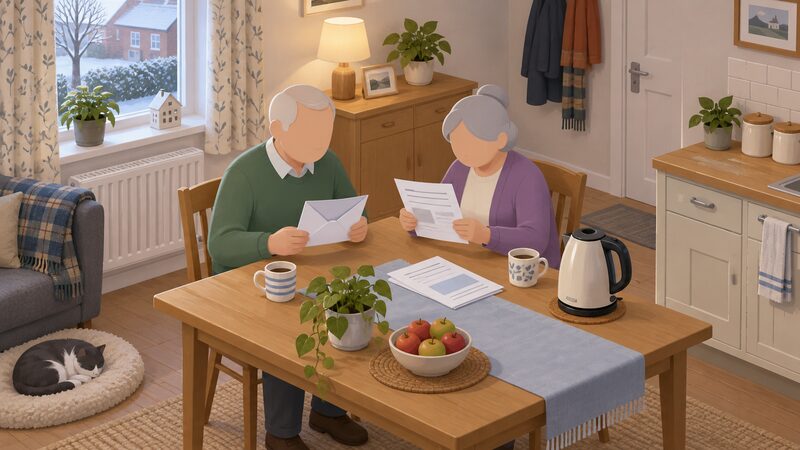
How much is paid: £200 or £300 per household

The published range for winter 2026 to 2027 is between £100 and £3002. Independent guidance gives the same range, noting that payments are between £100 and £300 but that the amount depends on personal situation8. A separate independent source states the payment is worth between £100 and £30012.
The standard amounts are more specific. For winter 2025/26 they were £200 per eligible household where the oldest person is under 80, and £300 for households containing a person aged 80 or over3. Where two eligible people live together, independent guidance puts the payment at between £200 and £300 depending on their respective ages13. The £100 figure in the published range reflects the lower amounts that arise in particular household combinations rather than a standard rate.
| Household situation | Amount | Winter | Source |
|---|---|---|---|
| Oldest person under 80 | £200 | 2025/26 | 3 |
| Someone aged 80 or over | £300 | 2025/26 | 3 |
| Two eligible people living together | £200 to £300, by age | 2025/26 | 13 |
| Published range | £100 to £300 | 2026/27 | 2 |
One official page gives the payment as £200 and another as £300 without the age condition attached, and that conflict is unresolved1. A maker's guidance from 2021 gives £200 for a person living alone and £100 for a person living with someone else who also qualifies, which does not match the household figures above14. Where the figures differ, the age-based standard amounts for the most recent winter are the ones with a stated period attached.
What this means in practice is that the payment is a fixed sum set by age and household composition, not by the size of the bill. A household in a large, poorly insulated home and a household in a small, efficient flat receive the same amount if their ages match. The payment softens the winter peak; it does not track it.
The £35,000 income threshold and how HMRC recovers payments
The Winter Fuel Payment is not withdrawn from high-income households at the point of payment. Official guidance states that if total income is over £35,000, HMRC will take the Winter Fuel Payment back1. Independent guidance describes the same mechanism: a household with income over £35,000 a year still gets the payment, but it is recovered later through HMRC15. Another independent source states that if annual income is more than £35,000, the full Winter Fuel Payment amount must be paid back8.
Recovery is done through the tax system rather than by invoice. HMRC takes the payment back either by changing the tax code or by adding the amount to a Self Assessment tax return16. That matters for timing: the money arrives in November or December and the recovery lands later, through a reduced code or a tax bill, which can surprise a household that treated the payment as settled income.
The threshold is applied to total individual income for the tax year, not to household income. One official source sets out the test as total individual income for the 2025-26 tax year, with £35,000 or less meaning the household keeps its 2025 Winter Fuel Payment and more than £35,000 meaning HMRC takes it back17. Because the test is individual, a couple where one partner is above the threshold and the other is below is treated differently from a couple where both are above it.
Opting out is the administrative alternative. One official source states that anyone who expects their total individual income from private pension, State Pension and any other sources to be over £35,000 can opt out of future payments17. The deadlines given do not match: one official source gives September 2026 for opting out of the 2026 to 2027 payment, while independent guidance gives the cut-off for the opt-out form as 11:59pm on 20 September 202616. A household relying on the later of the two dates is relying on the independent figure.
Scale of the scheme: around £2.7 billion for 9 million households
The Winter Fuel Payment is one of the larger cash transfers aimed at older households. Each winter it helps over 12.3 million older people in around 9 million households with fuel bills, at a cost of around £2.7 billion1. The gap between the two numbers is the household unit: roughly 9 million payments reach around 12.3 million people, because many recipient households contain two pension-age adults.
The most recent official statistics cover winter 2024 to 2025 and were published on 16 September 2025, giving annual figures on the number of Winter Fuel Payments made to recipients and beneficiaries6. That publication is the reference point for anyone tracking how the caseload has moved since the eligibility rules changed, and it is the dataset to compare against constituency-level figures.
Earlier figures show how much the scheme has changed shape. For 2024, official communications described 11.8 million pensioners receiving up to £600 in Winter Fuel Payments and Pensioner Cost of Living Payments, with over £4 billion paid to pensioners between November and March through the two schemes combined7. The £600 figure is a combined total across two payments, not a Winter Fuel Payment rate, and the two should not be read as one scheme.
Scotland's share of the caseload was forecast at 770,000 households, or 1 million individuals, under the existing Winter Fuel Payment, against 137,000 households under the new devolved payment, in 2024/25 forecasts19. That is a forecast rather than an outturn, and it illustrates how much narrower the Scottish replacement was expected to be.
For a household, the scale of the scheme is context rather than income. Around £2.7 billion spread across around 9 million households is a modest average contribution to a winter's bills, and it is dwarfed by the standing charges and unit rates that determine what those bills actually are. The payment is a cushion against the winter peak, not a route to independence from the grid or from a supplier.
Qualifying week, payment timing and automatic payment
The qualifying week is the hinge on which eligibility turns. For winter 2026 to 2027 it runs from Monday 21 until Sunday 27 September 20269, and official guidance gives the same dates16. Independent guidance describes it as the qualification week of 21 to 27 September 202611. For winter 2025/26 the equivalent week ended on 21 September3.
Payment follows the qualifying week by roughly two to three months. Most eligible people will be paid in November or December 20261. The award letter arrives in October or November telling the household how much it will get2. The payment goes into the bank account your benefits are usually paid into, which for joint claimants receiving listed benefits is the account used for those payments2.
Most people never need to claim. Independent guidance states that a household never needs to claim winter fuel allowance more than once, and that payments are automatic every year after that10. A claim is needed where the household did not get a Winter Fuel Payment last year, or where State Pension has been deferred since last winter11. Claims for winter 2026/27 open from 21 September 2026, with a deadline of 31 March 202720, and independent guidance gives the same closing date21.
The qualifying week also creates the main trap in the scheme. Because eligibility is tested against a single week in September, a hospital stay, a move into a residential care home or a period in prison during that week can change the outcome. Independent guidance advises letting the authorities know if any of those applied during the qualification week11.
Scotland: the Pension Age Winter Heating Payment instead
The Winter Fuel Payment does not operate in Scotland. It has been replaced there by the Pension Age Winter Heating Payment, a devolved benefit with its own rules5. Independent guidance states plainly that in Scotland the Winter Fuel Payment has been replaced by a new benefit called Pension Age Winter Heating Payment8, and the Scottish Government's own guidance explains why it has replaced the Winter Fuel Payment in Scotland5.
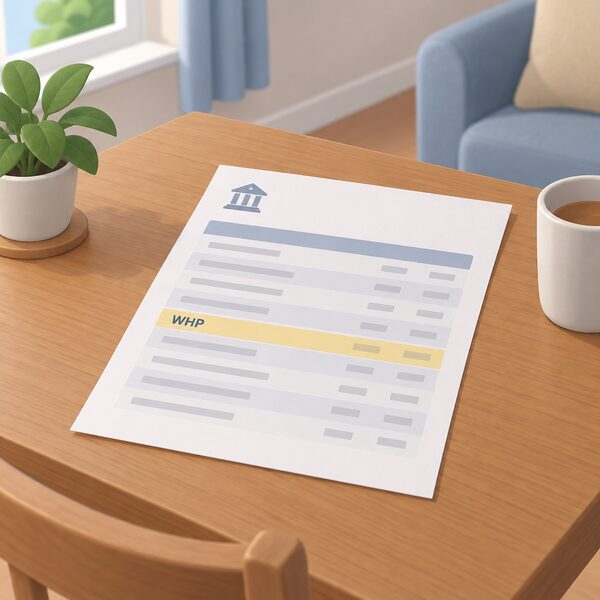
The replacement is not a like-for-like transfer of the same amount. Independent guidance describes the Scottish equivalent as carrying a slightly higher amount than the Winter Fuel Payment22. The Scottish payment also has its own administrative features: it appears as 'WHP' on a bank statement23, and getting it does not affect any other benefits the household may receive23.
Scotland's separate Winter Heating Payment is a different benefit again, aimed at people on low incomes rather than at pensioners as a class, and it too does not affect any other benefits23. The two Scottish payments should not be confused with each other or with the reserved Winter Fuel Payment that continues in the rest of the UK.
| Nation | Payment for pension-age households | Notes |
|---|---|---|
| England | Winter Fuel Payment | £100 to £300 range2 |
| Wales | Winter Fuel Payment | £100 to £300 range2 |
| Northern Ireland | Winter Fuel Payment | £100 to £300 range2 |
| Scotland | Pension Age Winter Heating Payment | Replaces Winter Fuel Payment; slightly higher amount5 |
For a Scottish household the practical effect is that the UK government's Winter Fuel Payment pages do not describe the benefit it will receive, and the £35,000 clawback and opt-out arrangements described above are the reserved scheme's rules. The devolved payment has its own eligibility and its own recovery arrangements, and a Scottish household should read the Scottish guidance rather than the UK pages.
Care home residents and other special cases
Living in a care home does not by itself remove eligibility. Official scheme rules state that you can get Winter Fuel Payment if you live in a care home24. The exclusion bites only in a narrower case: a person on Universal Credit, Pension Credit or income-related Employment and Support Allowance who lived in a care home for the whole time from 29 June 2026 or earlier is excluded24. The date matters, because a shorter stay does not trigger the exclusion.
The qualifying week is where care home residents, hospital patients and prisoners are treated together. Independent guidance advises reporting a stay in hospital, a residential care home or prison during the qualification week11. Official guidance puts the general duty more broadly: report any changes in your circumstances straight away16.
"You can get Winter Fuel Payment if you live in a care home."
Other special cases follow from the household unit. Where two eligible people live together, the payment is between £200 and £300 depending on their respective ages13. Where a household's income crosses £35,000, the payment is made and then recovered1. Where a household expects to cross the threshold, opting out is available before the payment is made17.
For a household's energy independence, the Winter Fuel Payment is best understood as what it is: a small, automatic, tax-free cash transfer that arrives once a year and is set by age and household composition rather than by consumption. It reduces the winter bill without changing the meter, the tariff or the supplier, and it does nothing about the standing charge that accrues in every month of the year. Households looking at the wider picture of what drives bills, and at how the UK's home energy data is assembled, will find the market data and energy independence guide a useful companion to these figures.
Sources24 cited
- Winter Fuel Payment, GOV.UK, 2026
- How much you'll get, GOV.UK, 2026
- Winter Fuel Payment research briefing SN06163, House of Commons Library, 2026
- Energy and Climate Change Committee report, Parliament, 2026
- Pension Age Winter Heating Payment, mygov.scot, 2026
- Winter Fuel Payment statistics for winter 2024 to 2025, DWP, 16 September 2025
- £5 billion in support for energy bills paid this winter, GOV.UK, 2024
- What is a Winter Fuel Payment, Turn2us, 5 August 2026
- Winter Fuel Payment, Age UK, 15 September 2026
- Winter Fuel Payment guide, Uswitch, 22 July 2026
- How do I claim a Winter Fuel Payment, Turn2us, 5 August 2026
- Winter bills financial help, Confused.com, 2026
- What is Winter Fuel Payment, Confused.com, 9 September 2025
- 10 ways to save on energy bills, Which?, 27 August 2026
- Financial support for home energy, Energy Saving Trust, 14 September 2026
- Winter Fuel Payment, nidirect, 17 September 2026
- Heating your home, Carmarthenshire County Council, 4 April 2026
- Can I get a Winter Fuel Payment, Turn2us, 5 August 2026
- Designing energy support for disabled consumers, Consumer Scotland, 2024
- Energy bill support this winter, British Gas Energy Trust, 26 August 2026
- Grants and benefits to help you pay your energy bills, Citizens Advice, 17 September 2026
- Benefits, Winter Fuel Payments and Cold Weather Payments, Turn2us, 8 September 2026
- Winter Heating Payment, mygov.scot, 17 September 2026
- Winter Fuel Payment eligibility, GOV.UK, 17 September 2026
 Fuel PovertyHow does Scotland decide if a household is in fuel poverty, and how many homes are affected?
 Flexibility Payments for HomesCan you really get paid for using less electricity at peak times, and how much would a household actually earn?
 Economy 7 and TariffsHow off-peak and time-of-use electricity tariffs work for heating, including Economy 7, Economy 10, Scottish white meter arrangements and the end of the Radio Teleswitch Service.
 Smart Charging RewardsCovers the schemes that pay or reward households for shifting car charging, including the Demand Flexibility Service, app-based reward programmes and supplier incentives.
 V2G Earnings and TariffsExplains how households are paid under vehicle-to-grid arrangements, whether through export payments, a flat monthly credit or a time-of-use tariff.
 Fuel Poverty in the UKWho counts as living in fuel poverty, and why does the number change depending on where in the UK you live?