

In this answer
Short answer
The Fuel Bank Foundation is the main emergency voucher route for households that pay for energy in advance and cannot afford to top up. It does not take applications from the public: a referral comes from a partner organisation, such as Citizens Advice, once the qualifying crisis criteria are met1. The support is designed for households that pre-pay for their fuel and are at risk of disconnection, and it includes vouchers for prepayment meters and help with the cost of fuel for off-grid households2.
The scale is substantial. The Welsh Government reported that more than 200,000 people across Wales had received emergency fuel top-ups, nearly 90,000 of them children3. A later announcement put the figure at more than 85,000 households supported, backed by £8.5 million4. The Foundation had issued over 62,000 fuel vouchers by November 20242.
What the scheme does for a household's energy independence is narrow but real: it clears an immediate barrier to supply, so a meter that has run out can be topped up without cash in hand. What it does not do is remove the underlying dependence. The household still buys energy from a supplier, still pays in advance, and still relies on a referral partner and a government grant to bridge the gap.
Emergency fuel vouchers for prepayment meter users
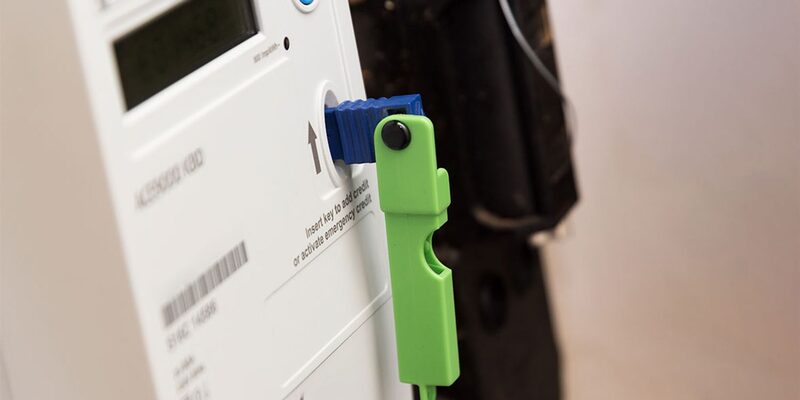
A prepayment meter is a way of paying for electricity or gas in advance rather than after use8. That is the whole point of the meter, and it is also the source of the risk: when the credit runs out, supply stops. Prepayment tariffs require a user to pay for their energy before they use it, topped up by token, key or smartcard, online or through an app9. If a household cannot afford to top up, a fuel voucher may be available1.
Suppliers often recommend a prepayment meter for customers already in fuel debt, set up to repay a specific amount each week based on affordability10. That arrangement can make budgeting easier, but it also means the meter is doing two jobs at once: buying current energy and recovering old debt. A voucher addresses the first job only.
The Fuel Bank Foundation provides same-day support to prepayment meter users who are at risk of self-disconnection, according to Scottish Government guidance11. Speed is the design feature. A prepayment meter can run out the same day, so a voucher that arrives next week does not solve the problem.
Vouchers can be received by each household up to three times a year to pay for gas, heating bills or electricity arrears5. Some food banks also issue fuel vouchers12. The Foundation itself offers emergency financial support and practical advice for people struggling to pay for energy13.
"If you can't afford to top up your prepayment meter, you might be able to get a fuel voucher."
Off-grid households: vouchers for oil and gas deliveries
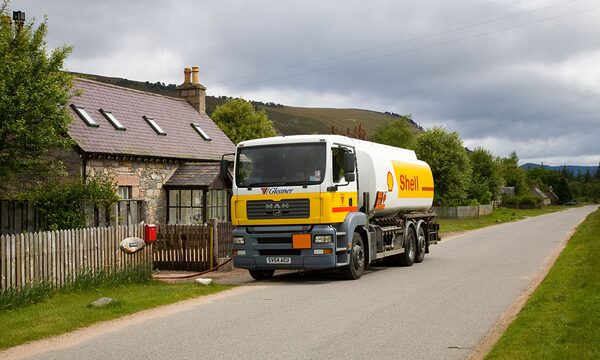
Off the mains gas network, the same scheme reaches further than a meter top-up. The Fuel Voucher and Heat Fund scheme provides fuel vouchers for homes with prepayment meters and deliveries of oil or gas for those not connected to the mains gas network14. The Foundation provides fuel vouchers for deliveries of oil or gas for households not connected to the mains gas network15. Off-grid support is part of the same scheme, not a separate one.
That matters because off-grid households face a different cash-flow problem. A heating oil delivery is a lump sum, not a weekly top-up, and a household that cannot raise the lump sum can run a tank dry. A voucher against a delivery addresses that directly.
The Welsh Government has reported that since 2022, more than 230,000 people across Wales have received energy top-ups and fuel deliveries through the Fuel Bank6. The scheme has provided support to eligible households that pre-pay for their fuel and are at risk of disconnection14.
Coverage is not uniform across the UK. In Northern Ireland, a separate Home Heating Oil Support Scheme provided a £100 prepaid card that can be used at heating oil suppliers16. In Wales, the Fuel Voucher and Heat Fund scheme is the route for off-grid fuels14. In Scotland, the Fuel Bank Foundation provides same-day support to prepayment meter users at risk of self-disconnection11.
On Anglesey, council guidance states that limited assistance with off grid fuel may be available through the council's financial inclusion team, but only until current funding expires17. That is a reminder that off-grid help is often time-limited and locally administered.
Who qualifies: eligibility and the risk of disconnection
The qualifying condition is not low income in the abstract. It is a prepayment meter plus a risk of imminent disconnection, including households with prepayment meters and at risk of imminent disconnection4. The Wales-wide Fuel Voucher Scheme was designed to help households in crisis who must pay for their energy in advance, on or off-grid fuels18.
A referral comes from a partner organisation such as Citizens Advice if the household meets the qualifying crisis criteria17. The Foundation does not take public applications. That gatekeeping is deliberate: it keeps the scheme to households in immediate crisis rather than general hardship.
Other support sits alongside it, and the boundaries matter. The Warm Homes Discount is aimed at people who are in or at risk from being in fuel poverty19. Warmer Homes Scotland is available to households, including owner-occupiers and some private rented sector tenants, living in or at risk of fuel poverty who meet the qualifying eligibility criteria20. The British Gas Energy Trust Individual and Families Fund is open to prepayment meter and credit account customers of British Gas and other suppliers21.
The Energy UK Vulnerability Commitment goes further, covering not disconnecting households where the customer is unable to protect their own personal welfare because of age, disability, health or severe financial insecurity23. Fuel Direct is a separate government scheme, designed to help people struggling to pay for their energy bills if they receive certain benefits such as Universal Credit, Jobseeker's Allowance, Employment and Support Allowance, Income Support Allowance and Pension Credit24.
Coverage in Wales and Scotland: centres and reach
Wales is where the scheme is most developed, because the Welsh Government funds it directly. Households across Wales facing tough times and who have to pre-pay for their energy can access further help this winter25. The scheme has provided support to eligible households that pre-pay for their fuel and are at risk of disconnection14.
The delivery model combines national funding with local referral. Community hubs have been part of the winter response, with safe, warm and connected community hubs helping communities through winter19. Council financial inclusion teams act as a local route, though on Anglesey that off-grid assistance is limited to the life of current funding17.
Scotland's route is different in emphasis. The Fuel Bank Foundation provides same-day support to prepayment meter users who are at risk of self-disconnection11. The Scottish Government has also boosted the Fuel Insecurity Fund4. Consumer Scotland has raised the question of debt-related costs within the price cap, noting the pressure that repayment obligations place on prepayment customers20.

Funding, scale and what the numbers show
The funding picture is a series of government grants rather than a single budget. The Welsh Government's support for the Fuel Bank Foundation reached £1.2m in 2024/25, building on the £5.6m provided since 20222. An extra £700,000 was allocated for households who pre-pay for their fuel and are at risk of disconnection26. An earlier grant of £3.952m helped the Foundation expand its operations27. A £4m allocation went to the Fuel Voucher and Heat Fund schemes27.
The headline scale figures need care, because they cover different periods and different measures. The Welsh Government reported more than 200,000 people across Wales had received emergency fuel top-ups, nearly 90,000 of them children3. A later announcement put support at more than 85,000 households, backed by £8.5 million4. The Foundation had issued over 62,000 fuel vouchers by November 20242. In one year, approximately 29,000 individuals were supported with crisis fuel vouchers25.
| Measure | Figure | Period | Source |
|---|---|---|---|
| People supported across Wales | more than 200,000 | to October 2025 | 3 |
| Children among those supported | nearly 90,000 | to October 2025 | 3 |
| Households supported | more than 85,000 | to September 2026 | 4 |
| Fuel vouchers issued | over 62,000 | to November 2024 | 2 |
| Individuals supported in one year | approximately 29,000 | 2024 | 25 |
| Welsh Government funding | £1.2m | 2024/25 | 2 |
The self-disconnection data is the sharpest evidence of what the scheme is up against. A report found that 49% of people the Foundation had helped still faced self-disconnection at least weekly, and the majority, 78%, had done so7. That sample covers people on prepayment meters having trouble paying for energy, so it is not representative of all prepayment customers7.
Ofgem's Additional Support Credit is described as a vital tool to support prepayment customers in vulnerable situations who have self-disconnected or are at risk of doing so28. That is the supplier-side mechanism; the Fuel Bank voucher is the charitable and government-funded one. Both exist because a prepayment meter can stop supply the moment credit runs out.
For a household, the practical meaning is this: the voucher removes an immediate barrier, but it does not change the payment method, the tariff or the debt. The dependence on a supplier, a referral partner and a government grant remains. The scheme is a bridge, not an exit.
Sources28 cited
- Grants and benefits to help you pay your energy bills, Citizens Advice, 2026-09-17
- Funding for the Fuel Bank Foundation, Welsh Government, 2024-11-15
- Fuel vouchers helping families across Wales keep warm, Welsh Government, 2025-10-17
- Boosting the Fuel Insecurity Fund, Scottish Government, 2026-09-17
- Help if you're struggling to pay your energy bill, Which?, 2026-08-19
- Thousands of Welsh households get help with oil and LPG heating costs, Welsh Government, 2026-03-31
- Ofgem call for input on debt-related costs allowance, House of Commons Library, 2022
- Get help with your prepayment meter, Ofgem, 2026
- Energy tariffs explained, Uswitch, 2026-02-17
- Prepayment meters, Centre for Sustainable Energy, 2025-08
- Tackling fuel poverty in Scotland, Scottish Government, 2021-12-23
- Save money on energy bills, Energy Saving Trust, 2026-07-01
- Worried about your energy bills, Energy Ombudsman, 2026-03-24
- Tackling fuel poverty, Welsh Government, 2025-01-27
- Support available to help with the cost of living, Welsh Government, 2026-03-18
- Lyons announces agreement on Home Heating Oil Support, Department for Communities, 2026-04-16
- Help with household costs, Isle of Anglesey County Council, 2026-09-20
- Cost of living support, National Energy Action, 2023-07
- Wales Fuel Support Scheme integrated impact assessment, Welsh Government, 2023-07-18
- Ofgem call for input on debt-related costs allowance in the price cap, Consumer Scotland, 2023-05-17
- Support with heating fuel costs, Welsh Government, 2026-03-31
- If you've been told your energy supply will be disconnected, Citizens Advice, 2026-09-20
- Energy schemes: Priority Services Register, Turn2us, 2026-09-08
- Charity helps clients with smart meter problems in Wales, British Gas Energy Trust, 2026-01-20
- Extra support for disadvantaged households this winter, Welsh Government, 2024-11-15
- Safe, warm and connected community hubs, Welsh Government, 2024-12-19
- Welsh Government Fuel Voucher Scheme, Welsh Government, 2022-06-10
- Additional Support Credit: our expectations, Ofgem, 2025-11-06
 Prepayment and Pay As You GoHow prepayment and pay as you go energy tariffs work in the UK: meter types, top-ups, emergency credit, debt repayment through the meter, price cap treatment and how households move to a credit meter.
 Fuel Poverty PolicyWhy does fuel poverty mean something different depending on where in the UK you live?
 Prepayment MetersHow do you top up a prepayment meter for gas or electricity, and what happens when the credit runs out?
 The Full Grants and Schemes GuideWhich grants can you actually get right now, and how do you apply for them?
 Fuel Poverty in the UKWho counts as living in fuel poverty, and why does the number change depending on where in the UK you live?
 Check Which Energy Grants ApplyWhich energy grants can you actually get right now, and which have closed?