
Short answer
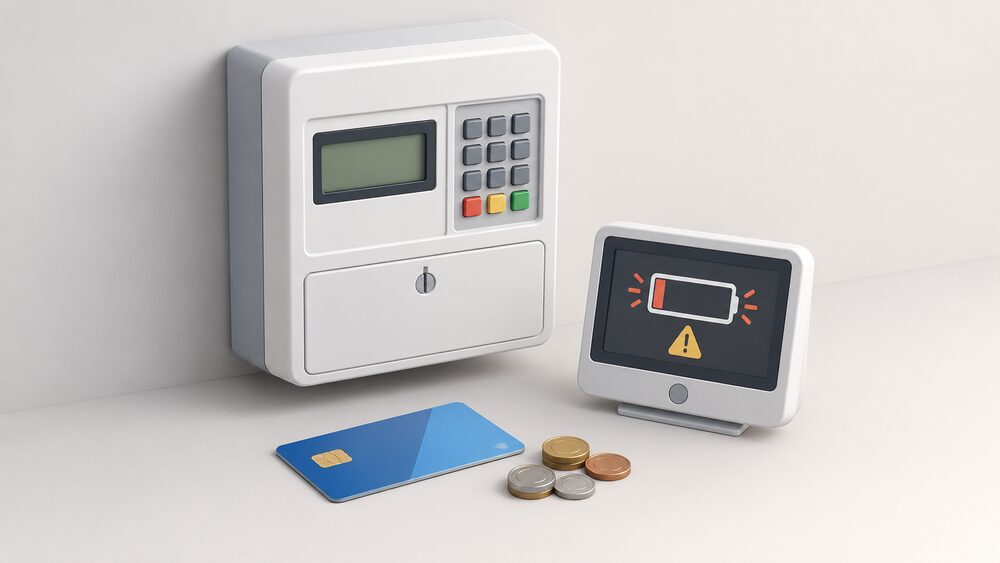
Self-disconnection is the term for a household losing its energy supply because the prepayment meter was not topped up. Ofgem defines it as happening "when a consumer with a prepayment meter does not have enough money to top-up their meter and their meter cuts out, or when they do not realise that credit on the meter is running out"1. The Scottish Government's fuel poverty strategy uses a narrower framing: "When a household stops using energy entirely due to affordability, it is called self-disconnection"2.
It is not the same as being cut off by a supplier. Disconnection by a supplier is rare, and the usual alternative offered is a prepayment meter3. Self-disconnection happens at the meter, without any supplier action, and it is common: one person every 10 seconds ran out of credit on a prepayment meter in a year because they could not afford to top up, according to research published in January 20234.
The scale is the reason the concept has its own regulatory machinery. Citizens Advice estimated that over 2 million people would disconnect because they could not afford to top up by the end of winter 20245, and reported in June 2026 that the number of people asking it for help with self-disconnections remains higher than before the energy crisis6.
Why households on prepayment meters run out of credit
Running out of credit is not only a matter of a household having no money on the day. A large share of prepayment meters are also collecting debt. Around 40% of people with prepayment meters are repaying energy debt through the meter7, and that repayment is taken automatically each time the household tops up10. Debt from a credit meter account may be transferred onto a prepayment meter by the energy company, with automatic repayments taken at each top-up10. The Electricity (Prepayment Meter) Regulations 2006 allow a prepayment meter to recover sums owed for gas or electricity supply, and for meter provision, at premises previously owned or occupied by the customer, as well as at the premises where the meter is installed11. An electricity supplier may not recover those sums by prepayment meter unless it has previously entered into a compliant agreement with the customer11.
The practical effect is that a top-up is split between energy, standing charge and arrears. The standing charge and any fuel debt still apply even if the household completely runs out of credit and stops topping up12. So the meter can run down faster than the household expects, and the debt does not pause while supply is off.
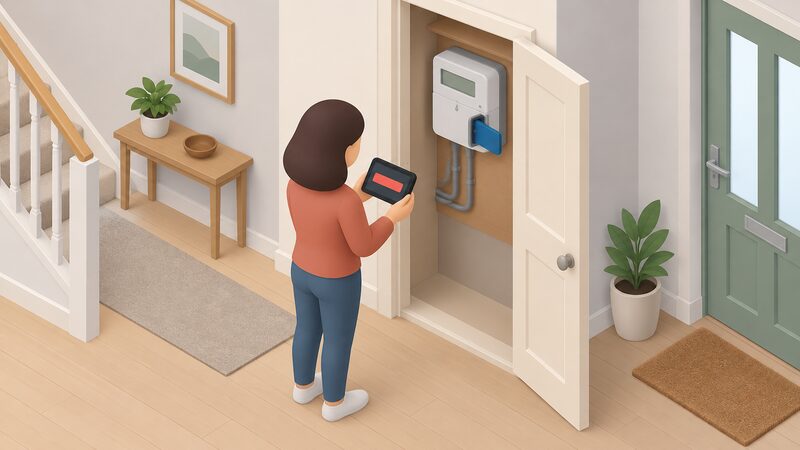
Smart prepay meters are meant to reduce the surprise. The in-home display shows when credit is nearly exhausted13. But a warning only helps if there is money to act on it. Fuel poverty organisations describe the wider pattern as unsafe energy rationing, where households try to use as little energy as possible, and even voluntary self-disconnection by those with prepayment meters in a bid to spend less14. That is the same behaviour regulators classify as self-rationing, and it sits alongside the involuntary kind.
The regulatory response: Ofgem's proposals and Citizens Advice's role

Ofgem consulted on proposals to improve outcomes for consumers who experience self-disconnection and self-rationing. Citizens Advice responded in September 2019, supporting the proposals, and again in August 2020 to Ofgem's final proposals, broadly supporting the intent while calling for improvements to the proposed drafting. The direction of travel was to make suppliers identify self-disconnection rather than wait for the household to report it.
The consumer protection framework that followed places duties on suppliers. Under heat network consumer protection guidance, authorised persons must monitor the usage of prepayment meters on an ongoing basis to identify any consumers who might be self-disconnecting15. Where a prepayment consumer has self-disconnected or self-rationed and any occupant of the household is in a vulnerable situation, the supplier is obliged to offer a reasonable amount of additional support credit in a timely manner15. The same guidance sets out a debt pathway: prevention and support first, any installation of prepayment meters with the explicit consent of the consumer explored before disconnection, and disconnection as an absolute last resort16.
Citizens Advice has also pressed on the cost side. In its response to Ofgem's consultation on levelling the cost of standing charges on prepayment meters, it supported some levelisation of payment method cost differentials, argued that any change should apply to standard credit customers as well as prepayment customers, and maintained that some degree of cost-reflectivity should remain so consumers still have an effective incentive to choose more efficient payment methods17. The Welsh Government went further, encouraging Ofgem to absorb standing charge costs entirely following a period of self-disconnection for prepayment meter customers18.
"Precautionary principle is the assumption to be made by authorised persons that any consumer faced with involuntary prepayment meter for debt is likely to be in financial difficulty and therefore more likely to self-disconnect"
What self-disconnection means for the household
The immediate consequence is stated plainly by Ofgem: once credit runs out, no energy can be used until the meter is topped up again19. There is no grace period built into the definition, and the standing charge and any fuel debt continue to accrue during the period without supply12.
The second consequence is that the household becomes dependent on the supplier's discretion and processes to get back on. Prepayment meters give a small amount of emergency credit designed to maintain supply after regular credit runs out, reclaimed from the next top-up12. Temporary credit, sometimes called additional support credit, is available from the supplier if a household cannot afford to top up, and any temporary credit is paid back from future prepayment card top-ups20. Depending on the supplier, temporary credit may be added automatically when the meter runs out20.
There is a difference between a meter that has run out and a meter that has failed. If there is an issue with the prepayment meter, the supplier should confirm the problem and offer a solution by fixing it remotely or replacing it with a new one10. In Northern Ireland, keypad customers whose supply has been interrupted due to a meter overload will have the meter come back on even if friendly or emergency credit has been activated21.
The independence question is sharp here. A prepayment meter gives a household direct control over what it spends and no exposure to a direct debit estimate, which Ofgem notes can suit people on a tight budget, those wanting more control, or those struggling with debt19. What it does not give is resilience. Supply depends on a topped-up meter, a working top-up route, and a supplier willing to extend credit. The household carries the risk of running out; the supplier carries the duty to monitor for it.
Getting back on supply after self-disconnecting
The first step is the supplier, because the supplier is the only party that can release credit. Contacting the supplier immediately is the route to temporary credit, sometimes called additional support credit20. Where the household includes someone in a vulnerable situation, the supplier is obliged to offer a reasonable amount of additional support credit in a timely manner once it identifies self-disconnection or self-rationing15.
If the meter itself is at fault rather than the credit, the supplier should confirm the problem and offer a solution by fixing it remotely or replacing it with a new one10. In Northern Ireland, a keypad meter interrupted by an overload will come back on even if friendly or emergency credit has been activated21.
Where the household cannot clear the debt, the options narrow. Households using prepayment meters can switch to another supplier as long as they do not owe more than £500 on their account, with the limit applied separately to gas and electricity meters9. Many customers can switch supplier while keeping their smart meter22. Ofgem rules protect customers in debt where a supplier wants to install a prepayment meter, and a household can tell its supplier so that suitability is checked23.
For households in England, Scotland, Wales and Northern Ireland, the support routes differ, and the devolved help pages set out what is available in each nation. The British Gas Energy Trust is one route for grant support with energy debt25. Where a household has self-disconnected and wants it recorded, Citizens Advice is the consumer body that logs self-disconnection cases and has published repeatedly on the trend6.
Sources25 cited
- Self-disconnection and self-rationing research briefing, House of Commons Library, 2022-12-14
- Tackling fuel poverty in Scotland: a strategic approach, Scottish Government, 2021-12-23
- If you've been told your energy supply will be disconnected, Citizens Advice, 2026-09-20
- 3.2m pre-payment meter customers left without heat, End Fuel Poverty Coalition, 2023-01-12
- Shock Proof: breaking the cycle of winter energy crises, Citizens Advice, 2024-01-23
- Future of prepayment discussion paper, Citizens Advice, 2026-06-25
- Energy debt and prepayment meter customers, British Gas Energy Trust, 2026-04-10
- The history of Ofgem's energy price cap, Energy Helpline, 2026-09-20
- Tackling fuel poverty in Scotland: a strategic approach, Scottish Government, 2021-12-23
- Energy debt on prepayment meters, Centre for Sustainable Energy, 2026-08
- The Electricity (Prepayment Meter) Regulations 2006, legislation.gov.uk, 2006-07-23
- Prepayment meters, Centre for Sustainable Energy, 2025-08
- Smart meter benefits for you, Smart Energy GB, 2026-08-18
- What is fuel poverty?, National Energy Action, 2026
- Heat networks consumer protections draft guidance, Ofgem, 2025-09-05
- Heat networks regulation consumer protection guidance decision, Ofgem, 2026-01-13
- Citizens Advice response to the Ofgem consultation on levelling the cost of standing charges on prepayment meters, Citizens Advice, 2023-10-05
- Ofgem call for input on standing charges: Welsh Government response, Welsh Government, 2024-02-15
- Get help with your prepayment meter, Ofgem, 2026
- What emergency help is available for unpaid energy bills in the UK?, British Gas Energy Trust, 2026-04-28
- Temporary power outages for keypad customers, NIE Networks, 2026-09-19
- How to use a smart meter in prepay mode to save money, Smart Energy GB, 2026-08-17
- Energy debt factsheet, National Energy Action, 2026-09-10
- You, home and energy checklist, National Energy Action, 2026-05-20
- How to get help with energy bills, Confused.com, 2025-11-10
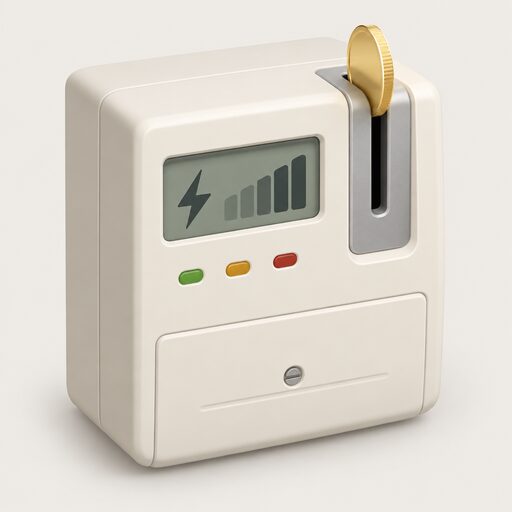 Prepayment MetersHow do you top up a prepayment meter for gas or electricity, and what happens when the credit runs out?
 Prepayment Meter DebtHow debt repayment is set on a prepayment meter, the limits on the share of a top-up that can be taken, and how to have a rate reviewed.
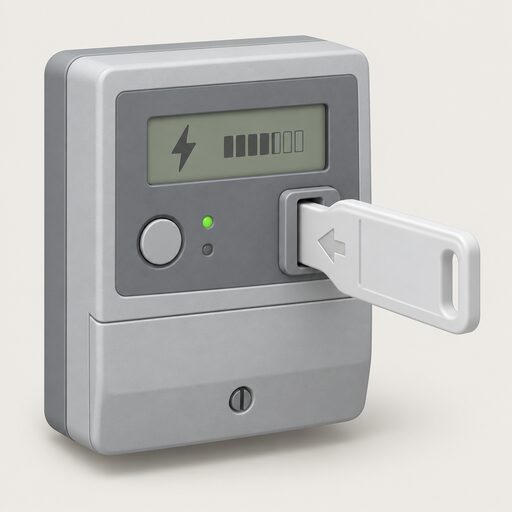 Top Up a Prepayment MeterHow to top up by card, key, app and code, how to enter a vend code by hand and how emergency credit and friendly-hours protection work.
 Disconnection and WarrantsCan your energy supplier force you onto prepayment or cut you off for debt?
 Smart Prepayment MetersHow prepayment mode works on a smart meter, remote switching between credit and prepay, topping up, emergency and friendly credit, the prepayment price cap, the £500 debt limit for switching, and the free help available when a household cannot top up.
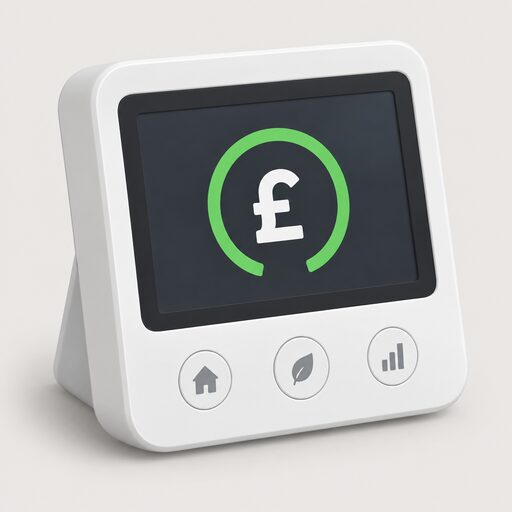 Prepayment Meters and DebtCan your energy supplier force you onto a prepayment meter because you owe them money?