

In this answer
Short answer
The British Gas Energy Trust is an independent charity, separate to but solely funded by British Gas, that clears household energy debt with grants of up to £2,0001. It was established in 2004 and distributed over £14.3 million in grants in 20252. The grants are not restricted to British Gas customers: energy debt grants are available from the Trust to eligible customers of any energy supplier3.
The headline figure for a household in arrears is a write-off of up to £2,000 against a gas or electricity account, and the average grant actually paid to energy debt recipients was £1,228 in 2024/254. For context, the average energy debt owed had risen to £1,835 by the end of 2023, so a grant at the average does not always clear the whole balance5.
The Trust is not British Gas. It states plainly that it is an independent charity and cannot respond to complaints regarding gas or electricity accounts held with British Gas6. What it does for a household's energy independence is narrow but real: it removes a debt that would otherwise sit on the meter or the account, and it funds free advice that can raise income. What it does not do is change the supply relationship, the tariff or the standing charge. The household remains a grid customer of whichever supplier it already has.
An independent charity, solely funded by British Gas
The Trust describes itself as an independent charity, separate to but solely funded by British Gas1. That structure matters to anyone weighing up whether to apply. The money comes from a supplier, but the grant rules, the eligibility criteria and the application process sit with the charity, not with the supplier's customer service operation. The Trust states that it cannot respond to complaints regarding gas or electricity accounts held with British Gas6, which is the clearest signal that the two organisations are not the same thing.
The funding relationship is long-standing and substantial. British Gas has committed £8 million a year over the next five years to the Trust9, and the charity distributed over £14.3 million in grants in 20252. It was formed in 2004, funded solely by, but separate to, British Gas10, and has been running since then.
The Trust also funds a network rather than only paying grants. It funds over 50 frontline charities delivering money and energy advice across Great Britain10, and it reports a huge increase in the demand for that advice10. It funds 32 organisations across Britain to provide free and impartial money and energy advice3, and over 40 money and energy advice projects in community-based charities and social enterprises across Britain11. Comprehensive advice is delivered via 41 core funded projects, including Citizens Advice and independent local charities4.
For a household, the practical consequence is that the Trust is a route to two different things: a debt write-off, and free advice from a local organisation that may also check benefit entitlement. The advice side is where income maximisation sits, and the Trust describes it as covering income maximisation and benefits checks, energy efficiency, tariff switching and budgeting12.
"The Trust is an independent charity, separate to, but solely funded by British Gas"
What the Trust funds: debt relief grants, small grants and advice projects

Support is delivered through three programmes: debt relief grants which can help households with up to £2,000 in fuel debt, a small grants programme providing emergency energy vouchers and payments, and Supporting Communities at Risk13. A later description sets out four main types of support: energy debt relief grants, emergency energy grants, white goods and a network of over 40 money and energy advice projects14.
The Trust operates two support funds, the Individuals and Families Fund and the Energy Support Fund15. These funds can provide up to £2,000 in grants to British Gas and non-British Gas customers with debt on credit or prepayment meter accounts15.
The White Goods Fund is a separate strand. Applications are accepted through British Gas or charitable organisations funded by the Trust1, and both British Gas and non-British customers in England and Wales can apply through referral from British Gas or one of the Trust's funded organisations1. Housing Benefit is a qualifying benefit for that fund1.
The advice projects are the third leg. The Trust supports organisations across Britain that give free and impartial money and energy advice12, and it funds many organisations to help people needing free, confidential support services, including Local Advice Centres that check benefits entitlement16. Its territorial extent is England, Scotland and Wales7, and it funds local charities and advice centres across those nations7. One example of a funded project is Changeworks, which was awarded £89,982 in funding from the British Gas Energy Trust17.
| Support type | What it does | Who it reaches |
|---|---|---|
| Energy debt relief grants | Clears arrears on a gas or electricity account, up to £2,00015 | British Gas and non-British Gas customers with credit or prepayment meter debt15 |
| Emergency energy grants and small grants | Emergency energy vouchers and payments13 | Households in crisis |
| White Goods Fund | White goods, by referral1 | British Gas and non-British Gas customers in England and Wales1 |
| Advice projects | Free and impartial money and energy advice12 | Households across England, Scotland and Wales7 |
Energy debt grants: up to £2,000 for customers of any supplier
The central offer is a write-off of energy debt, and the ceiling is consistent across the Trust's own material. Energy debt write-off grants of up to £2,000 are available for British Gas and non-British Gas customers12. Energy debt grants are available from the Trust to eligible customers of any energy supplier3. The energy grants programme can help households with up to £2,000 in fuel debt18.
The routes differ by supplier and by meter type, and this is where a household needs to read carefully rather than assume the maximum applies.
- British Gas customers: the British Gas Energy Support Fund offers grants of up to £2,000 to help clear outstanding energy debt, for customers with credit and pre-payment meter accounts19. The maximum debt cleared is up to £2,00016.
- Prepayment meter customers, any supplier: the Individuals and Families Fund can help clear energy debts of up to £1,700 to prepayment meters, regardless of supplier7.
- Any supplier, credit or prepayment: the Energy Support Grant is open to prepayment meter and credit account British Gas customers and customers of other suppliers6.
The £1,700 figure for prepayment meters sits below the £2,000 headline. The British Gas Energy Trust operates two support funds, the Individuals and Families Fund and the Energy Support Fund1, and the £1,700 ceiling attaches to the Individuals and Families Fund, which can clear energy debts of up to £1,700 to prepayment meters, regardless of supplier2. The £2,000 ceiling attaches to the Energy Support Fund, for British Gas customers with credit and prepayment meter accounts3. A household on a prepayment meter should treat the applicable ceiling as the one attached to the fund it applies to, not the highest figure quoted anywhere.
The grant is not cash. If an application is successful, the energy account is credited with the grant, and the Trust does not award cash payments20. That is the single most important practical point about the scheme: it reduces a balance owed to a supplier, and it does not put money in a household's hand.
Eligibility: who the grants are for
The Trust's own description of who it helps is broad: a registered charity that helps individuals and families in poverty, suffering or other distress who are struggling to pay their gas and or electricity debts21. The eligibility rules then narrow that in specific ways depending on the fund.
The most consequential rule is the one that surprises people: British Gas Energy Trust grants are open to anyone, and applicants do not have to be a British Gas customer22. That applies to the energy debt grants. The British Gas Energy Support Fund is different, and requires the applicant to be a British Gas customer13.
Other conditions attach to particular funds:
- Debt advice first. Applicants need to get debt advice before applying23. The Individuals and Families Fund requires that professional money advice has been sought before applying, on the reasoning that advice may uncover other support24.
- No recent grant. For the Individuals and Families Fund, the applicant must not have received a grant from the British Gas Energy Trust within the last 2 years13.
- Qualifying benefits. Housing Benefit is a qualifying benefit for the White Goods Fund1.
- Territorial scope. The Trust funds charities and advice centres across England, Scotland and Wales7. Northern Ireland sits outside that structure, and households there are directed to NI Energy Advice for grant information and energy advice, by email or on 0800 1114 45525.
The advice requirement is not a formality. The Trust reports a huge increase in the demand for money and energy advice10, and the funded advice network exists precisely to handle that demand. For a household, the sequence is advice first, application second.

Does a grant work? What the outcome figures show

The outcome evidence is a mixture of case studies, project funding and aggregate distribution figures, and it is worth reading each for what it actually measures.
At the individual level, the Trust reports a case study in which Ms N was awarded a £995 grant from the Trust, and she can now focus on keeping her family warm and healthy26. That is a single award, below the £2,000 maximum and below the £1,228 average, and it illustrates that the amount granted varies with the debt and the fund.
At the project level, the Trust's funding of advice organisations produces measurable income gains. Scottish Trust funded money and energy projects helped households gain £2m in income in 2022-202317. That figure measures money brought in through advice, such as benefit checks, rather than debt written off, and it is the clearest evidence that the advice strand does something the grants alone do not.
At the aggregate level, the Trust distributed over £14.3 million in grants in 20252. Two further figures appear in the Trust's own reporting and are not reconciled with each other: over £16 million in energy debt relief, and an additional £2 million in emergency fuel vouchers19.
The scale of the problem the grants address is set by independent figures. The average energy debt owed had increased to £1,835 by the end of 20235. Against that, an average grant of £1,2284 closes most but not all of a typical arrears balance. A household should expect a grant to reduce a debt substantially rather than necessarily to clear it, and the maximum of up to £2,000 is a ceiling, not an entitlement.
Applying: phone, website and what to have ready
Applications run through the Trust rather than through a supplier's billing team. The published route is to call 01733 421 021 or go to the British Gas Energy Trust website21. The British Gas Energy Support Fund is applied for on the British Gas Energy Trust website23.
The White Goods Fund works differently, by referral. Applications are accepted through British Gas or charitable organisations funded by the Trust1, and both British Gas and non-British customers in England and Wales apply through referral from British Gas or one of the Trust's funded organisations1.
Contact numbers are a common source of confusion, because several belong to different organisations:
| Organisation | Number | Purpose |
|---|---|---|
| British Gas Energy Trust | 01733 421 02121 | Grant enquiries and applications |
| British Gas | 0333 080 3880 (credit) or 0330 100 0303 (prepayment)27 | Account enquiries |
| British Gas | 0330 808 388028 | Supplier contact |
| British Gas | 0330 100 0056, Monday to Friday 9am to 5pm28 | Refunds |
| NI Energy Advice | 0800 1114 45525 | Grant information and energy advice in Northern Ireland |
Applying is free. The Trust describes its support as free29, and the advice delivered through the organisations it funds is free and impartial12. There is no charge attached to an application, and no cash changes hands in either direction: a successful application credits the energy account20.
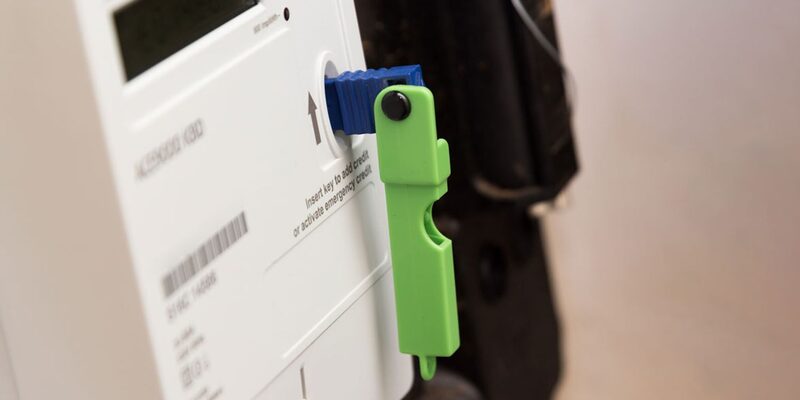
Where the Trust sits in the wider help landscape
The Trust is one of several routes for a household in energy arrears, and it is worth being precise about what distinguishes it. It is a named charity with a published maximum, a published average and a published contact number, which makes it more concrete than a general hardship fund. It is also funded by a single supplier while being open to customers of any supplier, which is an unusual arrangement and the reason the independence question comes up so often.
The wider context is that energy debt is a large and growing problem. The average energy debt owed had increased to £1,835 by the end of 20235, and the Trust itself reports a huge increase in demand for money and energy advice10. The Trust's own policy work looks at what can be done to ensure that low-income households are getting all the support they need before they fall into financial difficulty10, and at fuel poverty more broadly8.
For a household's energy independence, the honest assessment is this. A grant clears a balance, which removes a barrier to switching supplier, to moving from prepayment to credit, or simply to keeping the lights on. That is a real gain in control. But the grant does not change the underlying position: the household still buys gas and electricity from a supplier, still pays a standing charge, and still depends on the grid. The Trust's advice strand is the part that touches independence more durably, because income maximisation and benefit checks change what a household can afford rather than what it owes.
The Trust's own figures show the scale of what it does: over £14.3 million distributed in 20252, and a commitment of £8 million a year over the next five years9. For an individual household, the relevant numbers are smaller and more specific: up to £2,000, an average of £1,228, and a prepayment route of up to £1,700.
Sources29 cited
- British Gas Energy Trust White Goods Fund, British Gas Energy Trust, 2023-12-14
- A plan to end fuel poverty, British Gas Energy Trust, 2026-07-23
- Help with water, phone and broadband bills, British Gas Energy Trust, 2026-07-14
- Continuing the Warm Home Discount scheme consultation, British Gas Energy Trust, 2024
- Shock proof: breaking the cycle of winter energy crises, Citizens Advice, 2023-12
- Grants available, British Gas Energy Trust, 2026-09-17
- Support for those on prepayment meters, British Gas Energy Trust, 2026-07-07
- Fuel poverty and energy: navigating the path forward, British Gas Energy Trust, 2025-01-22
- Thousands of struggling households across Britain to be supported by new £40m funding commitment, British Gas Energy Trust, 2026-05-05
- What can be done to ensure that low-income households are getting all the support they need before they fall into financial difficulty, British Gas Energy Trust, 2023-11-07
- Energy grant fund, British Gas Energy Trust, 2025-08-01
- Energy savings tips, British Gas Energy Trust, 2026-02-27
- British Gas Energy Support Fund, British Gas Energy Trust, 2023-09-29
- Winter money and energy support pop-ups launch in Post Offices across the UK, British Gas Energy Trust, 2024-10-15
- Grants and help for you, British Gas Energy Trust, 2026-03-23
- Can energy grants help with energy debt UK, British Gas Energy Trust, 2026-03-19
- Trust funds community energy efficiency support in Scotland, British Gas Energy Trust, 2023-11-13
- Trust encourages pensioners to apply for energy support, British Gas Energy Trust, 2024-09-02
- Energy Support Fund, British Gas Energy Trust, 2024-11-04
- Energy debt relief grants, British Gas Energy Trust, 2021-07
- Help with household costs, Isle of Anglesey County Council, 2026-09-20
- What are energy hardship funds and how do they work, British Gas Energy Trust, 2026-02-26
- Grants and benefits to help you pay your energy bills, Citizens Advice Scotland, 2026-09-17
- British Gas Energy Trust Individual and Family Fund now open, British Gas Energy Trust, 2023-05-10
- Home heating, Belfast City Council, 2026-09-20
- Vulnerable households to receive vital energy debt grants, British Gas Energy Trust, 2025-01-13
- British Gas details, Citizens Advice, 2026-09-20
- Energy refunds, Uswitch, 2025-10-29
- Changeworks, British Gas Energy Trust, 2026-02-04
 The Full Grants and Schemes GuideWhich grants can you actually get right now, and how do you apply for them?
 Energy Debt and ArrearsHow much do households in the UK owe their energy supplier, and how many people are behind on their bills?
 Grants and Energy IndependenceCan you get a grant for solar panels or a battery?
 The Full Where Our Energy Comes From GuideWhere does the gas in your boiler and the electricity in your sockets actually come from?
 Gas Distribution NetworksWho actually owns the pipes under your street, and who do you call when gas smells or the supply fails?
 Heating Off the Gas GridThe options for the four million UK households with no mains gas connection: oil, LPG, electric, heat pump, biomass and solid fuel, and how their costs, storage and supply security compare.